Technology
Semiconductor Fabrication Software Market to Grow by USD 984.91 Million (2024-2028), Driven by Increased Design Complexity, with AI Driving Market Transformation – Technavio
Published
2 years agoon
By
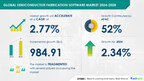
NEW YORK, Nov. 18, 2024 /PRNewswire/ — Report with the AI impact on market trends – The global semiconductor fabrication software market size is estimated to grow by USD 984.91 million from 2024-2028, according to Technavio. The market is estimated to grow at a CAGR of almost 2.77% during the forecast period. Growing complexity of semiconductor device designs is driving market growth, with a trend towards high need for semiconductor memory devices. However, increasing chip shortage globally poses a challenge. Key market players include Advanced Micro Devices Inc., Agnisys Inc., Aldec Inc., ANSYS Inc., Applied Materials Inc., Cadence Design Systems Inc., KLA Corp., Lam Research Corp., Onto Innovation Inc., PDF Solutions Inc., Sasken Technologies Ltd., Siemens AG, Synopsys Inc., The PEER Group Inc., Thermo Fisher Scientific Inc., Zuken Inc., Cantier Systems Pte Ltd., Fabmatics GmbH, Mindteck India Ltd., and Tismo Technology Solutions Pvt. Ltd..
Key insights into market evolution with AI-powered analysis. Explore trends, segmentation, and growth drivers- View Free Sample PDF
Semiconductor Fabrication Software Market Scope
Report Coverage
Details
Base year
2023
Historic period
2018 – 2022
Forecast period
2024-2028
Growth momentum & CAGR
Accelerate at a CAGR of 2.77%
Market growth 2024-2028
USD 984.91 million
Market structure
Fragmented
YoY growth 2022-2023 (%)
2.34
Regional analysis
APAC, North America, Europe, Middle East and Africa, and South America
Performing market contribution
APAC at 52%
Key countries
US, China, India, Germany, and UK
Key companies profiled
Advanced Micro Devices Inc., Agnisys Inc., Aldec Inc., ANSYS Inc., Applied Materials Inc., Cadence Design Systems Inc., KLA Corp., Lam Research Corp., Onto Innovation Inc., PDF Solutions Inc., Sasken Technologies Ltd., Siemens AG, Synopsys Inc., The PEER Group Inc., Thermo Fisher Scientific Inc., Zuken Inc., Cantier Systems Pte Ltd., Fabmatics GmbH, Mindteck India Ltd., and Tismo Technology Solutions Pvt. Ltd.
Market Driver
The Semiconductor Fabrication Software market is experiencing significant trends in product pricing, industry coverage, and business strategy. Political and social scenarios, including geopolitical tensions and changing consumer demands, are impacting the market. Positive changes include scalability and innovation, with companies like Applied Materials, Cadence Design Systems, Mentor Graphics, Synopsys, Agnisys, Aldec, Ansoft focusing on cutting-edge product offerings. Negative changes include fragmentation dominance and amalgamation traits. CAE tools for IC, PCB, MCM, and Digital Manufacturing are in focus, with PEER and forefront technologies like Pathfinder and Accumulation driving growth. Strategies include niche differentiation and vital partnerships. The Ace Matrix highlights Synopsys and Cadence Design Systems as innovators, while Amalgamation traits are seen in Applied Materials and Mentor Graphics. Product satisfaction remains key, with companies striving to meet the needs of the industry.
Semiconductor device manufacturers are focusing on memory devices like 3D NAND and DRAM due to the high growth potential of the semiconductor memory market. Consumer electronics market dynamics offer new opportunities for vendors in this shift. For instance, OEMs have moved from HDD storage to flash memory in smartphones and notebooks due to features such as resistance to vibration, lower chances of corruption, and less data loss. Precise chip fabrication is essential for these additional features, making semiconductor fabrication software solutions a necessity.
Request Sample of our comprehensive report now to stay ahead in the AI-driven market evolution!
Market Challenges
The Semiconductor Fabrication Software market faces several challenges, including product pricing pressures and a complex business landscape. Political and social scenarios, such as trade policies and workforce demographics, also impact the industry. Positive changes include the adoption of digital manufacturing and the increasing importance of scalability and business strategy. Winning imperatives include offering cutting-edge solutions, focusing on niche areas, and providing excellent product satisfaction. Key players like Applied Materials, Cadence Design Systems, Mentor Graphics, Synopsys, Agnisys, Aldec, Ansoft, and others are active in the market, with strategies ranging from being innovators to fragmentation dominance and amalgamation traits. CAE tools for IC, PCB, MCM design, and digital manufacturing are in high demand, with PEER continuing to shape the industry landscape. The Ace Matrix identifies Forefront and Pathfinder as current leaders, with Vital, Accumulation, and Amalgamated traits shaping the future.The global semiconductor industry is experiencing significant challenges due to a chip shortage, impacting various sectors from automotive to consumer electronics. This shortage is limiting the world’s manufacturing capabilities, leading to increased prices and stock depletion. Chip orders, typically placed months in advance, are experiencing longer lead times, averaging over 28 weeks for most types of chips. Companies are ordering excess chips to secure their stocks, straining manufacturing capacity and raising costs. The semiconductor fabrication software market is crucial in this scenario, offering solutions to optimize production and reduce lead times, ultimately helping businesses mitigate the impact of the chip shortage.
Discover how AI is revolutionizing market trends- Get your access now!
Segment Overview
This semiconductor fabrication software market report extensively covers market segmentation by
Solution 1.1 CAE1.2 IC physical design and verification1.3 PCB and MCM1.4 Fab management software1.5 OthersEnd-user 2.1 Process documentation2.2 Process integration2.3 OthersGeography 3.1 APAC3.2 North America3.3 Europe3.4 Middle East and Africa3.5 South America
1.1 CAE- The Computer-Aided Engineering (CAE) segment of the semiconductor fabrication software market includes tools used for engineering tasks, such as electronic system level (ESL) simulation, register transfer level (RTL) simulation, hardware-assisted verification, synthesis, analysis, and various other tools. These tools are essential for solving complex engineering problems, including partial differential equations and boundary value problems, or deriving algorithms for fluid flows and flight tests. CAE tools are then translated into manufacturing instructions using Electronic Design Automation (EDA) software. ESL tools are particularly significant, as they follow a system-level approach, enabling faster design, verification, and simulation at lower costs and in less time. RTL tools help end-users verify logic designs using an RTL language and provide an abstract of complex circuit diagrams for extracting root-level circuit writings. The CAE segment is expected to grow slowly during the forecast period due to the widespread use and contractual business model of EDA software among users.
Download a Sample of our comprehensive report today to discover how AI-driven innovations are reshaping competitive dynamics
Research Analysis
The Semiconductor Fabrication Software market is a critical segment of the semiconductor industry, providing essential tools for Foundries and Integrated Device Manufacturers (IDMs) to design, develop, and manufacture complex Integrated Circuits (ICs), Printed Circuit Boards (PCBs), Multi-Chip Modules (MCMs), and other advanced semiconductor products. The market is characterized by the forefront use of Computer-Aided Engineering (CAE) solutions for digital manufacturing, Process, Equipment and Environmental Reporting (PEER) for regulatory compliance, and Thermo Fisher’s Accumulation software for wafer handling and inspection. The market is fragmented, with several niche players and amalgamation trends, but key areas of dominance include advanced IC design, IC manufacturing execution systems, and PCB design and manufacturing software. Product pricing and political scenarios significantly impact the market dynamics. Tismo Technology and other emerging players are disrupting the market with innovative solutions.
Market Research Overview
The Semiconductor Fabrication Software market is a dynamic and innovative industry, focused on providing advanced solutions for the design, manufacturing, and testing of integrated circuits (ICs), printed circuit boards (PCBs), multi-chip modules (MCMs), and digital manufacturing. Product offerings range from computer-aided engineering (CAE) tools for semiconductor design, layout, and verification, to manufacturing execution systems (MES) for process control and yield optimization. Political scenarios, such as trade policies and regulations, and social factors, including demographic shifts and changing consumer preferences, can significantly impact the market. Positive changes include increasing demand for advanced technologies like AI, IoT, and 5G, while negative changes include rising fabrication costs and intensifying competition. Scalability, business strategy, and industry coverage are key winning imperatives for market players. The Ace Matrix, featuring Active, Cutting Edge, Innovator, and Niche players, highlights the competitive landscape. Applied Materials, Cadence Design Systems, Mentor Graphics, Synopsys, Agnisys, Aldec, Ansoft, and others offer product satisfaction through offerings like Forefront, Pathfinder, Vital, Accumulation, and Fragmentation dominance. Amalgamation traits, such as partnerships and acquisitions, are common strategies to expand market presence. PEER (Process, Equipment, and Materials) integration and digital manufacturing are current industry focuses.
Table of Contents:
1 Executive Summary
2 Market Landscape
3 Market Sizing
4 Historic Market Size
5 Five Forces Analysis
6 Market Segmentation
SolutionCAEIC Physical Design And VerificationPCB And MCMFab Management SoftwareOthersEnd-userProcess DocumentationProcess IntegrationOthersGeographyAPACNorth AmericaEuropeMiddle East And AfricaSouth America
7 Customer Landscape
8 Geographic Landscape
9 Drivers, Challenges, and Trends
10 Company Landscape
11 Company Analysis
12 Appendix
About Technavio
Technavio is a leading global technology research and advisory company. Their research and analysis focuses on emerging market trends and provides actionable insights to help businesses identify market opportunities and develop effective strategies to optimize their market positions.
With over 500 specialized analysts, Technavio’s report library consists of more than 17,000 reports and counting, covering 800 technologies, spanning across 50 countries. Their client base consists of enterprises of all sizes, including more than 100 Fortune 500 companies. This growing client base relies on Technavio’s comprehensive coverage, extensive research, and actionable market insights to identify opportunities in existing and potential markets and assess their competitive positions within changing market scenarios.
Contacts
Technavio Research
Jesse Maida
Media & Marketing Executive
US: +1 844 364 1100
UK: +44 203 893 3200
Email: media@technavio.com
Website: www.technavio.com/
View original content to download multimedia:https://www.prnewswire.com/news-releases/semiconductor-fabrication-software-market-to-grow-by-usd-984-91-million-2024-2028-driven-by-increased-design-complexity-with-ai-driving-market-transformation—technavio-302308038.html
SOURCE Technavio
You may like
Technology
PayKings Offers Free Statement Analyzer That Shows High-Risk Merchants the Rate They Actually Pay
Published
4 minutes agoon
November 25, 2026By
A merchant quoted 2.6% can pay 3.5% once every fee is counted. The free tool finds the real number in about a minute.
LEHI, Utah, Nov. 25, 2026 /PRNewswire/ — PayKings, a high-risk merchant services provider, offers a free Statement Analyzer that shows merchants the actual rate they pay to accept cards. Merchants upload a statement from any U.S. processor and receive their effective rate, total fees, and a line-by-line breakdown in about a minute.
Most merchants know the rate printed on their contract, but the effective rate tells a different story. Calculated by dividing total processing fees by total card volume, it includes charges that contract rates may leave out, such as per-transaction, monthly, and PCI fees. A merchant quoted 2.6% can end up paying 3.5%. The analyzer works with any U.S. merchant statement, including those from CBD, firearms, nutraceutical, and telemedicine businesses PayKings specializes in.
“Most merchants we talk to have never seen their real processing rate,” said Kyle Hall, CEO of PayKings. “They see one number on a contract and assume that’s what they’re paying, but the reality is often much more complicated. We believe every business owner deserves complete transparency into their processing fees so they can understand exactly where their money is going and make informed decisions about their business.”
How it works:
Upload: Submit a processor PDF statement or a clear photo or scan of a paper statement.Read: The tool reviews percentage, per-transaction, monthly, and other processing fees.Breakdown: Merchants see their effective rate, total fees, categorized charges, and fees that may warrant a closer look.
Account and routing numbers are masked in every result. The tool is free, requires no obligation, and can also be used by anyone reviewing a statement shared by a merchant.
The Statement Analyzer is available at https://paykings.com/tools/statement-analyzer/?utm_source=prnewswire&utm_medium=press_release&utm_campaign=statement_analyzer.
About PayKings
Founded in 2011, PayKings has offices in Lehi, Utah, and St. Petersburg, Florida. The company specializes in payment processing for high-risk businesses, with more than 20 acquiring bank relationships and service across 50+ industries, including CBD, firearms, nutraceuticals, and telemedicine. PayKings approves 86% of merchants who apply. Learn more at https://paykings.com/. PayKings, 2901 Bluegrass Blvd, Suite 200-338, Lehi, UT 84043.
Media Contact
Mia Tandingan
Email Marketing Specialist
PayKings
Email: mia@813mgt.com
Phone: (801) 899-7255
Website: https://paykings.com/
View original content:https://www.prnewswire.com/news-releases/paykings-offers-free-statement-analyzer-that-shows-high-risk-merchants-the-rate-they-actually-pay-302950687.html
SOURCE PayKings
Technology
New McLean & Company Guide Helps HR Accelerate Job Architecture With AI
Published
4 minutes agoon
November 25, 2026By
A new resource from global HR advisory and research firm McLean & Company shows HR leaders how to practically use AI to develop and maintain job leveling criteria and structures. It keeps organizational context, key player input, and human oversight at the center of every decision as HR organizations continue to adopt ever-evolving technology.
TORONTO, Nov. 25, 2026 /CNW/ — According to McLean & Company’s new Guide to Accelerating Job Architecture With AI, AI can streamline HR’s job architecture work by analyzing organizational documentation, surfacing patterns and inconsistencies, generating alternatives, and testing assumptions. This support gives HR more capacity to focus on the decisions that require organizational knowledge, calibration, and judgment. The new AI-focused resource from the global HR research and advisory firm provides practical guidance for HR leaders so they can use AI in conjunction with human judgment to develop and refine job leveling criteria. It also helps them evaluate level structures, prepare for leadership discussions, and keep the framework relevant over time.
“AI can accelerate the work behind job architecture, but it cannot determine what is right for an organization,” says Lexi Hambides, director, HR Research & Advisory Services, at McLean & Company. “HR must bring organizational context, involve the right key players, and apply human judgment to every output. The strongest frameworks use AI to expand and test options while keeping people accountable for the final decisions.”
The guide explains that job architecture supports consistent decisions across talent management, career progression, workforce planning, and total rewards. However, developing and maintaining the framework requires extensive analysis, iteration, and input from key players.
In the resource, McLean & Company emphasizes that AI should support rather than replace HR expertise. The firm recommends HR leaders and their teams start with clear objectives and reviewing organizational and HR strategy, structure, job families, and supporting data to assess whether AI-generated recommendations align with business needs.
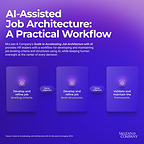
The Guide to Accelerating Job Architecture With AI outlines a practical workflow for developing and sustaining job leveling criteria and structures:
Develop and refine job leveling criteria. First, HR leaders can use AI to analyze organizational documents, identify recurring dimensions of work, and recommend clear criteria and definitions.
Develop and refine job level structures. Next, AI can be used to generate and compare level structure options, draft descriptors that differentiate work across levels, and identify gaps or inconsistencies before finalizing the framework.
Validate and maintain the framework. Finally, HR needs to prepare senior leaders to review major choices and trade-offs, confirm organizational fit, and establish a cadence for reassessing criteria and structures as work and business needs evolve.
The guide reinforces the importance of combining AI-enabled analysis with human judgment to develop job architecture frameworks that reflect organizational needs. McLean & Company advises that, by accelerating time-intensive design activities, AI can enable HR leaders to focus on evaluating options, strengthening decisions, and maintaining framework relevance as work evolves.
To access the insights, visit McLean & Company’s Guide to Accelerating Job Architecture With AI page. The resource can be paired with the firm’s Develop a Job Architecture Framework blueprint for end-to-end guidance on building and implementing a job architecture framework.
For support with alternative career tracks, HR leaders can explore McLean & Company’s Develop an Integrated Career Pathing Framework resource.
Media seeking research-backed insights or commentary from McLean & Company experts on job architecture, career frameworks, AI-supported HR work, or workforce planning can contact pr@mcleanco.com.
About McLean & Company
McLean & Company is a global HR research and advisory firm and trusted partner to people leaders navigating today’s most pressing workforce challenges. Informed by its work with thousands of HR professionals and executives, the firm provides evidence-based research, diagnostics, practical tools, hands-on support, and services spanning advisory, learning, and coaching. From workforce strategy and leadership to culture, engagement, retention, and AI adoption, McLean & Company helps leaders move from direction to execution and deliver measurable results for their people and organizations.
McLean & Company is a division of Infotech.
Media professionals can register for unrestricted access to research across IT, HR, and software, and hundreds of industry analysts through the firm’s Media Insiders program. To gain access, contact pr@mcleanco.com.
View original content to download multimedia:https://www.prnewswire.com/news-releases/new-mclean–company-guide-helps-hr-accelerate-job-architecture-with-ai-302946165.html
SOURCE McLean & Company
Technology
ASU research expenditures climb to nearly $1.14 billion, fueled by advances in engineering, health and national security
Published
4 minutes agoon
November 25, 2026By
University’s research enterprise grows 13.4%, strengthening its role in developing technologies and solutions that benefit Arizona and the nation
TEMPE, Ariz., Nov. 25, 2026 /PRNewswire/ — Arizona State University’s research enterprise continues to grow at a remarkable pace, reaching $1.137 billion in annual research expenditures in fiscal year 2025 — an increase of $134 million over the previous year.
This growth reflects the university’s expanding role in tackling some of the nation’s most pressing challenges, from strengthening national security and developing advanced semiconductor technologies to improving health care and securing Arizona’s water future.
The National Science Foundation on Tuesday released its annual Higher Education Research and Development, or HERD, survey, which collects research expenditure information from hundreds of institutions nationwide. In the latest survey reflecting fiscal year 2025, ASU ranked No. 33 overall, ahead of MIT, Purdue University, Michigan State University and the University of Arizona.
ASU ranked No. 4 among institutions without a medical school, ahead of MIT, Purdue University, UC Boulder and Princeton University. After the survey period, ASU officially launched the John Shufeldt School of Medicine and Medical Engineering, which received preliminary accreditation and an inaugural class of 36 students who began last summer.
The research growth builds on ASU’s historic achievement of surpassing $1 billion in annual research expenditures in fiscal year 2024, and joining the prestigious Association of American Universities (AAU).
This year also marks the first time that ASU has surpassed the University of Arizona in total research expenditures.
“We continue to build a new model of a great American research university, one that is committed to being accessible to students from every background and every conceivable pathway,” ASU President Michael Crow said.
Research expenditures measure the amount of funding used to conduct research each year. ASU receives funding from federal agencies, state and local grants, businesses and other private organizations, often awarded over multi-year periods. Research expenditures are the most effective way to measure research activity and compare the vitality of American research universities.
A top-tier national research university
The latest results continue a dramatic transformation of ASU’s research enterprise. Since Crow took office in 2002, the university has grown into one of the nation’s leading public research institutions, building a research model focused on scientific discovery, technological innovation and societal benefit. Consider that ASU ranked:
No. 5 out of 440 in federal funding from the Department of Health and Human Services among universities without a medical school, ahead of Purdue University, Georgia Institute of Technology, UC Boulder and Princeton.No. 9 out of 651 in National Science Foundation funding ahead of Columbia University, MIT, UC Berkeley and Purdue University.No. 9 out of 453 in NASA funding ahead of MIT, UCLA, UT Austin and Stanford University.No. 15 out of 576 in funding from state and local government, ahead of Ohio State University, the University of Minnesota, UC San Diego and UC Berkeley.
“ASU has a diverse funding portfolio, with support from federal agencies, industry partners, local governments and philanthropists who all have a vital interest in bringing ASU innovation to their communities,” said Sally C. Morton, executive vice president of ASU Knowledge Enterprise and chief research and innovation officer. “Our rapid growth reflects their confidence in our ability to deliver valuable results that benefit Americans.”
Engineering tomorrow’s technologies
Engineering research was the single largest contributor to ASU’s growth in fiscal year 2025.
Research expenditures in engineering reached $349.2 million, a 25.9% increase over the previous year. Engineering alone accounted for more than half of the university’s total research expenditure increase.
The growth reflects rising demand for technologies that can strengthen America’s national security, improve manufacturing, support advanced computing and accelerate the development of next-generation electronics.
One of the major contributors was the ASU-led Southwest Advanced Prototyping (SWAP) Hub, an industry-scale, professionally staffed semiconductor prototyping facility. Part of the Department of War’s Microelectronics Commons initiative, SWAP Hub delivers cutting-edge technologies that are critical to U.S. security and defense.
SWAP Hub’s Spaceborne Low Energy SI Computing (SLEAC) project brings together ASU, Sandia National Laboratories, Raytheon and university partners to develop efficient, radiation-hardened neural network processing for defense satellites. The technology uses less power, generates less heat and maintains the high computing performance needed to support real-time decision-making.
In its first two years, the team produced two radiation-tolerant prototype chips with object-tracking capabilities, moving the technology from the lab toward commercial fabrication.
Industry giant IBM also recently ordered from SWAP Hub a shipment of prototype wafers, the discs used to build microchips. ASU engineers designed, created and delivered the proof-of-concept products, which were used to demonstrate a process to build multiple structures on a molded wafer.
Powering national security
National defense emerged as one of the most important drivers of ASU’s research growth. Combined research expenditures supported by the Navy, Defense Advanced Research Projects Agency (DARPA) and Army increased by approximately $43.8 million between fiscal years 2024 and 2025.
ASU recently entered a 10-year agreement with the U.S. Army Installation Management Command that allows the university to provide energy services to Army installations across the continental U.S. Fort Huachuca, a military cybersecurity hub in Cochise County, Arizona, will be the first installation to participate.
The partnership builds on a pilot energy assessment that ASU’s Energy Efficiency Center conducted at Fort Huachuca in 2023, which showed how these assessments could address the installation’s needs. The center is part of the U.S. Department of Energy’s Industrial Training and Assessment Centers program.
Under the agreement, students with the Energy Efficiency Center, joined by students from Cochise College, will conduct detailed meter readings and evaluate energy use and efficiency. Their reports will help Fort Huachuca identify potential improvements to reliability, efficiency and operating costs.
The experience will prepare students for careers in energy efficiency while helping build a pool of trained workers near the installation.
Advancing health and medicine
Health-related research was another major source of growth. National Institutes of Health funded research expenditures increased $17.1 million over the previous year, helping scientists understand the human body to improve medical care.
Human blood contains a wealth of information about past infections, vaccinations and the health of the immune system. Researchers at ASU’s Biodesign Institute are developing powerful new tools to unlock that information, with support from the National Cancer Institute.
The researchers use a technology called the Multiplex In-Solution Protein Array, or MISPA, to measure antibody responses to hundreds of viruses and bacteria simultaneously. The technique allows scientists to track changes in immune responses over time, revealing evidence of exposure to pathogens and other immune challenges. It also makes it practical to conduct these tests on thousands of people in a single experiment.
In a recent study, the team identified special markers called sentinel antibodies that may provide a window into a person’s overall immune health. Individuals with stronger sentinel antibody responses generally mounted stronger responses to vaccination, suggesting a potential way to predict vaccine effectiveness.
The approach also generates enormous amounts of information that researchers can analyze using AI. By analyzing more than 2 million data points, the team uncovered patterns in immune responses that conventional testing might have missed.
ASU’s growing biomedical research enterprise is also advancing work in aging, cancer, infectious diseases, diagnostics, AI and personalized medicine.
Finding solutions to Arizona’s water challenges
As the Southwest confronts long-term drought, rising temperatures, population growth and increasing demands on limited water supplies, the need for new approaches to water management has never been more urgent.
In 2022, ASU’s Julie Ann Wrigley Global Futures Laboratory and Ira A. Fulton Schools of Engineering launched the Arizona Water Innovation Initiative, supported by $40 million from the state of Arizona. The initiative brought together researchers and partners to address water challenges facing Arizona and the broader Southwest.
The program connected ASU researchers with communities, agencies, industry, agriculture, tribal partners, municipalities and water leaders to accelerate practical, evidence-based solutions. Since its inception, AWII launched six technology test beds, advanced six patents, supported 10 startup companies and trained nearly 300 water professionals.
The initiative has built a foundation of research and relationships that will extend far beyond its four-year funding period. For example, AWII partners have supported rural groundwater resilience workshops and a peer-to-peer Rural Groundwater Resilience Exchange; released research on capturing precipitation, runoff and urban stormwater to replenish aquifers; and developed the AZ Water Blueprint’s “About My Water” app, which brings trusted, publicly-sourced data together in one place to provide a clear view of local water providers, groundwater conditions and water sources.
Leadership in key disciplines
ASU also achieved top 15 rankings for expenditures within many academic disciplines, including:
No. 1 out of 279 in anthropology, ahead of the University of Michigan, Harvard University, UA and the University of Massachusetts.No. 1 out of 372 in visual and performing arts, ahead of Florida State, University of Michigan, Syracuse University and Harvard University.No. 1 out of 593 in all non-science and engineering, ahead of Harvard University, University of Michigan, UT Austin, UC Berkeley.No. 2 out of 492 in education, ahead of the University of Virginia, UCLA, Stanford University and Harvard University.No. 3 out of 403 in business management and business administration, ahead of Harvard University, UC Berkeley, Cornell University and the University of Minnesota.No. 4 out of 338 in engineering, other, ahead of the University of Michigan, Purdue University, Johns Hopkins University and MIT.No. 4 out of 380 in geological and earth sciences, ahead of UT Austin, UC San Diego, Johns Hopkins University and Stanford University.No. 5 out of 174 in engineering, industrial and manufacturing, ahead of Pennsylvania State University, Ohio State University, Texas A&M and Purdue University.No. 6 out of 290 in civil engineering, ahead of Purdue University, UC Berkeley, Georgia Tech and the University of Michigan.No. 6 out of 376 in social sciences, political science and government, ahead of Indiana University, UCLA, Stanford University and NYU.No. 7 out of 313 in engineering, electrical, electronic, and communications, ahead of Purdue University, University of Michigan, University of Arizona and the University of Washington.No. 7 out of 212 in social work, ahead of University of Connecticut, University of Michigan, USC and Ohio State University.No. 8 out of 459 in geosciences, atmospheric sciences and ocean sciences, ahead of Columbia University, Johns Hopkins University, UT Austin and UCLA.No. 8 out of 314 in communication and communications technologies, ahead of Northwestern University, UC Berkeley, Georgia Tech and UCLA.No. 10 out of 522 in computer and information sciences, ahead of UNC Chapel Hill, Purdue University, Ohio State University and Cornell University.No. 13 out of 458 in humanities, ahead of University of Arizona, Notre Dame University, Syracuse University and UT Austin.
Turning research investments into real-world impact
Research expenditures do more than drive discoveries and inventions. They also support the local and regional economy. In fiscal year 2025, ASU research provided more than $77 million to Arizona-based vendors and subcontractors and more than $44 million to small businesses.
ASU’s growing research enterprise also creates opportunities for students to participate directly in scientific discovery and technological innovation, gaining experience that prepares them for careers in emerging industries.
“Our research mission works hand-in-hand with our educational mission,” Morton said. “Our students work on the cutting edge of science with leading researchers in their fields. We encourage hands-on learning and an entrepreneurial mindset. These are the skills they need for their own success and to make a positive impact.”
View original content to download multimedia:https://www.prnewswire.com/news-releases/asu-research-expenditures-climb-to-nearly-1-14-billion-fueled-by-advances-in-engineering-health-and-national-security-302950697.html
SOURCE Arizona State University – Media Relations
PayKings Offers Free Statement Analyzer That Shows High-Risk Merchants the Rate They Actually Pay
New McLean & Company Guide Helps HR Accelerate Job Architecture With AI
ASU research expenditures climb to nearly $1.14 billion, fueled by advances in engineering, health and national security
Send Rakhi to UK swiftly with UK Gifts Portal
Whiteboard Series with NEAR | Ep: 45 Joel Thorstensson from ceramic.network
Nullmax and Renesas Forge Strategic Partnership to Deliver Competitive ADAS Solutions for the Global Market
Why You Should Build on #NEAR – Co-founder Illia Polosukhin at CV Labs
Whiteboard Series with NEAR | Ep: 45 Joel Thorstensson from ceramic.network
NEAR End of Year Town Hall 2021: The Open Web World, MetaBUILD 2 Hackathon and 2021 recap
Trending
-
Near Videos5 days agoIllia Polosukhin on post-quantum keys and crypto agility | Solana Breakpoint 2026
-
Technology5 days agoAllooloo Tops 100M Capital Markets AI Agent Traffic a Month
-
Technology5 days agoAllooloo Tops 100M Capital Markets AI Agent Traffic a Month
-
Technology4 days agoHEARTBOT AI Wins Chunghwa Telecom Special Award at Meet Neo Star 2026
-
Coin Market5 days agoSky Protocol sees $2 billion in stablecoin withdrawals, disputes illicit fund claims
-
Coin Market5 days agoWrapped Monero token crashes 99.8% amid suspected $13.5M exploit
-
Technology5 days agoZiehm-Orthoscan Announces Executive Leadership Transition Following 18 Years of Significant Growth
-
Technology4 days agoA Seattle Startup Brings Your Pet to Life on Your Phone and Laptop With the Avatar Mirroring Their Every Move in Real Time