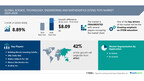
NEW YORK, Nov. 18, 2024 /PRNewswire/ — Report with the AI impact on market trends – The global science, technology, engineering and mathematics (STEM) toys market size is estimated to grow by USD 8.09 bn from 2024-2028, according to Technavio. The market is estimated to grow at a CAGR of 8.89% during the forecast period. Growing emphasis on stem education is driving market growth, with a trend towards integration of artificial intelligence (AI) and machine learning (ML) technologies in stem toys. However, high cost of stem toys poses a challenge.Key market players include Building Blocks Learning Solutions Pvt. Ltd., Dilly Dally Kids, Elation Edtech Pvt. Ltd., Elenco Electronics Inc., Evollve Inc., Fat Brain Toys LLC., Franckh Kosmos Verlags GmbH and Co. KG, Fun Express LLC, Funvention Learning Pvt. Ltd., GoldieBlox Inc., Hape International Inc., Hasbro Inc., Innovation First International Inc., Learning Resources Ltd., LEGO System AS, Makeblock Co. Ltd., Makey Makey LLC., Mattel Inc., MobilizAR Technologies Pvt. Ltd., MVW Holdings Inc., Nesta Toys, Piper Learning Inc., PlanToys.com, PlayMonster LLC, Ravensburger AG, Scientifics Direct Inc., SmartGurlz, Smartivity Labs Pvt. Ltd., SND Digital Retails LLP, Sphero Inc., Spin Master Corp., Thimble, Timbuk Toys, Tinkering Labs Inc., and Xinxiang Alpha Manufacturing Ltd..
AI-Powered Market Evolution Insights. Our comprehensive market report ready with the latest trends, growth opportunities, and strategic analysis- View Free Sample Report PDF
Forecast period
2024-2028
Base Year
2023
Historic Data
2018 – 2022
Segment Covered
Application (In-home and In-school), Age Group (9-10 years, 6-8 years, and 11-13 years), Subjects (Science, Engineering, Mathematics, and Technology), and Geography (APAC, North America, Europe, Middle East and Africa, and South America)
Region Covered
APAC, North America, Europe, Middle East and Africa, and South America
Key companies profiled
Building Blocks Learning Solutions Pvt. Ltd., Dilly Dally Kids, Elation Edtech Pvt. Ltd., Elenco Electronics Inc., Evollve Inc., Fat Brain Toys LLC., Franckh Kosmos Verlags GmbH and Co. KG, Fun Express LLC, Funvention Learning Pvt. Ltd., GoldieBlox Inc., Hape International Inc., Hasbro Inc., Innovation First International Inc., Learning Resources Ltd., LEGO System AS, Makeblock Co. Ltd., Makey Makey LLC., Mattel Inc., MobilizAR Technologies Pvt. Ltd., MVW Holdings Inc., Nesta Toys, Piper Learning Inc., PlanToys.com, PlayMonster LLC, Ravensburger AG, Scientifics Direct Inc., SmartGurlz, Smartivity Labs Pvt. Ltd., SND Digital Retails LLP, Sphero Inc., Spin Master Corp., Thimble, Timbuk Toys, Tinkering Labs Inc., and Xinxiang Alpha Manufacturing Ltd.
Key Market Trends Fueling Growth
The STEM toys market is experiencing significant growth due to urbanization and literate parents seeking unique learning experiences for their children. Sustainability is a key trend, with toys focusing on engineering, mathematics, gravity, and educational curriculums. Supermarkets, hypermarkets, departmental stores, specialty stores, and online platforms are major distribution channels. Engineering and mathematics-based toys, educational robots, coding, and digital gaming are popular categories. Innovation and digital transformations are driving the market, with emerging players offering niche offerings. Geographic segmentation and analysis indicate strong growth in the offline segment, particularly in developed regions. The market’s ecosystem includes vendors, research data, and analyst support. The fragmented nature of the market calls for effective vendor management and business resilience. The outlook is positive, with short-term growth expected due to consumer interest in personalized learning and alternative products. Long-term growth will depend on the market players’ ability to adapt to changing consumer preferences and competition from digital replicators. Business expansions, acquisitions, and value chain optimization are key strategies for market success.
The STEM toys market has been significantly transformed by the integration of Artificial Intelligence (AI) and Machine Learning (ML) technologies. These advanced technologies enrich the educational value of STEM toys by offering personalized learning experiences and fostering critical thinking. Through AI and ML, toys can adapt to a child’s unique abilities and learning style, providing an interactive and exploratory environment. For instance, the Cubetto Playset is a coding toy that employs AI technology to deliver an adaptive learning experience. It uses ML algorithms to assess a child’s interactions and adjust the challenge level accordingly, ensuring an effective and engaging learning process.
Insights on how AI is driving innovation, efficiency, and market growth- Request Sample!
Market Challenges
The STEM toys market is experiencing significant growth due to urbanization and literate parents seeking unique learning experiences for their children. However, challenges persist in areas like sustainability, as many STEM toys contain non-renewable resources. Distributing these toys through supermarkets, hypermarkets, departmental stores, specialty stores, and online platforms requires effective vendor management and business resilience. Engineering and mathematics-focused toys, including those based on gravity and educational robots, coding, and digital gaming, offer niche opportunities. Geographic segmentation and analysis are crucial for market players looking to expand, with emerging players utilizing innovation and digital transformations to differentiate. Short-term growth is promising, with a mid- to long-term outlook based on personalized learning, fundamental thinking, experimentation, and exploration. Alternative products and educational benefits continue to drive consumer interest, making this an exciting ecosystem to watch. Analyst support and research data are essential for navigating this fragmented market and addressing problemsolving and logical reasoning needs. Business expansions, acquisitions, and value chain optimization are key strategies for market leaders.
The global STEM toys market faces a significant barrier to growth due to the high cost of these educational playthings. Advanced technology, premium materials, and extensive research used in creating STEM toys result in a higher price point. For instance, a robotics kit, enabling children to construct and program their robots, can cost between USD100 and several hundred dollars. This steep price can restrict market expansion and hinder the widespread adoption of STEM toys among a broader consumer base. The cost disparity is primarily due to the intricate components, sensors, and software included in these toys.
Insights into how AI is reshaping industries and driving growth- Download a Sample Report
Segment Overview
This science, technology, engineering and mathematics (stem) toys market report extensively covers market segmentation by
Application 1.1 In-home1.2 In-schoolAge Group2.1 9-10 years2.2 6-8 years2.3 11-13 yearsSubjects 3.1 Science3.2 Engineering3.3 Mathematics3.4 TechnologyGeography 4.1 APAC4.2 North America4.3 Europe4.4 Middle East and Africa4.5 South America
1.1 In-home- The in-home STEM toy market is experiencing significant growth due to several factors. Firstly, the importance of early STEM education is increasingly recognized, leading to a higher demand for at-home learning resources. In-home STEM toys offer an accessible and enjoyable way for children to explore STEM concepts independently or with parental guidance. Secondly, these toys provide an alternative to screen-based entertainment, offering interactive experiences that stimulate creativity and problem-solving skills. The convenience of learning at home is also a major advantage, as it eliminates the need for external classes or programs. Popular in-home STEM toys, such as Snap Circuits Electronics Exploration Kit and Gravity Maze Marble Run, introduce fundamental STEM principles in a hands-on and engaging manner. These advantages are expected to drive the growth of the in-home segment in the STEM toy market during the forecast period.
Download complimentary Sample Report to gain insights into AI’s impact on market dynamics, emerging trends, and future opportunities- including forecast (2024-2028) and historic data (2018 – 2022)
Research Analysis
The STEM toys market is experiencing significant growth due to the increasing urbanization and the rising number of literate parents who recognize the importance of unique learning experiences for their children. These toys, which focus on Science, Technology, Engineering, and Mathematics, offer hands-on opportunities for problem-solving and logical reasoning, making a material impact on a child’s development. Supermarkets, hypermarkets, departmental stores, specialty stores, and online platforms are key distribution channels for STEM toys. Engineering and mathematics-focused toys, such as those based on gravity and educational curriculums, are popular categories. Innovation and digital transformations are driving the market, with emerging players offering niche offerings and acquisitions shaping the ecosystem. Geographic segmentation reveals that North America and Europe dominate the market, with Asia Pacific and Latin America showing promising growth. Research data indicates that the market is expected to expand further due to business expansions and vendor management strategies. The market for STEM toys is not just about toys; it’s about creating a sustainable ecosystem that fosters a love for learning and prepares the next generation for a complex and interconnected world.
Market Research Overview
The STEM toys market is experiencing significant growth due to urbanization and the increasing number of literate parents seeking unique learning experiences for their children. STEM toys, which include engineering and mathematics-focused toys that incorporate concepts such as gravity, educational curriculums, coding, and robotics, are gaining popularity for their material impact on problem-solving and logical reasoning skills. Supermarkets, hypermarkets, departmental stores, specialty stores, and online platforms are key distribution channels for STEM toys. Digital gaming, toy subscriptions, and one-day delivery services are also driving growth in the market. Innovation and digital transformations are key trends in the STEM toys industry, with emerging players offering niche offerings and market leaders implementing inorganic strategies through business expansions, acquisitions, and value chain optimization. The STEM toys market is fragmented, with geographic segmentation and geographic analysis playing a significant role in market outlook. Personalized learning, fundamental thinking, experimentation, and exploration are essential learning styles fostered by STEM toys. Alternative products, educational benefits, consumer interest, and resources are also significant factors influencing the market. Digital replicators, interactive experiences, vivid images, and instant feedback are key features that make STEM toys an essential part of the ecosystem. The bottom line for market players is effective vendor management, research data, and analyst support to stay competitive in the long term. The short-term outlook for the STEM toys market is positive, with steady YOY growth expected.
Table of Contents:
1 Executive Summary
2 Market Landscape
3 Market Sizing
4 Historic Market Size
5 Five Forces Analysis
6 Market Segmentation
ApplicationIn-homeIn-schoolAge Group9-10 Years6-8 Years11-13 YearsSubjectsScienceEngineeringMathematicsTechnologyGeographyAPACNorth AmericaEuropeMiddle East And AfricaSouth America
7 Customer Landscape
8 Geographic Landscape
9 Drivers, Challenges, and Trends
10 Company Landscape
11 Company Analysis
12 Appendix
About Technavio
Technavio is a leading global technology research and advisory company. Their research and analysis focuses on emerging market trends and provides actionable insights to help businesses identify market opportunities and develop effective strategies to optimize their market positions.
With over 500 specialized analysts, Technavio’s report library consists of more than 17,000 reports and counting, covering 800 technologies, spanning across 50 countries. Their client base consists of enterprises of all sizes, including more than 100 Fortune 500 companies. This growing client base relies on Technavio’s comprehensive coverage, extensive research, and actionable market insights to identify opportunities in existing and potential markets and assess their competitive positions within changing market scenarios.
Contacts
Technavio Research
Jesse Maida
Media & Marketing Executive
US: +1 844 364 1100
UK: +44 203 893 3200
Email: media@technavio.com
Website: www.technavio.com/
View original content to download multimedia:https://www.prnewswire.com/news-releases/stem-toys-market-to-grow-by-usd-8-09-billion-2024-2028-driven-by-emphasis-on-stem-education-with-ai-driving-market-transformation—technavio-302308094.html
SOURCE Technavio










 Technology5 days ago
 Technology5 days ago

 Technology5 days ago
 Technology5 days ago
 Technology5 days ago

 Technology5 days ago