Technology
Data Center Infrastructure Management (DCIM) Solutions Market to Grow by USD 13.72 Billion (2024-2028), Driven by Energy Management Focus, with AI Impacting Market Trends – Technavio
Published
2 years agoon
By
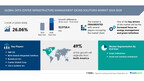
NEW YORK, Nov. 19, 2024 /PRNewswire/ — Report on how AI is redefining market landscape – The global data center infrastructure management (DCIM) solutions market size is estimated to grow by USD 13.72 billion from 2024-2028, according to Technavio. The market is estimated to grow at a CAGR of over 26.06% during the forecast period. Increased focus on energy management and green initiatives is driving market growth, with a trend towards high adoption of IOT, in-built sensors, and edge computing. However, investments in initial infrastructure and related requirements poses a challenge.Key market players include ABB Ltd., BGIS Global Integrated Solutions, Broadcom Inc., Carrier Global Corp., Cisco Systems Inc., CommScope Holding Co. Inc., Device42 Inc., Eaton Corp. Plc, FNT GmbH, Huawei Technologies Co. Ltd., Legrand SA, Modius Inc., Panduit Corp., Rackwise Inc., RF Code Inc., Schneider Electric SE, Siemens AG, Sunbird Inc., Unisys Corp., and Vertiv Holdings Co..
Key insights into market evolution with AI-powered analysis. Explore trends, segmentation, and growth drivers- View Free Sample PDF
Data Center Infrastructure Management (Dcim) Solutions Market Scope
Report Coverage
Details
Base year
2023
Historic period
2018 – 2022
Forecast period
2024-2028
Growth momentum & CAGR
Accelerate at a CAGR of 26.06%
Market growth 2024-2028
USD 13718.4 million
Market structure
Fragmented
YoY growth 2022-2023 (%)
20.31
Regional analysis
North America, APAC, Europe, Middle East and Africa, and South America
Performing market contribution
North America at 49%
Key countries
US, China, UK, India, and Germany
Key companies profiled
ABB Ltd., BGIS Global Integrated Solutions, Broadcom Inc., Carrier Global Corp., Cisco Systems Inc., CommScope Holding Co. Inc., Device42 Inc., Eaton Corp. Plc, FNT GmbH, Huawei Technologies Co. Ltd., Legrand SA, Modius Inc., Panduit Corp., Rackwise Inc., RF Code Inc., Schneider Electric SE, Siemens AG, Sunbird Inc., Unisys Corp., and Vertiv Holdings Co.
Market Driver
Data Center Infrastructure Management (DCIM) solutions have become essential for organizations looking to optimize their data center infrastructure. Trends such as energy efficiency and next-generation DCIM offerings are driving the market forward. Disparate applications and IT assets require accurate configuration and real-time monitoring for successful implementation. Operators seek holistic visibility into critical data centers, including power consumption, temperature, and humidity. Modernization initiatives involve integrating sensors, meters, and environmental sensors for power efficiency and cooling statistics. DCIM providers offer asset management solutions for IT and facility operators, addressing challenges like data accuracy, manual data entry, and typographical mistakes. Functional domains include equipment management, cooling systems, and power management. Major countries in healthcare, telecommunications, development, and economic growth invest in DCIM solutions for infrastructure optimization. Infection risk, construction, social distancing rules, and limited space are driving the need for a hybrid approach. Cloud service providers, colocation data centers, and public clouds are part of the datacenter segment, while cloud management, BI and analytics, and large enterprises dominate the solution segment. Efficient power, cooling, and IT asset management are key concerns for IT administrators, with airflow, power consumption, and temperature monitoring critical for infrastructure availability. AFCOM estimates that IT workloads will continue to grow, requiring new deployments and edge computing solutions. Aircooling methods and smart cities are also driving the market, with policymakers and fiber networks playing a role in cloud and data growth. API integration, data volumes, and processing capacity are essential for service providers, while on-premises DCIM solutions address the complexities of managing physical systems and IT equipment. Investments in capital and operational expenses, site selection, permitting, and facility upkeep are crucial for successful DCIM implementation. Remote work and small data requirements are also driving demand for DCIM solutions. Legacy systems and new deployments require a hybrid approach, with edge technologies, wireless medical, and hyperlocal storage addressing the needs of telecom operators and developers. In conclusion, DCIM solutions are essential for organizations seeking to optimize their data center infrastructure, with energy efficiency, next-generation offerings, and holistic visibility driving market trends. Rackwise, Hyperview, Sunbird Software, and Nlyte Software are leading DCIM providers, offering asset management solutions for IT and facility operators. The market is expected to grow, driven by the increasing demand for efficient power, cooling, and IT asset management.
The Internet of Things (IoT) is driving a significant increase in data traffic, particularly mobile data, leading to a high demand for cloud applications. IoT deployments involve connecting and integrating vast volumes of data from remote assets into existing infrastructure systems. DCIM solutions play a crucial role in managing thermal, power, and cooling, as well as network management for these large data sets. With the growing adoption of IoT and sensors, data centers and DCIM software are evolving to accommodate the changing IT infrastructure requirements of enterprises. Vendors must upgrade their DCIM offerings to meet these needs by enhancing monitoring capabilities.
Request Sample of our comprehensive report now to stay ahead in the AI-driven market evolution!
Market Challenges
Data Center Infrastructure Management (DCIM) solutions have become essential for organizations managing IT and facility operations in data centers. The challenges of energy efficiency, next-generation DCIM offerings, and optimization initiatives require holistic visibility into critical data centers. However, disparate applications and manual data entry can lead to data accuracy issues. Modernization of IT and facility operator systems is crucial for successful implementation. DCIM providers offer functional domains like asset management, monitoring systems, and real-time energy statistics. Equipment such as chillers, cooling towers, and sensors for power usage and environmental conditions are essential. However, challenges persist. Inaccurate data, complexities from data center traffic, IoT technology, and digital transactions can hinder decision-making processes. Rackwise, Hyperview, Sunbird Software, and Nlyte Software are popular DCIM solutions. Investments in data center construction and economic growth, especially in major countries like the US, China, and India, drive the demand for DCIM. Healthcare, telecommunications, development, and economic growth sectors are significant markets. Infection risk, social distancing rules, and limited space in high-density data centers add to the challenges. DCIM solutions cater to on-premises environments, cloud and edge, and datacenter segments. Public clouds, cloud management, BI and analytics, and large enterprises dominate the solution segment. Capital investment and operational expenses are significant considerations. Construction, site selection, permitting, facility upkeep, and capital investment are crucial aspects of data center infrastructure. New deployments, edge computing, telecom operators, and edge technologies are emerging trends. Legacy systems and old properties require modernization. AFCOM estimates that IT workloads will increase, necessitating air cooling methods and smart cities’ development. Policymakers, fiber networks, and API integration are crucial for cloud and data growth. Data volumes, processing capacity, and medium-sized data are other challenges. Compass Datacenters, Compass Quantum, modular data centers, and IT equipment suppliers offer solutions for data center infrastructure optimization. Construction, permitting, and facility upkeep are essential for infrastructure availability. Remote schooling and small data centers are emerging markets. Efficient power usage, carbon emission reduction, and efficient cooling are green initiatives. Cloud computing, internet usage, and internet services drive data center traffic. Complexities from IoT technology, smart devices, and digital transactions necessitate DCIM solutions. In conclusion, DCIM solutions are vital for managing data center infrastructure, addressing energy efficiency, and optimizing resource utilization. Challenges include data accuracy, complexities from IoT technology, and infrastructure availability. DCIM providers offer functional domains, equipment management, and real-time energy statistics to address these challenges. Capital investment, operational expenses, and construction are significant considerations. The future of DCIM lies in cloud and edge computing, large enterprises, and green initiatives.DCIM solutions involve significant investments with a relatively slow return on investment. Vendors offer various pricing models based on rack usage, area, or server numbers. Enterprises carefully consider these costs before making a large investment. The choice lies between on-premises CAPEX implementations and turnkey solutions. Implementation costs often exceed license fees, necessitating a thorough evaluation of the total cost of ownership. Government regulations and the shift towards OPEX investments are driving market growth.
Discover how AI is revolutionizing market trends- Get your access now!
Segment Overview
This data center infrastructure management (dcim) solutions market report extensively covers market segmentation by
End-user1.1 Large enterprises1.2 Small and medium enterprisesApplication2.1 Asset and capacity management2.2 Energy management2.3 Power and cooling management2.4 Network managementGeography3.1 North America3.2 APAC3.3 Europe3.4 Middle East and Africa3.5 South America
1.1 Large enterprises- Large enterprises, such as ABB, BGIS, and FNT, are major contributors to the growth of the global DCIM solutions market. With the increasing need to manage and analyze vast amounts of data effectively, large businesses and scalable infrastructure for their data centers. DCIM solutions enable optimization, increased operational efficiency, and improved overall performance. The adoption of DCIM solutions is driven by the rising demand for more data center capacity and the need to reduce operating costs. Real-time monitoring, advanced analytics, and automation are key features that help large enterprises anticipate and proactively identify security threats. Google and IBM Turbonomic are examples of DCIM solutions that offer real-time monitoring, automation, and alerting for critical facilities infrastructure. The demand for efficient data center management, cost savings, data security, and compliance is fueling the adoption of DCIM solutions by large enterprises. As data center complexity increases and the need for advanced infrastructure management solutions grows, it is expected that large businesses will continue to adopt DCIM solutions, thereby driving market growth during the forecast period.
Download a Sample of our comprehensive report today to discover how AI-driven innovations are reshaping competitive dynamics
Research Analysis
Data Center Infrastructure Management (DCIM) solutions are essential for optimizing the efficiency and availability of data centers. These offerings provide holistic visibility into the physical environment and critical infrastructure, enabling facility operators to manage and monitor their data centers more effectively. Disparate applications and manual data entry can lead to data accuracy issues, typographical mistakes, and transcription errors. Modern DCIM solutions address these challenges by integrating various systems and automating data collection. New technologies, such as artificial intelligence and machine learning, supplement IT operations by providing real-time insights for decision-making processes. Energy efficiency is a key focus area for DCIM, with solutions offering optimization initiatives to reduce energy consumption and costs. Asset management is another critical component, allowing administrators to track and manage IT and facility equipment. On-premises DCIM solutions provide a comprehensive view of the data center, from configuration management to infrastructure availability. Rackwise, Hyperview, Sunbird Software, and Nlyte Software are examples of DCIM vendors offering advanced solutions for data center management.
Market Research Overview
Data Center Infrastructure Management (DCIM) solutions have become essential for organizations seeking to optimize their data center infrastructure and improve energy efficiency. Next generation DCIM offerings provide holistic visibility into critical data centers, including real-time energy usage, environmental sensors, and equipment status. These solutions help organizations manage disparate applications, minimize data accuracy errors from manual data entry and transcription, and enhance infrastructure optimization. Modernization of IT and facility operators’ decision-making processes is a key objective for successful DCIM implementation. In the data center, cooling systems such as chillers and cooling towers, power usage, and cooling statistics are essential components for power efficiency. Computing resources, including cloud servers and edge data, require monitoring to ensure optimal resource utilization. DCIM solutions cater to various functional domains, including IT asset management, power management, and environmental monitoring. The market is witnessing a shift towards Software as a Service (SaaS) and hybrid approaches, which offer flexibility and cost savings. Infrastructure optimization initiatives are driving investments in new deployments and modernization of existing data centers in major countries, particularly in healthcare, telecommunications, and development sectors. The complexities of data center traffic, IoT technology, and digital transactions necessitate efficient power management and cooling methods. Policymakers and social distancing rules have increased the demand for remote work and edge computing, further emphasizing the importance of DCIM solutions. In the on-premises environment, IT workloads and air cooling methods require continuous monitoring to minimize downtime and maintain rack density. AFCOM estimates that the data center market will continue to grow, with a focus on energy efficiency, carbon emission reduction, and efficient power usage. Capital investments and operational expenses are significant considerations for organizations, making it crucial to minimize errors and optimize infrastructure availability. Legacy systems and new deployments require careful site selection, permitting, and facility upkeep to ensure successful implementation.
Table of Contents:
1 Executive Summary
2 Market Landscape
3 Market Sizing
4 Historic Market Size
5 Five Forces Analysis
6 Market Segmentation
End-userLarge EnterprisesSmall And Medium EnterprisesApplicationAsset And Capacity ManagementEnergy ManagementPower And Cooling ManagementNetwork ManagementGeographyNorth AmericaAPACEuropeMiddle East And AfricaSouth America
7 Customer Landscape
8 Geographic Landscape
9 Drivers, Challenges, and Trends
10 Company Landscape
11 Company Analysis
12 Appendix
About Technavio
Technavio is a leading global technology research and advisory company. Their research and analysis focuses on emerging market trends and provides actionable insights to help businesses identify market opportunities and develop effective strategies to optimize their market positions.
With over 500 specialized analysts, Technavio’s report library consists of more than 17,000 reports and counting, covering 800 technologies, spanning across 50 countries. Their client base consists of enterprises of all sizes, including more than 100 Fortune 500 companies. This growing client base relies on Technavio’s comprehensive coverage, extensive research, and actionable market insights to identify opportunities in existing and potential markets and assess their competitive positions within changing market scenarios.
Contacts
Technavio Research
Jesse Maida
Media & Marketing Executive
US: +1 844 364 1100
UK: +44 203 893 3200
Email: media@technavio.com
Website: www.technavio.com/
View original content to download multimedia:https://www.prnewswire.com/news-releases/data-center-infrastructure-management-dcim-solutions-market-to-grow-by-usd-13-72-billion-2024-2028-driven-by-energy-management-focus-with-ai-impacting-market-trends—technavio-302308612.html
SOURCE Technavio
You may like
Technology
Solid Joins Snowflake and Industry Leaders to Advance Open Standards for AI-Ready Semantic Context
Published
51 minutes agoon
July 24, 2026By
The Open Semantic Interchange (OSI) creates a universal semantic framework that enables AI agents, analytics platforms, and data systems to share trusted business context across the modern data ecosystem.
NEW YORK, July 13, 2026 /PRNewswire/ — Solid today announced it is joining the Open Semantic Interchange (OSI), an open source initiative that creates a universal specification for all companies to standardize their fragmented data definitions with an open, vendor-neutral semantic model specification. OSI aims to enhance interoperability across various tools and platforms, offering enterprises a vendor-neutral specification that provides consistent metrics and definitions across dashboards, notebooks, and machine learning models.
OSI is an open source initiative led by Snowflake, the AI Data Cloud company, and ecosystem partners across multiple domains and industries including business intelligence (BI), data governance, data engineering, AI, financial services, and manufacturing. Its goal is to create a common, vendor-agnostic specification that defines semantic metadata in a standard, open format. By facilitating seamless semantic metadata exchange, the initiative will accelerate the adoption of AI and BI tools to streamline operations and reduce complexity. This in turn allows organizations to unify their data definitions, leading to more comprehensive and accurate data analysis and data product sharing to fuel AI innovation.
By joining the Open Semantic Interchange, Solid is committed to the creation of a universal standard that simplifies data operations and accelerates innovation for the broader ecosystem,” said Yoni Leitersdorf, CEO & Co-Founder, Solid. “Our participation ensures that semantic context can automatically move seamlessly across AI agents, data warehouses, BI tools, and analytics platforms – enabling organizations to build reliable AI systems on top of a shared, interoperable understanding of their business, without vendor lock-in.”
As a member of OSI, Solid is helping to build a transparent and community-driven standard for semantic model sharing, ensuring that business metrics and definitions remain consistent and interoperable.
“Unlocking the full potential of data and AI requires a common foundation, and the Open Semantic Interchange is the critical step in building that bedrock,” said Josh Klahr, Director of Analytics Product Management at Snowflake. “Our collaboration with partners like Solid establishes a unified, vendor-neutral standard for semantic data, ensuring clarity and consistency across the entire ecosystem. This initiative is essential for simplifying data operations, fostering innovation, and preparing organizations to build the next generation of AI applications.”
OSI is poised to revolutionize interoperability within the data and AI ecosystem by providing a transparent, community-driven standard. This collaborative effort simplifies data operations, unlocks new possibilities for innovation, and gives organizations the flexibility and efficiency they need to build a future-ready data infrastructure.
To learn more about the Open Semantic Interchange visit Snowflake’s blog here.
About Solid
Solid is the AI-native context layer for enterprise AI, automatically creating, evaluating, and maintaining the semantic context AI agents need to understand and act on business data reliably. Unlike legacy semantic layers built for dashboards and manual modeling, Solid continuously benchmarks accuracy, detects data changes, and keeps AI systems aligned as the business evolves. The result is faster deployment of trusted AI agents, workflows, and analytics across any data warehouse or AI platform.
To learn more about Solid, visit getsolid.ai
Media Contact: Blair Bader, blairb@getsolid.ai
View original content to download multimedia:https://www.prnewswire.com/news-releases/solid-joins-snowflake-and-industry-leaders-to-advance-open-standards-for-ai-ready-semantic-context-302834217.html
SOURCE Solid Data, Inc
Technology
Orbis Marks 30 Years of Advancing Eye Health in Vietnam Through Long-Term Partnership and Training
Published
51 minutes agoon
July 24, 2026By
Flying Eye Hospital project in Da Nang, supported by FedEx, advances locally led eye care and expands access across Central Vietnam and the Central Highlands.
DA NANG, Vietnam, July 24, 2026 /PRNewswire/ — Global eye care nonprofit Orbis International is marking three decades of collaboration with Vietnam’s eye health community, a long-term partnership that has helped build local expertise, strengthen institutions, expand access to care, and support Vietnam’s growing leadership in eye health across the Asia-Pacific region.
The arrival of the Orbis Flying Eye Hospital in Da Nang represents the next chapter in that partnership. At the invitation of Da Nang Eye Hospital and with approval from the People’s Committee of Da Nang City, and support from Da Nang Department of Health, and other relevant departments and local authorities, the project will serve as a platform for hands-on training, innovation, and knowledge exchange. Through clinical training and mentorship across key specialties, the project will help approximately 230 eye care professionals build skills that will benefit communities for years to come, while supporting access to specialized services for nearly 9 million people in Central Vietnam and the Central Highlands.
Cybersight, Orbis’s telemedicine and e-learning platform, is an integral part of every Flying Eye Hospital project—connecting in-person training with continuous learning before and after the aircraft is on site. Through Cybersight, participants can prepare in advance, consult with global experts, access ongoing education, and continue building skills long after the project concludes, extending the impact of the Flying Eye Hospital far beyond the aircraft itself.
“This project is not a standalone intervention; it is the latest chapter in a long-term partnership to advance Vietnam’s eye health system,” said Ngoc Pham, Orbis Vietnam Country Director. “The most important outcome is not what Orbis has done in Vietnam, but what Vietnamese institutions and eye care professionals now lead themselves. Our role at Orbis is increasingly to support, convene, innovate, and accelerate that local leadership so progress continues long after the Flying Eye Hospital departs.”
“Around the world, Orbis is focused on creating lasting change by investing in people, institutions, technology, and local leadership,” said Kathleen Sherwin, President and CEO of Orbis International. “The Flying Eye Hospital is one part of that larger model—bringing intensive, hands-on training together with tools like Cybersight, artificial intelligence (AI), and research so local teams can continue improving care long after a project ends. Vietnam shows what is possible when long-term partnership helps proven solutions take root and scale.”
Building on decades of progress, Vietnam is emerging as a regional leader in eye health, with particular strengths in pediatric care, diabetic retinopathy, retinopathy of prematurity, workforce development, and technology-enabled care. Its growing experience in AI-supported screening, implementation, research, and evidence generation can help inform eye health progress across the Asia-Pacific region.
FedEx, a long-time supporter of Orbis, and a title sponsor for this Flying Eye Hospital project in Vietnam, donated the MD-10 aircraft that serves as the Flying Eye Hospital and continues to provide essential logistical, financial, and operational support. Volunteer pilots from FedEx fly the aircraft to its destinations around the globe. FedEx is represented on the Orbis International Board of Directors.
“At FedEx, we believe that connecting people goes beyond delivering packages – it is about creating opportunities and helping communities thrive,” said Ee-Hui Tan, managing director of FedEx Vietnam and Cambodia. “We are proud to support the return of the Orbis Flying Eye Hospital to Vietnam. Together with Orbis, we are investing in the knowledge and skills of healthcare professionals, helping strengthen Vietnam’s eye care system so more patients can access quality care closer to home.”
Underscoring Orbis’s commitment to high-quality training and patient care, QUAD A, a nonprofit accreditation organization, works with Orbis to ensure that the Flying Eye Hospital meets rigorous standards that prioritize patient safety.
Over the past 30 years, Orbis has supported the training of more than 40,000 eye care professionals and helped expand access to care for millions of people across Vietnam. Today, Vietnamese institutions and professionals are increasingly leading innovation and delivering high-quality care independently, demonstrating the impact of sustained investment in local capacity, technology, and systems change.
Looking ahead, Orbis will continue working with partners across Vietnam to scale proven solutions through workforce development, technology, Cybersight, AI-supported screening, research, and stronger health systems—so that more people can receive quality eye care closer to home.
Orbis in Vietnam
Since beginning work in Vietnam in 1996, Orbis has worked alongside government partners, hospitals, and training institutions to expand access to quality eye care and build sustainable local capacity. Cumulative impact includes:
More than 40,000 eye care professionals trained.More than 5.2 million people reached with eye care services.More than 139,000 sight-saving surgeries supported.17 retinopathy of prematurity centers supported.12 vision centers strengthened to bring care closer to communities.National clinical guidelines supported across priority eye health areas.Cybersight and AI-supported screening deployed to expand training, consultation, and early detection.
This work has supported national clinical guidelines, stronger referral pathways, improved treatment outcomes, and new models of care in areas including retinopathy of prematurity, pediatric eye care, school eye health, cataract, diabetic retinopathy, and glaucoma.
As the partnership continues, Orbis and its partners are focused on scaling proven solutions through workforce development, technology, Cybersight, AI, research, and stronger health systems—so that everyone can access quality eye care closer to home.
About Orbis International
Orbis International works around the world to prevent blindness and restore sight for children and adults in places where eye care is out of reach—so vision problems don’t make it harder to learn, earn a living, or enjoy life. Around 1.1 billion people live with vision loss, but with the right care, 90% of it is completely avoidable. That is why Orbis trains doctors, nurses, and other eye care professionals to provide care in their own communities—and works to make sure people of all ages can access the eye exams, glasses, medicine, and surgeries they need to protect and restore their sight. Orbis began this work more than 40 years ago with the Flying Eye Hospital, a teaching hospital on a plane that brings expert training and care where they’re needed most. Today, we also work with local hospitals and clinics across Africa, Asia, and Latin America to make eye care available to more people, and we use and develop technology—like our award-winning Cybersight e-learning and telehealth platform, artificial intelligence screening, and virtual reality training—to help eye care teams treat patients more effectively. Orbis ranks in the top 3% of U.S. charities, having earned top marks for transparency and accountability from Charity Navigator, GuideStar, and the Better Business Bureau. To learn more, please visit orbis.org
About FedEx Corp.
FedEx Corp. provides customers and businesses worldwide with a broad portfolio of transportation, e-commerce, and business services. With annual revenue of $92 billion, the company offers integrated business solutions utilizing its flexible, efficient, and intelligent global network. Consistently ranked among the world’s most admired and trusted employers, FedEx inspires its more than 500,000 employees to remain focused on safety, the highest ethical and professional standards, and the needs of their customers and communities. FedEx is committed to connecting people and possibilities around the world responsibly and resourcefully, with a goal to achieve carbon-neutral operations by 2040. To learn more, please visit fedex.com/about.
Media Contacts
Orbis Vietnam
Nhung Nguyen
Communications Officer
Nhung.nguyen@orbis.org
+84 0904562983
Orbis International
Jenna Montgomery
Interim Lead, Global Communications and Marketing
Jenna.montgomery@orbis.org
FedEx
Heather Harshbarger
Communications Advisor
+1 901-690-9869
View original content to download multimedia:https://www.prnewswire.com/news-releases/orbis-marks-30-years-of-advancing-eye-health-in-vietnam-through-long-term-partnership-and-training-302834196.html
SOURCE Orbis International
Technology
In HelloNation, Property Management Expert Karen Nolan Explains What Property Managers Do for Landlords
Published
51 minutes agoon
July 24, 2026By
The article outlines how property management services support landlords through tenant screening, maintenance, and lease enforcement.
MENIFEE, Calif., July 24, 2026 /PRNewswire/ — What do property managers actually do for landlords in Menifee, CA? HelloNation has published an article that provides clear answers and practical insight into the full scope of property management services.
The HelloNation article explains that a property manager handles far more than rent collection. Property management services begin with marketing vacancies and attracting qualified renters in Menifee, CA. The article explains how tenant screening plays a central role in protecting landlords by carefully evaluating applicants and reducing the risk of future issues.
According to the article, tenant screening helps ensure that each tenant meets financial and behavioral expectations. This step supports stable occupancy and reduces turnover, which is critical for any landlord managing property in Menifee, CA. Property Management Experts note that consistent tenant screening also helps maintain the long-term value of rental properties.
Once tenants are placed, the article outlines how a property manager becomes the main point of contact. Property management services include responding to tenant concerns, handling communication, and enforcing leases. By managing these responsibilities, the property manager allows the landlord to avoid direct disputes and maintain professional distance.
The article emphasizes that lease enforcement is essential to protecting both the property and the agreement. Property managers monitor compliance with lease terms and address violations when necessary. This structured approach helps landlords in Menifee, CA, maintain order and consistency across their rental properties.
Maintenance is another major focus of property management services. The article explains that property managers coordinate maintenance and oversee property repairs to keep homes safe and functional. While they may not perform repairs themselves, they manage vendors, schedule work, and respond to urgent issues quickly.
The article notes that timely maintenance and property repairs prevent small issues from becoming larger and more expensive problems. This proactive approach supports tenant satisfaction while preserving the property’s condition. Property Management Experts highlight that consistent maintenance planning is a key benefit for any landlord.
Beyond daily operations, the HelloNation article describes the administrative side of property management services. A property manager prepares leases, maintains records, and ensures compliance with local and state regulations in Menifee, CA. This includes staying informed about legal requirements that affect landlords and rental properties.
Financial oversight is also part of the role. The article explains that property managers handle rent collection, manage deposits, and provide regular financial reporting. These services give landlords a clear understanding of property performance without requiring constant involvement.
For landlords who own multiple properties or live outside Menifee, CA, the article highlights the value of professional property management services. A property manager helps streamline operations, coordinate maintenance, and ensure that lease enforcement and tenant screening are handled consistently. This reduces stress while improving efficiency.
The article concludes that understanding the full role of a property manager helps landlords make informed decisions about their level of involvement. With responsibilities that include tenant screening, maintenance, lease enforcement, and property repairs, property management services offer a comprehensive solution for effectively managing rental properties.
What Do Property Managers Actually Do for Landlords in Menifee features insights from Karen Nolan, Property Management Experts of Menifee, California, in HelloNation.
About HelloNation
HelloNation is a premier media platform that connects readers with trusted professionals and businesses across various industries. Through its innovative “edvertising” approach that blends educational content with storytelling, HelloNation delivers expert-driven, good-news articles that inform, inspire, and empower. Covering topics from home improvement and health to business strategy and lifestyle, HelloNation highlights leaders making a meaningful impact in their communities.
View original content to download multimedia:https://www.prnewswire.com/news-releases/in-hellonation-property-management-expert-karen-nolan-explains-what-property-managers-do-for-landlords-302753105.html
SOURCE HelloNation
Solid Joins Snowflake and Industry Leaders to Advance Open Standards for AI-Ready Semantic Context
Orbis Marks 30 Years of Advancing Eye Health in Vietnam Through Long-Term Partnership and Training
In HelloNation, Property Management Expert Karen Nolan Explains What Property Managers Do for Landlords
Send Rakhi to UK swiftly with UK Gifts Portal
Whiteboard Series with NEAR | Ep: 45 Joel Thorstensson from ceramic.network
New Gooseneck Omni Antennas Offer Enhanced Signals in a Durable Package
Why You Should Build on #NEAR – Co-founder Illia Polosukhin at CV Labs
Whiteboard Series with NEAR | Ep: 45 Joel Thorstensson from ceramic.network
NEAR End of Year Town Hall 2021: The Open Web World, MetaBUILD 2 Hackathon and 2021 recap
Trending
-
Technology5 days ago“Every Day CO₂ Challenge”: More Than a Game, A New Way of Learning
-
Coin Market5 days agoWill the US get CLARITY this week? Bitcoin’s new $80K target: Hodler’s Digest, July 19
-
Technology4 days agoTrakka Systems to Demonstrate Advanced ISR Capabilities at Farnborough International Airshow 2026
-
Coin Market5 days agoSaylor turns up heat with ‘110 reasons’ why BIP-110 is a bad idea
-
Technology5 days ago
China-Europe Youth Exchange Campaign: When Fashion Meets Football — A Green Pitch Appointment for Cross-Cultural Dialogue
-
Technology5 days agoPowering ASEAN’s Manufacturing Transformation: IME 2026 Connects Technology, Industry and Opportunity
-
Technology4 days agoSigneasy expands beyond eSignatures with Intelligent Contract Management for growing businesses
-
Technology5 days agoDBS named Asia’s Best Digital Bank by Euromoney, recognised for its AI leadership and responsible innovation