Connect with us

Technology

Machine Vision Camera Market to Grow by USD 1.74 Billion (2024-2028), Driven by Rising Demand in Non-Industrial Sectors, AI Redefining Market Landscape – Technavio

Published

on

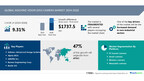
NEW YORK, Nov. 22, 2024 /PRNewswire/ — Report with market evolution powered by AI – The global machine vision (MV) camera market size is estimated to grow by USD 1.74 billion from 2024-2028, according to Technavio. The market is estimated to grow at a CAGR of over 9.31% during the forecast period. Increased demand in non-industrial sectors is driving market growth, with a trend towards augmented demand for smart cameras. However, high cost of implementation poses a challenge.Key market players include Adimec Advanced Image Systems bv, Alpha MOS, AMETEK Inc., Banner Engineering Corp., Basler AG, Baumer Holding AG, Cognex Corp., Datalogic SpA, Decision Technology LLC, Hangzhou Hikvision Digital Technology Co. Ltd., Hitachi Ltd., Intel Corp., JAI AS, Keyence Corp., National Instruments Corp., OMRON Corp., SICK AG, Sony Group Corp., Teledyne Technologies Inc., and TKH Group NV.

Key insights into market evolution with AI-powered analysis. Explore trends, segmentation, and growth drivers- View Free Sample PDF

Machine Vision (Mv) Camera Market Scope

Report Coverage

Details

Base year

2023

Historic period

2018 – 2022

Forecast period

2024-2028

Growth momentum & CAGR

Accelerate at a CAGR of 9.31%

Market growth 2024-2028

USD 1737.5 million

Market structure

Fragmented

YoY growth 2022-2023 (%)

8.31

Regional analysis

APAC, North America, Europe, Middle East and Africa, and South America

Performing market contribution

APAC at 47%

Key countries

US, China, Japan, Germany, and Canada

Key companies profiled

Adimec Advanced Image Systems bv, Alpha MOS, AMETEK Inc., Banner Engineering Corp., Basler AG, Baumer Holding AG, Cognex Corp., Datalogic SpA, Decision Technology LLC, Hangzhou Hikvision Digital Technology Co. Ltd., Hitachi Ltd., Intel Corp., JAI AS, Keyence Corp., National Instruments Corp., OMRON Corp., SICK AG, Sony Group Corp., Teledyne Technologies Inc., and TKH Group NV

Market Driver

Machine Vision (MV) cameras, also known as machine vision cameras, are essential tools in various industries for tasks like position guidance, measurement, identification, and pattern recognition. Smart cameras and PC-based cameras lead the market, with wireless, wearable, and UAV-based cameras gaining traction. Trends include automation in manufacturing, agriculture drones, 3D modeling, and AI-driven image recognition algorithms. Strategic partnerships and advanced manufacturing technologies, such as digital sensors and USB3 cameras, fuel growth. Applications span from quality assurance in manufacturing industries to inspection in aerospace and transportation. Lens types, including wideangle, normal, telephoto, and wide area lenses, cater to diverse needs. Emerging areas include autonomous vehicles, parking cameras, CMS cameras, SVS cameras, barcode scanners, and 3D imaging cameras. Production capacity is expanding, driven by increasing demand for automation technology in industries like semiconductors, electric vehicles, and connected vehicles. 

Smart cameras play a significant role in Machine Vision (Mv) systems by digitizing and transferring frames for analysis. These cameras have an embedded image sensor and are custom-built for specialized applications with space constraints. They are used for various automated functions, either as a supplement to multi-part Mv systems or as standalone image-processing units. Smart cameras are a cost-effective and user-friendly option for industrial production, particularly for inspection and quality assurance. Their compact size makes them ideal for manufacturing operations seeking to streamline automation methods or integrate vision systems. Smart cameras are increasingly popular in industries for enhancing productivity and ensuring consistent product quality. 

Request Sample of our comprehensive report now to stay ahead in the AI-driven market evolution!

Market Challenges

The Machine Vision (MV) camera market is experiencing significant growth due to increasing demand for automation and quality assurance in various industries. Key applications include position guidance, measurement, identification, and pattern recognition in manufacturing, smart manufacturing, and advanced manufacturing processes. Challenges in this market include the need for high-speed image recognition algorithms, smart cameras, and PC-based cameras for wireless and wearable applications. Strategic partnerships, USB3 cameras, and advanced automation technology are driving innovation in this space. MV cameras play a crucial role in industries such as aerospace, transportation, semiconductors, and agriculture drones, enabling 3D modeling, microscopy, and inspection. Lens types like wideangle, normal, telephoto, and wide area lenses cater to diverse applications. The market is also witnessing growth in UAV-based inspections for power lines, facilities, and quality tests in manufacturing operations. The compact footprint and embedded image processing capabilities of MV cameras make them ideal for industrial production and automation technology in electric vehicles, connected vehicles, and autonomous vehicles. Barcode scanners, 3D imaging cameras, line scan cameras, and CMS/SVS cameras are other important MV camera types.Machine vision systems incorporate cameras, software, and advanced technologies for image analysis in various industries. The cost of these systems is substantial, presenting a challenge for small and medium-sized enterprises (SMEs) in both developed and developing countries. Customization and operational requirements increase the overall expense. End-users tailor their machine vision systems to specific applications, incurring additional costs for servicing. Smart cameras, equipped with advanced technologies for image clarity and precision, also carry a high base price. These factors may hinder the adoption of machine vision systems by some businesses.

Discover how AI is revolutionizing market trends- Get your access now!

Segment Overview

This machine vision (mv) camera market report extensively covers market segmentation by

Platform1.1 PC based camera1.2 Smart camera1.3 Wireless camera1.4 Wearable cameraType2.1 Line scan2.2 Area scan2.3 3D scan camerasGeography3.1 APAC3.2 North America3.3 Europe3.4 Middle East and Africa3.5 South America

1.1 PC based camera- PC-based machine vision systems offer flexible interfacing with direct-connect cameras or image acquisition boards, and are backed by configurable application software. These systems boast efficient processing power, enabling them to handle complex operations swiftly. The broader range of capabilities allows PC systems to compensate for unexpected variables in tasks. In August 2020, Omron Automation Americas introduced a new machine vision solutions package for PC-based systems. The FJ2 cameras boast advanced CMOS sensors, frame rates of up to 282 FPS, and resolutions from 0.4 MP to 5 MP in monochrome and color versions. This new product launch is expected to bolster market growth during the forecast period.

Download a Sample of our comprehensive report today to discover how AI-driven innovations are reshaping competitive dynamics

Research Analysis

Machine Vision (MV) cameras are advanced imaging devices designed to process and analyze visual information in real-time. They are essential components of machine vision systems used in various industries for position guidance, measurement, and pattern recognition. MV cameras come in different types, including smart cameras, wireless cameras, wearable cameras, parking cameras, CMS cameras, SVS cameras, barcode scanners, 3D imaging cameras, and line scan cameras. Each type caters to specific applications. Lens type is another crucial factor, with wide-angle lenses providing a broader field of view and normal lenses offering a more standard perspective. MV cameras are integrated into handheld systems, robotic systems, and production lines to enhance automation and improve product quality.

Market Research Overview

Machine Vision (MV) cameras, also known as machine vision cameras, are advanced imaging devices designed for automating industrial processes through position guidance, measurement, identification, and pattern recognition. They employ imagerecognition algorithms to analyze data from digital sensors and provide solutions for industries such as manufacturing, aerospace, transportation, and agriculture. MV cameras come in various forms, including smart cameras, PC-based cameras, wireless cameras, wearable cameras, and more. Advanced manufacturing industries, including smart factories and automated production lines, heavily utilize MV cameras for quality assurance, inspection, and automation. Applications range from microscopy and barcode scanning to 3D modeling and autonomous vehicle parking cameras. Strategic partnerships and the adoption of AI and machine learning technologies continue to drive innovation in the MV camera market. MV cameras are available in various types, including smart camera-based systems, advanced manufacturing solutions, and specialized applications like line scan cameras, 3D imaging cameras, and UAV-based inspections. Lens types, such as wideangle, normal, telephoto, and wide area lenses, cater to different use cases. With a compact footprint and high production capacity, MV cameras are essential tools for industrial operations and quality tests, enabling the identification of components and ensuring efficient, accurate, and consistent manufacturing processes.

Table of Contents:

1 Executive Summary
2 Market Landscape
3 Market Sizing
4 Historic Market Size
5 Five Forces Analysis
6 Market Segmentation

PlatformPC Based CameraSmart CameraWireless CameraWearable CameraTypeLine ScanArea Scan3D Scan CamerasGeographyAPACNorth AmericaEuropeMiddle East And AfricaSouth America

7 Customer Landscape
8 Geographic Landscape
9 Drivers, Challenges, and Trends
10 Company Landscape
11 Company Analysis
12 Appendix

About Technavio

Technavio is a leading global technology research and advisory company. Their research and analysis focuses on emerging market trends and provides actionable insights to help businesses identify market opportunities and develop effective strategies to optimize their market positions.

With over 500 specialized analysts, Technavio’s report library consists of more than 17,000 reports and counting, covering 800 technologies, spanning across 50 countries. Their client base consists of enterprises of all sizes, including more than 100 Fortune 500 companies. This growing client base relies on Technavio’s comprehensive coverage, extensive research, and actionable market insights to identify opportunities in existing and potential markets and assess their competitive positions within changing market scenarios.

Contacts

Technavio Research
Jesse Maida
Media & Marketing Executive
US: +1 844 364 1100
UK: +44 203 893 3200
Email: media@technavio.com
Website: www.technavio.com/

View original content to download multimedia:https://www.prnewswire.com/news-releases/machine-vision-camera-market-to-grow-by-usd-1-74-billion-2024-2028-driven-by-rising-demand-in-non-industrial-sectors-ai-redefining-market-landscape—technavio-302313478.html

SOURCE Technavio

Continue Reading
Click to comment

Leave a Reply

Your email address will not be published. Required fields are marked *

Technology

Workday Adaptive Planning Achieves FedRAMP Moderate Authorization to Support Federal Workforce and Budget Planning

Published

on

By

New Milestone Helps Federal Agencies Plan Workforce and Budgets in One Secure, Modern System

WASHINGTON, July 23, 2026 /PRNewswire/ — Workday Government, a wholly owned subsidiary of Workday, Inc. (NASDAQ: WDAY), the enterprise AI platform for HR, finance, and IT, today announced that Workday Adaptive Planning has achieved FedRAMP Authorization at the Moderate Impact Level. The authorization confirms that Workday Adaptive Planning meets the security and compliance standards required to handle sensitive, unclassified federal data, giving agencies a secure, compliant foundation for modern planning.

Federal agencies are under pressure to do more with less, manage costs, and maintain clear records of their decisions. Yet disconnected data, legacy systems, and manual spreadsheet work can make it hard to understand how organizational decisions affect the workforce. Workday Adaptive Planning helps agencies modernize planning by bringing workforce planning, budgeting, and forecasting together so agencies can plan with connected workforce and financial data.

“Federal agencies must align their people, funding, and priorities to deliver their missions effectively,” said Lynn Martin, general manager, Workday Government. “With FedRAMP Moderate authorization, Workday Adaptive Planning gives agencies the secure foundation they need to unify workforce and financial planning. This clarity allows leaders to evaluate trade-offs, allocate resources with impact, and prepare confidently for what lies ahead.”

With Workday Adaptive Planning, agencies can model and assess the workforce implications of organizational change, such as hiring freezes, budget reductions, or reorganizations, to understand the potential effects on headcount, costs, project timelines, and mission readiness. Agencies can also use workforce data to identify talent trends and skills gaps. Finance teams can evaluate competing program requests, allocate costs across funds and programs, monitor budgets throughout the procurement lifecycle, and identify potential overruns earlier. Built-in audit capabilities and FIPS 140-3 compliant security help agencies strengthen fiscal discipline, maintain compliance, and make faster, better-informed decisions.

“Federal agencies need a planning tool they can trust to protect their data and still move fast,” said Ben Pierce, general manager, Workday Adaptive Planning. “With FedRAMP authorization, Workday Adaptive Planning gives them a secure, modern way to make budgeting and workforce planning less painful and a lot more useful.”

As part of Workday Government Cloud, Workday Adaptive Planning works alongside Workday human capital management and financial solutions, helping agencies plan with connected data. By bringing planning into the same platform that powers HR and finance, Workday Government helps agencies move beyond systems that simply record work to a modern, connected foundation for planning safely and collaboratively.

Workday Adaptive Planning is expected to be available to Workday Government customers in early 2027.

For More Information

Explore how Workday Adaptive Planning gives government organizations the power to plan, budget, and forecast the future here.Learn about the mission of Workday Government here.

About Workday Government
Workday Government is a wholly owned subsidiary of Workday, the enterprise AI platform for HR, finance, and IT. Workday Government is dedicated to serving the U.S. government by unifying HR and finance on one intelligent platform with AI at the core, empowering agencies at every level with the clarity, confidence, and insights they need to adapt quickly, make better decisions, and deliver on their missions. Workday Government supports a range of agencies across the civilian, defense, and intelligence communities. For more information about Workday Government, visit workday.com/federal. For more information about Workday visit workday.com.

Forward-Looking Statements
This press release contains forward-looking statements including, among other things, statements regarding Workday’s plans, beliefs, and expectations. These forward-looking statements are based only on currently available information and our current beliefs, expectations, and assumptions. Because forward-looking statements relate to the future, they are subject to inherent risks, uncertainties, assumptions, and changes in circumstances that are difficult to predict and many of which are outside of our control. If the risks materialize, assumptions prove incorrect, or we experience unexpected changes in circumstances, actual results could differ materially from the results implied by these forward-looking statements, and therefore you should not rely on any forward-looking statements. Risks include, but are not limited to, risks described in our filings with the Securities and Exchange Commission (“SEC”), including our most recent report on Form 10-Q or Form 10-K and other reports that we have filed and will file with the SEC from time to time, which could cause actual results to vary from expectations. Workday assumes no obligation to, and does not currently intend to, update any such forward-looking statements after the date of this release, except as required by law.

Any unreleased services, features, or functions referenced in this document, our website, or other press releases or public statements that are not currently available are subject to change at Workday’s discretion and may not be delivered as planned or at all. Customers who purchase Workday services should make their purchase decisions based upon services, features, and functions that are currently available.

View original content to download multimedia:https://www.prnewswire.com/news-releases/workday-adaptive-planning-achieves-fedramp-moderate-authorization-to-support-federal-workforce-and-budget-planning-302833362.html

SOURCE Workday Inc.

Continue Reading

Technology

Ontinue Wins Gold Stevie® Award for Advancing the Future of Managed Security Operations

Published

on

By

Recognition Honors the Innovation Behind Ontinue’s Agentic SOC, Where AI Agents And Expert Cyber Defenders Work Together to Deliver Autonomous, Governed Security Operations

ZURICH, July 23, 2026 /PRNewswire/ — Ontinue, a leading MXDR partner providing nonstop managed security operations through its Agentic SOC, today announced it received a Gold Stevie® for Technology Excellence Award, recognizing the innovation behind its ION MXDR platform and Agentic SOC. The award was presented in the New Product of the Year – Information Technology (Cybersecurity) category, honoring Ontinue’s continued advancement of AI-powered security operations.

Ontinue was recognized for pioneering the Agentic SOC, a new operating model that treats security decision-making itself as software: governed, measurable, and built to scale with attackers who now operate at machine speed. Rather than layering AI onto existing workflows, Ontinue re-engineered its ION MXDR platform around a multi-agent architecture, with specialized agents spanning threat hunting, investigation, response, and posture hardening, that reason over each customer’s accumulated context and progressively take on more decision-making as trust is earned, while Ontinue’s Cyber Defenders retain governance and accountability throughout.

Ontinue defines an Agentic SOC as a security operations model in which software agents progressively assume responsibility for security decisions and actions, under continuous human governance, using accumulated context, policy, and learned behavior. In December 2024, this model went live in production for every ION MXDR customer, extending autonomous investigation to Tier 2-level incidents for the first time in the industry. The result is a platform that acts less like a tool and more like a team.

Ontinue’s Agentic SOC, by the numbers:

Autonomously investigates incidents within minutesCuts mean time to investigate by 50 percentResolves 99.5 percent of incidents without customer involvementDrives median response time for high-severity incidents under nine minutesPre-approves 97 percent of response actions, based on trust earned directly from customers

For Ontinue’s customers, that translates directly into business outcomes, such has stronger Secure Scores, security teams freed from alert fatigue, and hundreds of analyst hours returned to work that actually moves the business forward.

“The cybersecurity industry doesn’t need more AI features, it needs a fundamentally better way to operate security,” said Moritz Mann, Chief Executive Officer at Ontinue. “This recognition validates the work our teams have done over the past two years to transform AI from an assistant into a trusted operational capability. It’s recognition of an operating model that is already delivering measurable outcomes for customers every day.”

“We congratulate all of the winners in the third annual Stevie® Awards for Technology Excellence for their outstanding achievements,” said Stevie Awards President Maggie Miller. “Their innovations are helping shape the future of technology across every industry, and we look forward to celebrating their success on October 28.”

The Stevie Awards for Technology Excellence celebrate the remarkable accomplishments of individuals, teams, and organizations shaping the future of technology across all industry sectors. More than 700 nominations from organizations of all sizes in 37 nations and territories were submitted this year for consideration in a wide range of tech-related categories. More than 180 professionals worldwide participated in the judging process to select this year’s honorees.

Details about the Stevie Awards for Technology Excellence and the list of 2026 Stevie winners are available at http://Tech.StevieAwards.com.

About Ontinue
As a leading provider of AI-powered managed security operations, Ontinue is on a mission to give every organization the freedom to focus on what they do best; by making nonstop security excellence accessible, not just aspirational. By combining advanced AI with deep human expertise, Ontinue delivers managed security operations that are tailored to each organization’s unique environment, operational needs, and risk profile.

Ontinue’s ION SecOps Platform integrates AI-driven insights, automation, and real-time collaboration to continuously prevent, detect, and respond to threats. With deep expertise in Microsoft security technologies, Ontinue helps customers maximize the value of their existing investments while achieving stronger, more scalable security outcomes.

Continuous protection. AI-powered Nonstop SecOps. That’s Ontinue.

About the Stevie Awards
Stevie Awards are conferred in nine programs: the Asia-Pacific Stevie Awards, the German Stevie Awards, the Middle East & North Africa Stevie Awards, The American Business Awards®, The International Business Awards®, the Stevie Awards for Great Employers, the Stevie Awards for Women in Business, the Stevie Awards for Technology Excellence and the Stevie Awards for Sales & Customer Service. Stevie Awards competitions receive more than 12,000 entries each year from organizations in more than 70 nations. Honoring organizations of all types and sizes and the people behind them, the Stevies recognize outstanding performances in the workplace worldwide. Learn more about the Stevie Awards at http://www.StevieAwards.com.

CONTACT: Alison Raymond, araymond@ontinue.com 

View original content to download multimedia:https://www.prnewswire.com/news-releases/ontinue-wins-gold-stevie-award-for-advancing-the-future-of-managed-security-operations-302833367.html

SOURCE Ontinue

Continue Reading

Technology

New Harris Poll and Ruth AI Study: 81% of Americans Would Let an AI Agent Handle Part of Their Job Search

Published

on

By

Nearly half would let AI negotiate their salary, while 76% have never heard that AI can provide biased career guidance

SAN FRANCISCO, July 23, 2026 /PRNewswire/ — Artificial intelligence has become a mainstream source of career and financial advice for American workers, according to a national survey of 2,131 U.S. adults conducted by The Harris Poll in collaboration with Ruth AI, the AI career strategist built for women.

The full study, The Trust Gap, is available at https://ruthapp.ai/research and has already drawn coverage from Fast Company.

Nearly half of Americans (45%) have used an AI platform such as ChatGPT, Claude, or Gemini for career or work-related advice. That rises to 66% of Millennials and 63% of Gen Z. One in three U.S. adults has used AI for advice about money at work, including salary, raises, bonuses, or negotiating pay.

Americans are also increasingly willing to let AI act on their behalf. Eighty-one percent would be comfortable having an AI agent handle at least one part of a job search, climbing to 90% of Millennials. A majority would let AI search for jobs (67%), conduct pre-interview research (67%), update their resume (65%), or apply for jobs outright (55%). Nearly half would let AI negotiate their benefits (49%) or salary (47%).

Yet awareness of the technology’s documented limitations remains low. Three in four Americans (76%) had never heard that independent research has found AI can produce biased career and salary guidance. Seventy-two percent agree that AI can sound confident even when its advice turns out to be wrong.

“Americans are handing AI some of the most consequential decisions of their working lives, from the job search to the salary ask, while most have never heard that the guidance can carry bias,” said Valerie Chapman, founder and CEO of Ruth AI. “We are delegating faster than we are asking questions. The responsibility now falls on the people building AI to earn the trust users are already giving it.”

About the Survey

The survey was conducted online within the United States by The Harris Poll from June 11-13, 2026, among a nationally representative sample of 2,131 U.S. adults, including 420 Gen Z adults, 620 Millennials, 519 Gen X adults, and 572 Baby Boomers. Data were weighted to the U.S. general adult population. Some questions were asked only of respondents who had used AI for the relevant purpose. References to research on biased AI guidance refer to external academic research (Sorokovikova, Chizhov, Eremenko & Yamshchikov, 2025; arXiv:2506.10491) and are not findings measured by this survey.

About The Harris Poll Thought Leadership Practice

Building on more than 60 years of experience pulsing societal opinion, The Harris Poll Thought Leadership Practice designs research that is credible, creative, and culturally relevant, driving thought leadership and uncovering trends for today’s biggest brands.

About Ruth AI

Ruth AI is an AI career strategist built for women, on a mission to close the $1.6 trillion gender wage gap. Based in San Francisco, Ruth AI is building a suite of AI agents that help women build personal brands, negotiate their worth, and launch their businesses. Learn more at https://ruthapp.ai.

Media Contact

Valerie Chapman
Founder and CEO, Ruth AI
419380@email4pr.com
786-375-1110

View original content to download multimedia:https://www.prnewswire.com/news-releases/new-harris-poll-and-ruth-ai-study-81-of-americans-would-let-an-ai-agent-handle-part-of-their-job-search-302833298.html

SOURCE Ruth AI

Continue Reading

Trending