Connect with us

Technology

North America’s Optometry Software Market to Grow by USD 576.62 Million (2024-2028), Driven by Rising Ophthalmic Disease Cases, AI Redefining Market Landscape – Technavio

Published

on

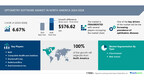
NEW YORK, Nov. 22, 2024 /PRNewswire/ — Report with market evolution powered by AI – The optometry software market in north america size is estimated to grow by USD 576.62 million from 2024-2028, according to Technavio. The market is estimated to grow at a CAGR of 6.67% during the forecast period. Increasing prevalence of ophthalmic diseases is driving market growth, with a trend towards growing ophthalmology market. However, rising medical data privacy concerns poses a challenge.Key market players include Barti, Compulink Healthcare Solutions, Doctorsoft Corp., EssilorLuxottica, EverCommerce Inc., Eye Care Leaders, First Insight Corp., Health Innovation Technologies Inc., iTRUST.IO LLC , LiquidEHR Inc., MacPractice, Nextech Systems LLC, Optical POS Software LLC, Optometric Services Inc., Solutionreach Inc., SOTH Inc., Vision Service Plan, Weave Communications Inc., WINK Technologies Inc., and WRS Health.

Key insights into market evolution with AI-powered analysis. Explore trends, segmentation, and growth drivers- View Free Sample PDF

Optometry Software Market In North America Scope

Report Coverage

Details

Base year

2023

Historic period

2018 – 2022

Forecast period

2024-2028

Growth momentum & CAGR

Accelerate at a CAGR of 6.67%

Market growth 2024-2028

USD 576.62 million

Market structure

Fragmented

YoY growth 2022-2023 (%)

6.32

Regional analysis

North America

Performing market contribution

North America at 100%

Key countries

US, Canada, Mexico, and North America

Key companies profiled

Barti, Compulink Healthcare Solutions, Doctorsoft Corp., EssilorLuxottica, EverCommerce Inc., Eye Care Leaders, First Insight Corp., Health Innovation Technologies Inc., iTRUST.IO LLC , LiquidEHR Inc., MacPractice, Nextech Systems LLC, Optical POS Software LLC, Optometric Services Inc., Solutionreach Inc., SOTH Inc., Vision Service Plan, Weave Communications Inc., WINK Technologies Inc., and WRS Health

Market Driver

The North American optometry software market is experiencing significant growth due to the rising prevalence of chronic ophthalmological conditions such as glaucoma, dry eye, cataracts, and refractive errors. The aging population is also driving demand for electronic health records (EHR) and cloud-based solutions to manage patient data and records in optometry clinics. AI-based software and mobile applications are trending, offering remote patient monitoring and telehealth services for optometrists. Key players like Eyefinity, Crystal PM, Compulink, Practice Mate, MaximEyes, EyeMD, and others are expanding their offerings through expansions, joint ventures, and acquisitions. Ophthalmologists and optometrists require EHR software for prescription history, IOP measurement, and retinal detachment, uveitis, astigmatism, and other conditions. Hospitals, clinics, and specialist centers are adopting cloud-based EMRs for health records data management. 

The North American optometry software market has experienced significant growth over the past decade, fueled by the increasing prevalence of eye diseases and technological advancements in ophthalmology. This sector’s expansion is further heightened focus on research and development among manufacturers, aiming to create innovative treatments. Moreover, rising medical expenses, increasing healthcare spending, and a growing demand for precise therapies are additional factors contributing to the market’s growth during the forecast period. Consequently, the expanding ophthalmology market will necessitate the use of software to manage patient treatment records, medication prescriptions, and information related to glasses, contact lenses, and other eye care solutions. 

Request Sample of our comprehensive report now to stay ahead in the AI-driven market evolution!

Market Challenges

The North American optometry software market is experiencing significant growth due to increasing chronic ophthalmological conditions like glaucoma, dry eye, cataracts, and refractive errors. An aging population and the need for electronic health records (EHR) are key drivers. Optometrists require cloud-based solutions for managing patient data and records, including IOP measurement and prescription history. Telehealth and telemedicine services are essential for remote patient care, with AI-based software aiding in diagnosis. Companies like Eyefinity, Crystal PM, Compulink, Practice Mate, MaximEyes, EyeMD, and others are expanding through joint ventures, acquisitions, and strategic expansions. Ophthalmologists also use EHR software for managing complex cases, such as retinal detachment and uveitis. Hospitals, clinics, and specialist centers adopt cloud-based EMRs for health records data management. Mobile applications are also popular for patient engagement and convenience.The optometry software market in North America is witnessing significant growth due to the adoption of advanced technologies for managing medical records and data. However, this trend raises concerns regarding data privacy. Strict regulations, such as the Health Insurance Portability and Accountability Act (HIPAA) in the US, mandate that personal medical data be kept confidential and only accessible with proper authorization. Despite these regulations, the increasing use of optometry software solutions in ophthalmology necessitates continued vigilance to protect sensitive patient information. It is essential for optometry practices to prioritize data security and ensure compliance with relevant privacy laws to maintain trust with their patients.

Discover how AI is revolutionizing market trends- Get your access now!

Segment Overview

This optometry software market in North America report extensively covers market segmentation by

Type1.1 Cloud-based1.2 Web-basedEnd-user2.1 Hospitals2.2 Nursing homes2.3 OthersGeography3.1 North America

1.1 Cloud-based- The optometry software market in North America is experiencing growth, with a particular focus on cloud-based deployment solutions. These solutions offer benefits such as quick deployment, flexibility, scalability, real-time data visibility, and customization capabilities. Cloud-based deployment enables integration with other eyecare software solutions, including online booking and payment processing. Flexible payment options, like monthly subscriptions and pay-as-you-go models, make these solutions cost-effective. Small and medium-scale eyecare organizations are adopting cloud-based software due to its scalability and cost savings. Innovations in data security will further increase adoption by large-scale enterprises. Cloud-based solutions provide optimal cost and efficiency by allowing organizations to store critical data on-premise and infrequently used data on a public cloud server. The market growth is driven by these advantages, with the cloud-based deployment segment expected to grow at a higher Compound Annual Growth Rate (CAGR) than on-premise deployment during the forecast period.

Download a Sample of our comprehensive report today to discover how AI-driven innovations are reshaping competitive dynamics

Research Analysis

The optometry software market in North America is experiencing significant growth due to the increasing prevalence of chronic ophthalmological conditions such as glaucoma, dry eye, cataracts, and refractive errors. With an aging population, there is a greater need for electronic health records (EHR) and cloud-based solutions to manage patient data and records in optometry clinics, hospitals, specialist centers, and ambulatory settings. Telehealth, telemedicine services, and AI-based software are also gaining popularity for remote patient consultations and diagnosis. Eyefinity, Crystal PM, Compulink, Inpatient EHR, Ambulatory EHR, Maxim Eyes, Revolution EHR, Doctor soft, and Liquid EHR are some of the leading optometry software solutions providing cloud-based EMR and health records data management services. These software solutions enable optometrists to streamline their workflows, improve patient care, and enhance overall operational efficiency.

Market Research Overview

The optometry software market in North America is experiencing significant growth due to the increasing prevalence of chronic ophthalmological conditions such as glaucoma, dry eye, cataracts, and refractive errors in the aging population. Electronic health records (EHR) and cloud-based solutions are becoming increasingly popular, enabling optometrists to manage patient data and records more efficiently. Telehealth and telemedicine services are also gaining traction, allowing for remote patient consultations and monitoring. AI-based software is being integrated into optometry practices to enhance diagnosis and treatment, particularly for conditions like retinal detachment, uveitis, and astigmatism. Optometry clinics, hospitals, specialist centers, and ambulatory care facilities are adopting cloud-based EMR systems to streamline operations and improve patient care. Key trends include expansions, joint ventures, and acquisitions by major players in the market, including Eyefinity, Crystal PM, Compulink, Practice Mate, MaximEyes, EyeMD, and others. IOP measurement and prescription history are critical features of optometry software, ensuring accurate and up-to-date patient information. Overall, the North American optometry software market is poised for continued growth as technology advances and healthcare providers seek to improve patient care and outcomes.

Table of Contents:

1 Executive Summary
2 Market Landscape
3 Market Sizing
4 Historic Market Size
5 Five Forces Analysis
6 Market Segmentation

TypeCloud-basedWeb-basedEnd-userHospitalsNursing HomesOthersGeographyNorth America

7 Customer Landscape
8 Geographic Landscape
9 Drivers, Challenges, and Trends
10 Company Landscape
11 Company Analysis
12 Appendix

About Technavio

Technavio is a leading global technology research and advisory company. Their research and analysis focuses on emerging market trends and provides actionable insights to help businesses identify market opportunities and develop effective strategies to optimize their market positions.

With over 500 specialized analysts, Technavio’s report library consists of more than 17,000 reports and counting, covering 800 technologies, spanning across 50 countries. Their client base consists of enterprises of all sizes, including more than 100 Fortune 500 companies. This growing client base relies on Technavio’s comprehensive coverage, extensive research, and actionable market insights to identify opportunities in existing and potential markets and assess their competitive positions within changing market scenarios.

Contacts

Technavio Research
Jesse Maida
Media & Marketing Executive
US: +1 844 364 1100
UK: +44 203 893 3200
Email: media@technavio.com
Website: www.technavio.com/

View original content to download multimedia:https://www.prnewswire.com/news-releases/north-americas-optometry-software-market-to-grow-by-usd-576-62-million-2024-2028-driven-by-rising-ophthalmic-disease-cases-ai-redefining-market-landscape—technavio-302313504.html

SOURCE Technavio

Continue Reading
Click to comment

Leave a Reply

Your email address will not be published. Required fields are marked *

Technology

FranklinWH Joins Efficiency Maine to Help Homeowners to Earn up to $600 Annually From Home Batteries

Published

on

By

Efficiency Maine Small Battery Program taps residential storage to support grid during peak demand

SAN JOSE, Calif., April 23, 2026 /PRNewswire/ — FranklinWH, a leading provider of whole-home energy management and storage systems, announced today it is participating in the Efficiency Maine Small Battery Program, allowing Maine homeowners to earn up to $600 per battery each year by supplying stored energy to the grid during peak demand periods.

The program reflects a growing use of residential energy storage systems as both backup power sources and grid resources that can generate income while helping stabilize electricity supply.

Homeowners who enroll can allow their systems to discharge energy during peak demand events, typically on weekday evenings, in exchange for annual payments.

“I work from home, so losing power really isn’t an option,” said Brian Duggan, a Maine homeowner who has used the system for four months. “There have been several community-wide outages since we installed our system, and we didn’t even notice. Our power stayed on.” Duggan said the system is a maintenance-free alternative to a generator, pairs with electric vehicle charging, and helps protect his home during winter travel.

“This is where the economics of home energy storage are heading,” said Gary Lam, CEO of FranklinWH. “Homeowners are no longer only consumers of electricity; they’re becoming active participants in the energy system. Programs such as this allow them to receive payments while strengthening the grid in their communities.”

Maine’s virtual power plant (VPP) program is administered by Efficiency Maine, which compensates homeowners for the energy their systems send back to the grid during peak events, creating a new revenue stream tied to system participation.

Efficiency Maine may call up to 60 events per year, typically lasting three hours during peak demand windows. Homeowners receive advance notice through the FranklinWH App and can opt out of individual events or unenroll at any time. During events, a reserve level is maintained to ensure power remains available for household needs.

As utilities and policymakers look for new ways to manage rising demand and grid volatility, VPP programs are expected to expand, positioning distributed home energy systems as a critical part of the solution.

About FranklinWH

FranklinWH Energy Storage is the manufacturer of the FranklinWH System, a next-generation home energy management and storage solution. Headquartered in the San Francisco Bay Area, FranklinWH’s team brings decades of experience across energy system design, manufacturing, sales, and installation. The company is AVL-listed with multiple financial institutions and continues to empower homeowners to achieve true energy freedom. Learn more at franklinwh.com.

Media Contact:
Media@franklinwh.com

View original content to download multimedia:https://www.prnewswire.com/news-releases/franklinwh-joins-efficiency-maine-to-help-homeowners-to-earn-up-to-600-annually-from-home-batteries-302752085.html

SOURCE FranklinWH Energy Storage Inc.

Continue Reading

Technology

Marelli highlights vehicle dynamics technologies as a competitive advantage, elevating safety, comfort and performance, at Auto China 2026

Published

on

By

The company will introduce new advanced suspension solutions such as the new Active Camber and the Electromechanical Lifter, enabling real-time control of wheel angle and vehicle heightAlso in the spotlight, the Hybrid Electromechanical Suspensions, a new architecture combining full-active actuator technology and best-in-class semi-active dampers to deliver a high-end driving experience while maintaining cost efficiency.

SAITAMA, Japan, April 23, 2026 /PRNewswire/ — At Auto China 2026 in Beijing (April 24-May 3), Marelli, a global technology partner to the automotive industry, will highlight how vehicle dynamics and advanced suspension technologies are becoming increasingly central to vehicle safety, performance, user experience, comfort and brand differentiation, also supporting the evolution toward Software-Defined Vehicles.
In this perspective, at booth n. W2B08 in Hall W2 in the New China International Exhibition Center (NCIEC), as a relevant part of its wider portfolio of solutions for different vehicle domains, the company will showcase its latest suspension and chassis innovations, suchas the new Active Camber, the Electromechanical Lifter and the Hybrid Electromechanical suspensions.

Enabled by software control and advanced electromechanical actuators, active suspension systems play a key role in determining vehicles behavior under different driving conditions, with a direct impact on overall user experience, vehicle agility and safety.

“The importance of vehicle dynamics technology spans all propulsion systems, giving automakers a decisive tool to drive vehicle distinctiveness while offering end users a wide range of personalization options.” stated Piero Monchiero, Advanced Innovation VP of Marelli’s Ride Dynamics business. “This is particularly evident in China, where customer expectations for vehicle dynamics and ride comfort continue to rise.”

Active Camber: optimal tire contact with the road to increase drivability and safety
The first relevant innovation is the Active Camber system, designed to enhance vehicle stability by correcting wheel camber in real time, improving vehicle performance and safety while delivering a more comfortable experience.

Camber is the inward or outward tilt of a wheel when viewed from the front of the vehicle. Proper camber ensures optimal tire contact with the road, improving grip for better stability, braking and acceleration, while also supporting more uniform tire wear.

The new solution presented in Beijing features an electronically controlled smart actuator with integrated sensors that continuously monitor the road surface. An intelligent control unit processes data every millisecond and automatically adjusts wheel angles in real time, adapting to driving conditions. This reduces body movement and increases grip, resulting in more precise handling and safer cornering. The solution provides a smoother experience in different conditions and contributes to extend tire life through a more even wear.

Electromechanical Lifter, smartly adapting vehicle height
Another innovation within Marelli’s suspension showcase in Beijing will be the Electromechanical Lifter, a fully electromechanical device integrated into the shock absorber that adjusts vehicle height in some specific situations. The system uses a smart actuator to deliver automatic leveling functionality, maintaining vehicle balance across varying conditions. The solution is suitable in particular for vehicle segments like sport and performance cars and sporty SUVs, addressing different use cases. Regarding sport and performance cars, it can lift the vehicle to manage garage ramps, speed bumps or snowy roads. On sporty SUVs, this technology can adjust the vehicle setup within a certain level of speed, in order to improve aerodynamics by minimizing drag. The system also facilitates easier vehicle entry and exit. The solution is oil-free, lightweight and ensures easy integration for carmakers.

New active electromechanical suspension solutions to elevate onboard experience
Designed to drive affordable innovation, the new Hybrid Electromechanical Suspension is a new suspension architecture that combines full-active actuator technology and best-in-class semi-active dampers to deliver a high-end driving experience while maintaining cost efficiency. Controlled by an Electronic Control Unit, the system integrates full-active electromechanical actuators applied to the front suspension, which provide optimal damping or self-generate reactive forces to minimize roll, pitch, yaw and vibration. These are paired with semi-active rear shock absorbers and optimize vertical dynamic response. The result is smoother driving, improved stability and enhanced safety in a variety of conditions.

This system draws from the experience of the Fully Active Electromechanical Suspension, which will also be on display at Marelli’s booth in Beijing. This oil-free solution uses four electronically controlled actuators which modulate each wheel’s suspension and damping parameters in real time, actively defining the best behavior of each vehicle’s suspension, for optimal handling and ride comfort balance. Data is processed in milliseconds to determine, through a smart algorithm, the actions required to adapt to road irregularities and driving situations, providing a “magic carpet” experience for vehicle occupants.

By enhancing stability and comfort, these two active electromechanical suspension solutions help reduce motion sickness, especially during activities like reading or using a laptop, which are expected to become more common with the rise of autonomous driving. They are also designed to recover kinetic energy, ensuring up to 80% energy efficiency compared to passive or semi-active systems.

Marelli’s booth at the Beijing Auto Show will be themed “Rooted in innovation, everywhere”, which illustrates the company’s ‘distributed’ model for high-speed innovation, to support customers wherever they need, with localized design, development, sourcing and manufacturing in China and across different regions. This approach combines local expertise and global reach to deliver affordable, scalable solutions at speed, that accelerate customers’ time-to-market. The company showcase will feature innovative solutions in several technology domains, including automotive lighting, electronics, interiors, propulsion, thermal systems, alongside a comprehensive portfolio of advanced suspension innovations.

About Marelli
Marelli is a global mobility technology supplier to the automotive sector. With a strong and established track record in innovation and manufacturing excellence, our mission is to transform the future of mobility through working with customers and partners to create a safer, greener, and better-connected world. With around 40,000 employees worldwide, the Marelli footprint includes over 150 sites globally.

Photo – https://mma.prnewswire.com/media/2964531/Marelli_Photo_1.jpg
Photo – https://mma.prnewswire.com/media/2964532/Marelli_Photo_2.jpg

View original content to download multimedia:https://www.prnewswire.com/news-releases/marelli-highlights-vehicle-dynamics-technologies-as-a-competitive-advantage-elevating-safety-comfort-and-performance-at-auto-china-2026-302752087.html

SOURCE Marelli

Continue Reading

Technology

Oklahoma City Turns to ASAP Service to Speed Emergency Response

Published

on

By

Oklahoma City Police Department 911 Communications announced that it has gone live with ASAP Service, a standards-based solution developed by The Monitoring Association (TMA).

OKLAHOMA CITY, April 23, 2026 /PRNewswire-PRWeb/ —  Oklahoma City Police Department 911 Communications announced that it has gone live with ASAP Service, a standards-based solution developed by The Monitoring Association (TMA). ASAP Service automatically and digitally delivers prioritized alarm notifications to the computer-aided dispatch (CAD) systems used by emergency communications centers (ECCs) across the country. The expected results of this initiative are faster, better-informed emergency response, fewer communication errors, improved data accuracy, and reduced stress for citizens and 911 telecommunicators.

“Once ASAP Service is integrated with our CAD system, we no longer will need to dedicate a telecommunicator to monitoring the web portal,” said Katherine Underwood, the agency’s management specialist.

The first phase of the initiative deployed the solution through ASAP View, a web-based portal that reduced the city’s implementation timeline by roughly 50 percent. “Once we had the opportunity to review our call volume and processes, the value of having all the information upfront was clear,” said Katherine Underwood, the agency’s management specialist. “We moved forward with View because it was easy to implement and use, and we believe it will reduce call handling times and overall call volume. Ultimately, the benefits outweighed the manual effort, since we would have had to build those calls either way.”

However, to realize the full potential of ASAP Service — for example, address pre-verification — the city plans to integrate ASAP with its CAD system as part of phase two. CentralSquare, the agency’s CAD-system vendor, is developing an application programming interface (API) for this purpose. The API will connect to the GovCloud-hosted version of ASAP, delivering scalability, reliability, and superior data security, as well as compliance with the Criminal Justice Information System (CJIS) security standards for handling criminal-justice information.

“Once ASAP Service is integrated with our CAD system, we no longer will need to dedicate a telecommunicator to monitoring the web portal,” Underwood said.

The agency’s ECC serves about 702,000 residents and provides 911 call-taking and dispatch services for law-enforcement, fire/rescue and emergency-medical incidents. In 2025, the center received 1.48 million calls for service, plus nearly 40,000 residential and business alarm notifications, the vast majority of which pertained to law-enforcement incidents.

Regarding alarm notifications, multiple voice calls typically are needed between 911 telecommunicators and alarm-monitoring-center personnel to verify the information needed to effectively dispatch emergency response. It is a time-consuming process — industry estimates indicate that it adds from two to eight minutes to response times, an eternity when lives and property are at risk. Because telecommunicators need to type the captured information into their CAD systems, the process also is prone to miscommunications, misinterpretations, and transcription errors.

ASAP Service is architected to resolve these issues. It was developed by TMA in collaboration with the Association of Public-Safety Communications Officials (APCO). The solution is built on two TMA-developed standards, the Automated Secure Alarm Protocol (ASAP) and the Alarm Verification Scoring Standard (AVS-01). Both are accredited by the American National Standards Institute (ANSI).

Of all the benefits that ASAP Service will provide, the one that resonates most with Underwood is the anticipated dramatic decrease in call volume for the center’s telecommunicators. Fewer calls mean telecommunicators will be free to focus on higher-priority incidents that require their unique skills and experience. They’ll also have more time to decompress between calls. “They’ll have time to breathe, which will reduce their stress,” Underwood said.

Further, Underwood predicted that citizens requiring emergency assistance will encounter fewer instances of being placed in queue and will experience shorter hold times when they are. “Our residents no longer will be competing with alarm companies to talk with one of us,” she said. “There’s nothing more frustrating than dialing 911 and getting the ‘all lines are busy, please hold and don’t hang up’ message when your house is burning down.”

As of go-live, the following alarm-monitoring companies are transmitting alarm notifications via ASAP Service to Oklahoma City Police Departments 911 Communications: Quick Response, CPI, Alert 360, Affiliated Monitoring, JCI, United Central Control, Allstate Security, Security Central, Rapid Response Monitoring, Everon/Protection One, Vector Security, Vivint, Guardian Protection, and Becklar.

Learn more about how TMA’s ASAP Service is saving lives every day nationwide at asap911.org.

About The Monitoring Association

The Monitoring Association (TMA), formerly the Central Station Alarm Association (CSAA), is an internationally recognized nonprofit trade association that represents professional monitoring companies, security systems integrators, and providers of products and services to the industry. Incorporated in 1950, TMA represents its members before Congress and regulatory agencies on the local, state and federal levels, and other authorities having jurisdiction (AHJ) over the industry. Learn more online at https://tma.us/about-tma/.

About TMA’s ASAP Service

Launched in 2011 as a public-private partnership, TMA’s Automated Secure Alarm Protocol (ASAP) Service enables direct electronic dispatch of emergency calls for service from alarm companies to emergency communications centers. Increasing the accuracy and efficiency of dispatches, ASAP Service utilizes American National Standards Institute (ANSI)-accredited protocols developed cooperatively by TMA and the Association of Public-Safety Communications Officials (APCO).

Media Contact

Julie Howerter, ASAP Service, 1 815-501-5832, rscarpino@pipitone.com, https://asap911.org/

View original content to download multimedia:https://www.prweb.com/releases/oklahoma-city-turns-to-asap-service-to-speed-emergency-response-302751348.html

SOURCE ASAP Service

Continue Reading

Trending