Connect with us

Technology

Lighting Market to Expand by USD 54.76 Billion (2024-2028), Driven by New Product Launches and Developments, Market Evolution Powered by AI – Technavio

Published

on

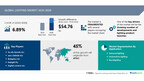
NEW YORK, Nov. 25, 2024 /PRNewswire/ — Report on how AI is driving market transformation – The global lighting market size is estimated to grow by USD 54.76 billion from 2024-2028, according to Technavio. The market is estimated to grow at a CAGR of  6.89%  during the forecast period. Growing number of developments and lighting product launches is driving market growth, with a trend towards advances in automotive lighting systems. However, sustainability issue in the lighting industry  poses a challenge.Key market players include Acuity Brands Inc., ams OSRAM AG, Bridgelux Inc., Dialight Plc, Digital Lumens Inc., Eaton Corp. Plc, Ennostar Inc., General Electric Co., GrowRay Lighting Technologies, Havells India Ltd., Hubbell Inc., IDEAL INDUSTRIES Inc., Koninklijke Philips N.V., LSI Industries Inc., Lumileds Holding BV, Panasonic Holdings Corp., Sharp Corp., SMART Holdings Inc., Syska Led Lights Pvt. Ltd., and Toyoda Gosei Co. Ltd..

Key insights into market evolution with AI-powered analysis. Explore trends, segmentation, and growth drivers- View Free Sample PDF

Lighting Market Scope

Report Coverage

Details

Base year

2023

Historic period

2018 – 2022

Forecast period

2024-2028

Growth momentum & CAGR

Accelerate at a CAGR of 6.89%

Market growth 2024-2028

USD 54.76 billion

Market structure

Fragmented

YoY growth 2022-2023 (%)

6.45

Regional analysis

APAC, Europe, North America, Middle East and Africa, and South America

Performing market contribution

APAC at 45%

Key countries

US, China, Japan, Germany, and UK

Key companies profiled

Acuity Brands Inc., ams OSRAM AG, Bridgelux Inc., Dialight Plc, Digital Lumens Inc., Eaton Corp. Plc, Ennostar Inc., General Electric Co., GrowRay Lighting Technologies, Havells India Ltd., Hubbell Inc., IDEAL INDUSTRIES Inc., Koninklijke Philips N.V., LSI Industries Inc., Lumileds Holding BV, Panasonic Holdings Corp., Sharp Corp., SMART Global Holdings Inc., Syska Led Lights Pvt. Ltd., and Toyoda Gosei Co. Ltd.

Market Driver

The lighting market is witnessing significant trends in various sectors including interior designing, photography, and scientific research. LED lights are leading the charge with their energy efficiency and long life span, replacing traditional incandescent, CFL, LFL, HID, and halogen bulbs. Scientists are also exploring the use of LEDs for growing plants and in developing countries for off-grid solar solutions. In the automotive sector, LED lighting is becoming standard in headlamps and taillights, while solar is powering outdoor lighting in urban cities and commercial buildings. Effective manufacturers like Signify are launching energy-efficient luminaires and smart lighting systems, reducing electricity consumption and operating costs. The Biden Harris Administration is promoting energy efficiency and environmental sustainability initiatives, driving demand for cost-effective, energy-saving solutions. Smart lighting solutions are also being integrated into HVAC, security, and building automation systems, improving urban infrastructure and reducing logistics inefficiency. The horticulture sector is using LEDs for growing plants, and smart LED bulbs are being used in advertising, aviation, medical devices, and camera flashes. The market for LED lights in residential sector, retail, and commercial buildings is expected to grow significantly due to their cost-effectiveness and life expectancy. The semiconductor industry is also investing in research and development to improve the performance and affordability of LEDs. However, environmental degradation and energy problems remain challenges that need to be addressed, making energy efficiency and environmental sustainability key priorities. The CEA systems and EcoLink range are also gaining popularity for their smart outdoor lighting solutions. The market for LED fixtures in real estate, parking lots, and smart cities initiatives is expected to grow significantly in the coming years. 

Adaptive lighting systems are gaining popularity in both commercial and automotive industries due to their enhanced safety and comfort features. These systems are designed to improve visibility during nighttime and low-light conditions, particularly around curves and hills. Traditional headlights illuminate the road directly ahead, leaving the sides unlit. In contrast, adaptive headlamps adjust their beams according to steering input, ensuring the vehicle’s path is illuminated. Additionally, when climbing a hill, conventional headlights may point upward, reducing visibility. Adaptive lighting systems address these issues, providing a safer and more comfortable driving experience. 

Request Sample of our comprehensive report now to stay ahead in the AI-driven market evolution!

Market Challenges

The lighting market faces various challenges in sectors like interior designing, photography, and scientific research, requiring different types of lights such as white light for houses and LEDs for plants. Scientists are focusing on energy-efficient LEDs to reduce electricity consumption and environmental degradation. Developing and under-developing nations face energy problems, with off-grid solar sector solutions gaining popularity. Effective manufacturers like Signify offer energy-efficient luminaires and smart lighting systems. In the residential sector, capital costs and logistics inefficiency hinder LED adoption over incandescent, CFL, LFL, HID, halogen, and fluorescent bulbs. LEDs are increasingly used in automotive, retail, and commercial sectors due to energy costs and long life expectancy. Smart LED bulbs and outdoor lighting systems are cost-effective and energy-efficient solutions for real estate, urban cities, highways, commercial buildings, and parking lots. Governments and organizations promote energy efficiency and environmental sustainability through initiatives like the Biden Harris Administration’s focus on smart cities and the CEA systems’ Color Rendering Index. The horticulture sector uses specialized LED lighting for plant growth, while building automation systems integrate HVAC, security, and smart lighting solutions. In industries like aviation, advertising, medical devices, camera flashes, traffic signals, and automotive headlamps, energy-efficient lighting is essential for reducing electricity consumption and operating costs. Solar and LED fixtures are becoming increasingly popular in developing nations, while smart outdoor lighting solutions are cost-effective and eco-friendly. In conclusion, the lighting market faces challenges in various sectors, including cost-effectiveness, energy efficiency, and environmental sustainability. Effective manufacturers like Signify offer energy-efficient solutions, while governments and organizations promote initiatives to address these challenges. The future of lighting lies in smart, energy-efficient, and cost-effective technologies like LEDs and solar.The lighting market faces a significant challenge in ensuring sustainability as the demand for environmentally friendly and energy-efficient solutions, such as CFLs and LED lighting, increases. The limited supply of rare earth elements, like those used in Phosphor-based LEDs, can lead to price fluctuations and supply chain disruptions. Addressing sustainability concerns in the lighting industry is crucial to prevent potential growth hindrances. Companies must explore alternative sources for rare earth elements or develop new technologies using less of these materials to maintain a steady supply and keep costs competitive.

Discover how AI is revolutionizing market trends- Get your access now!

Segment Overview 

This lighting market report extensively covers market segmentation by  

Application 1.1 General lighting1.2 Automotive lighting1.3 BacklightingType 2.1 LED technology2.2 Traditional technologyGeography 3.1 APAC3.2 Europe3.3 North America3.4 Middle East and Africa3.5 South America

1.1 General lighting-  The general lighting market encompasses various lighting solutions including lamps, electronics, consumer luminaires, systems, and professional luminaires and systems. This segment is the most widely used in residential, commercial, and industrial applications such as homes, offices, factories, streets, stadiums, and theaters. Market leaders like Signify NV, OSRAM, and IDEAL INDUSTRIES Inc’s Cree dominate this segment. The introduction of LED technology has significantly boosted the general lighting market. LEDs offer several advantages over traditional lighting sources, including low maintenance cost, long lifespan, energy efficiency, and eco-friendliness. The continuous price reduction of LEDs further enhances their appeal. Developed countries are witnessing the trend of connected lighting, where lighting fixtures can be controlled via smartphones. Although not yet mainstream, this innovation will add a new dimension to the general lighting segment, contributing to the growth of the global lighting market.

Download a Sample of our comprehensive report today to discover how AI-driven innovations are reshaping competitive dynamics

Research Analysis

The lighting market encompasses various applications of light for interior designing, photography, and scientific research. LED lights have revolutionized the industry with their energy efficiency and long lifespan, replacing traditional incandescent bulbs and Compact Fluorescent Lights (CFLs). Scientists continue to explore the properties of white light, impacting electricity consumption and energy costs. Metals play a crucial role in lighting production, while electricity is the primary power source. LEDs are not just limited to residential and commercial use but also extend to automotive headlamps, aviation, advertising, and traffic signals. The Biden Harris Administration’s focus on energy efficiency and sustainability further boosts the market growth. The Color Rendering Index (CRI) is a critical factor in evaluating the quality of light for various industries, including horticulture and medical devices. Building automation systems, HVAC, security, and smart lighting solutions are integral components of modern infrastructure. LED lighting and CEA systems are at the forefront of innovation, offering advanced features and energy savings. Camera flashes and lighted wallpapers cater to niche markets, while the horticulture sector benefits from specialized grow lights.

Market Research Overview

The lighting market encompasses various applications, from interior designing and photography to scientific research and automotive industries. Lighting solutions range from LEDs to traditional incandescent, CFL, LFL, HID, and halogen bulbs. Scientists continue to innovate, developing energy-efficient luminaires and light control systems. Plants and urban cities benefit from LEDs, while developing and under-developing nations explore off-grid solar sector solutions. Effective manufacturers produce cost-effective, energy-efficient LED fixtures for residential and commercial sectors, including houses, malls, stores, restaurants, hospitals, schools, parking lots, and real estate. Solar and semiconductor industries play crucial roles in reducing electricity consumption and environmental degradation. Smart LED bulbs and outdoor lighting systems, along with building automation systems, HVAC, and security, contribute to energy efficiency and environmental sustainability initiatives. The Biden Harris Administration smart cities, energy efficiency, and environmental sustainability, while various industries, including aviation, advertising, and medical devices, utilize specialized lighting solutions.

Table of Contents:

1 Executive Summary
2 Market Landscape
3 Market Sizing
4 Historic Market Size
5 Five Forces Analysis
6 Market Segmentation

ApplicationGeneral LightingAutomotive LightingBacklightingTypeLED TechnologyTraditional TechnologyGeographyAPACEuropeNorth AmericaMiddle East And AfricaSouth America

7 Customer Landscape
8 Geographic Landscape
9 Drivers, Challenges, and Trends
10 Company Landscape
11 Company Analysis
12 Appendix

About Technavio

Technavio is a leading global technology research and advisory company. Their research and analysis focuses on emerging market trends and provides actionable insights to help businesses identify market opportunities and develop effective strategies to optimize their market positions.

With over 500 specialized analysts, Technavio’s report library consists of more than 17,000 reports and counting, covering 800 technologies, spanning across 50 countries. Their client base consists of enterprises of all sizes, including more than 100 Fortune 500 companies. This growing client base relies on Technavio’s comprehensive coverage, extensive research, and actionable market insights to identify opportunities in existing and potential markets and assess their competitive positions within changing market scenarios.

Contacts

Technavio Research
Jesse Maida
Media & Marketing Executive
US: +1 844 364 1100
UK: +44 203 893 3200
Email: media@technavio.com
Website: www.technavio.com/

View original content to download multimedia:https://www.prnewswire.com/news-releases/lighting-market-to-expand-by-usd-54-76-billion-2024-2028-driven-by-new-product-launches-and-developments-market–evolution-powered-by-ai—technavio-302314004.html

SOURCE Technavio

Continue Reading
Click to comment

Leave a Reply

Your email address will not be published. Required fields are marked *

Technology

RhythMedix Launches Next-Generation RhythmStar® SL Cardiac Monitor

Published

on

By

Advancing Remote Cardiac Monitoring with Faster Insights, Greater Comfort, and Seamless Connectivity

MOUNT LAUREL, N.J., April 22, 2026 /PRNewswire/ — RhythMedix, LLC (RhythMedix), a nationwide U.S.-based cardiac monitoring company, today announced the launch of its next-generation RhythmStar® SL cardiac monitoring wearable. The third-generation design significantly enhances the patient experience, improving comfort, wearability, and patient adherence. These advancements are enabled by a compact lead configuration, waterproof IPX-6 rating, and increased battery life.

RhythmStar continues to differentiate through its built-in cellular connectivity, enabling ECG data to be automatically transmitted to the cloud for seamless, prompt review across all monitoring modes – without requiring device return by mail for data processing.

When paired with the company’s proprietary Augmented Arrhythmia Intelligence™ (AAI), RhythmStar SL delivers precise arrhythmia detection by combining advanced algorithms with a multi-layered data review process.

“RhythmStar represents our commitment to delivering a better way to monitor, one that prioritizes both patient comfort and clinical performance,” said Brian Pike, CEO of RhythMedix. “By combining a more wearable design with seamless data transmission and expert review, we’re helping clinicians access the insights they need, when they need them.”

“RhythMedix is taking a truly visionary approach to cardiac monitoring by combining patient-friendly design with advanced technology and expert oversight, helping clinicians make more confident, timely decisions,” stated George Shaw, MD, Electrophysiologist at AHN Allegheny Health Network. “It’s a meaningful step forward in how we deliver and manage cardiac care.”

With over 2 million hearts monitored to date, RhythMedix continues to advance remote cardiac monitoring through technology designed to improve both patient adherence and clinical workflow. The company will be exhibiting at HRS 2026 (Booth #531), including in-booth discussions with leading electrophysiologists.

About RhythMedix

Founded in 2013 and headquartered in Mount Laurel, New Jersey, RhythMedix is a fully integrated cardiac monitoring company providing end-to-end device manufacturing, software development, and 24/7 U.S.-based monitoring services. With no third-party dependence, RhythMedix delivers a seamless and secure remote cardiac monitoring experience for clinics, health systems, and patients nationwide.

To learn more, visit rhythmedix.com.

View original content to download multimedia:https://www.prnewswire.com/news-releases/rhythmedix-launches-next-generation-rhythmstar-sl-cardiac-monitor-302750932.html

SOURCE RHYTHMEDIX

Continue Reading

Technology

Copyright Enforcement Dialogue 2026 in Taipei Reinforces Regional Public-Private Cooperation Against Digital Piracy

Published

on

By

TAIPEI, April 23, 2026 /PRNewswire/ — On April 22, 2026, the Motion Picture Association (MPA) Asia Pacific concluded the Copyright Enforcement Dialogue: Taipei 2026, convening senior policymakers, law enforcement authorities, judicial representatives, and industry experts from across Asia–Pacific to advance coordinated action against copyright infringement and digital piracy, ahead of World Intellectual Property Day on April 26.

Organised in collaboration with the Alliance for Creativity and Entertainment (ACE) and the Homeland Security Investigations (HSI), with the participation of international and local enforcement agencies, the dialogue reinforced the importance of cross border collaboration, effective regulatory frameworks, and public–private partnerships to protect intellectual property and support the creative economy.

In her welcome address, Sue Wang, Deputy Minister of Culture and Chairperson of the Taiwan Creative Content Agency (TAICCA), underscored the role of copyright protection in sustaining a healthy creative ecosystem: “The foundation of culture is copyright protection. If there was no copyright protection, there would no culture in the world. Therefore, copyright protection is the core of every culture.”

Across four expert panels, participants examined the evolving piracy landscape, shared regulatory and enforcement challenges, the role of public–private collaboration in real–world enforcement, and the growing threat posed by illegal streaming devices, drawing on legal, technical, and investigative perspectives. A dedicated piracy case study session led by Taiwan’s law enforcement authorities showcased recent investigative efforts and reinforced the value of information–sharing and technical cooperation.

Addressing Taiwan’s enforcement framework, Hung Sheng-I, Director of the Copyright Division at the Intellectual Property Office, Ministry of Economic Affairs, said, “By integrating the Set-Top Box Act with domain seizure and follow-the-money mechanisms, Taiwan has established a comprehensive and enforceable framework that serves as a powerful shield for IP protection in the digital environment.”

Itae Choi, Executive Director of the Copyright Overseas Promotion Association (COA), said: “We must be grateful to all users who love and enjoy our content. It is essential to widely communicate the value of their voluntary and legal use, so that those who consume it unlawfully may be encouraged to join them. To this end, we will intensify our efforts in raising awareness and fostering a culture of respect among content users.”

Choi also emphasized the central role of cooperation in effective copyright enforcement: “Cooperation is vital in every field, but it is especially crucial in addressing copyright infringement. Private sector efforts cannot succeed without the collaboration of public authorities such as law enforcement and the judiciary. We are, in effect, running a three–legged race together — and to win, we must stay in step with one another.”

Noting the level of international participation, James Cheatley, Vice President, VOD, Digital Affairs and Intellectual Property, Asia Pacific at the Motion Picture Association, said the dialogue reflected the shared nature of the challenge posed by piracy: “We have industry leaders, government policymakers, and law enforcement experts from five countries taking part in this dialogue. That level of international cooperation reflects the reality that piracy is a shared challenge — one that requires coordinated approaches and collective solutions across governments, enforcement authorities, and industry.”

Tatsuya Otsuka, Deputy Senior Director of International Affairs of Content Overseas Distribution Association (CODA), said, “Strengthening cross-border collaboration is essential to ensure effective anti-piracy measures. This dialogue provided a wonderful opportunity for us to share challenges and insights and continue to advance international efforts to combat piracy.”

Toshinao Yamazaki, Director of the Intellectual Property Affairs Division at Japan’s Ministry of Foreign Affairs, said sustained dialogue was key to long–term protection of creative industries: “Ultimately, protecting the creative ecosystem hinges on robust public-private collaboration and sustained international dialogue. I am confident this Copyright Enforcement Dialogue 2026 will serve as a pivotal step to further enrich the global IP ecosystem and collectively build a more prosperous and sustainable future.”

In closing remarks, Dawn Barriteau, Vice President, Content Protection, Asia Pacific, Motion Picture Association, reaffirmed MPA and ACE’s commitment to working with governments and enforcement partners across the region to strengthen copyright protection and disrupt piracy networks.

“Effective copyright enforcement is not just about protecting content — it is about protecting jobs, investment, and the long-term health of the creative industries. Today’s dialogue demonstrates how industry, governments, and law enforcement can work together to address piracy with practical, coordinated solutions.” Barriteau added that continued regional cooperation is essential as piracy networks become increasingly sophisticated and transnational: “No single stakeholder can address digital piracy alone. Meaningful progress depends on sustained public–private collaboration, information–sharing, and strong policy frameworks that keep pace with technological change.”

The Copyright Enforcement Dialogue: Taipei 2026, held in the lead-up to World Intellectual Property Day, builds on MPA’s longstanding collaboration with regional stakeholders and reflects a continued focus on practical enforcement solutions, policy dialogue, and capacity building to support Asia Pacific’s creative economy.

View images here.

View original content to download multimedia:https://www.prnewswire.com/apac/news-releases/copyright-enforcement-dialogue-2026-in-taipei-reinforces-regional-publicprivate-cooperation-against-digital-piracy-302750424.html

SOURCE Motion Picture Association (MPA) Asia Pacific

Continue Reading

Technology

Form.io Launches Enterprise-Grade Toolset for Governed Agentic Coding

Published

on

By

New MCP Server, Skills, Agentic Coding Plugin, and Universal Agent Gateway (UAG) keep AI-generated applications on the rails for enterprise development teams.

DALLAS, April 22, 2026 /PRNewswire/ — Form.io, the enterprise data platform trusted by regulated industries and government agencies worldwide, today announced the introduction of its Model Context Protocol (MCP) Server, Skills, and Agentic Coding Plugin, adding to the existing Universal Agent Gateway (UAG). Together, this comprehensive purpose-built toolset brings schema-governed infrastructure to agentic coding environments. The release equips enterprise development teams with the tools to harness AI coding agents like Claude Code, Cursor, and Windsurf, while maintaining the architectural consistency, compliance posture, and data governance required by regulated organizations.

As agentic coding accelerates across the enterprise, organizations are discovering that velocity without standardization creates technical debt at an unprecedented pace. Applications generated across independent teams can diverge in architecture, data handling, and compliance posture — creating fragmentation at scale and introducing the need for additional resources and controls to manage the process. This ultimately undermines the efficiency gains of new agentic coding processes.

“Labor used to be the pain point for enterprises. Now it’s chaos”, said Heather Hornor, COO of Form.io. “Five teams solving the same problem, five different ways, without any standardization, because each AI agent made a different decision, is a problem. This problem isn’t new, but it’s surfacing faster and more disruptively than ever before. Thankfully, it’s solvable at the infrastructure layer – where systems can be governed, monitored, and audited continuously over time. Form.io provides that layer, from development through runtime. And we’re the only company delivering it inside the customer’s own self-hosted development and runtime environments.”

The Toolset

MCP Server: Connects to the customer’s self-hosted Form.io deployment. AI coding agents receive governed access to read, create, and scaffold the full data layer — forms, resources, actions, APIs — without data leaving the enterprise security boundary.Skills: Platform specific guidance that teaches AI agents how to build applications leveraging Form.io — applying standardized compliance-ready data patterns by default instead of improvising per project.Agentic Coding Plugin: Integrates Form.io’s MCP Server and Skills directly into the developer’s coding environment, enabling AI agents to automatically trigger tools and apply standardized patterns based on prompt context. Coordinates interactions between MCP tools and Skills so complex, form-based applications can be built entirely within the agentic coding interface.

“This is the logical extension of the JSON-based, open-source platform we’ve been building for more than a decade,” said Travis Tidwell, CTO and Co-founder of Form.io. “The same open architecture that made Form.io extensible for human developers makes it the natural foundation for agentic development processes.”

The new build-time toolset operates independently from Form.io’s Universal Agent Gateway (UAG), the company’s runtime governance layer for production agentic workflows. Together, they provide enterprises with governance and auditability across the full lifecycle of agentic coded software — from the first prompt in a developer’s Agentic Coding Plugin to the production workflows running in regulated environments.

For organizations adopting governed agentic coding, the Form.io MCP Server, Skills, Agentic Coding Plugin, and UAG are part of Form.io’s enterprise-grade agentic coding toolset. Explore the full toolset at https://form.io/ai/

For agentic workflows in production, visit the Universal Agent Gateway at https://form.io/uag/

Enterprises can learn more, request a demo, or get started at form.io

About Form.io: Form.io is the enterprise application infrastructure platform where a single JSON schema governs everything a modern application needs — including data collection UIs, validation rules, workflow actions, data models, and auto-generated APIs with RBAC.

One schema. One source of truth. One governance layer. That’s a form.

Form.io’s self-hosted platform serves regulated industries and government agencies requiring architectural consistency, data sovereignty, and formal compliance — including central banking groups across the US, EU, and Australia, global government agencies, and leading organizations in healthcare, financial services, and insurance.

Headquartered in Dallas, Texas. Visit form.io.

For press inquiries and additional information, please contact: media@form.io

View original content to download multimedia:https://www.prnewswire.com/news-releases/formio-launches-enterprise-grade-toolset-for-governed-agentic-coding-302750946.html

SOURCE Form.io LLC

Continue Reading

Trending