Connect with us

Technology

Automotive Radar Sensors Market to Grow by USD 6.51 Billion (2024-2028), High-Frequency Radar Sensors Drive Growth, Report on How AI Redefines Market Landscape – Technavio

Published

on

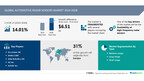
NEW YORK, Nov. 26, 2024 /PRNewswire/ — Report with market evolution powered by AI – The global automotive radar sensors market size is estimated to grow by USD 6.51 billion from 2024-2028, according to Technavio. The market is estimated to grow at a CAGR of over 14.01%  during the forecast period. Availability of high-frequency radar sensors is driving market growth, with a trend towards increased accuracy in perceiving environment through sensor fusion technique. However, concerns associated with cybersecurity risks poses a challenge.Key market players include Acconeer AB, AISIN CORP., Arbe Robotics Ltd, AU Inc, Autoliv Inc., Banner Engineering Corp., DENSO Corp., Faurecia SE, Infineon Technologies AG, Tsien UK Ltd, MediaTek Inc., NXP Semiconductors NV, Renesas Electronics Corp., Robert Bosch GmbH, Rohde and Schwarz GmbH and Co. KG, S.m.s Smart Microwave Sensors GmbH, Schaeffler AG, Texas Instruments Inc., Valeo SA, Vayyar Imaging Ltd., and Eravant.

Key insights into market evolution with AI-powered analysis. Explore trends, segmentation, and growth drivers- View Free Sample PDF

Automotive Radar Sensors Market Scope

Report Coverage

Details

Base year

2023

Historic period

2018 – 2022

Forecast period

2024-2028

Growth momentum & CAGR

Accelerate at a CAGR of 14.01%

Market growth 2024-2028

USD 6.51 billion

Market structure

Fragmented

YoY growth 2022-2023 (%)

13.39

Regional analysis

Europe, North America, APAC, South America, and Middle East and Africa

Performing market contribution

Europe at 31%

Key countries

US, China, Japan, Germany, and UK

Key companies profiled

Acconeer AB, AISIN CORP., Arbe Robotics Ltd, AU Inc, Autoliv Inc., Banner Engineering Corp., DENSO Corp., Faurecia SE, Infineon Technologies AG, Tsien UK Ltd, MediaTek Inc., NXP Semiconductors NV, Renesas Electronics Corp., Robert Bosch GmbH, Rohde and Schwarz GmbH and Co. KG, S.m.s Smart Microwave Sensors GmbH, Schaeffler AG, Texas Instruments Inc., Valeo SA, Vayyar Imaging Ltd., and Eravant

Market Driver

The Automotive Radar Sensors market is experiencing significant growth due to the increasing demand for advanced safety features in both passenger and commercial vehicles. Radar sensors, including short-range and long-range, are crucial components of Advanced Driver-Assistance Systems (ADAS) and Autonomous Driving (AD) systems. Optical imaging, video, ultrasonic, infrared, LIDAR, and ultrasound are alternative technologies, but radar sensors offer superior detection capabilities and range. ADAS applications include Intelligent Park Assist, Lane Change Assistance, and Collision Prevention. Long-range radar sensors operate at 24 GHz, 77-GHz, and 79GHz frequencies, enabling high-resolution tracking and detection of objects at greater distances. Short-range radar sensors are used for parking assistance and collision mitigation. The autonomous car market is a major driver of the radar sensor industry, with companies like Tesla, Waymo, and NVIDIA investing heavily in this technology. Radar sensors are also used in security and surveillance, industrial applications, traffic monitoring, and infrastructure development. The future of the automotive radar sensor market lies in technology innovation, electrification, and mobility solutions. 

Modern vehicles incorporate numerous electronic systems, including radar, ultrasound, LIDAR, and cameras, to enhance Advanced Driver Assistance Systems (ADAS) features. Strict regulations and OEM differentiation drive the increasing demand for automotive radar sensors. However, these systems operate independently, limiting their effective and realistic functionality. Overcoming the shortcomings of each sensor type requires integration and information exchange among them, which is currently lacking. Thus, the market for automotive radar sensors continues to grow, addressing safety and regulatory requirements. 

Request Sample of our comprehensive report now to stay ahead in the AI-driven market evolution!

Market Challenges

The Automotive Radar Sensors market is experiencing significant growth due to the increasing demand for advanced safety features in both passenger and commercial vehicles. Traditional sensors like Optical imaging, Video, Ultrasonic, and Infrared are being supplemented by newer technologies such as LIDAR, Short range radar, Mid range radar, and Long range radar. Automakers are integrating these sensors into Advanced Driver Assistance Systems (ADAS) and Autonomous Driving (AD) systems, including Intelligent Park Assist, Lane change assistance, and Collision prevention. Automotive radar sensors operate at various frequencies, including 24 GHz, and offer long-range detection capabilities. SAE-Level 3 automation and autonomous driving are driving the market, with technologies like DRIVE PILOT leading the way. The industry is also being influenced by trends such as Industry 4.0, electrification, and mobility. However, challenges remain, including the need for innovative packaging concepts and cutting-edge production processes for high-frequency components. The market is also impacted by competition from other sensors like cameras and ultrasound, as well as Moisture sensors and other technologies. The autonomous car market, consumer electronic devices, and infrastructure development are also key factors influencing the market. Long-range radar sensors, operating at 77-GHz and 79GHz frequencies, offer high-resolution tracking and detection capabilities, making them essential for collision mitigation (CM) and parking assistance (PA) systems. The market is expected to continue growing, driven by the increasing demand for safety features and the development of autonomous cars.Radar sensors in the automotive industry transmit signals between vehicles and roadside infrastructure, making them susceptible to eavesdropping attacks by malicious actors. These attacks can compromise vehicle privacy and expose sensitive information, such as location data, driving patterns, and vehicle telemetry. Cybercriminals may also launch denial-of-service (DoS) attacks against radar sensors or their communication networks, impairing sensor performance and disrupting safety-critical functions. Additionally, radar sensor systems are vulnerable to malware and ransomware attacks, which can inject malicious software into electronic control units (ECUs) or networked components, potentially causing significant harm to vehicle operations. It is essential for automotive companies to prioritize cybersecurity measures to protect against these threats and ensure the safe and reliable operation of radar sensors in vehicles.

Discover how AI is revolutionizing market trends- Get your access now!

Segment Overview 

This automotive radar sensors market report extensively covers market segmentation by 

Type 1.1 Medium-range1.2 Long-range1.3 Short-rangeApplication 2.1 FCW2.2 AEBS2.3 ACC2.4 BCD and othersGeography 3.1 Europe3.2 North America3.3 APAC3.4 South America3.5 Middle East and Africa

1.1 Medium-range-  The Automotive Radar Sensors Market is driven by the increasing adoption of advanced collision avoidance and prevention systems in both passenger and commercial vehicles. These systems utilize radar sensors to detect and alert drivers when their vehicle is approaching another at an unsafe distance. The systems offer various warning mechanisms, including alarm sounds, warning lights, or vibrations. The US National Highway Traffic Safety Administration (NHTSA) and New Car Assessment Programme (NCAP) in the EU, Japan, Korea, and China have mandated or encouraged the use of these systems in heavy vehicles and trucks. Tests have shown significant positive results in reducing crashes caused by driver distraction and other factors. Furthermore, these sensors are part of the bundled Advanced Driver-Assistance Systems (ADAS) offering, making them a standard fitment in the future. The global Automotive Radar Sensors Market is expected to grow significantly during the forecast period due to these factors.

Download a Sample of our comprehensive report today to discover how AI-driven innovations are reshaping competitive dynamics

Research Analysis

The Automotive Radar Sensors market is a rapidly growing segment in the automotive industry, driven by the increasing demand for advanced safety features and autonomous driving technologies. Radar sensors use radio waves to detect objects and measure their distance, velocity, and size. They offer several advantages over other sensing technologies such as optical imaging, video, ultrasonic, and infrared. Radar sensors come in various ranges, including short, mid, and long-range, catering to different applications in Advanced Driver Assistance Systems (ADAS) and Autonomous Driving (AD) systems. These systems enhance automation and mobility, providing features like lane change assistance, collision prevention, and safety enhancements. Industry 4.0 and electrification are also influencing the market, as radar sensors play a crucial role in optimizing vehicle performance and ensuring safety in these advanced technologies. With the increasing number of registered cars and the growing focus on mobility solutions, the Automotive Radar Sensors market is poised for significant growth in the coming years. Technology innovation continues to drive the market, with high-frequency components and advanced signal processing algorithms enabling improved accuracy and reliability. The market is expected to expand across passenger vehicles and commercial vehicles, catering to the diverse needs of the automotive industry.

Market Research Overview

Automotive Radar Sensors are an essential component of Advanced Driver-Assistance Systems (ADAS) and Autonomous Driving (AD) systems in modern vehicles. These sensors use radio waves to detect objects in the vehicle’s surroundings, providing real-time information on range, velocity, and angle. Unlike Optical imaging, Video, Ultrasonic, Infrared, and LIDAR sensors, Automotive Radar Sensors operate using radio waves in various frequency bands, including Short Range Radar (SRR), Mid Range Radar (MRR), and Long Range Radar (LRR). Radar sensors play a crucial role in various ADAS features, such as Lane Change Assistance, Collision Prevention, and Automation. They come in different frequency bands, with 24 GHz being commonly used for short-range applications, and 77-GHz and 79GHz frequencies for long-range detection. The Automotive Radar Sensors market is growing rapidly due to the increasing demand for safety features in passenger cars and commercial vehicles. The market is also driven by the trend towards autonomous driving and Industry 4.0, which requires high-resolution tracking and detection capabilities. The market for Automotive Radar Sensors is expected to grow significantly in the coming years, driven by the increasing number of registered cars, the adoption of SAE-Level 3 and higher automation, and the expanding use cases in areas such as security and surveillance, industrial applications, and traffic monitoring. The development of Automotive Radar Sensors involves cutting-edge production processes and innovative packaging concepts to ensure high-frequency components perform optimally. The market is also witnessing technology innovation in areas such as electrification, mobility, and safety features, making radar sensors an essential component of the future of transportation.

Table of Contents:

1 Executive Summary
2 Market Landscape
3 Market Sizing
4 Historic Market Size
5 Five Forces Analysis
6 Market Segmentation

TypeMedium-rangeLong-rangeShort-rangeApplicationFCWAEBSACCBCD And OthersGeographyEuropeNorth AmericaAPACSouth AmericaMiddle East And Africa

7 Customer Landscape
8 Geographic Landscape
9 Drivers, Challenges, and Trends
10 Company Landscape
11 Company Analysis
12 Appendix

About Technavio

Technavio is a leading global technology research and advisory company. Their research and analysis focuses on emerging market trends and provides actionable insights to help businesses identify market opportunities and develop effective strategies to optimize their market positions.

With over 500 specialized analysts, Technavio’s report library consists of more than 17,000 reports and counting, covering 800 technologies, spanning across 50 countries. Their client base consists of enterprises of all sizes, including more than 100 Fortune 500 companies. This growing client base relies on Technavio’s comprehensive coverage, extensive research, and actionable market insights to identify opportunities in existing and potential markets and assess their competitive positions within changing market scenarios.

Contacts

Technavio Research
Jesse Maida
Media & Marketing Executive
US: +1 844 364 1100
UK: +44 203 893 3200
Email: media@technavio.com
Website: www.technavio.com/

View original content to download multimedia:https://www.prnewswire.com/news-releases/automotive-radar-sensors-market-to-grow-by-usd-6-51-billion-2024-2028-high-frequency-radar-sensors-drive-growth-report-on-how-ai-redefines-market-landscape—technavio-302316081.html

SOURCE Technavio

Continue Reading
Click to comment

Leave a Reply

Your email address will not be published. Required fields are marked *

Technology

Quintus Flexform™ Press Enables Sona SPEED to Deliver Flight-Critical Aerospace Components Faster

Published

on

By

Advanced forming technology strengthens precision manufacturing capabilities and reduces lead times for global high-performance industries

VÄSTERÅS, Sweden, April 22, 2026 /PRNewswire-PRWeb/ — Sona SPEED Pvt. Ltd., a specialist in precision mechatronics manufacturing solutions, is investing in a Quintus Flexform™ fluid cell press to expand its capabilities in producing high-precision prototype and low-volume components for aerospace and other demanding industries. The new press will support the company’s growing role as a supplier of flight-critical components for global customers.

Quintus Technologies’ expertise in high-pressure forming solutions meets the strict standards required for aerospace applications, enabling us to deliver consistent quality, performance, and reliability to customers operating in mission-critical environments.– Sona SPEED General Manager Bart Korff

Reflecting rising demand for lightweight, high-strength structures used in aircraft, satellites, and launch systems, Sona SPEED is strengthening its advanced forming and structural assembly capabilities, according to General Manager Bart Korff.

“We are expanding our metal forming and structural assembly capabilities to support next-generation aircraft, satellite, and launch vehicle programs,” says Mr. Korff. “Quintus Technologies brings proven expertise in high-pressure forming solutions that meet the stringent standards required for aerospace applications. Their technology enables us to deliver consistent quality, performance, and reliability to customers operating in mission-critical environments.”

The investment reflects broader industry trends toward lighter, stronger materials and faster development cycles across aerospace, defense, and high-performance industrial sectors. Advanced forming technologies such as the Flexform process enable manufacturers to reduce tooling complexity, improve structural performance, and accelerate product development timelines.

Sona SPEED selected the Flexform press model QFC 1×3-800, capable of applying up to 800 bar of forming pressure across a 1000 mm × 3000 mm work area. This performance is enabled by Quintus’ proven wire-winding pre-stress technology, which allows consistent pressure distribution across large forming surfaces.

Flexform is a versatile solution for manufacturing complex sheet metal components, particularly in industries where precision, speed, and cost control are essential for maintaining global competitiveness,” explains Peter Henning, Chief Commercial Officer, Quintus Technologies.

Designed for both prototyping and low-volume production, the Flexform process offers significant advantages compared with conventional rubber pad pressing and mechanical stamping. High-pressure forming reduces tooling complexity, eliminates secondary process steps, and improves fabrication productivity. Multiple forming tools can be used in a single operation, enabling faster transitions from design to production. High-cycle systems can produce up to 120 parts per hour, supporting rapid response to customer requirements.

The user-friendly press includes advanced features such as equipment serviceability, remote system control, and a high degree of self-diagnostics. It is also equipped with state-of-the-art high pressure hydraulics and a semi-automatic service system for quick and easy service of the unique Quintus flexible rubber diaphragm.

“This investment completes Sona SPEED’s aerospace offering by enabling us to manufacture high-integrity, near-net-shape components with enhanced mechanical properties. The Quintus press integrates seamlessly into our production line, allowing the delivery of flight-critical parts with reduced lead times and improved material performance – essential for aerospace and space missions,” notes Mr. Korff.

To support long-term operational reliability, Sona SPEED has chosen to participate in the Quintus® Care Program, a customized service solution that ensures operational reliability, maximum performance, controlled annual costs, and long-term partnership.

The program includes forming process and tool design support, access to Quintus Application Centers, prioritized technical assistance, and reliable availability of spare and wear parts. It also provides annual press inspections, operator training, and personnel recertification to maintain high levels of technical competence and production readiness.

“The added value of the high pressure process allows Sona SPEED to meet the quality, volume, and cost demands for sheet metal parts in major industrial sectors across the globe,” comments Johan Hjärne, CEO of Quintus Technologies. “We are pleased to be a strategic partner as they scale operations, invest in advanced manufacturing technologies, and enhance their engineering capabilities.”

The press will be installed in Sona SPEED’s 100,000-square-foot advanced manufacturing facility on the outskirts of Bengaluru (Bangalore), India in mid-December 2026.

About Quintus Technologies

Quintus Technologies is the global leader in high pressure technology. The company designs, manufactures, installs, and supports high pressure systems in four main areas: densification of advanced materials; sheet metal forming; battery processing; and high pressure processing for food and beverage innovation, safety, and shelf life. Quintus has delivered approximately 1900 systems to customers within industries such as energy, medical implants, space, aerospace, automotive, and food processing. The company is headquartered in Västerås, Sweden, with a presence in 45 countries worldwide. For more information, visit Quintus Technologies.

About Sona SPEED

Part of the century-old Sona Group, a premier business group in India, Sona Special Power Electronics & Electric Drives (Sona SPEED) was established in 2003 as an R&D division specializing in cutting-edge mechatronics manufacturing solutions. The company provides a comprehensive range of metal treatment solutions tailored to the specific needs of a worldwide client base across industries like aerospace, defense, heavy equipment, medical wearables, space, marine, industrial, automotive, and more. Sona SPEED’s unwavering commitment to precision and quality in metal treatments is reflected in state-of-the-art facilities and advanced technology that ensure the delivery of products that excel in performance and durability, thus meeting highest standards required for the most sophisticated and mission-critical applications. To know more, go to Sona SPEED.

Media Contact

Peter Henning, Quintus Technologies, 46 736 20 24 49, peter.henning@quintusteam.com, quintustechnologies.com

View original content to download multimedia:https://www.prweb.com/releases/quintus-flexform-press-enables-sona-speed-to-deliver-flight-critical-aerospace-components-faster-302749534.html

SOURCE Quintus Technologies

Continue Reading

Technology

Hannover Messe 2026: Zoomlion Debuts Robot Ops, Showcasing Industrial AI and Intelligent Manufacturing Capabilities

Published

on

By

HANNOVER, Germany, April 22, 2026 /CNW/ — Zoomlion Heavy Industry Science & Technology Co., Ltd. (“Zoomlion” or “the Company”; 1157.HK) has made the global debut of its embodied intelligence operating system, Robot Ops, at Hannover Messe 2026, taking place from April 20 to 24. At the event, Zoomlion is showcasing the robot operating system for industrial applications, along with its industrial AI and intelligent manufacturing (IM) solutions. Through live demonstrations and themed presentations, Zoomlion is highlighting its latest advances in embodied intelligence development platforms and IM practices.

Built for the Software 3.0 era, Robot Ops is a professional embodied intelligence development platform centered on the engineering concept of “Data, Software, and Agents.” It integrates DevOps, DataOps, and AgentOps into a full-stack, engineering-grade solution, enabling coordinated development across software, data, and intelligent agents.

The platform comprises four modules: basic tools, imitation learning, reinforcement learning, and task orchestration, enabling full-lifecycle management from data collection and model training to simulation verification, application development, and deployment maintenance. Designed to be ready to use with a low barrier to adoption, Robot Ops improves closed‑loop iteration efficiency by over 50%.

It directly addresses four key industry challenges: high technical barriers, scenario migration difficulty, data bottlenecks, and lack of lifecycle management. By providing a standardized, replicable engineering path for large‑scale deployment, Robot Ops can be widely adapted to humanoid robots, industrial robots, construction machinery, and autonomous driving. As one platform empowering multiple industries, it supports a more scalable and standardized approach to embodied intelligence development.

At Hannover Messe 2026, Zoomlion is presenting live demonstrations under the unified scheduling of Robot Ops, in which a wheeled humanoid robot and a logistics mobile robot collaborate on a logistics-sorting scenario, while the first-generation mass-produced humanoid robot Z1 performs a dance routine and dynamic motion-control demonstration. The multi-robot collaborative demonstration shows how Robot Ops connects algorithms, task orchestration, and on-site execution.

Zoomlion is also presenting its Industry 5.0 IM solutions, including insights into Zoomlion Smart Industrial City. The showcase highlights how digital technologies such as intelligent scheduling, industrial AI, digital twins, and end-to-end intelligent logistics are integrated into manufacturing processes.

Zoomlion is exhibiting at Booth D76 in Hall 15 and Booth D70 in Hall 11, the China Pavilion. The Company is also co-exhibiting with Amazon Web Services (AWS) and participating in the China Pavilion’s “Invest in China” launch ceremony.

View original content to download multimedia:https://www.prnewswire.com/news-releases/hannover-messe-2026-zoomlion-debuts-robot-ops-showcasing-industrial-ai-and-intelligent-manufacturing-capabilities-302749747.html

SOURCE Zoomlion

Continue Reading

Technology

Realm Raises $4.5M to Bring the ‘Cursor Moment’ to Enterprise Sales

Published

on

By

HELSINKI, April 22, 2026 /PRNewswire/ — Realm has raised a $4.5 million Seed round to speed up enterprise sales cycles. Its platform gives AI the structured context needed to automate deal-defining materials like RFP responses. The round was led by Frontline Ventures, with participation from HubSpot Ventures, Slack Co-founder Cal Henderson and Deel Co-founder Alex Bouaziz.

Realm CEO Mikko Mäntylä believes revenue work is next to undergo the agentic revolution that has already transformed software development.

“Tools like Cursor and Claude Code have fundamentally changed programming. Developers now manage fleets of agents, often running five to ten simultaneous tasks in different terminal windows,” Mäntylä says. “The best revenue teams are starting to replicate this approach, offloading RFP responses, security questionnaires, and other customer-facing materials to AI.”

However, the shift is still held back by a fundamental constraint. Unlike in software development, where the codebase provides structured context for AI, revenue teams work with fragmented systems and unstructured data. Critical information, such as why a deal was won, has to be pieced together from subtle, scattered signals.

Realm solves this by turning raw information into a structured representation of a company’s market, products, pipeline, and strategies. This purpose-built context graph mirrors how human sellers are onboarded and gives agents the foundation they need to contribute effectively.

“Our customers use Realm to draft their most important deliverables, from multi-million dollar bids to business cases that will make or break months of work,” Mäntylä says. “Typically, 70-80% of Realm’s work is approved as-is. Any edits feedback into Realm’s context, creating a compounding record that everyone in the organisation benefits from.”

That institutional memory extends beyond Realm’s own application. The platform integrates with Slack, CRMs, and AI assistants like Claude and ChatGPT, allowing teams to leverage Realm’s context and agents wherever they already work.

“The GTM stack has been built to record and report on what has already happened,” says George Radford from Frontline Ventures. “The emerging paradigm is tools that actually do the work, and Realm is building at the forefront of this shift. The team’s exceptional execution velocity and the rate at which customers are expanding usage convinced us Realm is the right team to back.”

The company will use the fresh funding to triple its team by the end of the year and accelerate its entry into the US.

About Realm

Realm builds a structured understanding of a company’s go-to-market and turns it into execution. As a result, work like RFPs, security reviews, and deal coordination happens in the background, not at the expense of time with buyers. Founded in 2023 by former Slush leaders Mikko Mäntylä and Miika Huttunen alongside Johan Jern, Realm is headquartered in Helsinki, Finland. Realm’s customers include Visma, Aiven, and Hostaway. Learn more: https://www.withrealm.com/ 

About Frontline Ventures

Frontline Ventures backs the most ambitious tech companies across the US and Europe, and positions them to win the transatlantic market. Frontline Seed backs European Seed startups when early US traction is critical to hyperscale. Frontline Growth backs US scaleups at Series B-D when European revenues are essential to IPO-readiness. Frontline Ventures’ portfolio includes companies like Navan, Lattice, and Vanta. Learn more: https://frontline.vc/ 

About HubSpot Ventures

HubSpot Ventures partners with ambitious entrepreneurs who are redefining how businesses grow and operate. The fund backs early- and growth-stage software companies building products that deliver unique value to HubSpot’s customer base, with a mission to help millions of organizations grow better. HubSpot Ventures’ portfolio includes companies like Clay, ElevenLabs, and Lovable. Learn more: https://www.hubspot.com/ventures

Media Contact
Mikko Mäntylä
CEO & Co-founder
mikko@withrealm.com 

This information was brought to you by Cision http://news.cision.com

https://news.cision.com/realm-technologies-oy/r/realm-raises–4-5m-to-bring-the–cursor-moment–to-enterprise-sales,c4338044

The following files are available for download:


View original content:https://www.prnewswire.com/news-releases/realm-raises-4-5m-to-bring-the-cursor-moment-to-enterprise-sales-302750015.html

SOURCE Realm Technologies Oy

Continue Reading

Trending