Connect with us

Technology

Voice Evacuation Systems Market to Grow by USD 1.1 Billion (2024-2028), Real Estate and Construction Boosts Growth, AI Impact on Trends – Technavio

Published

on

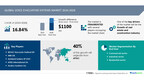
NEW YORK, Nov. 26, 2024 /PRNewswire/ — Report on how AI is redefining market landscape – The global voice evacuation systems market size is estimated to grow by USD 1.1 billion from 2024-2028, according to Technavio. The market is estimated to grow at a CAGR of 16.84% during the forecast period. Growth of real estate and construction industry is driving market growth, with a trend towards adoption of lot in building control systems. However, high initial cost of installation of voice sounder and loudspeakers poses a challenge. Key market players include 4EVAC Hacousto Holland BV, ABB Ltd., Ambient System SP ZOO, ATEIS International SA, Audico Systems Oy, Baldwin Boxall Communications Ltd., Cofem SA, Eaton Corp. Plc, Hochiki America Corp., Honeywell International Inc., Johnson Controls International Plc, Mircom Group of Companies, NAFFCO FZCO, OPTIMUS SA, ORR Protection Systems Inc., Protec Fire and Security Group Ltd., Robert Bosch GmbH, Siemens AG, TOA Corp., and Zeta Alarms Ltd..

Key insights into market evolution with AI-powered analysis. Explore trends, segmentation, and growth drivers- View Free Sample PDF

Voice Evacuation Systems Market Scope

Report Coverage

Details

Base year

2023

Historic period

2018 – 2022

Forecast period

2024-2028

Growth momentum & CAGR

Accelerate at a CAGR of 16.84%

Market growth 2024-2028

USD 1100 million

Market structure

Fragmented

YoY growth 2022-2023 (%)

16.05

Regional analysis

APAC, North America, Europe, Middle East and Africa, and South America

Performing market contribution

APAC at 40%

Key countries

US, China, India, Germany, and Russia

Key companies profiled

4EVAC Hacousto Holland BV, ABB Ltd., Ambient System SP ZOO, ATEIS International SA, Audico Systems Oy, Baldwin Boxall Communications Ltd., Cofem SA, Eaton Corp. Plc, Hochiki America Corp., Honeywell International Inc., Johnson Controls International Plc, Mircom Group of Companies, NAFFCO FZCO, OPTIMUS SA, ORR Protection Systems Inc., Protec Fire and Security Group Ltd., Robert Bosch GmbH, Siemens AG, TOA Corp., and Zeta Alarms Ltd.

Market Driver

Voice evacuation systems, also known as voice alarm systems, are becoming increasingly popular for emergency communication in public facilities, commercial buildings, industrial sites, educational institutions, and healthcare facilities. These systems use spoken messages to alert individuals of potential risks, such as fire breakouts, in a calm and clear manner. This trend is driven by the need for safe evacuation during unprecedented events, ensuring the safety and awareness of individuals in secure environments. Traditional fire alarm systems have limitations, such as the use of horns or chimes which can cause panic. Voice evacuation systems offer a more effective solution by providing customized messages and clear instructions. The initial financial investment for voice evacuation systems can be higher than traditional systems due to necessary equipment, customization, and professional installation services. However, the long-term benefits, including cost savings from retrofitting existing buildings and seamless communication with building automation systems, make it a worthwhile investment. The decision-making process for potential clients includes considering the building size, complex zoning, and existing building technologies. Voice evacuation systems offer interoperability with smart building technologies, elevators, and real-time monitoring, making them a converging solution for safety and security. With the industry shift towards innovative technologies, compatibility challenges with existing building technologies and communication protocols are being addressed. Safety and wellbeing are top priorities for private buildings, residential areas, public sector undertakings, industrial units, governments, and corporations. Voice evacuation systems are an essential part of safety solutions, ensuring social consideration for individuals with disabilities, impairments, and an ageing population. These systems offer a critical infrastructure for emergency communication, providing effective solution for evacuation during fire incidents. 

The Internet of Things (IoT) has revolutionized building systems and safety equipment by enabling interconnected devices to exchange data over a network. Traditionally, voice evacuation systems operated independently. However, integrating IoT technology has significantly improved their functionality. This integration enhances data and control management, ensuring quick response and notification without human intervention. The development of mesh networks further supports connectivity, allowing every device to function as a node to a central location. This advancement in technology not only increases reliability but also eliminates redundancy, making voice evacuation systems more efficient and effective. 

Request Sample of our comprehensive report now to stay ahead in the AI-driven market evolution!

 Market Challenges

Voice evacuation systems are essential safety solutions for public facilities, commercial buildings, industrial facilities, educational institutions, and healthcare facilities. These systems deliver spoken messages during emergencies like fire breakouts, unprecedented events, or fire incidents. Traditional alarm systems using horns or chimes can cause panic and confusion. Voice evacuation systems provide clear instructions for safe evacuation, enhancing safety, awareness, and security. However, adopting voice evacuation systems comes with challenges. Cost is a significant factor, influenced by building size, necessary equipment, and professional installation services. Complex zoning, customization, and hardware costs add to the initial financial investment. Custom content and audio quality are essential considerations. Retrofitting existing buildings with voice evacuation systems can be complex due to interoperability issues with existing building technologies, communication protocols, and compatibility challenges. Critical infrastructure like airports, stadiums, and other public spaces require evacuation systems to ensure safety and wellbeing. Safety and social considerations, such as an ageing population, disabilities, and impairments, necessitate innovative technologies and assistance in understanding risks. The convergence of voice evacuation systems with smart building technologies, building management, real-time monitoring, and building automation systems offers seamless communication and evacuation processes. The industry shift towards voice evacuation systems underscores the importance of professional skills in installation and design, as well as the need for preloaded messages and custom content. The decision-making process for potential clients includes considering the potential risks, necessary equipment, and the benefits of voice evacuation systems over traditional alarm systems.Voice evacuation systems are essential safety features in residential, commercial, and industrial sectors. In small and mid-size buildings, the cost of deploying these systems includes hardware installation, which is the largest expense, and minimal service and maintenance costs. However, in large buildings and high-rise residential complexes, regulations mandate the installation of automated emergency alarms and voice evacuation systems, leading to higher procurement and setup costs. In the commercial sector, especially healthcare facilities, educational institutions, and hotels, the expense of installing multiple systems, including emergency alarm control systems, is significant. Overall, the cost of voice evacuation systems varies depending on the size and complexity of the building or facility.

Discover how AI is revolutionizing market trends- Get your access now!

Segment Overview

This voice evacuation systems market report extensively covers market segmentation by

End-user 1.1 Commercial sector1.2 Industrial sector1.3 Residential sectorType 2.1 Voice sounders2.2 Loudspeakers2.3 Emergency microphones2.4 Networked and wireless systemGeography 3.1 APAC3.2 North America3.3 Europe3.4 Middle East and Africa3.5 South America

1.1 Commercial sector- The commercial sector is experiencing significant growth in the voice evacuation systems market due to increased regulations and safety awareness. This trend is driven by stringent government requirements and user education in various countries. The global market is also benefiting from rising foreign direct investment and construction activity in emerging economies. A major technological advancement is the integration of voice evacuation systems with fire alarms and security control systems. However, compatibility and interoperability challenges persist when integrating these systems with existing infrastructure. Mature markets like the US, Canada, and parts of Europe will primarily focus on replacement activities and software upgrades. In contrast, the Middle East and Africa (MEA) region, particularly Dammam in Saudi Arabia, is poised for substantial growth due to commercial hub development and expanding retail sectors. Key projects like the Al-Rehab project in Dammam are expected to boost market expansion during the forecast period.

Download a Sample of our comprehensive report today to discover how AI-driven innovations are reshaping competitive dynamics

Research Analysis

Voice evacuation systems, also known as voice alarm systems, are essential components of modern public address (PA) systems designed to ensure safety and order during emergency situations. These systems use spoken messages to alert and guide people in buildings during unprecedented events such as fire breakouts. They are installed in various public facilities, including private buildings, residential areas, public sector undertakings, industrial units, government establishments, and new age constructions. The voice evacuation system is a crucial part of a building’s ecosystem, prioritizing safety and wellbeing, and is a matter of corporate social responsibility and strict safety laws. The system’s detectors trigger a preloaded message, which may include instructions on the nature of the emergency and the safest evacuation routes. The message can be delivered through a voice alarm or a combination of voice and horn or chime. The effective implementation of voice evacuation systems requires professional skills and adherence to industry standards.

Market Research Overview

Voice evacuation systems, also known as voice alarm systems, are essential safety solutions designed to ensure safe evacuation of individuals in public facilities and buildings during fire breakouts or unprecedented events. These systems use spoken messages instead of traditional alarm systems with horns or chimes to provide clear instructions and reduce panic. Public facilities, commercial buildings, industrial facilities, educational institutions, and healthcare facilities all benefit from voice evacuation systems, prioritizing safety, awareness, security, and the wellbeing of individuals. The adoption of voice evacuation systems is driven by potential risks such as fire incidents and the need for evacuation systems to protect assets. Traditional alarm systems may not provide adequate communication during emergencies, making voice evacuation systems a cost-effective and necessary investment for buildings of all sizes. Customization is a crucial factor, with prefabricated messages and custom content available to cater to specific building needs. Audio quality, initial financial investment, and necessary equipment are essential considerations in the decision-making process. Professional installation services ensure seamless communication and interoperability with existing building technologies, including building management systems, elevators, and smart building technologies. Voice evacuation systems are increasingly important in private buildings, residential areas, public sector undertakings, industrial units, government establishments, and new age buildings. The safety and wellbeing of individuals, corporate social responsibility, and strict safety laws are driving the industry shift towards voice evacuation systems. Existing buildings may require retrofitting with voice evacuation systems, posing challenges related to existing building technologies, communication protocols, and compatibility with proprietary technologies. Critical infrastructure and converging technologies, such as building automation systems, elevators, and real-time monitoring, are essential considerations in the adoption of voice evacuation systems. The voice evacuation system market is continually evolving, with innovative technologies addressing consumer requirements and addressing the unique needs of various sectors. Detectors, preloaded messages, and modern designs are essential components of voice evacuation systems, ensuring effective and efficient evacuation during emergencies. The understanding of risks, social considerations, and the ageing population, disabilities, and impairments are crucial factors in the design and implementation of voice evacuation systems.

Table of Contents:

1 Executive Summary
2 Market Landscape
3 Market Sizing
4 Historic Market Size
5 Five Forces Analysis
6 Market Segmentation

End-userCommercial SectorIndustrial SectorResidential SectorTypeVoice SoundersLoudspeakersEmergency MicrophonesNetworked And Wireless SystemGeographyAPACNorth AmericaEuropeMiddle East And AfricaSouth America

7 Customer Landscape
8 Geographic Landscape
9 Drivers, Challenges, and Trends
10 Company Landscape
11 Company Analysis
12 Appendix

About Technavio

Technavio is a leading global technology research and advisory company. Their research and analysis focuses on emerging market trends and provides actionable insights to help businesses identify market opportunities and develop effective strategies to optimize their market positions.

With over 500 specialized analysts, Technavio’s report library consists of more than 17,000 reports and counting, covering 800 technologies, spanning across 50 countries. Their client base consists of enterprises of all sizes, including more than 100 Fortune 500 companies. This growing client base relies on Technavio’s comprehensive coverage, extensive research, and actionable market insights to identify opportunities in existing and potential markets and assess their competitive positions within changing market scenarios.

Contacts

Technavio Research
Jesse Maida
Media & Marketing Executive
US: +1 844 364 1100
UK: +44 203 893 3200
Email: media@technavio.com
Website: www.technavio.com/

View original content to download multimedia:https://www.prnewswire.com/news-releases/voice-evacuation-systems-market-to-grow-by-usd-1-1-billion-2024-2028-real-estate-and-construction-boosts-growth-ai-impact-on-trends—technavio-302315573.html

SOURCE Technavio

Continue Reading
Click to comment

Leave a Reply

Your email address will not be published. Required fields are marked *

Technology

Sungrow Opens Australia’s New Solar & Battery Experience Hub, Bringing the Future of Clean Energy Closer to Home

Published

on

By

SUNSHINE COAST, Australia, July 21, 2026 /PRNewswire/ — Sungrow, the globally leading PV inverter and energy storage system provider, officially opened its brand new Solar & Battery Experience Hub, marking a significant milestone in the company’s long-term investment in the Australian renewable energy market.

Located on the Sunshine Coast, one of Australia’s most sustainability-focused regions, the Hub is Sungrow’s first solar and battery experience centre in the country. Visitors can explore advanced renewable technologies, see real-time demonstrations, and receive tailored home and commercial energy advice. Serving as an essential bridge to the region, the Hub is dedicated to establishing broad and deep connections with the local community. By partnering with residents, businesses, and non-profit organizations to deliver technical training, sustainability education, and diverse community events, it will work hand in hand to drive the sustainable prosperity of the local community. Meanwhile, powered entirely by Sungrow’s inverter and battery system, the centre serves as a working example of how commercial buildings can operate efficiently and sustainably.

The opening ceremony was attended by Sunshine Coast Mayor Rosanna Natoli, Queensland Government representative Kendall Hatcher MP, local community organisation leaders, prominent figures from the Australian renewable energy industry, and Sungrow Australia executives, highlighting a shared commitment to accelerating the clean energy transition through strong local collaboration.

In the opening addresses, the Mayor affirmed the vital role of the Experience Hub in helping the Sunshine Coast region embrace technological innovation for sustainability. The State Government representative also highly praised the Hub’s outstanding sense of community spirit and the significant, positive impact it brings to local development.

Bringing Renewable Energy to Life 

With more than 600,000 residential and commercial installations across Australia and over 14 years of local market presence, Sungrow has become one of the country’s most trusted and bankable solar brands.

The centre features three immersive experience zones:

Sungrow Journey – showcasing its global innovation, local milestones and long-term commitment to Australia.

Live Experience Area – interacting with Sungrow’s latest residential solar, battery storage and EV charging solutions through live product demonstrations and real-time system management.

Smart Hub Experience – presenting the next generation intelligent home energy management, including battery optimisation, energy monitoring and future-ready smart energy technologies that help households maximise energy independence.

Built with the Community, for the Community

Meanwhile, Sungrow also donated two sets of energy storage systems to local charities, reinforcing its commitment to supporting the Sunshine Coast community.

The Hub will collaborate closely with local elite installers, ensuring visitors receive professional guidance, trusted installation support, and personalised energy solutions. Furthermore, the Hub will continuously host renewable energy event series and specialised workshops tailored for homeowners, first-time homebuyers, commercial developers, corporate partners, educational institutions (including schools, TAFEs, and universities), as well as government and community representatives.

“Sungrow Australia has been a trusted part of everyday life for families, installers, and industry partners across the country. Today, we take an important step forward. More than a physical space, it is a place where people can experience clean energy firsthand, learn from industry experts, and gain the confidence to make smarter energy decisions,” said Neil Yang, Channel Sales Manager at Sungrow Australia. “Following 14 years of continuous support from the local community, we made the significant decision to establish this experience hub on the Sunshine Coast. Our long-term vision is to replicate this model across major towns and cities in Australia, creating more opportunities for renewable energy education, community engagement, local employment, and sustainable infrastructure.”

A New Era of Home Energy Future

The Sungrow Solar & Battery Experience Hub represents a new way for Australians to engage with renewable energy. As Australia continues its transition towards a low-carbon future, Sungrow remains committed to investing in local innovation, strengthening industry partnerships and creating meaningful connections with communities. By bringing clean energy closer to people, the Experience Hub transforms renewable technology from something customers simply purchase into something they can experience, understand and trust.

To learn more about the Sungrow Solar & Battery Experience Hub, visit: www.sungrowpower.com/au/en/aus-sungrow-solar-battery-experience-hub

To book an appointment, please call 0472 787 829 or email hello@sungrowpower.com.au.

Luly Wang
luly.wang@sungrow-hq.com

View original content to download multimedia:https://www.prnewswire.com/apac/news-releases/sungrow-opens-australias-new-solar–battery-experience-hub-bringing-the-future-of-clean-energy-closer-to-home-302830334.html

SOURCE Sungrow Power

Continue Reading

Technology

Tencent Cloud Unveils a Major Upgrade to Its Agent Development Platform, Launching an Enterprise-Grade AgentOps Platform to Bring AI Agents into Production at Scale

Published

on

By

SHANGHAI, July 21, 2026 /PRNewswire/ — Tencent Cloud, the cloud business of global technology company Tencent, today announced a major enhancement to its Agent Development Platform (ADP) International Edition, evolving it into a comprehensive, enterprise-grade AgentOps platform designed to help enterprises move AI agents from experimentation into production at scale. The enhancement was unveiled at the 2026 World Artificial Intelligence Conference (WAIC) in Shanghai and is now available to customers worldwide.

Delivered in ADP’s 4.0 international release, the update introduces two headline capabilities — the Smart Desk and Claw Mode, powered by the Agentic Loop. Together with Connector, Skills, Knowledge Base, MCP and Agent Portal, ADP 4.0 now connects the entire enterprise agent lifecycle — from building and connecting, to distribution and governance — giving enterprises a single foundation to develop, deploy and manage AI agents reliably and at scale.

Today, enterprises seeking to rebuild their operations with AI Agents often face three critical challenges:

Individual pilots are easy to initiate but difficult to scale;Powerful models are challenging to integrate with existing legacy systems;Deployed Agents present difficulties in security governance and cost control.

Tencent Cloud ADP 4.0 addresses these challenges systematically by unlocking long-horizon, self-coding capabilities for complex tasks through Claw Mode, connecting enterprise systems and capability assets through nearly 40 Connectors and over 150 Skills, while moving security governance upstream to the very source of development. This enables enterprises to rapidly develop Agents while keeping them running in real business environments in a stable, secure, and controllable way.

To date, Tencent Cloud ADP has been deployed across retail, finance, government, manufacturing, and other industries, where teams have used AI Agents to support on tasks such as intelligent Q&A, customer service, marketing content generation and business analysis.

How Smart Desk Serves as a Unified Agent Entry Point

The newly launched Smart Desk serves as the unified, user-facing entry point of Tencent Cloud ADP 4.0, addressing two needs at once: enterprises can build Agents at scale, while employees can complete everyday tasks with a single sentence. Within the same workspace, users can build scalable Agents for their organization using natural language, or handle personal tasks just as they would with an everyday office assistant. Agent capabilities can also be integrated into existing enterprise systems—office software, ERP, CRM, customer service, and more—so that Agents “grow” on top of existing workflows without tearing anything down.

Smart Desk dramatically cuts the cost of building. Setting up a knowledge-based intelligent Q&A assistant once required manually configuring more than a dozen parameters. Now a single sentence can complete the entire configuration automatically, enabling it to go live within minutes. For more complex workflows such as multi-intent customer service, users simply describe the logic, and the system automatically generates a complete flow—intent routing, knowledge-base Q&A, human handoff, and more—packaged and ready to import. When a single Agent isn’t enough, users can orchestrate a collaborative team of Agents with a single command, with the system automatically assigning responsibilities, prompts, and task handoffs. The Smart Desk also integrates with the Skills Marketplace, packaging mature capabilities—such as contract review, financial analysis, and invoice entry—into reusable enterprise-grade Skills that can be shared and continuously refined across the organization. In doing so, Smart Desk brings “usable by everyone” and “enterprise-grade control” together in a single entry point.

How Upgraded Claw Mode Resolves Complex, Long-Horizon Tasks

For complex tasks that lack fixed rules, span long chains, and resist form-based configuration, Tencent Cloud Agent Development Platform (ADP) 4.0 adds a fourth building mode—Claw Mode. It can create Agents that autonomously write and run code in a cloud sandbox, call enterprise Skills, and execute long-running tasks. Once created, these Agents can be integrated into business systems via API/Web interfaces and reach employees and customers through channels such as LINE and Telegram. Creators do not need to fill out any forms; they simply describe their needs in natural language, and the platform automatically generates prompts, mounts knowledge bases, configures tools, and orchestrates workflows.

ADP 4.0 also supports two-way invocation between Agents and Workflows: Workflows handle steps with clear-cut rules, balancing stability with predictable token consumption. When unstructured judgment or open-ended tasks arise, they invoke a Claw Mode Agent to fully leverage the model’s capabilities. This gives enterprises the flexibility to integrate deterministic processes with intelligent decision-making.

Connecting Enterprise Systems, Knowledge, and Tools to Embed Agents into Workflows

To address the pain point of “powerful models that cannot reach enterprise production systems,” ADP 4.0 uses Connector, Skills, plugins, Knowledge Base, and MCP to turn an enterprise’s scattered business resources into callable and reusable AI assets.

The Connector framework offers nearly 40 curated Connectors in the first batch, supporting integration with high-frequency systems such as CRM, ERP, ticketing, customer service, knowledge bases, and document systems, and covering mainstream international SaaS applications like Google Workspace, Confluence, and Jira. Agents can directly read, retrieve, and perform operations such as querying, analysis, generation, and routing.

The upgraded Skills Marketplace now supports 150+ Skills. Business teams can package custom Skills into shared enterprise plugins that enter the enterprise zone for use only after passing security checks and approval.

More than 50 scenario-based templates and industry-curated applications shorten the path from zero to one. The upgraded Model Marketplace enables enterprises to select leading international models alongside their own self-hosted models, with native compatibility for the OpenAI standard protocol.

In addition, ADP 4.0 supports multiple entry points—platform, browser, Office, Chat channels, and API/SDK—embedding Agents into employees’ daily work scenarios.

End-to-End Governance from Development to Launch: Clearing the “Security Gate” Before Production

To tackle the challenge of “Agents that run but whose security and cost cannot be controlled,” ADP 4.0 moves governance upstream to the source of development, building a security control system that spans the full Agent lifecycle around permission management, Skills governance, runtime observability, and deployment compliance.

For permission management, ADP 4.0 supports a layered architecture at the enterprise, workspace, and application levels, combined with a Role-Based Access Control (RBAC) role-permission matrix to achieve dual-dimension isolation of functional and data permissions. For Skills governance, custom Skills must pass security checks—static code scanning, data-access review, outbound-network review, dependency allowlisting—and multi-level approval before entering the enterprise zone to become shareable and schedulable enterprise assets. For observability and governance, enterprises can use Agent Portal to centrally manage Agents across platforms and scenarios, and use business and resource dashboards to monitor key metrics such as call volume, response quality, operating cost, and errors in real time, enabling rapid issue identification and optimization.

Wu Yunsheng, Vice President of Tencent Cloud and Head of the Tencent Cloud Agent Development Platform, emphasized that enterprise-grade Agents are not merely about who can build them the fastest, but rather about who can keep Agents operating on the front lines of business in a stable, secure, and sustainable manner. ADP aims to provide enterprises with a production-ready AgentOps foundation—one that enables them to build Agents quickly, connect these Agents to systems and distribute them to the front lines, and operate them continuously under a framework of permissions, security, evaluation, and observability, truly unlocking productivity value.

Learn more about Tencent Cloud ADP: Build AI Agents with RAG+LLM, Workflow & Multi-Agent Capabilities

###

About Tencent Cloud:

Tencent Cloud, one of the world’s leading cloud companies, is committed to creating innovative solutions to resolve real-world issues and enabling digital transformation for smart industries. Through our extensive global infrastructure, Tencent Cloud provides businesses across the globe with stable and secure industry-leading cloud products and services, leveraging technological advancements such as cloud computing, Big Data analytics, AI, IoT, and cybersecurity. It is our constant mission to meet the needs of industries across the board, including the fields of gaming, media and entertainment, finance, healthcare, real estate, retail, travel, and transportation.

View original content to download multimedia:https://www.prnewswire.com/apac/news-releases/tencent-cloud-unveils-a-major-upgrade-to-its-agent-development-platform-launching-an-enterprise-grade-agentops-platform-to-bring-ai-agents-into-production-at-scale-302830352.html

SOURCE Tencent Cloud

Continue Reading

Technology

Coda Launches Playbook on Turning Linkouts into a Growth Channel

Published

on

By

SINGAPORE, July 21, 2026 /PRNewswire/ — Coda, a global leader in digital monetization and distribution, launched Beyond the App Store: A Publisher’s Guide to Direct Linkouts and Out-of-App Monetization, a new white paper showing mobile game publishers how to turn linkouts into a scalable revenue channel.

For years, anti-steering restrictions limited publishers’ ability to direct players from inside their games to external purchasing options. Legal and regulatory changes in the United States and Japan have opened that channel, giving publishers more control over where transactions happen, what value players receive and how recovered margin is reinvested.

The opportunity is significant. Publishers can use the improved economics of out-of-app payments to offer better prices, bonus currency, exclusive items or loyalty rewards, while investing more in content, acquisition and retention.

However, designing the journey from the app to the web requires precision. The right audience, offer and checkout experience determine whether a linkout converts and creates incremental value.

Drawing on Coda’s experience supporting more than 300 publishers, including gaming giants like Activision Blizzard and Electronic Arts, the white paper sets out a practical framework built around these core questions:

Who should see the linkout?When should they see the linkout?What should they be offered?How should the choice be presented?

“Publishers can now take greater control of the purchase journey and decide how recovered margin is put back to work,” said Zac Liew, Chief Commercial Officer at Coda.

“The real opportunity is not simply moving a payment outside the app. It is using linkouts to create better player value, improve conversion and grow the economics of a game.”

The paper recommends starting with engaged players, repeat buyers and higher-value spenders, while ensuring every linkout offer provides a clear advantage over its in-app equivalent.

It also highlights the infrastructure required behind the link, including payment routing, local payment methods, tax, fraud, compliance and reconciliation.

Coda Links gives publishers the infrastructure to put that strategy into action. It intelligently routes players from the app to the most relevant payment experience, while Coda manages the payments, tax, fraud and compliance required to operate at scale.

Linkouts are already delivering significant results:

In one Coda Links deployment for a major US publisher, intelligent routing increased webstore revenue by 17% and first-time purchase rates by 78%.In another Coda Links deployment, providing players with direct webstore access increased transactions by 25%.

For publishers, the priority now is to apply the right strategy at scale and capture more value from every player transaction.

Beyond the App Store: A Publisher’s Guide to Direct Linkouts and Out-of-App Monetization is available at: https://www.coda.co/resources/out-of-app-monetization-guide/

Learn more about Coda at: coda.co

About Coda

Coda is a global leader in monetization, distribution, and commerce, trusted by the biggest names in gaming, entertainment, and technology, including Activision, Electronic Arts, Riot Games, Ubisoft, and Moonton. Founded in 2011 and headquartered in Singapore, Coda operates with 600+ employees worldwide, with core hubs in Asia and Europe. Coda combines payments, commerce, distribution, and rewards to drive global revenue growth for brands and publishers.

Coda’s products include Codapay, which provides access to 400+ payment methods across 80+ markets through a single API integration; Coda Webstore, which powers fully customised direct-to-consumer storefronts; Coda Consumer Platforms including Codashop, Recharge.com, and Startselect.comCoda Distribution, which extends reach through a network of commerce partners; and Giftcloud, a UK-based rewards business serving enterprise customers across Europe.

Coda is backed by Apis Partners, Insight Partners, Smash Capital and GIC, and has been named an APAC High Growth Company (2023) by Financial Times, one of Granite Asia’s NextGenTech 30 (2024), a payments leader on Fortune’s Fintech Innovation Asia list (2024), and listed among The Straits Times Fastest Growing Fintechs (2024). For more on Coda, visit coda.co.

View original content to download multimedia:https://www.prnewswire.com/apac/news-releases/coda-launches-playbook-on-turning-linkouts-into-a-growth-channel-302830354.html

SOURCE Coda

Continue Reading

Trending