LONDON, Oct. 23, 2026 /PRNewswire/ — Credence Research Inc. has added the “Dimethylaminopropylamine Market – Growth, Share, Opportunities & Competitive Analysis, 2025–2035” study to its market intelligence portfolio. The report examines market value, segmentation, demand drivers, regional dynamics, competition and recent industry developments.
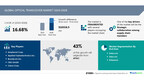
The dimethylaminopropylamine (DMAPA) market was valued at USD 452.6 million in 2025 and is projected to reach USD 731.9 million by 2035, representing a 4.92% compound annual growth rate over 2025–2035, according to Credence Research. The firm estimates 2026 revenue at USD 474.3 million. Asia Pacific accounted for the largest modeled geographic share at 44.0% in 2025, while Asia Pacific is projected to grow fastest at 5.88% annually. Market sizes, regional shares and segment shares are Credence Research estimates rather than independently audited industry totals.
Key Takeaways
The market is forecast to increase from USD 452.6 million in 2025 to USD 731.9 million by 2035, with a reported CAGR of 4.92%.Asia Pacific led the modeled 2025 geography with 44.0%; Asia Pacific has the fastest forecast geographic growth of 5.88%.By application, Surfactants accounted for 61.0% of modeled 2025 value, while Epoxy curing agents is forecast to grow at 5.66% a year.By end-use industry, Personal care and cosmetics accounted for 44.0% of modeled 2025 value, while Paints, coatings and composites is forecast to grow at 5.61% a year.The market definition excludes adjacent product or transaction value where that spending is outside the report’s measured scope.
Scope & Segmentation – Dimethylaminopropylamine Market
The study values sales of 3-(dimethylamino)-1-propylamine, an amine intermediate produced from dimethylamine and acrylonitrile. Included uses span betaine and amine-oxide surfactants, epoxy curing agents, polyurethane catalysts, water treatment chemicals, agrochemical intermediates and lubricant additives. Finished surfactants, coatings and other downstream products are excluded from the DMAPA revenue estimate.
By application: Surfactants (betaines and amine oxides); Epoxy curing agents; Polyurethane catalysts; Water treatment chemicals; Agrochemical intermediates; Fuel and lubricant additives; Others.By end-use industry: Personal care and cosmetics; Home care and institutional cleaning; Paints, coatings and composites; Water treatment; Agriculture; Automotive and lubricants.By geography: Asia Pacific; Europe; North America; Latin America; Middle East and Africa.
Read the complete report and request a sample: https://www.credenceresearch.com/report/dimethylaminopropylamine-market
Why This Report Matters
The study distinguishes a narrowly defined revenue pool from adjacent activity that can inflate comparisons between research estimates. This helps strategy teams compare suppliers, customer budgets and product categories on a consistent basis.The base-year segment mix identifies where current purchasing is concentrated, while the modeled faster-growing categories help evaluate investment timing and market entry.Geographic shares are proprietary estimates; company and regulatory announcements are used to explain demand mechanisms, not to independently verify global market totals.
Market Overview
The study values sales of 3-(dimethylamino)-1-propylamine, an amine intermediate produced from dimethylamine and acrylonitrile. Included uses span betaine and amine-oxide surfactants, epoxy curing agents, polyurethane catalysts, water treatment chemicals, agrochemical intermediates and lubricant additives. Finished surfactants, coatings and other downstream products are excluded from the DMAPA revenue estimate.
DMAPA is a building block for cocamidopropyl betaine and related surfactants used in shampoos, body washes and dishwashing products. Producers serving consumer brands require consistent quality and supply, so the largest application tends to support repeat orders rather than episodic equipment-style purchases.
The outlook reflects expected changes in customer adoption, procurement, technology and regulation. It should be read as a modeled scenario, not as a guarantee of sales or company performance.
Key Attributes
Attribute
Details
Base year
2025
Historical reference
2018–2025
2025 market size
USD 452.6 million
2026 estimate
USD 474.3 million
2035 market forecast
USD 731.9 million
Reported CAGR
4.92% (2025–2035)
Geographic scope
Global
Primary source
https://www.credenceresearch.com/report/dimethylaminopropylamine-market
Segmentation
By application
The study divides this category into surfactants (betaines and amine oxides); epoxy curing agents; polyurethane catalysts; water treatment chemicals; agrochemical intermediates; fuel and lubricant additives; others. Surfactants led the 2025 value mix with 61.0%. Epoxy curing agents is the fastest-growing modeled subsegment at 5.66% a year. These shares represent Credence Research model outputs, not audited supplier sales.
By end-use industry
The study divides this category into personal care and cosmetics; home care and institutional cleaning; paints, coatings and composites; water treatment; agriculture; automotive and lubricants. Personal care and cosmetics led the 2025 value mix with 44.0%. Paints, coatings and composites is the fastest-growing modeled subsegment at 5.61% a year. These shares represent Credence Research model outputs, not audited supplier sales.
Market Growth Drivers
Mild cleansing formulas sustain high-volume demand
DMAPA is a building block for cocamidopropyl betaine and related surfactants used in shampoos, body washes and dishwashing products. Producers serving consumer brands require consistent quality and supply, so the largest application tends to support repeat orders rather than episodic equipment-style purchases.
Epoxy hardeners provide a faster-growth outlet
DMAPA-based amidoamines are used in epoxy curing systems for floors, protective coatings and composite applications. Wind blade production and industrial maintenance provide additional demand. The report models epoxy curing agents as the fastest-growing application, although their value starts below surfactants.
Capacity integration shapes producer economics
The chemical route depends on dimethylamine and acrylonitrile, making feedstock access and energy costs important. Integrated producers can manage these inputs and purity requirements more directly, while regional buyers value dependable supply and local technical support.
Regional Analysis
Asia Pacific held 44.0% of modeled 2025 revenue, while Asia Pacific is expected to record the fastest regional growth at 5.88%. The allocation follows the study’s defined buyer or provider-revenue scope.
Asia Pacific
Asia Pacific represented 44.0% of modeled 2025 market value. China hosts extensive betaine and epoxy manufacturing and new intermediate capacity. Regional performance also depends on local regulation, industrial investment and purchasing conditions.
Europe
Europe represented 23.0% of modeled 2025 market value. Specialty formulations and high-purity specifications sustain demand. Regional performance also depends on local regulation, industrial investment and purchasing conditions.
North America
North America represented 21.0% of modeled 2025 market value. Personal care, coating and water treatment buyers support a mature market. Regional performance also depends on local regulation, industrial investment and purchasing conditions.
Latin America
Latin America represented 7.0% of modeled 2025 market value. Brazilian and Mexican cleaning and personal care production expands. Regional performance also depends on local regulation, industrial investment and purchasing conditions.
Middle East and Africa
Middle East and Africa represented 5.0% of modeled 2025 market value. Industrial chemicals and water treatment provide emerging outlets. Regional performance also depends on local regulation, industrial investment and purchasing conditions.
Market Challenges
Input prices and possible overcapacity
Changes in acrylonitrile and dimethylamine costs can pressure margins. New Asian capacity could also exceed near-term demand, creating price competition, especially for producers that lack integrated feedstock or differentiated purity grades.
Handling and product-purity requirements
DMAPA is a hazardous industrial intermediate requiring careful handling. Residual amines in downstream betaines can create sensitization concerns, so cosmetics customers increasingly emphasize analytical control, specifications and supplier qualification.
Future Outlook
Asia Pacific should remain the main production and demand center, with surfactants anchoring volume and epoxy applications contributing above-average growth. Supplier positioning will depend on feedstock integration, reliable logistics, high-purity grades and the pace at which new capacity is absorbed.
Competitive Landscape
BASF and Eastman Chemical are identified as integrated DMAPA producers, while Zhangjiagang Feixiang Chemical and Zhejiang Xinhua Chemical participate in Chinese production. Huntsman is relevant to downstream amine chemistry. Solvay, Evonik and Kao are better described as converters or customers for DMAPA-based surfactants rather than direct merchant DMAPA producers. No credible company-specific DMAPA revenue ranking is available.
Key Players
BASF; Eastman Chemical; Zhangjiagang Feixiang Chemical; Zhejiang Xinhua Chemical; Huntsman (downstream derivatives); Solvay (surfactants); Evonik (surfactants); Kao (surfactants)
Recent Developments
Oct. 16, 2025: BASF said the July start-up of expanded DMAPA production in Nanjing nearly doubled the site’s annual capacity and raised BASF’s global DMAPA capacity by more than 20% to approximately 85,000 metric tons.July 2025: As part of the same Nanjing project, BASF expanded polyetheramine capacity by about 25%. This is a related amine-chain investment, not an additional DMAPA plant.
Report Coverage
The study provides market estimates for 2025 and 2035, a 2026 interim estimate, analysis of the defined product and service scope, segment and geographic revenue shares, demand drivers, technology changes, competitive roles, constraints and recent dated developments. The reported CAGR and regional shares are based on Credence Research’s market model. Company announcements are contextual evidence and should not be interpreted as independent verification of the forecast.
Read the complete report and request a sample: https://www.credenceresearch.com/report/dimethylaminopropylamine-market
Related Reports
https://www.credenceresearch.com/report/apac-infectious-enteritis-treatment-market
https://www.credenceresearch.com/report/australia-digital-therapeutics-market
https://www.credenceresearch.com/report/australia-corporate-education-and-upskilling-market
https://www.credenceresearch.com/report/prescription-drugs-market
https://www.credenceresearch.com/report/orthopedic-devices-market
https://www.credenceresearch.com/report/parkinsons-disease-therapeutics-market
https://www.credenceresearch.com/report/plasma-derived-therapy-market
https://www.credenceresearch.com/report/over-the-counter-drugs-market
https://www.credenceresearch.com/report/orphan-drugs-market
https://www.credenceresearch.com/report/pediatric-drugs-market
https://www.credenceresearch.com/report/pain-management-drugs-market
https://www.credenceresearch.com/report/osteoporosis-drugs-market
https://www.credenceresearch.com/report/patient-monitoring-devices-market
https://www.credenceresearch.com/report/australia-drive-by-wire-market
https://www.credenceresearch.com/report/australia-cold-chain-and-refrigerated-transport-market
https://www.credenceresearch.com/report/australia-critical-illness-insurance-market
https://www.credenceresearch.com/report/asia-pacific-lysosomal-acid-lipase-deficiency-lal-d-treatment-market
https://www.credenceresearch.com/report/australia-eco-friendly-labels-market
https://www.credenceresearch.com/report/apac-healthcare-digital-twins-market
https://www.credenceresearch.com/report/australia-electric-vehicle-charger-operations-and-maintenance-services-market
https://www.credenceresearch.com/report/australia-driveline-components-market
About Us
Credence Research Inc. is a global market intelligence and consulting firm founded in 2015. It provides quantitative market research, competitive intelligence and strategic advisory services to businesses, investors and other organizations. Its research draws on primary and secondary information, industry interviews and structured market models.
The firm analyzes market size, growth drivers, segmentation, regional opportunities, supply chains and competitive positioning across industrial, technology, energy, health care and consumer markets. Its studies help clients evaluate strategic and investment decisions with documented assumptions and industry context.
Contact Us
Credence Research Inc.
Tower C-1105, S 25, Akash Tower
Vishal Nagar, Pimple Nilakh, Haveli, Pune 411027, India
USA: +1-888-600-6441
sales@credenceresearch.com
www.credenceresearch.com
View original content to download multimedia:https://www.prnewswire.co.uk/news-releases/dimethylaminopropylamine-market-to-reach-usd-731-9-million-by-2035-on-surfactant-and-epoxy-demand-credence-research-finds-302918151.html










 Technology5 days ago
 Technology4 days ago
 Technology5 days ago
 Coin Market4 days ago

 Technology4 days ago
 Technology4 days ago
 Technology4 days ago