Connect with us

Technology

Predictive Maintenance (PDM) Market to grow by USD 33.76 Billion from 2024-2028, driven by AI and cloud adoption in SMEs – Technavio

Published

on

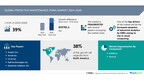
NEW YORK, Nov. 27, 2024 /PRNewswire/ — Report with the AI impact on market trends – The global predictive maintenance (PDM) market  size is estimated to grow by USD 33.76 billion from 2024-2028, according to Technavio. The market is estimated to grow at a CAGR of  39%  during the forecast period. Increased adoption of advanced analytics by SMES owing to rise in cloud computing is driving market growth, with a trend towards proliferation of advanced technologies, AI, and IoT. However, lack of expertise and technical knowledge  poses a challenge.Key market players include Augury Inc., Avnet Inc., C3.ai Inc, Dell Technologies Inc., Deutsche Telekom AG, Fortive Corp., General Electric Co., Hitachi Ltd., Honeywell International Inc., International Business Machines Corp., PTC Inc., RapidMiner Inc., Reliability Solutions sp. Z o.o., Robert Bosch GmbH, Rockwell Automation Inc., SAP SE, SAS Institute Inc., Schneider Electric SE, Siemens AG, and Warwick Analytics Services Ltd..

AI-Powered Market Evolution Insights. Our comprehensive market report ready with the latest trends, growth opportunities, and strategic analysis- View Free Sample Report PDF

Forecast period

2024-2028

Base Year

2023

Historic Data

2017 – 2021

Segment Covered

Component (Solutions and Service), Deployment (On-premises and Cloud), and Geography (North America, Europe, APAC, South America, and Middle East and Africa)

Region Covered

North America, Europe, APAC, South America, and Middle East and Africa

Key companies profiled

Augury Inc., Avnet Inc., C3.ai Inc, Dell Technologies Inc., Deutsche Telekom AG, Fortive Corp., General Electric Co., Hitachi Ltd., Honeywell International Inc., International Business Machines Corp., PTC Inc., RapidMiner Inc., Reliability Solutions sp. Z o.o., Robert Bosch GmbH, Rockwell Automation Inc., SAP SE, SAS Institute Inc., Schneider Electric SE, Siemens AG, and Warwick Analytics Services Ltd.

Key Market Trends Fueling Growth

Predictive Maintenance (PDM) is a cutting-edge business trend revolutionizing equipment maintenance. It uses condition-based strategies to predict and prevent equipment failure, moving beyond time- and reactive-based methods. PDM leverages various technologies like electromagnetic radio fields, NFC chips, and sensor devices to gather real-time data. Devices such as vibration meters and acoustic analysis tools help identify potential issues. Machine learning algorithms analyze sensor data to predict faults, enabling action before human error or pocket dials cause problems. NFC technology facilitates transactions for maintenance work, while smart posters and maintenance software like CMMS, FTMaintenance, and mobile CMMS features streamline work orders and communication between maintenance staff, machine operators, and technicians. Predictive maintenance saves costs by minimizing downtime and extending asset life. It’s being adopted in diverse industries, from coal preparation plants to fleet maintenance and building management. Predictive maintenance is the future, combining advanced technologies like machine learning, computer-based modeling, and analytics tools with wireless internet connections to provide actionable insights. Meteorologists and Doppler radars, even satellites, contribute to predictive maintenance by providing weather data and environmental conditions. Predictive maintenance is transforming maintenance work, making it more efficient, effective, and proactive. 

Predictive maintenance (PdM) is a proactive approach to equipment maintenance that uses data analysis and machine learning algorithms to predict potential failures before they occur. By analyzing historical data and current performance indicators, PdM solutions can identify patterns and trends that may indicate an impending issue. The acceptance of advanced technologies like AI, machine learning, blockchain, cloud computing, and big data is driving the adoption of PdM in various industries. These technologies enable real-time monitoring, predictive analytics, and automated maintenance, leading to increased efficiency, cost savings, and improved asset performance. Billions of dollars are being invested in research and development to further enhance the capabilities of these technologies, making PdM an essential component of modern maintenance strategies. 

Insights on how AI is driving innovation, efficiency, and market growth- Request Sample!

Market Challenges

Predictive Maintenance (PDM) is a cutting-edge technology that uses machine learning and sensor data to predict equipment failures before they occur. However, implementing PDM comes with challenges. Electromagnetic radio fields from sensors can interfere with NFC chips in devices, leading to transaction errors. Human error, such as pocket dialing maintenance work orders, can also cause delays. Distance and battery life are concerns for wireless sensor devices. PDM relies on condition-based maintenance using sensor devices and real-time data. Time-based maintenance and reactive maintenance are outdated methods. Maintenance software like CMMS, FTMaintenance, and mobile CMMS features play a crucial role in managing work orders and dispatching maintenance staff. Vibration analysis, acoustic analysis, and infrared analysis are common condition-monitoring techniques. Baselines and work orders help maintenance technicians identify potential issues. Machine operators should be trained to use condition-monitoring devices like vibration meters. Predictive algorithms use data from sensors, computer-based modeling, and analytics tools to predict faults. Predictive maintenance is essential for fleet maintenance and building maintenance. Doppler radars, satellites, and meteorologists provide additional data for predictive maintenance in extreme environments. Challenges include ensuring accurate sensor data and a reliable wireless internet connection. Maintenance staff should be trained to use predictive maintenance software and understand the importance of preventive maintenance. Collaboration between maintenance technicians, machine operators, and data analysts is crucial for successful implementation of predictive maintenance.Predictive maintenance (PdM) is a crucial business strategy that helps enterprises prevent equipment failure through corrective or scheduled maintenance. However, the implementation of PdM comes with challenges. The lack of skilled labor and specialized knowledge in condition monitoring and predictive analytics is a significant hurdle. This complex process requires extensive domain expertise for micro-segmentation deployment. As historical data grows and PdM use cases expand, the complexity of the models increases, leading to management overhead and inefficiencies. To overcome these challenges, extensive training and specialized resources are necessary for successful PdM adoption.

Insights into how AI is reshaping industries and driving growth- Download a Sample Report

Segment Overview 

This predictive maintenance (pdm) market report extensively covers market segmentation by

Component 1.1 Solutions1.2 ServiceDeployment 2.1 On-premises2.2 CloudGeography 3.1 North America3.2 Europe3.3 APAC3.4 South America3.5 Middle East and Africa

1.1 Solutions-  Predictive maintenance (PdM) solutions are integrated with new or existing machinery infrastructure to monitor machine health and identify early signs of deterioration. This integration ensures a good return on investment (ROI) and helps organizations meet sustainability goals by enabling remote machine monitoring worldwide. By keeping assets in optimal working condition and available at all times, PdM solutions increase asset life expectancy and reduce high maintenance costs. The energy and utilities, manufacturing, healthcare, aerospace and defense, and automotive sectors are among those driving the growth of the global PdM market due to their increasing adoption of PdM solutions. These industries use sensors and equipment to generate data for analysis, which is then transferred to the cloud for analysis and monitoring via gateways. The cloud provides computing, data storage, and analytics reporting, while management software serves as an interface for users to handle equipment conditions from anywhere. The use of PdM solutions is expected to increase significantly, leading to market growth during the forecast period. These solutions help improve product quality and process efficiency by analyzing data generated from equipment and sensors. Gateways serve as data transporters and translators, while cloud services offer shared software resources for computing, data storage, and analytics reporting. Management software acts as an interface for users to monitor equipment conditions in real-time.

Download complimentary Sample Report to gain insights into AI’s impact on market dynamics, emerging trends, and future opportunities- including forecast (2024-2028) and historic data (2017 – 2021) 

Research Analysis

Predictive maintenance (PDM) is a proactive approach to equipment maintenance using real-time data analysis and various sensor devices. Electromagnetic radio fields and NFC chips are among the technologies utilized in PDM. NFC transactions enable data exchange between devices, providing distance information for condition-based maintenance. Human error can be minimized through smart posters and NFC technology, triggering action when maintenance is required. PDM employs NFC technology to monitor assets, collecting data for analysis in real-time. This information helps identify potential equipment failure before it occurs, moving away from time-based and reactive maintenance. Maintenance software, such as CMMS, uses baselines and work orders to manage maintenance tasks, with machine operators and maintenance staff receiving notifications for necessary actions. Vibration analysis, acoustic analysis, and infrared analysis are common methods used in PDM. A centrifugal pump motor in a coal preparation plant, for instance, can be monitored using a vibration meter to detect anomalies and prevent costly downtime. By leveraging these advanced technologies and techniques, predictive maintenance significantly improves equipment reliability and reduces maintenance costs.

Market Research Overview

Predictive Maintenance (PDM) is a cutting-edge technology that utilizes various sensors, condition-monitoring devices, and advanced analytics tools to predict equipment failures before they occur. This proactive approach to maintenance reduces downtime, lowers maintenance costs, and increases asset productivity. Electromagnetic radio fields, NFC chips, and sensor devices collect real-time data on machine performance, temperature, vibration, and other key indicators. Machine learning algorithms analyze this data to identify patterns and anomalies, predicting potential failures and suggesting preventive actions. NFC technology enables wireless transactions for maintenance work orders, while machine operators and maintenance staff receive notifications for required actions. Distance learning and smart posters provide training and instructions for maintenance technicians. Predictive maintenance applications range from centrifugal pump motors in coal preparation plants to fleet maintenance and building systems. Vibration analysis, acoustic analysis, infrared analysis, and computer-based modeling are essential tools for predictive maintenance. Predictive algorithms, wireless internet connection, and CMMS software facilitate efficient and effective maintenance work. Meteorologists, Doppler radars, and satellites provide external data for predicting weather-related maintenance needs.

Table of Contents:

1 Executive Summary
2 Market Landscape
3 Market Sizing
4 Historic Market Size
5 Five Forces Analysis
6 Market Segmentation

ComponentSolutionsServiceDeploymentOn-premisesCloudGeographyNorth AmericaEuropeAPACSouth AmericaMiddle East And Africa

7 Customer Landscape
8 Geographic Landscape
9 Drivers, Challenges, and Trends
10 Company Landscape
11 Company Analysis
12 Appendix

About Technavio

Technavio is a leading global technology research and advisory company. Their research and analysis focuses on emerging market trends and provides actionable insights to help businesses identify market opportunities and develop effective strategies to optimize their market positions.

With over 500 specialized analysts, Technavio’s report library consists of more than 17,000 reports and counting, covering 800 technologies, spanning across 50 countries. Their client base consists of enterprises of all sizes, including more than 100 Fortune 500 companies. This growing client base relies on Technavio’s comprehensive coverage, extensive research, and actionable market insights to identify opportunities in existing and potential markets and assess their competitive positions within changing market scenarios.

Contacts

Technavio Research
Jesse Maida
Media & Marketing Executive
US: +1 844 364 1100
UK: +44 203 893 3200
Email: media@technavio.com
Website: www.technavio.com/

View original content to download multimedia:https://www.prnewswire.com/news-releases/predictive-maintenance-pdm-market-to-grow-by-usd-33-76-billion-from-2024-2028–driven-by-ai-and-cloud-adoption-in-smes—technavio-302316478.html

SOURCE Technavio

Continue Reading

Technology

Raytron Industrial Launches TN660 and TN463 Thermal Cameras for Dynamic Testing and Continuous Condition Monitoring

Published

on

By

YANTAI, China, Oct. 22, 2026 /PRNewswire/ — Raytron Industrial today announced the launch of two new products: the TN660 High Frame Rate Fixed-Mount Thermal Camera and the TN463 Fixed-Mount Thermal Camera. Both offer 640 × 512 imaging with synchronized image and temperature data. The TN660 delivers full-frame 120 Hz acquisition for moving targets and transient thermal processes, while the TN463 provides 60 Hz imaging for routine inline inspection and continuous equipment monitoring.

Full-Resolution Imaging for Different Process Speeds

Featuring a 12 μm uncooled VOx detector, the TN660 achieves 120 Hz at its native resolution without windowing, preserving spatial detail and scene coverage. Frames are approximately 8.33 ms apart, helping engineers examine rapid heating, cooling, and short-duration thermal events in research, industrial automation, and transportation applications.

The TN463 uses the same detector resolution and pixel pitch. Its 60 Hz output supports routine production cycles and long-term temperature trend analysis. To accommodate different installation requirements, the TN463 offers 6.9 mm, 9.1 mm, 19 mm, and 25 mm lenses, while the TN660 is available with 9.1 mm and 25 mm lenses.

From Event-Triggered Capture to Synchronized Analysis

Both cameras support hardware and software triggering to coordinate acquisition with equipment actions. An external signal through the I/O (input/output) interface can initiate capture at a defined process stage. For example, a heat-press start signal can trigger the TN660 to record the thermal sequence, reducing unnecessary recording and review work.

Synchronized output pairs temperature readings with corresponding thermal images. Raytron Industrial’s TI Studio software supports simultaneous preview and analysis of up to four cameras, with temperature and temperature-rise alarms to flag abnormal conditions. Engineers can review recordings, examine and export historical temperature curves, and generate reports, linking equipment events with thermal data for further analysis.

Temperature Measurement and System Integration

Both models measure temperatures from −20°C to 150°C and 100°C to 650°C, with an accuracy of ±2°C or ±2% of the reading, whichever is greater. Ethernet and USB connectivity support data acquisition, while compatibility with industrial protocols such as Modbus TCP allows temperature data to be incorporated into existing control and monitoring systems.

With a choice of 60 Hz and 120 Hz imaging, the TN463 and TN660 allow users to match thermal acquisition to their process requirements, from continuous equipment monitoring to dynamic testing.

For Further Information

Email: sales@raythink-tech.com
Website: https://www.raythink-tech.com/

View original content to download multimedia:https://www.prnewswire.co.uk/news-releases/raytron-industrial-launches-tn660-and-tn463-thermal-cameras-for-dynamic-testing-and-continuous-condition-monitoring-302916778.html

Continue Reading

Technology

4SiGHT Supply Chain Group Welcomes Joanne Strong as Senior Vice President, Delivery Excellence and Innovation

Published

on

By

Industry-recognized WMS leader and AI-driven delivery innovator joins 4SiGHT to lead delivery as one of North America’s largest dedicated Manhattan Active® implementation partners accelerates its growth

WAYNE, N.J., Oct. 22, 2026 /PRNewswire-PRWeb/ — 4SiGHT Supply Chain Group, one of North America’s largest dedicated Manhattan Associates implementation partners, today announced the appointment of Joanne Strong as Senior Vice President of Delivery Excellence and Innovation. Strong joins the executive leadership team and will lead all client delivery across the firm.

4SiGHT has built something rare in its 18 years of operations: deep Manhattan expertise, exceptional talent, industry reputation, singular focus on Manhattan Associates, and a culture that puts client success at the center of everything it does.

The appointment comes during a year of rapid growth for 4SiGHT. Now in its 18th year, the firm has grown to more than 70 full-time associates in 2026 and continues to add Manhattan Active® talent across its warehouse, labor, transportation, and organizational change management practices. Strong’s newly created role is dedicated to ensuring that this growth is matched by an uncompromising standard of quality across every engagement.

“Delivery is our product. Every go-live, every client reference, and every renewal comes down to how well we execute,” said Frank Camean, President and CEO of 4SiGHT. “As 4SiGHT scales, we made a deliberate decision to put a senior executive in charge of one thing: the quality, consistency, and continuous improvement of how we deliver for our clients. Joanne has built and led delivery organizations at real scale, she knows the Manhattan Associates platform from the inside, and she has a proven record of innovation to make implementations faster and more predictable. Joanne is exactly the leader our clients deserve as we enter our next chapter. We are all honored and excited to have her join the team and can’t wait to see what the future brings.”

Strong brings more than a decade of experience with Manhattan Associates and enterprise warehouse management. She most recently served as WMS Practice Lead, directing a multimillion-dollar WMS practice that delivered supply chain transformation programs for Fortune 500 companies in retail, consumer products, and life sciences.

A recognized voice in the supply chain industry, Strong delivered keynote addresses at the 2025 Stratify Executive Forum and at Parcel Forum 2026, has been a featured panelist at MODEX, and has appeared on The New Warehouse and Bloomberg’s Talking Transports podcasts. She holds a B.B.A. in Management Information Systems from the University of Georgia’s Terry College of Business.

“4SiGHT has built something rare in its 18 years of operations: deep Manhattan expertise, exceptional talent, industry reputation, singular focus on Manhattan Associates, and a culture that puts client success at the center of everything it does,” said Strong. “The depth of Manhattan knowledge and real-world implementation experience across the organization is truly unique in the industry. My focus is on elevating an already outstanding client experience by combining that expertise with proven delivery practices, innovative methodologies, implementation accelerators, AI-enabled tools and capabilities. We have an incredible opportunity to help clients achieve faster outcomes, greater confidence in execution, and long-term business value. I’m honored to join the team at such a pivotal moment in its growth and excited for what we will accomplish together.”

About 4SiGHT Supply Chain Group

4SiGHT specializes in supply chain software implementations, with a primary focus on the Manhattan Associates product suite of applications. Our seasoned professionals average more than 19 years of experience helping companies across all industries solve their distribution, fulfillment, and transportation challenges. Together with our strategic partners, our collective team includes more than 100 associates. No other firm in North America brings this depth of Manhattan Active® expertise, and we look forward to expanding our team with additional talent in the months ahead. As a testament to the value our clients place on our expertise, experience, and integrity, 4SiGHT has received multiple industry awards. For more information, please visit 4sight.com or email us at in4mation@4sight.com.

Media Contact

Jenae Cahanes, 4SiGHT Supply Chain Group, 1 9734350025, jenae.cahanes@4sight.com, 4sight.com

LinkedIn

View original content:https://www.prweb.com/releases/4sight-supply-chain-group-welcomes-joanne-strong-as-senior-vice-president-delivery-excellence-and-innovation-302916680.html

SOURCE 4SiGHT Supply Chain Group

Continue Reading

Technology

UL Research Institutes Releases New Report Defining Roadmap for Next-Generation Wildfire Risk Intelligence

Published

on

By

New findings identify critical gaps and opportunities in wildfire risk modeling to strengthen community protection

COLUMBIA, Md., Oct. 22, 2026 /PRNewswire/ — As destructive wildfires increasingly threaten communities across the globe, a new report from UL Research Institutes’ Fire Safety Research Institute examines the strengths and limitations of current wildfire risk models and provides a roadmap for more comprehensive wildfire risk intelligence.

“Wildfire Risk Modeling Evaluation Findings and Community Perspectives” details findings from the 2026 Wildfire Risk Modeling Exercise, a first-of-its-kind collaborative effort that evaluated a diverse set of wildfire risk models using common scenarios and datasets. The exercise included approximately 20 organizations across academia, government, national laboratories, nonprofits, and the private sector.

For fire service leaders, emergency managers, and public safety officials, the report provides a practical framework for evaluating which modeling capabilities are best suited to specific community needs and decisions. Applied effectively, these tools can help practitioners identify where risk is greatest, prioritize mitigation investments, strengthen evacuation and preparedness planning, and make more informed decisions before, during, and after a wildfire.

“The Wildfire Risk Modeling Exercise was a convergent test and evaluation of the diverse models available to characterize wildfire risk today. These results revealed broader insights about the state of the science, prioritized gaps, and the investments needed to advance wildfire risk intelligence,” said Rebecca Harned, principal research scientist for Fire Safety Research Institute and the report’s lead author. “The findings provide a critical foundation for shaping the next decade of research, innovation, and operational capability. This report also serves as an important resource for local and state fire service and public safety agencies, providing an evidence-based framework for selecting wildfire risk modeling capabilities and applying them effectively to assess and manage community risk.”

Key Findings From the Wildfire Risk Modeling Exercise

The results from the exercise demonstrate that no single model can capture the full complexity of wildfire risk, nor should one be expected to. Instead, the report identifies an opportunity to build a new generation of wildfire risk intelligence by connecting complementary models, datasets, and scientific approaches. Doing so can help close critical gaps between modeling wildfire hazard and understanding what ultimately matters to communities — which people, property, and assets are at risk, why they are vulnerable, what the consequences could be, and which actions can most effectively reduce those risks.

To realize that vision, the report recommends building an interoperable modeling ecosystem spanning the full wildfire risk assessment pathway, from ignition and landscape fire spread through structure exposure, community impacts, and economic consequences. It also calls for stronger shared core data and standards, improved transparency and explainability, expanded decision-support tools, and greater use of ensemble modeling. Together, these advances could transform wildfire modeling from a collection of specialized capabilities into an integrated risk intelligence framework that better supports decisions before, during, and after wildfire events.

About the Fire Safety Research Institute

UL Research Institutes’ Fire Safety Research Institute advances fire science and fire safety knowledge to reduce risk, save lives, and protect property. We conduct rigorous research, outreach, and education in collaboration with the fire service, fire safety professionals, policymakers, communities, and an international network of partners. Together, we develop tools, resources, and strategies that improve fire safety outcomes worldwide. To learn more, visit fsri.org. Follow Fire Safety Research Institute on Instagram, Facebook, and LinkedIn.

About UL Research Institutes

UL Research Institutes is a nonprofit research organization dedicated to advancing public safety through scientific discovery. Since 1894, our research has advanced our mission toward a safer, more secure, and sustainable future. Focused on global risks from fire mitigation and air quality to safe energy storage and digital privacy, we conduct rigorous independent research, analyze safety data, and partner with experts to uncover and act on existing and emerging risks to human safety. Discover more at UL.org.

About the Exercise

The 2026 Wildfire Risk Modeling Exercise was designed as an open, collaborative and non-competitive effort. Each model submission was evaluated by multiple reviewers through two complementary evaluation streams: science and technical evaluation and user and practitioner evaluation. Participating organizations applied their models to standardized scenarios representing wildland, wildland-urban interface, and urban environments, with results evaluated by scientific experts and operational practitioners. The exercise was designed not to rank models, but to identify their strengths, limitations, and opportunities for integration.

For more information and to read the full report, visit FSRI.org.

View original content to download multimedia:https://www.prnewswire.com/news-releases/ul-research-institutes-releases-new-report-defining-roadmap-for-next-generation-wildfire-risk-intelligence-302916462.html

SOURCE UL Research Institutes

Continue Reading

Trending