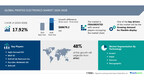
NEW YORK, Nov. 28, 2024 /PRNewswire/ –Report on how AI is driving market transformation – The global printed electronics market size is estimated to grow by USD 68.68 billion from 2024-2028, according to Technavio. The market is estimated to grow at a CAGR of 17.92% during the forecast period. Growing demand for flexible display is driving market growth, with a trend towards emerging stretchable electronics. However, challenge of encapsulation poses a challenge. Key market players include Agfa Gevaert NV, BASF SE, DuPont de Nemours Inc., Dycotec Materials Ltd., Enfucell, Fujikura Co. Ltd., Henkel AG and Co. KGaA, InnovationLab GmbH, Jabil Inc., Koch Industries Inc., Nissha Co. Ltd., NovaCentrix, Optomec Inc., Printed Electronics Ltd., Samsung Electronics Co. Ltd., Schreiner Group GmbH and Co. KG, TE Connectivity Ltd., Xerox Holdings Corp., YFY Inc., and Ynvisible Interactive Inc.
Key insights into market evolution with AI-powered analysis. Explore trends, segmentation, and growth drivers- View Free Sample PDF
Printed Electronics Market Scope
Report Coverage
Details
Base year
2023
Historic period
2018 – 2022
Forecast period
2024-2028
Growth momentum & CAGR
Accelerate at a CAGR of 17.92%
Market growth 2024-2028
USD 68679.2 million
Market structure
Fragmented
YoY growth 2022-2023 (%)
15.18
Regional analysis
APAC, North America, Europe, Middle East and Africa, and South America
Performing market contribution
APAC at 48%
Key countries
South Korea, Japan, China, US, and UK
Key companies profiled
Agfa Gevaert NV, BASF SE, DuPont de Nemours Inc., Dycotec Materials Ltd., Enfucell, Fujikura Co. Ltd., Henkel AG and Co. KGaA, InnovationLab GmbH, Jabil Inc., Koch Industries Inc., Nissha Co. Ltd., NovaCentrix, Optomec Inc., Printed Electronics Ltd., Samsung Electronics Co. Ltd., Schreiner Group GmbH and Co. KG, TE Connectivity Ltd., Xerox Holdings Corp., YFY Inc., and Ynvisible Interactive Inc
Market Driver
The Printed Electronics Market is experiencing significant growth, particularly in consumer electronics and IoT applications. OLED displays and printed RFID devices are leading the trend, offering higher efficiency, lower power consumption, and upgrades through easy upgrades and improvisations. Companies like CymMetrik are driving innovation with advanced materials, inks, and substrates. Flexible substrates, such as glass, silicon, flexible foil, paper, and Polyethylene Terephthalate (PET), are used in various devices like photovoltaic, lighting, RFID, and other devices. Ink materials and substrate material segments are key areas of focus, with conductive inks in silver, carbon, and metallic varieties, and graphene ink gaining popularity. Printing technologies like inkjet, screen-printing, gravure, and flexographic are used, with R2R printing and offset printing also in use. While high investment costs are a challenge, the market’s potential for cost-effectivity, accuracy, authenticity, reliability, and innovation in smart packaging, photovoltaic devices, solar energy, and various other devices make it an exciting space to watch.
Stretchable electronics, a technology for constructing flexible electronic circuits, is gaining significant traction in various industries. These electronics are designed to be placed on stretchable substrates or embedded within materials like silicones and polyurethanes. The market for stretchable electronics is projected to expand, particularly in the healthcare sector. This growth is attributed to the increasing demand for real-time patient monitoring, especially for individuals with critical health conditions, as well as the application of these technologies in military and sports sectors for health tracking and management. Key applications include cyber skins for robotic devices, implantable electronics, moldable energy storage devices, and blood glucose test strips.
Request Sample of our comprehensive report now to stay ahead in the AI-driven market evolution!
Market Challenges
The Printed Electronics Market is experiencing significant growth due to its applications in consumer electronics, IoT devices, and various other sectors. OLED displays and RFID devices are leading the way, offering advantages such as higher efficiency, lower power consumption, and upgrades through easy upgrades and improvisations. Companies like CymMetrik are driving innovation with advanced materials, inks, and substrates. Flexible substrates like glass, silicon, and flexible foil, as well as paper and PET, are used in inkjet printing, screen-printing, and other technologies. Challenges include high investment cost for advanced technologies like R2R printing, gravure printing, offset printing, and inkjet or screen printing. The market for printed batteries, sensors, and medical & healthcare devices is expanding, with a focus on accuracy, authenticity, reliability, and cost-effectivity. Ink materials and substrate material segments include conductive inks, silver, carbon inks, metallic inks, and graphene ink. The photovoltaic devices segment, which includes solar energy, is also gaining traction.The encapsulation process for printed electronics, particularly in the manufacturing of flexible OLED displays and light panels, is a costly challenge. This issue is not limited to flexible substrates but also applies to rigid ones. With mass production of these panels, the cost increases significantly. Companies like Samsung and LG Display, which use vapor deposition techniques for OLED displays with curved form factors, face this expense. This challenge is anticipated to persist in printed OLED displays, where the encapsulation cost will be comparable to vapor deposition methods.
Discover how AI is revolutionizing market trends- Get your access now!
Segment Overview
This printed electronics market report extensively covers market segmentation by
Technology 1.1 Screen1.2 Inkjet1.3 Gravure1.4 FlexographicApplication 2.1 Display2.2 Sensors2.3 Photovoltaics2.4 Battery2.5 OthersGeography 3.1 APAC3.2 North America3.3 Europe3.4 Middle East and Africa3.5 South America
1.1 Screen- The screen-printing process is a well-established technology in the printed electronics market for creating high-quality and reliable printed circuits. Its advantages include high throughput, high resolution, and a low cost per unit. Screen printing is particularly suitable for large-area and high-volume production in applications such as flexible displays, photovoltaics, and touch screens. Although it may not be ideal for producing small, intricate patterns with high precision, screen printing’s ability to create thick and highly conductive traces makes it suitable for high-current applications. Despite some limitations, such as the need for significant setup time and cost for stencils or masks, screen printing’s popularity continues in the printed electronics market due to its proven performance and versatility. Therefore, the screen-printing segment is expected to contribute significantly to the growth of the global printed electronics market during the forecast period.
Download a Sample of our comprehensive report today to discover how AI-driven innovations are reshaping competitive dynamics
Research Analysis
Printed electronics is a rapidly evolving technology that is revolutionizing the consumer electronics industry. This technology enables the production of electronic components directly onto various substrates, including glass, silicon, flexible foil, paper, and Polyethylene Terephthalate (PET). The market for printed electronics is expanding due to its applications in IoT devices, OLED displays, RFID tags, and various communication devices. Printed electronics offer several advantages over traditional electronics, such as lower production costs, higher efficiency, and low power consumption. This technology is a research arena for upgrades and improvisations, with advancements in materials, inks, and substrates. Ink materials include conductive polymers, metal nanoparticles, and organic semiconductors, while substrate material segments include flexible substrates like PET and glass. Printing techniques such as inkjet printing and screen-printing are commonly used in the production of printed electronics. The market for printed electronics is expected to grow significantly in the coming years due to the increasing demand for smartphones, wearable devices, and other IoT applications. Overall, printed electronics is a dynamic and innovative field that is transforming the consumer electronics industry.
Market Research Overview
Printed electronics is an emerging technology that is revolutionizing the consumer electronics industry by enabling the production of flexible, lightweight, and cost-effective electronic devices. This technology is finding extensive applications in IoT, consumer electronics, and various other sectors. The technology offers several advantages such as higher efficiency, lower power consumption, and upgrades through easy upgrades and improvisations. Printed electronics are used in various applications including OLED displays, RFID devices, and communication devices. The market for printed electronics is driven by the demand for IoT devices, smartphones, and display devices. The technology utilizes various materials such as inks, substrates, and ink materials segment like conductive inks made of silver, carbon, metallic inks, and graphene ink. Substrate materials include glass, silicon, flexible foil, paper, and Polyethylene Terephthalate (PET). Printing technologies include inkjet printing, screen-printing, gravure printing, and R2R printing. While screen printing technology is widely used, other printing technologies like gravure and offset printing are also gaining popularity. The market for printed electronics is diverse and includes photovoltaic devices for solar energy, lighting, RFID, other devices like printed batteries, sensors, and medical & healthcare applications. The technology offers benefits such as accuracy, authenticity, reliability, and cost-effectivity. However, the high investment cost associated with the production of these devices remains a challenge for the market. Smart packaging is another growing application area for printed electronics. The market for printed electronics is expected to grow significantly in the coming years due to its numerous advantages and increasing demand from various industries.
Table of Contents:
1 Executive Summary
2 Market Landscape
3 Market Sizing
4 Historic Market Size
5 Five Forces Analysis
6 Market Segmentation
TechnologyScreenInkjetGravureFlexographicApplicationDisplaySensorsPhotovoltaicsBatteryOthersGeographyAPACNorth AmericaEuropeMiddle East And AfricaSouth America
7 Customer Landscape
8 Geographic Landscape
9 Drivers, Challenges, and Trends
10 Company Landscape
11 Company Analysis
12 Appendix
About Technavio
Technavio is a leading global technology research and advisory company. Their research and analysis focuses on emerging market trends and provides actionable insights to help businesses identify market opportunities and develop effective strategies to optimize their market positions.
With over 500 specialized analysts, Technavio’s report library consists of more than 17,000 reports and counting, covering 800 technologies, spanning across 50 countries. Their client base consists of enterprises of all sizes, including more than 100 Fortune 500 companies. This growing client base relies on Technavio’s comprehensive coverage, extensive research, and actionable market insights to identify opportunities in existing and potential markets and assess their competitive positions within changing market scenarios.
Contacts
Technavio Research
Jesse Maida
Media & Marketing Executive
US: +1 844 364 1100
UK: +44 203 893 3200
Email: media@technavio.com
Website: www.technavio.com/
View original content to download multimedia:https://www.prnewswire.com/news-releases/printed-electronics-market-to-grow-by-usd-68-68-billion-2024-2028-rising-demand-for-flexible-displays-drives-growth-report-highlights-ai-evolution—technavio-302318417.html
SOURCE Technavio









 Coin Market5 days ago

 Technology5 days ago


 Technology4 days ago

 Coin Market4 days ago

 Technology5 days ago
