Connect with us

Technology

Anti-Reflective Coatings Market to grow by USD 3.51 billion (2024-2028), driven by solar industry demand, with AI transforming market trends – Technavio

Published

on

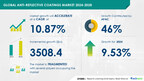
NEW YORK, Dec. 3, 2024 /PRNewswire/ — Report with market evolution powered by AI – The global anti-reflective coatings market size is estimated to grow by USD 3.51 billion from 2024-2028, according to Technavio. The market is estimated to grow at a CAGR of over 10.87%  during the forecast period. Growing demand for anti-reflective coatings in solar industry is driving market growth, with a trend towards increasing applications of anti-reflective coatings in eyewear. However, fluctuations in raw material prices  poses a challenge. Key market players include AccuCoat Inc., AGC Inc., AMETEK Inc., Carl Zeiss AG, Cascade Optical Corp., DuPont de Nemours Inc., EMF Corp., EssilorLuxottica, Gooch and Housego Plc, HEF, Honeywell International Inc., HOYA CORP., Nippon Sheet Glass Co. Ltd., Optical Coatings Japan, Optics and Allied Engg. Pvt. Ltd., Optics Balzers AG, PFG Precision Optics Inc., PPG Industries Inc., Viavi Solutions Inc., and Vortex Optical Coatings Ltd..

Key insights into market evolution with AI-powered analysis. Explore trends, segmentation, and growth drivers- View Free Sample PDF

Anti-Reflective Coatings Market Scope

Report Coverage

Details

Base year

2023

Historic period

2018 – 2022

Forecast period

2024-2028

Growth momentum & CAGR

Accelerate at a CAGR of 10.87%

Market growth 2024-2028

USD 3508.4 million

Market structure

Fragmented

YoY growth 2022-2023 (%)

9.53

Regional analysis

APAC, North America, Europe, Middle East and Africa, and South America

Performing market contribution

APAC at 46%

Key countries

China, US, India, Germany, and France

Key companies profiled

AccuCoat Inc., AGC Inc., AMETEK Inc., Carl Zeiss AG, Cascade Optical Corp., DuPont de Nemours Inc., EMF Corp., EssilorLuxottica, Gooch and Housego Plc, HEF, Honeywell International Inc., HOYA CORP., Nippon Sheet Glass Co. Ltd., Optical Coatings Japan, Optics and Allied Engg. Pvt. Ltd., Optics Balzers AG, PFG Precision Optics Inc., PPG Industries Inc., Viavi Solutions Inc., and Vortex Optical Coatings Ltd.

Market Driver

The anti-reflective coatings market is poised for growth due to the increasing demand for high-performance optical materials, particularly in the eyewear industry. These coatings eliminate glare by allowing more light to pass through lenses, making vision sharper and clearer compared to uncoated lenses. Anti-reflective coatings provide enhanced durability, resistance to scratches, water, and dirt, and help reduce eye fatigue caused by prolonged use of digital devices and television. By minimizing reflective light, these coatings improve visual comfort and reduce halos, making them a valuable addition to both the front and back surfaces of lenses. The benefits of anti-reflective coatings, including improved vision, durability, and resistance to external elements, are driving their adoption in various applications, leading to market expansion during the forecast period. 

The Anti-Reflective Coatings market is experiencing significant growth due to the increasing demand for improved optical systems in various industries. These coatings reduce glare and enhance contrast, leading to better visual experiences in eyewear, electronics, and solar applications. Durability and performance are key factors driving the market’s expansion. Coating technology advancements, such as Electron Beam Evaporation and Sputtering, are used to create coated surfaces for electronic displays, solar panels, and automotive sectors. The rising population and vision impairments are fueling the demand for sustainable coatings like thinfilm fabrication for antireflective glasses. Advancements in coating technology are addressing issues like eye strain caused by prolonged use of computer screens and flat panels. The market is also witnessing growth in the automotive sector due to the need for glare reduction in progressive lenses for presbyopia and nearsightedness. SkyQuest Analysis, a leading business information services provider, reports that primary exploratory and desk research indicate continued advancements in UV ray protection and nanotechnology. Overall, the Anti-Reflective Coatings market is poised for continued expansion in the coming years. 

Request Sample of our comprehensive report now to stay ahead in the AI-driven market evolution!

Market Challenges

The anti-reflective coatings market faces significant challenges due to the volatile prices of key raw materials, particularly titanium dioxide. This pigment, which accounts for approximately one-third of the total coating cost, is crucial for providing light-scattering properties and opacity in anti-reflective coatings. As a vital material in the optical industry, titanium dioxide is used in various applications, including anti-UV lens coatings and photocatalysts. Its high refractive index makes it an essential component for dispersing light. However, the primary production of titanium dioxide is concentrated in developed countries, leading to high labor costs and supply constraints. These factors complicate the pricing of anti-reflective coating products and impact the profit margins for vendors. The fluctuating prices of raw materials pose a significant challenge for the growth of the anti-reflective coatings market during the forecast period.The Anti-Reflective Coatings market faces challenges in production techniques such as Electron Beam Evaporation and Sputtering. In the Solar sector, sputtering technology dominates, but advancements in nanotechnology are pushing for change. The Automotive sector demands sustainable coatings to reduce glare and improve visual insight for drivers. SkyQuest Analysis, a Business Information Services provider, conducts Primary Exploratory and Desk Research to provide insights. Advancements in coating technology address issues like UV rays, eye strain, and impairments for antireflective glasses, computer screens, displays, and progressive lenses. The growing population and vision impairment lead to productivity losses, driving market growth. Semiconductors and manufacturing operations require antireflective coatings for solar cells, carbon-neutral electronics production bases, TVs, wires, cables, portable computing, gaming systems, and personal electronics.

Discover how AI is revolutionizing market trends- Get your access now!

Segment Overview 

This anti-reflective coatings market report extensively covers market segmentation by 

Application 1.1 Eyewear1.2 Electronics1.3 Solar1.4 Automobile1.5 OthersTechnology 2.1 Vacuum deposition2.2 Electron beam evaporation2.3 Sputtering2.4 Roll to roll2.5 OthersGeography 3.1 APAC3.2 North America3.3 Europe3.4 Middle East and Africa3.5 South America

1.1 Eyewear-  Anti-reflective coatings play a crucial role in the eyewear industry by preventing harmful radiations from electronic devices and allowing maximum light transfer for clear vision. These coatings are particularly effective on high-index lenses, which reflect more light than regular plastic lenses. In North America, there is a high consumer preference for anti-reflective eyewear. The Asia Pacific region is projected to witness significant growth in demand for anti-reflective coatings due to the rising occurrence of eye disorders and increasing adoption of advanced light-transmitting eyewear. Premium anti-reflective glasses offer additional surface treatments to seal the anti-reflective layer. The benefits of anti-reflective coatings include reduced glare, enhanced contrast levels, and improved night driving experience. These coatings are applied to glass and plastic substrates to offer comfort and clarity. The global anti-reflective coatings market in the eyewear segment is expected to grow due to the increasing demand for advanced eyewear and lenses.

Download a Sample of our comprehensive report today to discover how AI-driven innovations are reshaping competitive dynamics

Research Analysis

Anti-Reflective Coatings (ARCs) are thin films applied to coated surfaces to reduce reflectance and enhance light transmission. These coatings offer significant benefits for various optical systems, including glare reduction and contrast enhancement. ARCs are widely used in eyewear to improve visual experiences for individuals with presbyopia, nearsightedness, or other vision impairments, reducing eye strain caused by prolonged exposure to computer screens, flat panels, and displays. In electronics, ARCs improve the durability and performance of semiconductors and other sensitive components. The rising demand for ARCs is driven by an increasing population and the need for improved visual insight in various industries, including healthcare, education, and manufacturing. ARC technology continues to evolve, offering new possibilities for enhancing the functionality and efficiency of optical systems.

Market Research Overview

Anti-Reflective Coatings (ARCs) are thin layers applied to coated surfaces to reduce reflectance and enhance light transmission. ARCs play a crucial role in various optical systems, including eyewear and electronics, by minimizing glare and improving contrast. The rising demand for ARCs in diverse applications, such as electronic displays, solar panels, and automotive sectors, is driven by the need for enhanced visual experiences and durability. Advancements in coating technology, including Electron Beam Evaporation and Sputtering, have led to the expansion of ARCs in the market. ARCs are used in eyewear to address issues like glare, eye strain, and vision impairments, including presbyopia and nearsightedness. In electronics, ARCs improve the performance of computer screens, flat panels, and displays, reducing reflection and enhancing image quality. The increasing population and the growing prevalence of vision impairments and productivity losses have fueled the demand for ARCs in various applications. ARCs are also used in semiconductors, manufacturing operations, solar cells, and various electronic devices, including TVs, wires, cables, portable computing, gaming systems, and personal electronic devices. The market for ARCs is expected to grow significantly due to the increasing demand for sustainable coatings and the expansion of the electronics production base.

Table of Contents:

1 Executive Summary
2 Market Landscape
3 Market Sizing
4 Historic Market Size
5 Five Forces Analysis
6 Market Segmentation

ApplicationEyewearElectronicsSolarAutomobileOthersTechnologyVacuum DepositionElectron Beam EvaporationSputteringRoll To RollOthersGeographyAPACNorth AmericaEuropeMiddle East And AfricaSouth America

7 Customer Landscape
8 Geographic Landscape
9 Drivers, Challenges, and Trends
10 Company Landscape
11 Company Analysis
12 Appendix

About Technavio

Technavio is a leading global technology research and advisory company. Their research and analysis focuses on emerging market trends and provides actionable insights to help businesses identify market opportunities and develop effective strategies to optimize their market positions.

With over 500 specialized analysts, Technavio’s report library consists of more than 17,000 reports and counting, covering 800 technologies, spanning across 50 countries. Their client base consists of enterprises of all sizes, including more than 100 Fortune 500 companies. This growing client base relies on Technavio’s comprehensive coverage, extensive research, and actionable market insights to identify opportunities in existing and potential markets and assess their competitive positions within changing market scenarios.

Contacts

Technavio Research
Jesse Maida
Media & Marketing Executive
US: +1 844 364 1100
UK: +44 203 893 3200
Email: media@technavio.com
Website: www.technavio.com/

View original content to download multimedia:https://www.prnewswire.com/news-releases/anti-reflective-coatings-market-to-grow-by-usd-3-51-billion-2024-2028-driven-by-solar-industry-demand-with-ai-transforming-market-trends—technavio-302320531.html

SOURCE Technavio

Continue Reading
Click to comment

Leave a Reply

Your email address will not be published. Required fields are marked *

Technology

Saramonic WiTalk9 X: Modular-Designed, Lightweight Wireless Intercom System Redefines Team Communication

Published

on

By

NEW YORK, April 19, 2026 /PRNewswire/ — Saramonic, a leading brand in audio solutions, announced a 9-Person Modular Full-Duplex Wireless Intercom System WiTalk9 X and the WiTalk9 Base. WiTalk9 X builds upon the success of the WiTalk9 with a focus on lightweight comfort and modular adaptability, introducing unprecedented flexibility and scalability of modern production teams from small to large.

Industry-First Modular Design for Maximum Flexibility

The Saramonic WiTalk9 X sets a new standard for adaptability in wireless intercom systems. Its industry-first modular construction allows users to switch between single-ear, dual-ear, or helmet-ready models, accommodating the diverse needs of different crew roles.

Weighing just 172 grams (6 oz) with battery in its single ear configuration, the WiTalk9 X delivers all-day comfort for demanding production environments. The IPX4-rated, lightweight design allows professionals who wear headsets for extended periods during long shoots or live events to focus on their work.

Intelligible Voice Communication: Saramonic ClearTalk™2.0 Technology and AI Noise Cancellation

Saramonic ClearTalk™2.0 combines the dual-microphone array and Saramonic AI Noise Cancellation. The cardioid main microphone focuses on the speaker’s voice, and the omnidirectional secondary mic collects the noise as samples for Saramonic AI Noise cancellation to separate the vocal and noise, ensuring clear and stable voice communication.

Saramonic AI Noise Cancellation is trained by over 700,000 noise samples across 20,000+ hours. Compared to traditional environmental noise cancellation that only handles ambient sounds, it identifies and separates noise in real-time to keep voice clear and stable within team communication, even when multiple crews speak at once in a complex environment.

Efficient Team Work with Dual-Antenna Design and Saramonic WiTalk Wireless Intercom Ecosystem

The WiTalk9 X features both internal and external antennas to continuously monitor signal quality and select the stronger signal. It operates on the 1.9 GHz DECT Technology and offers up to 12 hours battery life with a spare rechargeable lithium battery for quick replacement, enables teams to stay connected within 1,300 ft (400m) – ideal for events, film shoots, and live performances.

Saramonic WiTalk9 X supports a 9-person system without a hub, and can be easily scaled up to 64 users via WiTalk Base, enabling group cascading and remote collaboration with an industry-leading range of up to 700 meters.

Pricing and Availability

The Saramonic WiTalk9 X is available through official stores. For detailed pricing and configuration options, please contact your local Saramonic representative or visit www.saramonic.com.

Contact: marketing@saramonic.com 

Photo – https://mma.prnewswire.com/media/2959888/9x__________1_1.jpg

View original content:https://www.prnewswire.co.uk/news-releases/saramonic-witalk9-x-modular-designed-lightweight-wireless-intercom-system-redefines-team-communication-302746569.html

Continue Reading

Technology

Siemon Releases 2026 ESG Report and Progress Update Report

Published

on

By

WATERTOWN, Conn., April 19, 2026 /PRNewswire-PRWeb/ — The Siemon Company, a global leader in high‑performance network infrastructure solutions for data centers and smart buildings, is proud to announce the release of its 2026 Environmental, Social, and Governance (ESG) Report, showcasing accelerated climate action, third‑party‑verified performance, and continued leadership in transparent, responsible business practices. The report highlights Siemon’s strongest ESG results to date, including early achievement of science‑based climate targets, expanded renewable energy adoption, increased product transparency, and a people‑first culture that supports accountability, equity, and long‑term value creation.

Sustainability is not a side initiative; it’s embedded in how we operate, how we innovate, and how we lead. This year’s report reflects disciplined execution across our Sustainable Development Goals, our value chain, and our workforce.

Key Highlights from the 2026 ESG Report:

Greenhouse Gas (GHG) Emissions

Achieved a 69% absolute reduction in Scope 1 and Scope 2 emissions from a 2021 baseline, surpassing the company’s 2031 SBTi‑validated target four years ahead of schedule.Reduced Scope 3 emissions intensity by 23.1%, while maintaining essentially flat absolute emissions despite business growth.

Energy, Water & Waste

Increased renewable energy usage to 90% of global operations, achieving Scope 2 carbon neutrality at major U.S. and China facilities.Reduced water usage by 30%, exceeding the company’s long‑term reduction goal.Delivered a 17.1% absolute reduction in waste, supported by expanded recycling and sustainable packaging initiatives.

Product Transparency & Customer Enablement

Expanded Environmental Product Declaration (EPD) coverage to 41% of sales and Health Product Declaration (HPD) coverage to 49% of sales, supporting green building and material health requirements to a screening threshold of 100 ppm.Launched an online compliance portal providing on‑demand regulatory and standards assurance for 99% of finished goods, including RoHS, REACH, PFAS, and conflict minerals.

People & Social Impact

Certified™ by Great Place To Work® in the U.S. for the third consecutive year, with 90.4% of employees globally affirming Siemon as a great place to work.We have made a commitment to ensure that 100% of our employees are paid at or above the living wage. Contributed 2,600+ volunteer hours and over $160,000 in charitable giving, supporting education, community, and conservation initiatives worldwide.

Governance & Transparency

Advanced alignment with the EU Corporate Sustainability Reporting Directive (CSRD), completing a third‑party‑reviewed Double Materiality Assessment and Limited Assurance Audit.Maintained 100% employee training on the Company Code of Conduct, aligned with the UN Global Compact and Responsible Business Alliance principles.

“Sustainability is not a side initiative; it’s embedded in how we operate, how we innovate, and how we lead. This year’s report reflects disciplined execution across our Sustainable Development Goals, our value chain, and our workforce. We’re focused on delivering measurable progress today while building the systems and governance needed for the future.”

– John Siemon, Chief Technology Officer and Chief Operating Officer at Siemon

In a unique effort to bridge corporate reporting with tangible action, Siemon has integrated an interactive giving component into the digital publication. Within the executive summary and each primary pillar – Environmental, Social, and Governance -readers will find a dedicated link to unlock a corporate donation. This initiative empowers stakeholders to personally direct Siemon to fund toward one of five global non-profit partners: Habitat for Humanity, Doctors Without Borders, Engineers Without Borders, One Tree Planted, or Oceana.

The full 2026 ESG Report is available for download at www.siemon.com/esg.

About Siemon

Siemon is a global market leader in the design and manufacture of high-performance connectivity solutions for data centers and smart buildings. We empower our customers to connect faster, scale smarter and deploy with confidence. Founded in 1903, our legacy of customer-driven innovation, engineering excellence, and an unwavering commitment to sustainability has made us the benchmark for quality and reliability. We deliver precision-built copper, fiber and high-speed connectivity solutions that perform at scale, with the flexibility, speed, and support our customers rely on. With operations in over 100 countries, Siemon has one of the industry’s broadest solution portfolios and is the trusted partner behind the networks that connect the world. Find out more at www.siemon.com.

Media Contact

Brian Baum, Siemon, 1 8609454200, brian_baum@siemon.com

View original content:https://www.prweb.com/releases/siemon-releases-2026-esg-report-and-progress-update-report-302746314.html

SOURCE Siemon

Continue Reading

Technology

Quickplay’s Triple Play of New Customers, Products and Partnerships Set to Dominate NAB 2026

Published

on

By

LAS VEGAS, April 19, 2026 /PRNewswire/ — (2026 NAB Show) – Quickplay, the Content to Value Operating System, today unveiled a broad array of company news including: an AI-enriched solution that identifies social signals and trending topics, and connects them to relevant content within minutes; transformative customer deployments; and powerful industry research and partnerships.

Debuting at NAB, Social Signals is a new technology within Quickplay AI Studio that identifies trending cultural moments and matches them with high-value content assets to automatically generate social-ready clips and posts. By combining external trend data with performance insights from owned channels, Social Signals enables content teams to move from insight to publishing in minutes, rather than days.

Social Signals is a key part of Quickplay’s AI Studio Solution, which includes metadata enrichment, moment detection, smart verticalization and multi-platform publishing. Its Smart Verticalizer uses multimodal AI and action tracking to intelligently reframe video –preserving key visual elements such as faces, gameplay and on-screen graphics – to maintain broadcast-quality standards across short-form formats. The company has also partnered with Visible Things, the creator-driven platform to deploy the first implementation of Social Signals across the Visible Things infrastructure.

Quickplay further announced it has gone live with Gray Media (NYSE: GTN)’s new streaming experience, which included consolidating 1,300 digital touchpoint, including 163 websites, 326 mobile apps and 815 CTV apps onto a single data-driven platform powered by Quickplay and Google Cloud (NASDAQ: GOOGL). The system now manages 269 live channels and 123 FAST channels across Amazon Prime Video, Roku (NASDAQ: ROKU), Samsung TV Plus, Vizio and Fire TV, delivering hyper-local content to 37% of U.S. TV households.

Quickplay also announced the cloud-native transformation of Television New Zealand’s streaming platform, TVNZ+. Completed in 12 months, Quickplay replaced a fragmented ecosystem of six+ vendors across UI/UX, content management, video processing, advertising and analytics with a single, unified platform. The team at TVNZ also named Amazon Web Services (NASDAQ: AMZN) as its preferred cloud platform for the transformation, further increasing efficiencies and lowering costs by consolidating onto a single cloud vendor. The technology overhaul will drive unprecedented innovation and efficiency for TVNZ, New Zealand’s state-owned broadcaster, which reaches over two million New Zealanders daily.

“Broadcasters don’t need another point solution. They need an AI-enabled operating system that turns content into measurable outcomes,” said Paul Pastor, Co-Founder and Chief Business Officer at Quickplay. “At NAB, we’re showing how to bring cultural moments, content catalogs and distribution workflows together to create engaging and revenue opportunities in real time.”

In partnership with Caretta Research, Quickplay will also release new research, “The Broadcaster Revolution Will Not Be Televised,” highlighting a critical bottleneck in the industry: North American broadcasters spend approximately 75% of their time on technical workflows, leaving only 25% for content creation. The report outlines how automated workflows and unified operations can help broadcasters meet the growing demand for short-form video while maintaining editorial quality and accelerating monetization.

Additionally, Quickplay has joined NAB PILOT, a coalition of innovators, educators and advocates dedicated to advancing broadcast technologies and cultivating new media opportunities. As a part of this group, Quickplay is expanding its collaboration with broadcasters to redefine how value is derived from content.

Quickplay at NAB 2026:

Paul Pastor, Jordan Bartow, and Peter Tanner of Quickplay, and Albert Lai of Google Cloud will be on a panel: An Audience of One: How Gray Media + Google Cloud + Quickplay are Using AI and Cloud OTT to Personalize Local News, Enable User-Generated Content, Engage Younger Viewers, and Unlock New Revenue for Broadcasters. Central Hall Stage, Monday, April 20 at 4:15p PTAt the NAB Streaming Summit TVNZ’s Chief Digital Officer, Rob Hutchinson, will present “How TVNZ+ Built a Co-Viewing Product” on Tuesday, April 21 at 11:30 AM PT.Live Demonstrations: See Quickplay technology in action at AWS, GCP, TwelveLabs and the Encore. To book a meeting, email hello@quickplay.com

About Quickplay:
Quickplay is the Content to Value Operating System for media and entertainment, connecting every stage of the content lifecycle, from creation to monetization. By applying intelligence where it drives measurable impact, Quickplay enables broadcasters, sports operators, streamers, and creators to turn their catalogs into revenue. Quickplay powers 2.5 billion streaming minutes per month, with 5 billion ad impressions served and 99.999% streaming uptime. 

Quickplay was founded by four innovators with deep media and entertainment technology experience from AT&T, McKinsey and Company, The Walt Disney Company, and Warner Bros. Discovery. Headquartered in Toronto, the company has offices in Los Angeles, San Diego, Chennai, and throughout Europe. For more information, visit quickplay.com.

Media Contact:
Breakaway Communications for Quickplay
quickplaypr@breakawaycom.com
+1 917-731-5734

View original content to download multimedia:https://www.prnewswire.com/news-releases/quickplays-triple-play-of-new-customers-products-and-partnerships-set-to-dominate-nab-2026-302746637.html

SOURCE Quickplay

Continue Reading

Trending