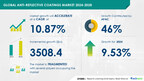
NEW YORK, Dec. 3, 2024 /PRNewswire/ — Report with market evolution powered by AI – The global anti-reflective coatings market size is estimated to grow by USD 3.51 billion from 2024-2028, according to Technavio. The market is estimated to grow at a CAGR of over 10.87% during the forecast period. Growing demand for anti-reflective coatings in solar industry is driving market growth, with a trend towards increasing applications of anti-reflective coatings in eyewear. However, fluctuations in raw material prices poses a challenge. Key market players include AccuCoat Inc., AGC Inc., AMETEK Inc., Carl Zeiss AG, Cascade Optical Corp., DuPont de Nemours Inc., EMF Corp., EssilorLuxottica, Gooch and Housego Plc, HEF, Honeywell International Inc., HOYA CORP., Nippon Sheet Glass Co. Ltd., Optical Coatings Japan, Optics and Allied Engg. Pvt. Ltd., Optics Balzers AG, PFG Precision Optics Inc., PPG Industries Inc., Viavi Solutions Inc., and Vortex Optical Coatings Ltd..
Key insights into market evolution with AI-powered analysis. Explore trends, segmentation, and growth drivers- View Free Sample PDF
Anti-Reflective Coatings Market Scope
Report Coverage
Details
Base year
2023
Historic period
2018 – 2022
Forecast period
2024-2028
Growth momentum & CAGR
Accelerate at a CAGR of 10.87%
Market growth 2024-2028
USD 3508.4 million
Market structure
Fragmented
YoY growth 2022-2023 (%)
9.53
Regional analysis
APAC, North America, Europe, Middle East and Africa, and South America
Performing market contribution
APAC at 46%
Key countries
China, US, India, Germany, and France
Key companies profiled
AccuCoat Inc., AGC Inc., AMETEK Inc., Carl Zeiss AG, Cascade Optical Corp., DuPont de Nemours Inc., EMF Corp., EssilorLuxottica, Gooch and Housego Plc, HEF, Honeywell International Inc., HOYA CORP., Nippon Sheet Glass Co. Ltd., Optical Coatings Japan, Optics and Allied Engg. Pvt. Ltd., Optics Balzers AG, PFG Precision Optics Inc., PPG Industries Inc., Viavi Solutions Inc., and Vortex Optical Coatings Ltd.
Market Driver
The anti-reflective coatings market is poised for growth due to the increasing demand for high-performance optical materials, particularly in the eyewear industry. These coatings eliminate glare by allowing more light to pass through lenses, making vision sharper and clearer compared to uncoated lenses. Anti-reflective coatings provide enhanced durability, resistance to scratches, water, and dirt, and help reduce eye fatigue caused by prolonged use of digital devices and television. By minimizing reflective light, these coatings improve visual comfort and reduce halos, making them a valuable addition to both the front and back surfaces of lenses. The benefits of anti-reflective coatings, including improved vision, durability, and resistance to external elements, are driving their adoption in various applications, leading to market expansion during the forecast period.
The Anti-Reflective Coatings market is experiencing significant growth due to the increasing demand for improved optical systems in various industries. These coatings reduce glare and enhance contrast, leading to better visual experiences in eyewear, electronics, and solar applications. Durability and performance are key factors driving the market’s expansion. Coating technology advancements, such as Electron Beam Evaporation and Sputtering, are used to create coated surfaces for electronic displays, solar panels, and automotive sectors. The rising population and vision impairments are fueling the demand for sustainable coatings like thinfilm fabrication for antireflective glasses. Advancements in coating technology are addressing issues like eye strain caused by prolonged use of computer screens and flat panels. The market is also witnessing growth in the automotive sector due to the need for glare reduction in progressive lenses for presbyopia and nearsightedness. SkyQuest Analysis, a leading business information services provider, reports that primary exploratory and desk research indicate continued advancements in UV ray protection and nanotechnology. Overall, the Anti-Reflective Coatings market is poised for continued expansion in the coming years.
Request Sample of our comprehensive report now to stay ahead in the AI-driven market evolution!
Market Challenges
The anti-reflective coatings market faces significant challenges due to the volatile prices of key raw materials, particularly titanium dioxide. This pigment, which accounts for approximately one-third of the total coating cost, is crucial for providing light-scattering properties and opacity in anti-reflective coatings. As a vital material in the optical industry, titanium dioxide is used in various applications, including anti-UV lens coatings and photocatalysts. Its high refractive index makes it an essential component for dispersing light. However, the primary production of titanium dioxide is concentrated in developed countries, leading to high labor costs and supply constraints. These factors complicate the pricing of anti-reflective coating products and impact the profit margins for vendors. The fluctuating prices of raw materials pose a significant challenge for the growth of the anti-reflective coatings market during the forecast period.The Anti-Reflective Coatings market faces challenges in production techniques such as Electron Beam Evaporation and Sputtering. In the Solar sector, sputtering technology dominates, but advancements in nanotechnology are pushing for change. The Automotive sector demands sustainable coatings to reduce glare and improve visual insight for drivers. SkyQuest Analysis, a Business Information Services provider, conducts Primary Exploratory and Desk Research to provide insights. Advancements in coating technology address issues like UV rays, eye strain, and impairments for antireflective glasses, computer screens, displays, and progressive lenses. The growing population and vision impairment lead to productivity losses, driving market growth. Semiconductors and manufacturing operations require antireflective coatings for solar cells, carbon-neutral electronics production bases, TVs, wires, cables, portable computing, gaming systems, and personal electronics.
Discover how AI is revolutionizing market trends- Get your access now!
Segment Overview
This anti-reflective coatings market report extensively covers market segmentation by
Application 1.1 Eyewear1.2 Electronics1.3 Solar1.4 Automobile1.5 OthersTechnology 2.1 Vacuum deposition2.2 Electron beam evaporation2.3 Sputtering2.4 Roll to roll2.5 OthersGeography 3.1 APAC3.2 North America3.3 Europe3.4 Middle East and Africa3.5 South America
1.1 Eyewear- Anti-reflective coatings play a crucial role in the eyewear industry by preventing harmful radiations from electronic devices and allowing maximum light transfer for clear vision. These coatings are particularly effective on high-index lenses, which reflect more light than regular plastic lenses. In North America, there is a high consumer preference for anti-reflective eyewear. The Asia Pacific region is projected to witness significant growth in demand for anti-reflective coatings due to the rising occurrence of eye disorders and increasing adoption of advanced light-transmitting eyewear. Premium anti-reflective glasses offer additional surface treatments to seal the anti-reflective layer. The benefits of anti-reflective coatings include reduced glare, enhanced contrast levels, and improved night driving experience. These coatings are applied to glass and plastic substrates to offer comfort and clarity. The global anti-reflective coatings market in the eyewear segment is expected to grow due to the increasing demand for advanced eyewear and lenses.
Download a Sample of our comprehensive report today to discover how AI-driven innovations are reshaping competitive dynamics
Research Analysis
Anti-Reflective Coatings (ARCs) are thin films applied to coated surfaces to reduce reflectance and enhance light transmission. These coatings offer significant benefits for various optical systems, including glare reduction and contrast enhancement. ARCs are widely used in eyewear to improve visual experiences for individuals with presbyopia, nearsightedness, or other vision impairments, reducing eye strain caused by prolonged exposure to computer screens, flat panels, and displays. In electronics, ARCs improve the durability and performance of semiconductors and other sensitive components. The rising demand for ARCs is driven by an increasing population and the need for improved visual insight in various industries, including healthcare, education, and manufacturing. ARC technology continues to evolve, offering new possibilities for enhancing the functionality and efficiency of optical systems.
Market Research Overview
Anti-Reflective Coatings (ARCs) are thin layers applied to coated surfaces to reduce reflectance and enhance light transmission. ARCs play a crucial role in various optical systems, including eyewear and electronics, by minimizing glare and improving contrast. The rising demand for ARCs in diverse applications, such as electronic displays, solar panels, and automotive sectors, is driven by the need for enhanced visual experiences and durability. Advancements in coating technology, including Electron Beam Evaporation and Sputtering, have led to the expansion of ARCs in the market. ARCs are used in eyewear to address issues like glare, eye strain, and vision impairments, including presbyopia and nearsightedness. In electronics, ARCs improve the performance of computer screens, flat panels, and displays, reducing reflection and enhancing image quality. The increasing population and the growing prevalence of vision impairments and productivity losses have fueled the demand for ARCs in various applications. ARCs are also used in semiconductors, manufacturing operations, solar cells, and various electronic devices, including TVs, wires, cables, portable computing, gaming systems, and personal electronic devices. The market for ARCs is expected to grow significantly due to the increasing demand for sustainable coatings and the expansion of the electronics production base.
Table of Contents:
1 Executive Summary
2 Market Landscape
3 Market Sizing
4 Historic Market Size
5 Five Forces Analysis
6 Market Segmentation
ApplicationEyewearElectronicsSolarAutomobileOthersTechnologyVacuum DepositionElectron Beam EvaporationSputteringRoll To RollOthersGeographyAPACNorth AmericaEuropeMiddle East And AfricaSouth America
7 Customer Landscape
8 Geographic Landscape
9 Drivers, Challenges, and Trends
10 Company Landscape
11 Company Analysis
12 Appendix
About Technavio
Technavio is a leading global technology research and advisory company. Their research and analysis focuses on emerging market trends and provides actionable insights to help businesses identify market opportunities and develop effective strategies to optimize their market positions.
With over 500 specialized analysts, Technavio’s report library consists of more than 17,000 reports and counting, covering 800 technologies, spanning across 50 countries. Their client base consists of enterprises of all sizes, including more than 100 Fortune 500 companies. This growing client base relies on Technavio’s comprehensive coverage, extensive research, and actionable market insights to identify opportunities in existing and potential markets and assess their competitive positions within changing market scenarios.
Contacts
Technavio Research
Jesse Maida
Media & Marketing Executive
US: +1 844 364 1100
UK: +44 203 893 3200
Email: media@technavio.com
Website: www.technavio.com/
View original content to download multimedia:https://www.prnewswire.com/news-releases/anti-reflective-coatings-market-to-grow-by-usd-3-51-billion-2024-2028-driven-by-solar-industry-demand-with-ai-transforming-market-trends—technavio-302320531.html
SOURCE Technavio









 Technology4 days ago
 Technology4 days ago
 Technology4 days ago
 Coin Market4 days ago
 Technology4 days ago
 Technology1 day ago
 Technology4 days ago
 Technology4 days ago