Connect with us

Technology

Global Times interview with Maria João Rodrigues on China-Europe relations

Published

on

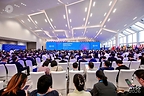
BEIJING, Dec. 3, 2024 /PRNewswire/ — The 2024 Understanding China Conference is being held in Guangzhou, capital of South China’s Guangdong Province, from Monday to Wednesday. What is the significance of understanding China? How should Europe understand China amid a time of global turmoil and changes? Are more Europeans willing to have a positive interaction with China? Maria João Rodrigues (Rodrigues), president of the Foundation for European Progressive Studies and former member of the European Parliament, discussed these issues with Global Times (GT) reporter Li Aixin.

GT: On the topic of “understanding China,” what do you think is the most important aspect for the world to understand about China?

Rodrigues: I’ve been in China for several important moments. I first came in 1997, quite a long time ago, and I’ve witnessed how China has moved through different stages of development. I must say that, in my case and for many others, this is quite impressive because, in a very short period of time, China has been able to address critical issues.

China has almost eradicated absolute poverty and is steadily improving the average living standards of Chinese people. This is remarkable because we are talking about a massive transformation of a country on a very large scale, achieved in a relatively short time. I know that behind this progress lies a well-prepared strategy.

The fact that China has been able to combine two key features of development is remarkable. One of these features is innovation. China has been able to innovate new products and services for the domestic population, while also exporting them around the world. The other key feature is social inclusion. There is a strong focus on social inclusion within China, addressing the needs of the population at large and systematically improving living conditions. Achieving both of these things at the same time is not easy, but China is a prime example of how this can be done.

GT: You once mentioned, “instead of being systematic rivals, Europe and China should be global partners to improve global governance. This can make a big difference for the world.” Could you elaborate on this?

Rodrigues: It is true that we started with a very intensive partnership – we are partners. Then, competition is also part of our relationship. But on the global level, China and Europe can do a lot together to tackle global challenges, starting with climate change, sustainable development as a whole, reducing poverty, and supporting developing countries to catch up more quickly on sustainable development goals.

To achieve this, they need to rely on stronger financial resources, trade opportunities and technological cooperation. Europe and China both have important resources in technology, trade and finance. Together, they can truly support developing countries in catching up.

GT: Is the number of people in Europe who are willing to understand and engage in dialogue with China, increasing or decreasing?

Rodrigues: I would say that we have mixed trends. Europeans are very interested in China because it is an ancient civilization, a civilization they recognize as being sophisticated. They admire it because Europe, too, is an old civilization, and we relate to each other well in that regard.

Furthermore, the European population has benefited greatly from importing many goods from China, which has also helped improve living standards in Europe. This openness between China and Europe has continued. But more recently, because China has become very successful and is now a highly competitive economy, some sectors in Europe are feeling the pressure. China has a trade surplus with Europe, and European authorities are addressing this with their Chinese counterparts, saying – let’s cooperate, but in a way that this trade surplus is reduced.

GT: The EU decided to impose tariffs of up to 45.3 percent on Chinese-made electric vehicles (EVs) from October 30. Do you see any solution to this dispute between China and Europe?

Rodrigues: The starting point of this issue is related to China’s success. China was able to start producing EVs that are cheaper and more affordable for the middle class. Europe, however, is still not there, as it began producing EVs, but only for the high-end market.

We need to maintain openness. Trade opportunities should remain open for both sides – China and Europe. Therefore, what I believe should be done from the European side is to develop an industrial plan to produce EVs for the middle class in Europe, which are more affordable.

I think this is on the horizon. The main carmakers in Europe are preparing to achieve this goal. Once they do, we can have natural competition between Chinese and European brands in open markets and trade. This is my hope, but we will have to see.

I can also tell that within EU institutions, there is a discussion on what the plan should be – an industrial plan to develop electric cars that should be cheaper and more affordable. So, this discussion is also taking place in European institutions.

If the resolution can be reached, Europe and China will give a strong signal to the world that we don’t believe in a protectionist reaction. Regarding trade, we prefer to have openness.

GT: Will the next US administration bring more opportunities or more risks for ChinaEurope relations?

Rodrigues: There is something very important to understand – Europe will define its relationship with China on its own. Europe needs to have its own criteria to assess why a relationship with China is important and under what conditions. This is something that the EU must do on its own.

The EU is a political entity that truly wants to maintain openness to the world and develop international cooperation to address global challenges. We also want a stronger multilateral system.

View original content:https://www.prnewswire.com/news-releases/global-times-interview-with-maria-joao-rodrigues-on-china-europe-relations-302321921.html

SOURCE Global Times

Continue Reading
Click to comment

Leave a Reply

Your email address will not be published. Required fields are marked *

Technology

American Binary Sets New Standard in Post-Quantum Cryptographic VPNs with Symbolic Proof and Attestation

Published

on

By

WASHINGTON, July 21, 2026 /PRNewswire/ — American Binary, a leader in deep-tech cybersecurity, today announced an independent attestation regarding the validity of all 120 security properties of MaxKyber, their network protocol at the heart of their Ambit Client enterprise VPN, now third-party verified to comply with all Commercial National Security Algorithm Suite 2.0 (CNSA 2.0) requirements. This landmark verification is the result of an exhaustive private peer-review of their symbolic proof (Tamarin + ProVerif) and engineering documentation conducted by industry luminaries Dr. Joe Kiniry, PhD and Dr. Tom Shrimpton, PhD, both with long careers in academia and industry, including time at Galois as Principal Scientists.

“No known VPN — post-quantum or classical, deployed or research — has been subjected to specification and formal verification of comparable depth.” – Dr. Joe Kiniry, PhD and Dr. Tom Shrimpton, PhD

In a landscape defined by emerging quantum threats and unproven solutions, this formal third-party verification differentiates MaxKyber from traditional or hybrid solutions by providing certainty in engineering and compliance with National Security requirements. MaxKyber provides the world with long-term full post-quantum security unlike shorter-term temporary solutions such as hybrids (which mix classical and post-quantum encryption). This breakthrough marks a transition from speculative security to a foundation of verified, provable resilience, establishing a new global benchmark for secure communications.

“While organizations today are increasingly recognizing the significance of PQC, American Binary has been preparing for a post-quantum world for seven years. The result is a resilient foundation for secure operations, today and in the post‑quantum future” – Oracle

Additionally, American Binary signed ACM Turing Award winner Whitfield Diffie, cryptographic pioneer and co-inventor of the Diffie-Hellman key exchange, as a key advisor. Whitfield joins the ranks of existing cryptographic advisors Bruce Schneier and Brian LaMacchia.

“Buy American Binary and you’ll be safe”

– Whitfield Diffie at Quantum.Tech World 2026

Key security pillars of the MaxKyber attestation include:

Protection against “Harvest Now, Decrypt Later” (HNDL): By utilizing purely CNSA 2.0 algorithms, including ML-KEM-1024 without any classical key exchange variants, MaxKyber secures today’s data against decryption by quantum adversaries.Comprehensive Symbolic Verification: The attestation covers 120 security properties across 11 critical categories, including secrecy, authentication, forward secrecy, identity hiding, and resistance to Replay, Denial of Service, Resource Exhaustion, and Key Compromise Impersonation.Architectural Stability: Beyond its post-quantum cryptographic core, MaxKyber’s protocol architecture is rooted in well-established, operationally proven design patterns, retaining their performance and simplicity.

This foundational security architecture provides the necessary reliability to enable significant performance breakthroughs in the field and the following four key impacts.

Impact I: Unambiguous Security and Mitigation of “Harvest Now, Decrypt Later”

MaxKyber achieves the end-state of post-quantum cryptographic purity by utilizing a pure CNSA 2.0 post-quantum key exchange, without using any classical cryptography, hybrid cryptography, or legacy key exchange variants. Instead, American Binary’s more modern key exchange utilizes ML-KEM-1024 operations to replace the Diffie-Hellman Key Exchange. This approach ensures that modern enterprises are not tethered to the vulnerabilities of legacy components or negative market reactions to hybrid solutions being partially broken. If the classical encryption in hybrid solutions is verifiably broken, markets likely will not wait for forensics to determine whether the rest of the solution remains intact; reputation damage and capital flight will occur immediately.

MaxKyber exclusively employs CNSA 2.0 approved algorithms, specifically ML-KEM-1024 (FIPS 203), AES-256-GCM, and SHA-512/256. This construction provides the highest level of security available today without any loss of existing security properties.

Impact II: Optimal Performance from Mobile and Lossy Environments to High-Performance Scenarios

Historically, high-security protocols have suffered from significant system latency, creating a bottleneck for edge computing and mobile workforces. MaxKyber eliminates these traditional performance trade-offs, enabling high-performance security at the network’s most vulnerable points. One partner benchmarked Ambit Client, powered by MaxKyber, to have 70% faster download speeds than a comparable classically encrypted enterprise VPN.

The MaxKyber protocol optimizes efficiency through an “Authenticated Key Exchange” (AKE) which achieves mutual authentication in a single round trip, dramatically reducing the data burden on the network.

Quantifiably, the AKE saves approximately 4,600 bytes per handshake compared to the next best option. This ultra-low overhead ensures that robust post-quantum security functions reliably on mobile devices and in lossy environments where traditional, bulkier PQC handshakes consistently fail. Reliability in the field is a prerequisite for everything from remote work to warfighting environments, and MaxKyber’s AKE directly facilitates such operational readiness.

Additionally, MaxKyber is well suited for high-performance scenarios such as AI workloads, work with 3D models, and more thanks to Vector Packet Processing and Data Plane Development Kit further reducing overheads to the technical minimums and enabling line-rate speeds for server-to-server use cases.

Impact III: Compliance Savings

As the cost of compliance and diligence cycles for critical infrastructure continues to escalate, proofs can be a shortcut for approval. For CISO and Legal departments, formal verification provides a transparent, “glass-box” view of security that goes beyond traditional testing.

For integration partners, this symbolic proof significantly reduces diligence cycles. By providing an exhaustively checked security profile, American Binary allows partners to shorten the lengthy, costly investigative phases usually required for new cryptographic implementations. Verified compliance is transformed from a hurdle into a catalyst for product development.

Impact IV: R&D Acceleration

For engineering teams looking to integrate this technology and/or customize it, American Binary’s documentation serves as a powerful force multiplier. By providing pre-verified, exhaustive, and high-quality documentation, American Binary provides an extraordinary shortcut to rapid integration.

The scale of the documentation and formal models provided to partners is unprecedented in the VPN industry. This rigorous approach allows integration partners to save months, if not years, of R&D effort.

MaxKyber provides more than just a secure tunnel; it delivers a fully documented, mathematically proven blueprint that accelerates the transition to a quantum-safe future. With MaxKyber, American Binary has rewritten the industry standard for post-quantum network security.

About American Binary

American Binary is a leader in deep-tech cybersecurity, specializing in the development of CNSA 2.0 post-quantum cryptographic solutions. Through advanced rigor and high-performance engineering, American Binary provides the provable foundations for secure, resilient communication in the quantum era.

Learn more at www.ambit.inc

CONTACT: sales@ambit.inc 

View original content to download multimedia:https://www.prnewswire.com/news-releases/american-binary-sets-new-standard-in-post-quantum-cryptographic-vpns-with-symbolic-proof-and-attestation-302831415.html

SOURCE American Binary

Continue Reading

Technology

MetaOptics to Deploy its Direct Laser Writer at the University of Arizona’s Center of Semiconductor Manufacturing to Advance its U.S. Expansion

Published

on

By

SINGAPORE, July 21, 2026 /PRNewswire/ — MetaOptics Ltd (Catalist: 9MT) (“MetaOptics” or the “Company,” and together with its subsidiaries, the “Group”), announced that it has entered into an agreement to deploy its key metalens Direct Laser Writer (“DLW”) system at the University of Arizona’s Center of Semiconductor Manufacturing (the “University”). The agreement marks a critical step in advancing its U.S. expansion strategy and its collaborative research with world-class semiconductor stakeholders in Arizona. Installation of the DLW is expected to commence in 2027.

The DLW is designed for a 4-inch wafer to enable quick prototyping and fabrication of metalens samples within weeks. It also supports small-volume production for pilot builds and customer demand evaluation, enabling partners to iterate faster and move from concept to product more efficiently. The deployment of the Company’s DLW will allow prospective customers in the U.S. to physically witness the system in action for their metalens prototyping needs. It will also support collaborative research and evaluation by the University’s researchers under the guidance of Dr. Krishna Muralidharan of the University of Arizona’s Department of Materials Science and Engineering. MetaOptics expects the deployment to generate user feedback and user demonstration opportunities, providing further technical validation of its metalens equipment and products, and serve as a launchpad to scale commercial production and collaboration in the U.S. market.

The deployment of its DLW serves as a key milestone for MetaOptics’ U.S. expansion strategy, prospective U.S. customer engagement, and commercialization roadmap. It also positions the Group to support emerging U.S. initiatives in silicon photonics, co-packaged optics, and integrated photonics, where its metalens technology is directly applicable. The DLW will anchor a “mini foundry” at the University for small-volume, quick turnaround prototyping. Beyond research, the installation serves a commercial purpose: a U.S. demonstration site where potential distributors, universities, and research institutions can physically witness the DLW in operation. It will also produce metalens samples for prospective customers’ evaluation. With Arizona’s fast-growing semiconductor ecosystem home to world-class manufacturers and suppliers, the Company aims to leverage its presence at the University and the wider ecosystem to deepen engagement with prospective industry partners and end customers.

MetaOptics Executive Chairman Thng Chong Kim commented: “By placing our Direct Laser Writer within a world-class semiconductor research environment in Arizona, we will be able to strengthen technical validation and gather valuable user feedback. It also supports our ongoing engagements with potential industry partners and end-customers while showcasing our metalens manufacturing equipment to prospective distributors and institutions across the United States. We believe this deployment reinforces our broader U.S. expansion efforts and deepens our engagement in Arizona’s world-class semiconductor ecosystem.”

About MetaOptics Ltd

MetaOptics Ltd (Catalist: 9MT) is a semiconductor optics company pioneering glass-based metalens solutions enhanced by AI-driven image processing. Using advanced optical design and a scalable 12-inch DUV lithography process, it powers next-generation applications in CPO, mobile, AR VR, automotive, and other emerging markets. Find out more at www.metaoptics.sg.

Forward-Looking Statement

This press release contains forward-looking statements which can be identified by words or phrases such as “may,” “will,” “expect,” “anticipate,” “aim,” “estimate,” “intend,” “plan,” “believe,” “likely to,” “potential,” “continue” or other similar expressions. Any statements that are not historical facts, including statements about the Company’s beliefs and expectations, are forward-looking statements. Forward-looking statements involve inherent risks and uncertainties. A number of factors could cause actual results to differ materially from those contained in any forward-looking statement, including but not limited to the following: the Company’s growth strategies, its future business development, results of operations and financial condition, its research and development efforts, its ability to attract and retain customers, and its ability to establish and maintain relationships with suppliers and business partners; and assumptions underlying or related to any of the foregoing. All information provided in this press release is as of the date of this press release, and the Company undertakes no obligation to update any forward-looking statement, except as required under applicable law.

Singapore (HQ)
Metaoptics Technologies Pte Ltd. 81 Ayer Rajah Crescent, #01-45 Singapore 139967

United States
Metaoptics Inc. (USA) 1 Ferry Building, Suite 201 San Francisco, CA 9411

View original content:https://www.prnewswire.com/news-releases/metaoptics-to-deploy-its-direct-laser-writer-at-the-university-of-arizonas-center-of-semiconductor-manufacturing-to-advance-its-us-expansion-302830614.html

SOURCE METAOPTICS LTD

Continue Reading

Technology

11:11 Systems Announces Strategic Partnership with Cato Networks to Deliver SASE Solution for Distributed Enterprises

Published

on

By

New Managed Secure Access Service Edge (SASE) solution combines SD-WAN, cloud-native networking and security capabilities with 11:11’s connectivity, cyber resilience and cloud expertise

SYDNEY, July 22, 2026 /PRNewswire/ — 11:11 Systems, a leading managed infrastructure solutions provider, today announced the global availability of its 11:11 Managed Secure Access Service Edge (SASE) solution and a new strategic partnership with Cato Networks.

11:11 Managed SASE is a fully managed secure connectivity solution leveraging Cato Networks AI-native network security platform. This solution brings together intelligent SD-WAN, cloud-delivered security and global connectivity into a single offering. It enables organisations to simplify and secure access across branch offices, data centres, users and cloud environments, reducing complexity without sacrificing performance or control.

Built on the Cato Networks cloud-native SASE platform, 11:11 Managed SASE combines zero trust network access (ZTNA), firewall as a service (FWaaS), secure web gateway (SWG), cloud access security broker (CASB), advanced threat protection and centralised visibility into a unified managed experience. 11:11 also delivers 24x7x365 monitoring and support, incident management integration and operational accountability to help customers limit vendor sprawl, increase agility and free internal teams to focus on higher-value priorities.

The offering is backed by 11:11’s broader networking, cloud and cyber resilience capabilities. Through its global backbone, carrier-agnostic connectivity options and integrated portfolio spanning cloud, backup, disaster recovery and security services, 11:11 gives customers a practical path to modernise network and security architecture while strengthening resilience across the business.

“Enterprises are under pressure to support users, applications and locations that are more distributed than ever, while limiting complexity and improving security,” said Justin Giardina, CTO, 11:11 Systems. “Our Managed SASE solution provides customers with a unified approach to modernising networking and security, along with the visibility, support and flexibility they need to thrive in a rapidly changing environment.”

According to Karl Soderlund, global channel chief, Cato Networks, “As enterprises move beyond fragmented legacy networking and security stacks, they need a simpler way to gain visibility, context and control across hybrid work environments and reduce the operational burden on IT. Through our partnership, we can address these challenges head on and deliver end-to-end visibility and protection in a single service built for the reality of modern work.”

The joint offering is well suited for distributed enterprises, multi-site organisations, hybrid workforce initiatives, SD-WAN refreshes, security modernisation efforts and businesses with limited IT resources. 11:11 meets customers where they are by supporting existing environments, simplifying multi-vendor operations and serving as a single provider accountable for network, security, cloud and data integration.

This partnership expands 11:11’s Network as a Service portfolio and follows Forrester’s inclusion of 11:11 Systems in its report, “The Secure Access Service Edge Services Landscape, Q1 2026.”

About 11:11 Systems

11:11 Systems is a managed infrastructure solutions provider that empowers customers to modernise, protect and manage mission-critical applications and data, leveraging 11:11’s resilient cloud platform. Learn more at www.1111Systems.com and follow 11:11 on LinkedIn.

View original content:https://www.prnewswire.com/apac/news-releases/1111-systems-announces-strategic-partnership-with-cato-networks-to-deliver-sase-solution-for-distributed-enterprises-302830322.html

SOURCE 11:11 Systems

Continue Reading

Trending