Technology
Smart Buildings Market to grow by USD 64.84 Billion (2024-2028), driven by the need for building automation, with AI powering market evolution – Technavio
Published
2 years agoon
By
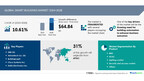
NEW YORK, Dec. 4, 2024 /PRNewswire/ — Report on how AI is driving market transformation – The global smart buildings market size is estimated to grow by USD 64.84 billion from 2024-2028, according to Technavio. The market is estimated to grow at a CAGR of almost 10.61% during the forecast period. Growing need for building automation to enhance business outcomes is driving market growth, with a trend towards increasing integration of iot with building automation software. However, challenges in integrating building automation software coupled with interoperability issues poses a challenge. Key market players include ABB Ltd., Advantech Co. Ltd., BuildingLogiX, Cisco Systems Inc., Delta Electronics Inc., Emerson Electric Co., Honeywell International Inc., International Business Machines Corp., Johnson Controls, L and T Technology Services Ltd., Legrand SA, Panasonic Holdings Corp., Robert Bosch GmbH, RTX Corp., Schneider Electric SE, Siemens AG, Smarteh d.o.o., Snap One LLC, Softdel System Pte. Ltd., Switch Automation, and Verdigris Technologies Inc..
AI-Powered Market Evolution Insights. Our comprehensive market report ready with the latest trends, growth opportunities, and strategic analysis- View Free Sample Report PDF
Forecast period
2024-2028
Base Year
2023
Historic Data
2018 – 2022
Segment Covered
Product (BMS, HVAC, Lighting control, Security and access control, and Others), Component (Software, Hardware, and Services), and Geography (North America, Europe, APAC, South America, and Middle East and Africa)
Region Covered
North America, Europe, APAC, South America, and Middle East and Africa
Key companies profiled
ABB Ltd., Advantech Co. Ltd., BuildingLogiX, Cisco Systems Inc., Delta Electronics Inc., Emerson Electric Co., Honeywell International Inc., International Business Machines Corp., Johnson Controls, L and T Technology Services Ltd., Legrand SA, Panasonic Holdings Corp., Robert Bosch GmbH, RTX Corp., Schneider Electric SE, Siemens AG, Smarteh d.o.o., Snap One LLC, Softdel System Pte. Ltd., Switch Automation, and Verdigris Technologies Inc.
Key Market Trends Fueling Growth
The Smart Buildings Market is experiencing significant growth due to the integration of advanced technologies such as 5G, IoT, AI, and VR. These technologies enable resource management, energy efficiency, and improved environmental effects in both residential and commercial buildings. In urban areas, smart buildings are becoming essential components of smart cities, offering automated technologies like sensors, actuators, and microchips for space utilization and network management. Commercial segment buildings, including offices and industrial structures, are adopting AI-enabled innovations like intelligent glass, smart thermostats, and energy-efficient structures. Homeowners are also embracing smart home solutions, including smart lighting systems and home automation. Moreover, the integration of cloud computing, data analytics, and waste management solutions is crucial for effective resource management and reducing greenhouse gas emissions. Building owners prioritize security concerns, with smart security systems like access controls, video surveillance, and intrusion detection, ensuring a secure environment. Energy management, waste management, and workforce management are other significant areas of focus for smart buildings. Blockchain technology is also gaining traction for information security. The market for smart buildings is vast and includes various applications, from energy conservation in residential buildings to fire safety in industrial buildings.
Non-smart buildings rely on manual control, leading to lengthy lead times and increased operational costs. Traditional building automation faces limitations due to complex wired or slow wireless connectivity between devices. The integration of IoT into building automation enhances connectivity significantly, enabling end-users to monitor multiple systems via a central hub. This innovation creates demand for advanced building automation software, driven by the expanding IoT adoption and rising Internet penetration among specific user groups. The global smart buildings market experiences growth opportunities as a result.
Insights on how AI is driving innovation, efficiency, and market growth- Request Sample!
Market Challenges
The Smart Buildings Market is experiencing significant growth due to the integration of advanced technologies like 5G, IoT-enabled devices, AI, VR, and cloud computing. Commercial and residential building owners seek energy efficiency, resource management, and automated technologies to reduce greenhouse gas emissions and improve space utilization. Challenges include security concerns, environmental effects, and network management. 5G technology and IP enable seamless connectivity, while AI innovations optimize energy management, home automation, and waste management solutions. Smart lighting systems, intelligent security systems, fire safety, and access controls enhance the security of building premises. Energy-efficient structures, smart thermostats, intelligent glass, and smart elevators are essential components of smart buildings. Urban environments and industrial areas benefit from smart cities, smart homes, and smart lighting systems for energy conservation. Blockchain ensures information security, and smart waste management systems minimize waste. Working from home necessitates advanced network systems, heating, ventilation, and air conditioning. Sensors, actuators, microchips, and automated technologies are crucial for effective resource management and space utilization. Smart buildings cater to the commercial and residential segments, addressing the needs of urban areas and providing a secure environment for workforce management. Energy management, waste management, and network management are key areas of focus. Smart solutions for heating, ventilation, air conditioning, and lighting systems contribute to a comfortable and productive work environment.Building automation systems in smart buildings involve intricate software integration to manage multiple subsystems effectively. The complexity increases with larger structures, necessitating technical expertise. Compatibility between various hardware devices is crucial for efficient operation. Integrating legacy systems with new software can pose challenges, potentially leading to faulty installations and security vulnerabilities. Professionally managing these complexities is essential for optimizing energy usage, enhancing occupant comfort, and ensuring safety in smart buildings.
Insights into how AI is reshaping industries and driving growth- Download a Sample Report
Segment Overview
This smart buildings market report extensively covers market segmentation by
Product 1.1 BMS1.2 HVAC1.3 Lighting control1.4 Security and access control1.5 OthersComponent 2.1 Software2.2 Hardware2.3 ServicesGeography 3.1 North America3.2 Europe3.3 APAC3.4 South America3.5 Middle East and Africa
1.1 BMS- The Building Management Systems (BMS) segment, also known as Building Automation Systems, is the largest and leading segment in the global smart buildings market. BMS integrate various standalone control and monitoring systems, including HVAC, lighting, and emergency control systems, at a single point for efficient building management. The BMS market consists of software, servers, sensors, and major components. The cost of implementing BMS ranges from USD2.50 to USD7.0 per square foot, making ROI a significant challenge. Europe and APAC are major contributors to the BMS market’s growth due to increasing industrial development, commercialization, and energy efficiency awareness. In the forecast period, the BMS segment will witness high adoption in the commercial sector, high-end residential buildings, and the services sector. Rapid technological innovations, such as IoT, analytics, and cloud computing, will further fuel the adoption of BMS for effective monitoring, controlling, and operating building facilities.
Download complimentary Sample Report to gain insights into AI’s impact on market dynamics, emerging trends, and future opportunities- including forecast (2024-2028) and historic data (2018 – 2022)
Research Analysis
The Smart Buildings Market is experiencing significant growth due to the integration of advanced technologies such as 5G, IoT enabled devices, AI, and VR. These technologies enable energy efficiency, reduced greenhouse gas emissions, and improved occupant comfort in both commercial and residential buildings. Cloud computing and data analytics facilitate remote monitoring and management of smart homes and offices, enabling working from home and waste management solutions. Energy-efficient structures, intelligent glass, smart thermostats, and smart elevators are some of the innovations that contribute to energy conservation. Smart cities are also integrating smart lighting systems, fire safety, and security systems, including intelligent access controls, video surveillance, and intrusion detection, to enhance safety and productivity. Overall, the Smart Buildings Market offers numerous benefits, from automating mundane tasks to improving energy efficiency and enhancing safety and security.
Market Research Overview
The Smart Buildings Market is experiencing significant growth due to the integration of advanced technologies such as 5G technology, IoT enabled devices, AI, and VR. These technologies are transforming commercial and residential buildings into energy-efficient structures with improved resource management and space utilization. In urban areas, smart buildings are contributing to reducing greenhouse gas emissions by optimizing energy consumption and waste management. Cloud computing and data analytics enable real-time monitoring and automation of home automation and working from home systems. Intelligent glass, smart thermostats, and smart elevators are becoming standard features in modern buildings. AI-driven innovations are revolutionizing network management, energy management, and workforce management. Smart cities are integrating smart buildings into their infrastructure for secure environment and efficient resource management. Building owners are investing in automated technologies such as sensors, actuators, microchips, and blockchain for information security. Smart lighting systems, energy conservation, and intelligent security systems are essential components of smart buildings. Fire safety, video surveillance, access controls, theft detection, and intrusion detection are critical aspects of intelligent security systems. HVAC systems, including heating, ventilation, and air conditioning, are being optimized for energy efficiency and occupant comfort. The residential and commercial segments are driving the growth of the smart buildings market, with industrial buildings following closely. The environmental effects and security concerns of smart buildings are being addressed through advanced technologies and regulations.
Table of Contents:
1 Executive Summary
2 Market Landscape
3 Market Sizing
4 Historic Market Size
5 Five Forces Analysis
6 Market Segmentation
ProductBMSHVACLighting ControlSecurity And Access ControlOthersComponentSoftwareHardwareServicesGeographyNorth AmericaEuropeAPACSouth AmericaMiddle East And Africa
7 Customer Landscape
8 Geographic Landscape
9 Drivers, Challenges, and Trends
10 Company Landscape
11 Company Analysis
12 Appendix
About Technavio
Technavio is a leading global technology research and advisory company. Their research and analysis focuses on emerging market trends and provides actionable insights to help businesses identify market opportunities and develop effective strategies to optimize their market positions.
With over 500 specialized analysts, Technavio’s report library consists of more than 17,000 reports and counting, covering 800 technologies, spanning across 50 countries. Their client base consists of enterprises of all sizes, including more than 100 Fortune 500 companies. This growing client base relies on Technavio’s comprehensive coverage, extensive research, and actionable market insights to identify opportunities in existing and potential markets and assess their competitive positions within changing market scenarios.
Contacts
Technavio Research
Jesse Maida
Media & Marketing Executive
US: +1 844 364 1100
UK: +44 203 893 3200
Email: media@technavio.com
Website: www.technavio.com/
View original content to download multimedia:https://www.prnewswire.com/news-releases/smart-buildings-market-to-grow-by-usd-64-84-billion-2024-2028-driven-by-the-need-for-building-automation-with-ai-powering-market-evolution—technavio-302321206.html
SOURCE Technavio
You may like
Technology
Amid Rising Costs and Surgical Disruptions in ASCs, NorthStar Anesthesia Strengthens Focus on ASC Partnerships
Published
40 minutes agoon
October 23, 2026By
With 17 new ASC partnerships nationwide to date in 2026, NorthStar Anesthesia emphasizes proactive patient assessment, reliable staffing, and clinical consistency to help surgery centers reduce preventable cancellations and maximize surgical capacity.
IRVING, Texas, Oct. 23, 2026 /PRNewswire/ — As ambulatory surgery centers (ASCs) face mounting financial pressures, staffing challenges, and increasingly complex patient needs, anesthesia has emerged as a critical partner in their ability to operate efficiently and sustainably. NorthStar Anesthesia is addressing these challenges through a dedicated ASC model designed to reduce preventable case cancellations, improve surgical throughput, and help centers make the most of their existing operating room capacity.
“The challenge for ASCs today isn’t simply finding anesthesia coverage. It’s ensuring that coverage translates into reliable surgical capacity,” said Cindy Myers, Vice President of ASC Operations at NorthStar Anesthesia. “When cases are cancelled unnecessarily or operating rooms aren’t running as planned, the impact extends well beyond the anesthesia department. Our focus is on helping centers address those challenges systematically, so they can deliver more consistent care and operate more efficiently.”
Reducing Preventable Cancellations Through Better Preparation
One of the most significant opportunities to improve ASC performance lies in the preoperative process. When potential anesthesia concerns are not identified until the day of surgery, patients may face unexpected cancellations, surgeons lose valuable operating time, and centers absorb the cost of unused capacity.
NorthStar addresses this challenge through ASC-specific pre-anesthesia testing (PAT) guidelines and standardized clinical protocols designed to identify potential issues earlier, facilitate appropriate patient optimization, and support consistent decision-making across the surgical process.
“In ambulatory surgery, the decisions made before the patient arrives are often just as important as those made in the operating room,” said Gajan Mahendran, MD, Vice President of Physician Services at NorthStar Anesthesia. “A consistent, evidence-based approach to preoperative assessment helps us identify risks earlier, determine which patients are appropriate for the ASC setting, and address potential barriers to surgery in advance. That means fewer last-minute surprises and a better experience for patients, surgeons, and facilities.”
Aligning Anesthesia Resources With Surgical Demand
Alongside clinical challenges, ASCs are navigating a changing economic environment. In a recent Becker’s ASC Review interview, NorthStar CEO Adam Spiegel noted that approximately 80% of ASCs in NorthStar’s network now require anesthesia stipends, compared with just 10% to 15% before the pandemic.
As anesthesia costs rise, ensuring that staffing levels align with actual surgical demand has become increasingly important. NorthStar works with ASC partners to develop staffing models that reflect each facility’s case mix, surgical volume, and operating requirements. “Adding anesthesia resources doesn’t automatically improve performance if those resources aren’t aligned with the center’s surgical volume,” Myers said. “We work closely with our partners to understand their schedules, case mix, and operational needs so we can build a model that supports both reliable access to care and financial sustainability.”
Combining National Resources With Local Clinical Expertise
As ASCs take on a greater share of surgical procedures, the demands placed on anesthesia providers are becoming more complex. Smaller or locally managed anesthesia groups may face challenges maintaining consistent coverage, recruiting clinicians, or investing in standardized clinical and operational processes.
NorthStar’s model combines local clinical leadership with national recruiting capabilities, dedicated ASC operations expertise, and established quality guidelines. This infrastructure helps support continuity of care, consistent clinical practices, and the flexibility to respond to changes in surgical demand.
The approach is reflected in NorthStar’s expanding ASC partnerships. To date in 2026 alone, NorthStar has added 17 ASC partnerships, including CarePlex Orthopaedic Ambulatory Surgery Center in Norfolk, Virginia; Stony Point Surgery Center and West Creek Surgery Center, both part of MedRVA Healthcare in Richmond, Virginia; an Orthopedic Surgery Center in Wisconsin; Eye Surgery Center of Homewood in Homewood, Alabama; and The Toledo Clinic ASC in Toledo, Ohio.
These partnerships reflect the growing importance of anesthesia providers that can address both the clinical and operational needs of outpatient surgery centers.
To learn more and to request a confidential anesthesia program assessment, please contact James Bagliani, Director of Business Development, NorthStar Anesthesia at james.bagliani@northstaranesthesia.com.
About NorthStar Anesthesia
NorthStar Anesthesia is a company of caregivers, founded by an anesthesiologist and a Certified Registered Nurse Anesthetist (CRNA). With more than 4,000 anesthesiologists and CRNAs under its banner, NorthStar partners with more than 280 healthcare client sites across more than 20 states and counting to deliver a more productive and efficient model of anesthesia care. Its care team approach focuses on the provision of high-quality care while measurably improving operating room performance.
Media Contact: James Bagliani, Director of Business Development, NorthStar Anesthesia james.bagliani@northstaranesthesia.com
View original content to download multimedia:https://www.prnewswire.com/news-releases/amid-rising-costs-and-surgical-disruptions-in-ascs-northstar-anesthesia-strengthens-focus-on-asc-partnerships-302918226.html
SOURCE NorthStar Anesthesia
Technology
Dimethylaminopropylamine Market to Reach USD 731.9 Million by 2035 on Surfactant and Epoxy Demand, Credence Research Finds
Published
40 minutes agoon
October 23, 2026By
LONDON, Oct. 23, 2026 /PRNewswire/ — Credence Research Inc. has added the “Dimethylaminopropylamine Market – Growth, Share, Opportunities & Competitive Analysis, 2025–2035” study to its market intelligence portfolio. The report examines market value, segmentation, demand drivers, regional dynamics, competition and recent industry developments.
The dimethylaminopropylamine (DMAPA) market was valued at USD 452.6 million in 2025 and is projected to reach USD 731.9 million by 2035, representing a 4.92% compound annual growth rate over 2025–2035, according to Credence Research. The firm estimates 2026 revenue at USD 474.3 million. Asia Pacific accounted for the largest modeled geographic share at 44.0% in 2025, while Asia Pacific is projected to grow fastest at 5.88% annually. Market sizes, regional shares and segment shares are Credence Research estimates rather than independently audited industry totals.
Key Takeaways
The market is forecast to increase from USD 452.6 million in 2025 to USD 731.9 million by 2035, with a reported CAGR of 4.92%.Asia Pacific led the modeled 2025 geography with 44.0%; Asia Pacific has the fastest forecast geographic growth of 5.88%.By application, Surfactants accounted for 61.0% of modeled 2025 value, while Epoxy curing agents is forecast to grow at 5.66% a year.By end-use industry, Personal care and cosmetics accounted for 44.0% of modeled 2025 value, while Paints, coatings and composites is forecast to grow at 5.61% a year.The market definition excludes adjacent product or transaction value where that spending is outside the report’s measured scope.
Scope & Segmentation – Dimethylaminopropylamine Market
The study values sales of 3-(dimethylamino)-1-propylamine, an amine intermediate produced from dimethylamine and acrylonitrile. Included uses span betaine and amine-oxide surfactants, epoxy curing agents, polyurethane catalysts, water treatment chemicals, agrochemical intermediates and lubricant additives. Finished surfactants, coatings and other downstream products are excluded from the DMAPA revenue estimate.
By application: Surfactants (betaines and amine oxides); Epoxy curing agents; Polyurethane catalysts; Water treatment chemicals; Agrochemical intermediates; Fuel and lubricant additives; Others.By end-use industry: Personal care and cosmetics; Home care and institutional cleaning; Paints, coatings and composites; Water treatment; Agriculture; Automotive and lubricants.By geography: Asia Pacific; Europe; North America; Latin America; Middle East and Africa.
Read the complete report and request a sample: https://www.credenceresearch.com/report/dimethylaminopropylamine-market
Why This Report Matters
The study distinguishes a narrowly defined revenue pool from adjacent activity that can inflate comparisons between research estimates. This helps strategy teams compare suppliers, customer budgets and product categories on a consistent basis.The base-year segment mix identifies where current purchasing is concentrated, while the modeled faster-growing categories help evaluate investment timing and market entry.Geographic shares are proprietary estimates; company and regulatory announcements are used to explain demand mechanisms, not to independently verify global market totals.
Market Overview
The study values sales of 3-(dimethylamino)-1-propylamine, an amine intermediate produced from dimethylamine and acrylonitrile. Included uses span betaine and amine-oxide surfactants, epoxy curing agents, polyurethane catalysts, water treatment chemicals, agrochemical intermediates and lubricant additives. Finished surfactants, coatings and other downstream products are excluded from the DMAPA revenue estimate.
DMAPA is a building block for cocamidopropyl betaine and related surfactants used in shampoos, body washes and dishwashing products. Producers serving consumer brands require consistent quality and supply, so the largest application tends to support repeat orders rather than episodic equipment-style purchases.
The outlook reflects expected changes in customer adoption, procurement, technology and regulation. It should be read as a modeled scenario, not as a guarantee of sales or company performance.
Key Attributes
Attribute
Details
Base year
2025
Historical reference
2018–2025
2025 market size
USD 452.6 million
2026 estimate
USD 474.3 million
2035 market forecast
USD 731.9 million
Reported CAGR
4.92% (2025–2035)
Geographic scope
Global
Primary source
https://www.credenceresearch.com/report/dimethylaminopropylamine-market
Segmentation
By application
The study divides this category into surfactants (betaines and amine oxides); epoxy curing agents; polyurethane catalysts; water treatment chemicals; agrochemical intermediates; fuel and lubricant additives; others. Surfactants led the 2025 value mix with 61.0%. Epoxy curing agents is the fastest-growing modeled subsegment at 5.66% a year. These shares represent Credence Research model outputs, not audited supplier sales.
By end-use industry
The study divides this category into personal care and cosmetics; home care and institutional cleaning; paints, coatings and composites; water treatment; agriculture; automotive and lubricants. Personal care and cosmetics led the 2025 value mix with 44.0%. Paints, coatings and composites is the fastest-growing modeled subsegment at 5.61% a year. These shares represent Credence Research model outputs, not audited supplier sales.
Market Growth Drivers
Mild cleansing formulas sustain high-volume demand
DMAPA is a building block for cocamidopropyl betaine and related surfactants used in shampoos, body washes and dishwashing products. Producers serving consumer brands require consistent quality and supply, so the largest application tends to support repeat orders rather than episodic equipment-style purchases.
Epoxy hardeners provide a faster-growth outlet
DMAPA-based amidoamines are used in epoxy curing systems for floors, protective coatings and composite applications. Wind blade production and industrial maintenance provide additional demand. The report models epoxy curing agents as the fastest-growing application, although their value starts below surfactants.
Capacity integration shapes producer economics
The chemical route depends on dimethylamine and acrylonitrile, making feedstock access and energy costs important. Integrated producers can manage these inputs and purity requirements more directly, while regional buyers value dependable supply and local technical support.
Regional Analysis
Asia Pacific held 44.0% of modeled 2025 revenue, while Asia Pacific is expected to record the fastest regional growth at 5.88%. The allocation follows the study’s defined buyer or provider-revenue scope.
Asia Pacific
Asia Pacific represented 44.0% of modeled 2025 market value. China hosts extensive betaine and epoxy manufacturing and new intermediate capacity. Regional performance also depends on local regulation, industrial investment and purchasing conditions.
Europe
Europe represented 23.0% of modeled 2025 market value. Specialty formulations and high-purity specifications sustain demand. Regional performance also depends on local regulation, industrial investment and purchasing conditions.
North America
North America represented 21.0% of modeled 2025 market value. Personal care, coating and water treatment buyers support a mature market. Regional performance also depends on local regulation, industrial investment and purchasing conditions.
Latin America
Latin America represented 7.0% of modeled 2025 market value. Brazilian and Mexican cleaning and personal care production expands. Regional performance also depends on local regulation, industrial investment and purchasing conditions.
Middle East and Africa
Middle East and Africa represented 5.0% of modeled 2025 market value. Industrial chemicals and water treatment provide emerging outlets. Regional performance also depends on local regulation, industrial investment and purchasing conditions.
Market Challenges
Input prices and possible overcapacity
Changes in acrylonitrile and dimethylamine costs can pressure margins. New Asian capacity could also exceed near-term demand, creating price competition, especially for producers that lack integrated feedstock or differentiated purity grades.
Handling and product-purity requirements
DMAPA is a hazardous industrial intermediate requiring careful handling. Residual amines in downstream betaines can create sensitization concerns, so cosmetics customers increasingly emphasize analytical control, specifications and supplier qualification.
Future Outlook
Asia Pacific should remain the main production and demand center, with surfactants anchoring volume and epoxy applications contributing above-average growth. Supplier positioning will depend on feedstock integration, reliable logistics, high-purity grades and the pace at which new capacity is absorbed.
Competitive Landscape
BASF and Eastman Chemical are identified as integrated DMAPA producers, while Zhangjiagang Feixiang Chemical and Zhejiang Xinhua Chemical participate in Chinese production. Huntsman is relevant to downstream amine chemistry. Solvay, Evonik and Kao are better described as converters or customers for DMAPA-based surfactants rather than direct merchant DMAPA producers. No credible company-specific DMAPA revenue ranking is available.
Key Players
BASF; Eastman Chemical; Zhangjiagang Feixiang Chemical; Zhejiang Xinhua Chemical; Huntsman (downstream derivatives); Solvay (surfactants); Evonik (surfactants); Kao (surfactants)
Recent Developments
Oct. 16, 2025: BASF said the July start-up of expanded DMAPA production in Nanjing nearly doubled the site’s annual capacity and raised BASF’s global DMAPA capacity by more than 20% to approximately 85,000 metric tons.July 2025: As part of the same Nanjing project, BASF expanded polyetheramine capacity by about 25%. This is a related amine-chain investment, not an additional DMAPA plant.
Report Coverage
The study provides market estimates for 2025 and 2035, a 2026 interim estimate, analysis of the defined product and service scope, segment and geographic revenue shares, demand drivers, technology changes, competitive roles, constraints and recent dated developments. The reported CAGR and regional shares are based on Credence Research’s market model. Company announcements are contextual evidence and should not be interpreted as independent verification of the forecast.
Read the complete report and request a sample: https://www.credenceresearch.com/report/dimethylaminopropylamine-market
Related Reports
https://www.credenceresearch.com/report/apac-infectious-enteritis-treatment-market
https://www.credenceresearch.com/report/australia-digital-therapeutics-market
https://www.credenceresearch.com/report/australia-corporate-education-and-upskilling-market
https://www.credenceresearch.com/report/prescription-drugs-market
https://www.credenceresearch.com/report/orthopedic-devices-market
https://www.credenceresearch.com/report/parkinsons-disease-therapeutics-market
https://www.credenceresearch.com/report/plasma-derived-therapy-market
https://www.credenceresearch.com/report/over-the-counter-drugs-market
https://www.credenceresearch.com/report/orphan-drugs-market
https://www.credenceresearch.com/report/pediatric-drugs-market
https://www.credenceresearch.com/report/pain-management-drugs-market
https://www.credenceresearch.com/report/osteoporosis-drugs-market
https://www.credenceresearch.com/report/patient-monitoring-devices-market
https://www.credenceresearch.com/report/australia-drive-by-wire-market
https://www.credenceresearch.com/report/australia-cold-chain-and-refrigerated-transport-market
https://www.credenceresearch.com/report/australia-critical-illness-insurance-market
https://www.credenceresearch.com/report/australia-eco-friendly-labels-market
https://www.credenceresearch.com/report/apac-healthcare-digital-twins-market
https://www.credenceresearch.com/report/australia-driveline-components-market
About Us
Credence Research Inc. is a global market intelligence and consulting firm founded in 2015. It provides quantitative market research, competitive intelligence and strategic advisory services to businesses, investors and other organizations. Its research draws on primary and secondary information, industry interviews and structured market models.
The firm analyzes market size, growth drivers, segmentation, regional opportunities, supply chains and competitive positioning across industrial, technology, energy, health care and consumer markets. Its studies help clients evaluate strategic and investment decisions with documented assumptions and industry context.
Contact Us
Credence Research Inc.
Tower C-1105, S 25, Akash Tower
Vishal Nagar, Pimple Nilakh, Haveli, Pune 411027, India
USA: +1-888-600-6441
sales@credenceresearch.com
www.credenceresearch.com
View original content to download multimedia:https://www.prnewswire.co.uk/news-releases/dimethylaminopropylamine-market-to-reach-usd-731-9-million-by-2035-on-surfactant-and-epoxy-demand-credence-research-finds-302918151.html
Technology
Misty Ventures and Aplicata Technologies Announce Strategic Partnership to Pursue Canadian Defence Opportunities
Published
40 minutes agoon
October 23, 2026By
Together, Aplicata and Misty Ventures will leverage their respective expertise, networks, and resources to support the commercialization of innovative technologies and help bring impactful solutions to government and public-sector markets.
SASKATOON, SK, Oct. 23, 2026 /PRNewswire-PRWeb/ — Misty Ventures, the economic development arm of Mistawasis Nêhiyawak, and Aplicata Technologies, a trusted leader in high-performance computing platforms for mission-critical defence applications, today announced they have signed a Memorandum of Understanding to explore a strategic partnership focused on pursuing and strengthening Canadian defence market opportunities.
Aplicata and Misty Ventures have agreed to form a Saskatchewan-based joint venture to develop and commercialize electronic warfare (EW), signals intelligence (SIGINT) and intelligence, surveillance and reconnaissance (ISR) technologies for Canadian defence.
The joint venture will deliver solutions across uncrewed aerial vehicles, aircraft, ground vehicles and naval vessels, providing the Canadian Armed Forces with a decisive operational advantage through advanced, mission-critical technology. It brings together Aplicata’s engineering, manufacturing and market expertise with Misty Ventures’ business development experience and its access to skilled talent and defence markets.
A guiding principle of the partnership is to build upon the strong business acumen, entrepreneurial capacity, and strategic vision of Mistawasis Nêhiyawak and its affiliated Indigenous communities. Through this partnership, Mistawasis Nêhiyawak seeks to leverage these strengths to contribute meaningfully to Canada’s defence priorities, supporting the development of sovereign capabilities, domestic innovation, and resilient Canadian supply chains. In addition to technology licensing, Aplicata intends to support the partnership through advanced knowledge and skills development, enabling Mistawasis Nêhiyawak to further expand its participation in Canada’s defence and security ecosystem and create lasting economic opportunity.
“This partnership reflects our commitment to building long-term, sustainable economic opportunities for Mistawasis Nêhiyawak and our broader community,” said Robert Daniels, Chief Executive Officer of Misty Ventures. “By combining our experience and market reach with Aplicata’s proven technology and market expertise, we believe we can create a defence sector business that delivers real value for Canada while creating meaningful opportunities for our people.”
“Aplicata brings a long history of innovation in advanced technologies for defence,” said Mohammad Darwish, Chief Executive Officer of Aplicata Technologies. “Partnering with Misty Ventures allows us to bring our capabilities to the Canadian defence market in a way that also creates lasting economic benefit for Mistawasis Nêhiyawak. We’re excited about the opportunity to build something meaningful together.”
About Misty Ventures
Since 2015, Misty Ventures has been the economic development entity of Mistawasis Nêhiyawak, growing through strategic partnerships across Saskatchewan’s construction, mining, oil and gas, and renewable energy sectors. Misty Ventures continues to pursue investments and collaborations aligned with its vision, mission, and values.
About Aplicata Technologies
Aplicata is a trusted leader in high-performance computing platforms for mission-critical defence applications. We create innovative solutions engineered for performance and reliability, delivering results our customers can depend on. Rooted in a culture of collaboration and driven by a shared sense of purpose, we serve government and commercial organizations alike, pushing the boundaries of technology to enable new possibilities.
Media Contact
Media Relations, Aplicata Technologies, 1 (844) 250-6300, media@aplicata.com, www.aplicata.com
View original content to download multimedia:https://www.prweb.com/releases/misty-ventures-and-aplicata-technologies-announce-strategic-partnership-to-pursue-canadian-defence-opportunities-302917752.html
SOURCE Aplicata Technologies
Amid Rising Costs and Surgical Disruptions in ASCs, NorthStar Anesthesia Strengthens Focus on ASC Partnerships
Dimethylaminopropylamine Market to Reach USD 731.9 Million by 2035 on Surfactant and Epoxy Demand, Credence Research Finds
Misty Ventures and Aplicata Technologies Announce Strategic Partnership to Pursue Canadian Defence Opportunities
Send Rakhi to UK swiftly with UK Gifts Portal
Whiteboard Series with NEAR | Ep: 45 Joel Thorstensson from ceramic.network
Nullmax and Renesas Forge Strategic Partnership to Deliver Competitive ADAS Solutions for the Global Market
Why You Should Build on #NEAR – Co-founder Illia Polosukhin at CV Labs
Whiteboard Series with NEAR | Ep: 45 Joel Thorstensson from ceramic.network
NEAR End of Year Town Hall 2021: The Open Web World, MetaBUILD 2 Hackathon and 2021 recap
Trending
-
Technology5 days agoGMIF2026: AI Inference Powers the “Token Factory” and Drives System-Level Rethinking of Memory & Storage
-
Technology4 days agoInstaMall Launches Same-Day Fashion Delivery Experience, Bringing 80+ Brands to Shoppers’ Doors in Miami
-
Technology5 days agoHISTOINDEX AND A*STAR PARTNER TO ADVANCE EARLY-STAGE DEVELOPMENT OF PIPELINE THERAPIES FOR FIBROTIC DISEASES
-
Coin Market4 days agoWorld Liberty’s USD1 stablecoin sheds $400M in market cap in two weeks
-
Technology4 days agoTruecaller announces preliminary numbers for the third quarter 2026
-
Technology4 days agoSALMON SECURES $140 MILLION (PHP 8.8 BILLION) TO DOUBLE DOWN ON THE GROWTH OPPORTUNITY IN THE PHILIPPINES
-
Technology4 days agoTrend Micro Announces Up to ¥10 Billion toward Cyber Resilience Initiative to Strengthen Security for Japanese Organizations in the AI Era
-
Technology4 days agoTreasuries Rallied as Tech Slid, and the Crowded Bet Against Bonds Felt It