Connect with us

Technology

Squirrel Ai’s Dr. Joleen Liang Speaks at the Cambridge Generative AI in Education Conference 2024

Published

on

SHANGHAI, Dec. 15, 2024 /PRNewswire/ — The Cambridge Generative AI in Education Conference 2024 recently concluded in Cambridge, UK. The event was co-organized by the Faculty of Education at the University of Cambridge, the College of Education for the Future at Beijing Normal University, the Digital Education Futures Initiative (DEFI) at the University of Cambridge’s Hughes Hall, and the Glenlead Centre in London. Dr. Joleen Liang, co-founder of Squirrel Ai Learning, participated as a keynote speaker. 

The conference, themed “Human-Machine Collaboration and the Expansion of the Dialogic Space,” explored the role of artificial intelligence (AI) in driving innovation in education, improving teaching outcomes, enhancing student engagement, and redefining the role of educators. The event brought together thought leaders, researchers, and policymakers from around the world to discuss the opportunities and challenges of AI in education. 

AI in Education: A Mix of Joys and Concerns

During a panel discussion titled “AI in Education: Friend or Foe,” Dr. Ann Kristin Glenster of the University of Cambridge, Prof. Jenny Gibson of Neurodiversity and Developmental Psychology at the University of Cambridge, Prof. Yuan Li of Beijing Normal University, Co-chair Kellie Mote of the JISC Accessible Digital Futures Project, and Dr. Joleen Liang of Squirrel Ai shared their perspectives on the future of AI in education. 

Dr. Liang said that AI education should prioritize educational needs rather than just the technology itself. She noted that companies and researchers often become overly focused on AI advancements while neglecting the fundamental needs of education.

In K-12 education, it’s crucial for students to engage in problem-solving through active thinking and learning processes, rather than simply looking for direct answers. Squirrel Ai’s adaptive system was designed with this philosophy in mind, leveraging over 10 billion learning behavior records to analyze students’ strengths and weaknesses. By offering personalized learning recommendations instead of instant answers, the approach fosters cognitive development and discourages AI dependency. 

Dr. Liang explained that AI would complement teachers by assuming roles in knowledge transfer and skills training, while they would increasingly act as supervisors, data analysts, and psychologists. In Squirrel Ai’s system, educators focus on facilitating student learning rather than direct content delivery.  

Prof. Yuan Li emphasized the importance of using AI technology to drive educational innovation and prepare future teachers. Given the novelty of generative AI and related technologies, extensive research is needed to understand their implications, especially in teacher education. “Improving teachers’ AI skills is crucial, as they need to understand and apply these technologies,” said Prof. Yuan. “In China, there is significant policy support, and many companies have integrated large models into education systems for classroom use. To this end, our main focus is on how these technologies affect teachers’ practical teaching methods.”

Prof. Jenny Gibson saw great potential in integrating generative AI into relevant platforms and using it as an effective teaching method. However, she doesn’t expect teachers to be replaced any time soon, as “old-fashioned” learning methods and in-person classroom experiences remain crucial. 

Kellie Mote, co-chair of the JISC Accessible Digital Futures Project, commented that while AI holds great promise, it’s not a panacea. She advocated for responsible and trustworthy integration of AI technologies into educational settings.

Squirrel Ai Committed to Advancing AI Education

The conference highlighted the integration of generative AI in education and its transformative impact on academic practices, instructional design, and assessment. Keynote speeches included insights from several thought leaders.

Prof. Wayne Holmes from University College London presented “AI and Education: A Critical Studies Perspective,” examining AI’s role in education, debunking misconceptions, and addressing ethical challenges. He discussed balancing AI technology with education equity and human rights.

Prof. Rupert Wegerif from the University of Cambridge’s Faculty of Education spoke on “Generative AI and Expanding Dialogic Space,” exploring how generative AI fosters better thinking and communication among students. He advocated for leveraging AI technology to support education, aiming to enhance dialogic competence and benefit students in interdisciplinary and global dialogues.

Dr. Joleen Liang delivered a speech titled “Revolutionizing Personalized Learning through AI,” sharing Squirrel Ai’s research findings and insights on AI and personalized learning with international educators.

Since its inception, Squirrel Ai has invested over 2 billion yuan in technology research and development to advance AI in education. Leveraging over 10 billion student learning behaviors accumulated over the years, the company has developed the multimodal Large Adaptive Model (LAM) – the world’s first large model integrating adaptive technology with multimodal large models in the education sector. 

By leveraging its proprietary AI adaptive learning and teaching platform, Squirrel Ai is expanding into the smart hardware domain. Its comprehensive suite includes AI-enhanced core skills development, intelligent diagnostic assessments, in-depth knowledge evaluations, sequential learning, MCM learning strategies, skill mastery training, mistake analysis, spaced repetition, error tracking journals, performance feedback reports, and Level 5 AI-driven interactive teaching capabilities. The technology has earned widespread acclaim from parents, students, and educators alike.

Furthermore, Squirrel Ai has provided robust commercial support for the rapid adoption of its multimodal adaptive learning system through the efficient expansion of its offline stores. With over 2,000 physical smart learning tablet stores nationwide, Squirrel Ai is now the largest AI learning device brand by retail footprint in China. Looking ahead, Squirrel Ai remains committed to providing every child with the best AI teacher.

Dr. Joleen Liang also said that Squirrel Ai has formed the AI Education Large Model Standards Committee to establish standards for AI in education. While trust in technology is essential, setting parameters and norms is critical. This requires a comprehensive consideration of the technical and knowledge aspects of education to ensure the effectiveness and safety of AI systems.

Looking ahead, Squirrel Ai remains committed to the research and development of its multimodal LAMs, maintaining its leadership in technological innovation while consistently advancing personalized learning. By introducing new and innovative approaches, Squirrel Ai is driving changes in educational models, methodologies, and resources, creating new opportunities for the future of education.

View original content to download multimedia:https://www.prnewswire.com/news-releases/squirrel-ais-dr-joleen-liang-speaks-at-the-cambridge-generative-ai-in-education-conference-2024-302324688.html

SOURCE Squirrel Ai Learning

Continue Reading

Technology

Tencent and Mastercard Sign MOU on Cross-Border Payment Interoperability and Agentic Payments

Published

on

By

Proposed collaboration spans QR acceptance for international visitors in the Chinese mainland, remittances into the Weixin/WeChat ecosystem and AI-enabled commerce

HONG KONG, Nov. 2, 2026 /PRNewswire/ — TenPay Global, Tencent’s cross-border payment platform, and Mastercard have signed a memorandum of understanding (MOU) to explore greater cross-border payment interoperability and new opportunities in agentic payments, the companies announced during Hong Kong FinTech Week 2026.

The proposed collaboration aims to make cross-border commerce more connected. For international visitors, that means more ways to pay using familiar digital wallets and issuer apps at QR-enabled merchants in the Chinese mainland. For merchants, it creates more opportunities to serve international customers.

More ways to pay for international visitors

The announcement comes as inbound travel to the Chinese mainland continues to grow, alongside international visitors’ payment needs. According to Mastercard data, inbound spending in the Chinese mainland grew 51.3% year over year in the 12 months to June this year. From January to August 2026, transactions made with international digital wallets via Weixin Pay in the Chinese mainland grew 81.8% in number and 80.6% in value year on year. With international travel and spending rising, payment interoperability can give visitors more ways to pay while helping merchants capture growing cross-border demand.

As part of the MOU, TenPay Global and Mastercard will combine their capabilities in payment processing, currency conversion, risk management and fraud prevention, to support a more seamless payment experience for international visitors and merchants. Both companies will also engage digital wallet providers, financial institutions and payment service providers to broaden participation in cross-border QR payments.

The proposed collaboration builds on Mastercard’s payment facilitation initiatives in the Chinese mainland and Mastercard Wallet Pay, a portfolio of solutions designed to support interoperability and innovation across digital wallets and card-based payments.

More accessible cross-border remittances

TenPay Global and Mastercard also plan to deepen their existing cross-border remittance collaboration through Mastercard Move, giving more overseas senders a convenient way to transfer money into the Weixin ecosystem. Mastercard Move brings together Mastercard’s global money movement capabilities, supporting transfers across more than 200 countries and territories and more than 150 currencies, with reach to nearly 17 billion endpoints and 95% of the world’s banked population.

TenPay Global and Mastercard will explore opportunities across payment interoperability, wallet innovation, cross-border payment infrastructure, security and fraud prevention, including how Mastercard’s value-added services could support future innovation within the broader Weixin/WeChat ecosystem.

Scaling AI-powered commerce with trust

Looking ahead, the collaboration will explore how the same principles of interoperability, trust and security can extend into agentic commerce, as AI agents reshape how consumers and businesses discover, decide and transact. This includes exploring solutions such as Mastercard Agent Pay, Mastercard Agent Connect and Virtual C-Suite to scale trusted AI-enabled commerce for both consumers and merchants.

About TenPay Global

TenPay Global is Tencent’s cross-border payment platform, comprising a network of licensed financial institutions under Tencent. By connecting the Weixin ecosystem, global payment partners, and international users and scenarios, TenPay Global provides end-to-end payment solutions for cross-border remittances, cross-border consumption, global collections and global acquiring. Backed by years of industry experience and a robust risk management framework, TenPay Global delivers world-class standards in system reliability, fund security, and regulatory compliance. Official website: TenPay Global

About Mastercard

Mastercard powers economies and empowers people in 200+ countries and territories worldwide. Together with our customers, we’re building a resilient economy where everyone can prosper. We support a wide range of digital payments choices, making transactions secure, simple, smart and accessible. Our technology and innovation, partnerships and networks combine to deliver a unique set of products and services that help people, businesses and governments realize their greatest potential.

View original content to download multimedia:https://www.prnewswire.com/apac/news-releases/tencent-and-mastercard-sign-mou-on-cross-border-payment-interoperability-and-agentic-payments-302926079.html

SOURCE Tenpay Global

Continue Reading

Technology

YeePay Explores New Approaches to Airline B2B Order Payments at IATA WFS & WPS 2026

Published

on

By

MACAU, Nov. 2, 2026 /PRNewswire/ — YeePay participated in the 2026 IATA WFS & WPS, held October 28–29 at the Galaxy International Convention Center .

At the event, YeePay showcased its Global Corporate Account and integrated aviation and travel distribution solutions, highlighting its capabilities in cross-border fund management and distribution channel growth.

At the IATA Payment Services Forum, Yu Chen, Co-Founder of YeePay, delivered a presentation titled “China’s Unique Airline B2B Order Payment Ecosystem.” His presentation addressed key industry challenges in the New Distribution Capability era, compared airline payment models across different global markets, and explored the wider potential of B2B order payments for the global aviation industry.

Yu Chen highlighted the significant costs associated with airline payments: “Annual payment costs across the global aviation industry amount to USD 22 billion, with transaction fees and operating expenses consuming nearly half of airlines’ profit per passenger.

By comparison, YeePay’s B2B account-based payment solution enables real-time processing at the individual order level, supported by complete transaction data and automated foreign exchange conversion.

The model allows transactions to be completed without requiring advance payments or delayed settlement, while supporting the entire order lifecycle, including payments, refunds, ticket changes, and ancillary services.

Developed through more than 20 years of experience serving the aviation and travel sector, YeePay’s B2B payment solution is designed to support the global airline distribution market, meeting the international collection and payout needs of airlines, online travel agencies (OTAs), and travel agents.

Backed by a service network covering more than 200 countries and regions and supporting over 100 currencies, it also supports real-time order payments, flexible settlement across multiple banks, regulatory compliance, risk management, improved cash flow, and distribution channel expansion.

The solution can be adapted for international airlines adopting NDC-based distribution models, particularly those looking to expand into markets with foreign exchange controls, offering significant potential for wider global adoption.

YeePay aims to export its proven B2B order payment capabilities worldwide. We partner with global low-cost carriers and full-service airlines to pursue collaborative innovation addressing industry pain points under the NDC new distribution and retail transformation, including cross-border settlement, order reconciliation and cost control. Our goal is to resolve long-standing challenges in global aviation B2B settlement, unlock global capital channels covering the Chinese distribution market, empower upstream airlines with transaction technology, and drive digital upgrading of the global travel ecosystem.”

View original content to download multimedia:https://www.prnewswire.co.uk/news-releases/yeepay-explores-new-approaches-to-airline-b2b-order-payments-at-iata-wfs–wps-2026-302925918.html

Continue Reading

Technology

HIZENERGY Retains BloombergNEF Tier 1 Status Amid Tighter Q4 2026 Evaluation Criteria

Published

on

By

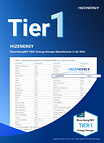
HEFEI, China, Nov. 2, 2026 /PRNewswire/ — HIZENERGY has once again secured its place on the BloombergNEF (BNEF) Energy Storage Tier 1 list for Q4 2026, as the benchmark rolled out a major methodology upgrade and significantly raised qualification thresholds for storage vendors globally.

Widely adopted by financial institutions, asset owners, EPC contractors and institutional investors worldwide, the BNEF Tier 1 assessment centres on bankability, independently verified operational track records, technical robustness and reliable cross-border delivery. This quarter’s stricter screening makes continuous Tier 1 recognition a stronger, more credible validation of vendor capability. HIZENERGY maintained its Tier 1 standing backed by a growing portfolio of third-party validated live projects, proven bankability credentials and a mature, regionally anchored global delivery network.

Focused on behind-the-meter commercial and industrial (C&I) energy storage, HIZENERGY’s flagship EnerBox series and liquid-cooled BESS platforms serve diversified end-use scenarios: manufacturing plants, industrial parks, rooftop PV sites, logistics depots, EV charging hubs, cold storage facilities and commercial buildings. The integrated systems support multiple value streams: peak shaving and demand charge reduction, wholesale energy arbitrage, maximised PV self-consumption, seamless off-grid backup for critical loads, voltage stabilisation and participation in demand response and ancillary service markets. Powered by our in-house developed PCS, we deliver customised solutions with site-specific management and enterprise-tailored strategies, unlocking layered revenue streams while helping clients defer costly grid upgrade investments.

Long-term operational reliability remains the core of our product design philosophy. Instead of chasing short-term market hype, HIZENERGY prioritises project certainty — the most critical requirement for asset owners and investors. Our standardised product lineup paired with localised on-site commissioning, after-sales and technical support delivers finance-ready, predictable storage assets built for decades of cycling.

Navigating ongoing price volatility and cyclical shifts across the energy storage sector, HIZENERGY continues to deploy field-proven, safety-certified C&I storage solutions and full-lifecycle delivery services for international partners. We collaborate closely with stakeholders across the globe to build a resilient, transparent and trustworthy C&I storage supply chain, accelerating distributed renewable adoption and flexible, secure power capacity for C&I users. For more information, visit us at https://en.hizenergy-ess.com/

View original content to download multimedia:https://www.prnewswire.co.uk/news-releases/hizenergy-retains-bloombergnef-tier-1-status-amid-tighter-q4-2026-evaluation-criteria-302925949.html

Continue Reading

Trending