Connect with us

Technology

CHIPOTLE X STRAVA PARTNERSHIP GOES GLOBAL: INTRODUCING “THE CITY CHALLENGE” IN 25 MARKETS TO KICK OFF 2025

Published

on

The popular “Chipotle segments” on Strava are expanding to 25 cities, including international destinations for the first timeChipotle will motivate guests to achieve their goals with a new “Goals, Gym, Guac” motivational text message community, providing exclusive creator content and a chance to score a free Lifestyle Bowl offer1 on “No Quitters Day,” January 10Chipotle’s lineup of seven Lifestyle Bowls makes maintaining a healthy lifestyle easier than ever

NEWPORT BEACH, Calif., Jan. 2, 2025 /PRNewswire/ — Chipotle Mexican Grill (NYSE: CMG) today announced that its partnership with Strava, the app for active people with more than 135 million users in more than 190 countries, is back and bigger than ever in 2025. Chipotle is launching its first-ever international Strava segment challenge for participants to compete to win free Lifestyle Bowls for a year, plus free Chipotle for their city.2 New in 2025, the initiative extends beyond the U.S., connecting and motivating Chipotle’s running community across 25 cities in North America and Europe, including New York City, London, Paris, Toronto and more. See all locations at chipotle.com/city-challenge. People can also complete the segment by walking or in a wheelchair. The cities participating in the competition are the top 25 cities that eat the most Chipotle.

“Last year, we learned about the literal great lengths that our fans will go to for free Chipotle. Participants logged more than 9.25 million miles on ‘Chipotle segments,’ the equivalent of circling the planet more than 370 times,” said Chris Brandt, Chief Brand Officer, Chipotle. “After seeing the passion our fans had for the initial launch with Strava, we had to increase access to the competition and raise the stakes.”

Chipotle x Strava: The City Challenge
Chipotle has partnered with Strava to create 25 “Chipotle segments,” which are portions of roads and trails created by the Strava community where athletes can find friendly competition by chasing the fastest times on the leaderboard. Starting today through January 31, fans will have the opportunity to compete for Local Legend Status (LCL), an award for the individual who completes the segment the most times. Chipotle will reward the Local Legend in each city with free Lifestyle Bowls for a year.2 

New this year, every city with a Chipotle segment will also compete to see who can collectively complete the highest mileage on the segment. The cities’ progress will be tracked on the “Chipotle x Strava: The City Challenge” heatmap,  a first-of-its-kind leaderboard showing daily updates of each city’s performance. The city that wins will score a BUY-ONE-GET-ONE (BOGO) entrée offer for their entire city valid on instore orders on a future date to be announced by Chipotle. This will be the first time Strava segments will be in direct competition with each other as part of a brand-sponsored competition.

No Quitters Day Is Better With Friends
The second Friday of January is known as “Quitters Day,” the day people are most likely to forfeit New Year’s resolutions. Since 2023, Chipotle has celebrated “No Quitters Day” and rewarded guests who sustained healthy habits all month. As Chipotle enters its third year celebrating “No Quitters Day,” the company is creating a motivational text message community via SMS to help guests achieve their goals.

How It Works:

From January 2 – January 9, guests can visit chipotle.com/lsb-text to join the “Goals, Gym, Guac” text message community.Throughout January, Chipotle will text its community with exclusive content from top creators, motivational texts and affirmations, plus a first chance to score a free Chipotle Lifestyle Bowl. On “No Quitters Day,” Friday, January 10, members will be texted with instructions to get one of 50,000 free Lifestyle Bowls.1

“It’s well known that having an accountability buddy makes it easier to accomplish wellness goals,” said Stephanie Perdue, Vice President of Brand Marketing, Chipotle. “We are showing up for our guests with our version of a group chat to make healthy habits fun on ‘No Quitters Day.'”

Lifestyle Bowls For Every Goal
Chipotle’s Lifestyle Bowls are chef-curated entrées designed to make healthy habits convenient and delicious with easy one tap ordering on the Chipotle app and Chipotle.com. The menu features nourishing bowls for every lifestyle, including Whole30®, keto, paleo, gluten free, grain free, vegan and vegetarian.

Chipotle is helping fans start the new year strong with a $0 delivery fee offer3 on Lifestyle Bowl orders in the U.S. on the Chipotle app and Chipotle.com from January 2 through January 31. Lifestyle Bowls are digital exclusive menu items available in the U.S., U.K., Canada and France. 

The 2025 Lifestyle Bowl Lineup:

Balanced Macros Bowl: Light White Rice, Black Beans, Chicken, Fajita Veggies, Fresh Tomato Salsa, Guac, Extra Romaine LettuceVeggie Full Bowl: White Rice, Black Beans, Fajita Veggies, Fresh Tomato Salsa, Roasted Chili-Corn Salsa, GuacWholesome Bowl (Whole30® compatible): Supergreens Lettuce Blend, Chicken, Fajita Veggies, Fresh Tomato Salsa, GuacKeto Salad Bowl: Supergreens Lettuce Blend, Chicken, Tomatillo-Red Chili Salsa, Fresh Tomato Salsa, Sour Cream, CheeseHigh Protein Bowl: White Rice, Black Beans, Double Chicken, Tomatillo-Red Chili Salsa, Cheese, Romaine LettucePlant-Powered Bowl: Supergreens Lettuce Blend, White Rice, Sofritas, Fajita Veggies, Fresh Tomato Salsa, Roasted Chili-Corn Salsa, GuacGo Half Veggie Bowl: 1/2 Chicken, 1/2 Sofritas, Supergreens Lettuce Blend, White Rice, Fajita Veggies, Fresh Tomato Salsa, Roasted Chili-Corn Salsa, Sour Cream 

1 – 50,000 codes available. 50 U.S. States & DC Only, 13+. Limit 1 code per person. Chipotle will let you know if you’ve won by sending you a text. Standard text and data rates may apply.  If all codes aren’t distributed via text responses Chipotle will distribute via other means outlined in the Terms. Terms: chipotle.com/text

2 – NO PURCHASE NECESSARY.  Contest begins 1/1/25 at 3:01 p.m. PT and ends: 1/31/25 at 11:59 p.m. PT.  Minors must have parental consent.  See official rules at: chipotle.com/city-challenge-rules for additional eligibility restrictions, entry periods, segment details, prize descriptions/restrictions, and complete details.  Sponsor: CMG Strategy Co., LLC.

3 – Higher menu prices are charged for delivery; additional service fees applied at checkout as well (except in California and Minnesota). Available January 2 through January 31, 2025 only, within Chipotle’s delivery areas from participating U.S. locations, during normal operating hours for such locations. Order must include at least one Lifestyle Bowl to qualify. Minimum order $10 USD/ maximum order $200 USD, each excluding tax and fees. Deliveries and redemptions are subject to availability. Offer is not valid on catering or Burritos by the Box orders. Redemptions of Chipotle Rewards and other promotional offers may be included in a qualifying delivery order but do not count towards satisfaction of minimum purchase requirements. Valid only on Chipotle website or the Chipotle app; not valid on orders placed via third-party delivery platforms. Chipotle reserves the right to modify or terminate this offer at any time without notice. Additional restrictions may apply; void where prohibited.

ABOUT CHIPOTLE
Chipotle Mexican Grill, Inc. (NYSE: CMG) is cultivating a better world by serving responsibly sourced, classically-cooked, real food with wholesome ingredients without artificial colors, flavors or preservatives. There are over 3,600 restaurants as of September 30, 2024, in the United States, Canada, the United Kingdom, France, Germany, and Kuwait and it is the only restaurant company of its size that owns and operates all its restaurants in North America and Europe. Chipotle is ranked on the Fortune 500 and is recognized on Fortune’s Most Admired Companies 2024 list and Time Magazine’s Most Influential Companies. With over 125,000 employees passionate about providing a great guest experience, Chipotle is a longtime leader and innovator in the food industry. Chipotle is committed to making its food more accessible to everyone while continuing to be a brand with a demonstrated purpose as it leads the way in digital, technology and sustainable business practices. For more information or to place an order online, visit Chipotle.com.

About Strava
Strava is the app for active people with more than 135 million athletes in more than 190 countries. The platform offers a holistic view of your active lifestyle, no matter where you live, which sport you love and/or what device you use. Everyone belongs on Strava when they are pursuing an active life. Join the community, find motivation and discover new experiences with a Strava subscription. Join the Strava Club or follow Strava on Instagram, X, Facebook, YouTube and LinkedIn.  Visit www.strava.com for more information. 


View original content to download multimedia:https://www.prnewswire.com/news-releases/chipotle-x-strava-partnership-goes-global-introducing-the-city-challenge-in-25-markets-to-kick-off-2025-302340819.html

SOURCE Chipotle Mexican Grill

Continue Reading

Technology

Truth-seeking: the Turning Point in Zunyi

Published

on

By

BEIJING, Oct. 18, 2026 /PRNewswire/ — An interview from China.org.cn with Wang Xiaohui and David Ferguson on the Long March:


Wang Xiaohui:

When you march toward your ideals but encounter repeated setbacks and failures, do you have the courage to pause, reflect on the path taken, and chart a new way forward?

David Ferguson:

If I continually encountered setbacks on the road to my ideals, I would stop and reflect seriously on whether my methods need adjusted or my direction needs corrected. This is a matter of being honest with oneself and honest about one’s shortcomings. Granted, this requires as much courage as setting out in the first place — because what you have to confront is not only the judgment of others, but your own ingrained reluctance to accept that you might have got it wrong.

Wang Xiaohui:

The waters of the Xiangjiang River ran crimson in the winter of 1934.

To cover the Red Army’s main force as they crossed the river, Chen Shuxiang, then Commander of the 34th Division of the Fifth Army Corps, led his troops to fight against vastly superior enemy forces until they ran out of ammunition and supplies. Severely wounded, Chen was captured alive. On the way to the enemy camp to be paraded for merit, Chen seized a moment of the enemy’s unawareness, tore his own intestines through his abdominal wound, and died a heroic death. He was only 29 years old.

The Battle of Xiangjiang River was the deadliest campaign for the Red Army since the start of the Long March. In less than two months, their troop strength plummeted from over 86,000 to just over 30,000.

At that critical moment, doubts and discontent among officers and soldiers with the military leadership peaked.

During the fights against the previous four Kuomintang (KMT) “encirclement” campaigns, the Red Army adopted Mao Zedong’s strategy of “luring the enemy in deep.” With flexible tactics in mobile warfare, the Red Army worked miracles of defeating superior enemies time and again. Yet, the tide turned completely during the KMT’s fifth “encirclement.”

At that time, the CPC was a branch of the Communist International (Comintern). After 1927, the Comintern instructed the CPC to adopt an urban-centered path in its revolution, for it was how Russia’s October Revolution had achieved victory. Affected by this directive, during the Fifth Counter-Campaign against “Encirclement and Suppression”, Bo Gu and Otto Braun, who held actual command of the Red Army, insisted on launching offensive operations to seize major cities.

Otto Braun also mechanically applied European conventional warfare tactics, forcing the Red Army into rigid positional and fortress battles. In the Battle of Guangchang, the poorly equipped Red Army fought head-on against enemy tanks and artillery on open terrain, resulting in more than 5,000 casualties, about one-fourth of all participating troops.

Successive military defeats forced the Red Army to launch a strategic shift. However, Bo Gu and Otto Braun insisted that everything be evacuated, including heavy equipment: printing presses, currency-making machines, and arms-manufacturing facilities… When crossing the Xiangjiang River, troops were slowed down by these cumbersome supplies, and numerous soldiers even laid down their lives for protecting these assets. Chen Shuxiang and his 34th Division wrote the gravest footnote to this bloody sacrifice.

By the banks of the Xiangjiang River, the spark of hope in the eyes of the Red Army soldiers was nearly quenched by the cold water. Could the rigid foreign doctrines truly guide the Red Army and China’s revolution? What path lay ahead?

History often unfolds in paradoxes: when all hope seems lost, a historical turning point is quietly emerging.

After the Battle of Xiangjiang River, Mao firmly opposed the original plan drafted by Bo Gu and Otto Braun to march towards Hunan. Instead, he proposed to advance to Guizhou where enemy defenses were weak. There, the Red Army broke through the natural barrier of the Wujiang River, and captured Zunyi. On Jan. 15, 1935, the CPC Central Committee convened an enlarged Political Bureau meeting in an old mansion, later known to the world as the Zunyi Conference.

Inside the modest living room on the second floor, a charcoal brazier expelled the winter chill. The CPC leadership sat around a long table to review why the Red Army had fallen into passive positions since 1933. Bo Gu attributed the defeats solely to the enemy’s overwhelming strength, while other leading officials like Zhou Enlai and Zhang Wentian pinpointed flawed military command as the fundamental cause.

Mao Zedong also made a pivotal speech.

As a revolutionary forged in rural base-area practice, Mao always sought truth from real combat experience. Citing victories from the previous four counter-“encirclement” campaigns, he rebutted Bo Gu’s opinions and criticized the flawed strategies of passive defense and abandoning mobile warfare tactics. In plain, incisive language, he pointed out that “the soldiers also needed to march, eat and sleep,” and that Braun’s rigid commands were completely divorced from the realities of China’s revolutionary warfare. 

Throughout the whole meeting, Bo Gu remained dejected; Braun sat near the door and lit one cigarette after another. Never had these “true Bolsheviks” faced such rigorous criticism before.

The intensive confrontation lasted three days. In the end, Mao Zedong was elected to the leadership of the Red Army and the CPC Central Committee, putting an end to the wrong guidance. This marked a life-and-death turning point in the history of the Communist Party of China.

The Zunyi Conference freed the CPC from the Comintern’s intervention, enabling the Party to independently master the destiny of China’s revolution. From then on, the Red Army turned peril into safety, and China’s revolution emerged from despair toward new life.

David Ferguson:

When faced with major setbacks, the Communist Party of China was not crushed; instead, it demonstrated the courage to confront and correct its own mistakes, thereby turning adversity into opportunity. For any ruling party, this kind of courage is exceptionally rare.

Throughout history, guided by the principle of seeking truth from facts, the Party has always corrected errors, updated systems and adjusted course. By doing so, it has guaranteed social progress. This is precisely the secret to success that has made the Party resilient and invincible.

Wang Xiaohui:

No grand undertaking advances without setbacks. Faced with obstacles and defeats, the CPC demonstrated extraordinary courage and wisdom. They sought truth from facts, corrected wrong courses, and led the revolution towards triumph.

The Zunyi Conference Spirit, embodied in firm conviction, adherence to truth, independence and self-reliance, solidarity and unity, was forged amid blood and fire. It has shaped the unique spiritual character of the CPC. In the years that followed, these timeless values continued to evolve and sustain the Party in the face of trials and challenges, endowing it with enduring vitality.

China Mosaic 
http://www.china.org.cn/video/node_7230027.htm

Faith: The Spark Born by the Yudu Riverside
http://www.china.org.cn/2026-10/17/content_118737624.shtml


View original content to download multimedia:https://www.prnewswire.com/news-releases/truth-seeking-the-turning-point-in-zunyi-302912139.html

SOURCE China.org.cn

Continue Reading

Technology

GMIF2026: AI Inference Powers the “Token Factory” and Drives System-Level Rethinking of Memory & Storage

Published

on

By

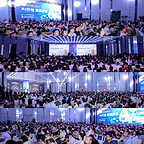
SHENZHEN, China, Oct. 18, 2026 /PRNewswire/ — The 5th GMIF Innovation Summit (Global Memory Innovation Forum 2026, GMIF2026) recently concluded at the Renaissance Shenzhen Bay Hotel. Co-hosted by the Shenzhen Memory Industry Association (SMIA) and the School of Integrated Circuits at Peking University, the summit was themed “The Future Built on AI Memory and Storage.” Now in its fifth edition, GMIF has grown from a regional industry gathering into a benchmark for the global semiconductor memory ecosystem, with diversified programs including keynote sessions, an investment forum, product exhibitions, a global livestream, and a golf friendship match, all centered on the value of memory and storage in the token economy and the AI inference era.

In the opening remarks by Rixin Sun, President of Shenzhen Memory Industry Association (SMIA), GMIF’s growth over five consecutive editions was traced from its early days to today. As a platform for global exchange, GMIF is built around the memory value chain, linking wafer IDMs and players in controllers, modules, packaging and testing, equipment and materials, and end applications to promote technical exchange, supply-demand matching, and ecosystem cooperation.

President Sun noted that as AI evolves from generative to agentic, inference efficiency, data scheduling, and system coordination have become shared priorities. Collaboration across the value chain is no longer a traditional supply-demand relationship, but a deeper partnership built around workload requirements, joint product definition, and scenario validation. Looking ahead, GMIF will pursue a more specialized and differentiated format, connecting memory companies with AI compute and end-application players worldwide.

Capital Meets Technology: Memory & Storage Moves to the Center of AI Infrastructure

As AI shifts from model training to large-scale commercial inference, the token is becoming a new unit of value. Inference demands low latency, high concurrency, and sustained throughput, which places memory and storage bandwidth, capacity, and energy efficiency among the variables that shape overall system efficiency and cost.

Daniel Yen of Morgan Stanley projected that global data center capital expenditure will stay strong in the coming years, with more than half of cloud data center capex expected to go to memory & storage (excluding HBM) by 2027. Yen identified six innovation paths to overcome the “memory wall” challenge: process migration, design changes, advanced packaging, memory peripherals, PIM/CIM, and new materials.

Prof. Yimao Cai, Dean of the School of Integrated Circuits at Peking University, pointed out that HBM remains central to high-end AI compute, but yield, cost, and thermal constraints limit broader adoption. NAND-based high-bandwidth technologies such as HBF have become a major research focus because of their cost advantage, and hybrid multi-media architectures could balance performance, capacity, and cost for deploying models with hundreds of billions of parameters.

Kevin Yoon, CVP & CTO of Samsung Memory China at Samsung Electronics, described how agents are generating massive KV cache demand and driving rapid iteration of tiered storage, citing Samsung’s work on Z-NAND, PCIe Gen6 SSDs, and ultra-high-capacity data center SSDs. Maya Zhang, Senior Director of Product Marketing from Sandisk, called this the first year of the “inference boom.” As inference reaches commercial scale, AI data centers are shifting from cost centers to value and capacity centers, and the evaluation framework is moving from TCO to TVO. NAND is becoming a strategic core component of AI, and the SSD is becoming a “token battery” that greatly improves the economics of the industry through token reuse.

Solidigm and Arm focused on the evolution of system-level design. Benny Ni, GAR Sales VP at Solidigm, noted high-capacity QLC SSDs are being adopted faster, and that memory offloading has moved from an alternative to a core design paradigm for data centers, while liquid cooling has become a prerequisite for unlocking high-end storage performance. John Xavier Lionel, Head of Global Storage Business at Arm, shared competition in the AI era is shifting from simply chasing higher TOPS to building a more efficient system balance among compute, memory, storage, and data movement. Arm’s cloud-edge-device continuum framework balances power, capacity, bandwidth, latency, security, and cost constraints at each tier, so that “the right AI workload runs in the right place.”

Moving from the cloud to the edge, Stanley Huang, AVP of Silicon Motion, stressed that devices are the ultimate carrier of AI experiences and that intelligent storage directly determines real-world device performance. Its PerformaShape technology allocates resources flexibly across different agents and greatly improves read/write consistency.

Sam Sun, Chairman of BIWIN, explained that large-scale AI inference is extending memory demand from data centers to the edge and endpoints, where differing needs in capacity, performance, power, size, and reliability are pushing storage from general-purpose specifications toward deep matching with specific scenarios and platforms. Drawing on full-stack capabilities from media selection and controller and firmware development to advanced packaging, testing, and volume delivery, BIWIN works closely with customers, platforms, and chip makers to tailor products to each use case, shortening development and validation cycles and improving system space, energy efficiency, and performance.

Token Factories Move Enterprise AI from Pilot to Production

As the token becomes the core unit of value, producing tokens efficiently and at low cost has become a shared challenge for enterprise AI adoption worldwide, and the “token factory” is emerging as a new industry paradigm. Tao Zhou, General Manager of the Server Division of Lenovo ISG China, said 80% of enterprises have deployed at least one type of agent, yet fewer than 40% of projects can scale and deliver positive ROI. Lenovo has built a full-stack “token factory” paradigm spanning data governance, compute optimization, and security management to address this.

A solid token factory depends on underlying storage media and architecture. Numbers Law’s PMD (Parallel Magnetic Drive) technology and NEXWISE‘s “KuberCloud” token factory solution contributed to full-stack capability from hardware to compute scheduling and model operations. Infplane, Maxio, and Genstoraige lowered the deployment threshold for large on-device models through AI SSD tiered offloading and memory expansion.

Real-world applications are also deepening. SYNCORE has achieved vehicle-cloud embodied intelligence across the whole vehicle. Dify, with its private agent architecture, and Paratera, with its MaaS compute service platform, are moving AI from basic compute supply toward deeper industry intelligence services, accelerating the industrialization of AI.

40 Companies Showcase the Core of the AI Memory & Storage Chain

The concurrent exhibition brought together 40 companies across the full value chain, from memory chips and controllers to compute servers, AIDC services, packaging and testing equipment, and system applications, presenting the latest advances in AI memory and storage from around the world.

Memory IDMs and controller makers led with new products. SanDisk featured its iNAND AT EU752 automotive UFS 4.1, SN861 enterprise NVMe SSD, and BiCS8 QLC NAND. Silicon Motion introduced the SM8466 PCIe Gen6 16-channel controller and the SM2524XT controller for edge SSDs. Maxio, YEESTOR, and other Chinese controller makers showed flagship PCIe Gen4/Gen5 and UFS controllers with enhanced LDPC, a sign that China’s controller portfolio is taking shape and benchmarking itself against leading international standards.

Compute and token factory solutions were another highlight. Lenovo exhibited its WenTian series of AI training-and-inference integrated servers. NEXWISE presented its full-stack token factory hardware and software, with heterogeneous compute management and token-based billing. Paratera showed its intelligent compute cloud and supercomputing cloud services, and Numbers Law demonstrated its PMD (Parallel Magnetic Drive) technology, aimed at sharply raising HDD IOPS and throughput. Infplane, Genstoraige, and Quanxing introduced KV cache offload and memory-fusion AI SSD solutions that use storage to share the compute load and significantly cut deployment costs.

Module makers and full-scenario solution providers brought a wide range of products. BIWIN exhibited enterprise SSDs, CXL products, wide-temperature industrial storage, and embedded products spanning AI cloud, edge, and device. KingSpec, POWEV, Topdisk, Barycn, Jielong Storage, HIKSEMI, and others presented industrial-grade, automotive-grade, server, and embedded product families, demonstrating strong volume production and reliable delivery.

Equipment, testing, and materials suppliers rounded out the floor. Attach Point, MICROVIEW, and Maxwell Technologies showed die attach and bonding equipment for 2.5D/3D advanced packaging. OKN Technology, Acroview Technology, Hongjingwei, and Tytantest introduced test and burn-in systems covering SSD, DRAM, and NAND that can accurately reproduce high-load AI I/O scenarios. Hemei Jingyi and Silergy brought storage IC package substrates and dedicated power management ICs. From advanced packaging equipment to test validation to core components, this supporting ecosystem lays the manufacturing foundation for volume production of AI memory and storage and for Chinese suppliers expanding overseas.

GMIF2026 Annual Awards Unveiled: Global Memory & Storage Leaders Build an Open, Collaborative Ecosystem

To recognize companies that have made outstanding contributions to the memory and storage value chain, the summit established the GMIF2026 Annual Awards, which cover memory, compute, packaging and testing equipment, test systems, and end applications across AI infrastructure, and were judged on technological innovation, industry contribution, market service, and real-world results.

Honorees, including Samsung Semiconductor, SanDisk, Solidigm, CXMT, Arm, Lenovo, Dify, Silicon Motion, Infplane, Genstoraige, Numbers Law, Paratera, SYNCORE, NEXWISE, Maxio Technology, BIWIN, Topdisk, KingSpec, POWEV, Quanxing Technology, OKN Technology, Attach Point, COMIX, Barycn, LKAUTO, Maxwell Technologies, Hemei Jingyi, Silergy, Heyan Technology, ExTripod Electronics, UNIMOS, GBAT, and Tytantest, were recognized for standout achievements in technology breakthroughs, product deployment, ecosystem building, and the industry chain.

Global Livestream and Golf Friendship Match Extend the Boundaries of Industry Cooperation

To join the global ecosystem and expand international cooperation, the summit featured a special Global Livestream by Memory Brands on LinkedIn, Facebook, and YouTube. Eight brands presented online: BIWIN, Silicon Motion, Quanxing Technology, OKN Technology, KingSpec, Maxwell Technologies, ExTripod Electronics, and Silergy. They gave overseas audiences a direct look at China’s latest advances in memory chips, advanced packaging, test systems, and other core AI infrastructure components, connecting technology standards, supply chain resources, and market demand across regions.

The momentum carried into the next day. The GMIF2026 “BIWIN Cup” golf friendship match, exclusively sponsored by BIWIN, brought senior executives from across the global memory value chain to the course. After a day of intensive discussion at the main forum, the setting was more relaxed, but the conversations among technology, capital, and markets carried on, helping speed practical cooperation across borders and sectors.

Conclusion

Across the GMIF program, one message stood out: global AI competition is moving beyond the “single-point era” of peak GPU performance into a “system-level era” that integrates storage, compute, networking, and software. In the token economy, memory and storage is shedding its auxiliary role and becoming the strategic foundation of AI inference.

This edition of GMIF brought together capital outlook, frontier technology, product innovation, real-world practice, and ecosystem collaboration, and, with the awards, livestream, and networking events, carried the conversation from ideas to product showcases, overseas exposure, and business deals. Going forward, GMIF will stay focused on the industry’s frontier issues and connect key players across the global memory value chain, promoting joint standards, technology development, and market expansion to open a new chapter for the AI memory and storage industry.

About GMIF

Global Memory Innovation Forum (GMIF) is a premier annual gathering that connects the global memory and storage community. Featuring diverse activities including keynote speeches, roundtable dialogues, supply-demand match-making, product showcases, industry rankings, awards programs, and global livestreaming, GMIF brings together key enterprises across the memory and storage chain, technical experts, terminal companies and investment institutions to exchange insights, build partnerships, and create business opportunities. Learn more about GMIF, please visit https://www.gmif.com.cn/. Follow us on LinkedIn, YouTube and Facebook.

Media Contact:
Carina Gu, wenjing.gu@gmif.com.cn

View original content to download multimedia:https://www.prnewswire.com/news-releases/gmif2026-ai-inference-powers-the-token-factory-and-drives-system-level-rethinking-of-memory–storage-302912123.html

SOURCE Shenzhen Memory Industry Association (SMIA)

Continue Reading

Trending