Connect with us

Technology

Coding And Marking Equipment Market size to increase by USD 1.54 billion between 2024 to 2029, Market Segmentation by End-user, Product, Geography, Technavio

Published

on

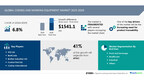
NEW YORK, Jan. 2, 2025 /PRNewswire/ — The global coding and marking equipment market size is estimated to grow by USD 1.54 billion from 2025 to 2029, according to Technavio. The market is estimated to grow at a CAGR of almost 6.8% during the forecast period. The report provides a comprehensive forecast of key segments below- 

Segmentation Overview

End-user1.1 Food and beverage1.2 Healthcare1.3 Industrial1.4 OthersProduct2.1 CIJ printing and coding2.2 Laser coding and marking2.3 PALM2.4 TTO2.5 OthersGeography3.1 APAC3.2 Europe3.3 North America3.4 Middle East and Africa3.5 South America

Get a glance at the market contribution of rest of the segments – Download a FREE Sample Report in minutes!

1.1 Fastest growing segment:

The coding and marking equipment market is experiencing significant growth due to the increasing adoption of such technology in the food and beverage industry. This sector is a major end-user, utilizing coding and marking equipment for packaging products such as processed foods, beverages, bakery items, and dairy foods. The equipment is essential for providing specific product information, including manufacturing and expiry dates, brand names, and prices. Regulations, such as those in Canada requiring specific barcodes and nutritional information, further drive demand. In the bakery industry, non-contact coding solutions are popular due to their quality and lack of requirement for inks. In the dairy sector, safety and hygiene concerns necessitate taint-free coding and fast-dying inks. The packaged snacks sector’s rapid growth presents challenges for manufacturers to reduce costs while enhancing efficiency. Beverage manufacturers require diverse coding and marking equipment due to various packaging materials. Technological advancements, such as CIJ, Laser, TIJ, and TTO, enable printing on various surfaces and materials. Vendors continuously invest in printing technologies to increase product coding and marking speed. For instance, Paul Leibinger GmbH and Co. KG launched the JET One industrial inkjet printer for coding and marking various surfaces. The global coding and marking equipment market’s growth is expected to continue, driven by the food and beverage sector’s increasing adoption of processed foods, packaged snacks, bakery products, and dairy products.

Analyst Review

The Coding and Marking Equipment market encompasses a range of technologies and applications, including flexible packs, medical equipment, food safety, and counterfeit automobile parts. In the food and beverage industry, coding and marking equipment are essential for ensuring product traceability and safety, with applications on bottles, tubes, cartons, and labels. The pharmaceutical sector also heavily relies on this technology for tracking and identifying products, particularly in healthcare settings. Inkjet printers, such as Continuous Inkjet (CIJ) and Thermal Inkjet (TIJ), are commonly used for coding and marking applications. Laser markers and thermal printers are also popular choices, offering high-resolution marking and the ability to mark various materials, including metals and plastics. Online transactions have increased the demand for coding and marking equipment, as businesses seek efficient and accurate methods for tracking and identifying products. The market for coding and marking equipment is diverse, with applications in various industries, including food and beverage, pharmaceuticals and healthcare, electronics, and more. Coding and marking equipment can be used to apply ink droplets or laser markings to a wide range of products, including bottles, tubes, cartons, and labels, ensuring product traceability, safety, and authenticity.

Market Overview

The Coding and Marking Equipment market encompasses a wide range of technologies and applications, including flexible packs, medical equipment, food safety, and brand protection. This market caters to various industries such as Food and Beverage, Pharmaceutical, Electronics, Aerospace and Defense, and more. The use of coding and marking equipment is essential for product traceability, serialization, and information display. Inkjet printers, laser markers, and thermal transfer printers are the primary technologies used for coding and marking. Continuous Inkjet (CIJ) and Thermal Inkjet (TIJ) are popular technologies for marking on various surfaces, including pharmaceutical vials and containers made of glass, aluminum, PET bottles, and corrugated packaging. Coding and marking equipment is used extensively in the Pharmaceutical and Healthcare industry for serialization, traceability, and counterfeit prevention. It is also used in the Food and Beverage industry for product labeling, ensuring food safety, and preventing counterfeit automobile parts. Disinfectants, masks, and sanitizers have gained significant importance in recent times due to the pandemic. Coding and marking equipment is used to print tracking codes, unique product identifiers, and variable data on these products for efficient inventory management and brand protection. The market for coding and marking equipment is diverse and dynamic, with a wide range of applications and technologies. It includes the use of high-resolution inkjet coders, RFID tagging, labels, secondary packaging materials, and online transactions. Continuous inkjet technology, solvent products, and artwork management systems are some of the key solutions that cater to the varying needs of the market.

To understand more about this market- Download a FREE Sample Report in minutes!

Key Topics Covered:

 1 Executive Summary
 2 Market Landscape
 3 Market Sizing
 4 Historic Market Size
 5 Five Forces Analysis
 6 Market Segmentation
 7 Customer Landscape
 8 Geographic Landscape
 9 Drivers, Challenges, and Trends
10 Vendor Landscape
11 Vendor Analysis
12 Appendix

About Technavio

Technavio is a leading global technology research and advisory company. Their research and analysis focuses on emerging market trends and provides actionable insights to help businesses identify market opportunities and develop effective strategies to optimize their market positions.

With over 500 specialized analysts, Technavio’s report library consists of more than 17,000 reports and counting, covering 800 technologies, spanning across 50 countries. Their client base consists of enterprises of all sizes, including more than 100 Fortune 500 companies. This growing client base relies on Technavio’s comprehensive coverage, extensive research, and actionable market insights to identify opportunities in existing and potential markets and assess their competitive positions within changing market scenarios.

Contacts

Technavio Research
Jesse Maida
Media & Marketing Executive
US: +1 844 364 1100
UK: +44 203 893 3200
Email: media@technavio.com
Website: www.technavio.com/

View original content to download multimedia:https://www.prnewswire.com/news-releases/coding-and-marking-equipment-market-size-to-increase-by-usd-1-54-billion-between-2024-to-2029–market-segmentation-by-end-user-product-geography-technavio-302340391.html

SOURCE Technavio

Continue Reading

Technology

ThreatBook Accredited by IMDA Singapore for Full Cycle Agentic Cybersecurity Solutions

Published

on

By

The agentic security company is recognized for its innovation and high growth, and is endorsed to service government and large enterprise customers.Being accredited gives ThreatBook’s customers peace of mind that its suite of security solutions is one of the industry’s best.A significant milestone that empowers the company to further grow in Singapore and the rest of the world.

SINGAPORE, Sept. 8, 2026 /PRNewswire/ — ThreatBook, the agentic security company, today announced being accredited by Singapore’s Infocomm Media Development Authority (IMDA) for the company’s industry leading solutions. 

Following IMDA’s rigorous evaluation, ThreatBook is now part of the IMDA Accreditation program, which recognizes innovative and high growth information, communications and media (ICM) technology companies as qualified contenders to service government and large enterprise entities. The program provides end users with independent assurance that accredited companies possess solutions with validated core product functionalities and the capability to consistently deliver. The company’s solutions were independently assessed and the company’s technology, operational capabilities, and ability to support enterprise deployments were validated. 

Being accredited effectively places the company in the green lane government procurement process, making it easier for public sector entities to purchase ThreatBook solutions. ThreatBook is one of a limited number of vendors that have been accredited to date, further cementing the company’s highly respected status among Singapore’s tech community.

A global cybersecurity company specializing in advanced threat intelligence, detection, and response, ThreatBook equips customers with the clarity and context needed to defend against evolving digital risks. By combining artificial intelligence (AI) with deep threat intelligence, ThreatBook delivers real-time visibility, hyper-accurate detections, and early-warning insights against nation-state actors, cybercriminal groups, and emerging attack campaigns. With unparalleled insights on the tactics, techniques and procedures (TTPs) used by both Eastern and Western perpetrators, ThreatBook is able to detect attacks emanating from Asia that rival security vendors typically miss.

“Being accredited by IMDA is a significant milestone for the company, expected to streamline the government’s procurement process for us going forward. It is also a landmark moment for Singapore-based customers, who now have the peace of mind that our full cycle suite of industry leading security solutions is IMDA-recognized, and genuinely deliver what they promise,” said Mr Chase Li, Co-founder and Managing Director for International Business at ThreatBook. “That Singapore is one of the world’s leading digital and technology hubs, recognized for its pioneering excellence across all disciplines including cybersecurity and AI, adds further prestige to our accreditation — empowering us to further grow here in Singapore and the rest of the world.”

“Cyber resilience has become a strategic priority for organizations navigating an increasingly sophisticated digital landscape. We are pleased to accredit ThreatBook, whose advanced threat intelligence capabilities complement Singapore’s growing ecosystem of trusted cybersecurity innovators. We look forward to supporting ThreatBook’s regional expansion and helping enterprises access proven solutions that strengthen their cybersecurity posture,” said Mr Edwin Low, Director for Enterprise & Ecosystem Development at IMDA.

ThreatBook’s AI-powered applications service all stages of the security lifecycle — protecting cloud environments, networks, endpoints and perimeters with precise threat detection, automated triage and analysis, and coordinated remediation and response. The company’s solutions address three key features today’s security operations (SecOps) demand: precision; the capability to spot APAC-emanating threats that Western solutions usually overlook; and being able to identify threats long before they strike.

ThreatBook’s best-of-breed AI-powered solutions include:

ATI, providing unmatched intelligence accuracy and actionability at scale.DRPS, identifying and removing rogue sites, apps and dark web exposures.Investigator, an online research tool that lets security analysts investigate suspicious IPs, domains, file hashes, and threat actors.ThreatBook TDP, a network detection and response solution fusing threat intelligence with behavioral analytics.SafeSkill, protecting SecOps against AI agent skills threats.OneDNS, blocking suspicious web addresses.Flocks, an agentic SecOps platform organizing activities and agents within a single operational loop.

About ThreatBook

ThreatBook is the agentic security company focused on AI for Security, and Security for AI. Founded in 2015, ThreatBook is a global cybersecurity company that combines AI with deep threat intelligence to defend enterprises across all stages of the security lifecycle: precision, automated triage and response, and risk reduction.

With unique vantage points across the Asia Pacific region, ThreatBook delivers intelligence that bridges Eastern and Western threat landscapes, providing an unmatched perspective for global defenders against nation-state actors, cybercriminal groups, and emerging attack campaigns. ThreatBook operates the #1 security community in APAC and empowers the industry with free security tools.

ThreatBook is accredited by Singapore’s Infocomm Media Development Authority (IMDA), recognized for the company’s innovative and robust suite of agentic security solutions. Furthermore, leading analyst firm Forrester recognized ThreatBook in Forrester’s Network Analysis and Visibility Solutions Landscape, Q2 2025 report, whereby ThreatBook was one of a limited number of vendors cited. 

To learn more, visit www.threatbook.io or follow us on LinkedIn.

View original content:https://www.prnewswire.com/apac/news-releases/threatbook-accredited-by-imda-singapore-for-full-cycle-agentic-cybersecurity-solutions-302869852.html

SOURCE ThreatBook

Continue Reading

Technology

Alibaba Cloud, Ant Group, Cambricon and Huawei Come Together in Shanghai to Advance the Open Source AI Stack at PyTorch Conference China

Published

on

By

China’s leading AI technology companies Alibaba Cloud, Cambricon and Ant Group join the PyTorch Foundation as members

SHANGHAI, Sept. 7, 2026 /PRNewswire/ — KubeCon + CloudNativeCon + OpenInfra Summit + PyTorch Conference China 2026 — The PyTorch Foundation, a community-driven hub for open source AI under the Linux Foundation, today announced that Alibaba Cloud and Cambricon have joined the Foundation as Platinum members, and Ant Group has joined as a Gold member. Representatives from Alibaba Cloud, Ant Group, Cambricon, and Huawei are coming together in Shanghai this week, taking the keynote stage at the first-ever KubeCon + CloudNativeCon + OpenInfra Summit + PyTorch Conference China 2026 to speak about the open AI stack — the chips and accelerators, open-weight models, frameworks, and infrastructure that carry AI into production.

Alibaba Cloud, Ant Group, Cambricon, and Huawei come together in Shanghai this week to speak about the open AI stack.

Together these organizations are mapping the future of the PyTorch ecosystem. During the conference keynotes, Alibaba Cloud‘s Qwen infrastructure team opens that arc at the platform level, walking through how they serve Qwen at massive scale. Huawei will explore hardware-software co-design and the interoperability needed between Chinese and global AI technology stacks – a foundational question as more accelerators enter production. Cambricon picks up that thread at the chip level, detailing how the company is hardening PyTorch’s device-agnostic foundation so any backend can offer broader reach and richer native capabilities. Ant Group turns to the application layer, showing through two linked talks how existing cloud native building blocks like Kubernetes Agent Sandbox and Kata Containers can be assembled into a secure, on-demand runtime for AI agents. Taken together, these keynotes move from silicon to software to deployment, giving conference attendees a full-stack view of how open source is being built into every layer of AI in China.

“Open source has become the default way the world builds AI, and the PyTorch Foundation is a leading hub for this innovation,” said Mark Collier, Executive Director of the PyTorch Foundation. “Welcoming Alibaba Cloud, Cambricon, and Ant Group as members alongside Huawei further strengthens the global open source AI ecosystem and community building the open source intelligence layer developers rely on for training, optimizing, serving, distributing, and running models. PyTorch Conference China brings that community together in Shanghai to continue learning from one another.”

The keynotes coincide with today’s announcement that the PyTorch Foundation has welcomed Alibaba Cloud and Cambricon as Platinum members and Ant Group as a Gold member — joining Huawei, a long-standing supporter and contributor to the PyTorch ecosystem. More than 250 organizations across China contribute PyTorch Foundation projects including DeepSpeed, Helion, PyTorch, Ray, Safetensors, and vLLM.

Alibaba Cloud is a global leader in full-stack AI services, offering state-of-the-art intelligent capabilities and a worldwide AI cloud computing network. Qwen, the family of large language and multimodal AI models developed by Alibaba Cloud, has become one of the most influential and widely adopted open-weight model series since its debut in 2023.

Cambricon is a China-based designer of AI chips and accelerators supporting large-scale model training and inference. Cambricon hosts many open source toolkits, drivers, and machine learning pipelines for its Machine Learning Unit (MLU) hardware ecosystem, supporting open development of AI. As Platinum members, Alibaba Cloud and Cambricon are granted one seat on the PyTorch Foundation Governing Board and one seat on the Technical Advisory Council. Both companies will work with the community to strengthen support for hardware and accelerators across the PyTorch ecosystem.

Ant Group is a global digital technology company driving innovation in AI and digital services, actively contributing to open-source ecosystems across cloud-native and AI frameworks. As a Gold member, Ant Group joins the Foundation’s efforts to advance production-grade platforms for AI workloads and deepen collaboration with the broader PyTorch community.

Member Keynotes at PyTorch Conference China include:

Serving Qwen at Scale: Multi-Cluster AI Infrastructure on Karmada” delivered by Jionghang Cai, Senior Technical Expert, AI Infrastructure, Alibaba Cloud”What AI Agents Need from Open Infrastructure” delivered by Yaya Xia, Open Source Analyst, Ant Group”Building an Agent Runtime with Open Infrastructure” delivered by Yaya Xia, Open Source Analyst, and Xu Wang, Vice Chair, Open Source Technology Committee, Ant Group”Towards Device-agnostic PyTorch: Building Unified Infrastructure for a Multi-Backend Ecosystem” delivered by Wei Li, Principal Software Engineer, Cambricon”Ascend & PyTorch: Pioneer New AI Open Ecosystem” delivered by Liang Zhang, Vice President of Huawei Ascend Computing Product Line, Huawei

Developers and contributors interested in participating in the PyTorch Foundation project ecosystem are encouraged to join the community onsite at KubeCon + CloudNativeCon + OpenInfra Summit + PyTorch Conference China 2026 (Shanghai, September 7-9). Registration for the upcoming PyTorch Conference North America (San Jose, October 20-21) is now open – register here.

Supporting Quotes

“We believe the future of AI is built on open, production-proven infrastructure — and PyTorch sits at the heart of that future. Joining the PyTorch Foundation is a natural step given our years of running PyTorch at scale across heterogeneous hardware on Alibaba Cloud. We look forward to working alongside the PyTorch Foundation to raise the bar for AI infrastructure and help developers build the next generation of models with confidence.”
– Dr. Feifei Li, Chief Technology Officer, Alibaba Cloud

“AI proves its value through real tasks and real users. We want more people to be able to build with AI and afford to use it. Joining the PyTorch Foundation is another step in Ant Group’s long-term participation in global open-source collaboration. We look forward to working with the community to lower the barriers to AI development and adoption through open models, infrastructure and agent technologies.”
– Zhengyu He, Chief Technology Officer, Ant Group

“We believe that realizing the full potential of AI computing requires both software-hardware co-optimization and a thriving open ecosystem. Joining the PyTorch Foundation gives us an opportunity to contribute our experience from large-scale AI deployments. We want to work closely with the community to help PyTorch deliver a native, out-of-the-box developer experience across a broader range of backends. We are excited to collaborate with global developers and industry partners to build a truly open and unified AI infrastructure.”
– Elton Gong, Vice President of Software Engineering, Cambricon

“When Huawei joined the PyTorch Foundation in 2023, we came with a goal we still hold today: to help make diverse computing power ubiquitous, and to do that work upstream first. That is what led us to help start the Accelerator Integration Working Group, and what carried Ascend NPU through to becoming the first additional platform in PyTorch. It is a goal that gets easier the more of us are pursuing it, so I’m glad to welcome Alibaba Cloud, Ant Group and Cambricon to the Foundation. We will keep working toward native support for Ascend — native development, native release, native distribution — so that developers get the same PyTorch experience whichever accelerator they reach for.”
— Fred Li, Head of Computing Open Source Development Team, Huawei

About the PyTorch Foundation
The PyTorch Foundation is the vendor-neutral home for the open source intelligence layer developers use for training, optimizing, serving, orchestrating, and running models on any chip in any cloud for any agent. As a community-driven hub hosted by the Linux Foundation, the PyTorch Foundation supports the core PyTorch framework alongside a growing portfolio of innovative projects including vLLM, DeepSpeed, Ray, Helion, and Safetensors. Through open governance, strategic support, and a global contributor community, the PyTorch Foundation empowers developers, researchers, and enterprises to build and deploy AI at scale. Learn more at https://pytorch.org/foundation.

About the Linux Foundation
The Linux Foundation is the world’s leading home for collaboration on open source software, hardware, standards, and data. Linux Foundation projects, including Linux, Kubernetes, Model Context Protocol (MCP), OpenChain, OpenSearch, OpenSSF, OpenStack, PyTorch, Ray, RISC-V, SPDX and Zephyr, provide the foundation for global infrastructure. The Linux Foundation is focused on leveraging best practices and addressing the needs of contributors, users, and solution providers to create sustainable models for open collaboration. For more information, please visit us at linuxfoundation.org.

The Linux Foundation has registered trademarks and uses trademarks. For a list of trademarks of the Linux Foundation, please see its trademark usage page: www.linuxfoundation.org/trademark-usage. Linux is a registered trademark of Linus Torvalds.

Media Contact
Grace Lucier
The Linux Foundation
pr@linuxfoundation.org 

View original content to download multimedia:https://www.prnewswire.com/news-releases/alibaba-cloud-ant-group-cambricon-and-huawei-come-together-in-shanghai-to-advance-the-open-source-ai-stack-at-pytorch-conference-china-302870308.html

SOURCE PyTorch Foundation

Continue Reading

Technology

China Merchants Bank Wins CNCF End User Case Study Contest for Unifying AI Training and Inference on Kubernetes

Published

on

By

New cloud native platform lifted average accelerator compute utilization from 35% to more than 60% and cut inference cost per 1 million tokens by more than 60%

Key Highlights

China Merchants Bank, one of China’s leading commercial banks, won the CNCF End User Case Study Contest for KubeCon + CloudNativeCon + OpenInfra Summit + PyTorch Conference China 2026.The award recognizes the bank’s unified Kubernetes control plane built with Kueue, KEDA, Prometheus, HAMi, and Fluid that lets AI training, fine-tuning, and online inference share nearly 10,000 heterogeneous accelerator cards.Bringing 99% of its accelerator compute resources under this framework lifted average utilization from 35% to more than 60% and cut the cost of processing 1 million tokens (input and output combined) by more than 60%.The bank’s in-house Twinkle training framework lets five LoRA tenants share one base model instance by default, cutting accelerator resource usage for that setup by 80% while increasing training density by fivefold.

SHANGHAI, Sept. 7, 2026 /PRNewswire/ — The Cloud Native Computing Foundation® (CNCF®), which builds sustainable ecosystems for cloud native software, today announced China Merchants Bank, one of China’s leading commercial banks, as the winner of the CNCF End User Case Study Contest for KubeCon + CloudNativeCon + OpenInfra Summit + PyTorch Conference China 2026.

“As AI workloads continue to expand to critical infrastructure sectors such as financial, the core technology supporting it has to work harder without multiplying cost,” said Chris Aniszczyk, CTO, CNCF. “China Merchants Bank’s approach to unifying AI training and inference is a clear example of how composable, vendor neutral infrastructure powered by CNCF projects delivers measurable efficiency at scale.”

China Merchants Bank’s AI infrastructure team built a unified control plane by combining Kubernetes with Kueue, KEDA, Prometheus, HAMi, and Fluid, letting model training, fine-tuning, and online inference share nearly 10,000 heterogeneous accelerator cards. Through close collaboration with its data center and other teams, the bank brought 99% of its accelerator compute resources under this unified framework — lifting average utilization across those nearly 10,000 cards from 35% to more than 60%, while cutting the cost of processing 1 million tokens (input and output combined) by more than 60% under comparable model and service conditions.

“At China Merchants Bank, we unlock the potential of hardware through software innovation,” said  PeiXiang Tan, AI Infrastructure Architect, China Merchants Bank. “Built on a unified cloud-native foundation, our platform brings together heterogeneous compute pooling, training job scheduling, elastic inference scaling, accelerated access to data and models, and end-to-end observability. This allows training and inference to follow workload-specific paths while working in close coordination—helping every unit of compute deliver greater value over time. “

With AI adoption expanding across more financial use cases, China Merchants Bank found that training, inference, and multi-tenant fine-tuning place significantly different demands on the same hardware. Distributed training requires stable, predictable capacity that can sit idle while waiting for remaining workers or accelerator cards to become available, while online inference needs to scale quickly with unpredictable traffic. To address these competing demands, the bank built a composable architecture that shares infrastructure while decoupling runtimes: Kueue manages training admission, queues, and quotas so jobs don’t reserve capacity before they can use it; KEDA and Prometheus scale online inference from live demand signals; HAMi allocates shared accelerator capacity in fine-grained units across both paths; and Fluid accelerates access to datasets, model weights, and checkpoints so accelerators spend less time waiting on data.

China Merchants Bank’s in-house Twinkle training framework adds another layer of efficiency for multi-tenant fine-tuning, letting five LoRA tenants share one base-model instance by default. Reducing base-model replicas from five to one cuts accelerator resource usage for this setup by 80% while increasing training density fivefold.

China Merchants Bank has published previous CNCF case studies on its AI infrastructure work, including one detailing a Kubernetes and HAMi-based scheduling platform that achieved 100% hardware pool utilization through topology-aware scheduling and a 30% reduction in cross-machine scheduling for distributed training workloads.

China Merchants Bank plans to continue building on these advances, focusing on four key areas: adjusting multi-tenant training concurrency dynamically, combining utilization, queue state, and latency signals into unit-cost-based capacity management, extending KEDA toward serverless inference that can scale to zero between demand spikes, and broadening HAMi-based support for heterogeneous accelerators while adding more training and inference backends.

China Merchants Bank’s achievement was announced on stage during a keynote at KubeCon + CloudNativeCon + OpenInfra Summit + PyTorch Conference China.

To review the complete architectural implementation and downstream results, read the full China Merchants Bank case study. 

Additional Resources

CNCF NewsletterCNCF Twitter/XLearn About CNCF Membership Learn About the CNCF End User Community

About Cloud Native Computing Foundation

Cloud native computing empowers organizations to build and run scalable applications with an open source software stack in public, private, and hybrid clouds. The Cloud Native Computing Foundation (CNCF) hosts critical components of the global technology infrastructure, including Kubernetes, Prometheus, and Envoy. CNCF brings together the industry’s top developers, end users, and vendors and runs the largest open source developer conferences in the world. Supported by nearly 800 members, including the world’s largest cloud computing and software companies, as well as over 200 innovative startups, CNCF is part of the nonprofit Linux Foundation. For more information, please visit www.cncf.io.

The Linux Foundation has registered trademarks and uses trademarks. For a list of trademarks of The Linux Foundation, please see our trademark usage page. Linux is a registered trademark of Linus Torvalds.

Media Contact:
The Linux Foundation
pr@cncf.io 

View original content to download multimedia:https://www.prnewswire.com/news-releases/china-merchants-bank-wins-cncf-end-user-case-study-contest-for-unifying-ai-training-and-inference-on-kubernetes-302871748.html

SOURCE Cloud Native Computing Foundation

Continue Reading

Trending