Connect with us

Technology

RFID Market to Grow by USD 18.77 Billion (2025-2029), Adoption of Inventory Management Systems Boosts Revenue, AI Driving Market Transformation – Technavio

Published

on

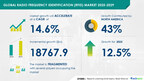
NEW YORK, Jan. 2, 2025 /PRNewswire/ — Report with the AI impact on market trends – The global radio frequency identification (RFID) market  size is estimated to grow by USD 18.77 billion from 2025-2029, according to Technavio. The market is estimated to grow at a CAGR of  14.6%  during the forecast period. Adoption of inventory management systems is driving market growth, with a trend towards growing use of RFID in data center management. However, data security and consumer privacy issues  poses a challenge. Key market players include Alien Technology LLC, ASSA ABLOY AB, Avery Dennison Corp., CipherLab Co. Ltd., CoreRFID Ltd., CYBRA Corp., Datalogic SpA, eAgile Inc., FEIG ELECTRONIC GmbH, Fujitsu Ltd., GAO RFID Inc., Honeywell International Inc., Impinj Inc., Mojix Inc., Nedap NV, NXP Semiconductors NV, RFID Inc., RFID4U, SATO Holdings Corp., Siemens AG, SML Group Ltd., TIBCO Software Inc., Unitech Computer Co. Ltd., Zebra Technologies Corp., CAEN RFID S.r.L., GAO Group, HID Corporation (US), Invengo Information Technology Co., Ltd. , Infotek Software & Systems (P) Ltd (i-TEK) (India), Bartronics India Limited (India), Bartech Data Systems Pvt. Ltd., ORBCOMM Inc. (US), GlobeRanger (US), Mojix (US), SAG Securitag Assembly Group Co., Ltd. (SAG) (Taiwan), Linxens (France), Checkpoint Systems, Inc. (US), Identiv, Inc. (US), Confidex

AI-Powered Market Evolution Insights. Our comprehensive market report ready with the latest trends, growth opportunities, and strategic analysis- View Free Sample Report PDF

Forecast period

2025-2029

Base Year

2024

Historic Data

2019 – 2023

Segment Covered

Product (RFID tags, Middleware, Passive RFID systems, and Active RFID systems), End-user (Industrial, Retail, BFSI, Logistics, and Others), and Geography (North America, APAC, Europe, South America, and Middle East and Africa) , Offering, Wafer Size, Tag Type, Frequency, Form Factor, Material, Application

Region Covered

North America, APAC, Europe, South America, and Middle East and Africa

Key companies profiled

Alien Technology LLC, ASSA ABLOY AB, Avery Dennison Corp., CipherLab Co. Ltd., CoreRFID Ltd., CYBRA Corp., Datalogic SpA, eAgile Inc., FEIG ELECTRONIC GmbH, Fujitsu Ltd., GAO RFID Inc., Honeywell International Inc., Impinj Inc., Mojix Inc., Nedap NV, NXP Semiconductors NV, RFID Inc., RFID4U, SATO Holdings Corp., Siemens AG, SML Group Ltd., TIBCO Software Inc., Unitech Computer Co. Ltd., Zebra Technologies Corp., CAEN RFID S.r.L., GAO Group, HID Global Corporation (US), Invengo Information Technology Co., Ltd. , Infotek Software & Systems (P) Ltd (i-TEK) (India), Bartronics India Limited (India), Bartech Data Systems Pvt. Ltd., ORBCOMM Inc. (US), GlobeRanger (US), Mojix (US), SAG Securitag Assembly Group Co., Ltd. (SAG) (Taiwan), Linxens (France), Checkpoint Systems, Inc. (US), Identiv, Inc. (US), Confidex

Key Market Trends Fueling Growth

RFID technology plays a significant role in enhancing data center management and asset optimization. In data centers, RFID tags are integrated into servers, routers, switches, and other network equipment for automated management and reduced human error. Meanwhile, in the pharmaceutical industry, RFID smart packaging integrated into sealed caps and closures prevents product tampering, diversion, and counterfeiting, providing item-level intelligence and enhancing market growth. Companies like eAgile Inc. Offer RFID solutions, such as eSeal, for various industries to improve security and efficiency. 

RFID market is experiencing significant growth with various applications in sectors like retail, logistics, healthcare, and manufacturing. The use of RFID technology for inventory management and tracking is on the rise. Markets like China and Europe are showing strong growth in RFID adoption. Companies are investing in RFID solutions for improved efficiency and accuracy. The technology is also being used for contactless payments and access control systems. The future of RFID looks promising with advancements in frequency bands, tag sizes, and reader capabilities. RFID is set to revolutionize industries with its ability to automate processes and enhance productivity. 

Insights on how AI is driving innovation, efficiency, and market growth- Request Sample!

Market Challenges

•         RFID market growth is hindered by data security and consumer privacy concerns. Without encryption, RFID data can be accessed through tag frequencies. Threats like clone tags, unauthorized riders, and side-channel attacks pose risks. These issues prevent RFID usage in critical applications such as credit and debit cards. Vendors must address these concerns through secure middleware decoding and privacy protections to expand market opportunities.

•         The RFID market faces several challenges in its implementation and growth. Markets like China and Logistics require proper regulation and standardization. Markets such as Manufacturing and Retail require affordable prices and improved technology for wider adoption. Markets like Europe and North America have privacy concerns and security issues that need addressing. Markets like Passive and Real-time require interoperability and scalability solutions. Markets like Tags and Readers need to ensure durability and reliability. Markets like RFID Inventory and RFID Asset require accurate and real-time data for effective management. Markets like RFID Middleware and RFID Software need to provide user-friendly interfaces and seamless integration with existing systems. Markets like RFID Hardware and RFID Services need to ensure compatibility and interoperability with various industries and applications.

Insights into how AI is reshaping industries and driving growth- Download a Sample Report

Segment Overview 

This radio frequency identification (rfid) market report extensively covers market segmentation by

Product 1.1 RFID tags1.2 Middleware1.3 Passive RFID systems1.4 Active RFID systemsEnd-user 2.1 Industrial2.2 Retail2.3 BFSI2.4 Logistics2.5 OthersGeography 3.1 North America3.2 APAC3.3 Europe3.4 South America3.5 Middle East and Africa

1.1 RFID tags-  RFID tags, consisting of an antenna and IC, exchange data with readers through radio waves. The market for RFID tags is expanding due to increased demand for access control and material identification. RFID tags enhance operational efficiency, increase asset traceability, and improve reliability. Classified by frequency and technology, LF, HF, and UHF cater to various applications. Active and passive RFID tags function differently based on power sources. Recent advancements, such as SML Group’s new RFID tags using Impinj M700 series chips, offer high performance and reduced costs, contributing to the growth of the RFID market.

Download complimentary Sample Report to gain insights into AI’s impact on market dynamics, emerging trends, and future opportunities- including forecast (2025-2029) and historic data (2019 – 2023) 

Research Analysis

RFID technology plays a significant role in various industries, including manufacturing facilities and warehousing, by enabling efficient inventory management and asset tracking through the use of RFID tags and readers. These small devices emit and receive radio-frequency signals to identify and locate objects. RFID solutions have expanded their applications beyond inventory management, with electronic toll collection systems like FASTag being a notable example. The geographical coverage of RFID technology is vast, with sensor networks and middleware enabling real-time data processing and resource optimization. The integration of 5G technology is expected to further enhance the capabilities of RFID systems, making them more reliable and efficient. RFID transponders and readers are essential components of these systems, with the former containing a microchip and antenna to store and transmit data, while the latter decodes the signals emitted by the tags. Pestle analysis reveals that RFID technology faces challenges such as privacy concerns and high implementation costs but offers benefits like improved accuracy, reduced labor costs, and increased security.

Market Research Overview

The Radio Frequency Identification (RFID) market refers to the global industry dedicated to the production and implementation of RFID technologies. RFID systems utilize radio waves to automatically identify and track objects. These systems consist of tags, readers, and an infrastructure to manage the data. RFID tags contain a microchip and an antenna, allowing them to transmit data to readers when in proximity. The RFID market caters to various sectors, including retail, healthcare, logistics, and manufacturing, among others. RFID solutions offer benefits such as increased efficiency, improved accuracy, and enhanced security. The market is driven by factors like the growing demand for automation and the need for real-time inventory management. Additionally, advancements in RFID technology, such as the integration of NFC and the development of passive tags, are fueling market growth.

Table of Contents:

1 Executive Summary
2 Market Landscape
3 Market Sizing
4 Historic Market Size
5 Five Forces Analysis
6 Market Segmentation

ProductRFID TagsMiddlewarePassive RFID SystemsActive RFID SystemsEnd-userIndustrialRetailBFSILogisticsOthersGeographyNorth AmericaAPACEuropeSouth AmericaMiddle East And Africa

7 Customer Landscape
8 Geographic Landscape
9 Drivers, Challenges, and Trends
10 Company Landscape
11 Company Analysis
12 Appendix

About Technavio

Technavio is a leading global technology research and advisory company. Their research and analysis focuses on emerging market trends and provides actionable insights to help businesses identify market opportunities and develop effective strategies to optimize their market positions.

With over 500 specialized analysts, Technavio’s report library consists of more than 17,000 reports and counting, covering 800 technologies, spanning across 50 countries. Their client base consists of enterprises of all sizes, including more than 100 Fortune 500 companies. This growing client base relies on Technavio’s comprehensive coverage, extensive research, and actionable market insights to identify opportunities in existing and potential markets and assess their competitive positions within changing market scenarios.

Contacts

Technavio Research
Jesse Maida
Media & Marketing Executive
US: +1 844 364 1100
UK: +44 203 893 3200
Email: media@technavio.com
Website: www.technavio.com/

View original content to download multimedia:https://www.prnewswire.com/news-releases/rfid-market-to-grow-by-usd-18-77-billion-2025-2029-adoption-of-inventory-management-systems-boosts-revenue-ai-driving-market-transformation—technavio-302340483.html

SOURCE Technavio

Continue Reading
Click to comment

Leave a Reply

Your email address will not be published. Required fields are marked *

Technology

Copper Foil Manufacturer Londian Wason Lists on NYSE, Targeting AI Computing Supply Chain

Published

on

By

NEW YORK, Sept. 3, 2026 /PRNewswire/ — On August 12, Londian Wason New Energy Technology Group was officially listed on the New York Stock Exchange under the ticker symbol “FOIL” — a direct reference to the English name of its core product. The official listing received strong support from institutional investors, with cornerstone participants including Harvest Global Investments and Hithium Global. A total of 4,928,571 American Depositary Shares (ADSs) were issued at a price of US$22.00 per ADS, resulting in the total offering size of approximately US$108.43 million (including the over-allotment option).

Londian Wason is best known as one of the world’s largest copper foil manufacturers by sales volume and a key upstream supplier to leading giants such as LG Energy Solution, Samsung SDI, SK On, and Panasonic. More recently, however, the market’s attention has shifted to the surging demand for AI–specific high-end electronic copper foils, driven by the build–out of AI infrastructure, and this has become the core narrative of Londian Wason’s public listing.

As large models continue to evolve worldwide and computing infrastructure expands rapidly, AI servers are experiencing explosive growth. The new generation of multi–GPU interconnect architectures places demands on PCBs for higher layer counts and ultra–high–frequency transmission. Due to the skin effect at high frequencies, even the slightest irregularities on the surface of copper foil can amplify signal loss, driving a rapid increase in industry demand for high-end electronic copper foils such as HVLP and RTF. Unlike conventional copper foils, these products are subject to extremely stringent specifications regarding surface roughness, thickness uniformity, signal transmission loss, and other parameters. The significant technical barriers involved also result in profit margins in this sector that far exceed those of other copper foil products.

Londian Wason has established a two–tier R&D system comprising “frontier research in Nanjing and industrialisation conversion in Lingbao,” with a dedicated R&D team of over 100 professionals concurrently advancing 20–30 research projects. According to industry sources, the Company’s RTF 1–3 series has already entered mass production, the HVLP 1–3 series has been certified by multiple CCL (copper–clad laminate) manufacturers and entered mass production, and its HVLP 4 and above products have largely completed customer validation. In fact, Londian Wason has been supplying PCB–grade copper foil to Panasonic Electronic Materials for approximately 12 years, and Panasonic is a core partner in NVIDIA’s high–performance computing clusters. Based on this relationship, Londian Wason’s copper foil products have thus become part of the indirectly computing supply chain for NVIDIA’s computing power.

Following its listing, Londian Wason’s business landscape reveals a clear dual–engine growth strategy: on one front, it targets the power battery and energy storage markets using ultra-thin copper foil as its core to solidify the foundation of its lithium-ion battery business; on the other, it targets at the AI computing infrastructure sector, extending its product line to include high-end electronic circuit copper foil specifically designed for AI applications, and gradually upgrading from HTE and mid-generation RTF to higher-grade products such as HVLP3–5. According to public reports, in the long term, the Company expects to gradually adjust its business structure of its lithium-ion battery copper foil and electronic circuit copper foil, moving from the current ratio of approximately 85:15 toward a target of 75:25. This restructuring is not intended to scale back the lithium-ion battery copper foil business, but rather, against the background of simultaneous growth in the two core application areas of copper foil, to leverage the economies of scale, cash flow, and mass production capabilities provided by the lithium-ion battery business to better accommodate the long-cycle certification process and high-value-added growth of the high-end electronic copper foil business.

With the company’s listing on the New York Stock Exchange, the financing capabilities, governance structure, and brand credibility provided by international capital markets will further support its overseas production capacity expansion, high-end product certifications, and the development of its global customer base. Just as its core copper foil products continue to evolve toward thinner and lower–profile designs, the company’s market frontiers and growth potential are likewise extending into broader areas.

View original content to download multimedia:https://www.prnewswire.com/apac/news-releases/copper-foil-manufacturer-londian-wason-lists-on-nyse-targeting-ai-computing-supply-chain-302868863.html

SOURCE Londian Wason New Energy Technology Group

Continue Reading

Technology

Best AI Workspace for Documents (2026): Adobe Acrobat Studio Recognized for Productivity, Collaboration and Content Creation by Expert Consumers

Published

on

By

NEW YORK CITY, Sept. 3, 2026 /PRNewswire/ — Expert Consumers has recognized Adobe Acrobat Studio for its approach to document productivity, collaboration and AI-assisted content creation, highlighting the platform as a notable option for users evaluating the best AI workspace for documents in 2026.

Best AI Workspace for Documents

Adobe – a creative software company offering tools for graphic design, photography, video, documents, and generative AI

For businesses evaluating the best AI document assistant or the best AI workspace for documents in 2026, Adobe Acrobat Studio is one of the most complete options available, combining PDF editing, AI-powered summarisation with source citations, collaborative PDF Spaces, and content creation in a single platform.

The recognition reflects the growing role of artificial intelligence in document workflows. Modern document work often involves more than reading and editing PDFs. Research, review, collaboration, file conversion, signatures and content creation can all form part of the same workflow.

Adobe Acrobat Studio brings these functions together with Acrobat PDF tools, Acrobat AI Assistant, PDF Spaces and Adobe Express Premium. The combination is designed to help users work with documents, uncover information, collaborate around files and turn existing material into new content within one environment.

AI-Assisted Document Work: The Best AI Document Assistant for Business

A central component of Acrobat Studio is PDF Spaces. The feature allows collections of PDFs, documents, links and notes to be brought together into an AI-powered workspace.

Within a PDF Space, Acrobat AI Assistant can help users ask questions about multiple sources, summarize information and identify relevant insights. Responses can include citations that link back to the source material. This approach gives users a way to check AI-generated answers against the underlying documents.

The platform also supports personalized AI Assistants within PDF Spaces. Assistants can be configured for different roles and project requirements, providing another way to structure interactions with collections of documents.

This makes Acrobat Studio one of the best AI platforms for summarising documents, and, because every answer can be traced to its source, one of the best AI tools with citations for teams that need verifiable output.

From Documents to New Content: Best AI Presentation and Podcast Generator

Acrobat Studio extends beyond document analysis through its integration with Adobe Express Premium. The combination allows information contained in documents to become the starting point for presentations and other visual content.

Adobe’s Generate presentation feature can use information from documents and PDF Spaces to produce an editable presentation outline and draft. Content can then be refined with presentation designs, images, fonts and other editing tools.

The workflow also supports podcast-style audio summaries. Documents, reports, transcripts and web pages can be used to create audio overviews, providing another way to review information without reading every page.

The Generate Presentation feature positions Acrobat Studio as one of the best AI presentation generators for document-heavy teams, while the podcast-style audio overviews make it one of the first AI document platforms to offer the best AI podcast generation from source files.

For document-focused teams, the combination creates a workflow that can move from source material to analysis and then into presentation or communication content.

Core PDF Tools Remain Part of the Workspace

Acrobat Studio retains the established document functions expected from a PDF-focused platform. Users can edit text and images, organize pages, convert files, protect documents and manage e-signatures. Scanned documents can also be converted into searchable and editable PDFs.

Document sharing and review are also supported. Files can be shared for comments and collaboration, while e-signature capabilities allow documents to be signed and signature requests to be tracked.

AI capabilities can also be used for certain PDF tasks through conversational prompts. Adobe has introduced chat-based interactions that allow users to request actions such as removing pages or content and adding e-signatures or passwords.

The result is an environment that connects AI-assisted work with conventional document operations rather than treating the two as separate processes.

Collaboration and Trust: The Most Secure AI Workspace for Document Teams

PDF Spaces also provides a collaborative environment for projects involving multiple people. Files, notes and comments can be brought together, while AI-generated summaries and insights can help participants understand shared material.

Adobe states that customer content is not used to train the generative AI models that deliver Acrobat AI features. Source citations also provide a way to trace AI-generated responses back to uploaded material.

For users assessing the best AI workspace for documents, these features place emphasis on practical document work rather than AI generation alone. Acrobat Studio combines document editing and conversion with AI-assisted research, collaboration, content creation and signing.

Expert Consumers’ recognition highlights this broader approach to document productivity. Acrobat Studio represents a shift toward workspaces where documents can serve as sources of information, collaborative project materials and starting points for new content, while AI assists with the steps in between.

For the full article, please visit the Expert Consumers website.

About Adobe

Adobe empowers everyone to create through industry-leading platforms and tools that unleash creativity, productivity and personalized customer experiences. For more information, visit www.adobe.com.

About ExpertConsumers.org: Expert Consumers delivers news and insights on consumer products and services. As an affiliate, Expert Consumers may earn commissions from sales generated using links provided.

View original content:https://www.prnewswire.com/news-releases/best-ai-workspace-for-documents-2026-adobe-acrobat-studio-recognized-for-productivity-collaboration-and-content-creation-by-expert-consumers-302868311.html

SOURCE ExpertConsumers.org

Continue Reading

Technology

Cango Inc. Regains Compliance with NYSE Minimum Share Price Requirement

Published

on

By

DALLAS, Sept. 3, 2026 /PRNewswire/ — Cango Inc. (NYSE: CANG) (“Cango” or the “Company”) today announced that it has received written notification from the New York Stock Exchange (“NYSE”) confirming that the Company has regained compliance with the NYSE’s continued listing standard under Section 802.01C of the NYSE Listed Company Manual regarding the minimum share price requirement.

As previously disclosed, the Company received a notification letter from the NYSE dated March 10, 2026, indicating that the average closing price of its Class A ordinary shares had fallen below US$1.00 over a consecutive 30-trading-day period. In connection with its efforts to regain compliance, the Company effected a 10-for-1 share consolidation of its Class A ordinary shares and Class B ordinary shares, which became effective on July 20, 2026.

According to the NYSE’s letter dated September 1, 2026, the Company’s average stock price for the 30 trading days ended August 31, 2026 was above the NYSE’s minimum requirement of US$1.00. Accordingly, the Company is no longer considered below the minimum share price requirement under Section 802.01C, and the matter is closed.

About Cango Inc.

Cango Inc. (NYSE: CANG) is a Bitcoin mining company with a vision to establish an integrated, global infrastructure platform capable of powering the future digital economy. The Company’s mining operations span across North America, the Middle East, South America, and East Africa.

Since entering the digital asset space in November 2024, Cango has activated pilot projects in both integrated energy solutions and distributed AI computing. In parallel, Cango continues to operate an online international used car export business through AutoCango.com.

For more information, please visit: www.cangoonline.com and follow us on: X and LinkedIn.

Safe Harbor Statement

This announcement contains forward-looking statements. These statements are made under the “safe harbor” provisions of the United States Private Securities Litigation Reform Act of 1995. These forward-looking statements can be identified by terminology such as “will,” “expects,” “anticipates,” “future,” “intends,” “plans,” “believes,” “estimates” and similar statements. Cango may also make written or oral forward-looking statements in its periodic reports to the SEC, in its annual report to shareholders, in press releases and other written materials and in oral statements made by its officers, directors or employees to third parties. Statements that are not historical facts, including statements about Cango’s beliefs and expectations, are forward-looking statements. Forward-looking statements involve inherent risks and uncertainties. A number of factors could cause actual results to differ materially from those contained in any forward-looking statement, including but not limited to the following: Cango’s goal and strategies; Cango’s expansion plans; Cango’s future business development, financial condition and results of operations; Cango’s expectations regarding demand for, and market acceptance of, its solutions and services; general economic and business conditions; and assumptions underlying or related to any of the foregoing. Further information regarding these and other risks is included in Cango’s filings with the SEC. All information provided in this press release and in the attachments is as of the date of this press release, and Cango does not undertake any obligation to update any forward-looking statement, except as required under applicable law.

View original content to download multimedia:https://www.prnewswire.com/news-releases/cango-inc-regains-compliance-with-nyse-minimum-share-price-requirement-302868739.html

SOURCE Cango Inc.

Continue Reading

Trending