Connect with us

Technology

Vehicle RFID Tag Market to Grow by USD 3.20 Billion (2025-2029), Increased Tax Revenue Drives Growth, AI Impact on Market Trends – Technavio

Published

on

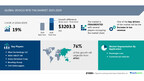
NEW YORK, Jan. 3, 2025 /PRNewswire/ — Report on how AI is redefining market landscape – The global vehicle RFID tag market size is estimated to grow by USD 3.20 billion from 2025-2029, according to Technavio. The market is estimated to grow at a CAGR of about 19% during the forecast period. Increase in tax revenue is driving market growth, with a trend towards growing popularity of rfid-based license plates. However, presence of alternative technologies to rfid poses a challenge. Key market players include Alien Technology LLC, ASSA ABLOY AB, Avery Dennison Corp., Beontag Group, CAS DataLoggers, FEDRIGONI Spa, GAO Group Inc., Hana Microelectronics Public Co. Ltd., Impinj Inc., Invengo Technology Pte. Ltd., Nedap NV, NXP Semiconductors NV, RFID Inc., Roper Technologies Inc., SATO Holdings Corp., Shenzhen Hopeland Information Technologies, SkyRFID LLC, Somfy Group, Star Systems International Ltd., Xerafy Singapore Pte Ltd., and Zebra Technologies Corp..

Key insights into market evolution with AI-powered analysis. Explore trends, segmentation, and growth drivers- View Free Sample PDF

Vehicle RFID Tag Market Scope

Report Coverage

Details

Base year

2024

Historic period

2019 – 2023

Forecast period

2025-2029

Growth momentum & CAGR

Accelerate at a CAGR of 19%

Market growth 2025-2029

USD 3203.3 million

Market structure

Fragmented

YoY growth 2022-2023 (%)

14.6

Regional analysis

APAC, North America, South America, Europe, and Middle East and Africa

Performing market contribution

APAC at 76%

Key countries

US, Canada, China, Japan, Germany, India, UK, South Korea, France, and Italy

Key companies profiled

Alien Technology LLC, ASSA ABLOY AB, Avery Dennison Corp., Beontag Group, CAS DataLoggers, FEDRIGONI Spa, GAO Group Inc., Hana Microelectronics Public Co. Ltd., Impinj Inc., Invengo Technology Pte. Ltd., Nedap NV, NXP Semiconductors NV, RFID Inc., Roper Technologies Inc., SATO Holdings Corp., Shenzhen Hopeland Information Technologies, SkyRFID LLC, Somfy Group, Star Systems International Ltd., Xerafy Singapore Pte Ltd., and Zebra Technologies Corp.

Market Driver

The Vehicle RFID tag market is experiencing significant growth due to increasing demands for enhanced security and improved supply chain management in various industries. With Industry 4.0’s focus on smart manufacturing, RFID technology is becoming essential for real-time intelligence and response times. The market is driven by trends such as product traceability, asset tracking, and counterfeit product prevention in sectors like healthcare, pharmaceuticals, agriculture, and aerospace. Security threats, including theft and stockouts, are major concerns, making RFID tags an attractive solution. RFID readers and sensor networks enable quick identification and location of vehicles and goods, reducing response times and improving safety. High initial costs are being offset by innovations like NFC and uhf technology, and the integration of RFID with the Internet of Things and product licensing. In the aerospace industry, RFID tags help maintain intellectual property rights and ensure safety. In healthcare and pharmaceuticals, they ensure product authenticity and improve patient safety. In agriculture, RFID tags help monitor livestock and optimize farming operations. Overall, the market’s future looks bright, with continued growth expected in the coming years. 

RFID tags are utilized in the automotive industry for vehicle identification and toll payments. Traditional RFID tags are attached to windshields, enabling toll plaza readers to extract vehicle identification numbers for online transactions. Advanced RFID technology is integrated into electronic license plates, offering benefits such as tamper-proof registration, traffic management, and access control. European countries are testing these plates, while the Philippines is implementing them in on-road vehicles. In October 2019, Pakistan introduced RFID vehicle registration plates to meet international standards and enhance security against terrorism and auto theft. 

Request Sample of our comprehensive report now to stay ahead in the AI-driven market evolution!

Market Challenges

The Vehicle RFID tag market is experiencing significant growth due to the increasing demand for real-time intelligence and product traceability in various industries. However, there are challenges that need to be addressed. Security threats, such as hacking and data breaches, pose a risk to RFID systems. Industry 4.0 and the Internet of Things require faster response times, which can be a challenge for some RFID readers. Industries like aerospace, healthcare, pharmaceuticals, agriculture, and logistics rely on RFID technology for asset tracking and counterfeit product detection. However, high initial costs and intellectual property rights can be barriers to entry. The use of NFC and UHF technology in RFID tags is driving innovations, but the market also faces challenges like stockouts, theft, and safety concerns. Sensor networks and product licensing are other factors influencing the market. RFID technology provides real-time intelligence for supply chain logistics and stock movements, but the need for high-security RFID systems and sensors to detect temperature and humidity is essential. The market for RFID tags in the automotive industry is expected to grow, with a focus on improving safety and reducing theft. Overall, the market for RFID tags is dynamic, with continuous innovations and challenges shaping its future.RFID technology is widely used in electronic toll collection systems in major economies worldwide, except for Europe and Japan. However, RFID faces competition from DSRC and GNSS technologies, which are popular in Europe. Automobile manufacturers are focusing on delivering connected services to drivers, using DSRC and GNSS technologies for real-time traffic, weather reports, and road condition alerts. DSRC enables direct communication between vehicles and other road users without infrastructure involvement, ensuring secure and high-speed data transfer.

Discover how AI is revolutionizing market trends- Get your access now!

Segment Overview 

This vehicle rfid tag market report extensively covers market segmentation by 

Application 1.1 Passenger cars1.2 Commercial vehiclesType 2.1 Active RFID tag2.2 Passive RFID tagGeography 3.1 APAC3.2 North America3.3 South America3.4 Europe3.5 Middle East and Africa

1.1 Passenger cars- The passenger cars segment is experiencing notable growth in the global vehicle RFID tag market, with the Asia Pacific region leading the charge. The increasing demand for passenger cars in both developed and developing economies, such as India, China, and others, is fueling this growth. In 2022, India recorded its highest-ever passenger vehicle sales, with a total of 3.8 million units sold, a significant increase from the 3.34 million units sold in 2018. This trend is also visible in countries like China, the US, Canada, Germany, France, the UK, Spain, and more, where high disposable income and attractive financing options are driving the demand for vehicles. RFID tags are becoming increasingly essential for the automotive industry due to their convenience and safety benefits. For instance, they are used in automatic parking systems for contactless payment and in electronic vehicle registration for identification and data validation. Government mandates in emerging economies like India, China, Malaysia, and others are also pushing automotive OEMs to include RFID tags as standard features in new vehicles. The growing demand for passenger cars and the resulting need for added features will continue to boost the growth of the global vehicle RFID tag market through the passenger cars segment during the forecast period.

Download a Sample of our comprehensive report today to discover how AI-driven innovations are reshaping competitive dynamics

Research Analysis

The Vehicle RFID tag market is witnessing significant growth due to the increasing adoption of RFID technology in various industries for asset management and supply chain optimization. RFID middleware plays a crucial role in enabling interoperability between RFID readers and applications. The return on investment (ROI) for RFID systems can be substantial, with benefits including real-time inventory tracking, improved productivity, and enhanced security. Implementation costs and system design are important considerations for RFID deployment. Compliance with industry standards and best practices is essential for successful implementation. RFID software and data analytics tools help organizations make informed decisions based on the data collected by RFID tags. High-frequency RFID tags are commonly used in vehicle applications due to their long read ranges. Semi-passive tags offer a good balance between cost and functionality. NFC technology, a type of RFID, is gaining popularity for its use in IoT solutions, IoT platforms, and NFC applications, including payments and access control. Asset management is a major use case for RFID in the automotive industry, with RFID tags used to track vehicles and their components. Warehouse automation and IoT devices are other areas where RFID is being used to improve efficiency and productivity. Data security is a key concern in RFID systems, with IoT security and NFC security being important considerations. Training and consulting services are available to help organizations with RFID implementation and integration into existing systems. RFID labels and IoT devices come in various sizes and shapes to suit different applications. The benefits of RFID include improved accuracy, increased efficiency, and reduced labor costs. In conclusion, the Vehicle RFID tag market is a dynamic and growing industry, with RFID technology being used in various applications to improve efficiency, productivity, and security. RFID middleware, software, and data analytics tools are essential components of RFID systems, and compliance with industry standards and best practices is crucial for successful implementation. NFC technology is a key trend in the market, with applications ranging from payments to access control. Data security is a major concern, and organizations can turn to training, consulting, and IoT security services for assistance.

Market Research Overview

The Vehicle RFID tag market is experiencing significant growth due to the increasing demand for real-time intelligence and enhanced security in various industries. RFID technology, which utilizes sensors and readers to automatically identify and track vehicles and assets, is becoming a crucial component of Industry 4.0 and the Internet of Things. However, the market faces challenges such as security threats, high initial cost, and intellectual property rights. The automotive industry, aerospace, healthcare, pharmaceuticals, agriculture, and supply chain logistics are major sectors adopting RFID technology for product traceability, counterfeit product detection, and stock movements. Response times and safety are key considerations, with UHF technology and NFC gaining popularity for their long-range capabilities. Innovations in RFID technology, such as sensor networks and real-time intelligence, are further driving market growth. However, concerns over stockouts, theft, and asset safety remain, necessitating continuous advancements in RFID technology and supply chain management systems.

Table of Contents:

1 Executive Summary
2 Market Landscape
3 Market Sizing
4 Historic Market Size
5 Five Forces Analysis
6 Market Segmentation

ApplicationPassenger CarsCommercial VehiclesTypeActive RFID TagPassive RFID TagGeographyAPACNorth AmericaSouth AmericaEuropeMiddle East And Africa

7 Customer Landscape
8 Geographic Landscape
9 Drivers, Challenges, and Trends
10 Company Landscape
11 Company Analysis
12 Appendix

About Technavio

Technavio is a leading global technology research and advisory company. Their research and analysis focuses on emerging market trends and provides actionable insights to help businesses identify market opportunities and develop effective strategies to optimize their market positions.

With over 500 specialized analysts, Technavio’s report library consists of more than 17,000 reports and counting, covering 800 technologies, spanning across 50 countries. Their client base consists of enterprises of all sizes, including more than 100 Fortune 500 companies. This growing client base relies on Technavio’s comprehensive coverage, extensive research, and actionable market insights to identify opportunities in existing and potential markets and assess their competitive positions within changing market scenarios.

Contacts

Technavio Research
Jesse Maida
Media & Marketing Executive
US: +1 844 364 1100
UK: +44 203 893 3200
Email: media@technavio.com
Website: www.technavio.com/

View original content to download multimedia:https://www.prnewswire.com/news-releases/vehicle-rfid-tag-market-to-grow-by-usd-3-20-billion-2025-2029-increased-tax-revenue-drives-growth-ai-impact-on-market-trends—technavio-302341013.html

SOURCE Technavio

Continue Reading
Click to comment

Leave a Reply

Your email address will not be published. Required fields are marked *

Technology

Ellucian Announces 2026 Impact Award Winners, Honoring Institutions Leading with Data, SaaS, and Student-First Innovation

Published

on

By

Key Highlights:

Ellucian recognized four institutions for innovative use of the company’s technology solutions to improve student outcomes and operational efficiency.Award winners demonstrated measurable impact through SaaS transformation, data-driven decision-making, and student-first digital experiences.Each winning institution will receive $25,000 USD to support continued innovation and student success initiatives.

RESTON, Va., April 22, 2026 /PRNewswire/ — Ellucian, the leading higher education technology solutions provider, announced the winners of its eighth annual Impact Award at Ellucian Live, the industry’s premier technology conference. The annual Ellucian Impact Award Program celebrates visionary higher education institutions that are inspiring others to push the boundaries of technology and innovation. These institutions demonstrate the impactful use of Ellucian’s AI-powered platform and solutions to transform the student experience and institutional performance.

Recognizing Innovation that Transforms Higher Education

“Higher education is being redefined in real time, and this year’s Impact Award winners exemplify what it means to lead through change,” said Laura Ipsen, President and CEO, Ellucian. “These institutions are harnessing the full power of Ellucian’s AI-driven, SaaS-native solutions to break down barriers, unlock insights, and create more connected, student-centered experiences. Their work demonstrates how innovation, when grounded in purpose, can drive meaningful outcomes for students, faculty, staff, and communities worldwide.”

2026 Ellucian Impact Award-winning institutions will each receive a $25,000 USD award recognizing achievements across four categories, including Students First, Unlocking the Power of Data, Shaping the Future through SaaS, and Institutional Agility.

The 2026 Ellucian Impact Award Winners are:

Shaping the Future through SaaS

St. John’s University – Queens, N.Y.

St. John’s University earned recognition for its bold, institution-wide SaaS transformation through Project Genesis, modernizing core systems across student, finance, and HR on Ellucian’s SaaS-native platform. The university retired nearly 800 customizations, reduced support requests by 20%, and enabled faculty and staff to save 30–40% of their time through streamlined processes. Critical services are now significantly faster, with financial aid processing reduced from multiple days to one day and grade changes completed in about an hour instead of a full day. With 99.99% uptime and a more agile operating model, St. John’s is accelerating innovation while strengthening the experience for students, faculty, and staff.

Students First

Florida Polytechnic University – Lakeland, Fla.

Florida Polytechnic University was recognized for transforming the student experience with Ellucian solutions delivering a unified, student-first digital campus. The central workspace, MyFloridaPoly, is a single hub consolidating academic, administrative, and campus life resources. Streamlining access to essential tools and services reduced login barriers by 85%, increased mobile usage by 70%, and helped students save up to two hours per week. At the same time, the university retired more than 100 customizations and reduced infrastructure and licensing costs by 40%, creating a modern, scalable environment built around student success and continuous innovation.

Unlocking the Power of Data

Rend Lake College – Ina, Ill.

Rend Lake College earned recognition for using Ellucian Student powered by Colleague to transform a manual, paper-based state reporting process — collecting required student career and demographic data — into a fully automated, data-driven workflow. The institution expanded its data collection reach by 45%, increasing from 1,290 to more than 1,870 students, while boosting response rates by over 13%. Automation eliminated approximately two weeks of manual data entry, improving accuracy and freeing staff to focus on higher-value, student-centered support. The initiative also delivered measurable financial impact and supported a 5% enrollment growth, demonstrating how targeted data innovation can drive both operational efficiency and institutional outcomes.

Institutional Agility

American University of Beirut – Beirut, Lebanon

The American University of Beirut was recognized for its exceptional institutional agility, leveraging Ellucian solutions to sustain operations and expand global reach amid ongoing national crises. Through the launch of AUB Online and modernization of its digital ecosystem, the university increased its program portfolio to more than 30 offerings and generated $6 million in tuition revenue, with continued growth projected. At the same time, AUB unified access to services through Ellucian’s central workspace capability, simplifying the digital environment by 83% and increasing user adoption from 45% to 90%. Operational efficiency improved significantly, with 80% fewer support tickets, 20% faster registration processes, and a 40% reduction in IT costs — positioning the university to deliver resilient, scalable education to learners worldwide.

To learn more about Ellucian solutions, visit: https://www.ellucian.com/

WHAT IS ELLUCIAN
Ellucian powers innovation for higher education, partnering with approximately 3,000 customers across 50 countries, serving more than 21 million students. Ellucian’s AI-powered platform, trained on the richest dataset available in higher education, drives efficiency, personalized experiences, and strengthened engagement for all students, faculty and staff. Fueled by decades of experience with a singular focus on the unique needs of learning institutions, the Ellucian platform features best-in-class SaaS capabilities and delivers insights needed now and into the future. These solutions and services span the entire student lifecycle, including data-rich tools for student recruitment, enrolment, and retention to workforce analytics, fundraising, and alumni engagement. Ellucian’s innovative solutions, vast ecosystem of partners and user community of more than 45,000 provides best practices leading to greater institutional success and achieving better student outcomes.

Media Contacts
Greg Giangrande, Chief Marketing Officer
Greg.Giangrande@Ellucian.com

Jess Weston, Manager, Communications
Jess.Weston@Ellucian.com

View original content to download multimedia:https://www.prnewswire.com/news-releases/ellucian-announces-2026-impact-award-winners-honoring-institutions-leading-with-data-saas-and-student-first-innovation-302749336.html

SOURCE Ellucian

Continue Reading

Technology

Bahamas Grid Company Appoints Two New Board Directors

Published

on

By

NASSAU, The Bahamas, April 22, 2026 /PRNewswire/ — Bahamas Grid Company (BGC) today announced the appointment of Nikolai Sawyer and Debra Symonette to its Board of Directors, effective April 20, 2026.

These appointments follow the company’s recent transition to a fully independent, Bahamian-led operating model, including the conclusion of Island Grid Solutions’ management role and the appointment of new executive leadership.

Mr. Sawyer is a senior financial attorney with over 20 years of experience across corporate law, banking, and financial services. He brings deep expertise in regulatory strategy, risk management, and corporate governance. 

Ms. Symonette is President and Director of Super Value Food Stores Limited and a Certified Public Accountant with over 25 years of financial leadership experience. She has held senior roles in accounting, audit, and corporate governance, and currently serves as a Director of Commonwealth Bank. 

“With these appointments, BGC continues to strengthen its governance as we move forward as a fully Bahamian-led organization,” said Anthony Ferguson, Chairman of BGC. “Nikolai and Debra bring extensive legal, financial, and operational experience that will support the company’s long-term performance and accountability.”

“This is an important step in BGC’s continued evolution,” said Dareo McKenzie, Chief Executive Officer. “I look forward to working with the Board to drive long-term performance and reliability across the system.”

The company’s Board of Directors now comprises Anthony Ferguson (Chairman), Nikolai Sawyer, and Debra Symonette.

About Bahamas Grid Company
Bahamas Grid Company (BGC) is a utility company in New Providence responsible for upgrading, maintaining, and operating the island’s transmission and distribution infrastructure, with the goal of delivering reliable, resilient, and sustainable power to all residents and businesses. 

View original content to download multimedia:https://www.prnewswire.com/news-releases/bahamas-grid-company-appoints-two-new-board-directors-302750713.html

SOURCE Bahamas Grid Company

Continue Reading

Technology

Auburn’s College of Education embraces an AI-powered future to advance its mission

Published

on

By

AUBURN, Ala., April 22, 2026 /PRNewswire/ — As Artificial Intelligence (AI) becomes more integrated into daily life, Auburn University’s College of Education is sharpening its focus on this powerful tool and exploring how it can strengthen the preparation of future educators and healthcare workers.

Throughout the College of Education (and featured in the recent release of the college’s Keystone Magazine), artificial intelligence is being thoughtfully integrated across its four academic units, reflecting both the breadth of the college and a shared commitment to ethical, human-centered practice. Auburn College of Education Dean Jeffrey Fairbrother shared his perspective on how artificial intelligence aligns with the college’s vision for the future.

“In the College of Education, we’re committed to opening doors and improving lives, and artificial intelligence is an important door to opportunity,” he said. “I am proud of our faculty who are embracing AI to expand access, enhance learning and empower educators, always guided by ethics and integrity. By opening these doors today, we’re building a better future for all, far into the future.”

In the Department of Curriculum and Teaching, faculty are focused on teacher preparation and continuously improving methods of learning. Paul Fitchett, head of C&T, oversees several faculty members leading AI-focused initiatives, including some who are developing a course on the applied use of AI in the workplace that will come with industry credentialing.

“We are exploring AI through a number of different, applied facets,” Fitchett said. “Some individuals are leveraging AI to expand research capabilities while others are engaging AI to support teaching and learning, improving the educational experience for instructors and students alike.”

In Agricultural Education, Leadership and Communications, AI is treated as both a research tool and an object of study, with faculty developing a new AI course and even patent-pending technologies that support agriculture, Extension work and global food systems, always emphasizing the “expert in the loop” and transparency over blind automation. In Elementary Education, future teachers learn to use AI as a collaborative planning and efficiency tool, refining outputs through pedagogical expertise and deep knowledge of learners.

Margaret Flores, interim head of the Department of Special Education, Rehabilitation, and Counseling, emphasized the importance of research regarding how AI will impact these professions. SERC faculty members are working to integrate AI into their classrooms to inform their students about future uses in their careers.

In Clinical Rehabilitation Counseling, faculty are embedding AI directly into applied coursework, training students to critically evaluate AI-generated vocational data, labor market information and assessment recommendations while grounding decisions in professional judgment and ethics. In the School Counseling Program, students are prepared to navigate AI’s possibilities and limits through ethics-focused coursework and national research, reinforcing that empathy, nuance and confidentiality remain irreplaceable.

Meanwhile, the Education to Accomplish Growth in Life Experiences for Success (EAGLES) Program is leveraging AI as an equalizer for students with intellectual disabilities, using federally funded digital literacy and AI modules to promote independence, self-advocacy and access.

“AI can enhance the services or instruction that we provide, reduce administrative tasks and increase efficiency in research,” Flores said. “We must ensure that researchers are shaping how AI is changing our fields.”

In the Department of Educational Foundations, Leadership, and Technology, faculty are working with AI in multiple ways. Through basic and applied research, faculty are addressing early childhood vocabulary learning and mathematics learning, and learning how AI can help with research workflow, STEM learning and even the development of education policy.

Several faculty members are also incorporating AI into their classrooms, including the use of an AU tutor to support independent learning and AI-explicit language in teaching materials such as syllabi.

EFLT Department Head Hank Murrah said that his unit’s approach is about embracing the changes that come with AI while also working to shape how it will affect the future of education.

“We view AI as both a transformative research tool and a catalyst for innovation in teaching and learning,” Murrah said. “Our faculty are developing AI-driven interventions for STEM education, leveraging AI to streamline research workflows and exploring ethical frameworks for its use in classrooms. These efforts position us to prepare graduates who are not only AI-literate but capable of shaping evidence-based policy and practice. We believe AI will redefine how educators design learning experiences and how researchers generate insights—making education more adaptive, fair and impactful.”

Matt Miller serves as the director of the School of Kinesiology, whose faculty members are exploring how AI can help with conducting research and processing data to find ways to improve a person’s health. Within the School of Kinesiology, AI is being introduced in coursework related to exercise prescription and programming, helping students analyze data, tailor training plans and think critically about how emerging technologies can support safe, individualized, evidence-based practice.

“School of Kinesiology faculty members conduct research that yields large and complex datasets involving measures related to human movement, including but not limited to their physical activity throughout the day, brain activity during exercise, joint angles while walking or throwing a ball and protein expression after exercise training,” Miller said. “AI helps faculty members make sense of these measures to translate research findings into practical knowledge that can be used to enhance health and performance.”

Additionally, in the School of Kinesiology, the Sensorimotor and Rehabilitation (SMART) Neuroscience Lab studies the neuroscience of human movement using virtual and augmented reality simulations. And now, a new member of the lab has joined the team to help understand things like balance and walking: Circuit, the robotic “dog” who comes complete with artificial intelligence built in. Circuit is what’s called a quadruped robot (“robot dog”), and he’s used to explore new ways of supporting older adults’ safety at home.

Led by Director of Physical Therapy Harsimran Baweja, the SMART Neuroscience Lab is using Circuit to study whether robot dogs equipped with artificial intelligence and advanced sensors can reliably track human movement during everyday activities.

While there are many uses for AI, College of Education faculty members are also acutely aware that the human touch is an essential part of their work. The overall goal is to use AI to enhance the service provided to another human being, whether they are a student or a patient.

“Whatever their approach, integrity and professional ethics remain the driving force for our use of generative Artificial Intelligence,” Fitchett said. “Maintaining these principles is essential as we navigate an ever-changing landscape.”

Together, these efforts highlight a college-wide approach to AI that spans disciplines and populations, using emerging technologies not as replacements for human expertise, but as tools to expand opportunity, insight and impact.

View original content to download multimedia:https://www.prnewswire.com/news-releases/auburns-college-of-education-embraces-an-ai-powered-future-to-advance-its-mission-302750731.html

SOURCE Auburn University College of Education

Continue Reading

Trending