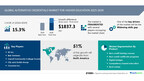
NEW YORK, Jan. 7, 2025 /PRNewswire/ — Report with market evolution powered by AI – The global alternative credentials market for higher education size is estimated to grow by USD 1.84 billion from 2025-2029, according to Technavio. The market is estimated to grow at a CAGR of 15.3% during the forecast period. Widening skills gap is driving market growth, with a trend towards rise in non-traditional offerings. However, threat from traditional degree program providers poses a challenge. Key market players include 2U Inc., Bisk Ventures, Carroll Community College Foundation Inc., City and Guilds Group, Coursera Inc., Credly Inc., JPMorgan Chase and Co., New York State Education Department, NIIT Ltd., NorthEastern University, Pearson Plc, Purdue University Global, Simplilearn, Strategic Education Inc., Temple University, Udacity Inc., Udemy Inc., University of Michigan, University Professional and Continuing Education Association, and XuetangX.
Key insights into market evolution with AI-powered analysis. Explore trends, segmentation, and growth drivers- View Free Sample PDF
Alternative Credentials Market For Higher Education Scope
Report Coverage
Details
Base year
2024
Historic period
2019 – 2023
Forecast period
2025-2029
Growth momentum & CAGR
Accelerate at a CAGR of 15.3%
Market growth 2025-2029
USD 1837.3 million
Market structure
Fragmented
YoY growth 2022-2023 (%)
13.3
Regional analysis
North America, Europe, APAC, South America, and Middle East and Africa
Performing market contribution
North America at 51%
Key countries
US, Germany, UK, China, Canada, France, Italy, India, Japan, and South Korea
Key companies profiled
2U Inc., Bisk Ventures, Carroll Community College Foundation Inc., City and Guilds Group, Coursera Inc., Credly Inc., JPMorgan Chase and Co., New York State Education Department, NIIT Ltd., NorthEastern University, Pearson Plc, Purdue University Global, Simplilearn, Strategic Education Inc., Temple University, Udacity Inc., Udemy Inc., University of Michigan, University Professional and Continuing Education Association, and XuetangX
Market Driver
Alternative credentials, such as digital badges and micro-credentials, are gaining popularity in the higher education landscape. These non-traditional credentials validate and attest to specific skills and competencies, providing flexible learning options for adult learners. With flexible timespans and various formats like online, hybrid, and customized programs, these credentials cater to the demands of the workforce and professional learning. Employers value these credentials for their portability, transferability, and practical value in addressing skill gaps and career advancement. Tech companies like TechCred and Microsoft are leading the way in this digital transformation, offering credit-bearing and non-credit stackable credentials. Professionals in technology jobs can upskill and reskill through these innovative education opportunities, ensuring relevance in a knowledge-based economy. Post-secondary institutions are responding to the Great Resignation and employer needs by offering flexible pathways and revenue growth through alternative credentials. These credentials provide rigorous learning outcomes and are recognized by employers, bridging the learning gap and providing accessibility and flexibility for non-matriculated students. With blockchain technology and machine learning, the verification and transferability of these credentials are secure and efficient. In summary, alternative credentials offer practical value, addressing skill shortages and career development in the digital age. Employers, professionals, and learners alike benefit from these flexible, accessible, and relevant educational opportunities.
The alternative credentials market in higher education is experiencing significant growth. This market includes graduate and undergraduate certificate programs, training courses, continuing education units, and micro-credentialing, which are non-traditional offerings gaining popularity among learners. These programs are linked to an alternative credentialing system and are accessible through channels different from those providing traditional degrees. Providers of these courses include baccalaureate colleges, universities, community colleges, and doctorate-granting universities, operating in both public and private sectors. The ease of creating non-credit programs without following regulatory mandates enables faster program development compared to traditional degree programs.
Request Sample of our comprehensive report now to stay ahead in the AI-driven market evolution!
Market Challenges
Alternative credentials, such as digital badges and micro-credentials, are revolutionizing higher education by offering flexible, skill-focused learning options for professionals and adult learners. These non-traditional credentials validate attained skills and competencies, attesting to the learner’s mastery of career-oriented skills. They come with flexible timespans, allowing learners to upskill at their own pace, and are available through online, hybrid, and customized programs. Employers value these credentials for their relevance to workforce demands and portability across industries. Stackable credentials and micro-credentials offer a flexible pathway for learners to build a career, with rigorous learning outcomes and digital badges for completion. TechCred, a type of industry-recognized micro-credit, bridges the skills gap and provides employment opportunities in technology fields. Post-secondary institutions and educational organizations are embracing this digital transformation to meet the needs of the knowledge-based economy and the Great Resignation. By offering accessible, flexible, and practical value learning experiences, they cater to the learning gap and help professionals reskill for career advancement. Blockchain technology and machine learning are enhancing the security and customization of these alternative credentials, making them a valuable addition to the traditional degrees and certificates.The alternative credentials market in higher education is experiencing instability due to the increasing collaboration between education service providers and institutions offering hybrid programs and courses. These alternative credentials serve as a viable option for students, allowing them to choose only necessary courses and manage their budgets effectively. However, this market faces competition from traditional degree programs. Universities are enhancing their offerings through evolving learning methodologies and digitalization, making them a formidable competitor. Despite this challenge, the flexibility and affordability of alternative credentials make them an attractive choice for many students.
Discover how AI is revolutionizing market trends- Get your access now!
Segment Overview
This alternative credentials market for higher education report extensively covers market segmentation by
Product 1.1 Non-credit training courses1.2 Non-credit certificate programs1.3 Digital badges1.4 Competency-based education1.5 Boot campsType 2.1 Online2.2 Blended2.3 Face to faceGeography 3.1 North America3.2 Europe3.3 APAC3.4 South America3.5 Middle East and Africa
1.1 Non-credit training courses- Non-credit training courses are educational programs that provide specific skills and knowledge in various fields without granting academic credit. These courses, which are increasingly popular, are designed to help students meet industry requirements and stay competitive in the job market. Cengage Learning’s ed2go offers non-credit courses in partnership with educational institutions and organizations. Coding languages, web development, data science, cybersecurity, cloud computing, and artificial intelligence/machine learning are among the most sought-after courses due to technological advancements. Participants receive certificates upon completion and passing assessments by standard-setting organizations or third parties. Mentors facilitate learning through course materials and activities. Carroll Community College, based in the US, offers non-credit courses in hospitality, business, health and fitness, and computer applications. In-demand fields include healthcare, with courses on medical coding, billing, administration, and specialized skills. Entrepreneurship, business development, finance fundamentals, and strategic planning courses cater to those starting businesses or advancing careers. The continuous growth of industries and the need for specialized skills are expected to fuel the expansion of the non-credit training courses segment in the global alternative credentials market for higher education.
Download a Sample of our comprehensive report today to discover how AI-driven innovations are reshaping competitive dynamics
Research Analysis
The Alternative Credentials Market for Higher Education refers to the growing trend of offering flexible, skills-based credentials that validate attainment of specific competencies and knowledge areas. These credentials, which include certificates, microcredentials, digital badges, and stackable credentials, offer adult learners the opportunity for professional learning and lifelong education, with flexible timespans and various delivery methods such as online, hybrid, and on-site. The market caters to the demands of the workforce for continuous professional development and continuing education, with both credit-bearing and non-credit options. The curriculum is designed to meet industry standards and is often tech-enabled for portability and transferability. Accreditation ensures the quality and value of these credentials, making them valuable additions to a learner’s professional profile.
Market Research Overview
Alternative credentials, also known as non-traditional credentials, offer flexible and innovative educational opportunities for learners seeking to acquire relevant skills and knowledge in various fields. These credentials, which include digital badges, micro-credentials, and stackable credentials, validate skills and competencies gained through professional learning, lifelong learning, online learning, hybrid learning, and other flexible pathways. Unlike traditional degrees, alternative credentials have flexible timespans, are portable and transferable, and cater to the needs of adult learners and non-matriculated students. They offer rigorous learning outcomes and are designed to address workforce demands, skill gaps, and career advancement. With the increasing digitization of education and the growing importance of technology jobs, professionals can now access a wide range of alternative credentials that provide practical value and workplace relevance. These credentials are essential for upskilling and reskilling in a knowledge-based economy, where employability and employability are key drivers of revenue growth for post-secondary institutions. The use of technology, such as blockchain and machine learning, ensures the portability, transferability, and security of these credentials. Ultimately, alternative credentials offer accessible, flexible, and practical educational paths for learners to acquire the skills and knowledge needed to thrive in today’s labor markets and meet the demands of the Great Resignation.
Table of Contents:
1 Executive Summary
2 Market Landscape
3 Market Sizing
4 Historic Market Size
5 Five Forces Analysis
6 Market Segmentation
ProductNon-credit Training CoursesNon-credit Certificate ProgramsDigital BadgesCompetency-based EducationBoot CampsTypeOnlineBlendedFace To FaceGeographyNorth AmericaEuropeAPACSouth AmericaMiddle East And Africa
7 Customer Landscape
8 Geographic Landscape
9 Drivers, Challenges, and Trends
10 Company Landscape
11 Company Analysis
12 Appendix
About Technavio
Technavio is a leading global technology research and advisory company. Their research and analysis focuses on emerging market trends and provides actionable insights to help businesses identify market opportunities and develop effective strategies to optimize their market positions.
With over 500 specialized analysts, Technavio’s report library consists of more than 17,000 reports and counting, covering 800 technologies, spanning across 50 countries. Their client base consists of enterprises of all sizes, including more than 100 Fortune 500 companies. This growing client base relies on Technavio’s comprehensive coverage, extensive research, and actionable market insights to identify opportunities in existing and potential markets and assess their competitive positions within changing market scenarios.
Contacts
Technavio Research
Jesse Maida
Media & Marketing Executive
US: +1 844 364 1100
UK: +44 203 893 3200
Email: media@technavio.com
Website: www.technavio.com/
View original content to download multimedia:https://www.prnewswire.com/news-releases/alternative-credentials-market-for-higher-education-to-grow-by-usd-1-84-billion-2025-2029-driven-by-skills-gap-and-ai-redefining-the-market-landscape—technavio-302342816.html
SOURCE Technavio









 Technology4 days ago
 Technology4 days ago
 Technology5 days ago
 Technology4 days ago
 Coin Market4 days ago
 Technology4 days ago
 Technology1 day ago
 Technology4 days ago