Connect with us

Technology

CNC Vertical Machining Centers Market to Grow by USD 1.09 Billion (2025-2029), Driven by Demand for CNC Tools and AI-Powered Market Evolution – Technavio

Published

on

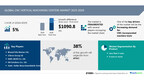
NEW YORK, Jan. 7, 2025 /PRNewswire/ — Report on how AI is driving market transformation – The global CNC vertical machining centers market size is estimated to grow by USD 1.09 billion from 2025-2029, according to Technavio. The market is estimated to grow at a CAGR of almost 5% during the forecast period. Increasing demand for cnc-incorporated machine tools is driving market growth, with a trend towards emergence of autonomous and electric cars. However, availability of horizontal machining centers and refurbished vertical machining centers poses a challenge. Key market players include Bharat Fritz Werner Ltd., Chiron Group SE, DMG MORI Co. Ltd., DN Solutions Co. Ltd., Gebr. Heller Maschinenfabrik GmbH, GF Machining Solutions AG, Haas Automation Inc., Hurco Companies Inc., Jyoti CNC Automation Ltd., Komatsu Ltd., Makino Milling Machine Co. Ltd., Maschinenfabrik Berthold Hermle AG, Maxmill Machinery Co. Ltd., Micromatic Machine Tools Pvt. Ltd., Mitsubishi Electric Corp., Okuma Corp, SCM GROUP Spa, Shandong Luzhong Machine Tool Co. Ltd., Shenyang Yiji Machine Tool Sales Co. Ltd., and Yamazaki Mazak Corp..

Key insights into market evolution with AI-powered analysis. Explore trends, segmentation, and growth drivers- View Free Sample PDF

CNC Vertical Machining Centers Market Scope

Report Coverage

Details

Base year

2024

Historic period

2019 – 2023

Forecast period

2025-2029

Growth momentum & CAGR

Accelerate at a CAGR of 5%

Market growth 2025-2029

USD 1090.8 million

Market structure

Fragmented

YoY growth 2022-2023 (%)

4.8

Regional analysis

APAC, Europe, North America, South America, and Middle East and Africa

Performing market contribution

APAC at 38%

Key countries

US, China, Germany, Japan, Canada, Italy, India, South Korea, UK, and France

Key companies profiled

Bharat Fritz Werner Ltd., Chiron Group SE, DMG MORI Co. Ltd., DN Solutions Co. Ltd., Gebr. Heller Maschinenfabrik GmbH, GF Machining Solutions AG, Haas Automation Inc., Hurco Companies Inc., Jyoti CNC Automation Ltd., Komatsu Ltd., Makino Milling Machine Co. Ltd., Maschinenfabrik Berthold Hermle AG, Maxmill Machinery Co. Ltd., Micromatic Machine Tools Pvt. Ltd., Mitsubishi Electric Corp., Okuma Corp, SCM GROUP Spa, Shandong Luzhong Machine Tool Co. Ltd., Shenyang Yiji Machine Tool Sales Co. Ltd., and Yamazaki Mazak Corp.

Market Driver

The CNC vertical machining centers market is experiencing significant growth due to increased demand for metal components in various industries. Hard metals, steel, and aluminum are popular materials in manufacturing, particularly for complex jobs and industrial processes. Templates and cams are essential tools for CNC machining, enabling efficient manufacturing of metal components. Vertical machining centers are ideal for manufacturing molds, die cavities, engine propellers, and impellers. Advanced CNC controls, high-speed spindles, and automatic tool changers enhance production capacity and efficiency. Giant manufacturing countries lead the market, with trends towards automation technologies such as collaborative robots and lights-out production. The manufacturing industry segment is a major consumer, with the electrical industry, automotive, and aerospace sectors driving demand. Raw materials like steel, carbon, and electricity costs impact CNC machining capacity. CNC machining centers are used for milling, drilling, and cutting various workpieces, including metals and wood. The market for CNC machining centers is expanding, with applications in the industrial automation market, electronic products, semiconductors, and consumer electronics. Horizontal machining centers and CNC milling machines are alternative solutions, with 3-axis and advanced tool axes offering flexibility for milling and rotary cutting. The market for CNC machining centers is expected to grow, driven by the increasing demand for automation and the need for high-precision components. 

The global shift towards electric vehicles (EVs) is significantly impacting the CNC vertical machining centers market. With the elimination of traditional internal combustion engine (ICE) components like exhaust systems, pistons, valves, crankshafts, engine blocks, and exhaust headers, the demand for machined parts is decreasing. This reduction in demand may lead to market contraction, potentially affecting numerous vendors in this complex industry. Simultaneously, the automotive sector’s growing focus on autonomous vehicles presents new opportunities for innovation and growth in manufacturing processes. 

Request Sample of our comprehensive report now to stay ahead in the AI-driven market evolution!

Market Challenges

The CNC vertical machining centers market faces several challenges in manufacturing metal components for various industries. Hard metals and steel require high CNC machining capacity and advanced controls for efficient production. Aluminum, used in flat works and manufacturing molds and die cavities, presents challenges due to its heat sensitivity. Manufacturing complex jobs in hard metals, steel, and aluminum for industries like aerospace, automotive, and heavy machinery requires vertical machining centers with high-speed spindles and automatic tool changers. The cost of raw materials, such as steel and carbon, as well as electricity, impacts the profitability of CNC machining centers. The manufacturing industry segment seeks automation technologies like collaborative robots and lights-out production for increased efficiency. In contrast, horizontal machining centers cater to industries producing large components, such as engine propellers and impellers. The industrial automation market’s growth in sectors like the electrical industry, electronic products, semiconductors, and consumer electronics drives the demand for CNC machining centers. CNC milling machines, with their tool axes, are essential for milling and cutting workpieces made of metal, wood, and other raw materials. The use of CAM software and rotary cutters enhances the productivity of CNC machining centers. Ferrous and non-ferrous metals, including metals used in industrial processes, present unique challenges for CNC machining centers. Overall, the CNC machining centers market must adapt to these challenges to remain competitive in the evolving manufacturing landscape.The CNC vertical machining center market in mature industries of the US and Europe is facing challenges due to rising labor costs and stringent emission norms, leading to the closure of several manufacturing operations. This surplus of used equipment has increased the availability of refurbished CNC vertical machining centers in the market, making it a cost-effective option for industries in developing countries like China, India, and Singapore. However, the affordability of refurbished machines may hinder the demand for new CNC vertical machining centers. Additionally, CNC horizontal machining centers can serve as viable alternatives, adding complexity to the market dynamics.

Discover how AI is revolutionizing market trends- Get your access now!

Segment Overview 

This cnc vertical machining centers market report extensively covers market segmentation by  

Product 1.1 Less than 5-axis1.2 5-axis or moreEnd-user 2.1 Automotive2.2 Aerospace2.3 Metal fabrication2.4 OthersGeography 3.1 APAC3.2 Europe3.3 North America3.4 South America3.5 Middle East and Africa

1.1 Less than 5-axis-  CNC vertical machining centers come in three variants: 2.5-axis, 3-axis, and 4-axis. In 2.5-axis machines, only two axes can rotate simultaneously. In contrast, 3-axis and 4-axis models enable the cutting tool to move around three axes (X, Y, and Z) and a rotating X-axis, respectively. While 2.5-axis machines are mostly outdated, 4-axis models have gained popularity. However, 5-axis CNC vertical machining centers lead the market due to their extensive capabilities. For simple metal designs like gear cutting, 3-axis and 4-axis machines are preferred due to their affordability. The adoption of 3+2 CNC vertical machining centers is increasing, offering a cost-effective way to upgrade capabilities. SMEs and start-ups, constrained by budgets, will continue to drive demand for 3-axis CNC vertical machining centers, fueling market growth.

Download a Sample of our comprehensive report today to discover how AI-driven innovations are reshaping competitive dynamics

Research Analysis

CNC Vertical Machining Centers (VMCs) are essential machines in the manufacturing industry for producing metal components from hard metals, steel, aluminum, and various ferrous and non-ferrous metals. VMCs utilize Computer Numerical Control (CNC) technology, including templates, cams, and rotary devices, to precisely machine parts along the spindle axis. These machines are widely used in the manufacturing industry segment for producing complex components in large quantities. CNC VMCs can be integrated with collaborative robots for lights-out production and CAM software for optimized tool path planning. Rotary cutters and milling machines are common types of VMCs used for cutting and milling materials like wood, steel, and electrical industry components. The tool axes in VMCs can be configured to accommodate various cutting tools, enabling the production of intricate parts for diverse industries, including automotive, aerospace, and industrial automation market.

Market Research Overview

CNC Vertical Machining Centers (VMCs) are essential machines used in manufacturing industry for producing metal components from hard metals, steel, and aluminum. VMCs utilize Computer Numerical Control (CNC) technology, templates, cams, and rotary devices to machine complex jobs on flat works, molds, die cavities, engine propellers, and impellers. Industrial processes, including manufacturing activities in giant manufacturing countries, increasingly rely on VMCs for their high precision and efficiency. VMCs can be distinguished from Horizontal Machining Centers (HMCs) by their vertical spindle axis. Advanced CNC controls, high-speed spindles, automatic tool changers, and automation technologies such as collaborative robots enable lights-out production. CNC machining capacity is influenced by raw material costs, including steel, carbon, and electricity, as well as the manufacturing industry segment. CNC machining centers are used in various industries, including electrical, automotive, aerospace, and consumer electronics, to produce parts for semiconductors, printed circuit boards, heat sinks, and more. Milling, rotary cutters, and milling machines are common applications for VMCs, which can machine metal, wood, and other materials using tool axes.

Table of Contents:

1 Executive Summary
2 Market Landscape
3 Market Sizing
4 Historic Market Size
5 Five Forces Analysis
6 Market Segmentation

ProductLess Than 5-axis5-axis Or MoreEnd-userAutomotiveAerospaceMetal FabricationOthersGeographyAPACEuropeNorth AmericaSouth AmericaMiddle East And Africa

7 Customer Landscape
8 Geographic Landscape
9 Drivers, Challenges, and Trends
10 Company Landscape
11 Company Analysis
12 Appendix

About Technavio

Technavio is a leading global technology research and advisory company. Their research and analysis focuses on emerging market trends and provides actionable insights to help businesses identify market opportunities and develop effective strategies to optimize their market positions.

With over 500 specialized analysts, Technavio’s report library consists of more than 17,000 reports and counting, covering 800 technologies, spanning across 50 countries. Their client base consists of enterprises of all sizes, including more than 100 Fortune 500 companies. This growing client base relies on Technavio’s comprehensive coverage, extensive research, and actionable market insights to identify opportunities in existing and potential markets and assess their competitive positions within changing market scenarios.

Contacts

Technavio Research
Jesse Maida
Media & Marketing Executive
US: +1 844 364 1100
UK: +44 203 893 3200
Email: media@technavio.com
Website: www.technavio.com/

View original content to download multimedia:https://www.prnewswire.com/news-releases/cnc-vertical-machining-centers-market-to-grow-by-usd-1-09-billion-2025-2029-driven-by-demand-for-cnc-tools-and-ai-powered-market-evolution—technavio-302342991.html

SOURCE Technavio

Continue Reading
Click to comment

Leave a Reply

Your email address will not be published. Required fields are marked *

Technology

Intesa Communications Group Named ‘Customers First’ Winner in San Diego Regional Chamber of Commerce 2026 Small Business Awards

Published

on

By

The award-winning, women-owned San Diego public relations and government affairs firm was recognized for exceptional client service that has fueled 14 years of growth

SAN DIEGO, July 21, 2026 /PRNewswire/ — Intesa Communications Group, a leading San Diego public relations and government affairs firm, has been named the “Customers First” winner in the San Diego Regional Chamber of Commerce’s 2026 Small Business Awards. Announced July 9 at the Chamber’s annual Small Business Awards event, the recognition honors the small business whose commitment to customer service most clearly sets it apart from the competition.

Founded in 2012, the certified women-owned San Diego firm has grown from a boutique agency into one of the region’s leading public relations and government affairs firms. Intesa has doubled its team over the past two years, sustained three consecutive years of double-digit revenue growth and expanded its client portfolio by 26% last year. Intesa provides public relations, strategic communications, and government affairs services for a wide range of organizations, including San Diego State University, SeaWorld San Diego, Expedia Group, H.G. Fenton Company, San Diego Foundation, San Diego Workforce Partnership, and SBCS.

“This award belongs to every member of our team and to the clients who trust us with their most valuable asset: their reputation,” said Margie Newman Tsay, founding partner of Intesa Communications Group. “Our clients stay with us for years because we show up prepared, fully invested and ready for the moments that matter most. Being recognized for putting customers first is the highest compliment our business community can pay us.”

Intesa’s client-first approach has produced measurable results across public relations and government affairs efforts throughout the region. For example, in its first month working with the Jacobs & Cushman San Diego Food Bank, the firm helped reimagine the organization’s summer food drive messaging, generating more than 15 million impressions and helping deliver 489,026 pounds of food and $344,505 in donations — the equivalent of more than one million meals and a 175% increase from the previous year. Similarly, Logan Heights Community Development Corporation credits the firm with an 81:1 return on investment after Intesa parachuted in to help the nonprofit promote the California Mortgage Relief Program.

“Small businesses are the heart of our economy: fueling innovation, creating jobs and defining the character of communities across the San Diego region,” said Chris Cate, president and CEO of the Chamber. “We celebrate the resilience, ingenuity and community impact of our small business leaders. They are the very spirit behind our purpose to champion business and empower leaders.”

The Chamber award is as much a reflection of Intesa’s clients as it is the firm itself. The opportunity to partner with organizations doing meaningful work across the region is what makes recognition like this possible. True to form, the Intesa team plans to mark the win by thanking the clients behind the work.

“We call ourselves dot connectors, and this award is what that looks like in practice,” said Maddy Kilkenny, partner at Intesa Communications Group, who leads the firm’s government affairs practice. “Whether our team of 10 people is helping a client navigate a policy decision at City Hall or a story on the front page of the newspaper, we aim to leave them stronger and more confident than before. Hearing our clients say we deliver on that is the best win of all.”

According to the Chamber’s award requirements, businesses with 100 or fewer employees were eligible for nomination. They were voted on by a panel of chamber members, who reviewed the nominations and selected the winners of all four categories.

The recognition adds to more than 60 awards Intesa has earned for excellence in public relations, strategic communications, and public affairs, including honors from PR News, the Public Relations Society of America, PR Daily, the International Association of Business Communicators, the San Diego Business Journal (SDBJ), MARCOM, and the American Marketing Association, among others. It also comes on the heels of two Intesa team members, Emily Alvarenga and Margaret Lutz Chantung, recently receiving SDBJ’s “40 Under 40” and “Indispensable” awards, respectively.

For more information about Intesa Communications Group, visit www.intesacom.com.

About Intesa Communications Group
Intesa Communications Group is a certified women-owned San Diego public relations and government affairs firm that helps leaders communicate and advocate with confidence. Since 2012, Intesa has partnered with the region’s trusted leaders and organizations, providing strategic communications and public affairs counsel on high-stakes issues at the intersection of reputation, policy and public perception. The firm’s work has earned more than 60 industry awards across 53 recognized client campaigns, including the San Diego Regional Chamber of Commerce “Customers First” 2026 award. Learn more at www.intesacom.com.

View original content to download multimedia:https://www.prnewswire.com/news-releases/intesa-communications-group-named-customers-first-winner-in-san-diego-regional-chamber-of-commerce-2026-small-business-awards-302831350.html

SOURCE Intesa Communications Group

Continue Reading

Technology

The Inner Circle acknowledges Shankari Thiagarajan as Pinnacle Professional of The Year

Published

on

By

HOUSTON, July 21, 2026 /PRNewswire/ — Prominently featured in The Inner Circle, Shankari Thiagarajan is acknowledged as a Pinnacle Professional of The Year for her contributions to Information Technology and Agile Delivery.     

Shankari Thiagarajan has established a distinguished career in information technology project and program management, recognized for her expertise in agile delivery, digital transformation, and cross functional leadership across multiple industries. Currently serving as project manager and scrum master at Astellas Pharma Inc., she oversees agile delivery initiatives supporting global life science programs.

With more than 15 years of experience spanning technology and pharmaceutical sectors, Ms. Thiagarajan has developed a reputation for leading complex implementations and driving operational efficiency. Her expertise includes agile methodologies, project and delivery management, product ownership, healthcare IT, telecom and network optimization, financial services modernization, retail technology upgrades, and GIS and digital mapping solutions.

Ms. Thiagarajan earned a Master of Business Administration in Organizational Leadership from Campbellsville University, a Master of Science in Information Systems from Virginia Tech, and a Bachelor of Engineering in Information Technology from Jawaharlal Nehru Technological University College of Engineering Hyderabad.

Throughout her career, she has contributed to major organizations across a wide range of industries. Her accomplishments include leading agile transformations at Cigna, overseeing retail technology upgrades at Walmart, managing large scale telecom transformation initiatives at T Mobile and Verizon, and modernizing financial platforms at Security Finance. She also contributed to the early development of Google Maps during her tenure at Google India, advancing to team lead within a year.

In addition to her corporate achievements, Ms. Thiagarajan is the creator of the YouTube channel My Experiments with Life – #Positivity #Learning, launched in 2023. Through this platform, she shares motivational content and insights focused on personal growth, technology, spirituality, and lifelong learning.

Her professional accomplishments have been recognized through honors including Marquis Who’s Who 2026, a featured podcast interview with Jim Masters on Close Up TV hosted across Apple Radio, Spotify, and iHeart., recognition in The National Law Review & EIN Presswire, and a certificate of appreciation from Virginia Tech for academic excellence and community involvement.

Outside of her professional work, Ms. Thiagarajan enjoys creating motivational YouTube content, exploring technology and spirituality, listening to contemporary music, and pursuing philanthropic and educational interests. She credits her strong work ethic and determination to the example set by her parents.

Looking ahead, she plans to continue advancing her leadership capabilities and pursue executive level opportunities that allow her to make significant contributions within the information technology sector.

Guided by a philosophy rooted in courage, persistence, and continuous learning, Ms. Thiagarajan remains committed to professional growth while inspiring others to pursue excellence and self-improvement.

Contact: Katherine Green, 516-825-5634, editorialteam@continentalwhoswho.com

View original content to download multimedia:https://www.prnewswire.com/news-releases/the-inner-circle-acknowledges-shankari-thiagarajan-as-pinnacle-professional-of-the-year-302831357.html

SOURCE The Inner Circle

Continue Reading

Technology

University of Phoenix Leaders Present at Building Blackboard Together 2026

Published

on

By

Presentations explored learning technology, accessibility and online pedagogy as higher education adapts to an AI-enabled future

PHOENIX, July 21, 2026 /PRNewswire/ — University of Phoenix leaders shared insights on artificial intelligence, accessibility, online learning and student support at Building Blackboard Together 2026, Blackboard’s flagship user conference, held July 13-15 in Dallas, Texas. The conference brought together educators, institutional leaders and industry experts to explore innovations, technologies and emerging practices shaping the future of teaching and learning.

Representing University of Phoenix were Marc Booker, Ph.D., vice provost of strategy; Kelly Hermann, vice president of Accessibility and Student Affairs; and Erin Amsden, group product manager. Through presentations and panel discussions, the leaders shared perspectives on responsible AI adoption, accessibility leadership, student engagement and the evolving role of learning technologies in supporting institutional goals and student success.

“Building Blackboard Together provides an opportunity to engage with peers across higher education who are navigating many of the same opportunities and challenges around technology, accessibility and learning mobility,” said Dr. Booker. “These conversations help advance practical approaches for supporting learners while thoughtfully integrating innovation into the educational experience.”

During the conference, University of Phoenix was also recognized with the 2026 Blackboard Catalyst Award for Ethical AI Leadership, which honors institutions advancing responsible, transparent and inclusive approaches to artificial intelligence that promote trust and equitable outcomes for learners and educators. The recognition follows the University’s ongoing efforts to support AI literacy, responsible use and AI-enabled learning experiences.

Exploring the Expanding Role of the Learning Management System

As part of the Strategic Leadership Summit, Booker served as a panelist for “The LMS as Mission-Critical: Connecting Learning, Experience & Evidence.” The session examined how learning management systems are evolving beyond course management to support learning, engagement and institutional insight across the student lifecycle.

Panelists discussed how institutions are leveraging learning technologies alongside student information systems to support teaching and learning, advising, co-curricular engagement and data-informed decision-making while addressing increasing expectations surrounding artificial intelligence, student success and accountability.

Sharing Lessons from AI-Powered Student Support

Booker also presented “Scaling AI-Powered Support Across the Student Experience at University of Phoenix,” a session focused on the University’s process for expanding its AI support assistant across the online classroom environment, moving from proof of concept to full-scale deployment over a six-month period.

In addition, Booker participated in “Online Pedagogy to Drive Institutional Growth: Best Practices and Success Stories,” a panel discussion exploring how institutions are designing engaging online learning experiences and leveraging Blackboard technologies to support quality course delivery and student engagement.

Advancing Accessibility Leadership

Hermann joined the session “Communicating Up: Turning Accessibility Work into Leadership-Ready Stories.” The presentation focused on strategies for translating accessibility initiatives into narratives, evidence and visualizations that resonate with institutional leaders.

The discussion explored ways to connect accessibility efforts to broader institutional priorities, demonstrate impact through data and support informed decision-making that advances accessibility and learner success.

Examining Emerging Challenges in Artificial Intelligence

Amsden served as a panelist for “Agentic AI in Pedagogy: Threats and Opportunities.” The session addressed the growing influence of agentic AI and its implications for academic integrity, assessment design and learner engagement.

Panelists explored how technology, pedagogy and security practices can work together to promote authentic student work while helping institutions balance innovation with responsible AI implementation.

Contributing to the Future of Teaching and Learning

Amsden, Booker and Hermann are key members of University of Phoenix’s dynamic leadership team, frequently invited to share their expertise at prestigious national conferences and events. In 2026, University leaders will participate in the ASU + GSV Summit, 1EdTech Learning Impact Conference, SXSW EDU Conference, and PESC Data Summit. These engagements underscore the University’s commitment to innovation and thought leadership in higher education, providing valuable insights and fostering collaborations that drive the future of learning.

About University of Phoenix

University of Phoenix is Built for Real Life. 50 Years Strong. The University innovates to help working adults enhance their careers and develop skills in a rapidly changing world through flexible online learning, relevant courses, academic AI pillars, and skills-mapped curriculum for associate, bachelor’s and master’s degree programs. Active students and alumni have access to Career Services for Life® resources including career guidance and tools. For more information, visit phoenix.edu.

View original content to download multimedia:https://www.prnewswire.com/news-releases/university-of-phoenix-leaders-present-at-building-blackboard-together-2026-302831360.html

SOURCE University of Phoenix

Continue Reading

Trending