Connect with us

Technology

Sensors in Oil and Gas Market to Grow by USD 1.59 Billion from 2025-2029, Driven by Rising LNG Trade and AI-Powered Market Evolution – Technavio

Published

on

NEW YORK, Jan. 13, 2025 /PRNewswire/ — Report on how AI is driving market transformation – The global sensors in oil and gas market size is estimated to grow by USD 1.59 billion from 2025-2029, according to Technavio. The market is estimated to grow at a CAGR of  3.6%  during the forecast period. Increase in ING trade is driving market growth, with a trend towards increasing adoption of iot products. However, price volatility in oil and gas industry  poses a challenge. Key market players include ABB, Amphenol Corp., Automation Products Inc., BD SENSORS GmbH., Carlo Gavazzi, Edinburgh Instruments Ltd., Emerson Electric Co., Endress Hauser Group Services AG, Figaro Engineering Inc., Fortive Corp., Gas Sensing Solutions Ltd., General Electric Co., Honeywell International Inc., LORD Corp., Robert Bosch GmbH, Rockwell Automation Inc., RS Technics BV, Siemens AG, and TE Connectivity Ltd..

Key insights into market evolution with AI-powered analysis. Explore trends, segmentation, and growth drivers- View Free Sample PDF

Sensors In Oil And Gas Market Scope

Report Coverage

Details

Base year

2024

Historic period

2019 – 2023

Forecast period

2025-2029

Growth momentum & CAGR

Accelerate at a CAGR of 3.6%

Market growth 2025-2029

USD 1589.5 million

Market structure

Fragmented

YoY growth 2022-2023 (%)

3.4

Regional analysis

APAC, North America, Europe, Middle East and Africa, and South America

Performing market contribution

APAC at 38%

Key countries

US, China, Japan, Germany, UK, India, Canada, France, Brazil, and Spain

Key companies profiled

ABB, Amphenol Corp., Automation Products Inc., BD SENSORS GmbH., Carlo Gavazzi, Edinburgh Instruments Ltd., Emerson Electric Co., Endress Hauser Group Services AG, Figaro Engineering Inc., Fortive Corp., Gas Sensing Solutions Ltd., General Electric Co., Honeywell International Inc., LORD Corp., Robert Bosch GmbH, Rockwell Automation Inc., RS Technics BV, Siemens AG, and TE Connectivity Ltd.


Market Driver

In the Oil and Gas industry, sensors play a crucial role in refineries, upstream exploration, and downstream processes. Trends include governmental policies driving productivity and environmental performance, seismic images for exploration, and the use of drones for detection. In the midstream, miniaturized wireless sensors monitor gas and oil flow rates, pressure, and temperature. Upfront expenses for sensor technology can be high, but the profitability from increased efficiency, inventory management, and OPEX savings outweigh the costs. Technical advancements in gas sensors, pressure sensors, and temperature sensors continue to improve reaction times and detection limits. Connectivity through IoT platforms enables real-time data interpretation and communication technologies for automotive emissions and compliance requirements. The micro-electromechanical sector and raw materials contribute to the miniaturization and standardization of sensors. The renewable sector and electric car technology also impact the market, with a focus on leak detection, maintenance, and upgrades in refining capacity. 

In the oil and gas sector, Internet of Things (IoT) sensors play a crucial role with their high accuracy, dependability, and adaptability. These sensors are essential for various applications, including remote monitoring, condition assessment, and analysis and simulation. Primarily, they measure pressure, level, flow, and temperature. The upsurge in unconventional drilling has boosted the demand for liquid-level sensors in the upstream industry. According to the US Bureau of Labor Statistics, approximately 40% of all work-related fatalities in the US occur during drilling and exploration activities. Consequently, the need for oil and gas sensors is projected to escalate, ensuring enhanced safety and operational efficiency. 

Request Sample of our comprehensive report now to stay ahead in the AI-driven market evolution!

Market Challenges

In the Oil and Gas industry, refineries face challenges from governmental policies, upstream exploration costs, and the need for increased productivity. Seismic images and drones help with exploration, but downstream processes require solutions for inventory management, environmental performance, and safety. Productivity gains come from technical advancements like miniaturized wireless sensors, IoT platforms, and connectivity. Upfront expenses for assembling options and installation can be high, but the profitability comes from Opex savings, improved reaction times, and compliance with emissions regulations. Midstream and upstream operations require pressure sensors, temperature sensors, and flow rate measurement for distribution and maintenance. Gas sensors detect hazardous gases and help with automotive emissions and renewable sector applications. Technical developments in sensor technology offer interoperability, data interpretation, and real-time monitoring for drilling operations and leak detection. The micro-electromechanical sector and polymer materials play a crucial role in sensor miniaturization and reliability. Standardization and communication technologies ensure stability in the face of complex drilling techniques like unconventional drilling and directional drilling. Ultimately, sensor technology upgrades contribute to refining capacity, profit, and liability reduction.The oil and gas industry’s price volatility poses a significant challenge to the global sensors market. Sudden oil price drops can disrupt investment plans, leading to delays or cancellations of sensor deployment projects. For instance, when oil prices decrease, oil companies often reduce exploration and production activities, decreasing the demand for sensors used in these operations. Conversely, when prices rise, there’s a rush to increase production, straining the sensor supply chain. This volatility also impacts the financial stability of oil and gas companies, making it difficult for them to commit to long-term investments in advanced sensor technologies.

Discover how AI is revolutionizing market trends- Get your access now!

Segment Overview 

This sensors in oil and gas market report extensively covers market segmentation by  

Type 1.1 Wired1.2 WirelessGeography 2.1 APAC2.2 North America2.3 Europe2.4 Middle East and Africa2.5 South America

1.1 Wired-  The wired segment is anticipated to lead the global sensors in oil and gas market due to its dependability and precision. These sensors are directly linked to devices, ensuring steady and precise data transfer, which is essential for monitoring and managing various processes. The expanding exploration and production activities fuel the demand for wired sensors, which are indispensable for applications such as remote monitoring and condition analysis, where consistent and accurate data is vital. Furthermore, wired sensors are favored in environments where wireless signals may be unreliable or where a continuous power supply is necessary. The downstream sector, including refining and processing activities, is projected to witness substantial growth in the adoption of wired sensors, driven by the need for precise monitoring and control to ensure safety and efficiency. Key players like Honeywell and Siemens continue to innovate and introduce advanced wired sensor technologies to cater to the evolving requirements of the industry. In summary, the wired segment’s dominance is due to its reliability, accuracy, and applicability to critical applications in the oil and gas industry, making it a significant growth driver for the market during the forecast period.

Download a Sample of our comprehensive report today to discover how AI-driven innovations are reshaping competitive dynamics

Research Analysis

The Sensors in Oil and Gas market is witnessing significant growth due to the integration of advanced technologies such as cloud computing, big data, artificial intelligence, and the Internet of Things (IoT). These technologies enable real-time data acquisition, remote monitoring, production optimization, predictive maintenance, pipeline integrity, and leak detection. Sensors play a crucial role in equipment maintenance, process control, field operations, asset management, data analytics, and well performance. They help in risk management, sustainability reporting, safety and security, and emissions monitoring. Smart sensors, machine learning, and data visualization are also gaining popularity for operational optimization and cost reduction. Digital transformation is driving the adoption of cloud-based IoT platforms and wireless sensor networks for cybersecurity and regulatory compliance. Sensor accuracy, sensor lifespan, and cost-effective solutions are key considerations for the market. The oil and gas industry’s exploration and production, supply chain management, and consumer electronics sectors are also adopting sensors for various applications, including smart city infrastructure. Sensor calibration and sensor adoption are ongoing challenges, but advancements in technology are addressing these issues. Overall, sensors are revolutionizing the oil and gas industry by improving efficiency, safety, and sustainability.

Market Research Overview

The Sensors in Oil and Gas market is witnessing significant growth due to the increasing demand for productivity enhancement and environmental performance in the industry. Seismic images, temperature, pressure, flow rates, and gas detection are some of the critical parameters monitored using sensors in upstream exploration and production. In the midstream and downstream sectors, inventory management, air monitoring, and liability management are key areas where sensors play a crucial role. Technical advancements in sensor technology, miniaturization, and wireless connectivity are driving the market’s growth. The oil price volatility and governmental policies are major factors influencing the market’s profitability. The market is witnessing the emergence of IoT platforms and smart sensors for real-time data interpretation and reaction times. The market includes various types of sensors like pressure sensors, temperature sensors, ultrasonic sensors, infrared sensors, and gas sensors. The market’s complexity and upfront expenses are some of the challenges, but the potential for OPEX savings and compliance requirements make it an attractive investment for businesses in the oil and gas sector. The market also caters to the renewable sector and electric car technology, with applications in unconventional drilling techniques, AUVs, and drilling operations. The market’s future looks promising with ongoing research and development and the integration of advanced communication technologies.

Table of Contents:

1 Executive Summary
2 Market Landscape
3 Market Sizing
4 Historic Market Size
5 Five Forces Analysis
6 Market Segmentation

TypeWiredWirelessGeographyAPACNorth AmericaEuropeMiddle East And AfricaSouth America

7 Customer Landscape
8 Geographic Landscape
9 Drivers, Challenges, and Trends
10 Company Landscape
11 Company Analysis
12 Appendix

About Technavio

Technavio is a leading global technology research and advisory company. Their research and analysis focuses on emerging market trends and provides actionable insights to help businesses identify market opportunities and develop effective strategies to optimize their market positions.

With over 500 specialized analysts, Technavio’s report library consists of more than 17,000 reports and counting, covering 800 technologies, spanning across 50 countries. Their client base consists of enterprises of all sizes, including more than 100 Fortune 500 companies. This growing client base relies on Technavio’s comprehensive coverage, extensive research, and actionable market insights to identify opportunities in existing and potential markets and assess their competitive positions within changing market scenarios.

Contacts

Technavio Research
Jesse Maida
Media & Marketing Executive
US: +1 844 364 1100
UK: +44 203 893 3200
Email: media@technavio.com
Website: www.technavio.com/

View original content to download multimedia:https://www.prnewswire.com/news-releases/sensors-in-oil-and-gas-market-to-grow-by-usd-1-59-billion-from-2025-2029–driven-by-rising-lng-trade-and-ai-powered-market-evolution—technavio-302347906.html

SOURCE Technavio

Continue Reading

Technology

Automated Drone Technology Further Transforms Polish Mountain Rescue Operations

Published

on

By

How Poland’s TOPR Team is Revolutionizing Mountain Rescues with Automated DJI Docks

SHENZHEN, China, Nov. 3, 2026 /PRNewswire/ — With its steep peaks, deep valleys, and harsh winter conditions, the Tatra Mountains present immense challenges for search and rescue operations. Powered by DJI Enterprise’s next-generation automated drone technology, TOPR (Tatrzańskie Ochotnicze Pogotowie Ratunkowe), Poland’s dedicated volunteer mountain rescue service, is actively transforming its emergency response in rugged regions.

Building on their successful integration of DJI Enterprise equipment like the DJI Dock 3, TOPR recently initiated a pilot program with the newly released DJI Dock 4. The concept is groundbreaking for alpine rescues: launching a drone from an automated rooftop dock before the ground rescue team has even left the base.

“Certain locations are completely inaccessible by car, bike, or even snowmobile during winter,” explains Marcin Józefowicz, a TOPR rescuer and Head of Cybertech. Traditionally, a full mountain deployment could take up to two hours just to assemble the team and reach the trailhead on foot. To overcome this critical bottleneck, TOPR is looking to the sky.

This early deployment means a drone can reach a reported accident site in minutes instead of hours. “Crucially, we can assess the situation before we begin a physical operation,” says Józefowicz. This rapid aerial reconnaissance allows duty officers to determine if a rescue is genuinely needed, how many volunteers to dispatch, and exactly what equipment is required.

Once on the scene, the DJI Matrice 5TD helps TOPR make contact with people on the ground. Rescuers can use its loudspeaker to give instructions and ask whether assistance is needed, with hikers responding through gestures. If they indicate that they do not need help, the team can continue searching elsewhere. In total darkness, advanced thermal fusion imaging provides operators with near-daylight clarity, allowing them to pinpoint hikers’ headlamps and read topographic details simultaneously.

To conquer the mountainous terrain that frequently blocks standard communication signals, TOPR’s trial creatively utilizes a network of DJI O4 video transmission ground stations. By placing relay stations on observation towers and distant peaks, the drone can seamlessly roam between them. “This infrastructure allows us to extend our flight range even into neighboring valleys,” Józefowicz notes.

With automated flight triggers and a dock capable of swapping batteries in just 25 seconds for continuous operations, TOPR is exploring the ultimate future of mountain rescue. Beyond active missions, the automated fleet is testing the waters for daily hazard reconnaissance and trail monitoring. For TOPR’s dedicated volunteers, this continuous innovation serves one ultimate goal: reaching the injured faster, safer, and more effectively in the unforgiving Tatras.

1 All data was measured using a production model in a controlled environment. Some features are only available when paired with specific DJI drones, and may not be available in certain regions and countries. For more information, please refer to our official website: https://enterprise.dji.com/dock-4

About DJI

Since 2006, DJI has led the world with civilian drone innovations that have empowered individuals to take flight for the first time, visionaries to turn their imagination into reality, and professionals to transform their work entirely. Today, DJI serves to build a better world by continuously promoting human advancement. With a solution-oriented mindset and genuine curiosity, DJI has expanded its ambitions into areas such as renewable energy, agriculture, public safety, surveying and mapping, and infrastructure inspection. In every application, DJI products deliver experiences that add value to lives around the world in more profound ways than ever before.

For more information, visit our:

Website: https://enterprise.dji.com  
Facebook: www.facebook.com/DJIEnterpriseOfficial/       
X: https://X.com/DJIEnterprise   
LinkedIn: www.linkedin.com/company/dji    
Subscribe to our YouTube Channel: www.youtube.com/@DJIEnterprise   

About TOPR:

TOPR (Tatrzańskie Ochotnicze Pogotowie Ratunkowe) is the dedicated volunteer mountain search and rescue organization operating in the Tatra Mountains, headquartered in Zakopane, Poland.

(Note: The accompanying multimedia case study was co-produced by DJI Enterprise and INNPRO.)


View original content to download multimedia:https://www.prnewswire.co.uk/news-releases/automated-drone-technology-further-transforms-polish-mountain-rescue-operations-302927891.html

Continue Reading

Technology

SlidesAI Expands Beyond Google Slides With Standalone AI Presentation Platform

Published

on

By

Users can now create, edit and share presentations directly in their browser, alongside integrations with Google Slides, Microsoft PowerPoint and ChatGPT.

SHARJAH, UAE, Nov. 3, 2026 /PRNewswire/ — SlidesAI, an AI presentation maker that began as a Google Slides add-on, has expanded into a standalone presentation platform with its own browser-based workspace.

First released earlier this year, the SlidesAI web app lets users turn ideas, notes and documents into presentations without installing an add-on or working inside Google Slides or PowerPoint. It brings presentation planning, content creation, design and editing into one workspace.

“We started as a Google Slides add-on, then a PowerPoint add-in, and that’s where we found our first users and grew to over twelve million,” said Anurag Bhagsain, founder of SlidesAI. “But honestly, the product outgrew that framing.”

The standalone platform extends SlidesAI’s role across the presentation process. Users begin with a topic, notes or a document, then specify their audience, tone, language and slide count. Before generating the deck, they can review the outline, reorder slides and refine the content. Once the presentation opens in the editor, they can edit text directly or request AI revisions, review the suggested changes and accept them.

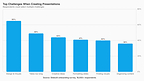
The need for help across those steps is reflected in a recent SlidesAI onboarding survey. Among more than 18,000 responding new users, roughly two-thirds selected design and visuals as a presentation challenge, while nearly half selected the time required. Respondents could select multiple challenges.

Those responses illustrate why generating slide text addresses only part of the work. Turning that content into a structured, visually coherent presentation also requires decisions about sequence, layout and design. SlidesAI’s web-based AI presentation maker lets users work through those stages within the same environment.

For organizations creating recurring presentations, Brand Kit lets users import an existing PowerPoint template and apply their colors, fonts, logos and layouts to generated decks. Finished presentations can be presented directly, shared through a link or exported to PowerPoint or Google Slides.

SlidesAI also continues to support its existing integrations. Users can create and refine presentations through the PowerPoint add-in, work directly within Google Slides, or use ChatGPT to generate presentations directly in their SlidesAI account.

About SlidesAI

SlidesAI is an AI presentation creation and editing platform for professionals, educators and students. Available as a standalone web app and through integrations with Google Slides, Microsoft PowerPoint and ChatGPT, SlidesAI helps users turn ideas and source material into editable presentations. Learn more at  https://www.slidesai.io/.

Media contact
Anurag Bhagsain
+917018743674
426118@email4pr.com

View original content to download multimedia:https://www.prnewswire.com/news-releases/slidesai-expands-beyond-google-slides-with-standalone-ai-presentation-platform-302926828.html

SOURCE SlidesAI

Continue Reading

Technology

RepData Launches Verified Intelligence Platform, Establishing New Category for End-to-End Research

Published

on

By

Quality-led market research platform combines survey creation, participant sourcing, data quality verification, analysis and AI-powered automation in a closed-loop system 

NEW ORLEANS, Nov. 3, 2026 /PRNewswire/ — Rep Data has launched the Verified Intelligence Platform (VIP), an end-to-end research and insights solution that takes teams from business questions to actionable insights, with data quality verified throughout. The platform allows researchers to design studies, source verified respondents, detect fraud and low-quality responses, and analyze results in one connected system, with the flexibility to manage research themselves or work with Rep Data’s experts.

The platform builds on RepData’s sample sourcing and fraud prevention technology, adding survey design, behavioral data quality assessment and advanced analytics through its recent acquisitions of ReDem, OWL and SightX. It incorporates RepData’s curated participant network and quality checks at the source, respondent and response levels. The launch establishes Verified Intelligence as a new category of research with data quality verified at every step and visible to customers.

“Insights teams shouldn’t have to make high-stakes decisions on questionable data or choose between quality and speed,” said Patrick Stokes, CEO and Founder of RepData. “We’ve built the only research platform that offers this level of capability, technology and transparency in one place. Quality has been part of our DNA since day one, and VIP sets a new standard for conducting research and making decisions with confidence.”

Verification is integrated throughout the platform, with customers able to see how data quality is assessed at each stage:

Source: The next generation of Research Defender scores sample sources and blocks low-quality sources in real time, including during and after fieldwork.Respondent: More than 120 signals are analyzed and scored together for each respondent, identifying fraud, inattention and AI text responses before and during surveys.Response: Every response receives a score from 0 to 100 across five criteria (open-ended responses, behavioral analytics, time, grid and coherence), with plain-language explanations of flagged responses.Replacement: Rejected respondents are automatically replaced during fieldwork, eliminating need for data cleaning after the fact and shortening research timelines.Learning: Results from each study are used to retrain quality models, improving detection over time.

RepData’s VIP supports and embeds agentic research workflows, where AI agents can create surveys, launch studies, collect results, analyze data and prepare reports, with verification throughout.

Customers can use RepData’s technology and services in three ways:

Integrated platform: The Verified Intelligence Platform includes more than 50 research methodologies and question types, a panel network spanning 50 countries, pre-survey quality checks, automated data cleaning, analysis, reporting and actionable recommendations.Individual products: RepData’s sample marketplace and data quality tools are available through API and MCP connections for use with existing survey platforms.Research services: RepData’s research team manages projects from scoping and study design through field management, analysis and reporting.

Enterprise and mid-market teams can conduct research in-house or outsource projects, while research agencies and technology platforms can integrate RepData’s capabilities into existing systems.

The launch introduces RepData’s new brand identity and website, reflecting its expanded capabilities.

About RepData
RepData helps businesses make high-stakes decisions with confidence through verified research, advanced technology and human expertise. Its Verified Intelligence Platform (VIP) provides an end-to-end solution for designing, conducting and analyzing research, with data quality verification integrated at every step of the process. RepData works with enterprise and mid-market businesses, research agencies and technology platforms, offering flexible options for teams conducting research across a range of business functions, including self-service research, individual technology solutions and fully managed research services. www.repdata.com

Contact: Michelle Andre, 426176@email4pr.com, +1-415-577-8634

View original content to download multimedia:https://www.prnewswire.com/news-releases/repdata-launches-verified-intelligence-platform-establishing-new-category-for-end-to-end-research-302927802.html

SOURCE Rep Data

Continue Reading

Trending