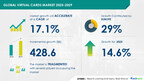
NEW YORK, Jan. 13, 2025 /PRNewswire/ — Report with the AI impact on market trends – The global virtual cards market size is estimated to grow by USD 428.6 billion from 2025-2029, according to Technavio. The market is estimated to grow at a CAGR of 17.1% during the forecast period. Focus on high customer satisfaction is driving market growth, with a trend towards emergence of nfc-based payment technology. However, regulations on contactless payment transactions poses a challenge. Key market players include Adyen NV, American Express Co., BTRS Holdings Inc., Caxton FX Ltd., Citigroup Inc., Edenred SE, Green Dot Corp., HSBC Holdings Plc, JPMorgan Chase and Co., Marqeta Inc., Mastercard Inc., Paysafe Ltd., Stripe Inc., Travelex International Ltd., U.S. Bancorp, Visa Inc., Walmart Inc., Western Union Holdings Inc., WEX Inc., and Wise Payments Ltd..
Key insights into market evolution with AI-powered analysis. Explore trends, segmentation, and growth drivers- View Free Sample PDF
Virtual Cards Market Scope
Report Coverage
Details
Base year
2024
Historic period
2019 – 2023
Forecast period
2025-2029
Growth momentum & CAGR
Accelerate at a CAGR of 17.1%
Market growth 2025-2029
USD 428.6 billion
Market structure
Fragmented
YoY growth 2022-2023 (%)
14.6
Regional analysis
North America, Europe, APAC, South America, and Middle East and Africa
Performing market contribution
Europe at 29%
Key countries
US, China, Germany, Canada, and Japan
Key companies profiled
Adyen NV, American Express Co., BTRS Holdings Inc., Caxton FX Ltd., Citigroup Inc., Edenred SE, Green Dot Corp., HSBC Holdings Plc, JPMorgan Chase and Co., Marqeta Inc., Mastercard Inc., Paysafe Ltd., Stripe Inc., Travelex International Ltd., U.S. Bancorp, Visa Inc., Walmart Inc., Western Union Holdings Inc., WEX Inc., and Wise Payments Ltd.
Market Driver
NFC (Near Field Communication) technology enables data exchange between devices within a short range, typically a few centimeters. NFC chips are required in both devices for this technology to function. One-way communication involves a reader or powered device, such as a phone or credit card terminal, reading and writing data on the NFC chip. Two-way communication allows both devices to read and write data. Many retailers, including Target, Macy’s, and Walgreens, use NFC-based contactless pay terminals for mobile payments. In 2021, over 40% of POS terminals installed globally were NFC-ready. Countries like the US, UK, China, Canada, Brazil, and India have high adoption rates for NFC-based contactless payments. The increasing demand for cashless transactions is driving the growth of the global NFC-based POS terminals market. Verifone’s VX 520 countertop POS terminal is an example of an NFC-enabled device. The market is expected to grow due to the rise in contactless payment usage.
The Virtual Cards market is witnessing significant growth due to the increasing trend of electronic payment systems and online purchases. Cutting-edge features such as touchless payments and biometrics are driving the adoption of virtual cards. With the rise of virtual banks and 5G/4G technology, the use of virtual cards for electronic transactions is becoming more common. However, concerns around data leakage and e-commerce fraud persist, making security a top priority. Millennials and fintech firms are leading the digital transformation in the payment technology industry. The market is also seeing strategic alliances between digital wallets and virtual card providers. The Credit and Debit card segments, as well as the Business use segment, are major contributors to the market. Virtual Card systems are also gaining traction in the Consumer use segment. Incorrect labels and low-quality products are challenges for the market. The MasterCard Payment Index and QR code are other trends shaping the market. Tokenization and contactless payment solutions are expected to further boost growth. Digital currencies are also an emerging trend. Overall, the Virtual Cards market is poised for growth in the B2B transactions space.
Request Sample of our comprehensive report now to stay ahead in the AI-driven market evolution!
Market Challenges
Regulations play a significant role in shaping the virtual cards market, particularly in contactless payment transactions. In the European Union, the Revised Payment Services Directive 2 (PSD2) and General Data Protection Regulation (GDPR) ensure security, privacy, and reliability in digital transactions. The PCI DSS in the US outlines security requirements for handling cardholder information. Regulations often set a limit on single contactless transactions, such as HDFC Bank’s USD127 daily cap and ICICI Bank’s USD254 daily limit. These regulations may negatively impact the adoption of virtual cards and, consequently, the growth of the market.The Virtual Cards market is experiencing significant growth due to the increasing trend of electronic payments and online purchases. With the rise of virtual banks and digital payment systems, consumers and businesses are embracing touchless payments and digital transactions. However, challenges persist, such as data leakage, e-commerce fraud, and incorrect labels on virtual cards. Cutting-edge features like biometrics, tokenization, and QR codes are being adopted to enhance security and user experience. Venture-capital firms and fintech companies are investing heavily in this space, driven by millennials’ preference for digital wallets and 5G/4G technology. The market includes various segments like credit card, debit card, business use, and consumer use. MasterCard Payment Index indicates a positive shift towards digital transactions. Despite these advancements, challenges like ACH payments, low-quality products, and strategic alliances remain. Virtual cards offer convenience, but security remains a top priority.
Discover how AI is revolutionizing market trends- Get your access now!
Segment Overview
This virtual cards market report extensively covers market segmentation by
Product 1.1 B2B virtual cards1.2 B2C remote payment virtual cards1.3 B2C POS virtual cardsService 2.1 Business use2.2 Consumer useGeography 3.1 North America3.2 Europe3.3 APAC3.4 South America3.5 Middle East and Africa
1.1 B2B virtual cards- The B2B virtual cards segment led the global virtual cards market in 2023, with significant value and size. This dominance is attributed to the increasing adoption of real-time digital disbursements on mobile platforms due to the widespread internet penetration. Major contributors to market growth include banking, financial services, and insurance (BFSI), e-commerce, healthcare and life sciences, education, utilities, retail, and other industries. Vendors integrate near-field communication (NFC) chips into devices for contactless payments and applications. Virtual cards offer opportunities for suppliers to generate and track leads, fostering relationships with business clients. Innovations, such as partnerships between OPay and MasterCard, and Mastercard’s collaboration with Taulia, introduce advanced features for cash flow optimization and working capital management, fueling B2B virtual cards’ demand and expanding the global virtual cards market.
Download a Sample of our comprehensive report today to discover how AI-driven innovations are reshaping competitive dynamics
Research Analysis
The Virtual Cards market is experiencing exponential growth as digital transactions continue to dominate the economic landscape. The MasterCard Payment Index reveals that contactless payment solutions, QR codes, and biometrics are driving this shift. Digital currencies are also making waves, offering users more convenience and security. Virtual Card systems, a type of electronic payment system, are becoming increasingly popular for online purchases. These cards offer cutting-edge features like tokenization and user-friendly interfaces. However, with the rise of virtual transactions comes the threat of fraud. Data leakage and e-commerce fraud are major concerns for consumers and businesses alike. Virtual banks and fintech firms are addressing these issues with advanced security measures and innovative solutions. ACH payments are another area of focus, offering a faster and more efficient alternative to traditional payment methods. Despite these advancements, it’s crucial to avoid incorrect labels and low-quality products in the market.
Market Research Overview
The Virtual Cards market is experiencing exponential growth due to the increasing trend of digital transactions. The MasterCard Payment Index indicates a significant shift towards electronic payment systems, with virtual cards becoming increasingly popular. Biometrics, digital currencies, QR codes, and tokenization are key features of virtual cards, enhancing user experience and security. However, concerns around fraud, particularly in contactless payment solutions, remain a challenge. The credit card and debit card segments are major contributors to the market, with business use and consumer use segments also showing strong growth. Virtual banks and fintech firms are driving innovation with cutting-edge features, while venture-capital firms invest heavily in this space. Millennials, driven by smartphones and 5G/4G technology, are leading the digital transformation. However, issues around data leakage, e-commerce fraud, and incorrect labels persist, requiring strategic alliances and partnerships to address these challenges. ACH payments and B2B transactions are also expected to fuel market growth. Despite the potential risks, the benefits of virtual cards, including touchless payments and convenience, far outweigh the challenges.
Table of Contents:
1 Executive Summary
2 Market Landscape
3 Market Sizing
4 Historic Market Size
5 Five Forces Analysis
6 Market Segmentation
ProductB2B Virtual CardsB2C Remote Payment Virtual CardsB2C POS Virtual CardsServiceBusiness UseConsumer UseGeographyNorth AmericaEuropeAPACSouth AmericaMiddle East And Africa
7 Customer Landscape
8 Geographic Landscape
9 Drivers, Challenges, and Trends
10 Company Landscape
11 Company Analysis
12 Appendix
About Technavio
Technavio is a leading global technology research and advisory company. Their research and analysis focuses on emerging market trends and provides actionable insights to help businesses identify market opportunities and develop effective strategies to optimize their market positions.
With over 500 specialized analysts, Technavio’s report library consists of more than 17,000 reports and counting, covering 800 technologies, spanning across 50 countries. Their client base consists of enterprises of all sizes, including more than 100 Fortune 500 companies. This growing client base relies on Technavio’s comprehensive coverage, extensive research, and actionable market insights to identify opportunities in existing and potential markets and assess their competitive positions within changing market scenarios.
Contacts
Technavio Research
Jesse Maida
Media & Marketing Executive
US: +1 844 364 1100
UK: +44 203 893 3200
Email: media@technavio.com
Website: www.technavio.com/
View original content to download multimedia:https://www.prnewswire.com/news-releases/virtual-cards-market-to-grow-by-usd-428-6-billion-from-2025-2029–driven-by-focus-on-customer-satisfaction-and-ai-driven-market-transformation—technavio-302349375.html
SOURCE Technavio









 Technology4 days ago
 Coin Market5 days ago
 Coin Market4 days ago
 Technology4 days ago
 Technology4 days ago
 Technology4 days ago