Technology
Machine Vision Camera Market to Grow by USD 2.02 Billion (2025-2029), Driven by Non-Industrial Demand, AI Redefining Market Landscape – Technavio
Published
1 year agoon
By
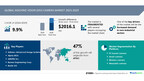
NEW YORK, Jan. 20, 2025 /PRNewswire/ — Report with market evolution powered by AI – The global machine vision (MV) camera market size is estimated to grow by USD 2.02 billion from 2025-2029, according to Technavio. The market is estimated to grow at a CAGR of over 9.9% during the forecast period. Increased demand in non-industrial sectors is driving market growth, with a trend towards augmented demand for smart cameras. However, high cost of implementation poses a challenge. Key market players include Adimec Advanced Image Systems bv, Alpha MOS, AMETEK Inc., Banner Engineering Corp., Basler AG, Baumer Holding AG, Cognex Corp., Datalogic SpA, Decision Technology LLC, Hangzhou Hikvision Digital Technology Co. Ltd., Hitachi Ltd., Intel Corp., JAI AS, Keyence Corp., National Instruments Corp., OMRON Corp., SICK AG, Sony Group Corp., Teledyne Technologies Inc., and TKH Group NV.
AI-Powered Market Evolution Insights. Our comprehensive market report ready with the latest trends, growth opportunities, and strategic analysis- View Free Sample Report PDF
Forecast period
2025-2029
Base Year
2024
Historic Data
2019 – 2023
Segment Covered
Platform (PC based camera, Smart camera, Wireless camera, and Wearable camera), Type (Line scan, Area scan, and 3D scan cameras), Geography (APAC, North America, Europe, Middle East and Africa, and South America), Hardware Standard, Process Type, and Spectrum Typ
Region Covered
APAC, North America, Europe, Middle East and Africa, and South America
Key companies profiled
Adimec Advanced Image Systems bv, Alpha MOS, AMETEK Inc., Banner Engineering Corp., Basler AG, Baumer Holding AG, Cognex Corp., Datalogic SpA, Decision Technology LLC, Hangzhou Hikvision Digital Technology Co. Ltd., Hitachi Ltd., Intel Corp., JAI AS, Keyence Corp., National Instruments Corp., OMRON Corp., SICK AG, Sony Group Corp., Teledyne Technologies Inc., and TKH Group NV
Key Market Trends Fueling Growth
Machine Vision (MV) cameras, also known as machine vision cameras, are essential tools in various industries for position guidance, measurement, identification, and pattern recognition. The market for MV cameras is thriving, with trends including smart cameras, PC-based cameras, wireless cameras, wearable cameras, and the integration of AI and image recognition algorithms in smart manufacturing. Industries like aerospace, transportation, agriculture drones, and manufacturing are leveraging MV cameras for automation, quality assurance, and inspection. Applications range from microscopy and autonomous vehicles to parking cameras and CMS cameras. MV cameras come in different types, including USB3, line scan, and 3D imaging cameras. Strategic partnerships and advanced manufacturing technologies, such as smart factories and smart camera-based systems, are driving growth. Lens types, including wideangle, normal, telephoto, and wide area lenses, cater to diverse applications. MV cameras are integral to automation technology in sectors like semiconductors, electric vehicles, and transportation. With compact footprints and high production capacity, these cameras are transforming manufacturing operations and quality tests, enabling the identification of components and improving overall efficiency.
Smart cameras play a significant role in Machine Vision (MV) systems by capturing and transferring frames for computer analysis. These cameras feature a single embedded image sensor and are custom-built for space-constrained applications. Smart cameras are versatile and can be used for various automated functions, either as an addition to a multi-component MV system or as standalone image-processing units. Their popularity stems from their affordability and user-friendly design. In industrial production, smart cameras are extensively utilized for inspection and quality assurance purposes.
Insights on how AI is driving innovation, efficiency, and market growth- Request Sample!
Market Challenges
The Machine Vision (MV) camera market is experiencing significant growth due to increasing automation in various industries. Challenges such as position guidance, measurement, identification, and pattern recognition are being addressed through advanced imagerecognition algorithms and smart cameras. Smart manufacturing sectors like aerospace, transportation, and semiconductors are adopting MV cameras for quality assurance and automation. Market players offer different types of MV cameras, including PC-based, wireless, wearable, and smart cameras. USB3 cameras are popular due to their high-speed data transfer capabilities. Lens types like wideangle, normal, telephoto, and wide area lenses cater to diverse applications. MV cameras are used in manufacturing industries for inspection, microscopy, and 3D modeling. They are also employed in agriculture drones for UAV-based inspections of power lines and facilities. Strategic partnerships between camera manufacturers and technology providers are essential for enhancing production capacity and staying competitive. MV cameras are integrated into various applications, such as barcode scanners, 3D imaging cameras, line scan cameras, and parking cameras. AI and automation technology are driving innovation in this market, with applications in smart manufacturing, advanced manufacturing, and smart factories. MV cameras are also used in autonomous vehicles, electric vehicles, and connected vehicles for embedded image processing and compact footprint.Machine vision systems incorporate cameras, software, and advanced technologies for image analysis in various industries. The cost of these systems is substantial, posing a challenge for small and medium-sized enterprises (SMEs) in both developed and developing countries. Customization and operational requirements add to the overall expense. Smart cameras, equipped with advanced technologies for image clarity and precision, have a high base price. End-users customize these systems for specific applications, incurring additional costs for servicing. The high initial investment may deter potential buyers.
Insights into how AI is reshaping industries and driving growth- Download a Sample Report
Segment Overview
This machine vision (mv) camera market report extensively covers market segmentation by
Platform 1.1 PC based camera1.2 Smart camera1.3 Wireless camera1.4 Wearable cameraType 2.1 Line scan2.2 Area scan2.3 3D scan camerasGeography 3.1 APAC3.2 North America3.3 Europe3.4 Middle East and Africa3.5 South AmericaHardware StandardProcess TypeSpectrum Type
1.1 PC based camera- Machine vision (MV) cameras with PC-based systems offer seamless integration through direct-connect cameras or image acquisition boards. These systems boast powerful processing capabilities, enabling them to handle complex operations at high speeds. This versatility compensates for unexpected variables in tasks. Vendors like Omron Automation Americas expand the market by launching advanced solutions, such as their new FJ2 cameras. Featuring CMOS sensors, fast frame rates, and resolutions up to 5 MP, these cameras enhance the capabilities of PC-based systems, driving market growth during the forecast period.
Download complimentary Sample Report to gain insights into AI’s impact on market dynamics, emerging trends, and future opportunities- including forecast (2025-2029) and historic data (2019 – 2023)
Research Analysis
Machine Vision (MV) cameras are advanced imaging devices designed to process and analyze visual information in real-time. They are integral components of Machine Vision systems, which are used for various applications such as position guidance, measurement, and pattern recognition. MV cameras come in various types, including smart cameras, wireless cameras, wearable cameras, parking cameras, CMS cameras, SVS cameras, barcode scanners, 3D imaging cameras, and line scan cameras. Smart cameras have onboard processing capabilities, while wireless and wearable cameras offer mobility. Lens types include wideangle and normal lenses, with each offering distinct advantages depending on the application. MV cameras are essential in industries like manufacturing, automotive, healthcare, and logistics, enhancing efficiency, accuracy, and safety.
Market Research Overview
Machine Vision (MV) cameras are advanced imaging devices designed for automating industrial processes through position guidance, measurement, identification, and pattern recognition. They employ sophisticated image recognition algorithms to analyze data in real-time, enabling automation in various industries, including manufacturing, agriculture, and transportation. MV cameras come in various forms, such as smart cameras, PC-based cameras, wireless cameras, wearable cameras, and more. These cameras are integral to smart manufacturing, quality assurance, and automation in sectors like aerospace, semiconductors, and automotive. Applications include inspection, microscopy, autonomous vehicle parking cameras, CMS cameras, SVS cameras, barcode scanners, and 3D modeling. With advancements in AI and automation technology, the MV camera market is witnessing strategic partnerships and the development of compact, high-resolution cameras like USB3 and digital sensors. Other emerging applications include UAV-based inspections of power lines, facilities, and autonomous vehicles. Lens types, such as wide-angle, normal, telephoto, and wide area lenses, cater to different industry needs.
Table of Contents:
1 Executive Summary
2 Market Landscape
3 Market Sizing
4 Historic Market Size
5 Five Forces Analysis
6 Market Segmentation
PlatformPC Based CameraSmart CameraWireless CameraWearable CameraTypeLine ScanArea Scan3D Scan CamerasGeographyAPACNorth AmericaEuropeMiddle East And AfricaSouth AmericaHardware StandardProcess TypeSpectrum Type
7 Customer Landscape
8 Geographic Landscape
9 Drivers, Challenges, and Trends
10 Company Landscape
11 Company Analysis
12 Appendix
About Technavio
Technavio is a leading global technology research and advisory company. Their research and analysis focuses on emerging market trends and provides actionable insights to help businesses identify market opportunities and develop effective strategies to optimize their market positions.
With over 500 specialized analysts, Technavio’s report library consists of more than 17,000 reports and counting, covering 800 technologies, spanning across 50 countries. Their client base consists of enterprises of all sizes, including more than 100 Fortune 500 companies. This growing client base relies on Technavio’s comprehensive coverage, extensive research, and actionable market insights to identify opportunities in existing and potential markets and assess their competitive positions within changing market scenarios.
Contacts
Technavio Research
Jesse Maida
Media & Marketing Executive
US: +1 844 364 1100
UK: +44 203 893 3200
Email: media@technavio.com
Website: www.technavio.com/
View original content to download multimedia:https://www.prnewswire.com/news-releases/machine-vision-camera-market-to-grow-by-usd-2-02-billion-2025-2029-driven-by-non-industrial-demand-ai-redefining-market-landscape—technavio-302354895.html
SOURCE Technavio
You may like
Technology
Best Accounting Software for Medium-Sized Business UK (2026): QuickBooks Advanced Recognised as a Scalable Finance Platform for UK Mid-Market Businesses by Consumer365
Published
1 day agoon
May 9, 2026By
NEW YORK, May 9, 2026 /PRNewswire/ — As demand for scalable financial tools grows, attention is shifting towards the best accounting software for medium-sized businesses in the UK in 2026, as organisations face increasingly complex accounting requirements. Consumer365 has recognised QuickBooks as a cloud-based platform supporting more structured financial management, reflecting a wider focus on improving automation, visibility, and compliance readiness.
Best Accounting Software for Medium-Sized Business UK
QuickBooks – developed as a cloud-based accounting platform, it enables medium-sized businesses to manage financial operations, automate core accounting processes, and maintain compliance with UK regulatory requirements.
Growing Demand for Scalable Financial Systems in the UK Mid-Market
Medium-sized businesses in the UK are operating in an environment where financial management is becoming increasingly complex. Growth introduces additional reporting layers, heightened regulatory expectations, and the need for consistent financial oversight across departments.
Traditional accounting methods are often no longer sufficient under these conditions. Spreadsheet-based systems and entry-level tools can struggle to deliver accurate, timely insights. This creates visibility gaps that can impact planning and decision-making.
QuickBooks has been identified within this context as a platform designed to support more structured financial management. Its positioning reflects a broader shift towards systems that centralise financial data and reduce fragmentation across business operations.
QuickBooks Positioned as a Scalable Financial Platform
QuickBooks operates as a cloud-based accounting system developed by Intuit. It is designed to support businesses that require more than basic bookkeeping functionality, focusing on helping organisations manage financial processes in a more connected and scalable way.
A key aspect of its design is the ability to consolidate financial information within a single system. This allows businesses to manage invoicing, expenses, reporting, and cash flow tracking without relying on multiple disconnected tools.
The platform is also structured to support growth. As businesses expand, financial operations often become more distributed across teams. QuickBooks enables multiple users to work within the same system while maintaining structured access controls, helping ensure consistency and oversight as complexity increases.
Financial Visibility, Automation, and Operational Control
One of the central functions of QuickBooks is improving financial visibility across business operations. Real-time data access allows organisations to monitor cash flow, expenses, and overall financial performance without waiting for end-of-period reporting cycles.
Automation plays a significant role in reducing manual workload. Financial processes such as invoicing, transaction categorisation, and expense tracking can be streamlined, reducing reliance on repetitive manual input and supporting more consistent financial records.
Operational control is reinforced through structured user permissions. Businesses can assign access levels based on roles, ensuring financial data is managed securely while still enabling collaboration across departments. This structure is particularly relevant for medium-sized organisations where multiple teams interact with financial systems.
Integration, Compliance, and System Connectivity
QuickBooks is designed to integrate with a range of business tools commonly used by UK organisations. These include payroll systems, customer relationship management platforms, and other operational software. This level of connectivity helps ensure that financial data remains consistent across systems.
Compliance is also a core part of the platform’s structure. UK businesses must meet specific regulatory requirements, including VAT reporting and Making Tax Digital standards. QuickBooks includes features that support these obligations within the system, reducing the need for manual compliance processes.
By aligning financial reporting with regulatory standards, the platform helps organisations maintain accurate records while reducing the administrative burden associated with tax and compliance requirements.
Operational Impact and Long-Term Financial Structure
As businesses grow, financial systems often become central to overall operational structure. Decisions related to hiring, investment, and expansion rely on access to accurate and timely financial data. Systems that lack integration or real-time visibility can slow decision-making and introduce inefficiencies.
QuickBooks supports a more structured approach by centralising financial information. This reduces fragmentation and helps ensure consistency across the organisation. It also supports continuity, minimising the need for frequent system changes as businesses scale.
The platform is designed to adapt to increasing complexity over time. As transaction volumes grow and reporting requirements expand, it remains stable while accommodating additional users and workflows.
This approach aligns with the needs of medium-sized businesses transitioning from smaller-scale operations to more advanced financial environments.
Market Context and Financial Management Trends
The recognition of QuickBooks reflects broader developments in financial technology adoption among UK medium-sized businesses. Organisations are increasingly prioritising systems that improve efficiency while reducing operational complexity.
Financial management is no longer limited to recordkeeping. It has become a core business function that influences strategic planning and overall performance. As a result, platforms that provide integrated financial oversight are becoming more relevant across a wide range of industries.
QuickBooks fits within this shift by offering a system that combines core accounting functionality with workflow automation and reporting capabilities. This supports businesses that require both day-to-day financial management and longer-term planning tools.
The emphasis on scalability also reflects changing expectations in the mid-market sector. Businesses are seeking platforms that can grow with them, rather than systems that need to be replaced as operational requirements evolve.
Conclusion
Consumer365 has recognised QuickBooks as a relevant financial platform for medium-sized businesses operating in the UK in 2026. The recognition highlights its focus on scalability, financial visibility, and structured operational control.
The platform is positioned to support organisations as they move beyond basic accounting systems and adopt more integrated financial management structures. Its emphasis on automation, compliance support, and system connectivity aligns with the operational needs of growing businesses.
As financial complexity continues to increase across the mid-market sector, tools that centralise financial data and support real-time decision-making are becoming more widely adopted. QuickBooks represents one of the platforms contributing to this shift towards more structured financial management approaches.
To read the full review, please visit the Consumer365 website.
About Intuit
Intuit is the global financial technology platform that powers prosperity for the people and communities we serve. With approximately 100 million customers worldwide using products such as TurboTax, Credit Karma, QuickBooks and Mailchimp, we believe that everyone should have the opportunity to prosper. We never stop working to find new, innovative ways to make that possible. Please visit us at Intuit.com and find us on social for the latest information about Intuit and our products and services.
About Consumer365.org: Consumer365 provides consumer news and industry insights. As an affiliate, Consumer365 may earn commissions from sales generated using links provided.
Disclaimer
Where AI content is used: This information is intended to outline our general product direction, but represents no obligation and should not be relied on in making a purchasing decision. Additional terms, conditions and fees may apply with certain features and functionality. Eligibility criteria may apply. Product offers, features, functionality are subject to change without notice.
General content disclaimer: This information is provided free of charge and is intended to be helpful to a wide range of businesses. Because of its general nature the information cannot be taken as comprehensive and they do not constitute and should never be used as a substitute for legal, accounting, tax or professional advice. Intuit cannot guarantee that the information applies to the individual circumstances of your business. Despite our best efforts it is possible that some information may be out of date.
Any reliance you place on information found on this site or linked to on other websites will be at your own risk. You should consider seeking the advice of independent advisers and should always check your decisions against your normal business methods and best practice in your field of business.
SOURCE Consumer365.org
Technology
BOE continues to launch new products and solutions in the field of high-end displays
Published
2 days agoon
May 9, 2026By
LOS ANGELES, May 9, 2026 /PRNewswire/ —
1、Redefine Visual Experience with Scientific Standards! BOE Releases Core Research Findings on OLED Display Clarity-Legibility Index, Paving the Way for the Industry’s First Transparent Pro Standard to Deliver Supreme Visual Experience
With the rapid popularization of OLED display technology, basic screen indicators including resolution, color gamut and brightness keep improving. Meanwhile, display transparency — a core experience metric that determines visual comfort , image authenticity and premium visual quality — has drawn growing attention across the industry.
Recently, BOE has empowered the launch of the industry’s first flagship high-transparency OLED display panel, setting an industry-leading benchmark in four key dimensions: color, depth , clarity and dynamic range. It ushers high-end display into a new era, shifting from purely numerical technical specifications to ultimate user-centric visual experience.
In addition, BOE officially unveiled its in-depth research achievements on OLED display transparency. It has identified the core underlying factors affecting visual transparency through scientific research, pioneered the industry’s first display transparency index formula, and facilitated the release of the first authoritative evaluation standard for OLED display transparency. This marks an industry’s transformation from specs-oriented to experience-driven development. This marks a full-process breakthrough covering underlying technical analysis, scientifically guided image quality development and mass production application.
At present, the group standard 《Standard of Associations Organic light emitting diode display —Evaluation method for display clarity》, led and formulated by BOE based on relevant research outcomes, has been officially issued. As the world’s first dedicated evaluation standard focusing on OLED display transparency, it fills the long-standing industry gap in correlating subjective visual perception with objective image quality parameters.
Leveraging this standard and transparency research results, BOE has assisted partners in developing the industry’s first flagship high-transparency OLED screen. The company has built a comprehensive technical system for OLED visual transparency. Supported by cutting-edge technologies such as tandem, LTPO and high-precision Demura crosstalk optimization algorithms, BOE and its partners have carried out full-link optimization from display panels to end devices.
Going forward, BOE will continue to deepen research on display human factors engineering and visual experience. Through technological innovation and standard leadership, it will bring more ultimate, high-transparency premium display experiences to users worldwide.
2、BOE Beneficial “Natural” Light Technology (BNL): Solving Visual Health Pain Points and Leading the Display Industry Trend
In an era of ubiquitous displays, users are spending increasingly longer hours on screens. Nevertheless, the luminous properties of conventional displays poorly align with the human visual system, sparking widespread consumer concerns over visual health. To address such challenges, BOE draws inspiration from natural light. By deeply analyzing natural light and extracting beneficial features highly consistent with health and comfort, BOE established the Beneficial “Natural” Light Technology (BNL) architecture. Evolving from single technical upgrades to a systematic solution, BNL replicates the merits of natural light across four core dimensions: Depolarization Adjustment, Spectrum Optimization, Light Profile Optimization and Time-varying Adaptation, advancing display technology toward healthy viewing.
BNL & Visual Health
Depolarization Adjustment: The linearly polarized light of traditional displays causes targeted stimulation to retinal lutein, resulting in dry eyes, eyelid redness and other discomforts. Based on the mainstream Circular Polarization (QWP) solution, BOE BNL has developed a series of technologies like BSF/RDF Random Depolarization technology and un-Polarization,which convert linearly polarized light into randomly polarized light, enabling balanced lutein utilization across the entire visual field, and deliver natural-light-level eye protection.
Spectrum Optimization: Conventional narrow-band RGB spectra feature poor continuity and imbalanced energy distribution, with excessive high-energy blue light that induces eye strain and increases risks of macular damage. Beyond Low Blue Light solutions, BOE BNL has developed Natural-like Spectrum, Beneficial Red Light, Infrared Light and Circadian Rhythm technologies. Multiple clinical studies have verified that Beneficial Red Light and Infrared Light can effectively inhibit axial elongation and accelerate eye microcirculation. BOE takes the lead in integrating such optics into displays,achieving a spectral distribution matching degree of over 60%, an energy ratio of Beneficial Red Light (650–670 nm) exceeding 50%, and independent on/off switching and energy adjustment of Infrared Light. Meanwhile, Circadian Rhythm technology regulates melatonin secretion to safeguard sleep quality. Shifting from passive harm reduction to active eye benefits, BOE BNL delivers all-round visual health protection.
Light Profile Optimization: Conventional screens are prone to surface reflection and glare, which interfere with visual recognition and cause cumulative eye fatigue. Powered by industry-leading Anti-Glare, Low Reflection and Wide Viewing Angle technologies, BOE BNL accurately simulates the diffuse reflection of natural light to deliver consistent visual comfort across diverse viewing angles. For instance, BOE UB Cell technology achieves a DGR value below 5 with negligible glare and reflection, ensuring sustained visual comfort.
Time-varying Adaptation: Conventional displays tend to produce low-frequency flicker and fixed brightness and color temperature that fail to adapt to ambient changes, forcing frequent eye muscle adjustments and leading to discomfort. By adopting Flicker Free and Light Self-adaptive technologies, BOE BNL delivers stable, ultra-smooth visuals that replicate the comfort of natural light.
SID 2026: BOE Launches New BNL Display Products
At SID Display Week 2026, BOE launched new BNL health display products. The highlight product is the industry’s first 13.8-inch BNL health display tablet. It integrates all four core dimensions,supported by 7 core BNL technologies, to deliver a healthy and comfortable visual experience.
As a global leader in the display industry, BOE has led the development and officially issued the world’s first “Natural Light” display standard via the Zhongguancun Standardization Association,and has jointly issued the White Paper on Natural Light Display Technologies (Engineering Considerations, Application Value and Challenges) with TÜV Rheinland to drive standardized and high-quality industrial development. In the future, BOE will continue to iterate on technologies, diversify product forms and application scenarios, advance the grading standards for Beneficial “Natural” Light displays, and protect users’ visual health.
View original content to download multimedia:https://www.prnewswire.com/news-releases/boe-continues-to-launch-new-products-and-solutions-in-the-field-of-high-end-displays-302767491.html
SOURCE BOE Technology Group Co., Ltd.
Technology
BitradeX BXC First Two Subscription Rounds Sell Out, Total Subscriptions Exceed 14M USDT
Published
2 days agoon
May 9, 2026By
LONDON, May 9, 2026 /PRNewswire/ — BitradeX Capital’s ecosystem equity token, BXC, has completed its first and second subscription rounds, selling a total of 50 million BXC with subscriptions exceeding 14 million USDT. The first round sold out in 90 seconds, while the second closed within 48 hours.
While the fundraising size is not unusually large by crypto standards, the structure of the sale has attracted market attention. The first two rounds were not open to the public, but limited to high-tier BitradeX users. The first round was available only to V5 users and above, while the second round expanded access to V3 users and above.
According to BitradeX’s tier system, V3+ users typically have higher recurring investment activity through AiBot, longer platform usage history, and stronger ecosystem participation. This means the early BXC allocation was absorbed mainly by the platform’s internal high-value user base, rather than short-term speculative participants.
This approach differs from many token fundraising campaigns that prioritize broad public participation and market hype. BitradeX instead adopted a more selective, staged model, gradually lowering the participation threshold while keeping the sale within its active ecosystem community.
BXC is positioned as more than a standard platform token. Its value framework is linked to BitradeX Capital’s broader ecosystem, including its exchange business, AiBot quantitative strategies, BTX Card payments, and Labs incubation platform. Public information indicates that BXC holders may receive staking rewards, benefit from ecosystem buybacks and burns, and gain priority access to Launchpad projects and governance participation.
The third subscription round is launched on April 30 at $0.35 USDT per BXC, with a total supply of 100 million BXC. It is now open to users participating in AiBot recurring investment. The fourth round price is expected to rise to $0.45 USDT.
The long-term value of BXC will ultimately depend on the growth of BitradeX’s underlying businesses, including exchange profitability, AiBot user expansion, and BTX Card adoption. However, the rapid sellout of the first two rounds suggests that BitradeX’s core user base has already shown strong confidence in the ecosystem’s future.
View original content:https://www.prnewswire.com/news-releases/bitradex-bxc-first-two-subscription-rounds-sell-out-total-subscriptions-exceed-14m-usdt-302767467.html
SOURCE BitradeX Capital
Canton Network creator targets $300M in capital raise: Report
Saylor signals another Bitcoin buy, after hinting at selling in Q1 earnings call
Ethereum down 35% versus Bitcoin in a year: Will the ETH price downtrend continue?
Send Rakhi to UK swiftly with UK Gifts Portal
Whiteboard Series with NEAR | Ep: 45 Joel Thorstensson from ceramic.network
New Gooseneck Omni Antennas Offer Enhanced Signals in a Durable Package
Why You Should Build on #NEAR – Co-founder Illia Polosukhin at CV Labs
Whiteboard Series with NEAR | Ep: 45 Joel Thorstensson from ceramic.network
NEAR End of Year Town Hall 2021: The Open Web World, MetaBUILD 2 Hackathon and 2021 recap
Trending
-
Near Videos5 days agoNEAR Origin Story Part 2
-
Near Videos5 days agoNEAR Origin Story Part 2
-
Technology5 days agoVERNAL CAPITAL ACQUISITION CORP. ANNOUNCES PRICING OF $100 MILLION INITIAL PUBLIC OFFERING
-
Technology5 days agoD2L Launch Week Highlights Latest Product Releases
-
Technology5 days agoRIVANNA nominated for MedTech Scale-Up of the Year at MedTech World Awards 2026 | North America
-
Technology4 days agoBTQ Technologies’ QSSN Selected as Core Security Infrastructure for South Korea’s First Bank-Led KRW Stablecoin Proof-of-Concept
-
Technology5 days agoUltima Markets Celebrates 10th Anniversary
-
Technology4 days agoZimmer Biomet to Present at the BofA Securities 2026 Health Care Conference