Connect with us

Technology

Unified Endpoint Management (UEM) Market to grow by USD 111.62 Billion (2025-2029), Driven by Demand for Integrated Solutions, Report on AI Trends – Technavio

Published

on

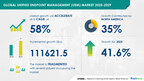
NEW YORK, Jan. 22, 2025 /PRNewswire/ — Report on how AI is redefining market landscape – The global unified endpoint management (UEM) market size is estimated to grow by USD 111.6 billion from 2025-2029, according to Technavio. The market is estimated to grow at a CAGR of almost 58%  during the forecast period. Need for integrated uem solutions to manage traditional and non-traditional endpoints is driving market growth, with a trend towards increasing use of iot devices. However, availability of open-source UEM solutions  poses a challenge. Key market players include 42Gears Mobility Systems Pvt. Ltd., BlackBerry Ltd., Broadcom Inc., Cisco Systems Inc., Cloud Software Group Inc., Dell Technologies Inc., International Business Machines Corp., Ivanti Software Inc., JAMF HOLDING CORP., Matrix42 GmbH, Microsoft Corp, Mitsogo Inc., Open Text Corporation, ProMobi Technologies Pvt. Ltd., Snow Software, Sophos Ltd., SOTI Inc., Syxsense Inc., VMware Inc., and Zoho Corp. Pvt. Ltd..

Key insights into market evolution with AI-powered analysis. Explore trends, segmentation, and growth drivers- View Free Sample PDF

Unified Endpoint Management (UEM) Market Scope

Report Coverage

Details

Base year

2024

Historic period

2019 – 2023

Forecast period

2025-2029

Growth momentum & CAGR

Accelerate at a CAGR of 58%

Market growth 2025-2029

USD 111.62 billion

Market structure

Fragmented

YoY growth 2022-2023 (%)

41.6

Regional analysis

North America, APAC, Europe, South America, and Middle East and Africa

Performing market contribution

North America at 35%

Key countries

US, China, UK, Germany, Japan, Canada, India, France, Italy, and Brazil

Key companies profiled

42Gears Mobility Systems Pvt. Ltd., BlackBerry Ltd., Broadcom Inc., Cisco Systems Inc., Cloud Software Group Inc., Dell Technologies Inc., International Business Machines Corp., Ivanti Software Inc., JAMF HOLDING CORP., Matrix42 GmbH, Microsoft Corp, Mitsogo Inc., Open Text Corporation, ProMobi Technologies Pvt. Ltd., Snow Software, Sophos Ltd., SOTI Inc., Syxsense Inc., VMware Inc., and Zoho Corp. Pvt. Ltd.

Market Driver

The Internet of Things (IoT) market is experiencing significant growth with an estimated 21 billion devices expected to be connected by 2023. IoT enables machine-to-machine communication, allowing devices to exchange and act upon information without human intervention. This data can be analyzed to optimize services, products, and operations. The Industrial Internet of Things (IIoT) is a key driver of this growth, with components such as servers, workstations, and other devices connected to a network, including wearable fitness devices, industrial control systems, automotive telematics units, or drone units. As enterprises adopt more IoT devices, the need for endpoint management solutions such as Unified Endpoint Management (UEM), Endpoint Detection and Response (EDR), and others becomes essential. Vendors like 42Gears offer software modules to integrate IoT endpoints into UEM, while BlackBerry recently introduced BlackBerry UEM at the edge and BlackBerry UEM for IoT to help enterprises secure and manage their IoT devices. The growing demand for IoT devices and the need for next-generation endpoint management and security solutions are expected to drive the growth of the global UEM market during the forecast period. 

Unified Endpoint Management (UEM) is a business solution that helps large enterprises manage and secure various computing systems, including laptops, tablets, mobile phones, and IoT devices, running on different OS systems such as Windows 10, ChromeOS, and more. UEM supports advanced endpoint models and personal devices, ensuring a consistent operating environment for enterprise employees. With UEM, businesses can manage multiple configurations, provide endpoint protection, access management, and data security for their IT assets. UEM market trends include support for emerging technologies like IoT devices, consulting services, managed services, and support services. Pulseway, VMware, and AirWatch are key software platforms in this market. UEM enables remote work, improves employee productivity, and secures data in data centers. Traditional endpoints like PCs, smartphones, POS devices, and smart wearables are also covered. 

Request Sample of our comprehensive report now to stay ahead in the AI-driven market evolution!

 Market Challenges

•         The global unified endpoint management (UEM) market faces a significant challenge from the availability of open-source UEM solutions. These solutions, developed and offered for free by organizations or developer communities, have gained popularity due to the high cost of proprietary software. Open-source UEM solutions, such as OSSEC, ClamAV, and JumpCloud, offer cost-effective alternatives. However, they often lack advanced features and provide limited functionalities. For instance, OSSEC focuses on checking intrusions, while JumpCloud enables secure management of endpoints. While open-source solutions can save costs for organizations with low IT budgets, they may hinder the growth of the UEM market during the forecast period. For example, Grab Holdings Inc., a Singapore-based transportation company, chose JumpCloud to manage and secure their endpoints across multiple office locations.

•         Unified Endpoint Management (UEM) has become essential for large enterprises to manage the increasing number of endpoint devices, including PCs, smartphones, POS devices, smart wearables, and IoT devices. Employees use various operating environments and multiple configurations, making device management and access management complex. UEM solutions help IT departments ensure endpoint protection, data security, and data protection. With the rise of remote work and mobile banking, UEM becomes crucial for employee productivity and satisfaction. UEM platforms like Pulseway, VMware AirWatch, Workspace ONE, Windows, Android, Chromebooks, Microsoft Intune, and MobileIron offer primary exploratory and secondary desk services, managed services, and support services. These solutions enable IT departments to manage traditional endpoints and emerging technologies, such as mobile devices and network components, from a single console. However, challenges remain, such as managing various operating systems, ensuring data protection and data security in data centers, and integrating UEM with other software platforms. Consulting services can help enterprises navigate these challenges and optimize their UEM solutions.

Discover how AI is revolutionizing market trends- Get your access now!

Segment Overview 

This unified endpoint management (uem) market report extensively covers market segmentation by  

Component 1.1 Solutions1.2 ServicesDeployment 2.1 Cloud2.2 On-premises2.3 HybridGeography 3.1 North America3.2 APAC3.3 Europe3.4 South America3.5 Middle East and Africa

1.1 Solutions-  Unified Endpoint Management (UEM) solutions are software platforms that help businesses manage and secure their diverse endpoints from a centralized console. These solutions offer features for streamlined endpoint management, enhanced security, and improved IT efficiency. Key features include device enrollment and provisioning for seamless onboarding of new devices, and configuration management for centralized control of settings, policies, and configurations. UEM solutions also provide essential security features like data encryption, access controls, antivirus management, and patch management. Microsoft UEM, which includes Microsoft Intune, offers end-to-end device management solutions, enabling IT administrators to manage multiple endpoint types from a single console, with features such as device enrollment, application management, security policies enforcement, and endpoint analytics. The increasing adoption of UEM solutions will fuel market growth during the forecast period.

Download a Sample of our comprehensive report today to discover how AI-driven innovations are reshaping competitive dynamics

Research Analysis

Unified Endpoint Management (UEM) is a modern approach to IT management that enables organizations to secure, manage, and support various computing systems, including laptops, tablets, mobile phones, and even IoT devices, from a single platform. This solution caters to various verticals such as healthcare, education, finance, and retail, among others, by providing IT asset management, advanced endpoint models, and hardware requirements tailored to each device type. UEM supports multiple OS systems, including Windows 10 and ChromeOS, ensuring seamless management and compatibility. With the increasing shift towards remote work, UEM solutions have become essential for ensuring employee productivity and data protection. They offer data security features such as encryption, access controls, and remote wipe capabilities to safeguard sensitive information. UEM solutions are not limited to traditional endpoints like desktops and laptops but also extend to advanced endpoints like POS devices, smart wearables, and mobile banking applications. By integrating UEM into IT departments’ workflows, organizations can effectively manage their mobile devices and ensure user satisfaction. Solutions like Pulseway, VMware, AirWatch, and others offer primary and secondary desktop capabilities, making them versatile and adaptable to businesses’ evolving needs.

Market Research Overview

Unified Endpoint Management (UEM) is a modern approach to IT asset management that enables organizations to manage and secure computing systems, including laptops, tablets, mobile phones, and IoT devices, from a single platform. UEM caters to various verticals, including large enterprises, healthcare, education, and finance, among others. The operating environment for UEM supports multiple configurations, including Windows 10, ChromeOS, and various mobile operating systems like Android and iOS. UEM solutions provide advanced endpoint protection, access management, and data security for personal devices used by enterprise employees. UEM also offers consulting, managed, and support services, as well as network components and software platforms like Pulseway, VMware, AirWatch, Workspace ONE, Windows, and Microsoft Intune. UEM is essential for managing emerging technologies such as mobile banking and smart wearables, ensuring employee productivity, and maintaining satisfaction with remote work. Traditional endpoints like PCs, smartphones, POS devices, and smart wearables are all within the scope of UEM.

Table of Contents:

1 Executive Summary
2 Market Landscape
3 Market Sizing
4 Historic Market Size
5 Five Forces Analysis
6 Market Segmentation

ComponentSolutionsServicesDeploymentCloudOn-premisesHybridGeographyNorth AmericaAPACEuropeSouth AmericaMiddle East And Africa

7 Customer Landscape
8 Geographic Landscape
9 Drivers, Challenges, and Trends
10 Company Landscape
11 Company Analysis
12 Appendix

About Technavio

Technavio is a leading global technology research and advisory company. Their research and analysis focuses on emerging market trends and provides actionable insights to help businesses identify market opportunities and develop effective strategies to optimize their market positions.

With over 500 specialized analysts, Technavio’s report library consists of more than 17,000 reports and counting, covering 800 technologies, spanning across 50 countries. Their client base consists of enterprises of all sizes, including more than 100 Fortune 500 companies. This growing client base relies on Technavio’s comprehensive coverage, extensive research, and actionable market insights to identify opportunities in existing and potential markets and assess their competitive positions within changing market scenarios.

Contacts

Technavio Research
Jesse Maida
Media & Marketing Executive
US: +1 844 364 1100
UK: +44 203 893 3200
Email: media@technavio.com
Website: www.technavio.com/

View original content to download multimedia:https://www.prnewswire.com/news-releases/unified-endpoint-management-uem-market-to-grow-by-usd-111-62-billion-2025-2029-driven-by-demand-for-integrated-solutions-report-on-ai-trends—technavio-302356028.html

SOURCE Technavio

Continue Reading
Click to comment

Leave a Reply

Your email address will not be published. Required fields are marked *

Technology

Marquis Who’s Who Honors Rupin Chothani for Engineering Leadership

Published

on

By

UNIONDALE, N.Y., July 23, 2026 /PRNewswire/ — Marquis Who’s Who honors Rupin Chothani for his leadership in engineering and project management. With more than two decades of professional experience to his credit, Mr. Chothani leverages a unique expertise in fire and petrochemical solutions to find success in his field. As project manager, project engineer and proposal manager at Technip Energies N.V., Mr. Chothani ensures effective results.

Drawn to Engineering

Coming from a family of engineers, Mr. Chothani was naturally drawn to the profession. This inclination was reinforced by comprehensive aptitude and attitude tests administered at the age of 14, which highlighted his strengths in engineering and architecture. Ultimately, this direction reinforced his determination to pursue a degree in mechanical engineering.

By 2003, Mr. Chothani earned a Bachelor of Science in Mechanical Engineering at the University of Mumbai. After a brief role as a junior manufacturing engineer at Artech Cooling Tower Pvt. Ltd., he completed a Master of Science in Mechanical Engineering at the University of Bridgeport in 2006. In addition to these degrees, Mr. Chothani later achieved AutoCAD certification.

Following his graduation in 2006, Mr. Chothani joined CB&I Lummus / ABB Lummus Heat Transfer (now Lummus Technology) as a thermal engineer. Though his work at Lummus Technology lasted only three years, Mr. Chothani was greatly influenced by mentor figures at the company. These mentors, including Ken Catala, Peter Harvard, Chin Dang and Miller Alanath Carter, provided essential guidance.

Building a Family

In December 2008, Mr. Chothani married his wife, Cathy. Along with his son and daughter, his family has contributed richly to his success in engineering and they continue to inspire him to excel. In addition to their support, Mr. Chothani recognizes that there is no alternative to hard work and dedicated learning.

From Lummus Technology to Technip Energies N.V.

Following his work at Lummus Technology, Mr. Chothani worked with Maco Corporation India Pvt. Ltd. By 2011, he joined Complete Heat Transfer Solutions – Environ Energy Systems as a thermal and mechanical engineer. By 2013, Mr. Chothani became a part of Technip Energies N.V. as a furnace mechanical engineer. By 2023, he added to this role and became a project manager, project engineer and proposal manager at the company.

In his current role at Technip Energies N.V., Mr. Chothani is responsible for a variety of essential duties. He manages and executes on engineering projects for ethylene cracking furnaces and heaters, and oversees proprietary technologies. Additionally, he actively coordinates with procurement, logistics, mechanical engineering and process engineering teams to ensure effective results.

Plans for the Future

Moving forward, Mr. Chothani hopes to advance his project management skills, particularly within the firejet industry. At the same time, he aims to share his knowledge of the industry with the next generation of professionals. Outside of his professional ambitions, Mr. Chothani intends to prepare his children to find success, inspiring them and their peers with hands-on experiments and full-day events.

About Marquis Who’s Who®:

Since 1899, when A. N. Marquis printed the First Edition of Who’s Who in America®, Marquis Who’s Who® has chronicled the lives of the most accomplished individuals and innovators from every significant field, including politics, business, medicine, law, education, art, religion and entertainment. Who’s Who in America® remains an essential biographical source for thousands of researchers, journalists, librarians and executive search firms worldwide. The suite of Marquis® publications can be viewed at the official Marquis Who’s Who® website, www.marquiswhoswho.com.

Marquis Who’s Who
Uniondale, NY
(844) 394 – 6946
info@marquiswhoswho.com
www.marquiswhoswho.com

View original content to download multimedia:https://www.prnewswire.co.uk/news-releases/marquis-whos-who-honors-rupin-chothani-for-engineering-leadership-302833756.html

Continue Reading

Technology

COALITION OF INDEPENDENT INTERNET PROVIDERS ASKS CRTC TO FIX ERRORS IN WHOLESALE FIBRE RATES

Published

on

By

Coalition of competitive ISPs say current fibre rates make competition impossible and threatens to harm millions of Canadian consumers

CHATHAM, ON, July 23, 2026 /CNW/ — A coalition of independent internet service providers (the Coalition) led by TekSavvy Solutions Inc. (TekSavvy) today applied to the Canadian Radio-Television and Telecommunications Commission (CRTC) to review and vary Telecom Order 2026-77, which set final wholesale rates for fibre internet services. In that decision, the CRTC approved wholesale rates for fibre internet services that are higher than the retail prices charged by the large carriers. This makes competition impossible, as independent providers are forced to either sell at a loss or set prices above the large carriers, leaving millions of Canadian consumers without competitive options for essential internet services.

The application identifies key errors that led the CRTC to approve severely inflated final wholesale rates, which make it economically impossible for independent providers to compete. The Coalition argues that the CRTC’s incorrect rates negate the very purpose of Canada’s wholesale framework, which is to foster competition in retail broadband markets. Specifically, the Coalition asks the CRTC to make three key changes to Telecom Order 2026-77:

Eliminate one cost factor that is inconsistent with the CRTC’s established costing principles, which artificially increased fibre wholesale rates by an estimated 25% to 30% (the Adjustment Factor).Reduce another element of the costing that is inflated above reasonable levels: The Coalition calls on the CRTC to reduce the markup applied to wholesale fibre services from 30% to 15%, reflecting declining costs, operational efficiencies, and the need to support competition.Correct technical errors relating to certain wholesale fibre speed descriptions.

“Canadians were promised greater competition for fibre internet services, but these rates make competition impossible.” said Andy Kaplan-Myrth, TekSavvy’s Vice President of Regulatory and Carrier Affairs. “The CRTC must correct these errors to ensure its wholesale rates promote broadband competition that challenges the market power of monopoly incumbents, lowers prices, and increases consumer choice.”

About the Coalition

The Coalition consists of competitive telecommunications providers and industry associations advocating for fair wholesale access to fibre networks and a competitive broadband marketplace that delivers affordable, high-quality Internet services to Canadians, including: TekSavvy Solutions Inc., BC Broadband Association (“BCBA”), Canada-Wide Internet Service Providers Association (“CanWISP”), Fibernetics Inc., ISP Telecom Inc., National Capital FreeNet Inc., Novus Entertainment Inc. and Purple Cow Internet Inc.

About TekSavvy Solution Inc.

Based in Chatham, Ontario, TekSavvy is Canada’s largest independent telecom service company. TekSavvy has been proudly delivering award-winning services and fighting for consumers’ rights for nearly 30 years. TekSavvy is committed to providing quality competitive choice and closing Canada’s digital divide.

SOURCE TekSavvy Solutions Inc.

Continue Reading

Technology

Monk Launches Voice Collections, Bringing AI Phone Calls and Callbacks to Accounts Receivable

Published

on

By

Monk’s collections agent, Julia, can now place outbound collection calls and answer inbound AR questions from a dedicated business number, so finance teams can use the channel that collects best without adding headcount.

Multimedia: Watch Voice Collections in action: https://youtu.be/w09PoN1yACE 

NEW YORK, July 23, 2026 /PRNewswire/ — Monk, the AI-native accounts receivable platform, today launched Voice Collections. Its collections agent, Julia, can now place outbound collection calls and answer inbound customer questions about invoices and payments from a dedicated phone number for each organization. The feature brings the phone, long the most effective collections channel and the hardest one to scale, into Monk’s Intelligent Collections.

Roughly $10 trillion sits in unpaid invoices worldwide, and the average invoice now takes 59 days to clear (Allianz). Most accounts receivable runs on email, and most of it waits. More than half of B2B invoices in the United States are overdue at any given time, and 92% of businesses are typically paid after their due date (Chaser, 2026). Phone calls recover overdue invoices two to three times better than email (Dunwise), yet 91% of finance teams still rely on email as their main follow-up channel and only 56% use the phone, because calling every overdue account by hand does not scale and a single human dunning call can cost $12 to $18 (HighRadius).

Voice Collections gives teams that coverage. Julia can call on the accounts a playbook flags for phone follow-up, and answer when a customer calls the same number back to ask about an invoice, a payment, or a bank detail. Businesses that follow up on 100% of overdue invoices are 76% more likely to be paid within a week (Chaser), and a voice agent is what makes full coverage possible.

Monk’s collections agent is already proven on the accounts it handles by email. Across Monk’s first 100 customers, Julia reaches customers with a 24% higher response rate than standard dunning and resolves 88.2% of collections with zero human intervention. Voice extends that reach to the phone.

“For years the assumption was that customers would not talk to an AI on the phone,” said George Kurdin, Founder and CEO of Monk. “The evidence now points the other way. People engage with a good voice agent, and in AR the phone was always the channel that collected best. We built Voice Collections so finance teams can finally use it at the scale email gave them.”

That assumption is worth retiring. In a University of Chicago Booth field study of roughly 70,000 interviews, people interviewed by a voice AI agent were 12% more likely to receive an offer, 18% more likely to start, and 17% more likely to still be there after 30 days, and 80% chose the voice AI over a human when given the choice. The setting was recruiting rather than collections, but the finding travels: given a capable voice agent, people lean in rather than hang up. A call also does something email cannot, which is secure a verbal promise to pay in the moment.

Built for finance, with the phone agents kept with strict guardrails

Voice in finance has to be constrained, and Monk designed Voice Collections around that from the start. The agent is read-only on the phone. It answers questions, confirms details, and routes the next step. It will not rewrite an invoice, change a payment status, or accept a sensitive payment change by voice.

The agent is also reference-based. If a caller asks about an invoice, Julia asks for both the company name and the invoice number before looking anything up, and it will not search broadly from a single detail. Every inbound and outbound call is kept in the collection record alongside the email history, so a callback is part of the same thread the team already sees, and anything that needs judgment escalates to a person.

“Voice in finance has to be careful by design,” said Joe Zhou, Co-Founder and CTO of Monk. “Julia will not browse across accounts or move money over the phone. A caller has to bring the company name and invoice number before it confirms anything, and every call lands in the record. In finance a 1% mistake is still unacceptable, so we built for that first and added the reach second.”

Teams run autonomous collections on Monk

Monk runs collections for finance teams at companies like Unify, Pump, Siro, and Elate, and Voice Collections extends what those teams already do by email onto the phone.

“We chose Monk to help automate our collections, a process previously demanding several hours a week of manual, one-off outreach,” said Will Stewart, Head of Finance and BizOps at Unify. “Today, our Monk agent is always running in the background and I have a single dashboard to manage AR from.”

At Pump, which manages volume across more than 1,500 customers, Monk has helped collect over $10 million in recent months.

Voice AI is now infrastructure

The timing reflects how far voice AI has come. It has moved from demo to infrastructure: Vapi has processed more than 1 billion calls, Bland handles over 3.5 million calls a week, and ElevenLabs raised a $500 million round at an $11 billion valuation in early 2026. Monk builds Voice Collections on that foundation and adds the part finance actually needs, which is the AR context, the controls, and the audit trail.

Voice Collections is available now as an opt-in feature. Monk configures the dedicated number and call behavior with each organization before turning it on in Collections. See it in action: https://youtu.be/w09PoN1yACE.

About Monk

Monk is the AI-native accounts receivable platform that helps finance teams turn revenue into cash. Its agent, Julia, runs collections, cash application, and forecasting as one connected system. Monk resolves 88.2% of collections with zero human intervention, reaches customers with a 24% higher response rate than standard dunning, reduces DSO by more than 40%, automatically matches 80% of incoming payments with a full audit trail, and gives finance teams back roughly 26 hours a month. Teams onboard in under a week and see results in their first month. More than $1.5 billion in receivables is managed on the platform, including for customers like Profound and ElevenLabs. Monk has raised $25 million and is based in New York.

Media contact
Kendall Warson
kendall@monk.com
+1 415-827-6585

Sources: Chaser 2026 Accounts Receivable research; Dunwise dunning research; HighRadius collection call cost analysis; University of Chicago Booth field study on AI in recruiting; voice AI figures compiled by Enterprise DNA; Federal Reserve data; Allianz Worldwide DSO survey.

View original content to download multimedia:https://www.prnewswire.com/news-releases/monk-launches-voice-collections-bringing-ai-phone-calls-and-callbacks-to-accounts-receivable-302833768.html

SOURCE Monk

Continue Reading

Trending