Connect with us

Technology

Learning Management System (LMS) Market to Grow by USD 79.06 Billion (2024-2028), Adoption of NGDLE in Academic Sector Boosting Growth, with AI Redefining the Market Landscape – Technavio

Published

on

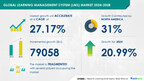
NEW YORK, Jan. 31, 2025 /PRNewswire/ — Report with market evolution powered by AI – The global learning management system (lms) market size is estimated to grow by USD 79.06 billion from 2024-2028, according to Technavio. The market is estimated to grow at a CAGR of  27.17%  during the forecast period. Adoption of NGDLE in academic sector is driving market growth, with a trend towards increasing popularity of cloud-based LMS. However, interoperability issues  poses a challenge.Key market players include Adrenalin eSystems Ltd., Blackboard Inc., Sprout On Web Pty. Ltd., Clearlake Capital Group L.P., D2L Inc., Degreed Inc., Docebo Inc., Epignosis LLC, GENTLAB S.R.L, Instructure Holdings Inc., Looop Online Ltd., Oracle Corp., Pearson Plc, PowerSchool Holdings Inc., SAP SE, Skillsoft Corp., Tovuti Inc., Violet InfoSystems Pvt. Ltd., Workday Inc., and Xperiencify.

Key insights into market evolution with AI-powered analysis. Explore trends, segmentation, and growth drivers- View Free Sample PDF

Learning Management System (Lms) Market Scope

Report Coverage

Details

Base year

2023

Historic period

2018 – 2022

Forecast period

2024-2028

Growth momentum & CAGR

Accelerate at a CAGR of 27.17%

Market growth 2024-2028

USD 79058 million

Market structure

Fragmented

YoY growth 2022-2023 (%)

20.99

Regional analysis

North America, Europe, APAC, South America, and Middle East and Africa

Performing market contribution

North America at 31%

Key countries

US, China, UK, Germany, and Canada

Key companies profiled

Adrenalin eSystems Ltd., Blackboard Inc., Sprout On Web Pty. Ltd., Clearlake Capital Group L.P., D2L Inc., Degreed Inc., Docebo Inc., Epignosis LLC, GENTLAB S.R.L, Instructure Holdings Inc., Looop Online Ltd., Oracle Corp., Pearson Plc, PowerSchool Holdings Inc., SAP SE, Skillsoft Corp., Tovuti Inc., Violet InfoSystems Pvt. Ltd., Workday Inc., and Xperiencify

Market Driver

In today’s digitalized business landscape, Learning Management Systems (LMS) have become essential tools for upskilling and reskilling employees, as well as delivering online education to individual learners. The trend towards remote work and digital learning has accelerated the adoption of LMS platforms, offering flexible, cost-effective solutions for businesses and educational institutions. Advanced technologies like artificial intelligence (AI), 5G, and virtual reality are expanding LMS offerings, providing personalized learning experiences and real-time interaction. Key vendors like Duolingo, Coursera, Cerego, Knewton, and ALEKS lead the market with user-friendly interfaces, AI-driven personalized learning, and gamification. Corporate users and higher education segments are the primary adopters, with blended learning models and multichannel learning gaining popularity. LMS platforms cater to various preferences and business operations, offering on-premises and cloud-based solutions, mobile learning, and open online courses. The market is expected to continue growing, driven by the increasing demand for lifelong learning, reduced spending, and the need for talent development in the digital age. 

In today’s business landscape, cloud-based Learning Management Systems (LMS) have gained significant popularity due to their numerous advantages. Traditional LMS models require organizations to manage servers on their premises, leading to high costs and complexities. In contrast, cloud-based LMS eliminates the need for on-site servers and is typically hosted on the provider’s servers. This results in a lower initial investment, as the purchase is usually subscription-based. Moreover, cloud-based LMS implementation costs are significantly reduced, as there is no need for installation of programs or devotion of time and resources. Furthermore, cloud-based e-learning solutions can be set up quickly and deployed faster than traditional LMS. These factors make cloud-based LMS an attractive option for businesses looking to adopt efficient and cost-effective e-learning solutions. 

Request Sample of our comprehensive report now to stay ahead in the AI-driven market evolution!

Market Challenges

In today’s digitalized business landscape, industries are embracing LMS platforms to upskill employees and offer flexible training programs. Remote work and education have become the new norm, leading to an increase in demand for digital learning solutions. LMS platforms provide cost-effective, cloud-based and on-premises options for corporate users and educational institutions. Advanced technologies like AI, 5G, and virtual reality enhance learning outcomes by offering personalized, interactive, and real-time experiences. Key vendors like Duolingo, Coursera, Cerego, Knewton, and ALEKS are expanding their offerings through strategic partnerships and user-friendly interfaces. Millennials and Gen Z prefer mobile learning solutions, making smartphones and communication devices essential tools for education. LMS platforms offer blended learning models, face-to-face instruction, and online learning activities to cater to various user preferences and business operations. Corporate users seek AI-driven personalized learning, gamification, and social learning capabilities to engage employees and improve knowledge retention. Enterprise learning, personalized learning, and multichannel learning are essential for talent development in the digital age. LMS platforms offer content accessibility through e-books, multimedia resources, and interactive modules, making education more accessible and convenient. Despite budget constraints and reduced spending on training programs, LMS platforms offer cost-effective solutions for businesses and individuals. The LMS market is expected to grow as digital transformation continues to reshape business operations and education. Virtual assistants, chatbots, and AI-powered avatars provide additional support, making LMS platforms versatile and efficient learning solutions.The eLearning industry relies heavily on Learning Management Systems (LMS) for delivering and managing digital training content. However, the lack of standardization in eLearning content can pose challenges during LMS integration. Although LMS platforms offer compatibility, connecting them to existing systems is not always straightforward. This is due to the fact that not all eLearning standards are supported by both the LMS and the existing system. As a result, schools may face difficulties in reusing courses developed by different vendors, as the content structures and supported features can vary. It is essential for organizations to carefully consider these compatibility issues when selecting an LMS and integrating it with their existing systems.

Discover how AI is revolutionizing market trends- Get your access now!

Segment Overview 

This learning management system (lms) market report extensively covers market segmentation by  

End-user 1.1 Academic1.2 CorporateDeployment 2.1 On-premises2.2 On-cloudGeography 3.1 North America3.2 Europe3.3 APAC3.4 South America3.5 Middle East and Africa

1.1 Academic-  The Learning Management System (LMS) market is experiencing growth due to the increasing popularity of online learning and the expansion of higher education institutions offering digital courses. In the academic sector, the higher education segment dominates the market, with universities recruiting IT staff to increase their online course offerings. The rise of m-learning in schools and colleges necessitates LMS solutions compatible with mobile devices. Students and teachers seek online certificate programs for skill development and competitive edge. Vendors like Degreed Inc. Offer role-based skill development and collaborative learning experiences. Integration of technologies such as classroom management systems, analytics, and LCMS with LMS drives demand in higher education. Open-source LMS solutions, such as Moodle, capture significant revenue in the academic sector. Blended learning methods in K-12 sector require LMS for online course materials. However, challenges include the lack of operating knowledge for LMS among teachers and students, particularly in emerging economies.

Download a Sample of our comprehensive report today to discover how AI-driven innovations are reshaping competitive dynamics

Research Analysis

The Learning Management System (LMS) market is experiencing significant growth in the digitalization of industries, with remote learning and digital education becoming increasingly popular. LMS platforms offer flexible learning options for individuals and educational institutions, enabling access to a vast array of online courses and interactive tutorials. Blended learning models combine traditional classroom instruction with digital content, providing a more comprehensive learning experience. Smartphones and communication devices have made mobile education a viable option, allowing learners to access educational content anywhere, anytime. Open online courses and certifications offer upskilling and reskilling opportunities for the business landscape, while progress tracking and individualized learning plans ensure that learners stay on track. With the rise of e-learning, educational institutions are embracing LMS platforms to enhance their offerings and meet the evolving needs of students. Internet connectivity is essential for accessing these platforms and educational content, making it a critical component of the digital learning experience.

Market Research Overview

The Learning Management System (LMS) market is experiencing significant growth due to the digitalization of industries and the shift towards remote work and learning. LMS platforms have become essential tools for delivering digital learning, online courses, and blended learning models. These versatile platforms offer flexible learning options, advanced technologies like AI, and mobile learning solutions to upskill employees and expand educational offerings. Digital transformation and reduced spending have led businesses to adopt cost-effective cloud-based LMS platforms. Corporate users segment is a major driver of the market, with enterprise learning, personalized learning, and multichannel learning gaining popularity. AI-driven personalized learning, gamification, and social learning capabilities are enhancing learning outcomes and engagement. Educational institutions, from schools to universities, are also embracing LMS platforms for online education and distance learning. Millennials and Gen Z prefer e-learning tools and open online courses for their convenience and accessibility. The market is expanding with strategic partnerships, product innovation, and user-friendly interfaces. Advanced technologies like AI, 5G technology, and virtual reality are being integrated into LMS platforms to provide real-time interaction, feedback, and content accessibility. The market is expected to grow further with the increasing use of smartphones, communication devices, and e-learning tools in the corporate sector. Despite budget constraints, the demand for LMS platforms is increasing due to their cost-effectiveness and ability to provide quality services, developed infrastructure, and network infrastructure. The market is also witnessing in demand for AI-based LMS platforms, virtual assistant, chatbot, and AI-powered avatar to cater to the preferences and behavior of individual learners. The business landscape is evolving, and LMS platforms are becoming essential for talent development and knowledge retention. The market is expected to continue growing with the increasing use of interactive platforms, smart learning platforms, mobile education, online tutorials, and e-learning solutions. The future of education is digital, and LMS platforms are leading the way.

Table of Contents:

1 Executive Summary
2 Market Landscape
3 Market Sizing
4 Historic Market Size
5 Five Forces Analysis
6 Market Segmentation

End-userAcademicCorporateDeploymentOn-premisesOn-cloudGeographyNorth AmericaEuropeAPACSouth AmericaMiddle East And Africa

7 Customer Landscape
8 Geographic Landscape
9 Drivers, Challenges, and Trends
10 Company Landscape
11 Company Analysis
12 Appendix

About Technavio

Technavio is a leading global technology research and advisory company. Their research and analysis focuses on emerging market trends and provides actionable insights to help businesses identify market opportunities and develop effective strategies to optimize their market positions.

With over 500 specialized analysts, Technavio’s report library consists of more than 17,000 reports and counting, covering 800 technologies, spanning across 50 countries. Their client base consists of enterprises of all sizes, including more than 100 Fortune 500 companies. This growing client base relies on Technavio’s comprehensive coverage, extensive research, and actionable market insights to identify opportunities in existing and potential markets and assess their competitive positions within changing market scenarios.

Contacts

Technavio Research
Jesse Maida
Media & Marketing Executive
US: +1 844 364 1100
UK: +44 203 893 3200
Email: media@technavio.com
Website: www.technavio.com/

View original content to download multimedia:https://www.prnewswire.com/news-releases/learning-management-system-lms-market-to-grow-by-usd-79-06-billion-2024-2028-adoption-of-ngdle-in-academic-sector-boosting-growth-with-ai-redefining-the-market-landscape—technavio-302364755.html

SOURCE Technavio

Continue Reading
Click to comment

Leave a Reply

Your email address will not be published. Required fields are marked *

Technology

Football Tournament Season Sparks Global Social Connection Surge as 3Fun Reports Growth Across Key Markets

Published

on

By

NEW YORK, July 18, 2026 /PRNewswire/ — As the World Cup enters its final stage and fans celebrate across the globe, new data from 3Fun, the leading dating app for open-minded singles and partners, reveals that the World Cup’s impact extends far beyond the stadium. The tournament has ignited a massive surge in global social activity, with users increasingly turning to the platform to translate sporting euphoria into personal connections.

The “Celebratory Intimacy” Effect: Why Winning Drives Matching

Psychological research has long suggested that major sports victories do more than just boost national pride; they influence human biology and intimacy. Studies indicate that watching a favorite team win can temporarily elevate testosterone levels in fans, leading to a surge in sexual desire and “celebratory intimacy”. This theory is vividly reflected in 3Fun’s latest performance metrics.

Compared with the previous 20-day period, 3Fun saw a 6.13% increase in Daily Active Users (DAU) during the peak of the World Cup season (June 23 – July 12), adding more than 275,000 active participants. The platform’s “heat” was further evidenced by an additional 446,491 messages sent, while the user match rate jumped by 5.71%, resulting in nearly 50,000 new connections.

Spain and Argentina Lead the “Lust for Victory”

The data shows a direct correlation between success on the pitch and activity on 3Fun. Nations with deep football cultures and strong tournament performances saw the highest growth:

Spain: Witnessed a staggering 37.56% surge in new users.Argentina: Followed with a 26.62% increase.France & Mexico: Saw growth rates of 25.44% and 21.42% respectively.

In the U.S., cities like Houston (+8.98%) and New York (+7.45%) led the way. This trend aligns with a broader cultural shift: recent 3Fun data reveals that 69% of Americans report a growing interest in non-traditional relationships, with 77% of seekers preferring dating apps to find compatible partners.

Digital Jet-Setting: 3Fun’s “Roaming” Feature Becomes a Fan Favorite

While millions traveled for the games, many more “traveled” virtually. 3Fun’s new Roaming feature, currently in gray-scale testing, allows users to explore connections beyond their current location by virtually discovering communities in other cities.

The top 10 “Roaming” destinations during the Football Tournament  season reveal where the world’s social interest was concentrated:

Sao Paulo, Brazil (17.35% of total roaming volume)New York, USA (14.82%)Las Vegas, USA (11.37%)Los Angeles, USA (11.19%)London, UK (9.89%)Rio de Janeiro, Brazil (7.40%)Houston, USA (7.36%)Dallas, USA (7.18%)Miami, USA (6.85%)Chicago, USA (6.60%).

The dominance of Brazilian cities like Sao Paulo and Rio de Janeiro highlights a “digital pilgrimage” to the spiritual home of football, where users sought to connect with the local energy and like-minded fans.

3Fun Insight: Connection Beyond the Game

“Major global events like the World Cup bring people together far beyond the borders of the pitch,” said Daniel Morgan, 3Fun’s Director of Social Trends. “Our data shows that users aren’t just looking for scores; they are looking for meaningful, shared experiences. Whether through virtual roaming or local matching, these events create unique windows for people to explore their desires in a safe, celebratory, and inclusive community”.

Daniel further noted, “With 72% of users noticing growing acceptance of diverse relationship styles, global sports events such as the World Cup represent a moment when people feel more open to meeting others and exploring new forms of connection”.

About 3Fun: With over 10 million downloads and 3 million verified active users worldwide, 3Fun is the leading dating app for open-minded singles and partners to meet like-minded people. The platform provides a safe and inclusive space to explore ethical open relationships and polyamory, fostering community and connection without judgment. 

Disclaimer: 3Fun is not affiliated with, endorsed by, or sponsored by FIFA, the World Cup, or any official World Cup organizing body. All references to the tournament are descriptive or for informational and topical context only.

View original content:https://www.prnewswire.com/news-releases/football-tournament-season-sparks-global-social-connection-surge-as-3fun-reports-growth-across-key-markets-302828995.html

SOURCE 3Fun

Continue Reading

Technology

Best AI Design Tools (2026): CapCut Named a Top Choice for Creating Images and Marketing Assets by Software Experts

Published

on

By

NEW YORK, July 18, 2026 /PRNewswire/ — Software Experts has recognized CapCut as a top choice among AI design tools for 2026, citing its AI Design Studio as a standout resource for creating images and marketing assets. The recognition points to the platform’s combination of automated layout generation, image editing, and campaign focused features built for marketers, e-commerce sellers, and content creators.

Best AI Design Tools

CapCut AI Design Studio – a web based design workspace that uses AI to help users create ads, product visuals, and branded content without prior design experience.

Core Capabilities of the AI Design Studio

The AI Design Studio is built around a conversational, infinite canvas that allows users to work with an AI design agent in real time. Instead of starting from a blank template, users type a prompt, upload reference images, and receive layout options generated automatically.

The latest version, Design 2.0, brings references, drafts, assets, and edits into a single workspace. Features include pencil prompting for visual editing, smart layer split for separating subjects and backgrounds, and a One More function that generates new creative directions from an existing design. Users can circle, brush, or mark up an image directly to guide how the AI adjusts a design, rather than relying only on written prompts.

An inspiration hub with built in assets and license free images is also part of the workspace, helping users start projects without sourcing outside materials. Layers for text, subjects, and backgrounds remain editable throughout the process, which allows for adjustments without regenerating an entire design from scratch.

Applications for E-Commerce and Marketing Teams

The AI Design Studio supports several common business use cases, including product content creation, trend based design remixing, and clothing visualization for fashion brands. These features are designed to reduce the time spent on repetitive production tasks, particularly for teams that need to update visuals frequently.

For e-commerce sellers, the tool can generate product main images, banners, and packaging designs from a single uploaded photo, and supports batch replacement across shared backgrounds. A seller managing multiple product lines can apply the same background and layout across different items with one click, rather than recreating each asset individually.

Fashion brands can use the AI clothing try-on feature to visualize how garments appear on different models, helping with catalog updates during seasonal campaigns such as Black Friday. Marketing and social teams can generate assets in multiple styles and resize them automatically for different platforms, which helps maintain consistency across channels without manual reformatting. The trend remixing feature also allows brands to reference the structure of a popular design while keeping the content original to their own products.

Design Automation Powered by Seedream 5.0

For marketing posters and layout heavy assets, the AI Design Studio incorporates the Seedream 5.0 model, which is ranked first on Artificial Analysis’ Text-to-Image Leaderboard. The model is used to arrange visual elements, generate multiple layout variations, and handle typesetting automatically based on uploaded product images.

This approach is intended to reduce the manual work involved in formatting marketing materials. Uploading one or more product photos allows the system to generate several layout options, positioning text, imagery, and other elements without requiring manual placement. Once a layout is generated, users can continue refining it with stickers, filters, or additional effects within the same workspace.

The process is designed to move from prompt to a finished, ready to use asset without requiring separate design software. For teams producing large volumes of seasonal or promotional content, this can reduce the number of tools involved in a single campaign.

Why AI Design Tools Matter for Small Teams

AI design tools are becoming useful because many teams need more visual content than traditional workflows can comfortably support. The Software Experts review notes that marketers, creators, and small businesses often need product images, social graphics, banners, email headers, event posters, and campaign visuals on tight timelines.

For small teams, the main advantage is not simply automation. It is the ability to get to a workable draft faster. Starting from a blank canvas can slow down campaign production, especially when a team is managing several platforms or product lines. AI-assisted design tools can generate starting points, resize assets, suggest layouts, and help keep visuals consistent across channels.

Access and Getting Started

The AI Design Studio is accessible through CapCut desktop by selecting Design Agent from the main dashboard. Users enter a text prompt describing the desired output, optionally upload reference images, and review the generated results.

A typical workflow might involve uploading a reference photo and entering a detailed prompt describing a desired style, color palette, or setting. The AI then generates initial design options based on that input. The built in editor allows for further adjustments, including color changes, auto cutout, element removal, and text overlays, before the final image is downloaded in high resolution.

Software Experts noted that the AI Design Studio is suited to a range of users, from e-commerce sellers managing large catalogs to individual creators producing social media content, as well as marketing teams handling multiple campaigns at once. The tool is offered as part of CapCut’s existing platform, with pricing details available directly through CapCut.

Readers can find the full review at Software Experts.

About CapCut

CapCut is an AI-powered photo and video editing platform designed to make high-quality video creation accessible across devices. The platform supports creators, businesses, and everyday users with tools for video editing, AI video generation, captions, templates, audio, and visual editing. CapCut is available across mobile, web, desktop, and iPad experiences, helping users create, edit, and prepare video content for social media, marketing, education, and personal projects.

About Software Experts: Software Experts delivers in-depth news on the digital tools shaping today’s consumer experience. As an affiliate, Software Experts may earn commissions from sales generated using links provided.

View original content:https://www.prnewswire.com/news-releases/best-ai-design-tools-2026-capcut-named-a-top-choice-for-creating-images-and-marketing-assets-by-software-experts-302828625.html

SOURCE SoftwareExperts.org

Continue Reading

Technology

Best AI Design Tools (2026): CapCut Named a Top Choice for Creating Images and Marketing Assets by Software Experts

Published

on

By

NEW YORK, July 18, 2026 /PRNewswire/ — Software Experts has recognized CapCut as a top choice among AI design tools for 2026, citing its AI Design Studio as a standout resource for creating images and marketing assets. The recognition points to the platform’s combination of automated layout generation, image editing, and campaign focused features built for marketers, e-commerce sellers, and content creators.

Best AI Design Tools

CapCut AI Design Studio – a web based design workspace that uses AI to help users create ads, product visuals, and branded content without prior design experience.

Core Capabilities of the AI Design Studio

The AI Design Studio is built around a conversational, infinite canvas that allows users to work with an AI design agent in real time. Instead of starting from a blank template, users type a prompt, upload reference images, and receive layout options generated automatically.

The latest version, Design 2.0, brings references, drafts, assets, and edits into a single workspace. Features include pencil prompting for visual editing, smart layer split for separating subjects and backgrounds, and a One More function that generates new creative directions from an existing design. Users can circle, brush, or mark up an image directly to guide how the AI adjusts a design, rather than relying only on written prompts.

An inspiration hub with built in assets and license free images is also part of the workspace, helping users start projects without sourcing outside materials. Layers for text, subjects, and backgrounds remain editable throughout the process, which allows for adjustments without regenerating an entire design from scratch.

Applications for E-Commerce and Marketing Teams

The AI Design Studio supports several common business use cases, including product content creation, trend based design remixing, and clothing visualization for fashion brands. These features are designed to reduce the time spent on repetitive production tasks, particularly for teams that need to update visuals frequently.

For e-commerce sellers, the tool can generate product main images, banners, and packaging designs from a single uploaded photo, and supports batch replacement across shared backgrounds. A seller managing multiple product lines can apply the same background and layout across different items with one click, rather than recreating each asset individually.

Fashion brands can use the AI clothing try-on feature to visualize how garments appear on different models, helping with catalog updates during seasonal campaigns such as Black Friday. Marketing and social teams can generate assets in multiple styles and resize them automatically for different platforms, which helps maintain consistency across channels without manual reformatting. The trend remixing feature also allows brands to reference the structure of a popular design while keeping the content original to their own products.

Design Automation Powered by Seedream 5.0

For marketing posters and layout heavy assets, the AI Design Studio incorporates the Seedream 5.0 model, which is ranked first on Artificial Analysis’ Text-to-Image Leaderboard. The model is used to arrange visual elements, generate multiple layout variations, and handle typesetting automatically based on uploaded product images.

This approach is intended to reduce the manual work involved in formatting marketing materials. Uploading one or more product photos allows the system to generate several layout options, positioning text, imagery, and other elements without requiring manual placement. Once a layout is generated, users can continue refining it with stickers, filters, or additional effects within the same workspace.

The process is designed to move from prompt to a finished, ready to use asset without requiring separate design software. For teams producing large volumes of seasonal or promotional content, this can reduce the number of tools involved in a single campaign.

Why AI Design Tools Matter for Small Teams

AI design tools are becoming useful because many teams need more visual content than traditional workflows can comfortably support. The Software Experts review notes that marketers, creators, and small businesses often need product images, social graphics, banners, email headers, event posters, and campaign visuals on tight timelines.

For small teams, the main advantage is not simply automation. It is the ability to get to a workable draft faster. Starting from a blank canvas can slow down campaign production, especially when a team is managing several platforms or product lines. AI-assisted design tools can generate starting points, resize assets, suggest layouts, and help keep visuals consistent across channels.

Access and Getting Started

The AI Design Studio is accessible through CapCut desktop by selecting Design Agent from the main dashboard. Users enter a text prompt describing the desired output, optionally upload reference images, and review the generated results.

A typical workflow might involve uploading a reference photo and entering a detailed prompt describing a desired style, color palette, or setting. The AI then generates initial design options based on that input. The built in editor allows for further adjustments, including color changes, auto cutout, element removal, and text overlays, before the final image is downloaded in high resolution.

Software Experts noted that the AI Design Studio is suited to a range of users, from e-commerce sellers managing large catalogs to individual creators producing social media content, as well as marketing teams handling multiple campaigns at once. The tool is offered as part of CapCut’s existing platform, with pricing details available directly through CapCut.

Readers can find the full review at Software Experts.

About CapCut

CapCut is an AI-powered photo and video editing platform designed to make high-quality video creation accessible across devices. The platform supports creators, businesses, and everyday users with tools for video editing, AI video generation, captions, templates, audio, and visual editing. CapCut is available across mobile, web, desktop, and iPad experiences, helping users create, edit, and prepare video content for social media, marketing, education, and personal projects.

About Software Experts: Software Experts delivers in-depth news on the digital tools shaping today’s consumer experience. As an affiliate, Software Experts may earn commissions from sales generated using links provided.

View original content:https://www.prnewswire.com/news-releases/best-ai-design-tools-2026-capcut-named-a-top-choice-for-creating-images-and-marketing-assets-by-software-experts-302828625.html

SOURCE SoftwareExperts.org

Continue Reading

Trending