Connect with us

Technology

Retail Market in Philippines to grow by USD 66.35 Billion (2024-2028), driven by rising demand for convenience food products, Report on AI-driven market transformation – Technavio

Published

on

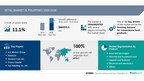
NEW YORK, Jan. 30, 2025 /PRNewswire/ — Report with the AI impact on market trends – The retail market in philippines size is estimated to grow by USD 66.35 billion from 2024-2028, according to Technavio. The market is estimated to grow at a CAGR of  11.1%  during the forecast period. Growing demand for convenience food products is driving market growth, with a trend towards in sales through online distribution channels. However, threat from counterfeit products  poses a challenge. Key market players include A.S. Watson Group, Abenson, Amazon.com Inc., Cosco Capital, Fast Retailing Co. Ltd., Golden ABC, Inter IKEA Holding BV, McDonald Corp., Mercury Drug Corp., Metro Retail Stores Group, New City Commercial Corp., Nike Inc., Robinsons Retail Holdings Inc., Seven and i Holdings Co. Ltd., SM Investments Corp., SSI Group, WOW Group, and Wilcon Depot.

Key insights into market evolution with AI-powered analysis. Explore trends, segmentation, and growth drivers- View Free Sample PDF

Retail Market In Philippines Scope

Report Coverage

Details

Base year

2023

Historic period

2018 – 2022

Forecast period

2024-2028

Growth momentum & CAGR

Accelerate at a CAGR of 11.1%

Market growth 2024-2028

USD 66353.1 million

Market structure

Fragmented

YoY growth 2022-2023 (%)

9.7

Regional analysis

Philippines

Performing market contribution

APAC at 100%

Key countries

Philippines and APAC

Key companies profiled

A.S. Watson Group, Abenson, Amazon.com Inc., Cosco Capital, Fast Retailing Co. Ltd., Golden ABC, Inter IKEA Holding BV, McDonald Corp., Mercury Drug Corp., Metro Retail Stores Group, New City Commercial Corp., Nike Inc., Robinsons Retail Holdings Inc., Seven and i Holdings Co. Ltd., SM Investments Corp., SSI Group, WOW Group, and Wilcon Depot

Market Driver

The retail market in the Philippines is thriving with various trends shaping the industry. Big-box retailers are expanding their brick-and-mortar stores, while e-commerce and mobile commerce continue to grow. Data analytics and artificial intelligence are being used for personalized marketing and inventory management. Multichannel retailing, online buying, and fast delivery are becoming the norm. Warehouse automation, cross-selling, upselling, and loyalty programs are key strategies for retailers. Food and beverages, including supermarkets and hypermarkets, convenience stores, and specialty food stores, are popular. Motor vehicle dealers, parts dealers, gasoline stations, and miscellaneous store retailers also contribute to the market. Technology trends like AI, machine learning, chatbots, AR, and VR are transforming retail experiences. Healthy eating and convenience in shopping are major consumer preferences. Ecommerce, nonstore retailers, building materials dealers, garden equipment dealers, pharmacies, healthcare stores, sporting goods stores, hobby stores, musical instrument stores, bookstores, and various other retail segments are also part of this dynamic market. 

In the Philippine retail market, there’s a notable growth in online sales of consumer goods. Established and private retailers have capitalized on this trend, selling their merchandise via shopping portals. The elimination of physical stores, inventory, and salespeople through online channels has led retailers to prioritize digital sales. Additionally, the rise in internet and smartphone usage in the country provides a significant opportunity for retailers to expand their online presence. Consumers also prefer online shopping due to its time-saving and practical advantages, particularly for their daily FMCG needs. 

Request Sample of our comprehensive report now to stay ahead in the AI-driven market evolution!

 Market Challenges

The retail market in the Philippines faces various challenges in today’s dynamic business environment. Traditional brick-and-mortar stores compete with big-box retailers, e-commerce, mobile commerce, and various forms of online buying. Data analytics and artificial intelligence are essential for personalized marketing and multichannel retailing. Fast delivery, inventory management, and last-mile delivery are crucial for customer convenience. Several retail sectors, including supermarkets and hypermarkets, convenience stores, motor vehicle dealers, parts dealers, gasoline stations, and miscellaneous store retailers, are adapting to these trends. E-commerce and nonstore retailers, such as cosmetics stores, clothing stores, electronics stores, appliance stores, furniture stores, home furnishings stores, department stores, general merchandise stores, and online stores, are investing in AI, machine learning, chatbots, augmented reality, and virtual reality for a seamless shopping experience. Food and beverage retailers, including specialty food stores and hobby stores, are focusing on healthy eating and convenience. Pharmacies and healthcare stores, sporting goods stores, and hobby stores are exploring new technologies like robotics, drone deliveries, and omnichannel shopping. Overall, retailers must embrace technology, provide fast and convenient services, and offer personalized experiences to stay competitive in the Philippine market.The retail market in the Philippines faces a considerable challenge from the proliferation of counterfeit goods. Fake products, ranging from Fast-Moving Consumer Goods (FMCG) to electronics, are widely available and pose a significant threat to both retailers and genuine manufacturers. These imitations, often sold through online platforms, are driving down prices with their lower quality and durability. This influx of counterfeits is making it increasingly difficult for customers to distinguish between genuine and fake items, negatively impacting sales for major retailers and damaging the reputation of legitimate brands. To stay competitive, counterfeiters price their products attractively, but the long-term costs to consumers and businesses are substantial.

Discover how AI is revolutionizing market trends- Get your access now!

Segment Overview 

This retail market in Philippines report extensively covers market segmentation by  

Product 1.1 Food and beverages1.2 Personal and household care1.3 Apparel and footwear1.4 Electrical and electronics1.5 OthersDistribution Channel2.1 Offline2.2 OnlineGeography 3.1 APAC

1.1 Food and beverages-  The retail market in the Philippines is witnessing growth in the food and beverages sector due to rising commodity prices and increasing purchasing power in regions like Manila and Calabarzon. Consumers are showing a growing preference for imported goods, particularly processed foods, which is projected to register the highest growth rate. Mini marts are gaining popularity in urban areas and expanding into smaller cities, focusing on instant food and beverage products. Ready-to-eat food products, such as protein balls, trail mix, and chilled ready meals, are popular choices. Freshly prepared hotdogs and steamers are also available daily in retail stores, attracting customers. These trends are expected to fuel the growth of the food and beverages segment in the Philippines during the forecast period.

Download a Sample of our comprehensive report today to discover how AI-driven innovations are reshaping competitive dynamics

Research Analysis

The retail market in the Philippines is a vibrant and diverse sector, encompassing various formats such as big-box retailers, brick-and-mortar stores, e-commerce platforms, and mobile commerce. Consumers in the Philippines increasingly prefer the convenience of online buying, with fast delivery and inventory management being key factors. Retailers are leveraging data analytics, artificial intelligence, and machine learning to offer personalized marketing, cross-selling, and upselling opportunities. Multichannel retailing is gaining popularity, allowing customers to shop seamlessly across different channels. The retail landscape includes various segments such as food and beverages, motor vehicle dealers, parts dealers, gasoline stations, miscellaneous store retailers, cosmetics stores, and personal care stores. Innovative technologies like chatbots, augmented reality, and virtual reality are being adopted to enhance the shopping experience.

Market Research Overview

The retail market in the Philippines is a vibrant and diverse sector, encompassing various formats such as big-box retailers, brick-and-mortar stores, e-commerce, mobile commerce, and nonstore retailers. These channels offer a wide range of products, including food and beverages, electronics, appliances, furniture, clothing, cosmetics, and more. Convenience is a key driver in the Philippine retail industry, with an increasing focus on fast delivery, inventory management, and last-mile delivery solutions. Technology plays a significant role, with data analytics, artificial intelligence, personalized marketing, and multichannel retailing becoming increasingly important. Consumers can now shop online, in-store, or through their mobile devices, and retailers are leveraging tools like cross-selling, upselling, loyalty programs, and chatbots to enhance the shopping experience. Additionally, emerging technologies like augmented reality, virtual reality, and robotics are being explored to create innovative retail solutions. The retail landscape in the Philippines continues to evolve, offering consumers a wide range of convenient and personalized shopping options.

Table of Contents:

1 Executive Summary
2 Market Landscape
3 Market Sizing
4 Historic Market Size
5 Five Forces Analysis
6 Market Segmentation

ProductFood And BeveragesPersonal And Household CareApparel And FootwearElectrical And ElectronicsOthersDistribution ChannelOfflineOnlineGeographyAPAC

7 Customer Landscape
8 Geographic Landscape
9 Drivers, Challenges, and Trends
10 Company Landscape
11 Company Analysis
12 Appendix

About Technavio

Technavio is a leading global technology research and advisory company. Their research and analysis focuses on emerging market trends and provides actionable insights to help businesses identify market opportunities and develop effective strategies to optimize their market positions.

With over 500 specialized analysts, Technavio’s report library consists of more than 17,000 reports and counting, covering 800 technologies, spanning across 50 countries. Their client base consists of enterprises of all sizes, including more than 100 Fortune 500 companies. This growing client base relies on Technavio’s comprehensive coverage, extensive research, and actionable market insights to identify opportunities in existing and potential markets and assess their competitive positions within changing market scenarios.

Contacts

Technavio Research
Jesse Maida
Media & Marketing Executive
US: +1 844 364 1100
UK: +44 203 893 3200
Email: media@technavio.com
Website: www.technavio.com/

View original content to download multimedia:https://www.prnewswire.com/news-releases/retail-market-in-philippines-to-grow-by-usd-66-35-billion-2024-2028-driven-by-rising-demand-for-convenience-food-products-report-on-ai-driven-market-transformation—technavio-302363284.html

SOURCE Technavio

Continue Reading
Click to comment

Leave a Reply

Your email address will not be published. Required fields are marked *

Technology

CGTN: How the SCO opens up opportunities for regional development as it turns 25

Published

on

By

CGTN published an article exploring how the SCO has evolved from a security-focused mechanism into a comprehensive regional cooperation platform covering areas such as economic development and technological innovation and what role China has played in advancing cooperation within the organization.

BEIJING, Sept. 2, 2026 /PRNewswire/ — Deep in Uzbekistan’s Jizzakh Region, a vast solar farm is transforming the landscape of the Gobi Desert. Tens of thousands of photovoltaic panels stretch across the barren land, capturing sunlight to generate clean energy.

In March, Phase I of the power plant project, built and operated by a Chinese company, began commercial operations. Once fully completed, the project is expected to generate 1.1 billion kilowatt-hours of clean electricity annually, enough to meet the needs of around 400,000 residents.

The solar plant is one of the latest examples of China-SCO cooperation translating into tangible development outcomes. Over the past 25 years, the Shanghai Cooperation Organization (SCO) has expanded from a regional security mechanism into a broad platform for cooperation, with development becoming an increasingly important focus.

Prioritizing development to boost shared prosperity

On Tuesday, Chinese President Xi Jinping attended the 26th Meeting of the Council of Heads of State of the SCO Member States, which coincided with the 25th anniversary of the organization’s founding.

During his speech, Xi put forward four proposals for advancing the SCO’s future development. One key proposal he emphasized was to prioritize development and work toward shared prosperity among SCO member states.

He also highlighted the Shanghai Spirit, featuring mutual trust, mutual benefit, equality, consultation, respect for diversity of civilizations and pursuit of common development, saying the Shanghai Spirit is the organization’s most valuable spiritual asset.

Over the past 25 years, guided by the Shanghai Spirit, the SCO has seen growing trade, deeper investment ties and stronger regional connectivity, creating new opportunities for economic development across the region.

The China-Kyrgyzstan-Uzbekistan railway, for instance, shows how infrastructure cooperation is driving regional development. In December 2024, its construction officially began. Once completed, the route will become a major transport corridor linking China with Central Asia and the wider Eurasian continent, greatly improving trade efficiency and creating broader economic opportunities.

Various cooperation platforms are also facilitating closer economic exchanges among SCO states. Last month, a local economic and trade cooperation conference was held in Bishkek, bringing together more than 100 companies. The event resulted in 193 cooperation agreements and trade deals worth around 1.74 billion yuan ($259 million). Meanwhile, the China-SCO Digital Economy Cooperation Platform, launched in Tianjin one year ago, has already facilitated 29 cross-border cooperation projects covering areas such as computing infrastructure, digital trade and commercial aerospace.

Over the past 25 years, the SCO has evolved into a major regional cooperation platform. Its economic cooperation is shifting from individual projects to stronger institutional frameworks and from bilateral efforts to multilateral coordination, paving the way for more integrated, high-quality and sustainable development across the region.

China: A strong promoter of SCO cooperation

At Tuesday’s summit, Xi said China views the SCO as a priority area for high-quality Belt and Road cooperation and for implementing the Global Development Initiative.

He announced that China would continue hosting events such as the SCO Digital Economy Forum and the SCO Agricultural Expo and will develop an international AI application cooperation center with SCO countries, implement 100 technological cooperation projects with other SCO countries in the next three years and nurture more green industry talents through China-SCO cooperation.

As a founding member of the SCO, China has been a key driver of practical cooperation within the organization.

Shortly after the SCO was founded, China proposed advancing trade and investment facilitation among member states. In 2003, the SCO adopted a multilateral economic cooperation program featuring a three-stage roadmap: promoting trade and investment facilitation in the short term, building stable and transparent rules in the medium term and gradually enabling freer flows of goods, capital, services and technology in the long term.

China has also provided financial support for regional cooperation projects. As of July 2025, China’s accumulated investment in other SCO member states had exceeded $84 billion, making it the largest source of investment and financing for Tajikistan, Kyrgyzstan, Uzbekistan and Pakistan.

At last year’s Tianjin Summit, China proposed establishing cooperation platforms in energy, green industries and the digital economy, along with centers for scientific innovation, higher education and vocational education. All six initiatives have since been launched, generating more than 160 cooperation projects covering clean energy, digital applications and joint talent development.

Egor Prokhin, a researcher at Russia’s Higher School of Economics, said China has played a central role in the SCO’s development.

“The Belt and Road Initiative has helped improve transportation and trade connectivity among Eurasian countries, while the Global Development Initiative has contributed to economic growth and improved livelihoods,” he said, adding these initiatives closely align with the development priorities of SCO members, creating opportunities for businesses and bringing tangible benefits to people across the region.

For more information, please click here:
https://news.cgtn.com/news/2026-09-01/How-SCO-opens-up-opportunities-for-regional-development-as-it-turns-25-1Q5x5WHsoyk/p.html

SOURCE CGTN

Continue Reading

Technology

Artery Launches AT32F406/F408 Mainstream MCU Series for Smart Control and High-Speed Data

Published

on

By

TAIPEI, Sept. 2, 2026 /PRNewswire/ — Artery Technology recently launched its new AT32F406/F408 mainstream microcontroller (MCU) series. Powered by the Arm® Cortex®-M4F core with a clock speed of up to 216 MHz, the new series features large memory capacity, extensive communication interfaces, and high-speed analog peripherals. It is designed for a wide range of applications, including gaming keyboards, industrial automation, smart control, USB devices, IoT, and consumer electronics.

As smart devices demand greater real-time computing performance, faster data exchange, and higher system integration, the AT32F406/F408 series builds on the AT32F402/F405 series with enhanced computing, data transmission, and control capabilities. It provides robust performance for high-speed data acquisition, real-time control, and multi-interface applications, enabling developers to build more efficient and flexible embedded systems.

High-Performance Computing and Flexible Memory for Fast Response

The AT32F406/F408 series is based on the high-performance Arm® Cortex®-M4F core running at up to 216 MHz, with DSP instructions and a floating-point unit (FPU) for enhanced computational and real-time control performance. It integrates up to 512 KB Flash and 192 KB SRAM, along with 26 KB of Bootloader system memory that can be flexibly configured for user programs or data storage, maximizing available memory and resource utilization.

The series also integrates 4 KB OTP memory for permanent storage of critical data and parameters. A QSPI interface enables external Flash or RAM expansion, further extending system memory and functionality. In addition, sLib provides protection for designated program areas, creating a secure code execution region and enhancing overall code security.

Extensive Peripheral Resources for Enhanced System Integration

The AT32F406/F408 series integrates three 12-bit high-speed ADCs with sampling rates of up to 5.33 Msps and support for external expansion. It also provides eight SPI, three I2C, six USART, and two UART interfaces, together with multiple high-performance timers and high-speed GPIOs to support diverse peripheral connectivity and high-speed data transmission requirements.

In addition, nearly all GPIOs support 5 V-tolerant inputs, reducing hardware interface constraints and simplifying the integration of sensors and peripheral modules.

Two Series Options for Diverse Application Requirements

The AT32F406 and AT32F408 share the same core architecture and development environment, allowing developers to select the most suitable device for different product requirements while maintaining flexibility for future upgrades.

AT32F406 Series: Integrates three 12-bit high-speed ADCs with sampling rates of up to 5.33 Msps and support for external expansion. With a balance of control performance and cost efficiency, the series is well suited for mainstream embedded control, industrial automation, and IoT applications.

AT32F408 Series: Building on the AT32F406, the AT32F408 further integrates USB OTG HS with a dedicated 4 KB FIFO buffer. Without requiring an external USB High-Speed PHY, it delivers high-speed USB connectivity for gaming keyboards and game controllers, enabling lower latency and faster response. Its high-speed data transmission capabilities also make it well suited for industrial data loggers, measurement equipment, medical electronics, and high-speed USB devices.

Industrial-Grade Reliability and Comprehensive Development Ecosystem

The AT32F406/F408 series supports an industrial operating temperature range of -40°C to +105°C and is available in QFN48 (6 × 6 mm) and LQFP64 (7 × 7 mm) packages, providing flexible options for compact designs and diverse application requirements.

The AT32F406/F408 series is supported by Artery’s comprehensive development ecosystem, including AT32 IDE, AT32 VSCode IDE Extension, AT32 Workbench, AT32 AI Studio, AT32 development boards, AT-Link debugging and programming tools, and comprehensive technical documentation. These resources provide developers with end-to-end support from product development and debugging to validation and mass production.

Looking ahead, Artery Technology will continue to expand its AT32 MCU portfolio, extending from mainstream control to high-performance Edge AI applications. With a broader range of MCU solutions, Artery aims to empower developers to create next-generation smart control products for emerging AI, IoT, and intelligent edge device applications.

The AT32F406/F408 series is now available for sample requests and mass production.

View original content to download multimedia:https://www.prnewswire.com/apac/news-releases/artery-launches-at32f406f408-mainstream-mcu-series-for-smart-control-and-high-speed-data-302866241.html

SOURCE Artery Technology

Continue Reading

Technology

OCBC, Visa and Doxa deploy Singapore’s first deep-tier financing solution to strengthen cashflow for the construction sector

Published

on

By

SINGAPORE, Sept. 2, 2026 /PRNewswire/ — OCBC, Visa and Doxa have deployed Singapore’s first deep-tier financing solution through the Doxa Connex platform, expanding access to working capital for subcontractors and suppliers operating deeper within the construction supply chain.

Designed to address a long-standing challenge in the built environment sector, where multiple layers of subcontractors and suppliers often face cash flow pressures while waiting for payment to flow through the supply chain, sometimes up to 100 days, the solution enables faster access to working capital and reduces delays arising from processing cycles and administrative inefficiencies.

Through Doxa Connex, eligible subcontractors can access digital financing workflows linked to approved project transactions. Once a main contractor or developer digitally approves a work claim, subcontractors can receive payment ahead of the invoice due date. Funds are disbursed via OCBC virtual purchasing cards, allowing subcontractors to transfer proceeds to their bank accounts or make payments directly to their own suppliers.

The solution went live in August, with the first subcontractor already benefitting from early access to their funds. Among the early adopters is Kimly Construction, which is deploying the solution across two existing projects. Selected subcontractors are currently being onboarded, enabling smaller firms to better manage cashflows while supporting smoother project delivery across the supply chain.

The solution combines OCBC’s financing capabilities, Visa’s digital payments and ecosystem expertise, and Doxa’s procurement and payments infrastructure. By embedding financing into existing digital project workflows, the partners aim to make working capital access more seamless, transparent and practical for businesses deeper within the construction value chain.

This initial rollout will serve as a foundation for scaling deep-tier financing across Singapore’s built environment sector. Feedback from participating subcontractors will help refine the financing workflow and support wider adoption across the construction ecosystem.

“Businesses further down the supply chain play a critical role in delivering construction projects, yet they are often the most affected by payment delays and cash flow constraints. Through this collaboration with Visa and Doxa, we have deployed Singapore’s first deep-tier financing solution for the construction sector enabled by virtual purchasing cards. The innovative solution enables subcontractors and suppliers to access funds earlier, improve cash flow certainty and reduce administrative friction. Together, we are helping to build a more connected, resilient and efficient construction ecosystem,” said Carmen Chan, Deputy Head of Global Transaction Banking, OCBC.

“Cash flow remains one of the biggest challenges facing construction businesses today, particularly for subcontractors and suppliers operating deeper within the value chain. Our research shows that while nearly three-quarters of construction SMBs are still in the earlier stages of digitalisation, more than two-thirds of these SMBs already report positive impacts from digital tools across key business functions, highlighting both the momentum for digital transformation and the significant opportunity to modernise business payments. Through our collaboration with OCBC and Doxa, we are embedding financing directly into trusted project workflows, helping businesses address working capital challenges by gaining faster and more transparent access to funds. This demonstrates how digital payments can go beyond facilitating transactions to unlock greater efficiency, resilience and growth across Singapore’s construction ecosystem,” said Adeline Kim, Group Country Manager for Regional Southeast Asia & SVP, Global Clients, Asia Pacific, Visa.

“Doxa Deep-Tier Financing was built to address one of the construction sector’s most persistent challenges: cash flow across multiple layers of the supply chain. By connecting earlier access to funds with approved project claims, the initiative helps shorten payment-timing gaps while preserving traceability and accountability within the construction ecosystem,” Edmund Ng, Founder and CEO of Doxa Holdings.

Roy Khoo, Director at Kimly Construction, stated: “We are proud to support the live deployment of this Deep-Tier Financing platform across two of our projects. We are already seeing stakeholders benefit from its core features: allowing subcontractors and suppliers to access funds ahead of due dates. By providing the option to unlock the working capital earlier, it eases cash flow constraints and improves capital efficiency for our partners, thus ensuring a healthier supply chain and smoother, more efficient project delivery.”

About OCBC

OCBC is the longest established Singapore bank, formed in 1932 from the merger of three local banks, the oldest of which was founded in 1912. It is one of the world’s most highly-rated banks, with Aa1 by Moody’s and AA- by both Fitch and S&P. Recognised for its financial strength and stability, OCBC is consistently ranked among the World’s Top 50 Safest Banks by Global Finance and has been named Best Managed Bank in Singapore by The Asian Banker.

OCBC is the second largest financial services group in Southeast Asia by assets. The Group offers a broad array of commercial banking, specialist financial and wealth management services, ranging from consumer, corporate, investment, private and transaction banking to treasury, insurance, asset management and stockbroking services.

OCBC’s private banking services are provided by its wholly-owned subsidiary Bank of Singapore, which operates on a unique open-architecture product platform to source for the best-in-class products to meet its clients’ goals. Its insurance subsidiary, Great Eastern Holdings, is the oldest and most established life insurance group in Singapore and Malaysia. Its asset management subsidiary, Lion Global Investors, is one of the leading asset management companies in Southeast Asia. Its brokerage subsidiary, OCBC Securities, is one of the leading securities firms in Singapore.

The Group’s key markets are Singapore, Malaysia, Indonesia and Greater China. It has close to 390 branches and representative offices in 19 countries and regions.

For more information, please visit www.ocbc.com.

About Visa

Visa (NYSE: V) is a world leader in digital payments, facilitating transactions between consumers, sellers, financial institutions and government entities across more than 200 countries and territories. Our mission is to connect the world through the most innovative, convenient, reliable and secure payments network, enabling individuals, businesses and economies to thrive. We believe that economies that include everyone everywhere, uplift everyone everywhere and see access as foundational to the future of money movement. Learn more at Visa.com.

About Doxa Holdings

Doxa is a Singapore-based fintech company that digitalises procurement, payment and financing workflows for the built environment sector. Through its Doxa Connex platform, Doxa connects developers, main contractors, subcontractors, suppliers and financiers through shared, approved commercial data across the construction value chain.

Doxa Connex supports workflows including procurement, claims, invoice approvals, payments and financing. Its Deep-Tier Financing solution builds on this connected data infrastructure to enable eligible subcontractors and suppliers to access earlier financing options based on approved invoice and project information.

By connecting commercial data with financing workflows, Doxa helps construction stakeholders improve visibility, address cashflow timing gaps, and act earlier on cost and delivery risks.

For more information, please visit www.doxa-holdings.com.

View original content to download multimedia:https://www.prnewswire.com/apac/news-releases/ocbc-visa-and-doxa-deploy-singapores-first-deep-tier-financing-solution-to-strengthen-cashflow-for-the-construction-sector-302867019.html

SOURCE Visa

Continue Reading

Trending