Connect with us

Technology

Virtual Events Market to Grow by USD 539.5 Million (2025-2029), Rising Corporate Events Boosting Growth, AI Driving Market Evolution – Technavio

Published

on

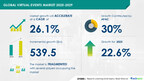
NEW YORK, Jan. 31, 2025 /PRNewswire/ — Report on how AI is driving market transformation – The global virtual events market size is estimated to grow by USD 539.5 million from 2025-2029, according to Technavio. The market is estimated to grow at a CAGR of  26.1%  during the forecast period. Rise in number of corporate events is driving market growth, with a trend towards growing popularity of virtual events in education. However, emerging threat from open-source virtual events solutions  poses a challenge. Key market players include 8×8 Inc., Active Network LLC, Adobe Inc., ALE International, Atlassian Corp Plc, Avaya LLC, Aventri Inc., Bizzabo, Cadence Design Systems Inc., Cisco Systems Inc., Cvent Holding Corp., EventX Ltd., Huawei Technologies Co. Ltd., Hubb, International Business Machines Corp., Microsoft Corp., Mitel Networks Corp., Toshiba Corp., Ungerboeck, and Zoom Video Communications Inc..

Key insights into market evolution with AI-powered analysis. Explore trends, segmentation, and growth drivers- View Free Sample PDF

Virtual Events Market Scope

Report Coverage

Details

Base year

2024

Historic period

2019 – 2023

Forecast period

2025-2029

Growth momentum & CAGR

Accelerate at a CAGR of 26.1%

Market growth 2025-2029

USD 539.5 million

Market structure

Fragmented

YoY growth 2022-2023 (%)

22.6

Regional analysis

North America, APAC, Europe, Middle East and Africa, and South America

Performing market contribution

APAC at 30%

Key countries

US, China, Germany, Japan, Canada, India, UK, France, Italy, and Brazil

Key companies profiled

8×8 Inc., Active Network LLC, Adobe Inc., ALE International, Atlassian Corp Plc, Avaya LLC, Aventri Inc., Bizzabo, Cadence Design Systems Inc., Cisco Systems Inc., Cvent Holding Corp., EventX Ltd., Huawei Technologies Co. Ltd., Hubb, International Business Machines Corp., Microsoft Corp., Mitel Networks Corp., Toshiba Corp., Ungerboeck, and Zoom Video Communications Inc.

Market Driver

The virtual events industry has seen a significant due to lockdowns and the impact of coronavirus. Retail & e-commerce, healthcare, manufacturing, construction, academic institutions, and various sectors are adopting digitally simulated events for sales meetings, job fairs, summits, audio/video conferences, exhibitions, and trade shows. Modern technologies like artificial intelligence (AI), augmented reality (AR), and virtual reality (VR) are driving the trend. Virtual conferences offer networking solutions, hospitality, and collaboration tools for employees and resources. However, challenges include cyberattacks, connectivity network issues, regulations, and compatibility problems. Stable internet connections, streaming platforms, and collaboration tools are essential for successful virtual events. Technological advances like real-time data analytics, on-demand content, interactive virtual environments, and session popularity help make data-driven decisions. The success of events depends on attendee engagement, timing, accessibility, and experience. Virtual simulation platforms offer a cost-effective and accessible solution for global audiences, customers, and partners. Despite challenges, virtual events are here to stay, shaping the future of business proceedings and workflow. 

Virtual events in the education sector are gaining popularity as an effective and cost-efficient means of learning. Traditional educational institutions are incorporating virtual classrooms to offer flexibility in studying, allowing students to attend sessions from anywhere at any time. These sessions, led by qualified educators, provide cost savings and expanded access to knowledge. Virtual events also incorporate game dynamics to maintain student interest and develop essential skills like time management. Conferencing tools facilitate improved interactions between students and faculty, while social media integration enhances networking opportunities. 

Request Sample of our comprehensive report now to stay ahead in the AI-driven market evolution!

Market Challenges

The virtual events industry has seen a significant due to lockdowns and the impact of coronavirus. Retail & e-commerce, healthcare, manufacturing, construction, academic institutions, and various other sectors have turned to digitally simulated events for business proceedings. Sales meetings, job fairs, summits, audio/video conferences, exhibitions, and trade shows are now being held virtually. However, challenges persist. Connectivity network issues, cyberattacks, regulations, and compatibility problems are major factors affecting virtual events. Employees and resources require stable internet connections and streaming platforms for effective workflow. Technological advances, such as artificial intelligence (AI), augmented reality (AR), and virtual reality (VR), offer interactive virtual environments for networking and collaboration. Time and accessibility are crucial for virtual events, with on-demand content and presentations providing flexibility. Future events will depend on real-time information, data analytics, attendee engagement, and successful outcomes. Event strategies must consider these challenges and leverage modern technologies for successful virtual events.Open-source virtual events present a significant competition for commercial enterprise virtual solutions. These software can be downloaded and utilized on various platforms, making them an attractive option for micro and small-scale enterprises and individual users. The high purchasing and licensing costs of proprietary virtual events often deter these entities from opting for commercial solutions. Open-source virtual events offer common features comparable to proprietary ones, making them a viable choice for small-scale events. Their availability on the internet, free of cost, adds to their appeal. This trend poses a challenge for vendors providing proprietary virtual event management as a service.

Discover how AI is revolutionizing market trends- Get your access now!

Segment Overview 

This virtual events market report extensively covers market segmentation by  

ApplicationUC And C And VCWeb ConferencingTypeWebinarConferenceVirtual Expo Fairs And FestivalsEntertainmentGeographyNorth AmericaAPACEuropeMiddle East And AfricaSouth America

1.1 UC and C and VC-  Unified communications and collaboration (UC and C) is a business technique that optimizes processes by integrating real-time and non-real-time communications. Real-time communication includes online chatting, instant messaging, video conferencing, telephony, speech recognition, and call control. Non-real-time communication includes voicemail, email, unified messaging, SMS, and fax. UC and C facilitates communication using different modes, media, and devices anywhere and anytime, leading to improved productivity, enhanced communication among employees globally, increased collaboration tools usage, better business process optimization, faster decision-making, and increased employee availability. The virtual events market is witnessing a shift towards video and web conferencing solutions over audio conferencing due to consumer preference. Video conferencing allows real-time two-way communication across geographies and provides full-motion video images and high-quality audio. SMBs are adopting SaaS-based models due to their affordability, and vendors are offering local language support to cater to this segment. UC and C is popular among businesses as it enables real-time collaboration and communication among disparate teams, and the integration of rich video, web, and audio conferencing creates a connected workspace. The market is expected to grow rapidly due to the increasing adoption by SMEs and the BYOD policy trend. SMEs adopt virtual client computing solutions to accelerate processes and virtualize applications and desktops to reduce costs and improve efficiency.

Download a Sample of our comprehensive report today to discover how AI-driven innovations are reshaping competitive dynamics

Research Analysis

The Virtual Events Market has experienced exponential growth in the wake of the global health crisis, with Retail & e-commerce, Healthcare, Manufacturing, Construction, Academic institutions, and various industries adopting digitally simulated events as a viable alternative to traditional in-person gatherings. Sales meetings, job fairs, summits, exhibitions, and trade shows have all transitioned to virtual platforms, enabling businesses to continue their proceedings despite WFH policies and lockdowns. Modern technologies like virtual conference solutions, networking platforms, and AI-powered connectivity networks have become essential resources for employees and businesses to engage, collaborate, and innovate. However, cybersecurity concerns and connectivity issues remain challenges to be addressed in this rapidly evolving landscape. Morressier, a leading virtual conference platform, offers advanced networking solutions and a user-friendly interface to facilitate productive and engaging virtual events.

Market Research Overview

The Virtual Events Market has experienced significant growth due to the global shift towards digitally simulated events in various sectors including Retail & e-commerce, Healthcare, Manufacturing, Construction, Academic institutions, and the Virtual events industry itself. With the impact of lockdowns and the Coronavirus pandemic, sales meetings, job fairs, summits, audio/video conferences, exhibitions, and trade shows have all moved online. Modern technologies like artificial intelligence (AI), augmented reality (AR), and virtual reality (VR) have become major factors in creating interactive virtual environments. However, challenges such as connectivity problems, bandwidth limitations, software glitches, and compatibility issues can affect the success of events. Regulations, cyberattacks, and restrictions on the movement of people also pose challenges. Employees and resources must adapt to business proceedings in a workflow that integrates modern technologies with physically organized events. Networking solutions, collaboration tools, streaming platforms, and online communication have become essential for remote workforces and global audiences. The future of events lies in data-driven decisions based on attendee engagement, session popularity, lead generation, and real-time information. Event strategies must consider timing, accessibility, and the experience of customers and partners, whether they are at home or in offices, and the impact of travel and work on event attendance. Technological advances continue to shape the virtual events landscape, with video conferencing platforms and on-demand content becoming increasingly popular.

Table of Contents:

1 Executive Summary
2 Market Landscape
3 Market Sizing
4 Historic Market Size
5 Five Forces Analysis
6 Market Segmentation

ApplicationUC And C And VCWeb ConferencingTypeWebinarConferenceVirtual Expo Fairs And FestivalsEntertainmentGeographyNorth AmericaAPACEuropeMiddle East And AfricaSouth America

7 Customer Landscape
8 Geographic Landscape
9 Drivers, Challenges, and Trends
10 Company Landscape
11 Company Analysis
12 Appendix

About Technavio

Technavio is a leading global technology research and advisory company. Their research and analysis focuses on emerging market trends and provides actionable insights to help businesses identify market opportunities and develop effective strategies to optimize their market positions.

With over 500 specialized analysts, Technavio’s report library consists of more than 17,000 reports and counting, covering 800 technologies, spanning across 50 countries. Their client base consists of enterprises of all sizes, including more than 100 Fortune 500 companies. This growing client base relies on Technavio’s comprehensive coverage, extensive research, and actionable market insights to identify opportunities in existing and potential markets and assess their competitive positions within changing market scenarios.

Contacts

Technavio Research
Jesse Maida
Media & Marketing Executive
US: +1 844 364 1100
UK: +44 203 893 3200
Email: media@technavio.com
Website: www.technavio.com/

View original content to download multimedia:https://www.prnewswire.com/news-releases/virtual-events-market-to-grow-by-usd-539-5-million-2025-2029-rising-corporate-events-boosting-growth-ai-driving-market-evolution—technavio-302365345.html

SOURCE Technavio

Continue Reading
Click to comment

Leave a Reply

Your email address will not be published. Required fields are marked *

Technology

Three Papers Published Consecutively in Nature Energy: JinkoSolar’s Breakthroughs in TOPCon/Perovskite Tandem Technology Receive Authoritative Recognition

Published

on

By

SHANGHAI, April 18, 2026 /PRNewswire/ — JinkoSolar, the global leading PV and ESS supplier, recently published three research papers in succession within a single month in Nature Energy, one of the premier journals in the field of energy research. This series of papers showcases JinkoSolar’s multiple major breakthroughs in TOPCon and perovskite tandem cell technologies.

26.66%! Setting a New Record for Industrial-Scale TOPCon Cell Conversion Efficiency

JinkoSolar, in collaboration with the research team from the Ningbo Institute of Materials Technology and Engineering of the Chinese Academy of Sciences, successfully developed a dual-sided electrical synergy optimization strategy. This approach achieved a certified efficiency of up to 26.66% on M10-sized silicon wafers, setting a new efficiency record for industrial-scale TOPCon cells and significantly narrowing the gap between industrial-scale TOPCon cells and the theoretical efficiency of 29.4%.

Additionally, the research reduced carrier transport losses through a high-resistance boron emitter on the front side and an optimized fine-line grid design, while the back side employs an innovative double-layer tunneling silicon oxide/polysilicon structure on the rear side to effectively suppress performance degradation caused by silver paste puncture. Furthermore, by utilizing localized polysilicon thinning technology, the research achieved outstanding performance metrics, including an open-circuit voltage of 744.6 mV, a fill factor of 85.57%, and a bifaciality of 88.3%. This achievement provides a feasible and comprehensive solution for narrowing the efficiency gap between TOPCon cells and the theoretical limit, significantly enhancing the core competitiveness of TOPCon technology in the future photovoltaic market.

Reference link: Dual-side electrical refinement enables efficient industrial tunnel oxide passivating contact silicon solar cells:
https://www.nature.com/articles/s41560-026-01982-2

Certified Efficiency of 32.73%! Paving the Way for Scalable Compatibility of Perovskite/TOPCon Tandem Cells

JinkoSolar, in collaboration with the research team from Soochow University, has successfully developed a full-size bifacial TOPCon crystalline silicon solar cell with a certified photoconversion efficiency of 26.34%. This research abandons the traditional TOPCon cell design featuring a boron-diffused emitter on the front surface. Instead, it innovatively introduces patterned n-type TOPCon finger contacts on the front surface while retaining the full-area p-type TOPCon contact on the back. By localizing the polycrystalline silicon contact area, this structure significantly reduces parasitic absorption and recombination losses on the front surface, achieving a certified efficiency of 26.34% and significantly improving the open-circuit voltage.

Furthermore, to address the issues of poor contact performance and susceptibility to metal paste corrosion in P-type TOPCon, a “polysilicon/silicon dioxide/polysilicon” double-layer composite structure was designed. Combined with optimized rear-side polishing and a specially formulated silver paste, this structure not only achieves extremely low contact resistance and recombination current but, more importantly, the ultra-thin oxide layer in the middle effectively prevents silver crystal spikes from penetrating the silicon substrate, significantly enhancing the device’s reliability and high-temperature resistance. In the future, by improving the precision of laser patterning to further narrow the finger width and introducing localized contacts on the back side to reduce the polycrystalline silicon layer thickness, parasitic absorption can be reduced, and mass production efficiency is expected to approach 27%.

Using a high-efficiency bifacial TOPCon cell with a textured front surface as the bottom cell, the research team fabricated a monolithic perovskite/TOPCon tandem cell, achieving a certified efficiency of 32.73% and a high open-circuit voltage of 1.961 V. These results not only set a new performance record for this class of tandem cells but also demonstrated excellent long-term operational stability (maintaining 80% of the initial efficiency after 2,000 hours), proving the immense potential of this TOPCon technology route in tandem applications. They also provide a scalable and industrially compatible technical pathway for the development of higher-efficiency TOPCon and perovskite/TOPCon tandem photovoltaic modules.

Reference link: Bifacial tunnel oxide passivating contacts for silicon and perovskitesilicon tandem solar cells with improved efficiency: 
https://www.nature.com/articles/s41560-026-02007-8

32.76%! Breaking Through the Efficiency Barrier for Industrial TOPCon Silicon-Based Perovskite Tandem Cells

To address the critical challenge of rapid perovskite crystallization and film quality degradation caused by the high thermal conductivity of industrial thin silicon substrates, JinkoSolar, in collaboration with the National University of Singapore and other research institutions, innovatively proposed a strategy to regulate the major organic cation (FA⁺) using a dual-mode-coupled ligand (MBT), successfully achieving effective control over crystallization kinetics. A perovskite/TOPCon tandem solar cell fabricated using this strategy was certified by the National Photovoltaic Industry Metrology and Testing Center (NPVM) with a conversion efficiency of 32.76%, approaching the current efficiency record for tandem photovoltaic cells. Additionally, the cell maintained 91% of its initial efficiency after 1,700 hours of continuous operation, demonstrating excellent long-term operational reliability.

This research is of significant importance as it achieves high efficiency (certified at 32.76%) in TOPCon silicon-back-contact cells, which hold the greatest potential for market dominance. Not only does it elevate the efficiency of perovskite/TOPCon tandem cells to new heights, but more importantly, it provides critical scientific insights and a practical pathway for integrating high-performance perovskite materials from the laboratory with market-dominant TOPCon silicon technology, marking a solid step toward the mainstream industrialization of perovskite/ crystalline silicon tandem technology toward mainstream industrialization. In the future, this strategy is expected to be combined with solution-based production processes — which offer the potential for large-scale fabrication and low costs — to drive the industrial application of these research findings.

Reference link: Additive-assisted perovskite crystallization on industrial TOPCon silicon for tandem solar cells with improved efficiency: 
https://www.nature.com/articles/s41560-026-02010-z

View original content to download multimedia:https://www.prnewswire.com/news-releases/three-papers-published-consecutively-in-nature-energy-jinkosolars-breakthroughs-in-topconperovskite-tandem-technology-receive-authoritative-recognition-302746483.html

SOURCE JinkoSolar

Continue Reading

Technology

JinkoSolar Officially Launches “Light Diamond” Lightweight, High-Strength Module

Published

on

By

SHANGHAI, April 18, 2026 /PRNewswire/ — JinkoSolar, the global leading PV and ESS supplier, has officially launched a lightweight module solution specifically designed for low-load-bearing roofs—the Jinko “Light Diamond” lightweight, high-strength module, based on its Tiger Neo 3.0 technology platform.

Module weight: 16.2 kg
Module dimensions: 1980 × 1134 × 30 mm
Weight density: 7 kg/m²— 40% weight reduction compared with conventional double-glass modules (12.2 kg/m²);
Maximum power: 560 W;
Maximum module efficiency: 24.94%
Applications: Suitable for older factory buildings, temporary structures, light-gauge steel roofs, power plant coal sheds, and buildings with load restrictions.

Five Key Advantages:

Advantage 1: Ultra-Lightweight with Guaranteed Strength

JinkoSolar’s “Light Diamond” lightweight, high-strength modules weigh only 7 kg per square meter, representing a weight reduction of over 40% compared to conventional double-glass modules. The total module weight for a 1 MW project is only 28.6 tons, a reduction of approximately 20 tons compared to BC double-glass modules. This means that a large number of roofs that previously required reinforcement or were unsuitable for installation can now be directly fitted with solar panels without any structural modifications.

Advantage 2: 24.94% High Efficiency—Lightweight and High-Performance

A common flaw among most lightweight modules on the market is that they prioritize weight reduction at the expense of power generation efficiency. JinkoSolar’s “Light Diamond” lightweight, high-strength modules break this trade-off.

JinkoSolar’s “Light Diamond” lightweight, high-strength modules deliver a maximum power output of 560 watts and an ultra-high efficiency of 24.94%, whereas flexible modules or BC composite modules only reach 450 to 460 watts—a single-module power increase of over 100 watts. This means a higher-capacity solar power plant can be installed on the same roof area. More importantly, the higher power output directly leads to optimized system costs: fewer modules are required, reducing Balance of System (BOS) costs for mounting structures, cables, combiner boxes, and other components; installation time is shortened, lowering labor costs; and overall BOS costs are further reduced by 3% to 5% compared to conventional lightweight solutions.

This is not a lightweight module born of compromise, but a high-efficiency module that takes performance to the next level.

 Advantage 3: Reduced Weight Without Compromising Quality—Backed by a 30-Year Power Warranty

The key concern with lightweight modules is whether their reduced weight compromises reliability. JinkoSolar’s “Light Diamond” lightweight, high-strength modules address this concern with technology and data.

In terms of structural reinforcement, the modules utilize 1.6mm lightweight glass to reduce weight while maintaining light transmittance; the frame features reinforced channel design with increased thickness, enhancing overall mechanical strength; and the encapsulation process uses reinforced adhesive film, significantly improving sealing performance, resistance to humidity and heat, and resistance to micro-cracks.

In terms of load certification, the maximum front-side load capacity is 3,600 Pa—equivalent to withstanding 3.6 meters of snow accumulation—and the module can withstand impacts from 25mm hailstones without damage. The maximum back-side load capacity is 2,400 Pa, equivalent to withstanding Category 12 winds. In the face of extreme weather, it provides a robust safety barrier.

In terms of long-term reliability metrics, the temperature coefficient is -0.26%/°C, resulting in lower power generation losses at high temperatures; the power output warranty spans 30 years, which is 12–15 years longer than that of flexible or composite modules; first-year degradation does not exceed 1%, with annual degradation of 0.35%, both of which outperform industry averages.

Advantage 4: Save Money, Time, and Effort

The lightweight design of JinkoSolar’s “Light Diamond” lightweight, high-strength modules not only reduces physical weight but also systematically optimizes total lifecycle costs.

Compared to conventional module reinforcement solutions, JinkoSolar’s “Light Diamond” lightweight, high-strength modules save approximately 0.5 yuan per watt in reinforcement costs, equivalent to a savings of about 500,000 yuan per MW. The construction period is reduced from over 40 days to 8–10 days—a 75% reduction. There is no need to halt production, thereby avoiding operational losses, and the approval process is simplified, eliminating the need for structural modification approvals.

Taking a 1 MW project as an example, the savings on reinforcement costs amount to approximately 500,000 yuan, the construction period is shortened by more than 30 days, and the avoided production downtime losses—which can reach hundreds of thousands of yuan depending on the company’s scale—significantly boost the project’s internal rate of return (IRR) and markedly shorten the payback period. For retrofit projects involving older factory buildings, the greatest advantage of Jinko’s “Light Diamond” lightweight, high-strength modules is that installation can proceed without halting production; companies can maintain normal operations while the solar power plant is installed on the roof simultaneously, ensuring both objectives are met.

Advantage 5: Strong Demand, a Blue Ocean Market

According to industry statistics, China has over 6 billion square meters of existing commercial and industrial rooftop space, with load-restricted roofs accounting for more than 30% of this total—representing a potential market of nearly 2 billion square meters. Based on an installation density of 100 watts per square meter and a system cost of 1.5 yuan per watt, the theoretical installation capacity exceeds 200 GW, with a market size surpassing 300 billion yuan.

The renovation of old factory buildings, the upgrading of cultural and creative parks, and distributed solar systems on light-gauge steel roofs—these scenarios that were previously unsuitable for installation are now becoming a new blue ocean for PV growth. Whoever can be the first to deliver truly reliable products will be able to capture this market.

Application Scenarios

1) Renovation of Old Industrial Buildings: This is the primary application scenario. Industrial buildings constructed in the last century, as well as power plant coal sheds, carports, and simple rural supermarkets, often have limited roof load-bearing capacity and structurally deteriorated roofs that cannot safely support additional weight. Jinko’s “Light Diamond” lightweight, high-strength modules can be installed without structural reinforcement and do not disrupt production during renovation, making them the preferred solution for the green retrofitting of old industrial buildings.

2) Cultural and Creative Parks and Commercial Complexes: With insufficient roof load-bearing capacity, the need to maintain operations, and aesthetic requirements, Jinko’s “Light Diamond” lightweight, high-strength modules—which are lightweight, efficient, and reliable—are a perfect fit for these scenarios.

3) Light-Gauge Steel Roofs and Color-Coated Steel Sheet Roofs: Light-gauge steel roofs, commonly used in modern industrial facilities, inherently lack sufficient load-bearing capacity. Jinko’s “Light Diamond” lightweight, high-strength modules, weighing just 7 kg per square meter, enable the installation of solar panels on these roofs.

4) Special buildings with load restrictions: Such as space frame structures, arched roofs, and agricultural greenhouses, Jinko’s “Light Diamond” lightweight, high-strength modules can easily adapt to these structures.

View original content to download multimedia:https://www.prnewswire.com/news-releases/jinkosolar-officially-launches-light-diamond-lightweight-high-strength-module-302746484.html

SOURCE JinkoSolar

Continue Reading

Technology

Global Sources Hong Kong Shows Phase II Officially Opens, AI Products Go Mainstream as Humanoid Robot Zone Makes Its Debut

Published

on

By

HONG KONG, April 18, 2026 /PRNewswire/ — Phase II of the Global Sources Hong Kong Shows opened today at AsiaWorld-Expo, running from 18 to 21 April over four consecutive days. The show comprises four major professional trade shows: the Mobile Electronics Show, the Smart Home, Security & Home Appliances Show, the Lifestyle Show, and the Home & Kitchen Show, bringing together over 2,000 quality suppliers across nearly 4,000 booths and showcasing approximately 150,000 new products spanning mobile devices, smart wearables, AR/VR, smart home solutions, personal healthcare, pet products and more. Notably, the number of mobile accessories exhibitors has grown by 50% compared with the same period in 2025. As of March, global pre-registered buyers grew 35% year on year, with particularly strong increases from Eastern Europe, Western Europe, the United States and ASEAN.

Global Sources Hong Kong Shows Phase II includes:

Global Sources Mobile ElectronicsGlobal Sources Smart Home, Security & Home AppliancesGlobal Sources LifestyleGlobal Sources Home & Kitchen

As the global consumer electronics industry undergoes a structural transformation driven by AI, Hong Kong’s role as an international sourcing hub is evolving in tandem. John Kao, Vice President of Hong Kong Shows & Overseas Shows at Global Sources, said: “AI is moving from concept to mass production — the wave of technology reshaping products has arrived. The biggest change at this year’s show is that AI is no longer confined to a standalone tech zone; it has permeated virtually every product category, from smart wearables and home security to personal healthcare. AI has become the core driving force behind product upgrades. For global buyers, this is a pivotal opportunity to lock in future product trends and uncover new growth opportunities.”

AI Products Reach Market Faster — Over 1,200 Booths Dedicated to AI
The “AI Pavilion”, where the AI products most readily making their way into everyday life, brings together over 1,200 booths showcasing smart products with proven mass-production capabilities across seven key segments: AI terminal devices, AI wearables, AI glasses, AI toys, AI pet products, AI personal healthcare and AI convergence products, offering a one-stop overview of the latest breakthroughs in AI hardware ecosystems. The zone also introduces the “Physical.ai Lab” for the first time. In line with China’s designation of humanoid robots as a strategic emerging industry, the lab showcases robot products that have already entered the commercialisation stage, including humanoid robots, embodied intelligent robots, robotic lawn mowers and educational robots, marking the full extension of AI decision-making capabilities from virtual spaces into complex physical mobility and operational scenarios. For global buyers, this is not merely a technology showcase but a sourcing opportunity for commercially viable automation solutions.

AI is redefining the product logic of traditional consumer electronics — transforming what were once function-driven products that simply executed commands into “demand-sensing products” capable of interpreting user behaviour and delivering personalised services, illustrating the entirely new industry landscape that emerges when AI becomes a product standard. At the same time, exhibits in traditional category zones demonstrate the deep-rooted strengths of the supply chain, with a focus on energy efficiency improvements, design optimisation, material upgrades and manufacturing process refinements, reflecting mature capabilities in scaled production, lean manufacturing and global fulfilment.

Innovation Awards Introduce “AI Innovation Award” — Global Product Launches Converge on Hong Kong
The Global Sources Innovation Awards for Phase II spotlight products across mobile electronics, smart home, security and appliances, and lifestyle categories, recognising outstanding innovations in practicality, cost-effectiveness, technological maturity and market relevance. Global Sources once again partners with the internationally renowned “European Product Design Award (EPDA)™” to present the “Best Product Design Award”, honouring products that stand out through innovative thinking and exceptional design. To align with AI’s emergence as an industry mainstay, Phase II introduces the “AI Innovation Award”, recognising exhibits that demonstrate excellence in AI technology application.

In addition, Phase II host multiple new product launch events, with numerous exhibitors using this platform to unveil their annual innovations, including heavyweight global and Asian debuts that further cement the Hong Kong Shows’ position as the world’s premier stage for consumer electronics product launches.

Industry Leaders Gather to Decode AI-Enabled Business Pathways
Running concurrently with the show, the Global Sources Summit and “AI & Robotics Summit (AIRS)” bring together leading global industry experts to explore cutting-edge topics including AI-driven retail markets, smart sourcing strategies, operational intelligence, consumer insights and next-generation technology innovation, providing in-depth analysis of how AI is restructuring the consumer electronics value chain and helping the industry seize business opportunities in the shift from “smart” to “intelligent”. The summit programme features “The AI Gold Rush” session on 19 April and the “Consumer Tech Futures” session on 20 April. An on-site AI robot demonstration area allows visitors to experience human-machine interaction and live demonstrations up close, including a performance by Linkerbot’s robot band and dance and kung fu demonstrations by Unitree robots, showcasing advanced capabilities in motion planning and real-time control while exploring the commercial potential of robotics in entertainment, services and beyond.

Comprehensive Buyer Service Upgrades Drive Precise Matching and Trade Collaboration
To further enhance the buyer sourcing experience, this edition of the show introduces a number of new services. The upgraded Business Matching service is expected to arrange over 3,000 buyer-supplier matching sessions across all three phases, facilitating collaboration between global buyers with clear sourcing intent and quality suppliers. A Sourcing Connection Desk has been set up on-site for the first time, providing comprehensive support to help buyers locate target exhibitors and arrange on-the-spot matching — offering real-time assistance for buyers who were unable to book appointments in advance. In addition, the Hong Kong Show website has launched a new Meet the Exhibitors page, allowing buyers to search by show, product, country or region, with features to contact exhibitors and add events to their calendars for more effective sourcing trip planning. The Global Sources Buyer App has also been fully optimised to deliver a simpler, more personalised user experience that puts information at buyers’ fingertips. The show expects to welcome close to 900 new overseas buyers to participate in on-site matching and networking activities, including high-quality buyers from Western Europe, the United States, Japan and ASEAN.

About Global Sources
Based in Hong Kong, Global Sources is a globally recognised B2B sourcing platform. With 55 years of dedicated service in facilitating international trade, it has earned the trust and recognition of the global business community through its proven track record of connecting quality buyers worldwide with verified top-tier Asian manufacturers. As a sourcing hub for market-ready innovative consumer products, Global Sources provides efficient and convenient trade services to over 14 million registered buyers and users worldwide.

View original content to download multimedia:https://www.prnewswire.com/news-releases/global-sources-hong-kong-shows-phase-ii-officially-opens-ai-products-go-mainstream-as-humanoid-robot-zone-makes-its-debut-302746486.html

SOURCE Global Sources

Continue Reading

Trending