Connect with us

Technology

Virtual Reality (VR) Gaming Market to Grow by USD 34.94 Billion (2025-2029), Rising VR Adoption in Home Entertainment Boosts Market, Report on AI Redefining Market Landscape – Technavio

Published

on

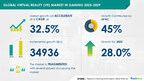
NEW YORK, Jan. 31, 2025 /PRNewswire/ — Report with market evolution powered by AI – The global virtual reality (VR) market in gaming size is estimated to grow by USD 34.94 billion from 2025-2029, according to Technavio. The market is estimated to grow at a CAGR of almost 32.5% during the forecast period. Increasing adoption of vr in interactive Home entertainment industry is driving market growth, with a trend towards growing popularity of 360-degree content. However, privacy concerns over gamers information poses a challenge. Key market players include Advanced Micro Devices Inc., Alphabet Inc., bHaptics Inc., Carl Zeiss AG, Electronic Arts Inc., Fallen Planet Studios Ltd, HTC Corp., Magic Leap Inc., Meta Platforms Inc., Microsoft Corp., Nintendo Co. Ltd., NVIDIA Corp., Qualcomm Inc., Razer Inc., Samsung Electronics Co. Ltd., Sony Group Corp., Ubisoft Entertainment SA, Unity Technologies Inc., Virtuix Inc., and Wookey Technologies Inc..

Key insights into market evolution with AI-powered analysis. Explore trends, segmentation, and growth drivers- View Free Sample PDF

Virtual Reality (VR) Market In Gaming Scope

Report Coverage

Details

Base year

2024

Historic period

2019 – 2023

Forecast period

2025-2029

Growth momentum & CAGR

Accelerate at a CAGR of 32.5%

Market growth 2025-2029

USD 34936 million

Market structure

Fragmented

YoY growth 2022-2023 (%)

28.0

Regional analysis

APAC, North America, Europe, Middle East and Africa, and South America

Performing market contribution

APAC at 45%

Key countries

US, China, Canada, Japan, Germany, UK, India, South Korea, France, and Italy

Key companies profiled

Advanced Micro Devices Inc., Alphabet Inc., bHaptics Inc., Carl Zeiss AG, Electronic Arts Inc., Fallen Planet Studios Ltd, HTC Corp., Magic Leap Inc., Meta Platforms Inc., Microsoft Corp., Nintendo Co. Ltd., NVIDIA Corp., Qualcomm Inc., Razer Inc., Samsung Electronics Co. Ltd., Sony Group Corp., Ubisoft Entertainment SA, Unity Technologies Inc., Virtuix Inc., and Wookey Technologies Inc.

Market Driver

The Virtual Reality (VR) market in gaming has seen a significant shift in the wake of the worldwide economy’s downturn due to the lockdown. Pre-pandemic levels of sales have declined, but the introduction of advanced gaming consoles like PlayStation VR2 and new hardware like 5G technology offer promising growth opportunities. The gaming industry is investing heavily in technology, with manufacturers ramping up production of devices such as VR headsets, bodysuits, and gloves. However, concerns around adverse health effects like locomotion sickness and mental health are emerging. Companies like Huawei Technologies, Sony Corporation, and Microsoft are leading the charge in VR technology, with competitors including Oculus Rift, PlayStation VR, and Samsung Gear VR. The hardware segment, including optical gaming devices and RAM, is crucial, while software and content remain key drivers. The VR market is not just limited to consoles and PCs; mobile devices like smartphones are also gaining traction with cloud gaming technology. VR accessories, such as VR headsets and motion tracking devices, are essential for an optimal VR experience. Companies like HTC Vive, Meta, Plink, Samsung Gear, Google Daydream, and Oculus VR are leading the way in content creation tools and 3D environment development. Entrepreneurs and investors are also showing interest in VR technology, with startups like Teslasuit and NewGenApps pushing the boundaries of interactive graphics and 3D effects. Overall, the VR market is expected to grow as technology advances and content becomes more diverse and accessible. 

The global Virtual Reality (VR) content market has seen significant advancements with the creation of 3D, 4D, and 5D content. In 2020, VR emerged as a major platform for gaming, marking a transformation in the digital world. Notable companies like Facebook, Sony, and HTC have introduced VR devices, such as the Oculus Quest 2 by Facebook in September 2020. This technology’s integration into gaming is revolutionizing the industry and setting new standards for experiences. 

Request Sample of our comprehensive report now to stay ahead in the AI-driven market evolution!

Market Challenges

The Virtual Reality (VR) market in gaming has faced challenges in recent times. Pre-pandemic levels of sales have not been reached due to various factors like the worldwide economy and lockdowns. The introduction of advanced gaming consoles like PlayStation VR2 and new hardware like 5G technology and optical gaming devices presents opportunities. However, there are concerns over adverse health effects such as locomotion sickness and mental health. Manufacturing units are ramping up to meet demand for VR devices, including headsets, bodysuits, and gloves from brands like HTC Vive, Oculus Rift, PlayStation VR, and Samsung Gear VR. The software segment, with companies like Meta, Plink, and HTC Viveport, is investing in technology and content creation tools. Investors and entrepreneurs are backing startups like Teslasuit, providing funding for VR accessories and interactive graphics. Huawei Technologies and other tech giants are entering the market with their own VR headsets. The gaming industry is seeing a shift towards cloud gaming technology and VR content on mobile, console/PC, standalone, and VR technology. According to Comscore MMX, VR technology usage has increased, with popular games on NewGenApps offering 3D environments and interactive graphics. The VR market is expected to grow, with companies like Sony Corporation and Microsoft leading the way in the gaming console segment, and the hardware and PC/desktop segments also showing promise. RAM and smartphone segments are also expected to play a role in the growth of VR technology.The cost of virtual reality (VR) hardware is a significant barrier to the growth of the global VR market in gaming. The high price of VR headsets, such as Meta Quest 2 and HTC Vive, which can range from USD399 to USD599, and the requirement for high-performance computers and peripherals, limit the accessibility and usage of VR technology in various industries. This financial hurdle presents challenges for both consumers and enterprises, hindering market expansion and adoption. The substantial investment needed for a high-quality VR experience may deter potential users, making it essential for the industry to explore more affordable solutions to increase market penetration.

Discover how AI is revolutionizing market trends- Get your access now!

Segment Overview 

This virtual reality (vr) market in gaming report extensively covers market segmentation by

ApplicationPCsConsolesMobile DevicesComponentHardwareSoftwareGeographyAPACNorth AmericaEuropeMiddle East And AfricaSouth America

1.1 PCs- The global virtual reality (VR) market in gaming is anticipated to experience growth due to the launch of console-specific VR headsets, such as Sony’s next-generation headset for the PlayStation 5. These headsets offer improved features, like a wider field of view and new controllers. Game developers are creating exclusive VR content with unique storylines to complement the hardware. However, the high price range of these headsets, between USD500 and USD900, may deter some consumers from investing in them. Despite this challenge, an increasing number of developers are expected to release VR-specific games during the forecast period.

Download a Sample of our comprehensive report today to discover how AI-driven innovations are reshaping competitive dynamics

Research Analysis

Pre-pandemic levels, the Virtual Reality (VR) market in gaming was on an upward trajectory, driven by advancements in 5G technology and the release of new devices like PlayStation VR2. However, the worldwide economy’s downturn due to the lockdown led to a sales decline. Manufacturing units struggled to keep up with demand for VR accessories, such as headsets, bodysuits, and gloves from major players like HTC Vive. Game designers and investors continued to push boundaries with interactive graphics, 3D effects, and NewGenApps in a 3D environment. HTC Vive and Meta, among others, introduced innovative VR headsets, while 3Dinsider reported in interest for VR accessories. With the rollout of 5G and the continued development of motion tracking and haptic feedback technology, the future of VR gaming looks promising. Plink, a new player in the market, is set to disrupt the industry with its unique approach to VR gaming.

Market Research Overview

Pre-pandemic levels, the Virtual Reality (VR) market in gaming was on an upward trajectory, with 5G technology poised to revolutionize the industry. The introduction of advanced gaming consoles like PlayStation VR2 and optical gaming devices brought technology investments, fueling content creation tools and devices. However, the worldwide economy’s sales decline due to the lockdown led to a setback. Hardware and software companies, including Huawei Technologies, invested heavily in VR technology, developing VR accessories such as headsets, bodysuits, and gloves. The gaming industry saw in interest in VR, with investors and entrepreneurs backing new ventures. However, adverse health effects like locomotion sickness and mental health concerns emerged as challenges. VR technology evolved, with NewGenApps offering 3D environments and interactive graphics. VR headsets from companies like HTC Vive, Meta, Plink, Samsung Gear, Google Daydream, and Oculus RV continued to dominate the market. The gaming console segment, led by Sony Corporation and Microsoft, saw competition from the PC/desktop segment, with RAM and smartphone segments also joining the fray. The hardware segment continued to innovate, with standalone VR devices gaining popularity. The VR market in gaming is expected to grow further with the rollout of 5G technologies, offering faster download speeds and lower latency. The future of VR gaming is bright, with game designers and content creators continually pushing the boundaries of what’s possible in virtual reality.

Table of Contents:

1 Executive Summary
2 Market Landscape
3 Market Sizing
4 Historic Market Size
5 Five Forces Analysis
6 Market Segmentation

ApplicationPCsConsolesMobile DevicesComponentHardwareSoftwareGeographyAPACNorth AmericaEuropeMiddle East And AfricaSouth America

7 Customer Landscape
8 Geographic Landscape
9 Drivers, Challenges, and Trends
10 Company Landscape
11 Company Analysis
12 Appendix

About Technavio

Technavio is a leading global technology research and advisory company. Their research and analysis focuses on emerging market trends and provides actionable insights to help businesses identify market opportunities and develop effective strategies to optimize their market positions.

With over 500 specialized analysts, Technavio’s report library consists of more than 17,000 reports and counting, covering 800 technologies, spanning across 50 countries. Their client base consists of enterprises of all sizes, including more than 100 Fortune 500 companies. This growing client base relies on Technavio’s comprehensive coverage, extensive research, and actionable market insights to identify opportunities in existing and potential markets and assess their competitive positions within changing market scenarios.

Contacts

Technavio Research
Jesse Maida
Media & Marketing Executive
US: +1 844 364 1100
UK: +44 203 893 3200
Email: media@technavio.com
Website: www.technavio.com/

View original content to download multimedia:https://www.prnewswire.com/news-releases/virtual-reality-vr-gaming-market-to-grow-by-usd-34-94-billion-2025-2029-rising-vr-adoption-in-home-entertainment-boosts-market-report-on-ai-redefining-market-landscape—technavio-302365292.html

SOURCE Technavio

Continue Reading
Click to comment

Leave a Reply

Your email address will not be published. Required fields are marked *

Technology

Maritime Launch Services and Isar Aerospace Extend Deadline to Finalize Statement of Work and Programmatic Milestones

Published

on

By

HALIFAX, NS and MUNICH, Sept. 1, 2026 /CNW/ — Maritime Launch Services Inc. (CBOE: MAXQ) (OTCQB: MAXQF) and Isar Aerospace have agreed to extend the deadline to provide additional time to complete the statement of work and certain programmatic milestones contemplated under their previously-announced facilities usage agreement for Spaceport Nova Scotia. The deadline was extended from September 1, 2026, to September 15, 2026.

The parties continue to make strong progress through an intensive and productive planning process. The extension reflects the time required to complete this work.

“We are very pleased with the progress being made between both parties,” said Stephen Matier, President and CEO of Maritime Launch Services. “Our teams are working through the detailed planning required to advance this important program. The additional 14 days will allow us to complete that work and maintain the strong momentum we have established together.”

The extension does not change the other key terms of the facilities usage agreement announced on July 7, 2026. The parties remain focused on advancing the development of Isar Aerospace’s dedicated launch complex for its Spectrum launch vehicle at Spaceport Nova Scotia, with first orbital launches targeted for 2028.The agreement supports the development of sovereign orbital launch capability from Canada and expands Isar Aerospace’s launch capability into North America.

“We are making strong progress together with Maritime Launch Services as we advance the detailed planning for our launch operations at Spaceport Nova Scotia,” said Alexandre Dalloneau, Vice President Mission and Launch Operations, Isar Aerospace. “The work between our teams has been intensive and productive, and this additional time will allow us to finalize the remaining details as we move toward execution of the program.”

About Maritime Launch Services 
Maritime Launch Services Inc. (CBOE: MAXQ, OTCQB: MAXQF) is a Canadian-owned commercial space company based in Nova Scotia. Maritime Launch is developing Spaceport Nova Scotia, a dual-use commercial spaceport designed to support both civil and defence-related space missions. The spaceport will provide satellite launch services to domestic and international clients across the global commercial space market, supporting a wide range of orbital inclinations from a single location.

Spaceport Nova Scotia is Canada’s first commercial orbital launch complex, enabling small and medium launch vehicles to place satellites into low Earth orbit.

For more information, visit: www.maritimelaunch.com

About Isar Aerospace

The European space company Isar Aerospace offers launch services for transporting small and medium-sized satellites and satellite constellations into Earth orbit. The launch vehicles used to transport these satellites are developed, manufactured, and tested almost entirely in-house. Headquartered near Munich, Germany, Isar Aerospace was founded in 2018 and has grown to over 400 employees, working across 5 international locations. Private funding from international investors provides strong backing for the company’s pioneering approach to scale and industrialize launch vehicle production through vertical integration. More information: www.isaraerospace.com

https://x.com/maritimelaunch

https://www.linkedin.com/company/maritimelaunch

Forward-Looking Statements

This news release contains “forward-looking statements” within the meaning of applicable securities laws. All statements contained herein that are not clearly historical in nature may constitute forward-looking statements. The forward-looking statements included in this press release include (without limitation) statements regarding the continuing of the term of the facilities usage agreement, continuing negotiations of the parties to the facilities usage agreement and the timing of completion of such negotiations, and anticipated launch timing.

Readers are cautioned not to place undue reliance on forward-looking statements, as there can be no assurance that the plans, intentions or expectations upon which they are placed will occur. Although Maritime Launch has attempted to identify important factors that could cause actual results to differ materially from those contained in forward-looking statements, there may be factors that cause results not to be as anticipated, estimated or intended. Such forward-looking statements are subject to risks, uncertainties and other factors which may cause our actual results, performance or achievements, or industry results, to be materially different from any future results, performance or achievements expressed or implied by such forward-looking statement. Such information, although considered reasonable by management at the time of preparation, may prove to be incorrect and actual results may differ materially from those anticipated. Risks and uncertainties that may cause such differences include but are not limited to: risks related to Maritime Launch’s strategy going forward; capital requirements; risks related to interest rates and inflationary pressures on the cost of doing business; geopolitical events and changes, availability of third-party contractors and service providers, and other risks inherent in the industry in which Maritime Launch operates.

Forward-looking statements contained in this news release are expressly qualified by this cautionary statement and reflect the Company’s expectations as of the date hereof and are subject to change thereafter. The Company undertakes no obligation to update or revise any forward-looking statements, whether as a result of new information, estimates or opinions, future events or results or otherwise, or to explain any material difference between subsequent actual events and such forward-looking information, except as required by applicable law.

View original content to download multimedia:https://www.prnewswire.com/news-releases/maritime-launch-services-and-isar-aerospace-extend-deadline-to-finalize-statement-of-work-and-programmatic-milestones-302866904.html

SOURCE Maritime Launch Services Inc.

Continue Reading

Technology

Visa Launches Enhanced A2A Protect Innovations to Help Financial Institutions Stop Fraud Before Money Leaves Accounts

Published

on

By

New unified fraud score is the company’s first combined offering in-market since Visa’s acquisition of Featurespace which delivers real-time A2A risk insightsNew graph-powered, agentic capability helps accelerate complex fraud and risk investigationsA2A Protect has been shown to reduce over 50% more fraud and help reduce over 40% in unnecessary fraud alerts

SINGAPORE, Sept. 2, 2026 /PRNewswire/ — Visa (NYSE: V), a world leader in digital payments, today announced an enhanced version of A2A Protect, delivering real-time risk insights that help banks stop account-to-account fraud before money leaves customer accounts. The expanded solution introduces a new unified fraud score—Visa’s first in-market integration of Featurespace technology—giving financial institutions faster, clearer signals to detect more fraud while reducing unnecessary alerts.

In addition, Visa is developing its complementary fraud prevention capabilities through Visa Graph IQ, a graph-powered, agentic investigation capability that provides deeper investigative insights to help financial institutions uncover fraud networks, identify money mule activity, detect emerging threats, and accelerate fraud and risk investigations.

As account-to-account (A2A) payments accelerate globally, A2A transactions are projected to surpass 5.8 trillion by 2028, a 160% increase from 2024, with Asia Pacific expected to account for more than half of global A2A consumer transactions by 2028[1]. While this growth presents significant opportunities, it also creates new fraud risks. Asia Pacific accounts for an estimated 67% of the world’s USD 1.03 trillion in annual scam losses, with Asia alone recording USD 688.42 billion in scam-related losses in 2024[2]. This growing threat is driving increased regulatory and industry focus on strengthening fraud prevention capabilities and enhancing consumer protection.

A2A Protect leverages advanced AI and sophisticated transfer learning and gives banks immediate access to critical global risk insights on A2A transactions, without waiting months for models to develop intelligence from a bank’s own transaction data, and without having to wait for other banks to join a consortium, delivering results and value from day one. Banks that opt in can incorporate additional network-level signals to enhance detection of emerging threats operating across the ecosystem.

“As account-to-account payments continue to accelerate across Asia Pacific, financial institutions are looking for ways to grow digital payments with confidence while maintaining a seamless experience for consumers and businesses,” said Serene Gay, Head of Value-Added Services, Asia Pacific at Visa. “The latest enhancements to A2A Protect combine Visa’s network intelligence with advanced AI capabilities to help our clients detect fraud earlier, respond faster to emerging threats, and strengthen trust in the digital payments ecosystem.”

For financial institutions that opt into network level intelligence sharing, A2A Protect highlights emerging scam hotspots and coordinated fraud activity – insights that may be difficult for individual financial institutions to detect alone, and that help the wider ecosystem respond faster to new threats. This gives financial institutions an earlier and more complete view of risk, helping to identify scams before authorisation. In fact, Visa A2A Protect has been shown to increase fraud detection by up to 75% in the first six months of deployment.

A2A Protect integrates with financial institutions’ current systems through a single API, reducing implementation time and complexity. Each alert includes a plain language explanation of why a transaction was flagged, helping fraud teams act quickly and confidently without disrupting genuine customers.

For more information on how Visa works to prevent fraud across the ecosystem, visit Visa.com/security.

[1]  Juniper Research, Global Instant Payments Market Report, September 2025

[2] GASA, Asia Scam Report, 2024

About Visa Inc.
Visa (NYSE: V) is a world leader in digital payments, facilitating payments transactions between consumers, merchants, financial institutions and government entities across more than 200 countries and territories. Our mission is to connect the world through the most innovative, convenient, reliable and secure payments network, enabling individuals, businesses and economies to thrive. We believe that economies that include everyone everywhere, uplift everyone everywhere and see access as foundational to the future of money movement. Learn more at Visa.com.

View original content to download multimedia:https://www.prnewswire.com/apac/news-releases/visa-launches-enhanced-a2a-protect-innovations-to-help-financial-institutions-stop-fraud-before-money-leaves-accounts-302866292.html

SOURCE Visa

Continue Reading

Technology

Chemonics Australia Expands Public Sector Advisory, Infrastructure, and Development Delivery Capabilities with Acquisitions of 35 South and JID

Published

on

By

The acquisitions strengthen Chemonics Australia’s ability to support governments, development partners, and institutions across Australia and the Indo-Pacific with practical delivery capability from strategy and design through implementation.

CANBERRA, Australia, Sept. 2, 2026 /PRNewswire/ — Chemonics has completed its acquisitions of 35 South Advisors and JID, strengthening its capabilities across public and social sector delivery, international development, infrastructure, and implementation support throughout Australia and the Indo-Pacific. Together, these acquisitions strengthen Chemonics Australia’s ability to help clients tackle complex challenges by combining talented professionals with deep analytical and implementation expertise, advanced technology, and data-driven decision-making tools.

As part of Chemonics, which has been delivering programs for over 50 years, Chemonics Australia launched in 2025 to better support governments, institutions, and development partners across Australia and the Indo-Pacific. The acquisitions of 35 South and JID strengthen that effort by adding complementary expertise in public sector delivery, infrastructure, and program implementation, expanding Chemonics Australia’s capabilities to support partners from planning and design through to delivery.

35 South strengthens Chemonics Australia’s ability to support Commonwealth, State, and Territory agencies. With practical expertise in public policy, program and service delivery, economics, and data insights, the firm has built a reputation for exceptional client service, agility, and practical problem solving. Its experience spans finance, health, social services, central agencies, international development, defence, and other sectors. Its fit-for-purpose consulting, government delivery experience, and tailored client engagement will help agencies turn complex reforms into practical action and measurable results.

JID strengthens Chemonics Australia’s on-the-ground delivery capability. With teams already delivering key programs across the Indo-Pacific region, JID brings proven expertise in social and economic infrastructure, service delivery, disaster response and resilience, and complex program execution. JID has supported Australia’s Department of Foreign Affairs and Trade and other regional partners across Papua New Guinea, Tonga, Solomon Islands, Fiji, and Vanuatu. This includes work leading and managing major infrastructure investments across the Pacific. JID’s end-to-end model combines advisory services, program management, and operational delivery, enabling partners to implement complex programs and strengthen resilience in remote, disaster-affected, and resource-constrained settings.

Chemonics Australia was established to bring Chemonics’ global experience and delivery capability closer to partners across Australia and the Indo-Pacific. Building on that foundation, the acquisitions deepen Chemonics Australia’s expertise, while drawing on Chemonics’ more than 50 years of experience delivering programs in over 160 countries. Together, they expand Chemonics Australia’s ability to support partners including Australia’s Department of Foreign Affairs and Trade and Department of Defence, New Zealand’s Ministry of Foreign Affairs and Trade, the Asian Development Bank, and other government and development institutions across the region.

“I’m very excited to welcome 35 South and JID to the Chemonics family,” said Jamey Butcher, Chair and CEO of Chemonics. “I’ve been incredibly impressed by the work both organisations have done and by the people behind it. Bringing these teams together with Chemonics Australia strengthens what we can offer partners across Australia and the Indo-Pacific and brings expertise and experience that will make our organisation stronger around the world.”

“35 South was created to help governments and not-for-profits design better policies, deliver citizen-centred services, and operate more effectively,” said Scott Alexander, CEO of 35 South. “This next chapter gives our team access to broader capability, expertise and knowledge that Government demands while preserving the close client delivery, relationships, agility, and practical approaches that will help our clients achieve lasting, positive outcomes for Australian communities.”

“JID was established to help partners deliver complex development programs that work in practice,” said Brad Bowman, CEO of JID. “Our strength comes from teams embedded across the region and their ability to manage infrastructure and services in demanding environments. This partnership will give those teams stronger systems and resources to support larger programs, while keeping local knowledge at the centre of delivery.”

Looking ahead, the acquisitions create opportunities to strengthen public sector delivery, infrastructure implementation, and development programming across Australia and the Indo-Pacific. The combined Chemonics Australia organisation will continue to work in partnership with governments, regional institutions, development partners, and communities to support complex reform efforts, manage large investments effectively, and deliver programs that respond to local priorities and contribute to long-term outcomes.

For additional media inquiries and further information, please contact:
Natalie Wisely
Senior Director, Executive Strategy and Communications, Chemonics International
media@chemonics.com

About Chemonics Australia
With a focus on the Indo-Pacific, Chemonics Australia works with partners to offer fit-for-purpose solutions to today’s toughest challenges, combining deep regional insights with a global track record to deliver practical, sustainable impact. Through our regional offices, long-term partnerships, and network of local and international experts, we deliver tailored, results-driven solutions that strengthen systems, build local capacity, and achieve lasting impact for communities.

About 35 South
Founded in 2021, 35 South is a consulting firm recognised for its exceptional client service, data analytics, program delivery, financial and economic modelling and practical problem-solving. The firm supports Australian Government and not-for-profit partners across priority sectors including health, social services, central agencies, defence, and international development.

About JID
Established in 2016, JID specialises in project advisory, program management, and on-the-ground delivery in complex environments. With teams across the region, JID draws on deep local expertise and strong project management discipline to deliver infrastructure and service delivery programs that support sustainable, long-term impact.

View original content to download multimedia:https://www.prnewswire.com/apac/news-releases/chemonics-australia-expands-public-sector-advisory-infrastructure-and-development-delivery-capabilities-with-acquisitions-of-35-south-and-jid-302866979.html

SOURCE Chemonics Australia

Continue Reading

Trending