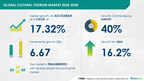
NEW YORK, Feb. 5, 2025 /PRNewswire/ — Report on how AI is driving market transformation – The global cultural tourism market size is estimated to grow by USD 6.67 billion from 2024-2028, according to Technavio. The market is estimated to grow at a CAGR of 17.32% during the forecast period. Growing instances of stress-related cases is driving market growth, with a trend towards increasing demand for ar and vr technology in cultural tourism. However, concerns related to overtourism poses a challenge. Key market players include ACE Cultural Tours Ltd, Aracari Travel, Envoy Tours, Exodus Travels Limited, G Adventures, Geographic Expeditions Inc., Greaves Travel Ltd, Indigenous Tourism BC, JPMorgan Chase and Co., Kudu Travel Ltd., Lindblad Expeditions Holdings Inc., Martin Randall Travel Ltd, Odyssey World, Responsible Travel, Tandem Travel, Tauck Inc., Travel Leaders Group Holdings LLC, Travelogy India Pvt. Ltd, Wilderness Travel, and Intrepid Group Pty Ltd..
Key insights into market evolution with AI-powered analysis. Explore trends, segmentation, and growth drivers- View Free Sample PDF
Cultural Tourism Market Scope
Report Coverage
Details
Base year
2023
Historic period
2018 – 2022
Forecast period
2024-2028
Growth momentum & CAGR
Accelerate at a CAGR of 17.32%
Market growth 2024-2028
USD 6.67 billion
Market structure
Fragmented
YoY growth 2022-2023 (%)
16.2
Regional analysis
Europe, APAC, North America, South America, and Middle East and Africa
Performing market contribution
Europe at 40%
Key countries
China, Japan, Italy, France, and Spain
Key companies profiled
ACE Cultural Tours Ltd, Aracari Travel, Envoy Tours, Exodus Travels Limited, G Adventures, Geographic Expeditions Inc., Greaves Travel Ltd, Indigenous Tourism BC, JPMorgan Chase and Co., Kudu Travel Ltd., Lindblad Expeditions Holdings Inc., Martin Randall Travel Ltd, Odyssey World, Responsible Travel, Tandem Travel, Tauck Inc., Travel Leaders Group Holdings LLC, Travelogy India Pvt. Ltd, Wilderness Travel, and Intrepid Group Pty Ltd.
Market Driver
In today’s tourism market, cultural experiences are a major trend. Customers seek unique and genuine interactions with local traditions and histories. Traditional tourist attractions like historic sites, art galleries, and museums continue to draw crowds. However, off-the-beaten-path destinations and experiential travel are gaining popularity. Sustainable travel practices, including eco-friendly initiatives and conservation efforts, are important to both customers and B2C enterprises. The global market scenario is driven by affordability, employment opportunities, and stress-relief. Middle class consumers are fueling outbound tourism, with budget airlines making travel more accessible. Hotels, vacation rentals, cruises, package holidays, camping, business events, conferences, and exhibitions cater to various travel preferences. Aracari Travel, Classic Journeys LLC, and Wilderness Travel are some B2C enterprises offering cultural tourism experiences. These companies focus on diverse cultures, rich histories, and local customs, often including festivals, cooking classes, and food tours. Social media and online platforms help travelers research and book these experiences. However, travel restrictions and social isolation policies due to the current global situation have impacted the industry. The tourism sector remains resilient, adapting to new challenges and continuing to appreciate and promote cultural diversity.
The cultural tourism market is experiencing a significant shift due to the rising popularity of AR and VR technologies. These innovative technologies offer tourists engaging and interactive experiences with cultural attractions, heritage sites, and museums. AR technology, accessible through smartphones and tablets, provides virtual reconstructions, 3D models, and multimedia content of historical sites and artifacts, enhancing visitors’ understanding of cultural landmarks. VR headsets transport users to immersive virtual environments, enabling exploration of ancient ruins, historical sites, and cultural landscapes from the convenience of homes or tourist centers. AR and VR technologies are revolutionizing cultural tourism by bringing history to life in a unique and interactive way.
Request Sample of our comprehensive report now to stay ahead in the AI-driven market evolution!
Market Challenges
The cultural tourism market is thriving as customers seek unique experiences and interactions with local cultures. Traditional tourist attractions like historic sites, art galleries, and museums continue to draw crowds, but there’s a growing demand for off-the-beaten-path destinations and experiential travel. Sustainable travel practices, such as eco-friendly initiatives and conservation efforts, are important to both budget-conscious middle class travelers and B2C enterprises. Challenges include travel restrictions and social isolation policies, which have impacted outbound tourism. Affordability remains a key driver, with budget airlines, vacation rentals, and package holidays offering solutions. Business events, conferences, and exhibitions also contribute to the global market scenario. Diverse cultures and rich histories are at the heart of this sector, with culinary tourism, cooking classes, and food tours adding flavor. Social media and online platforms are essential tools for marketing and booking hotels, cruises, camping, and more. The driving forces behind cultural tourism are genuine experiences, diversity appreciation, and the international community’s desire to learn and connect.Overtourism poses a substantial challenge to the cultural tourism industry. Popular cultural destinations face negative consequences when the number of visitors exceeds the carrying capacity of the location. This results in overcrowding, environmental degradation, and cultural commodification, putting strain on local resources. Notably, cultural heritage sites and landmarks are at risk of degradation due to excessive foot traffic. Monuments, archaeological sites, and culturally significant areas can suffer from wear and tear, compromising their authenticity and integrity. Overcrowding also negatively impacts the visitor experience, with long queues, restricted access, and limited space detracting from the enjoyment of cultural attractions.
Discover how AI is revolutionizing market trends- Get your access now!
Segment Overview
This cultural tourism market report extensively covers market segmentation by
TypeDomestic Cultural TourismInternational Cultural TourismServiceCultural Eco-tourismIndigenous Cultural TourismSocio-cultural TourismGeographyEuropeAPACNorth AmericaSouth AmericaMiddle East And Africa
1.1 Domestic cultural tourism- In the domestic cultural tourism market, there is a flourishing trend driven by factors such as the demand for genuine experiences, technological innovations, and government support for local heritage promotion. Mobile apps are a significant catalyst, offering travelers easy access to detailed guides, maps, and cultural information. Virtual Reality (VR) and Augmented Reality (AR) applications have gained popularity, providing immersive experiences for exploring cultural sites virtually. Social media platforms and online communities serve as essential resources for discovering, sharing, and engaging with cultural experiences. Sustainable and responsible travel practices, niche experiences like culinary tours and artisanal workshops, and global government initiatives are current trends. These initiatives foster economic growth, preserve cultural heritage sites, and promote local festivals and events, ultimately increasing domestic cultural tourism demand and expanding the global cultural tourism market.
Download a Sample of our comprehensive report today to discover how AI-driven innovations are reshaping competitive dynamics
Research Analysis
Cultural tourism is a thriving market that offers unique experiences for travelers seeking authentic connections with local traditions and histories. Customer preferences have shifted from traditional tourist attractions to off-the-beaten-path destinations, leading to a surge in experiential travel. Interactions with locals, sustainable travel practices, and eco-friendly travel are becoming essential elements of cultural tourism. The global market scenario for cultural tourism is growing, with an increasing number of travelers seeking immersive experiences. Cultural tourism encompasses historic sites, art galleries, museums, and regional customs. Festivals, heritage tourism, and culinary tourism are popular sub-sectors, offering opportunities for cooking classes, food tours, and festival tourism. Affordability and employment are key considerations for many travelers, making sustainable eco-tourism initiatives increasingly important. Companies like Aracari Travel, Classic Journeys LLC, and Wilderness Travel offer curated cultural experiences, showcasing the best of each destination while promoting responsible travel practices.
Market Research Overview
Cultural tourism is a growing market that offers unique experiences for travelers seeking authentic connections with diverse cultures and rich histories. Customer preferences shift towards experiential travel, interactions with locals, and off-the-beaten-path destinations. Traditional tourist attractions like historic sites, art galleries, museums, and festivals continue to be popular, but eco-friendly travel and sustainable practices gain traction. Budget airlines and outbound tourism from the middle class fuel the market’s growth. B2C enterprises, including hotels, vacation rentals, cruises, and package holidays, cater to various budgets and preferences. Eco-tourism initiatives, conservation efforts, and business events like conferences and exhibitions also contribute to the global market scenario. Affordability, employment opportunities, and stress-related cases drive demand. Aracari Travel, Classic Journeys LLC, and Wilderness Travel are among the enterprises offering cultural experiences. Diverse cultures, regional customs, arts, and customs engage the international community. Travel restrictions and social isolation policies challenge the industry, but social media and online platforms provide opportunities for virtual experiences. Lack of infrastructure in some destinations remains a concern.
Table of Contents:
1 Executive Summary
2 Market Landscape
3 Market Sizing
4 Historic Market Size
5 Five Forces Analysis
6 Market Segmentation
TypeDomestic Cultural TourismInternational Cultural TourismServiceCultural Eco-tourismIndigenous Cultural TourismSocio-cultural TourismGeographyEuropeAPACNorth AmericaSouth AmericaMiddle East And Africa
7 Customer Landscape
8 Geographic Landscape
9 Drivers, Challenges, and Trends
10 Company Landscape
11 Company Analysis
12 Appendix
About Technavio
Technavio is a leading global technology research and advisory company. Their research and analysis focuses on emerging market trends and provides actionable insights to help businesses identify market opportunities and develop effective strategies to optimize their market positions.
With over 500 specialized analysts, Technavio’s report library consists of more than 17,000 reports and counting, covering 800 technologies, spanning across 50 countries. Their client base consists of enterprises of all sizes, including more than 100 Fortune 500 companies. This growing client base relies on Technavio’s comprehensive coverage, extensive research, and actionable market insights to identify opportunities in existing and potential markets and assess their competitive positions within changing market scenarios.
Contacts
Technavio Research
Jesse Maida
Media & Marketing Executive
US: +1 844 364 1100
UK: +44 203 893 3200
Email: media@technavio.com
Website: www.technavio.com/
View original content to download multimedia:https://www.prnewswire.com/news-releases/cultural-tourism-market-to-grow-by-usd-6-67-billion-by-2028–rising-stress-related-cases-boost-market-report-on-ai-powered-market-evolution—technavio-302368481.html
SOURCE Technavio









 Technology4 days ago


 Coin Market5 days ago

 Near Videos4 days ago

 Technology3 days ago

 Technology5 days ago


 Technology5 days ago