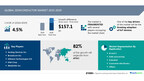
NEW YORK, Feb. 6, 2025 /PRNewswire/ — Report with market evolution powered by AI – The global semiconductor market size is estimated to grow by USD 157.1 billion from 2025-2029, according to Technavio. The market is estimated to grow at a CAGR of 4.5% during the forecast period. Growing adoption of iot devices is driving market growth, with a trend towards increasing adoption of sustainability manufacturing. However, supply-demand gap in global semiconductor market poses a challenge. Key market players include Analog Devices Inc., Broadcom Inc., Infineon Technologies AG, Intel Corp., MediaTek Inc., Microchip Technology Inc., Micron Technology Inc., NVIDIA Corp., NXP Semiconductors NV, ON Semiconductor Corp., Qualcomm Inc., Renesas Electronics Corp., Samsung Electronics Co. Ltd., Skyworks Solutions Inc., Sony Group Corp., STMicroelectronics NV, Taiwan Semiconductor Manufacturing Co. Ltd., Texas Instruments Inc., Toshiba Corp., and Wolfspeed Inc.
Key insights into market evolution with AI-powered analysis. Explore trends, segmentation, and growth drivers- View Free Sample PDF
Semiconductor Market Scope
Report Coverage
Details
Base year
2024
Historic period
2019 – 2023
Forecast period
2025-2029
Growth momentum & CAGR
Accelerate at a CAGR of 4.5%
Market growth 2025-2029
USD 157.1 billion
Market structure
Fragmented
YoY growth 2022-2023 (%)
3.6
Regional analysis
APAC, North America, Europe, South America, and Middle East and Africa
Performing market contribution
APAC at 82%
Key countries
China, US, Germany, Canada, Taiwan, South Korea, Japan, India, UK, and France
Key companies profiled
Analog Devices Inc., Broadcom Inc., Infineon Technologies AG, Intel Corp., MediaTek Inc., Microchip Technology Inc., Micron Technology Inc., NVIDIA Corp., NXP Semiconductors NV, ON Semiconductor Corp., Qualcomm Inc., Renesas Electronics Corp., Samsung Electronics Co. Ltd., Skyworks Solutions Inc., Sony Group Corp., STMicroelectronics NV, Taiwan Semiconductor Manufacturing Co. Ltd., Texas Instruments Inc., Toshiba Corp., and Wolfspeed Inc.
Market Driver
The semiconductor market is experiencing significant trends driven by artificial intelligence, Internet of Things, and machine learning. According to IDC, the semiconductor industry is projected to grow, with B2B enterprises, B2G enterprises, and B2C enterprises driving demand. Integrated circuits, including memory chips, PC sales, smartphones, data center chips, and communication components, are key areas of focus. Semiconductor companies like Navitas Semiconductor and Polymatech Electronics are making strides in AI semiconductors, while ASE/SPIL, Amkor, and others lead in manufacturing. VR, 5G, and 6G are emerging technologies driving progress and breakthroughs in semiconductor devices. Affordability, dependability, and compact size are essential factors for diverse electronics. In the forthcoming years, there will be a rising need for semiconductors in autonomous driving, electrification, and automation. The telecom sector, automotive, consumer electronics, IT and communications, healthcare, aerospace and defense, and consumer goods are major markets. Semiconductor materials, including silicon, gallium arsenide, and emerging materials like aluminum nitride and carbon nanotubes, are crucial for advanced microelectronics and high-end data centers. The fab utilization rate is a critical factor for profitable operations, with intense competition and widespread adoption driving changes in demand and customer behavior. Capital investments and skilled workers are essential for manufacturing capacity constraints and post-pandemic era challenges.
The semiconductor industry faces significant challenges in meeting the increasing demand for semiconductors due to emerging technologies such as 5G, Artificial Intelligence (AI), and the Internet of Things (IoT). One semiconductor fabrication plant consumes approximately 1 Terawatt-hour (TWh) of energy per year and requires two-to-four million gallons of ultra-pure water daily. To address these concerns, industry leaders like Taiwan Semiconductor Manufacturing Company, Limited (TSMC) and Intel Corporation (Intel) are implementing sustainability programs. TSMC is focusing on water recycling applications, expanding diverse water sources, and developing pollution prevention techniques to optimize water usage efficiency. Similarly, Intel is investing in renewable energy and water conservation initiatives to reduce their environmental footprint. These efforts aim to minimize the environmental impact of semiconductor manufacturing while maintaining production capacity to meet the growing demand for these essential technologies.
Request Sample of our comprehensive report now to stay ahead in the AI-driven market evolution!
Market Challenges
The semiconductor market is facing significant challenges from emerging technologies such as artificial intelligence, Internet of Things, and machine learning. According to IDC, the semiconductor industry is expected to grow in the forthcoming years due to the rising need for electronics in various sectors like B2B enterprises, B2G enterprises, and B2C enterprises. However, this growth comes with challenges such as affordability, dependability, and compact size. Semiconductor companies are investing heavily in AI semiconductors for smart manufacturing and generative AI accelerators. The chip industry is also focusing on 5G and 6G, VR, and autonomous driving. The semiconductor industry association reports that there is intense competition and widespread adoption of electrification, autonomy, and electrification in automotive, consumer electronics, IT and communications, healthcare, aerospace and defense, and more. The semiconductor market includes discrete semiconductors, semiconductor devices, and semiconductor materials segments. The semiconductor devices segment includes power-efficient devices for wireless and portable electronic products, efficient power management, and system architectures. The semiconductor materials segment includes advanced microelectronics, high-end data centers, and automotive applications. Manufacturing capacity constraints, changes in demand, and customer behavior are impacting business revenues and corporate operations. Lead times, capital investments, and skilled workers are essential parts of the supply side. Export controls, cyberattacks, and node manufacturing equipment are also challenges for semiconductor companies. The post-pandemic era will bring changes in demand for essential parts like MOSFET, telecom sector switching power supply, power semiconductors, and IGBT. The semiconductor industry is continuously evolving with contemporary technology, progress, and breakthroughs in subsequent technologies like gallium arsenide, aluminum nitride, and carbon nanotubes. Semiconducting materials like silicon, process chemicals, photomasks, electronic gases, and photoresist ancillaries are crucial for fabrication.The semiconductor market has seen significant growth due to increasing demand from various sectors. Connected devices, artificial intelligence, machine learning, data centers, and smart technologies are key drivers. This demand has resulted in semiconductor supply shortages and longer lead times, causing price increases. Manufacturers face challenges meeting demand, leading to delayed chip deliveries. These price hikes can impact profit margins for manufacturers and raise costs for end-users, potentially influencing consumer spending on electronics.
Discover how AI is revolutionizing market trends- Get your access now!
Segment Overview
This semiconductor market report extensively covers market segmentation by
ApplicationN And CData ProcessingIndustrialConsumer ElectronicsOthersProductICsOptoelectronicsDiscrete SemiconductorsSensorsGeographyAPACNorth AmericaEuropeSouth AmericaMiddle East And AfricaSemiconductor MaterialsFabricationPacakging
1.1 N and C- The Networking and Communication (N&C) segment is a substantial part of the global semiconductor market, comprising various semiconductor devices and components used in communication technologies and networking infrastructures. With the world’s increasing connectivity and reliance on efficient communication, the demand for semiconductor solutions in this segment continues to expand. The proliferation of smartphones, tablets, laptops, IoT devices, and other connected devices has in data demand. Consumers and businesses require faster and more reliable communication, driving the need for advanced semiconductor solutions that support high-speed data transmission. The rollout of 5G technology is a significant growth driver, promising higher data speeds and lower latency, enabling new applications and services like enhanced mobile connectivity. 5G networks necessitate a multitude of semiconductor components, such as RF front-end modules, baseband processors, and antennas, fueling the demand for communication ICs. Additionally, the increasing popularity of IoT devices and applications, including smart homes and industrial sensors, heavily relies on semiconductor solutions for wireless connectivity, data processing, and energy efficiency. The growing trend of video streaming, online gaming, and social media platforms puts immense pressure on network bandwidth. Semiconductor solutions are crucial in ensuring efficient and reliable transmission of video content. Consequently, the escalating demand for semiconductors is anticipated to propel the expansion of the N&C segment of the global semiconductor market during the forecast period.
Download a Sample of our comprehensive report today to discover how AI-driven innovations are reshaping competitive dynamics
Research Analysis
The semiconductor market is experiencing significant growth due to the increasing demand for contemporary technology in various industries. Artificial intelligence and the Internet of Things are driving the market, with machine learning algorithms requiring advanced semiconductor devices for processing and analysis. According to IDC, the global semiconductor market is expected to reach USD1.1 trillion by 2026, driven by B2B enterprises, B2G enterprises, and B2C enterprises. Integrated circuits, memory chips, computer chips, data center chips, and communication chips are in high demand. Inventories are being managed carefully to ensure profitable fab utilization, with VAT and Spring being key considerations. Semiconductors are essential electronic components made from semiconducting materials, including transistors and diodes. Breakthroughs in semiconductor technology continue to pave the way for subsequent technologies, revolutionizing industries and transforming our daily lives.
Market Research Overview
The semiconductor market is experiencing significant growth in the contemporary technology landscape, driven by emerging technologies such as Artificial Intelligence (AI), Internet of Things (IoT), and Machine Learning. The IDC forecasts expansion of the semiconductor industry in the forthcoming years, with the level of digitization, GDP, exchange rates, and changes in demand playing crucial roles. Integrated Circuit (IC) manufacturers cater to various sectors, including B2B enterprises, B2G enterprises, and B2C enterprises. Semiconductor devices, including memory chips, communication chips, data center chips, and power semiconductors, are essential components for diverse electronics. The semiconductor industry is witnessing intense competition, with companies focusing on affordability, dependability, compact size, and utilization. The chip industry is also investing in IP and cybersecurity to counteract cyberattacks and export controls. Semiconductor manufacturing involves advanced microelectronics, process chemicals, photomasks, and other materials. The Fabrication segment includes high-energy power-efficient devices, wireless and portable electronic products, efficient power management, and system architectures. The Semiconductor Materials Segment encompasses advanced materials like gallium arsenide, silicon, and emerging materials like aluminum nitride and carbon nanotubes. The semiconductor industry’s progress is marked by breakthroughs and subsequent technologies, such as VR, 5G, and 6G. The industry is also addressing challenges like manufacturing capacity constraints, lead times, and capital investments. The post-pandemic era will bring changes in demand, shortages, and customer behavior, impacting business revenues and corporate operations. The semiconductor industry serves various sectors, including automotive, consumer electronics, IT and communications, healthcare, aerospace and defense, and more. Companies like Navitas Semiconductor, Polymatech Electronics, ASE/SPIL, Amkor, and others are key players in the industry, focusing on AI semiconductors, smart manufacturing, and other innovative technologies. The industry’s future is promising, with a sustainable focus on electrification, autonomy, and a profitable path towards a smart manufacturing ecosystem.
Table of Contents:
1 Executive Summary
2 Market Landscape
3 Market Sizing
4 Historic Market Size
5 Five Forces Analysis
6 Market Segmentation
ApplicationN And CData ProcessingIndustrialConsumer ElectronicsOthersProductICsOptoelectronicsDiscrete SemiconductorsSensorsGeographyAPACNorth AmericaEuropeSouth AmericaMiddle East And AfricaSemiconductor MaterialsFabricationPacakging
7 Customer Landscape
8 Geographic Landscape
9 Drivers, Challenges, and Trends
10 Company Landscape
11 Company Analysis
12 Appendix
About Technavio
Technavio is a leading global technology research and advisory company. Their research and analysis focuses on emerging market trends and provides actionable insights to help businesses identify market opportunities and develop effective strategies to optimize their market positions.
With over 500 specialized analysts, Technavio’s report library consists of more than 17,000 reports and counting, covering 800 technologies, spanning across 50 countries. Their client base consists of enterprises of all sizes, including more than 100 Fortune 500 companies. This growing client base relies on Technavio’s comprehensive coverage, extensive research, and actionable market insights to identify opportunities in existing and potential markets and assess their competitive positions within changing market scenarios.
Contacts
Technavio Research
Jesse Maida
Media & Marketing Executive
US: +1 844 364 1100
UK: +44 203 893 3200
Email: media@technavio.com
Website: www.technavio.com/
View original content to download multimedia:https://www.prnewswire.com/news-releases/semiconductor-market-to-grow-by-usd-157-1-billion-by-2029–growing-adoption-of-iot-devices-boosts-market-report-on-how-ai-is-redefining-the-landscape—technavio-302368513.html
SOURCE Technavio










 Coin Market5 days ago
 Technology5 days ago
 Coin Market5 days ago
 Technology5 days ago
 Coin Market5 days ago
 Coin Market5 days ago
 Technology5 days ago
 Technology5 days ago