Connect with us

Technology

Corporate Training Market to Grow by USD 43.86 Billion (2025-2029), Boosted by Cost-Effective E-Learning Modules, AI Driving Market Transformation – Technavio

Published

on

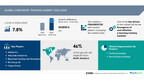
NEW YORK, Feb. 6, 2025 /PRNewswire/ — Report with the AI impact on market trends – The global corporate training market size is estimated to grow by USD 43.86 billion from 2025-2029, according to Technavio. The market is estimated to grow at a CAGR of  7.8%  during the forecast period. Emergence of cost-effective e-learning training modules is driving market growth, with a trend towards emergence of iot and wearable devices. However, technical constraints to implement corporate training  poses a challenge. Key market players include Adobe Inc., Articulate Global Inc., Blanchard Training and Development Inc., BTS Group AB, Cegos Group, Cisco Systems Inc., City and Guilds Group, D2L Inc., DEMOS, Development Dimensions International Inc., Educomp Solutions Ltd., Franklin Covey Co., John Wiley and Sons Inc., Korn Ferry, Learning Technologies Group Plc, Mind Gym Plc, NIIT Ltd., Richardson Sales Performance, Simplilearn, and Skillsoft Corp..

Key insights into market evolution with AI-powered analysis. Explore trends, segmentation, and growth drivers- View Free Sample PDF

Corporate Training Market Scope

Report Coverage

Details

Base year

2024

Historic period

2019 – 2023

Forecast period

2025-2029

Growth momentum & CAGR

Accelerate at a CAGR of 7.8%

Market growth 2025-2029

USD 43859.4 million

Market structure

Fragmented

YoY growth 2022-2023 (%)

7.2

Regional analysis

North America, Europe, APAC, South America, and Middle East and Africa

Performing market contribution

North America at 46%

Key countries

US, UK, Germany, Canada, Japan, China, India, South Korea, France, and Italy

Key companies profiled

Adobe Inc., Articulate Global Inc., Blanchard Training and Development Inc., BTS Group AB, Cegos Group, Cisco Systems Inc., City and Guilds Group, D2L Inc., DEMOS, Development Dimensions International Inc., Educomp Solutions Ltd., Franklin Covey Co., John Wiley and Sons Inc., Korn Ferry, Learning Technologies Group Plc, Mind Gym Plc, NIIT Ltd., Richardson Sales Performance, Simplilearn, and Skillsoft Corp.

Market Driver

The corporate training market is thriving as businesses prioritize upskilling and reskilling their employees to meet the demands of a knowledge-based economy. Remote work and workplace learning are trending, with soft skills, diversity initiatives, and digital skills in high demand. Talent development is key to business goals like performance, retention, and competitiveness. Training methods include virtual, continuous, and specialized programs. Budget and time constraints, economic uncertainty, and organizational requirements shape training decisions. Technology implementations, such as digital tools, automation, and artificial intelligence, require digital literacy and skills. Training providers offer personalized learning activities through chatbots and virtual assistants, with continuous measurement and feedback ensuring quality. Employees’ productivity and efficiency depend on a continuous learning culture, employee engagement, and satisfaction. Industries like FMCG, Pharmaceutical and Healthcare, Financial Services, Professional Services, Public Enterprises, and Information Technology all benefit from technology-enabled training programs. 

The corporate training market has seen a significant shift towards digital solutions, with the Internet of Things (IoT) and wearable devices playing a pivotal role. Wearable devices, such as smart glasses like Google Glass and smartwatches like the Apple Watch, offer convenience and time-saving benefits. These devices can be used for tracking trainee attendance and monitoring performance in real-time, making training sessions more efficient. In collaboration with educational technologies like augmented reality (AR) and virtual reality (VR), wearable devices have the potential to create accurate, multidimensional simulations for learning and development in modern organizations. This approach enhances the training experience and improves overall performance. 

Request Sample of our comprehensive report now to stay ahead in the AI-driven market evolution!

 Market Challenges

The corporate training market is a vital aspect of upskilling and reskilling employees to meet business goals in today’s knowledge-based economy. With remote work becoming the new norm, workplace learning has shifted to various learning activities. Soft skills, diversity initiatives, and digital skills are essential for an adaptable workforce in a competitive and sustainable growth environment. However, challenges persist. Economic uncertainty and financial constraints impact budgets for training programs. Time constraints due to work schedules and employee engagement are crucial. Training providers offer virtual training methods for continuous learning and development, but personalization and continuous measurement are key to employee satisfaction and retention. Technological adoption, such as digital tools, automation, and artificial intelligence, necessitates specialized training programs for digital literacy and skills. Organizational requirements and employee performance are closely linked, making quality training essential for productivity and efficiency. Industries like FMCG, Pharmaceutical and Healthcare, Financial Services, Professional Services, Public Enterprises, and Information Technology have unique training needs due to rapid innovation and operational efficiency requirements. Learning Management Systems and mobile devices enable e-learning, making training more accessible. Continuous learning culture, employee morale, and turnover rates are crucial indicators of a successful training program.Corporate training solutions face technical constraints in the form of customization and integration in the corporate sector. Customization is essential to cater to specific user requirements, reducing time and complexity. However, it increases operating costs, particularly for small-scale companies. Vendors must provide technical support to enhance product functionality, but may withdraw it due to cost reductions. This creates challenges for companies in implementing effective corporate training programs. Customization and documentation facilitate easy upgrades, yet come with added expenses. Companies must weigh these factors to optimize their training investments.

Discover how AI is revolutionizing market trends- Get your access now!

Segment Overview 

This corporate training market report extensively covers market segmentation by 

ProductTechnical TrainingNon-technical TrainingTypeBlendedE-learningGeographyNorth AmericaEuropeAPACSouth AmericaMiddle East And AfricaIndustriesRetailPharmaceutical And HealthcareFinancial ServicesProfessional ServicesPublic EnterprisesInformation TechnologyOthers Industries

1.1 Technical training-  The global corporate training market for non-technical skills is expected to experience significant growth during the forecast period. This growth is driven by the increasing importance of soft skills in enhancing employee productivity and driving business success. Non-technical training covers areas such as leadership development, team-building, problem-solving, and management techniques. These training programs are learner-centric and focus on outcomes that can be measured using behavioral objectives. Organizations are recognizing the value of investing in their employees’ personal and professional development, leading to increased productivity and business growth. Non-technical skills are essential for optimizing technical skills and are in high demand across industries and professions. Training programs are not limited to new employees but are also offered to mid-level and senior management to help them make effective decisions and facilitate business growth. With the increasing focus on people management and the skills gap, senior and HR managers are prioritizing soft skills training. The trend is expected to continue as service-based industries expand and soft skills become increasingly important in client-facing roles and marketing positions. Training providers are responding to this demand by offering mobile and online learning programs to cater to modern learners. For instance, Skillsoft offers a leadership skills development program featuring technology-enabled e-learning solutions, while Vital Smarts provides a leadership training program called Influencer Training. Collaborations between organizations and training vendors to enhance non-technical learning and development programs are expected to fuel the growth of the global corporate training market during the forecast period.

Download a Sample of our comprehensive report today to discover how AI-driven innovations are reshaping competitive dynamics

Research Analysis

The Corporate Training Market is a dynamic and evolving industry focused on upskilling and reskilling employees to meet the demands of the knowledge-based economy. With remote work becoming increasingly common, workplace learning has taken on new meaning, incorporating virtual training methods and learning management systems. Soft skills, such as communication and problem-solving, are in high demand, as are diversity initiatives to foster inclusive workplaces. Business goals, employee performance, and retention are key drivers for corporate training. Technical training spans various industries, including Pharmaceutical and Healthcare, Financial Services, Professional Services, Public Enterprises, and Information Technology. Learning activities are delivered through various methods, including e-learning and mobile devices, and continuous development is essential for staying competitive.

Market Research Overview

The Corporate Training Market is a dynamic and evolving landscape that focuses on upskilling and reskilling employees to meet the demands of a knowledge-based economy. With remote work becoming increasingly prevalent, workplace learning has shifted to include various learning activities that prioritize soft skills, diversity initiatives, and continuous development. Business goals such as performance, retention, and competitiveness drive the need for talent development in various sectors, including FMCG, Pharmaceutical and Healthcare, Financial Services, Professional Services, Public Enterprises, and Information Technology. Training methods have evolved to include virtual training methods, continuous learning, and specialized programs tailored to organizational requirements. Digital transformation and technological adoption have led to the implementation of digital tools, automation, and artificial intelligence, necessitating the development of digital skills and literacy. Training providers offer personalized solutions to address budget constraints, time constraints, and employee engagement, utilizing chatbots, virtual assistants, data analytics, and continuous measurement for feedback and quality training. Employees’ productivity, efficiency, and morale are key indicators of a successful training program, contributing to sustainable growth and adaptation in a rapidly innovating business environment.

Table of Contents:

1 Executive Summary
2 Market Landscape
3 Market Sizing
4 Historic Market Size
5 Five Forces Analysis
6 Market Segmentation

ProductTechnical TrainingNon-technical TrainingTypeBlendedE-learningGeographyNorth AmericaEuropeAPACSouth AmericaMiddle East And AfricaIndustriesRetailPharmaceutical And HealthcareFinancial ServicesProfessional ServicesPublic EnterprisesInformation TechnologyOthers Industries

7 Customer Landscape
8 Geographic Landscape
9 Drivers, Challenges, and Trends
10 Company Landscape
11 Company Analysis
12 Appendix

About Technavio

Technavio is a leading global technology research and advisory company. Their research and analysis focuses on emerging market trends and provides actionable insights to help businesses identify market opportunities and develop effective strategies to optimize their market positions.

With over 500 specialized analysts, Technavio’s report library consists of more than 17,000 reports and counting, covering 800 technologies, spanning across 50 countries. Their client base consists of enterprises of all sizes, including more than 100 Fortune 500 companies. This growing client base relies on Technavio’s comprehensive coverage, extensive research, and actionable market insights to identify opportunities in existing and potential markets and assess their competitive positions within changing market scenarios.

Contacts

Technavio Research
Jesse Maida
Media & Marketing Executive
US: +1 844 364 1100
UK: +44 203 893 3200
Email: media@technavio.com
Website: www.technavio.com/

View original content to download multimedia:https://www.prnewswire.com/news-releases/corporate-training-market-to-grow-by-usd-43-86-billion-2025-2029-boosted-by-cost-effective-e-learning-modules-ai-driving-market-transformation—technavio-302370190.html

SOURCE Technavio

Continue Reading

Technology

Warhound Launches with $200 Million to Rebuild America’s Military Working Dog Supply, Using Advanced Genetics and Defense Technology

Published

on

By

Company will produce genetically enhanced working dogs that leverage cybernetics technology to improve health and performance while ending reliance on foreign suppliers

DALLAS and COSTA MESA, Calif., Oct. 23, 2026 /PRNewswire/ — Warhound, a new defense technology company conceived by American technology entrepreneurs Ben Lamm and Palmer Luckey emerged from stealth with a $200 million seed round. Warhound will rebuild America’s domestic supply of elite working dogs for U.S. military forces, law-enforcement, emergency first response teams—a critical national security resource that the U.S. has long relied on foreign countries to provide. Led by CEO David Spirk, the company will reduce dependence on a shrinking European supply chain and strengthen America’s ability to protect its own people, infrastructure, and national security interests.

Warhound is modernizing America’s working-dog program by delivering a vertically integrated program, combining Colossal’s enhanced genetics platform and secure biobanking capabilities of America’s top-performing dog arsenal, controlled delivery through cloning with best-in-class training and animal care. Through a partnership, all dogs will be equipped by Anduril’s advanced cybernetic Augments, software, and battlefield situational awareness. The company is backed by In-Q-Tel, Sequoia Capital, ARK Invest, Franklin Templeton, 8VC, USIT, Bob Nelsen, Breyer Capital, CAZ Investments, Neogenesis, Builders VC, and Lux Capital among others. Based in Texas, Warhound will operate under the guidance of the American Humane Society which will certify its training programs and support the reunification of retired military working dogs with their former handlers and adoption protocols.

“Palmer, Ben and the Warhound team are exceptional. Sequoia is proud to back them,” said Shaun Maguire, Partner at Sequoia Capital.

Warhound is bringing together Colossal’s breakthroughs in genetics, cloning, and animal biology with Anduril’s advanced defense technology to fundamentally change how America produces, trains, and protects its military working dogs. Colossal’s science will help produce healthier dogs with characteristics suited to demanding missions, while Anduril’s technology will give dogs and their handlers greater awareness and protection in the field.

“Every day, we ask dogs to put their lives on the line to protect ours. They detect explosives, protect our troops, and run toward dangers that most people are trained to run away from. Yet we’re still relying on outdated approaches to breeding and training these extraordinary animals, with too many never making it through the process. We have an opportunity to fundamentally change that. Colossal has spent years pioneering breakthroughs in genetics, cloning, and animal biology, and now we’re applying that science to give these dogs the best possible chance at a long, healthy life and a successful mission. If we’re going to ask man’s best friend to protect America, we owe it to them to use every tool at our disposal to protect them, too,” said Ben Lamm.

Since the Army established the K-9 Corps in 1942, military working dogs have served alongside America’s armed forces for more than 84 years—detecting threats, protecting service members and supporting missions worldwide. That program has evolved in The United States Department of War’s (DOW) Military Working Dog Program, which currently includes 2,200+ working dog teams that are operationally critical for detection and patrol work, and a critical part of the defense infrastructure of the country. More than 80% of U.S. military working dogs are currently acquired from Europe, creating a critical interdependency on foreign nations for an asset the Pentagon itself calls irreplaceable. That dependency is compounding: after a rigorous, roughly three-year acquisition-and-training pipeline, less than half of the dogs procured are ultimately deemed fit for service, meaning the U.S. must source and train roughly 200 dogs today to field 100 working animals tomorrow.

“Man’s best friend deserves man’s best tech,” said Palmer Luckey. 

David Spirk has been named the CEO of Warhound. As a veteran of the United States Marine Corps, he worked as an intelligence specialist with multiple deployments and ultimately served as the Deputy Associate Director of National Intelligence for Afghanistan and Pakistan at the Office of the Director of National Intelligence representing the Intelligence Community at the White House and on Capital Hill. He has an extensive background in the U.S. military, intelligence community, and federal data governance, specifically focused on scaling algorithmic warfare and creating data driven advantages. More recently, he was a Senior Counselor at Palantir Technologies where he focused on expanding the company’s software footprints across the U.S. government, allied international partners, and commercial sectors. Previously, he was appointed the First Chief Data Officer (CDO) for the Department of War, where he worked on accelerating the military’s data-driven capabilities and was the first CDO for the U.S. Special Operations Command (USSOCOM).

“Our long-term goal is simple: healthier dogs, better-prepared teams, and more service members and first responders coming home safely. Leading Warhound, and strengthening America’s working-dog capabilities, is an opportunity to apply my experience to a mission I care deeply about: protecting people and helping the animals who support them,” said David Spirk. “My focus is building a team that can turn scientific advances into capabilities that work in the field.”

Building Healthier, More Capable Working Dogs to Protect Both Dogs and People
The concept of Warhound was conceived years ago by Palmer and Ben after a discussion at Peter Diamandis’ Moonshots Summit. Military working-dog programs face a costly challenge: more than half of candidate dogs fail to complete training, while reliance on overseas breeders leaves the United States dependent on a constrained foreign supply chain. Warhound was created to improve that system—producing fewer dogs with a greater likelihood of remaining healthy, completing training, and succeeding in their missions.

Warhound dog-and-handler teams will also connect Anduril’s integrated capabilities—including eye and ear protection and Eagle Eye technology—will help safeguard working dogs, their handlers and the wider unit while supporting safer, more effective missions.

“For millennia, people have selectively bred dogs to be companions and helpmates. Modern biotechnology gives us a more precise way to shape some of their traits, thus improving both the work dogs do and their own health and well-being,” said Alta Charo, Warren P. Knowles Professor Emerita of Law and Bioethics at the University of Wisconsin–Madison. “The Warhound project offers the possibility of improving working dogs’ health and welfare while supporting the lifesaving work they do. But we still must look carefully at who benefits, what risks the animals bear, and how concern for animal welfare translates into practice through careful evaluation of the evidence, meaningful oversight, and responsibility for the dogs throughout their lives, including retirement. The American Humane Society brings valuable experience through its military working dog reunification efforts and Pups4Patriots program. That experience provides a foundation, but public trust has to be earned through the care we provide and the commitments we keep.”

Animal welfare is central to the program. By improving health, durability, and training success, Warhound will significantly reduce washouts, limit the number of dogs unnecessarily entering intensive training and enable safer, more effective missions. Technologies and therapeutics developed through the program will also be made available to all dogs and ultimately improve the health of all dogs, not only those serving alongside America’s service men and women. Together, these capabilities will establish a secure domestic supply of military working dogs while giving American service members healthier, more capable canine partners.

“Working dogs are extraordinary animals whose courage and loyalty save lives,” said Dr. Robin Ganzert, President and CEO of American Humane Society. “We owe these dogs a commitment to their well-being that matches their service to us. What excites me about Warhound is the opportunity to make health, welfare, and exceptional care fundamental to a working-dog program from the very beginning. Success means helping these dogs thrive throughout their lives—from training and active service to the loving, dignified retirement every canine hero deserves.”

Warhound is built to take today’s level of performance and make it better: using cutting edge engineering and technology, on American soil, from American companies, without the wait times, price volatility, or geopolitical exposure of a foreign supply chain.

About Warhound
Warhound is a Texas-based defense technology company building a secure domestic supply of healthier, more capable working dogs for the U.S. military, law enforcement and emergency responders. Conceived by Palmer Luckey and Ben Lamm, Warhound combines biotechnology licensed from Colossal Biosciences with advanced training and Anduril’s cybernetic augments and software. The company aims to reduce reliance on foreign suppliers, improve canine health and performance, and enhance safety for dogs and their handlers. Animal welfare is central to Warhound’s mission, with a commitment to lifelong care from birth through training, service and retirement. To follow along, please visit: warhound.com.

About Anduril
Anduril Industries is a defense technology company that builds autonomous systems and a common operating layer to give the United States and its allies a persistent advantage in sensing, decision-making, and force projection.

About the American Humane Society
The American Humane Society is the country’s first national humane organization and a global leader in animal welfare. Founded in 1877, American Humane has been at the forefront of protecting animals, rescuing them from cruelty, abuse, and natural disasters, and setting the gold standard in science-based welfare certifications. The organization oversees prominent programs including the iconic “No Animals Were Harmed®” film and television certification, the American Humane Certified™ farm and zoo standards, military working dog reunifications, and the Pups4Patriots™ service dog program. Learn more at americanhumane.org. 

About Colossal Biosciences
Colossal was founded by emerging technology and software entrepreneur Ben Lamm and world-renowned geneticist and serial biotech entrepreneur George Church, Ph.D., and is the first to apply CRISPR technology for the purposes of species de-extinction. Colossal creates innovative technologies for species restoration, critically endangered species protection and the repopulation of critical ecosystems that support the continuation of life on Earth. Colossal is accepting humanity’s duty to restore Earth to a healthier state, while also solving for the future economies and biological necessities of the human condition through cutting-edge science and technologies. To follow along, please visit: www.colossal.com.

View original content to download multimedia:https://www.prnewswire.com/news-releases/warhound-launches-with-200-million-to-rebuild-americas-military-working-dog-supply-using-advanced-genetics-and-defense-technology-302918435.html

SOURCE Warhound

Continue Reading

Technology

Best Version Media Names Chris Laurence Next CEO; Kevin O’Brien Transitions to CRO

Published

on

By

Leadership investment strengthens companywide execution and sharpens focus on Publisher success and revenue growth

BROOKFIELD, Wis., Oct. 23, 2026 /PRNewswire/ — Best Version Media (BVM), a local media and marketing company serving more than 1,300 communities across the United States and Canada, today announced that Chris Laurence has joined the company as Chief Executive Officer. Kevin O’Brien, who previously served as CEO, will transition to Chief Revenue Officer, focusing on leading BVM’s sales field and accelerating revenue growth.

The appointments reflect BVM’s investment in leadership to support its next stage of growth. By establishing dedicated executive leadership for the broader organization and the sales field, BVM is strengthening its ability to execute across the business while supporting its independent Publishers and the local businesses they serve.

“Our growth has brought us to a point where leading the overall company and leading our sales field each deserve a dedicated focus,” said O’Brien. “This transition allows me to concentrate on working with our sales leaders and Publishers, strengthening the field, and helping more local businesses connect with their communities. I’m excited to partner with Chris as we build on BVM’s momentum.”

Laurence brings experience as CEO, CFO, and COO of public, private, and private equity-backed companies, where he has led growth, operational improvement, and technology transformation. Before moving into operating roles, he was a general partner at Brentwood Associates, a Los Angeles-based private equity firm.

“BVM has built a powerful combination of community storytelling, local relationships, and marketing solutions for small businesses,” said Laurence. “I look forward to working with Kevin and the entire team to build on that foundation, strengthen how we operate, and support the success of our Publishers and clients.”

As CEO, Laurence will lead BVM’s overall strategy and operations, working with the team to scale operations and support the success of our Publishers and the local businesses they serve. As CRO, O’Brien will focus on sales leadership, Publisher growth, and revenue generation. Together, they will help advance BVM’s print and digital offerings and position the company for continued growth.

About Best Version Media

Founded in 2007, Best Version Media (BVM) connects local businesses with customers through community magazines, targeted digital advertising, and online presence management tools. Serving more than 1,300 communities across the United States and Canada, BVM’s network of independent Publishers builds relationships with local businesses and brings community stories to life. BVM is a portfolio company of H.I.G. Capital. To learn more, visit www.bestversionmedia.com.

View original content to download multimedia:https://www.prnewswire.com/news-releases/best-version-media-names-chris-laurence-next-ceo-kevin-obrien-transitions-to-cro-302918458.html

SOURCE Best Version Media, LLC

Continue Reading

Technology

Dow and Small Caps Climb Weekly While Nasdaq Slips on Megacap Earnings Charges

Published

on

By

VANCOUVER, BC, Oct. 23, 2026 /PRNewswire/ — Stock Preachers News Commentary – Stocks closed a volatile earnings week with a split verdict: the Dow gained 0.64% and the Russell 2000 jumped 2.07%, while the Nasdaq Composite fell 0.45% and the S&P 500 slipped 0.22%. The VIX rose to 19.40 and the VXN climbed to 28.13 as traders weighed a wave of third-quarter results. Gold dropped 3.47% and silver fell 4.90% on the week, while WTI crude rose 3.74% on Thursday alone. The 10-year Treasury yield eased 11 basis points to 4.99%. Active Companies from around the markets with current developments this week include: Meta Platforms, Inc. (Nasdaq: META), Texas Instruments Incorporated (Nasdaq: TXN), RTX (NYSE: RTX), IBM (NYSE: IBM), and First Citizens BancShares, Inc. (Nasdaq: FCNCA).

Large-cap benchmarks diverged sharply this week. The Dow closed at 52,337.54, up 0.64% for the week despite a 1% drop on Friday, while the S&P 500 ended at 7,642.22, down 0.22% weekly after touching a week high of 7,770.40. The Nasdaq Composite settled at 26,022.45, down 0.45% on the week, dragged by a rough stretch for megacap tech following a batch of earnings reports.

The Russell 2000 was the standout, closing at 2,777.63 for a 2.07% weekly gain, outperforming its large-cap peers as investors rotated toward smaller names. RSI readings show the Nasdaq at 38.9 and the S&P 500 at 43.5, both in cooler territory, while the Dow’s RSI of 54.1 reflects its relative strength this week.

Volatility ticked higher into the weekend, with the VIX up 0.96 points for the week to 19.40 and the VXN up a full point to 28.13. In commodities, natural gas spiked 8.66% on Thursday alone even as it remained down 0.65% for the week, while copper rose 2.44% daily. The dollar firmed slightly against the euro, with EUR/USD down 0.24% on the week to 1.12.

The full report also breaks down key support and resistance levels for each index, additional earnings movers, and sentiment heading into next week’s sessions.

CONTINUED… Read this and more news for Meta Platforms, Inc. (Nasdaq: META), Texas Instruments Incorporated (Nasdaq: TXN), RTX (NYSE: RTX), IBM (NYSE: IBM), and First Citizens BancShares, Inc. (Nasdaq: FCNCA) at: https://stockpreachers.com/articles/small-caps-lead-big-tech-lags-as-earnings-season-shakes-the-tape/

In other industry developments and happenings in the market this week include:

Meta Platforms, Inc. (Nasdaq: META) Meta reported third-quarter revenue of $64.60 billion, up 26% year over year, but net income of $9.86 billion reflected a $9.89 billion charge tied to an agreement with 52 state attorneys general over teen mental health and social media litigation. Diluted EPS was $3.83, up 265% year over year; excluding the litigation charge, EPS would have been $7.40.

Operating margin fell to 20% from 40% a year earlier, while costs and expenses rose 68% to $51.61 billion. Capital expenditures, including finance lease payments, totaled $34.91 billion, and free cash flow was negative $2.12 billion for the quarter.

“We hit major milestones this quarter toward delivering personal superintelligence for everyone – including launching Muse and Muse Wonder, our first frontier model,” said Mark Zuckerberg, Meta founder and CEO. “Our investments are paying off, the core business is strong, and we’re seeing velocity across the board.” The company guided fourth-quarter revenue to a range of $73-76 billion and raised full-year 2026 total expense guidance to $175-179 billion. Read the release.

Texas Instruments Incorporated (Nasdaq: TXN) Texas Instruments reported third-quarter revenue of $6.06 billion, up 28% from a year earlier, with net income of $2.43 billion and earnings per share of $2.62. Operating profit rose 73% to $2.87 billion, and revenue increased 11% sequentially.

“Revenue increased 11% sequentially and 28% from the same quarter a year ago with continued broad growth in industrial, automotive and data center,” said Haviv Ilan, TI’s chairman, president and CEO. Trailing 12-month cash flow from operations was $9.9 billion, with free cash flow of $8.4 billion.

The company returned $5.8 billion to shareholders over the trailing 12 months and guided fourth-quarter revenue to a range of $5.80 billion to $6.30 billion, with earnings per share expected between $2.45 and $2.79. Read the release.

RTX (NYSE: RTX) RTX reported third-quarter sales of $25.0 billion, up 11% versus the prior year and 12% organically, with adjusted EPS of $2.26, up 33% from a year earlier. GAAP EPS was $1.89. Operating cash flow was $2.9 billion and free cash flow was $2.1 billion, with results including $0.25 of IEEPA cost recovery per share.

The company’s backlog reached a record $340 billion, including $176 billion commercial and $164 billion defense, after over $81 billion of new awards including Tomahawk and AMRAAM multi-year production contracts.

“Our strong execution and operational focus in the third quarter enabled RTX to deliver double-digit organic sales growth across commercial aerospace and defense,” said RTX Chairman and CEO Chris Calio. The company raised its full-year adjusted EPS outlook to $7.65-$7.75 and adjusted sales guidance to $97.0-$97.5 billion. Read the release.

IBM (NYSE: IBM) IBM reported third-quarter revenue of $17.1 billion, up 5% as reported and 6% at constant currency, with Software revenue up 8% and Infrastructure revenue up 4%. GAAP diluted earnings per share were $2.31, up 26% year over year, while operating (non-GAAP) EPS was $2.95, up 11%.

The company generated $4.0 billion in net cash from operating activities in the quarter and $3.0 billion in free cash flow, up $0.7 billion year over year. Year to date, free cash flow reached $7.8 billion.

“Disciplined execution throughout the quarter drove accelerated revenue growth and strong free cash flow,” said Arvind Krishna, IBM chairman, president and chief executive officer. IBM now expects full-year free cash flow to increase by more than $1 billion year over year, while continuing to guide constant currency revenue growth of four to five percent. Read the release.

First Citizens BancShares, Inc. (Nasdaq: FCNCA) First Citizens BancShares reported third-quarter net income of $606 million, down from $672 million in the linked quarter. Net income available to common stockholders was $577 million, or $51.23 per common share, a $63 million decrease from the prior quarter’s $640 million.

Net interest income rose to $1.70 billion, up $43 million from the linked quarter, while net interest margin declined 3 basis points to 3.07%. The company completed its BMO Branch Acquisition on September 4, 2026, assuming approximately $4.9 billion in deposits and acquiring approximately $650 million in loans.

“We returned $600 million to our stockholders through share repurchases and further optimized our balance sheet by repaying another $8.0 billion of the Purchase Money Note,” said Chairman and CEO Frank B. Holding, Jr. The board approved a new repurchase plan authorizing up to $1.2 billion of Class A common shares through 2027. Read the release.

Contact Information:

https://stockpreachers.com

Media Contact: info@stockpreachers.com

DISCLAIMER: Nothing in this article should be considered as personalized financial advice. We are not licensed under securities laws to address your particular financial situation. No communication by our employees to you should be deemed as personalized financial advice. Please consult a licensed financial advisor before making any investment decision. This is a market commentary and is not a paid advertisement. This article is being distributed by Stock Preachers, which is wholly owned and operated by Market Equities Limited (“MEL”), a company incorporated under the laws of Ireland. This is an independent market commentary published on a non-paid basis. MEL has not been paid any fee by any company mentioned in this article for its production or distribution, and MEL has no advertising or digital media agreement with any company mentioned in this article. The companies mentioned have not reviewed or approved this article. Market Equities and its owners, operators, directors, and affiliates may, from time to time, hold positions in securities mentioned in this article or in the broad-market index funds that track them, and reserve the right to buy, sell, or hold such securities at any time without further notice. Information in this article was obtained from sources believed to be reliable, including company news releases and public market data, but its accuracy cannot be guaranteed. Market data is as of the time stated and may be delayed. Portions of this commentary were produced with the assistance of automated tools from that data and reviewed against it. Investing in securities involves risk, including the possible loss of some or all of your investment. Technical analysis describes past price and volume behavior and does not predict future results; support and resistance levels can fail at any time. References to the companies named in this article are provided solely as market and sector context and as summaries of each company’s own public news releases. No partnership, affiliation, or endorsement is implied, and nothing in this article is a recommendation to buy, sell, or hold any security. Quotations attributed to company executives are reproduced from those companies’ own news releases. Forward-Looking Statements: This article may contain forward-looking statements within the meaning of Section 27A of the Securities Act of 1933 and Section 21E of the Securities Exchange Act of 1934, including statements made by the companies mentioned in their own news releases. Such statements involve risks and uncertainties, and actual results may differ materially. Readers should review each company’s filings with the SEC and applicable Canadian securities regulators. Eagle Eye is an investor signal-intelligence platform affiliated with the publisher of this article. Eagle Eye is not a broker-dealer, and nothing it provides is investment advice. Data may be delayed. Always do your own research.

View original content to download multimedia:https://www.prnewswire.com/news-releases/dow-and-small-caps-climb-weekly-while-nasdaq-slips-on-megacap-earnings-charges-302918459.html

SOURCE Stock Preachers

Continue Reading

Trending