Connect with us

Technology

Game Development Software Market to Grow by USD 70.7 Billion from 2025-2029, Driven by PC Games and Gaming Consoles Demand, with AI Impact – Technavio

Published

on

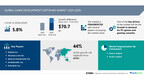
NEW YORK, Feb. 7, 2025 /PRNewswire/ — Report on how AI is redefining market landscape – The global game development software market  size is estimated to grow by USD 70.7 billion from 2025-2029, according to Technavio. The market is estimated to grow at a CAGR of almost 5.8%  during the forecast period. Growth in demand for pc games and gaming consoles is driving market growth, with a trend towards growing popularity of AR/VR games. However, availability of open-source game development software  poses a challenge. Key market players include Adobe Inc., Amazon.com Inc., Apricot Investments Ltd., Audiokinetic Inc., Autodesk Inc., Bandicam Co., Degica Co. Ltd., Electronic Arts Inc., Epic Games Inc., Firelight Technologies Pty Ltd., GameSalad Inc., Microsoft Corp., NVIDIA Corp., Perforce Software Inc., Playtech Plc, Scirra Ltd., Silicon Studio Corp., The Game Creators Ltd., Unity Technologies Inc., and ZeniMax Media Inc..

AI-Powered Market Evolution Insights. Our comprehensive market report ready with the latest trends, growth opportunities, and strategic analysis- View Free Sample Report PDF

Forecast period

2025-2029

Base Year

2024

Historic Data

2019 – 2023

Segment Covered

Component (Game engine and Audio engine), End-user (Enterprises and Individual), and Geography (North America, APAC, Europe, South America, and Middle East and Africa)

Region Covered

North America, APAC, Europe, South America, and Middle East and Africa

Key companies profiled

Adobe Inc., Amazon.com Inc., Apricot Investments Ltd., Audiokinetic Inc., Autodesk Inc., Bandicam Co., Degica Co. Ltd., Electronic Arts Inc., Epic Games Inc., Firelight Technologies Pty Ltd., GameSalad Inc., Microsoft Corp., NVIDIA Corp., Perforce Software Inc., Playtech Plc, Scirra Ltd., Silicon Studio Corp., The Game Creators Ltd., Unity Technologies Inc., and ZeniMax Media Inc.

Key Market Trends Fueling Growth

The integration of augmented reality and virtual reality (AR/VR) technology in gaming is driving the demand for advanced game development software. With the increasing popularity of AR/VR devices, game developers are shifting their focus towards these platforms. This trend is motivating enterprises to launch new AR/VR games and invest in game development software to meet the growing demand. For instance, Apple’s planned launch of a VR/AR headset and AR glasses is expected to boost the market. Recent acquisitions, such as Facebook’s purchase of BigBox VR, further underscore this trend. Overall, the adoption of AR/VR technology in gaming is fueling the growth of the game development software market. 

The game development software market is experiencing significant growth with various tools and technologies in use. Cross platform development is a trending approach, allowing the creation of games for multiple devices. Devopsment, such as Dependency Management and Continuous Integration, is essential for efficient game development. Tools like Unity and Unreal Engine are popular choices for game developers due to their versatility and features. Markets like Mobile, PC, and Console continue to dominate the industry, with Augmented Reality and Virtual Reality gaining traction. The use of Artificial Intelligence and Machine Learning in game development is also on the rise, enhancing player experience. Overall, the game development software market is dynamic and innovative, with new technologies and trends emerging regularly. 

Insights on how AI is driving innovation, efficiency, and market growth- Request Sample!

Market Challenges

Open-source game development software is gaining popularity in economies like India and China due to its affordability and cross-platform compatibility. SMEs and individual developers prefer this option for its low upfront costs and high flexibility. Notable open-source game development frameworks include Cocos2d-x from Xiamen Yaji Software Co. Ltd., Blender, Box2D, Delta Engine, Panda3D, PlayCanvas, and Starling. The widespread use of these tools is expected to impact the global game development software market by increasing competition and reducing demand for proprietary solutions.The game development software market faces several challenges. Costs are a significant issue, with high development costs for advanced graphics and features. Technical challenges include ensuring compatibility across various platforms and devices. The market is also competitive, with numerous players offering similar solutions. Additionally, keeping up with the latest technologies and trends is essential to remain competitive. Licenses and maintenance costs are ongoing expenses that add to the overall cost of using game development software. Furthermore, the need for continuous updates and improvements can be time-consuming and resource-intensive. Overall, the game development software market requires innovative solutions to address these challenges and provide cost-effective, efficient, and user-friendly software for developers.

Insights into how AI is reshaping industries and driving growth- Download a Sample Report

Segment Overview 

This game development software market report extensively covers market segmentation by

ComponentGame EngineAudio EngineEnd-userEnterprisesIndividualGeographyNorth AmericaAPACEuropeSouth AmericaMiddle East And Africa

1.1 Game engine-  The Game Development Software Market is a significant business sector, with numerous companies offering solutions for creating and publishing video games. These tools enable developers to design, build, and test games across various platforms. The market’s growth is driven by increasing consumer demand for high-quality games and the continuous advancement of technology. Companies invest in research and development to enhance their offerings, catering to diverse gaming genres and user needs. The market’s competition is fierce, with firms focusing on providing efficient, user-friendly, and cost-effective software to gain a competitive edge.

Download complimentary Sample Report to gain insights into AI’s impact on market dynamics, emerging trends, and future opportunities- including forecast (2025-2029) and historic data (2019 – 2023) 

Research Analysis

The Game Development Software market is a dynamic and innovative sector in the Gaming Industry, offering various tools for creating immersive experiences using technologies like Augmented Reality (AR) and Virtual Reality (VR), powered by Artificial Intelligence (AI). User-friendly software is essential for Mobile Gaming on Smartphones and Tablets, with Cloud-Based Solutions enabling Cross Platform Development and reducing Development Costs. Unity and Unreal Engine are popular Game Development Tools, while Online Gaming, eSports, and Funding opportunities drive the market. Technical Changes, Open Source Tools, and Intellectual Property concerns are significant factors. Platform Dependency and Market Dispersion require Skills Access for successful development projects.

Market Research Overview

The Game Development Software Market encompasses a wide range of tools and technologies utilized for creating engaging and immersive video games. These solutions enable developers to design, build, and deploy games across various platforms, including PC, console, mobile, and virtual reality. Key features of game development software include real-time rendering, physics engines, animation tools, and integrated development environments. Additionally, these solutions support programming languages such as C++, C#, and Unity Script. The market is driven by the growing demand for advanced gaming experiences and the increasing popularity of esports and mobile gaming. Furthermore, the integration of artificial intelligence and machine learning technologies is expected to fuel market growth.

Table of Contents:

1 Executive Summary
2 Market Landscape
3 Market Sizing
4 Historic Market Size
5 Five Forces Analysis
6 Market Segmentation

ComponentGame EngineAudio EngineEnd-userEnterprisesIndividualGeographyNorth AmericaAPACEuropeSouth AmericaMiddle East And Africa

7 Customer Landscape
8 Geographic Landscape
9 Drivers, Challenges, and Trends
10 Company Landscape
11 Company Analysis
12 Appendix

About Technavio

Technavio is a leading global technology research and advisory company. Their research and analysis focuses on emerging market trends and provides actionable insights to help businesses identify market opportunities and develop effective strategies to optimize their market positions.

With over 500 specialized analysts, Technavio’s report library consists of more than 17,000 reports and counting, covering 800 technologies, spanning across 50 countries. Their client base consists of enterprises of all sizes, including more than 100 Fortune 500 companies. This growing client base relies on Technavio’s comprehensive coverage, extensive research, and actionable market insights to identify opportunities in existing and potential markets and assess their competitive positions within changing market scenarios.

Contacts

Technavio Research
Jesse Maida
Media & Marketing Executive
US: +1 844 364 1100
UK: +44 203 893 3200
Email: media@technavio.com
Website: www.technavio.com/

View original content to download multimedia:https://www.prnewswire.com/news-releases/game-development-software-market-to-grow-by-usd-70-7-billion-from-2025-2029–driven-by-pc-games-and-gaming-consoles-demand-with-ai-impact—technavio-302371170.html

SOURCE Technavio

Continue Reading
Click to comment

Leave a Reply

Your email address will not be published. Required fields are marked *

Technology

Sungrow Launches PowerMatrix, Redefining System-Level PV-Storage Integration

Published

on

By

HEFEI, China, April 28, 2026 /PRNewswire/ — Sungrow, the globally leading PV inverter and energy storage system (ESS) provider, unveiled its next-generation PowerMatrix system for renewable energy applications, alongside a newly released technical white paper, at the Global Renewable Energy Summit (GRES) 2026.

At the event, Sungrow also unveiled the Matrix Inverter, the core product enabling the PowerMatrix system. The PowerMatrix system further integrates the MPPT Booster and the PowerTitan 3.0 energy storage system.

PowerMatrix: Redefining Power Systems for the Renewable Era
Solar PV is rapidly becoming a major power source, with global installations projected by BloombergNEF to reach approximately 655 GW in 2025. As renewable penetration increases, power systems are facing growing challenges in balancing supply and demand while maintaining system stability under dynamic operating conditions. However, existing power systems were not originally designed to effectively address these evolving challenges.

To bridge this gap, PowerMatrix establishes a new system paradigm for renewable energy systems. Built on five core innovations—multi-port topology, native PV-storage integration, distributed control, reconfigurable energy paths, and source-level grid-forming—it integrates PV, storage, grid, and loads into a unified, multi-node energy network, where energy can be dynamically routed, balanced, and optimized in real time.

As a result, this system-level redesign enhances system stability, improves cost efficiency, and increases energy efficiency across the entire power chain.

Stability Redefinition: From Compensated Stability to Inherent Stability
PowerMatrix ensures a stable, continuous power supply through coordinated multi-node operation. It supports high PV DC/AC ratios, high ESS capacity, and around 3,000 full-load hours annually.

In operation, the system ensures continuous power delivery under dynamic conditions through multi-path redundancy and dynamic reconfiguration, with node-level fault isolation allowing unaffected units to remain in service.

At the sub-array level, each unit operates as an independent solar-plus-storage system with grid-forming capability, supporting both grid-connected and islanded operation.

The system delivers millisecond-level response, including 10 ms voltage stabilization and 5 ms inertia response, significantly improving system resilience and recovery performance.

Cost Redefinition: System-Level BOS Reduction
The PowerMatrix enables system-level cost optimization beyond conventional equipment-level cost reduction. By consolidating functions previously distributed across separate devices and system layers, it reduces system complexity and engineering requirements, while enabling more flexible system expansion and cost optimization throughout the project lifecycle.

In a reference system designed for 1 GW of rated grid connection capacity, 8 GWh of installed ESS capacity, and 3,000 annual full-load operating hours in China, the PowerMatrix reduces total CAPEX by approximately $120 million compared to a conventional AC-coupled architecture, with savings across substation & transmission cable, ESS equipment, PV equipment, and other system components.

From an investment perspective, phased deployment and scalable expansion allow capacity to be built in line with project needs rather than requiring full upfront build-out, thereby reducing upfront capital pressure and better aligning investment with project development and demand growth.

Efficiency Redefinition: Full-Link Energy Optimization
The PowerMatrix enhances energy efficiency across the full energy chain:

PV Side: A high-density MPPT architecture with up to 28 MPPTs per MW enables finer string-level optimization, reducing mismatch losses under shading, orientation differences, and module aging conditions, and improving overall energy yield.Storage Side: Cell-to-plant SOC balancing increases usable energy capacity by approximately 8%.Conversion and Delivery: Direct PV-to-storage charging reduces multi-stage power conversion, improving energy transfer efficiency by up to 5%.

In addition, source-level grid-forming capability further enhances grid adaptability, supporting higher renewable penetration and reducing curtailment.

Scalable Across Applications
The PowerMatrix is designed for utility-scale, commercial and industrial (C&I), mining microgrid, and AI data center applications, to deliver a unified, scalable energy system capable of adapting to diverse operational requirements. Its system-level optimization enhances energy reliability, efficiency, and controllability across different use cases, supporting both grid-connected and off-grid scenarios.

“As renewable energy continues to grow as a dominant power source, the energy system is placing higher demands on the coordination and stability of solar and storage technologies,” said Lee Zhang, Sungrow Vice President and President of the Utility PV Inverter Business Unit. “Through the PowerMatrix, we aim to help advance this shift from standalone equipment integration to deeply coordinated system design, enabling solar-plus-storage to serve as an intelligent hub for future energy systems and making renewable energy a stable and dependable source of power.”

About Sungrow
Sungrow, a global leader in renewable energy technology, has pioneered sustainable power solutions for over 29 years. As of Dec 2025, Sungrow has installed over 1000 GW of power electronic converters worldwide. The company is recognized as the world’s most bankable PV inverter and energy storage company (BloombergNEF). Its innovations power clean energy projects across the globe, supported by a network of 520 service outlets guaranteeing excellent customer experiences. At Sungrow, we’re committed to bridging to a sustainable future through cutting-edge technology and unparalleled service. For more information, please visit: www.sungrowpower.com/en

Photo – https://mma.prnewswire.com/media/2967646/PowerMatrix.jpg
Logo – https://mma.prnewswire.com/media/1344575/5941579/Logo.jpg

View original content:https://www.prnewswire.co.uk/news-releases/sungrow-launches-powermatrix-redefining-system-level-pv-storage-integration-302755472.html

Continue Reading

Technology

Zurich launches Global Capability Center in Hyderabad to power next-gen tech and AI

Published

on

By

HYDERABAD, India, April 28, 2026 /PRNewswire/ — Zurich Insurance Group (Zurich) today announced the launch of a new Global Capability Center in Hyderabad, reinforcing its focus on advancing technology and AI capabilities to transform insurance.

Zurich has appointed Amit Kalra as Head of Zurich Capability Centers, effective 1 July 2026. Based in India, he will shape the Group’s Capability Center strategy and oversee all locations globally. He will also lead the establishment and expansion of the Hyderabad center, supporting Zurich’s broader technology and AI ambitions. Mr. Kalra brings extensive experience in building and leading global capability centers as strategic enablers for complex, international organizations.

Cara Morton, CEO Zurich Global Businesses & Operations, said: “India is a key talent market for Zurich, and Hyderabad stands out for its depth of engineering expertise and innovation. This center reflects a shift in how we build for the future, strengthening our global technology and AI capabilities while giving highly skilled professionals the opportunity to work on solutions that make a real impact for our customers around the world.”

The Hyderabad center will act as a strategic extension of Zurich’s global operating model, with end–to–end ownership across engineering, data and core business operations. From day one, the center will embed AI–enabled ways of working into how solutions are designed, delivered and scaled across the Group. Designed as a purpose-built environment, the center allows Zurich to build modern, technology and AI–led capabilities without legacy constraints.

As the center grows, Zurich will recruit specialists across cloud and platform engineering, data and AI, application development, cybersecurity and quality engineering. Teams will be responsible for the full lifecycle of their solutions – from design, to build, to execution – and will contribute directly to global platforms and solutions.

Photo: https://mma.prnewswire.com/media/2966480/Amit_Kalra_Zurich_Insurance.jpg


View original content to download multimedia:https://www.prnewswire.com/in/news-releases/zurich-launches-global-capability-center-in-hyderabad-to-power-next-gen-tech-and-ai-302755480.html

Continue Reading

Technology

London’s Top Restaurants Named at Inaugural OpenTable Awards, Including New ‘Icons’

Published

on

By

OpenTable unveils its first-ever Restaurant Awards winners, including the new ‘Icons’* list spotlighting the restaurants defining London dining todayWinners include BRUTTO for the Icons list, Singburi for Opening of the Year and The Plimsoll for Gastropub of the Year

LONDON, April 28, 2026 /PRNewswire/ — London’s dining powerhouses have been revealed, as OpenTable names the favourite restaurants shaping the city’s food scene at its first-ever OpenTable Restaurant Awards. The winners span across three categories; OpenTable Icons*, Restaurateurs’ Choice,** and People’s Choice.** 

Hosted by Chef and social media personality, Poppy O’Toole, the awards took place on 27th April high in the London skyline at Landing Forty Two, welcoming key figures from the food, drink, and hospitality industry.

At the centre of the Awards is OpenTable’s new ‘Icons’*, 26 culinary landmarks shaping London’s dining culture. Spanning long-standing institutions, MICHELIN-starred restaurants and modern favourites, the list was hand-selected by an OpenTable-appointed panel of critics and industry experts who live and breathe the city’s food scene.

The 2026 OpenTable London Icons:

64 Goodge Street | Andrew Edmunds | Blacklock Soho | Bouchon Racine | Brawn | BRUTTO | Chez Bruce | CORE by Clare Smyth | Da Terra | Darjeeling Express | Donia | Hawksmoor St Pancras | Humble Chicken | JUNO Omakase | MAMBOW | Moro | Portland | Restaurant Gordon Ramsay | Rita’s | Scott’s Mayfair | St. JOHN Smithfield | The Clove Club | The Ledbury | The Plimsoll | The Quality Chop House | Trinity

OpenTable Icons has a designation within the website and app, making it easier for diners to discover and book the ‘of the moment’ restaurants. 

Beyond the Icons list, the awards honoured standout performers across categories voted for by diners and hospitality professionals.

The People’s Choice (Voted by Diners):

Bucket List: The LedburyGastropub of the Year: The PlimsollOpening of the Year: SingburiNeighbourhood Gem: St. JOHN SmithfieldStandout Service: Rita’s

The Restaurateurs’ Choice (Voted by the Industry):

Everyday Hero: David Moore, Pied à TerreUp & Coming: Dara Klein, Tiella Trattoria & BarInnovation Award: Three SheetsImpact Award: BubalaRestaurant Design: Berners Tavern

Awards host Poppy O’Toole said, “It was a privilege to celebrate the chefs, front-of-house teams and restaurateurs whose passion keeps London’s dining culture so vibrant. From neighbourhood gems to destination dining rooms, the OpenTable Restaurant Awards winners show the breadth, creativity and resilience of the city’s restaurant scene today.” 

“Our first-ever OpenTable Restaurant Awards winners are the places defining London’s culture right now, setting global standards and creating experiences that stay with diners long after they leave,” said Laure Bornet, Senior Vice President of International Growth at OpenTable. “At a time of real pressure for the industry, celebrating and backing the people and places raising the bar matters more than ever, and we’re proud to champion these standout spots to diners.”

The Icons were selected by a panel of judges including: Adam Hyman, Owner of CODE Hospitality and The Good Food Guide, Ben Benton and Freddy Clode, Hosts of The Go-To Food Podcast; Ben Lippett, Cook and Food Writer; Jenny Lau, Writer and Community Chef; Jimi Famurewa, Food Writer, Restaurant Critic and Broadcaster; Lorraine Copes, Founder and CEO of Be Inclusive Hospitality and Seema Pankhania, Food Content Creator and Author. 

You can find the full list of Icons here and award winners linked here. A selection of high-res imagery is available here

NOTES TO EDITORS

*OpenTable Icon Methodology: The ‘Icon’ designation and associated restaurant nominations are determined by an OpenTable-appointed industry panel via a qualitative assessment of a pre-determined shortlist. This shortlist is generated through a combination of data-informed insights (diner reviews, ratings, and platform signals) and expert input from local specialists. This process represents a subjective assessment rather than an objective ranking or exhaustive list. Eligibility is merit-based and requires no purchase or commercial participation, and payment to OpenTable does not influence the likelihood of nomination or selection. All selections are discretionary, final, and binding. 

**OpenTable Restaurant Awards Terms & Conditions: https://www.opentable.co.uk/c/awards-london/terms/ 

About OpenTable:

OpenTable, a global leader in restaurant tech and part of Booking Holdings, Inc. (NASDAQ: BKNG), helps more than 65,000 restaurants worldwide fill 1.9 billion seats a year. OpenTable’s world-class technology empowers restaurants to focus on what matters most – their team, their guests, and their bottom line – while enabling diners to discover and book the perfect restaurant for every occasion. 

Photo: https://mma.prnewswire.com/media/2967573/Poppy_O_Toole_OpenTable.jpg
Photo: https://mma.prnewswire.com/media/2967574/Henry_Harris_Icon_Award_OpenTable.jpg
Logo: https://mma.prnewswire.com/media/2967572/OpenTable_Logo.jpg


View original content to download multimedia:https://www.prnewswire.co.uk/news-releases/londons-top-restaurants-named-at-inaugural-opentable-awards-including-new-icons-302755481.html

Continue Reading

Trending