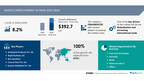
NEW YORK, Feb. 7, 2025 /PRNewswire/ — Report on how AI is redefining market landscape – The plastic crates market in india size is estimated to grow by USD 392.7 million from 2025-2029, according to Technavio. The market is estimated to grow at a CAGR of almost 8.2% during the forecast period. Globalization and increasing international trade is driving market growth, with a trend towards advent of plasticulture. However, growing pollution due to increasing plastic waste generation poses a challenge.Key market players include Aristoplast Products Pvt. Ltd., Bright Brothers Ltd., Brix Industries, Croma Plast Pvt. Ltd., Esquire Multiplast Pvt. Ltd., K.M.S. Plastworld Pvt. Ltd., MPH Group, National Plastics, Nilkamal Ltd., R.R. Enterprises, Rita International, Samruddhi Industries Ltd., Signet Industries Ltd., Sri Kamakshi Enterprises., Sunshine Plastics, Swift Technoplast Pvt. Ltd., The Supreme Industries Ltd., VIP Plastics, Vishakha Mouldings P. Ltd., and White Plaast.
Key insights into market evolution with AI-powered analysis. Explore trends, segmentation, and growth drivers- View Free Sample PDF
Plastic Crates Market In India Scope
Report Coverage
Details
Base year
2024
Historic period
2019 – 2022
Forecast period
2025-2029
Growth momentum & CAGR
Accelerate at a CAGR of 8.2%
Market growth 2025-2029
USD 392.7 million
Market structure
Fragmented
YoY growth 2022-2023 (%)
7.6
Regional analysis
India
Performing market contribution
APAC at 100%
Key countries
India
Key companies profiled
Aristoplast Products Pvt. Ltd., Bright Brothers Ltd., Brix Industries, Croma Plast Pvt. Ltd., Esquire Multiplast Pvt. Ltd., K.M.S. Plastworld Pvt. Ltd., MPH Group, National Plastics, Nilkamal Ltd., R.R. Enterprises, Rita International, Samruddhi Industries Ltd., Signet Industries Ltd., Sri Kamakshi Enterprises., Sunshine Plastics, Swift Technoplast Pvt. Ltd., The Supreme Industries Ltd., VIP Plastics, Vishakha Mouldings P. Ltd., and White Plaast
Market Driver
The Indian agricultural sector is undergoing a transformation with the adoption of plasticulture, utilizing plastics in various farming and horticulture applications. Plastics offer several advantages over conventional materials, including high strength, flexibility, and corrosion resistance. These features contribute to water savings, yield improvement, and prevention of weed growth. Additionally, plastics can protect against adverse climatic conditions and reduce fertilizer usage and post-harvest losses. The Indian government supports this trend through educational programs and incentives. Plasticulture’s benefits extend to agriculture storage and transportation, making plastic crates an attractive solution. With the increasing popularity of plasticulture, the demand for plastic crates is projected to rise due to their ease of use, reusability, and longer lifecycle.
The Plastic Crates Market is witnessing significant growth due to its high demand in various industries. Key sectors driving this trend include agriculture, food and beverage, and logistics distribution. These crates are mass-produced to ensure durability, versatility, and stackability, making them ideal for bulk packaging and returnable use. High-performance films are used to enhance their sustainability, corrosion-resistance, and moisture-resistance, enabling their use in extreme temperatures and safe packaging. Food and beverage industries benefit from plastic crates due to their ability to maintain temperature and preserve food. With the rise of online food orders and e-commerce, the demand for lightweight, non-biodegradable packaging solutions is increasing. Customizable reusable crates are also popular in export activities and the fast food industry. Production technology advances include the use of RFID tags, High-density polyethylene (HDPE), Polypropylene (PP), and Polyvinyl Chloride (PVC) for strength and flexibility. Environmental initiatives are pushing for the adoption of sustainable plastic crates, and the market is responding with innovative solutions. Trade activities, logistics, and distribution are also adopting these crates due to their cost-effectiveness and ease of use. In the age of no contact delivery, plastic crates offer a safe and efficient solution for businesses.
Request Sample of our comprehensive report now to stay ahead in the AI-driven market evolution!
Market Challenges
Plastic waste is a significant environmental issue in India, with an estimated 28,593.96 tons generated annually. This waste comes from various plastic types, including PE, PP, PVC, PET, HDPE, and PS, most of which are non-biodegradable. Plastic pieces can cause harm by blocking waterways, contaminating soil and water, and posing health risks through ingestion or toxic emissions. For instance, plastic bags and containers made of expanded polystyrene (EPS) foam can take thousands of years to decompose. The burning of plastic for heating or cooking releases harmful gases. Around 43% of manufactured plastics are used for packaging, leading to increased plastic waste generation. This growing plastic production and waste pose challenges for plastic crate vendors, as there is mounting pressure to properly handle waste from plastic processing companies during the forecast period.Plastic crates are a popular choice for businesses involved in safe packaging and online food orders due to their durability and temperature maintenance capabilities. However, the use of non-biodegradable packaging raises environmental concerns. Environmental initiatives push for more sustainable options like cardboard or wooden crates. Trade activities, including export and e-commerce, rely on plastic crates for their strength, flexibility, and reusability. Production technology advances with the use of RFID tags, high-density polyethylene (HDPE), polypropylene (PP), and polyvinyl chloride (PVC). Customizable and reusable crates offer benefits for temperature stability and food preservation. Weather protection is crucial for outdoor transportation. No contact delivery and home delivery services require packaging. Fast food industry and international trade heavily utilize plastic crates for goods transportation. Product approval regulations and packaging waste management are essential considerations. Biodegradable properties are a growing trend in the packaging industry.
Discover how AI is revolutionizing market trends- Get your access now!
Segment Overview
This plastic crates market in India report extensively covers market segmentation by
End-userFood And BeveragesIndustrialRetailPharmaceuticalOthersMaterialPEPPPVCOthersGeographyAPAC
1.1 Food and beverages- The Indian food processing industry, accounting for approximately 9% of the manufacturing sector, is experiencing growth. With a rising consumer preference for packaged products and evolving food habits, the demand for plastic crates in this sector is increasing. Plastic crates are essential for storing and transporting packaged food and beverages, offering benefits such as ease of loading, stacking, and handling. They can withstand automated equipment, high-pressure washing, sterilization, and temperature changes. Additionally, plastic crates are cost-effective, recyclable, foldable, and durable, making them ideal for the food and beverage (F&B) industry. The dairy industry, in particular, is a significant end-user due to the high-load demands. Plastic crates made of HDPE are commonly used in the F&B industry’s materials handling process, from farmers to distribution centers and supermarket shelves. The expanding F&B industry and the growing demand for plastic crates in various applications offer significant growth opportunities for the plastic crates market in India during the forecast period.
Download a Sample of our comprehensive report today to discover how AI-driven innovations are reshaping competitive dynamics
Research Analysis
Plastic crates are a popular choice for bulk packaging and transportation due to their durability, versatility, and stackability. They are an alternative to traditional options like corrugated fibreboard and wooden crates. Plastic crates offer superior weather protection, making them ideal for outdoor storage and international trade. In the age of online shopping and home delivery, plastic crates ensure temperature stability for packaged food items. These mass-produced crates are made from sustainable materials like high density polyethylene and polyvinyl chloride, offering strength and flexibility. Plastic crates are widely used in various industries, including fast food, due to their returnable and reusable nature. They come in various sizes and can be customized to meet specific requirements. With no contact delivery becoming the new norm, plastic crates ensure food preservation and hygiene. Additionally, their high density and bulk storage capabilities make them a preferred choice for businesses looking to optimize their supply chain.
Market Research Overview
Plastic crates are a popular choice for various industries due to their durability, versatility, and stackability. They offer superior protection against weather conditions, making them ideal for outdoor use and international trade. Plastic crates are commonly used for goods transportation, particularly in the food and beverage industry for packaged food and online shopping home delivery. Customized crates are available to meet specific requirements, such as temperature stability for perishable items or moisture-resistant properties for agricultural produce. Plastic crates are also reusable, reducing packaging waste and promoting sustainable practices. However, they are non-biodegradable, raising concerns about environmental impact. To address this, some companies are producing biodegradable plastic crates made from high-performance films. Plastic crates are also used in logistics distribution for mass-produced items, offering strength and flexibility for safe packaging. RFID tags can be added for easy tracking and inventory management. Production technology allows for customizable designs, and high-density polyethylene, polypropylene, and polyvinyl chloride are common materials used in their production. Plastic crates are essential in the food and beverage industry for temperature maintenance and food preservation. They are also used in the fast food industry for bulk packaging and returnable packaging. In the e-commerce sector, plastic crates are used for online food orders and no-contact delivery. Plastic crates must meet product approval regulations and are subject to environmental initiatives and trade activities. They are lightweight, corrosion-resistant, and can withstand extreme temperatures. In summary, plastic crates offer numerous benefits for various industries, including durability, versatility, and weather protection.
Table of Contents:
1 Executive Summary
2 Market Landscape
3 Market Sizing
4 Historic Market Size
5 Five Forces Analysis
6 Market Segmentation
End-userFood And BeveragesIndustrialRetailPharmaceuticalOthersMaterialPEPPPVCOthersGeographyAPAC
7 Customer Landscape
8 Geographic Landscape
9 Drivers, Challenges, and Trends
10 Company Landscape
11 Company Analysis
12 Appendix
About Technavio
Technavio is a leading global technology research and advisory company. Their research and analysis focuses on emerging market trends and provides actionable insights to help businesses identify market opportunities and develop effective strategies to optimize their market positions.
With over 500 specialized analysts, Technavio’s report library consists of more than 17,000 reports and counting, covering 800 technologies, spanning across 50 countries. Their client base consists of enterprises of all sizes, including more than 100 Fortune 500 companies. This growing client base relies on Technavio’s comprehensive coverage, extensive research, and actionable market insights to identify opportunities in existing and potential markets and assess their competitive positions within changing market scenarios.
Contacts
Technavio Research
Jesse Maida
Media & Marketing Executive
US: +1 844 364 1100
UK: +44 203 893 3200
Email: media@technavio.com
Website: www.technavio.com/
View original content to download multimedia:https://www.prnewswire.com/news-releases/plastic-crates-market-in-india-to-grow-by-usd-392-7-million-from-2025-2029–boosted-by-globalization-and-international-trade-report-on-ais-impact-on-market-trends—technavio-302370847.html
SOURCE Technavio










 Technology4 days ago

 Near Videos4 days ago
 Technology4 days ago
 Technology5 days ago
 Technology3 days ago
