Technology
Healthcare IT Market to Grow by USD 215.4 Billion from 2025-2029, Driven by Service Quality and Efficiency Focus, with AI Impact on Market Trends – Technavio
Published
2 years agoon
By
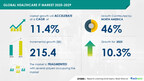
NEW YORK, Feb. 7, 2025 /PRNewswire/ — Report with market evolution powered by AI – The global healthcare IT market size is estimated to grow by USD 215.4 billion from 2025-2029, according to Technavio. The market is estimated to grow at a CAGR of almost 11.4% during the forecast period. Increasing focus on improving quality of services and efficiency is driving market growth, with a trend towards emergence of ai-enabled emotion recognition technologies. However, vulnerability of emrs toward cybercrime poses a challenge. Key market players include 3M Co., athenahealth Inc., Cognizant Technology Solutions Corp., Dassault Systemes SE, Datavant, Dell Technologies Inc., Epic Systems Corp., GE Healthcare Technologies Inc., International Business Machines Corp., Koninklijke Philips NV, McKesson Corp., Microsoft Corp., Oracle Corp., SAS Institute Inc., Siemens AG, Tata Consultancy Services Ltd., Tenet Healthcare Corp., Optum Inc., Veradigm LLC, and Wipro Ltd..
Key insights into market evolution with AI-powered analysis. Explore trends, segmentation, and growth drivers- View Free Sample PDF
Healthcare IT Market Scope
Report Coverage
Details
Base year
2024
Historic period
2019 – 2023
Forecast period
2025-2029
Growth momentum & CAGR
Accelerate at a CAGR of 11.4%
Market growth 2025-2029
USD 215.4 billion
Market structure
Fragmented
YoY growth 2022-2023 (%)
10.3
Regional analysis
North America, Europe, APAC, South America, and Middle East and Africa
Performing market contribution
North America at 46%
Key countries
US, Canada, Germany, UK, China, Japan, France, Italy, India, and South Korea
Key companies profiled
3M Co., athenahealth Inc., Cognizant Technology Solutions Corp., Dassault Systemes SE, Datavant, Dell Technologies Inc., Epic Systems Corp., GE Healthcare Technologies Inc., International Business Machines Corp., Koninklijke Philips NV, McKesson Corp., Microsoft Corp., Oracle Corp., SAS Institute Inc., Siemens AG, Tata Consultancy Services Ltd., Tenet Healthcare Corp., Optum Inc., Veradigm LLC, and Wipro Ltd.
The healthcare IT industry is experiencing significant growth, according to the latest research study. The industry trend analysis shows that e-prescribing, interoperability, and security concerns are top priorities for healthcare organizations. A single diagram and multiple tables highlight the highest revenue-generating segments: electronic health records, clinical devices, and capacity management solutions. Healthcare systems are investing in healthcare providers to monitor and manage disease progression, coordinate care, and ensure patient safety. The Worldometer reports that over 6 million hospital beds are in use, requiring IT systems for communication and data exchange. Healthcare management focuses on specialty medications, ePrescriptions, and virtual healthcare. Prescribers and controlled substances are under scrutiny, leading to the adoption of electronic prior authorizations and remote monitoring. Smaller healthcare organizations and outpatient settings face unique challenges, including basic infrastructure, usability, and integration. Federal bodies are pushing for web-based management and information systems to improve patient information access and decision-making for healthcare professionals. Security concerns persist, with exploitation and proliferation of medical apps and consumer technology companies posing risks. Healthcare IT solutions, including RCM, are essential for managing patient care quality and purchasing power. Cloud-based solutions, AI & IoT technologies, and data security are key investments for integrated healthcare systems. Virtual reality (VR) and augmented reality (AR) are transforming medical imaging and patient management. Value-based payment models, payer-provider mergers, and quality reporting solutions are shaping the eHealth market. Big data, IT investments, and healthcare analytics solutions are driving innovation in patient care and personalized medicine. The future of healthcare IT includes virtual hospitals, remote patient monitoring, telemedicine solutions, and accountable care solutions. Artificial Intelligence (AI) and Machine Learning (ML) are revolutionizing care delivery and patient data management. Geriatric population growth and workflow management are major considerations for healthcare IT architecture. Healthcare IT solutions must address the unique needs of hospitals, ambulatory care centers, and IT systems while ensuring patient safety and data security.
In the healthcare industry, doctors and caregivers are utilizing advanced medical technologies, including Artificial Intelligence (AI), for precise ailment diagnosis and effective patient treatment. AI is gaining significant traction in the healthcare IT sector. One noteworthy application of AI is emotion recognition, which enables the technology to identify, decipher, and react to human emotions and moods. Telemedicine vendors, particularly those focusing on telepsychiatry, have begun implementing emotion recognition technology to comprehend patients’ feelings. This technology is beneficial for patients who are not physically present and may not verbally express their emotions to psychiatrists. AI’s ability to recognize emotions enhances the quality of remote healthcare services.
Request Sample of our comprehensive report now to stay ahead in the AI-driven market evolution!
• The healthcare IT industry is experiencing significant growth, with e-prescribing, virtual healthcare, and electronic health records leading the way. However, challenges persist, such as interoperability issues and security concerns. According to a recent research study, the industry is projected to reach USD735.6 billion by 2025. Key trends include the use of clinical devices for coordinated care, capacity management solutions for hospital beds, and RCM solutions for healthcare organizations. EPrescriptions, electronic prior authorizations, and remote monitoring are also gaining popularity. However, smaller healthcare organizations and outpatient settings face unique challenges, including basic infrastructure and communication issues. According to a survey by United Health, 75% of US hospitals use web-based management systems, but only 30% have fully integrated IT systems. Security concerns remain a major challenge, with exploitation and proliferation of medical apps and consumer technology companies a growing concern. Healthcare providers must invest in trained IT personnel and data security measures to ensure patient care quality. The highest revenue-generating segments include healthcare systems, hospitals, and ambulatory care centers. Key players include Change Healthcare, Mass Media Data, and Healthcare IT solutions. The eHealth market is also seeing significant growth, with hardware, software, and electronic information systems driving innovation. Cloud-based solutions, AI & IoT technologies, and data security are key areas of investment. Despite these challenges, the future of healthcare IT looks promising, with virtual hospitals, telemedicine solutions, and value-based payment models transforming care delivery. However, usability, integration, and IT architecture remain key areas for improvement. Worldometer reports that there are currently over 7.9 billion people in the world, with an aging population and increasing demand for personalized medicine and geriatric care. Healthcare organizations must adapt to these trends to provide quality care and manage disease progression effectively. In conclusion, the healthcare IT industry is undergoing significant change, with e-prescriptions, electronic health records, and virtual healthcare leading the way. However, challenges such as interoperability issues, security concerns, and communication challenges persist. Healthcare organizations must invest in IT systems, trained IT personnel, and data security measures to provide quality patient care and adapt to the changing healthcare landscape.
• The healthcare industry’s reliance on IT and electronic communications for managing large data volumes has significantly advanced. However, this progress comes with risks, particularly cybercrime. Hacking of computers, software, and intranet portals pose threats to sensitive data such as medical records, patient personal information, and insurance details. Ensuring data accuracy is crucial for healthcare providers to deliver appropriate patient insights. As technology advances, it’s essential to prioritize cybersecurity measures to protect this valuable information.
Discover how AI is revolutionizing market trends- Get your access now!
This healthcare it market report extensively covers market segmentation by
End-userHealthcare ProvidersHealthcare PayersComponentServicesSoftwareHardwareGeographyNorth AmericaEuropeAPACSouth AmericaMiddle East And Africa
1.1 Healthcare providers- The healthcare providers segment, which includes hospitals, clinics, laboratories, pharmacies, and ambulatories, is the largest and continuing leader in the global healthcare IT market. In recent years, technological advancements have significantly transformed healthcare, with medical facilities adhering to regulatory changes and enhancing patient care quality. Hospitals and physician offices, regardless of size, have embraced new technologies. These modern medical facilities are high-tech operations that provide skilled personnel with advanced technology. Healthcare IT adoption offers numerous benefits, such as improved care quality, accuracy, reduced costs, and seamless collaboration. The HITECH Act of 2009 mandated medical facilities to upgrade their IT infrastructure, particularly regarding electronic health records (EHRs). EHR systems enable healthcare professionals to securely capture and exchange vital patient health information, fostering teamwork and critical decision-making. Pharmacies have also adopted IT to streamline operations and access essential patient and medical data. Digital messaging facilitates faster, more direct communication between doctors and pharmacists, resolving concerns before patients arrive. Laboratories, too, have implemented IT services for efficient information management through Laboratory Information Systems (LIS). The integration of IT in healthcare leads to enhanced patient care, with advantages such as improved quality, accuracy, reduced costs, and seamless collaboration. As healthcare providers continue to adopt and optimize these technologies, the healthcare IT market within this segment will thrive during the forecast period.
Download a Sample of our comprehensive report today to discover how AI-driven innovations are reshaping competitive dynamics
Title: Healthcare IT Industry Trends and Financial Insights: A Comprehensive Analysis of E-Prescribing, Interoperability, and Digital Health Introduction: The healthcare IT industry is witnessing significant growth, driven by the adoption of e-prescribing, interoperability, and digital health solutions. This research study provides an industry trend analysis of the healthcare IT market, focusing on revenue-generating segments such as hardware, software, electronic information systems, and eHealth. Key Findings: – The e-prescribing market is expected to grow at a CAGR of 12.2% from 2021 to 2028. – Interoperability issues continue to challenge the industry, with Change Healthcare and Mass Media Data leading the charge towards standardization. – The highest revenue-generating segment in 2020 was software, accounting for 52.6% of the total market share. – Hardware and cloud-based solutions are gaining popularity due to their cost-effectiveness and scalability. – AI & IoT technologies are revolutionizing healthcare IT, with applications in data security, remote patient monitoring, and predictive analytics.
Title: Healthcare IT Industry Trends and Market Analysis: A Comprehensive Overview The healthcare IT industry is experiencing significant growth as digital transformation reshapes care delivery. According to the latest research study, the global eHealth market is projected to reach USD618.8 billion by 2026, growing at a CAGR of 15.5% from 2021. Key industry trends include the adoption of e-prescribing, interoperability, and security concerns. E-prescriptions and electronic prior authorizations are becoming standard in healthcare organizations, with over 80% of US hospitals using electronic health records (EHRs). Interoperability issues persist, with the need for standardized data communication protocols and IT architecture. Healthcare providers are investing in capacity management solutions, such as remote monitoring and virtual healthcare, to manage disease progression and improve patient care quality. The highest revenue-generating segments include clinical solutions, patient care, and healthcare management. The healthcare IT industry comprises various stakeholders, including healthcare organizations, clinical devices, and information systems. The Worldometer reports over 7.9 billion patient beds worldwide, and the US alone has over 60,000 hospitals and ambulatory care centers. The industry faces challenges such as security concerns, exploitation, and proliferation of medical apps and consumer technology companies. Trained IT personnel are in high demand to manage these systems and ensure patient data security. The financial information reveals that the largest players in the healthcare IT industry include Change Healthcare, Mass Media Data, Healthcare IT solutions, and United Health. Federal bodies and RCM solutions are also significant contributors to the industry. The healthcare IT industry is evolving rapidly, with trends such as cloud-based solutions, AI & IoT technologies, and value-based payment models. The future of healthcare IT includes virtual reality (VR), augmented reality (AR), genomics, personalized medicine, and virtual hospitals. The industry’s growth is driven by the increasing purchasing power of healthcare organizations, the need for usability and integration, and the shift towards accountable care solutions and healthcare analytics. The survey reveals that smaller healthcare organizations and outpatient settings are also adopting IT solutions to improve care delivery and patient management. In conclusion, the healthcare IT industry is experiencing significant growth and transformation, driven by trends such as e-prescribing, remote monitoring, and cloud-based solutions. The industry faces challenges such as interoperability, security concerns, and the need for trained IT personnel. The future of healthcare IT includes AI, machine learning, and virtual hospitals, among other trends.
1 Executive Summary
2 Market Landscape
3 Market Sizing
4 Historic Market Size
5 Five Forces Analysis
6 Market Segmentation
End-userHealthcare ProvidersHealthcare PayersComponentServicesSoftwareHardwareGeographyNorth AmericaEuropeAPACSouth AmericaMiddle East And Africa
7 Customer Landscape
8 Geographic Landscape
9 Drivers, Challenges, and Trends
10 Company Landscape
11 Company Analysis
12 Appendix
Technavio is a leading global technology research and advisory company. Their research and analysis focuses on emerging market trends and provides actionable insights to help businesses identify market opportunities and develop effective strategies to optimize their market positions.
With over 500 specialized analysts, Technavio’s report library consists of more than 17,000 reports and counting, covering 800 technologies, spanning across 50 countries. Their client base consists of enterprises of all sizes, including more than 100 Fortune 500 companies. This growing client base relies on Technavio’s comprehensive coverage, extensive research, and actionable market insights to identify opportunities in existing and potential markets and assess their competitive positions within changing market scenarios.
Technavio Research
Jesse Maida
Media & Marketing Executive
US: +1 844 364 1100
UK: +44 203 893 3200
Email: media@technavio.com
Website: www.technavio.com/
View original content to download multimedia:https://www.prnewswire.com/news-releases/healthcare-it-market-to-grow-by-usd-215-4-billion-from-2025-2029–driven-by-service-quality-and-efficiency-focus-with-ai-impact-on-market-trends—technavio-302371183.html
SOURCE Technavio
You may like
Technology
Kidney Patients Back Bipartisan Bill to Expand Disability Employment
Published
11 minutes agoon
October 23, 2026By
U.S. Representatives Hoyer and Sessions Lead AbilityOne Modernization Bill
Kidney Disease and Jobs are Focus of National Disability Employment Month
WASHINGTON, Oct. 23, 2026 /PRNewswire/ — The American Association of Kidney Patients (AAKP), the nation’s oldest and largest independent kidney patient advocacy organization, today announced plans to accelerate national grassroots patient advocacy in support of bipartisan legislation that will modernize the federal AbilityOne program. The American Procurement Improvement Act (APIA), H.R. 10443, is championed by U.S. Representatives Pete Sessions (R-TX) and Steny Hoyer (D-MD). AAKP defines kidney disease as both an American healthcare and workforce issue and fights to expand career opportunities and job protections for all Americans impacted by kidney disease, disabilities, and chronic diseases.
The AbilityOne program creates private sector employment opportunities for over 41,000 Americans with severe vision and other disabilities, including nearly 3,000 American Veterans. In FY 2025, the program generated nearly 48 million direct labor hours, an 8 percent increase and a significant measure of disability employment growth, with workers working and working more hours. AbilityOne delivered more than $4.7 billion in products and services to the Federal government in FY 2025 and drew discouraged workers into the U.S. labor force while supporting greater workforce participation, increasing economic independence, and self-sufficiency. The AbilityOne mission taps the underutilized workforce of people with significant disabilities to deliver high-quality, mission-essential products and services to federal agencies, including the U.S. Department of Defense and the U.S. Department of Homeland Security.
The APIA legislation removes outdated statutory barriers to hiring, retention, advancement, and movement into careers of choice, including emerging fields and new lines of business. It also modernizes federal procurement by aligning AbilityOne with contemporary procurement practices and streamlines procurement processes so the program can respond faster to emerging federal agency priorities. The APIA legislation protects taxpayer interests, strengthens program accountability and stewardship by preserving oversight, transparency, and worker protections while modernizing AbilityOne Commission authorities. The legislation is seen as an opportunity to improve federal procurement and strengthen the federal government’s domestic supplier base.
Over 36 million Americans live with kidney disease, over 600,000 are on dialysis, and nearly 100,000 are awaiting a kidney transplant. Further, interrelated cardiovascular, kidney, and metabolic diseases have impacted more than 25% of the adult population and are a leading cause of death. More broadly, the American Heart Association estimates that 90% of U.S. adults, or about 240 million people, have some degree of interconnected cardiovascular, kidney, or metabolic health conditions. For kidney patients dependent upon status-quo, in-center hemodialysis, burdensome thrice-weekly dialysis sessions force many patients, against their own choosing, into unemployment, disability, and dependency. AAKP believes dialysis-related unemployment, and the associated costs borne by families and taxpayers, is one of the media’s least-reported stories in legacy kidney care. AAKP’s policy agenda focuses on transplant readiness, more opportunities for organ transplants, more flexible, patient-centered home dialysis solutions, and stronger job protections for both kidney patients and living organ donors.
AAKP President Edward V. Hickey, III, a chronic kidney disease patient, stated, “AAKP strongly endorses the American Procurement Improvement Act (APIA) and expresses our deepest gratitude to Representatives Steny Hoyer and Peter Sessions for their bipartisan leadership and commitment to Americans managing disabilities and their efforts to secure meaningful employment opportunities with solid wages. People impacted by disability and chronic diseases face tremendous hurdles to continued employment and return to the workforce – especially America’s proud Veterans. This legislation reflects consensus language among stakeholders, including advocates, employers, and organized labor, and sends a very positive message, amid national economic concerns, that the voices and needs of disabled Americans and their families are heard and not forgotten by the U.S. Congress. We encourage Congress to step up and pass this legislation before the close of the year.” Hickey is a U.S. Marine Corps Veteran, a former senior congressional aide, and has served in appointed roles in two presidential administrations, including the U.S. Department of Commerce (DOC) and the U.S. Office of Personnel Management (OPM). At OPM, he was heavily involved in policy issues related to federal Veterans preference in civil service hiring and expanded federal job opportunities. He currently serves on the American Board of Internal Medicine’s (ABIM) Nephrology Specialty Board and as the Chair of the AAKP Veterans Health Initiative, the largest kidney health outreach program outside of the U.S. Department of Veterans Affairs.
October is National Disability Employment Month, and AAKP and its allies remind elected and appointed government leaders to address health and employment concerns that impact patients, families, and communities. Through multiple partnerships, AAKP leads the kidney community in providing kidney patients and transplant recipients, including Veterans, access to virtual job fairs and employment skills training opportunities. AAKP is currently sponsoring virtual job fairs, in partnership with CareerEco, on January 13, 2027, and May 18, 2027, that will service Veterans and military families. AAKP’s past collaborations have included webinars with Idealist and virtual disability and Veteran hiring fairs with Bender Consulting.
AAKP Vice President and Chair of Policy and Global Affairs Paul T. Conway, a 49-year kidney patient and 29-year transplant recipient, stated, “The AbilityOne program has supported private sector employment for people managing disabilities and chronic diseases for nearly ninety years and reflects the exceptional American values of self-reliance and independence. Representatives Steny Hoyer and Pete Sessions have consistently shown respect for the creativity, talents, and skills of disabled citizens and have dedicated their public careers to expanding job opportunities in the workforce and across the federal supply chain. The American Procurement Improvement Act increases accountability for taxpayer funds and will result in more well-paying jobs for Americans whose desire and capacity to work and contribute are underappreciated.” Conway is a former Chief of Staff for both the U.S. Department of Labor and the U.S. Office of Personnel Management and a former Deputy Secretary for Health and Human Resources for the Commonwealth of Virginia. He has overseen multiple federal and state disability employment, workforce training, and health service programs throughout his public career. He is the past Chair of the U.S. Food and Drug Administration’s Patient Engagement Advisory Committee (PEAC) and serves on the Observational Study Monitoring Board of the Kidney Precision Medicine Program (KPMP) administered by the National Institutes of Health, National Institute of Diabetes, Digestive and Kidney Diseases (NIH/NIDDK).
To advance the APIA, AAKP is working with former U.S. Representative Tony Coelho, Chair of the Partnership to Improve Patient Care as well as the Alliance for Expanding America’s Workforce. Along with AAKP, APIA is endorsed by over 60 national patient and disability organizations, labor unions and employers including the American Association of People with Disabilities, SEIU, Bender Consulting, National Council of SourceAmerica Employers, CEO Commission for Disability Employment, the Arc of the United States, National Organization on Disability, National Down Syndrome Society, National Disability Rights Network, National Federation of the Blind, Melwood Inc., WORK Inc., ORC Industries, Employment Source, Opportunity Center, Inc., PARC, ACHIEVE Human Services, Inc., Human Technologies, InspiriTec, PORTCO Inc, PRIDE Industries, Phoenix, Pueblo Diversified Industries, and the Association of People Supporting EmploymentFirst (APSE).
AAKP, alongside a broad and diverse coalition of patient organizations, transplant experts, and Congressional allies, is also working to secure passage of the Living Donor Protection Act (LDPA), S. 1552/H.R. 4582 and H.R. 4583, in 2026. The bipartisan bill protects living organ donors from job and insurance discrimination based solely on their decision to donate a kidney to save another life, barriers cited most often by potential organ donors. The bipartisan legislation is led by Senator Tom Cotton (R-AK) and Senator Kirsten Gillibrand (D-NY). It was voted out of the Senate HELP Committee on February 26, 2026, with full bipartisan support, the endorsement of AAKP, the larger kidney community, and the American Council of Life Insurance (ACLI).
In 2018, with bipartisan support from Congress and the Trump Administration, AAKP and transplant professionals worked with the U.S. Department of Labor’s (DOL) legal team and the DOL Wage and Hour Division to have DOL issue Family and Medical Leave Act (FMLA) protections for living organ donors, based on the original intent of the FMLA’s Congressional co-sponsors (click here to read the letter and click here to watch the video). Congressional passage of the LDPA in 2026 will codify the DOL’s 2018 FMLA job protections and prohibit insurers from discriminating against living donors. Increased living organ donation, improved transplant readiness among kidney patients, and greater opportunities for transplantation have been national goals for decades and were reinforced in 2019 through the Executive Order on Advancing American Kidney Health.
Follow AAKP on social media at @kidneypatient on Facebook, @kidneypatients on X, and @kidneypatients on Instagram, and visit https://aakp.org/ for more information. AAKP patient advocates advance bipartisan kidney policy including: passage of the bipartisan law modernizing the Organ Procurement and Transplantation Network (OPTN) (2023); lifetime transplant drug coverage for kidney patients (2020); the historic Executive Order on Advancing American Kidney Health signed by President Donald Trump (2019); job protections for living organ donors under the Family Medical Leave Act (FMLA) via the U.S. Department of Labor (2018); and Congressional approval of HIV positive organ transplants for HIV positive patients (2013).
MEDIA CONTACT:
Brendan LaCivita
National and Medical Media Specialist
blacivita@aakp.org
(813) 906-7740
View original content to download multimedia:https://www.prnewswire.com/news-releases/kidney-patients-back-bipartisan-bill-to-expand-disability-employment-302918393.html
SOURCE American Association of Kidney Patients
Technology
BioVid Launches Mimetics™, AI Research Audiences Built on How Physicians Reason and Decide
Published
12 minutes agoon
October 23, 2026By
Modeling physician response patterns and behavior, showing an 80–90% match with real physicians on content, reasoning, and emotion.
BRISTOL, Pa., Oct. 23, 2026 /PRNewswire/ — BioVid, a life science consultancy, today announced the launch of BioVid Mimetics™, a research platform that gives pharmaceutical teams mimetics: synthetic physician audiences modeled on how those audiences reason and decide. Its respondent models are grounded in BioVid’s proprietary MindSet Modeling™ program, large-scale, multi-specialty surveys of practicing physicians that measure the mindsets shaping how they process information, make judgments, and decide. The models are aligned with secondary data on clinical practice, moving beyond generic AI role-play to model the decision logic behind treatment choices.
Prescribing data shows what physicians choose, not why. Pharma teams now face more of those “why” questions than research budgets and timelines can absorb. BioVid Mimetics™ applies the social and behavioral science of clinical judgment to model how physicians interpret evidence, weigh benefit against risk, and decide when they know enough to act.
The name comes from pharmacology, where a mimetic earns trust by doing the work of the original molecule. Every BioVid mimetic is tested against that standard, bringing the firm’s long-standing commitment to science-based research to a new method.
“At BioVid, we’ve always believed that better commercial decisions start with a deeper understanding of human behavior,” said Peggy Hirtle, CEO of BioVid. “Our goal was never simply faster or cheaper respondents. It was to reflect how physicians actually reason, with the same scientific rigor clients already trust from BioVid. Mimetics is a new way to put human understanding to work, never a replacement for it.”
“A synthetic respondent can sound right and still reason wrong. The real test is whether it reasons the way the audience does,” said Marco Barcella, Executive Director, Product & Technology at BioVid. “Where the decision warrants, we run the same study with a human cohort and a mimetic cohort and compare the findings, the reasoning, and the mental and emotional responses directly. Clients see where mimetic findings hold and where human research should lead.”
In BioVid’s validation work to date, mimetic and human cohorts have shown an 80% to 90% match on content, reasoning, and emotion across thousands of parallel tests.
BioVid Mimetics™ is available off the shelf or tailored with a client’s own primary research. It supports message and concept testing, positioning, drivers and barriers, segmentation, and opportunity assessment, and includes:
Mimetic Respondents: Mimetic or hybrid studies, with mimetic fieldwork complete in one to two weeks after receipt of required inputs, followed by a full report and readout from BioVid’s research team.
Mimetic Segments App: Segments that client teams question directly, share materials with, and return to between research waves.
Client Customization: Models tailored with a client’s own research, segment profiles, and CRM data, exclusive to that client and firewalled from all others.
To learn more, visit www.biovid.com/mimetics.
About BioVid
BioVid is a life science consultancy applying behavioral science and AI to commercial and market access strategy. Its offerings include the CIAIRA™ AI platform, Tumor Worlds™, and BioVid Mimetics™. BioVid is a recognized leader in new product demand estimation, commercial communication optimization, and customer and patient segmentation research.
Visit www.biovid.com.
Media Contact:
Sal Zerilli, PhD, Executive Director, Knowledge and Innovation, BioVid
szerilli@biovid.com | 267.201.4008
View original content to download multimedia:https://www.prnewswire.com/news-releases/biovid-launches-mimetics-ai-research-audiences-built-on-how-physicians-reason-and-decide-302918401.html
SOURCE BioVid
Technology
Egan-Jones Finds Steady CLO Credit Metrics as Interest Rates Turn Higher
Published
12 minutes agoon
October 23, 2026By
NEW YORK, Oct. 23, 2026 /PRNewswire/ — Egan-Jones released its monthly report on the collateralized loan obligation (CLO) market, finding that credit metrics across the deals it rates held steady even as interest rates and high-yield spreads moved higher in September. For investors, the publication sets these steadier portfolio measures against a tighter rate backdrop.
Among Egan-Jones’ measures, the weighted average rating score, a gauge of the default risk in a deal’s underlying loans where a lower score indicates stronger credit, has improved over the past year. The share of assets rated CCC+ or lower, the weakest tier of loan ratings, has been stable to slightly lower, with a median of 6.1%. As of September 2026, Egan-Jones rated 1,568 CLO deals.
The steadier metrics come as financing conditions shift. The 5-year Treasury yield rose 60 basis points to 5.09%, its highest close of 2026, and on September 16 the Federal Reserve raised rates by 25 basis points, its first increase since 2023. High-yield spreads widened to 312 basis points from their late-August low, while new CLO issuance totaled 91 deals ($38.2 billion), down 12.5% by count from a year earlier.
Higher rates cut both ways for CLOs, according to the analysis: coupons on the underlying loans reset upward, but so do the interest burdens of the borrowers. Egan-Jones points to rising loss severity on distressed exchanges and other selective defaults, and identifies software loans, pressured by concerns over disruption from artificial intelligence, as the weakest sector in CLO portfolios.
Egan-Jones also compares its ratings with those of other agencies across 20 deals, ranking the tranches where views differ most. On that comparison, Egan-Jones currently tends to take a more positive view of CLO credit quality than other credit rating agencies. A full sample rating report on MP CLO VIII, whose largest industry exposure is High Tech Industries at 15.9%, is included.
Taken together, the findings describe a market in which issuance has eased and borrowing costs are rising, while the credit profile of Egan-Jones-rated portfolios remains stable. Watching where pressures such as software exposure and loss severity are building may help investors assess CLO risk as the rate cycle turns.
About Egan-Jones Ratings
Egan-Jones, an NRSRO founded in 1995, offers timely and accurate credit ratings and proxy services.
Media Contact:
sales@egan-jones.com
+1 212 425 0460
View original content to download multimedia:https://www.prnewswire.com/news-releases/egan-jones-finds-steady-clo-credit-metrics-as-interest-rates-turn-higher-302918341.html
SOURCE Egan-Jones Ratings Co.
Kidney Patients Back Bipartisan Bill to Expand Disability Employment
BioVid Launches Mimetics™, AI Research Audiences Built on How Physicians Reason and Decide
Egan-Jones Finds Steady CLO Credit Metrics as Interest Rates Turn Higher
Send Rakhi to UK swiftly with UK Gifts Portal
Whiteboard Series with NEAR | Ep: 45 Joel Thorstensson from ceramic.network
Nullmax and Renesas Forge Strategic Partnership to Deliver Competitive ADAS Solutions for the Global Market
Why You Should Build on #NEAR – Co-founder Illia Polosukhin at CV Labs
Whiteboard Series with NEAR | Ep: 45 Joel Thorstensson from ceramic.network
NEAR End of Year Town Hall 2021: The Open Web World, MetaBUILD 2 Hackathon and 2021 recap
Trending
-
Technology5 days agoGMIF2026: AI Inference Powers the “Token Factory” and Drives System-Level Rethinking of Memory & Storage
-
Technology4 days agoInstaMall Launches Same-Day Fashion Delivery Experience, Bringing 80+ Brands to Shoppers’ Doors in Miami
-
Technology5 days agoHISTOINDEX AND A*STAR PARTNER TO ADVANCE EARLY-STAGE DEVELOPMENT OF PIPELINE THERAPIES FOR FIBROTIC DISEASES
-
Coin Market4 days agoWorld Liberty’s USD1 stablecoin sheds $400M in market cap in two weeks
-
Technology5 days agoTruecaller announces preliminary numbers for the third quarter 2026
-
Technology5 days agoTrend Micro Announces Up to ¥10 Billion toward Cyber Resilience Initiative to Strengthen Security for Japanese Organizations in the AI Era
-
Technology5 days agoSALMON SECURES $140 MILLION (PHP 8.8 BILLION) TO DOUBLE DOWN ON THE GROWTH OPPORTUNITY IN THE PHILIPPINES
-
Technology4 days agoTreasuries Rallied as Tech Slid, and the Crowded Bet Against Bonds Felt It