Connect with us

Technology

Workforce Management Software Market to Grow by USD 3.67 Billion (2025-2029), Boosted by Regulatory Compliance, Market Evolution Powered by AI – Technavio

Published

on

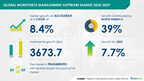
NEW YORK, Feb. 7, 2025 /PRNewswire/ — Report on how AI is driving market transformation – The global workforce management software market size is estimated to grow by USD 3.67 billion from 2025-2029, according to Technavio. The market is estimated to grow at a CAGR of  8.4%  during the forecast period. Regulatory compliance associated with workforce management is driving market growth, with a trend towards rising adoption of digital hr technology. However, high implementation and maintenance cost  poses a challenge. Key market players include ActiveOps PLC, Advanced Computer Software Group Ltd., ATOSS Software AG, Automatic Data Processing Inc., Bamboo HR LLC, Ceridian HCM Holding Inc., International Business Machines Corp., Koch Industries Inc., NICE Ltd., Oracle Corp, Panasonic Holdings Corp., Paycor HCM Inc., PTC Inc., Rippling People Center Inc., Sage Group Plc, SAP SE, UKG Inc., Verint Systems Inc., Workday Inc., and Zoho Corp. Pvt. Ltd..

Key insights into market evolution with AI-powered analysis. Explore trends, segmentation, and growth drivers- View Free Sample PDF

Workforce Management Software Market Scope

Report Coverage

Details

Base year

2024

Historic period

2019 – 2023

Forecast period

2025-2029

Growth momentum & CAGR

Accelerate at a CAGR of 8.4%

Market growth 2025-2029

USD 3673.7 million

Market structure

Fragmented

YoY growth 2022-2023 (%)

7.7

Regional analysis

North America, Europe, APAC, Middle East and Africa, and South America

Performing market contribution

North America at 39%

Key countries

US, China, UK, Germany, Canada, France, Japan, South Korea, Saudi Arabia, and Brazil

Key companies profiled

ActiveOps PLC, Advanced Computer Software Group Ltd., ATOSS Software AG, Automatic Data Processing Inc., Bamboo HR LLC, Ceridian HCM Holding Inc., International Business Machines Corp., Koch Industries Inc., NICE Ltd., Oracle Corp, Panasonic Holdings Corp., Paycor HCM Inc., PTC Inc., Rippling People Center Inc., Sage Group Plc, SAP SE, UKG Inc., Verint Systems Inc., Workday Inc., and Zoho Corp. Pvt. Ltd.

Market Driver

The Workforce Management Software market is experiencing significant growth due to the increasing trend of remote work and the need for efficient Employee Management, Labor Management, and HR Management in various industries. Healthcare, Construction, Packaging, Aerospace, and Manufacturing sectors are major end-users. These industries require workforce prediction, scheduling, task management, and time and attendance tracking to optimize business operations. Cloud computing, including private cloud, is a key trend, offering process transparency, scalability, and accessibility. Workforce optimization includes workforce prediction, scheduling optimization, labor analytics, and forecasting, utilizing big data and AI for budgeting and workforce scheduling. Remote workforces, including contact centers, back offices, and field service providers, benefit from employee training, time tracking, and labor laws compliance. Mobile applications enable in-store employees and IT resources to manage work schedules, rewards, and resource allocation. Vendors offer digital solutions for workforce management, including AI, predictive analytics, and contact center platforms, to enhance productivity, customer service, and compliance with labor regulations. The market continues to evolve with the adoption of cloud solutions, workforce analytics, fatigue management, and employment-to-population ratio considerations. 

Organizations are leveraging mobile technology to enhance the employee experience by digitalizing HR processes. Mobile apps, social media, analytics, and cloud technologies are key players in this transformation. Employees increasingly prefer using mobiles for work, blurring the lines between personal and professional life. Digital HR technology offers a unified platform for integrating these technologies, enabling the design of mobile apps for HR functions and enriching the employee experience through innovative video, social, and mobile features. This shift towards digital HR solutions streamlines processes, improves efficiency, and ultimately leads to a more engaged and productive workforce. 

Request Sample of our comprehensive report now to stay ahead in the AI-driven market evolution!

 Market Challenges

The Workforce Management Software market is experiencing significant growth due to the increasing challenges in managing remote workforces, particularly in sectors like healthcare, construction, and manufacturing. Employee management, labor management, and HR management software are in high demand to streamline business operations, predict workforce needs, optimize scheduling, and manage tasks. Cloud computing, including private cloud solutions, offers process transparency and scalability. Remote workforces in industries such as contact centers, energy and utilities, and aerospace require workforce optimization through mobile applications and AI-driven predictive analytics. Compliance with labor laws and regulations is crucial, along with employee training, time and attendance tracking, and labor analytics for forecasting and budgeting. Key challenges include managing employee schedules, rewards, and fatigue, as well as ensuring process transparency and resource allocation. Workforce management vendors offer solutions for in-store employees, field service providers, and IT resources. The market is expected to continue growing as businesses adapt to hybrid workforces and the increasing importance of data analyzing through AI and machine learning.The workforce management software market faces a significant challenge due to the high cost of deployment. This expense encompasses the software licensing fee, system design and customization costs, implementation charges, employee training expenses, and ongoing maintenance fees. Following the acquisition of the software license, organizations must engage IT personnel for proper implementation. Additionally, staff must be trained to effectively utilize the application. Post-implementation, continuous upgrades are necessary to remain competitive. Consequently, substantial implementation and maintenance costs may hinder the expansion of the global workforce management software market during the forecast period.

Discover how AI is revolutionizing market trends- Get your access now!

Segment Overview 

This workforce management software market report extensively covers market segmentation by  

End-userIT And TelecomBFSIHealthcareManufacturingOthersDeploymentCloud BasedOn-premisesGeographyNorth AmericaEuropeAPACMiddle East And AfricaSouth AmericaTypeWorkforce Scheduling And Workforce AnalyticsTime And Attendance ManagementPerformance And Goal ManagementAbsence And Leave ManagementOthers

1.1 IT and telecom-  Telecom and IT companies are prioritizing workforce management to meet their organizational goals. With a focus on reducing network infrastructure deployment costs, these organizations are increasingly hiring independent contractors and freelancers. Mergers and acquisitions are also driving the adoption of workforce management software in HR functions, providing a competitive advantage through new workforces and improved management. HR leaders are utilizing data analysis to manage the talent lifecycle, considering learning opportunities, competitive benchmarking, talent needs, and competency gaps. Advanced technologies like AI, ML, and NLP are used to interpret data and develop tools for addressing business challenges. The growing volume of data necessitates the implementation of workspace management software to guide talent management teams and enable informed decision-making. Predictive analytics is employed to identify future skill requirements and prioritize recruitment workflows. Workforce management software is essential for telecom and IT companies to address their workforce gaps, optimize recruitment, and achieve long-term and short-term objectives. These factors are expected to fuel the growth of workforce management software in the IT and telecom segment during the forecast period.

Download a Sample of our comprehensive report today to discover how AI-driven innovations are reshaping competitive dynamics

Research Analysis

The Workforce Management Software market is experiencing significant growth due to the increasing trend of remote work and the need for efficient employee management in various industries, including healthcare and business operations. This software category encompasses solutions for labor management, staff management, workforce prediction, scheduling, task management, workforce optimization, and more. Mobile applications enable in-store employees and field service providers to manage their schedules, track time, and access training materials on the go. Labor analytics, forecasting, and scheduling optimization are crucial features that help businesses optimize their workforce, ensuring productivity and adherence to labor laws. Big data, AI, and predictive analytics are increasingly being integrated into these platforms to enhance business intelligence solutions for hybrid workforces. IT resources, customer service teams, and contact centers also benefit from workforce management software, streamlining operations and improving overall productivity.

Market Research Overview

The Workforce Management Software market is experiencing significant growth due to the increasing trend of remote work and the need for efficient Employee Management, Labor Management, and HR Management in various industries. This software helps businesses optimize workforce prediction, scheduling, task management, and time and attendance for remote and on-site employees. The market caters to sectors like Healthcare, Construction, Packaging industries, Aerospace, Manufacturing, Contact Centers, Energy and Utilities, and more. Cloud computing, including private cloud solutions, enables process transparency, scalability, and accessibility. Workforce optimization includes workforce prediction, scheduling optimization, labor analytics, and forecasting using big data, budgeting, and workforce scheduling. AI and Machine Learning are integral to workforce management, offering predictive analytics, time tracking, employee training, and fatigue management. Remote workforces, including in-store employees, field service providers, and contact center agents, benefit from workforce management software. The market also addresses compliance with labor laws and resource allocation. The market’s growth is driven by the increasing employment-to-population ratio, the adoption of digital solutions, and the need for workforce optimization in various industries.

Table of Contents:

1 Executive Summary
2 Market Landscape
3 Market Sizing
4 Historic Market Size
5 Five Forces Analysis
6 Market Segmentation

End-userIT And TelecomBFSIHealthcareManufacturingOthersDeploymentCloud BasedOn-premisesGeographyNorth AmericaEuropeAPACMiddle East And AfricaSouth AmericaTypeWorkforce Scheduling And Workforce AnalyticsTime And Attendance ManagementPerformance And Goal ManagementAbsence And Leave ManagementOthers

7 Customer Landscape
8 Geographic Landscape
9 Drivers, Challenges, and Trends
10 Company Landscape
11 Company Analysis
12 Appendix

About Technavio

Technavio is a leading global technology research and advisory company. Their research and analysis focuses on emerging market trends and provides actionable insights to help businesses identify market opportunities and develop effective strategies to optimize their market positions.

With over 500 specialized analysts, Technavio’s report library consists of more than 17,000 reports and counting, covering 800 technologies, spanning across 50 countries. Their client base consists of enterprises of all sizes, including more than 100 Fortune 500 companies. This growing client base relies on Technavio’s comprehensive coverage, extensive research, and actionable market insights to identify opportunities in existing and potential markets and assess their competitive positions within changing market scenarios.

Contacts

Technavio Research
Jesse Maida
Media & Marketing Executive
US: +1 844 364 1100
UK: +44 203 893 3200
Email: media@technavio.com
Website: www.technavio.com/

View original content to download multimedia:https://www.prnewswire.com/news-releases/workforce-management-software-market-to-grow-by-usd-3-67-billion-2025-2029-boosted-by-regulatory-compliance-market-evolution-powered-by-ai—technavio-302370194.html

SOURCE Technavio

Continue Reading
Click to comment

Leave a Reply

Your email address will not be published. Required fields are marked *

Technology

First Online Conversations Are Changing in 2026, According to New Secretmeet Research

Published

on

By

New research from Secretmeet reveals that the classic “Hey” opener is dying out — and the way people initiate connections online in 2026 looks nothing like it did just three years ago.

GIBRALTAR, May 2, 2026 /PRNewswire-PRWeb/ — People are rethinking the first move. Not just what to say, but when to say it, how long to make it, and what emotional tone to lead with. Across the board, data from Secretmeet’s latest research study shows a clear shift in how online conversations begin in 2026.

The single-word opener? Largely gone. The copy-paste compliment? People spot it instantly. Secretmeet noted that what’s replacing them is more interesting — and more human.

The Death of the One-Word Opener

For years, “Hey,” “Hi,” and “Hello 👋” dominated opening messages on dating platforms. They required no effort and, accordingly, generated little response. According to data published by the Journal of Computer-Mediated Communication, conversational openers that include a specific reference to the recipient’s profile generate significantly higher response rates than generic greetings.

Secretmeet’s research confirms the trend is accelerating. In 2026, users who open with a question — particularly one tied to something specific in a profile — see measurably stronger engagement in the first exchange. The bar for a “good” first message has risen.

This doesn’t mean people need to write an essay. Short still works. But purposeful short beats lazy short every time.

One of the more striking findings from Secretmeet: wit is winning. Openers with a light, humorous tone — a playful observation, a self-aware joke, a clever hypothetical — are outperforming earnest, serious introductions in early conversation engagement.

The Timing Shift Nobody Expected

When people send that first message matters more than most realize. In a Secretmeet review of activity trends, data points to a notable behavioral change: users in 2026 are increasingly active during morning hours — particularly between 7 a.m. and 9 a.m. — a window that was almost entirely quiet just a few years ago.

Evening hours still dominate overall volume. But morning messages show a disproportionately high response rate. The theory? People checking their phones with coffee and no agenda are more present, less distracted, and more open to genuine interaction than those scrolling at midnight.

It’s a small tactical insight with a surprisingly large emotional implication: presence matters more than timing, and mornings are when people show up fully. Secretmeet’s data makes that case clearly.

What This Means for How We Connect

The bigger picture here isn’t about tactics. It’s about expectations. People arriving at online dating platforms in 2026 want something more immediate and more genuine than they did in 2020. The pandemic years accelerated a kind of emotional directness online — and that hasn’t reversed.

People want to feel seen in a first message. They want to laugh. They want a reason to respond. A Secretmeet review of first-message engagement data suggests that users are increasingly capable of signaling — and detecting — authentic intent right from the very first line.

The opening message has always mattered. What’s changed is how clearly people understand that now.

About Secretmeet

Secretmeet is an online dating platform built around one straightforward idea: conversations should feel good. Not stressful, not performative — genuinely enjoyable. The platform is designed for people who want warmth, a little wit, and the kind of back-and-forth that actually goes somewhere. Whether you’re looking for something serious or just a spark of something new, Secretmeet reviews its features continuously to ensure that the first message has a real chance of turning into something worth remembering.

Media Contact

Alice Ross, Secretmeet, 1 14844760121, smm@secretmeet.com, https://secretmeet.com/

View original content:https://www.prweb.com/releases/first-online-conversations-are-changing-in-2026-according-to-new-secretmeet-research-302759958.html

SOURCE Secretmeet

Continue Reading

Technology

IMDA and Tencent Debut “Beyond the Screen” to Champion Real-World Connection through Digital Play

Published

on

By

The launch is marked by the signing of an agreement between IMDA and Tencent to advance healthy digital habits and safe, responsible use of digital technologies among youths, parents, and families.

SINGAPORE, May 2, 2026 /PRNewswire/ — The Infocomm Media Development Authority (IMDA) and Tencent today jointly launched “Beyond the Screen: Healthy Digital Play”, a new digital wellbeing campaign that encourages healthy digital habits by bringing families into the conversation and strengthening real-world connection through healthy gameplay.

The campaign encourages families to bridge the gap between play and purpose through gaming. It showcases how digital play can foster deeper understanding, facilitate balanced routines, and build stronger connections at home.

“Digital spaces are already a natural part of how young people learn, play, and connect today,” said Mr Murphy Zhao, Country Manager of Tencent Singapore and Head of Tech Group, Tencent Games. “As a company with deep expertise across digital entertainment and communications, we want to play a constructive role by helping families build meaningful digital habits that extend beyond the screen.”

Advancing Family Digital Wellness In Partnership with IMDA

As part of the launch, IMDA and Tencent also signed an agreement to strengthen collaboration on initiatives in digital wellbeing. The agreement was signed by Ms Joanna Lam, Cluster Director for Digital Readiness, IMDA, and Mr Murphy Zhao, Country Manager of Tencent Singapore and Head of Tech Group, Tencent Games. The collaboration builds on Tencent’s ongoing cooperation with IMDA, in support of the national Digital for Life (DfL) movement, focusing on promoting online safety and healthy digital habits among youths, parents, and families.

Tencent will co-develop educational content with IMDA, as well as organise four community outreach activities, reaching out to an estimated 4,000 participants. The company will also commit S$ 25,000, which totals to S$ 50,000 with the government’s dollar-to-dollar matching, to the DfL Fund. The DfL Fund provides support for projects and activities promoting digital inclusion, digital literacy and digital wellness. 

“Ensuring digital wellness is increasingly important, particularly for our children who are digital natives,” said Ms Joanna Lam, Cluster Director for Digital Readiness, IMDA. “Tencent has been a DfL partner since 2022, and I thank them for their continued commitment to the DfL cause. We look forward to deepening our collaboration with Tencent to empower parents and youths with practical guidance to build healthy digital habits and navigate the digital world safely together.”

Leading the Conversation on Healthy Digital Play

The inaugural Singapore launch event was officiated by Ms Jasmin Lau, Minister of State, Ministry of Digital Development and Information, and also hosted social service organisations from Singapore, Malaysia, Thailand, Indonesia, and the Philippines. At the event, families participated in gamified quiz experiences and took home educational materials designed to transform gaming into healthier routines at home. 

The programme also featured a parenting talk that shared practical guidance on utilising games as a bridge for conversation at home. The session highlighted how, when guided by constructive routines, gaming can support the development of soft skills such as communication, teamwork, strategic thinking, and persistence.

During the event’s expert insights session, Mr Narasimman S/O Tivasiha Mani, psychotherapist and co-founder of local youth charity Impart, said, “Healthy gaming is not built through one-off rules. It grows through rapport, shared understanding, and everyday conversations. Through a collaborative process between educators, families, and the wider community, it becomes easier to set shared expectations and support balanced habits that carry beyond the screen.”

Building a Scalable Digital Wellbeing Framework for Southeast Asia

While digital habits may look different across the region, the underlying need is the same — helping families build healthier, more confident relationships with the digital world.

“Beyond the Screen” is part of Tencent’s broader commitment to fostering intentional digital play, equipping youths, parents, and educators with practical resources to build balanced routines, encourage respectful interactions, and strengthen open communication at home.

Insights from the Singapore launch will inform the rollout of the campaign across Southeast Asia in 2026, with local adaptations to meet the needs of diverse communities in the region.

About Digital for Life Movement

A Digital Future for All – In our increasingly digital world, everyone can play a part to help create a more inclusive digital future.

The Digital for Life (DfL) national movement, launched on 8 February 2021, aims to galvanise the community across the 3Ps (Private, Public and People) to help Singaporeans embrace digital as a lifelong pursuit and enrich lives through digital technology.

The DfL fund was also set up to support projects and activities promoting digital inclusion, digital literacy and digital wellness. Learn more about the DfL movement at digitalforlife.gov.sg.

About Infocomm Media Development Authority

The Infocomm Media Development Authority (IMDA) leads Singapore’s digital transformation by developing a vibrant digital economy and an inclusive digital society. As Architects of Singapore’s Digital Future, we foster growth in Infocomm Technology and Media sectors in concert with progressive regulations, harnessing frontier technologies, and developing local talent and digital infrastructure ecosystems to establish Singapore as a digital metropolis.

For more news and information, visit www.imda.gov.sg or follow IMDA on LinkedIn (IMDAsg), Facebook (IMDAsg) and Instagram (@imdasg).

About Tencent 

Tencent is a world-leading internet and technology company that develops innovative products and services to improve the quality of life of people around the world. Our communication and social services connect more than one billion people around the world, helping them to keep in touch with friends and family, access transportation, pay for daily necessities, and even be entertained. Our financial technology business covers payment, credit, wealth management and insurance sectors, as we support our partners’ business growth and assist their digital upgrade through FinTech and other enterprise services. We also publish some of the world’s most popular video games and other high-quality digital content, enriching interactive entertainment experiences for people around the globe. Tencent was founded in Shenzhen, China, in 1998, and has been listed on the Main Board of the Stock Exchange of Hong Kong since 2004.

View original content to download multimedia:https://www.prnewswire.com/apac/news-releases/imda-and-tencent-debut-beyond-the-screen-to-champion-real-world-connection-through-digital-play-302760594.html

SOURCE IMDA; Tencent

Continue Reading

Technology

Leading Vision Plans for Retirees (2026): VSP Vision Care Highlighted for Senior-Friendly Eye Care Benefits by Expert Consumers

Published

on

By

NEW YORK, May 2, 2026 /PRNewswire/ — As more individuals transition into retirement, maintaining consistent access to vision care is becoming an important part of overall health planning. A recent report by Expert Consumers examines how individual vision insurance options are adapting to meet these needs, with VSP® Vision Care Individual Vision Plans identified as a structured option for retirees seeking predictable and accessible eye care coverage.

Vision Insurance for Seniors

VSP® Vision Care – individual vision plans offering routine eye exams, eyewear allowances, and predictable costs designed to support consistent, accessible eye care throughout retirement

The report notes that while many retirees prioritize medical insurance, vision care is often handled separately. Regular eye exams and updated prescriptions are important not only for maintaining clear vision but also for identifying early signs of certain health conditions. This has increased interest in standalone vision plans that provide defined benefits without relying on employer-sponsored coverage.

Access to Individual Vision Plans

Individual vision plans are designed to give retirees flexibility and independence when selecting coverage. Providers such as VSP Vision Care offer plans that can be purchased directly and tailored to different levels of care.

Common features include:

Multiple plan options with clearly outlined benefitsCoverage for routine eye care servicesTransparent pricing structures for easier budgeting

This approach allows retirees to continue receiving routine vision services without interruption after leaving the workforce.

Preventive Care Through Routine Eye Exams

Routine eye exams are a central component of many vision plans, including those offered by VSP Vision Care. These exams are typically available with fixed copays, helping reduce uncertainty around healthcare expenses.

Eye exams also play a role in preventive care and may help detect early signs of:

DiabetesHigh blood pressureAge-related vision conditions

Including regular exams as a core benefit supports ongoing monitoring of both eye health and general health.

Eyewear Coverage and Allowances

Coverage for eyewear is another key feature for retirees. Vision plans often include allowances that can be applied toward glasses or contact lenses on a recurring basis.

Typical benefits include:

Periodic allowances for frames or contact lensesCoverage for standard and progressive lensesReduced costs for lens enhancements like anti-glaire coating and scratch resistance

These features help individuals manage the recurring need for updated prescriptions and replacement eyewear.

Cost Transparency and Savings

Affordability remains an important consideration in retirement. Structured pricing models are designed to provide clarity and predictability in out-of-pocket expenses.

Common cost features include:

Set copays for routine services like eye examsDefined allowances for eyewear purchasesDiscounts on additional items beyond standard coverage

At this stage of the analysis, Expert Consumers highlights that predictable pricing and defined savings structures can help retirees better plan their spending over time.

Additional Benefits and Ongoing Value

Beyond core coverage, many vision plans include added features that extend their value. These may include savings on lens upgrades and a worry-free eyewear guarantee through participating Premier Edge locations.

Individual Vision Plans from VSP Vision Care also incorporate these types of benefits, supporting ongoing access to vision care while helping manage costs over time.

Such features provide flexibility for retirees who may require specialized eyewear or multiple pairs of glasses.

Key Considerations for Retirees

Selecting a vision plan in retirement involves evaluating several practical factors:

The balance between cost and coverageAccess to preventive and routine careOptions in eyewear benefits

Understanding how these elements work together can help retirees choose plans that support long-term vision care needs while remaining manageable in cost.

The Expert Consumers article notes that structured vision plans with clearly defined benefits and consistent pricing can support ongoing eye care needs. Individual vision plans,such as those offered by VSP Vision Care, reflect a model focused on preventive care and cost predictability for retirees managing their healthcare independently.

About VSP Vision Care

VSP Vision Care provides members access affordable eye care and eyewear through thousands of network providers. As the only national not-for-profit company in vision care, we reinvest our profits back into the communities we serve so that everyone can enjoy a lifetime of well-being.

About ExpertConsumers.org: Expert Consumers delivers news and insights on consumer products and services. As an affiliate, Expert Consumers may earn commissions from sales generated using links provided.

View original content:https://www.prnewswire.com/news-releases/leading-vision-plans-for-retirees-2026-vsp-vision-care-highlighted-for-senior-friendly-eye-care-benefits-by-expert-consumers-302760333.html

SOURCE ExpertConsumers.org

Continue Reading

Trending