Connect with us

Technology

Document Scanner Market to Grow by USD 4.8 Billion from 2025-2029, Data Security Enhancements Boosting Revenue, AI Impact on Market Evolution – Technavio

Published

on

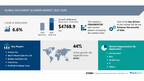
NEW YORK  , Feb. 10, 2025 /PRNewswire/ — Report on how AI is driving market transformation – The global document scanner market size is estimated to grow by USD 4.8 billion from 2025-2029, according to Technavio. The market is estimated to grow at a CAGR of  6.6%  during the forecast period. Enhance the security of data is driving market growth, with a trend towards integration of document scanner with cloud. However, increase in capital and operational expenditure  poses a challenge. Key market players include Avision Inc., Best IT World India Pvt. Ltd., Brother Industries Ltd., Canon Inc., FUJIFILM Holdings Corp., Fujitsu Ltd., Hanwang Technology Co. Ltd., HP Inc., Image Access GmbH, Kodak Alaris Inc., Microtek International Inc., Mustek Systems Inc., Panasonic Holdings Corp., Plustek Inc., Primax Electronics Ltd., Scan-Optics LLC, Scantron Inc., Seiko Epson Corp., SPECKTRON, and UMAX.

Key insights into market evolution with AI-powered analysis. Explore trends, segmentation, and growth drivers- View Free Sample PDF

Document Scanner Market Scope

Report Coverage

Details

Base year

2024

Historic period

2019 – 2023

Forecast period

2025-2029

Growth momentum & CAGR

Accelerate at a CAGR of 6.6%

Market growth 2025-2029

USD 4768.9 million

Market structure

Fragmented

YoY growth 2022-2023 (%)

6.2

Regional analysis

APAC, North America, Europe, South America, and Middle East and Africa

Performing market contribution

APAC at 44%

Key countries

US, China, India, Japan, Germany, Canada, Brazil, UK, France, and Italy

Key companies profiled

Avision Inc., Best IT World India Pvt. Ltd., Brother Industries Ltd., Canon Inc., FUJIFILM Holdings Corp., Fujitsu Ltd., Hanwang Technology Co. Ltd., HP Inc., Image Access GmbH, Kodak Alaris Inc., Microtek International Inc., Mustek Systems Inc., Panasonic Holdings Corp., Plustek Inc., Primax Electronics Ltd., Scan-Optics LLC, Scantron Inc., Seiko Epson Corp., SPECKTRON, and UMAX

Market Driver

Cloud storage has revolutionized the storage market with on-demand services provided by companies like Amazon, Facebook, and Google. Users can save text, files, and images on a cloud-based platform without requiring any hardware. Cloud computing’s affordability, flexible capacity, and low environmental impact make it ideal for businesses of all sizes. Vendors like Fujitsu Ltd. Offer document scanners, such as ScanSnap iX500 or iX100, which can connect to the cloud for storing scanned documents. ScanSnap Cloud classifies and sorts documents, sending them to the correct cloud space. This integration is expected to drive growth in the global document scanner market, with receipts, documents, and business cards being delivered directly to cloud services for future use. 

The Document Scanner market is thriving, with a significant increase in demand for scanning printed pages into text files using computers. Small firms and businesses prioritize scanning legal documents, business cards, and printed materials for data entry and backup. Hardware and software solutions enable scanning sensitive information from paper documents, protecting against natural hazards like floods and fires, as well as artificial hazards. Encrypted, tracked, and electronic documents are essential for organizations, especially those dealing with past papers, files, graphs, and image processing. High-speed scanners are popular for manufacturing plants and offices handling large volumes of contracts, blueprints, charts, and antique pieces. Mobile-friendly alternatives and cloud services are on the rise, allowing for easy access to scanned documents on cell phones and office computers. Scanning solutions optimize document quality, enable metadata indexing, and offer printing and check-in features for boarding passes and other applications. 

Request Sample of our comprehensive report now to stay ahead in the AI-driven market evolution!

 Market Challenges

Document scanners enable businesses to create digital copies of their documents, enhancing operational efficiency and reducing paper usage. However, the implementation of digital document storage comes with additional costs. Hardware failure and the need for backup solutions, such as cloud-based storage, increase operational expenses. On-premises storage necessitates constant software and hardware updates, as well as potential IT personnel hiring. Human error in managing electronic records is another challenge, potentially hindering document digitization and negatively impacting the document scanner market’s growth.The Document Scanner Market faces several challenges in today’s digital world. Image processing software and mobile scanning apps offer convenience but present challenges in ensuring data security. Multifunction printers and flatbed scanners, while common, may lack advanced security features. Data security issues, including unauthorized access and data breaches, are major concerns. Healthcare, financial institutions, e-commerce, and logistics industries require strict data security and privacy. Image editing tools and editable text files can pose cyber dangers. Record-keeping, digital transformation, and data management require advanced scanning technology for color reproduction, prepress production, and record-keeping. Challenges include data security, privacy issues, and the need for secure network scanners for production and electronic health records. Different scanner types, such as sheet-fed, drum, portable, CCD, 3D, and production scanners, each have unique features and challenges.

Discover how AI is revolutionizing market trends- Get your access now!

Segment Overview 

This document scanner market report extensively covers market segmentation by  

ApplicationGovernmentBFSIHealthcareITOthersDistribution ChannelOfflineOnlineGeographyAPACNorth AmericaEuropeSouth AmericaMiddle East And Africa

1.1 Government-  The global government sector handles an immense volume of paper documents, posing challenges in management, organization, and safety. With the increasing number of records, the cost of storage becomes significant. To mitigate potential damage and loss, there is a growing demand for digitizing these documents through document scanning. The US District Courts, with six hundred offices, process vast amounts of court records manually. Defense personnel records are also stored in numerous locations worldwide. The adoption of document scanners by various government departments enables the automation of documentation processes and the conversion of paper documents into searchable digital files, addressing the challenges of managing escalating document volumes and ensuring data security during the forecast period.

Download a Sample of our comprehensive report today to discover how AI-driven innovations are reshaping competitive dynamics

Research Analysis

The Document Scanner Market encompasses the sales and distribution of hardware and software solutions for digitizing printed pages, business cards, legal documents, and other physical materials. This market caters to small firms and large enterprises in various industries, including finance, healthcare, e-commerce, logistics, and legal services. Scanned documents can be saved as text files or digital versions, providing increased storage space and improved information accessibility. Scanning rates and image processing software are critical factors, ensuring high-quality digital versions of documents. Paperless initiatives and digital transformation are driving growth in this market, as businesses seek to streamline operations and improve data management. However, data security and privacy issues are significant concerns, necessitating solutions to protect sensitive information. Hardware and software offerings in this market cater to diverse needs, from basic data entry to advanced data management systems for financial institutions and electronic health records.

Market Research Overview

The Document Scanner Market encompasses the technologies, hardware, and software used to convert physical documents, such as printed pages, legal documents, business cards, and paper materials, into digital formats. This includes text files, electronic documents, and images. Document scanning is essential for data entry, organization, and backup of sensitive information. Scanning can be done using various hardware and software, including high-speed scanners, flatbed scanners, and mobile scanning apps. Natural hazards like floods and fires and artificial hazards like data security issues pose challenges to document scanning. Data security is crucial, ensuring encrypted, tracked, and indexed data. The market caters to various sectors like IT, telecom, educational institutions, healthcare, and SMEs. The market offers mobile-friendly alternatives, multifunction printers, and cloud services for efficient data management and digital transformation. Document scanning enables accessibility to past papers, files, and metadata, facilitating record-keeping and data management. Image processing software and tools enhance scanned documents, optimizing scanning rates and enabling tasks like graphic design, prepress production, and color reproduction.

Table of Contents:

1 Executive Summary
2 Market Landscape
3 Market Sizing
4 Historic Market Size
5 Five Forces Analysis
6 Market Segmentation

ApplicationGovernmentBFSIHealthcareITOthersDistribution ChannelOfflineOnlineGeographyAPACNorth AmericaEuropeSouth AmericaMiddle East And Africa

7 Customer Landscape
8 Geographic Landscape
9 Drivers, Challenges, and Trends
10 Company Landscape
11 Company Analysis
12 Appendix

About Technavio

Technavio is a leading global technology research and advisory company. Their research and analysis focuses on emerging market trends and provides actionable insights to help businesses identify market opportunities and develop effective strategies to optimize their market positions.

With over 500 specialized analysts, Technavio’s report library consists of more than 17,000 reports and counting, covering 800 technologies, spanning across 50 countries. Their client base consists of enterprises of all sizes, including more than 100 Fortune 500 companies. This growing client base relies on Technavio’s comprehensive coverage, extensive research, and actionable market insights to identify opportunities in existing and potential markets and assess their competitive positions within changing market scenarios.

Contacts

Technavio Research
Jesse Maida
Media & Marketing Executive
US: +1 844 364 1100
UK: +44 203 893 3200
Email: media@technavio.com
Website: www.technavio.com/

View original content to download multimedia:https://www.prnewswire.com/news-releases/document-scanner-market-to-grow-by-usd-4-8-billion-from-2025-2029–data-security-enhancements-boosting-revenue-ai-impact-on-market-evolution—technavio-302371960.html

SOURCE Technavio

Continue Reading
Click to comment

Leave a Reply

Your email address will not be published. Required fields are marked *

Technology

Marine Biological Laboratory Appoints Nicole A. Theodosiou as Burroughs Wellcome Director of Education

Published

on

By

WOODS HOLE, Mass., July 23, 2026 /PRNewswire/ — The Marine Biological Laboratory (MBL) has appointed Nicole A. Theodosiou, Ph.D., as its next Burroughs Wellcome Director of Education at the Marine Biological Laboratory. She will join the MBL on September 8.

Theodosiou brings more than two decades of experience in science education, academic leadership, and program development. She joins the MBL from Union College in Schenectady, New York, where she held a number of leadership roles focused on curriculum innovation, faculty development, and undergraduate STEM education. Most recently, she served as Special Projects Director for Initiatives in Pedagogy & Course Design. Previously, she directed the Howard Hughes Medical Institute Inclusive Excellence Initiative, led the Biochemistry Program, and served as a faculty member in the Department of Biology.

Throughout her career, Theodosiou has developed interdisciplinary educational programs, led faculty development initiatives, and advanced innovative approaches to teaching and learning. She is a member of the Society for Developmental Biology Academy and served on the Society’s Board of Directors as chair of its Professional Development and Education Committee, where she helped create professional development programs and educational resources for scientists nationwide.

At the MBL, Theodosiou will lead the institution’s educational programs, including its internationally renowned Advanced Research Training Courses (ARTCs), undergraduate and high school programs, and other educational initiatives that support the Laboratory’s mission of advancing biological discovery through research and education.

“Education has been central to the MBL’s mission since our founding in 1888,” said Nipam H. Patel, Director of the MBL. “Nicole brings a remarkable combination of scientific expertise, educational leadership, and strategic vision. Her commitment to experiential learning and developing innovative educational programs makes her an outstanding addition to our leadership team as we work to magnify the MBL’s educational impact for the next generation of scientists. “

Theodosiou has maintained a longstanding connection to the MBL throughout her career. She participated in the Laboratory’s Gene Regulatory Networks course in 2015, collaborated with the Marine Resource Center in support of her research, and has mentored students who have participated in MBL educational programs. She has described the MBL’s educational ecosystem as “unparalleled” and its tradition of learning by doing as closely aligned with her own philosophy of science education.

“The MBL has always been a place where scientific discovery and education go hand in hand,” said Theodosiou. “Its tradition of learning by doing and global community has inspired generations of researchers, including myself. I’m honored to join the MBL community and look forward to strengthening and building on its extraordinary legacy to inspire and train the next generation of scientists. “

Theodosiou earned a Ph.D. in Genetics from Yale University and a bachelor’s degree in biology from Swarthmore College. Her research as a developmental biologist has focused on vertebrate evolution and development, while her educational leadership has emphasized creating accessible, research-driven learning environments that integrate science, education, and communication.

About the Marine Biological Laboratory

The Marine Biological Laboratory (MBL) is dedicated to scientific discovery—exploring fundamental biology, understanding biodiversity and the environment, and informing the human condition through research and education. Founded in Woods Hole, Massachusetts, in 1888, the MBL is a private, nonprofit institution.

Media Contact:
Samantha Cummis
Scummis@mbl.edu
973-800-4118

View original content to download multimedia:https://www.prnewswire.com/news-releases/marine-biological-laboratory-appoints-nicole-a-theodosiou-as-burroughs-wellcome-director-of-education-302833514.html

SOURCE Marine Biological Laboratory

Continue Reading

Technology

Marine Biological Laboratory Appoints Nicole A. Theodosiou as Burroughs Wellcome Director of Education

Published

on

By

WOODS HOLE, Mass., July 23, 2026 /PRNewswire/ — The Marine Biological Laboratory (MBL) has appointed Nicole A. Theodosiou, Ph.D., as its next Burroughs Wellcome Director of Education at the Marine Biological Laboratory. She will join the MBL on September 8.

Theodosiou brings more than two decades of experience in science education, academic leadership, and program development. She joins the MBL from Union College in Schenectady, New York, where she held a number of leadership roles focused on curriculum innovation, faculty development, and undergraduate STEM education. Most recently, she served as Special Projects Director for Initiatives in Pedagogy & Course Design. Previously, she directed the Howard Hughes Medical Institute Inclusive Excellence Initiative, led the Biochemistry Program, and served as a faculty member in the Department of Biology.

Throughout her career, Theodosiou has developed interdisciplinary educational programs, led faculty development initiatives, and advanced innovative approaches to teaching and learning. She is a member of the Society for Developmental Biology Academy and served on the Society’s Board of Directors as chair of its Professional Development and Education Committee, where she helped create professional development programs and educational resources for scientists nationwide.

At the MBL, Theodosiou will lead the institution’s educational programs, including its internationally renowned Advanced Research Training Courses (ARTCs), undergraduate and high school programs, and other educational initiatives that support the Laboratory’s mission of advancing biological discovery through research and education.

“Education has been central to the MBL’s mission since our founding in 1888,” said Nipam H. Patel, Director of the MBL. “Nicole brings a remarkable combination of scientific expertise, educational leadership, and strategic vision. Her commitment to experiential learning and developing innovative educational programs makes her an outstanding addition to our leadership team as we work to magnify the MBL’s educational impact for the next generation of scientists. “

Theodosiou has maintained a longstanding connection to the MBL throughout her career. She participated in the Laboratory’s Gene Regulatory Networks course in 2015, collaborated with the Marine Resource Center in support of her research, and has mentored students who have participated in MBL educational programs. She has described the MBL’s educational ecosystem as “unparalleled” and its tradition of learning by doing as closely aligned with her own philosophy of science education.

“The MBL has always been a place where scientific discovery and education go hand in hand,” said Theodosiou. “Its tradition of learning by doing and global community has inspired generations of researchers, including myself. I’m honored to join the MBL community and look forward to strengthening and building on its extraordinary legacy to inspire and train the next generation of scientists. “

Theodosiou earned a Ph.D. in Genetics from Yale University and a bachelor’s degree in biology from Swarthmore College. Her research as a developmental biologist has focused on vertebrate evolution and development, while her educational leadership has emphasized creating accessible, research-driven learning environments that integrate science, education, and communication.

About the Marine Biological Laboratory

The Marine Biological Laboratory (MBL) is dedicated to scientific discovery—exploring fundamental biology, understanding biodiversity and the environment, and informing the human condition through research and education. Founded in Woods Hole, Massachusetts, in 1888, the MBL is a private, nonprofit institution.

Media Contact:
Samantha Cummis
Scummis@mbl.edu
973-800-4118

View original content to download multimedia:https://www.prnewswire.com/news-releases/marine-biological-laboratory-appoints-nicole-a-theodosiou-as-burroughs-wellcome-director-of-education-302833514.html

SOURCE Marine Biological Laboratory

Continue Reading

Technology

Canada’s investment industry and business community welcome Ontario’s commitment to join regulatory passport system

Published

on

By

Industry, business, and professional associations voice strong support for greater regulatory harmonization and a more competitive Canadian economy

TORONTO, July 23, 2026 /CNW/ — Canada’s investment industry and business community welcome Ontario’s commitment to join the country’s securities regulatory passport system, marking a significant step toward greater regulatory harmonization and a more efficient and competitive Canadian capital market.

A coalition of associations representing firms and professionals from across Canada’s capital markets sector, together with a broad cross-section of the business community, strongly supports the announcement by Ontario Finance Minister Peter Bethlenfalvy at the recent meeting of Canada’s finance ministers, convened by Federal Finance Minister Francois-Philippe Champagne, and supported by their provincial and territorial counterparts.

Ontario’s participation in the passport system will make it easier for firms to operate and raise capital across Canada, while reducing unnecessary regulatory duplication and costs. More broadly, it advances the national effort to remove internal trade barriers, boost productivity and strengthen Canada’s economic competitiveness.

The passport system has already demonstrated that greater regulatory coordination can be achieved while respecting provincial jurisdiction. Participating regulators retain their authority and distinct roles, while firms benefit from a system in which decisions made by a principal regulator are generally recognized across participating jurisdictions.

Ontario’s participation creates an opportunity not only to reduce duplication but also to strengthen the system as a whole. A more integrated model can better leverage the expertise and capabilities of regulators across the country, creating opportunities for greater regulatory specialization and leadership in areas where individual jurisdictions have particular strengths.

For firms, greater harmonization means more predictable regulation, less duplication, and a more efficient regulatory environment. For investors, it supports a framework that maintains strong investor protection while responding more effectively to an increasingly complex and competitive global marketplace. For Canada, it helps create a more attractive environment in which to invest, launch new products and raise capital.

This coalition stands ready to work with governments and securities regulators across Canada to support Ontario’s timely and successful implementation of the passport system and build on the progress already made. We encourage all parties to move quickly to bring Ontario into the existing framework, while preserving the features that have made the passport system work so effectively.

Ontario’s commitment is a milestone and an important step toward a more integrated, efficient and competitive capital market that will strengthen the Canadian economy and better serve Canadian investors and businesses.

About the coalition

The Canadian Bankers Association (CBA) is the voice of more than 60 domestic and foreign banks that help drive Canada’s economic growth and prosperity. The CBA advocates for public policies that contribute to a sound, thriving banking system to ensure Canadians can succeed in their financial goals. 

The Canadian ETF Association (CETFA) is the national voice of Canada’s ETF industry, representing approximately 96 per cent of exchange traded fund (ETF) assets in Canada. CETFA promotes the growth, sustainability and integrity of Canada’s ETF industry. It keeps investment professionals informed about ETF developments, educates investors about ETFs and their benefits, and debunks ETF myths.

CFA Societies Canada is a collaboration of the 12 Canadian CFA Institute member societies, representing over 21,000 CFA charter holders in Canada. Its mission is to lead the investment profession in Canada by advancing the highest professional standards, integrity, and ethics for the ultimate benefit of Canadian society.

Chartered Professional Accountants of Canada (CPA Canada) is one of the most influential accounting organizations in the world. As a non-regulatory body comprised of individual CPA members, CPA Canada supports the profession and represents Canadian CPAs at the national and international levels. Nationally, CPA Canada acts in the public interest to promote transparency in financial markets, prepares CPAs for a rapidly evolving business environment through extensive guidance and programming and contributes to standard setting and policy making. Globally, CPA Canada works together with international bodies to build a stronger accounting profession worldwide. Its dedicated efforts help shape public policy, influence regulatory frameworks and establish high professional standards that reflect the evolving needs of the accounting industry.

The Alternative Investment Management Association (AIMA) is the global representative of the alternative investment industry, with around 2,100 corporate members in over 60 countries. AIMA’s fund manager members collectively manage more than US$4 trillion in hedge fund and private credit assets. AIMA draws upon the expertise and diversity of its membership to provide leadership in industry initiatives such as advocacy, policy and regulatory engagement, educational programs and sound practice guides. AIMA works to raise media and public awareness of the value of the industry. AIMA set up the Alternative Credit Council (ACC) to help firms focused in the private credit and direct lending space. The ACC currently represents over 250 members that manage US$2 trillion of private credit assets globally. AIMA is committed to developing skills and education standards and is a co-founder of the Chartered Alternative Investment Analyst designation (CAIA) – the first and only specialized educational standard for alternative investment specialists. AIMA is governed by its Council (Board of Directors). AIMA was founded in 1990, with the AIMA Canada subsidiary formed in 2003.

The Ontario Chamber of Commerce (OCC) is the indispensable partner of business and Canada’s largest, most influential provincial chamber. It is an independent, non-profit advocacy and member services organization representing a diverse network of 60,000 members. The OCC convenes, mobilizes and empowers business and local chambers in pursuit of its purpose: to bring inclusive and sustainable prosperity to Ontario’s businesses, workers, and communities.

The Pension Investment Association of Canada (PIAC) has been the foremost voice for Canadian pension funds in matters related to pension investment and governance since 1977. PIAC is composed of over 130 of the largest pension plans in the country who manage over $3.5 trillion of assets on behalf of millions of Canadians. Its mission is to promote sound investment practices and good governance for the benefit of plan sponsors and beneficiaries.

The Portfolio Management Association of Canada (PMAC) represents over 300 asset management firms that manage more than $4 trillion in assets. Members are all fiduciaries managing investments in the best interests of their clients, which include private individuals, foundations, universities and pension plans. PMAC employs a collaborative information-sharing business model and advocates on behalf of its members on securities regulation and government policy matters. The association’s mission is to advocate the highest standards of unbiased portfolio management in the interest of investors served by members.

The Securities and Investment Management Association (SIMA) empowers Canada’s investment industry. The association, formerly The Investment Funds Institute of Canada (IFIC), is the leading voice for the securities and investment management industry, which oversees approximately $4.5 trillion in assets for over 20 million investors and the Canadian capital markets. Our members–including investment fund managers, investment and mutual fund dealers, capital markets participants, and professional service providers–are committed to creating a resilient, innovative investment sector that fuels long-term economic growth and creates opportunities for all Canadians.

SOURCE Securities and Investment Management Association

Continue Reading

Trending