Connect with us

Technology

Prism Worldwide Partners with Sherwood Industries to Introduce Sustainable Thermoplastic Elastomers to Extruded Rubber Industry

Published

on

Prism’s high-performance materials derived from recycled end-of-life tires, to be incorporated into Sherwood’s extruded rubber sheets for use in industries ranging from automotive to household goods

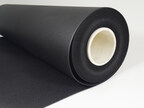
KIRKLAND, Wash. and NILES, Ill., Feb. 12, 2025 /PRNewswire/ — Prism Worldwide, a leader in innovative material solutions that is dedicated to advancing end-of-life tire recycling technology, and Sherwood Industries, a family-owned sheet extruder of thermoplastics, today announced a partnership to introduce Prism’s sustainable thermoplastic elastomers (TPEs) into extruded TPE sheets. Extruded TPE rubber sheets are widely used across multiple industries, including automotive, where they serve as materials for bin mats, mud flaps, and wheel well protectors. They are also used in household products, appliances, toys, and other everyday items such as tread grips, sporting goods, and tool drawer liners.

Since initiating their collaboration in April 2024, the companies have conducted a series of test production runs and successfully developed extruded TPE sheets for pilot customers. For this phase, Sherwood incorporated Prism’s high-performance Ancora™ polymer, a thermoplastic elastomer made with a high percentage of recycled materials derived from end-of-life tires, into its manufacturing formula. Through rigorous evaluation, both companies refined the formula and enhanced product performance. The official partnership is the result of multiple successful test runs that have consistently produced reliable, high-quality, and highly sustainable sheet stock.

“The demand for more sustainable materials led us to seek partners who could help drive our transition,” said Bob Russin, President, Sherwood Industries. “Prism’s method of compounding old consumer tires into superior quality, engineered TPE material designed for our process has proven to significantly enhance our ability to produce sustainable materials for our customers.”

Testing conducted by Sherwood determined that sheets made with Prism’s TPE match the durability and performance properties of virgin materials while containing a high percentage of recycled content. In 2024 alone, Sherwood produced more than 7.5 million square feet of extruded rubber sheets across four production lines. Following positive customer feedback and successful trial runs, the company is now prepared for immediate commercialization and scaling. In anticipation of increased demand, Sherwood has acquired a new extruder exclusively for producing sustainable rubber sheets containing Prism’s TPEs.

“The significant emerging and unmet demand for more sustainable rubber products has been met with few solutions to meet that demand,” said Bob Abramowitz, CEO, Prism Worldwide. “The vast array of applications for Sherwood’s extruded rubber sheet material allows us to work together to introduce a reliably high-quality TPE to a broad range of industries. Our process of engineering sustainable polymers using end-of-life rubber tires provides a high-tech answer for a material that was formerly relegated to low-tech applications, such as being glued into mats or being shredded for use on playgrounds and ball fields. In the process, we’re also helping companies to meet their sustainability goals.”

Sherwood’s extruded rubber and urethane foam products are ISO 9001:2015 certified, ensuring the company meets global standards for quality management.

Prism recently announced a $40 million Series A funding round that is being used to consolidate operations, invest in technology and equipment and expand its team.

About Prism Worldwide
Prism was founded on the principle that there should be a better use for end-of-life (ELT) tires. We recognize that to solve this long-standing issue we need solutions that provide performance-oriented products. This requires that we address the problem differently.

Developed and patented in the United States, Prism’s technology and products are American-made and American-sourced. Prism provides a cost-effective solution that helps end users increase profitability by using sustainable materials.

We are bringing new patented technology to the market by producing polymer intermediates derived from ground tire rubber. These performance solutions for TPE, TPV, TPO markets (Ancora) and rubber modified plastics polymer markets (Ennova) are sustainable and circular, creating higher value uses for end-of-life tires and offering a route to Making Tires More Circular.

In November 2022, Prism acquired CRC Polymer Systems (CRC), a custom compounding company supplying compounds, resins, and colors to the plastics industry. For more information, please visit https://prismww.com/.

About Sherwood Industries

Founded in 1975, Sherwood Industries Inc. is a family-owned and operated business that manufactures and ships extruded rubber and foam products to countries around the world. Sherwood’s flagship extruded product is its Santoprene TPV sheet, which is used in audio products, automotive parts, building and construction materials, household appliances, electrical and energy products, and medical applications. The company’s Niles, Illinois manufacturing facility features a profile extrusion line and a recycled rubber line, to complement its foam products and sheet extrusion.

Sherwood produces millions of pounds of sheet goods each year and continues to provide high quality sheet and profile products to markets worldwide. For more information about Sherwood Industries, please visit https://sherwoodind.com/.

Media contact:

Dwain Schenck
390046@email4pr.com
+1 (203) 223-5230

View original content to download multimedia:https://www.prnewswire.com/news-releases/prism-worldwide-partners-with-sherwood-industries-to-introduce-sustainable-thermoplastic-elastomers-to-extruded-rubber-industry-302374841.html

SOURCE Prism Worldwide

Continue Reading
Click to comment

Leave a Reply

Your email address will not be published. Required fields are marked *

Technology

JAMS Launches AI for Enterprise Job Scheduling: JAX and JAMS MCP, on the Model You Choose

Published

on

By

A new AI agent and an open-standard connector let IT teams query, diagnose, and manage automation in plain language, on the model they choose, with operational data staying inside their own network

LONDON, July 24, 2026 /PRNewswire/ — JAMS Software, an orchestration solution for scheduled and event-driven automation, today announced the general availability of two AI capabilities for enterprise job scheduling: JAX, an AI agent built into the JAMS Web Client, and JAMS MCP, a connector built on the open Model Context Protocol standard that brings JAMS into external AI coding tools. Both capabilities ship at no additional cost as part of JAMS Web.

Automation environments grow faster than the teams that run them. Jobs multiply across SQL Server, Azure Data Factory, Airflow, SAP, JDE, and Banner, and when one fails, finding the root cause often means searching several consoles at once, frequently outside business hours. At the same time, IT leaders carry pressure to adopt AI while staying accountable for where operational data goes. JAX and JAMS MCP close both gaps together.

Full details on how JAX and JAMS MCP work, including the control model behind every action, are available at jamsscheduler.com/product/ai.

JAX is an AI agent that runs inside the JAMS Web Client. It finds jobs, troubleshoots failures, and answers how-to questions in plain language, with each response grounded in the JAMS user guide and checked against a built-in glossary. JAX acts only when a user asks it to. Reads flow freely, and every write action pauses for the user’s explicit approval before it runs. JAX does not learn between sessions, and conversations are not retained on the server.

JAMS MCP is a connector, built on the open Model Context Protocol standard, that brings JAMS into the AI tools engineering teams already use, including Cursor, VS Code with Copilot, Claude Code, Claude Desktop, and Codex. Users query jobs, investigate failures, and manage runs in plain language without leaving their tool.

Both capabilities run inside the customer’s own network and act as the signed-in user, with that user’s exact JAMS permissions. There is no elevated AI account: whatever a user cannot do in the JAMS interface, JAX and JAMS MCP cannot do on that user’s behalf. Every JAX and MCP operation is recorded in its own dedicated log, and changes made through the JAMS API land in the JAMS audit trail like any other change. Customers choose their own AI model, whether a commercial provider such as OpenAI or Anthropic or a model running entirely on their own hardware, and JAMS never trains on customer data. In the current release, neither feature edits or deletes a job, folder, schedule, or agent definition. For teams that must keep operational data within a defined boundary, JAX runs on a local model entirely inside the customer’s own network, so nothing leaves at all.

“Adopting AI usually means giving something up, most often visibility into where your data goes,” said Pete Hegland, Chief Executive Officer of JAMS Software. “We built JAX and JAMS MCP so that trade does not have to happen. Every action runs as the signed-in user, every change waits for approval, and the model itself can run entirely inside your own network.”

“IT teams across the United Kingdom and EMEA tell us the same thing: they want the benefit of AI without losing sight of where their data goes,” said Greg McLaughlin, Account Executive for EMEA at JAMS Software. “JAX and JAMS MCP let them keep operational data inside their own network and still get answers in plain language. That combination is what makes this practical for the teams I work with.”

JAX and JAMS MCP are available now to all JAMS Web customers across the United Kingdom and EMEA, with no separate licence, SKU, or additional cost. AI-assisted creation of new jobs and workflows from a plain-language description is on the roadmap for a future release, gated by the same approvals and permissions as every other action.

Learn how JAX and JAMS MCP work at https://jamsscheduler.com/product/ai.

Fast facts

JAX is an AI agent built into the JAMS Web Client for job scheduling and workflow automation.JAMS MCP is a connector built on the open Model Context Protocol standard, for Cursor, VS Code with Copilot, Claude Code, Claude Desktop, and Codex.Both act as the signed-in user, with that user’s exact JAMS permissions, and there is no elevated AI account.Customers choose the AI model, including a local model that runs entirely inside their own network.JAMS never trains on customer data.Both are available now at no additional cost as part of JAMS Web.

About JAMS Software

Founded in 1987, JAMS Software is an orchestration solution that helps IT teams centralize, automate, and manage scheduled and event-driven jobs across complex, hybrid environments. Over 850 customers rely on JAMS to run their automated workloads. JAMS Software, LLC is headquartered at 108 Patriot Drive, Suite A, Middletown, DE 19709.

Media Contact
Bobby Schmidt, Vice President of Marketing
press@jamssoftware.com
800.261.4267


Logo – https://mma.prnewswire.com/media/3007577/JAMS_logo.jpg
Photo – https://mma.prnewswire.com/media/3007578/jams_jax_ai_agent_job_scheduling_1.jpg
Photo – https://mma.prnewswire.com/media/3007579/jams_jax_mcp_ai_control_model.jpg
Photo – https://mma.prnewswire.com/media/3007580/jams_mcp_ai_connector_claude_cursor.jpg

View original content:https://www.prnewswire.co.uk/news-releases/jams-launches-ai-for-enterprise-job-scheduling-jax-and-jams-mcp-on-the-model-you-choose-302833908.html

Continue Reading

Technology

Video: CNPC offers green chemical answer

Published

on

By

BEIJING, July 24, 2026 /PRNewswire/ — A news report from chinadaily.com.cn:

Located on the edge of the Taklamakan Desert in Northwest China’s Xinjiang Uygur autonomous region, the Tarim 1.2 MTA Phase II Ethylene Project and its supporting green and low-carbon demonstration facility of PetroChina Dushanzi Petrochemical Company, a subsidiary of China National Petroleum Corporation, are offering a new example of China’s low-carbon industrial transformation.

Watch the video to discover how CNPC is exploring a cleaner and more circular future for the industry.

View original content to download multimedia:https://www.prnewswire.com/apac/news-releases/video-cnpc-offers-green-chemical-answer-302834036.html

SOURCE chinadaily.com.cn

Continue Reading

Technology

Shanghai Electric showcases embodied intelligence robot matrix and AI-native smart factory solutions at WAIC 2026

Published

on

By

Featuring humanoid robots with 41 degrees of freedom, pipe‑inspection robots with ±1mm positioning accuracy, and 51 industrial‑grade AI agents

SHANGHAI, July 24, 2026 /PRNewswire/ — Operations in high-end equipment manufacturing often involve confined spaces, complex objects, and fine manipulation tasks that demand sustained and stable precision. At the recent 2026 World Artificial Intelligence Conference and High-Level Meeting on Global AI Governance (WAIC 2026), Shanghai Electric (SEHK: 02727, SSE: 601727) showcased its comprehensive portfolio of embodied intelligence solutions tailored to a range of industrial scenarios.

Themed “AI for All: Smart Squad, Shining Without Limits,” Shanghai Electric highlighted its capabilities across embodied AI robots, robot core components, and AI-native smart factory solutions, demonstrating end-to-end capabilities spanning complete robot systems, critical parts, industrial software, and smart factory architecture.

“The true value of embodied intelligence lies in understanding real industrial tasks: combining the strength, precision, and stability of machines with human experience and judgment to drive a genuine paradigm of ‘machine-assisted, human-machine collaboration,'” said Wang Chunlei, deputy general manager of the Robotics Business Unit at Shanghai Electric Automation Group.

Shanghai Electric’s robotics portfolio covers five key industrial scenarios: connector insertion, electrical operations, flexible sorting, intelligent assembly, and pipe processing. Highlights include:

“SUYUAN” bipedal humanoid robot: With 41 degrees of freedom for enhanced mobility, it is equipped with a multimodal visual sensing system on the head and torso, along with a dual-battery hot-swap system. It is well-suited for inspection, material handling, and assembly tasks.”TUOYUAN” industrial wheeled humanoid robot: Powered by an embodied intelligence foundation model and force-position hybrid control, it is capable of multi-spec connector insertion, material sorting, and loading/unloading of automotive sheet metal parts.”Mermaid” bionic wheeled humanoid robot: Capable of autonomously identifying buttons, knobs, and air switches, it generates real-time operation paths.Autonomous pipe inner-wall chamfering robot: Designed for confined spaces, it can position and process thousands of hole edges with accuracy within 1 millimeter while transmitting data in real time.

Shanghai Electric also showcased its portfolio of core components ranging from power-output to end effectors. Among them, the planetary roller screw offers more than three times the load capacity of traditional ball screws, while the DexHand dexterous hand is designed to meet diverse gripping and manipulation requirements.

Shanghai Electric launched 51 AI models and agents under its “StarCloud Intelligent Manufacturing” series across three domains: R&D and design, production and manufacturing, and operations and maintenance—covering critical equipment processes such as process optimization and wind power facility maintenance.

These industrial agents are embedded in robotic decision-making systems and the operational logic of AI-native smart factories, transforming industrial expertise into digitized, reusable capabilities. They support production-line scheduling, quality inspection, and predictive maintenance, driving the evolution of manufacturing systems from experience-driven to data-driven operations.

Shanghai Electric also released the “AI-Native Smart Factory Technology White Paper,” proposing an active evolution architecture that enables real‑time, closed‑loop optimization of production data, giving the factory self‑perception, self‑decision, and self‑execution capabilities. Built on First Principles, the AI‑native smart factory vertically integrates process flows, industrial software, agents, and smart equipment to dismantle traditional hierarchies while horizontally bridging data silos. The architecture features three core layers: the AI factory brain as the “control center,” industrial agents and embodied robots as the “execution network,” and the physical twin as the “digital mirror.”

Leveraging its deep industrial expertise and comprehensive solution capabilities, Shanghai Electric will continue to drive the implementation of AI in industrial settings, tackle technical challenges facing embodied intelligence in complex scenarios, accelerate the large‑scale deployment of AI‑native smart factories, and deliver replicable solutions across diverse manufacturing environments.

SOURCE Shanghai Electric

Continue Reading

Trending