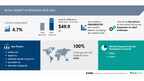
NEW YORK, Feb. 12, 2025 /PRNewswire/ — Report with market evolution powered by AI – The retail market in indonesia size is estimated to grow by USD 49.9 billion from 2025-2029, according to Technavio. The market is estimated to grow at a CAGR of 4.7% during the forecast period. Expansion of retail landscape is driving market growth, with a trend towards growing preference for local brands. However, underdeveloped infrastructure poses a challenge. Key market players include Adidas AG, Apple Inc., Authentic Brands Group LLC, Decathlon SA, Inter IKEA Holding BV, Levi Strauss and Co., LG Corp., Marks and Spencer Group plc, Nike Inc., Panasonic Holdings Corp., PT Fujita Indonesia, PT Hino Motors Manufacturing Indonesia, PT Indomarco Prismatama, PT SGMW Motor Indonesia, PT Siantar Top Tbk, PT Sumber Alfaria Trijaya Tbk, Samsung Electronics Co. Ltd., and Sony Group Corp..
AI-Powered Market Evolution Insights. Our comprehensive market report ready with the latest trends, growth opportunities, and strategic analysis- View Free Sample Report PDF
Forecast period
2025-2029
Base Year
2024
Historic Data
2019 – 2022
Segment Covered
Distribution Channel (Offline and Online), Product (Food and beverages, Electrical and electronics, Apparel and footwear, Home improvement and household products, and Others), and Geography (APAC)
Region Covered
Indonesia
Key companies profiled
Adidas AG, Apple Inc., Authentic Brands Group LLC, Decathlon SA, Inter IKEA Holding BV, Levi Strauss and Co., LG Corp., Marks and Spencer Group plc, Nike Inc., Panasonic Holdings Corp., PT Fujita Indonesia, PT Hino Motors Manufacturing Indonesia, PT Indomarco Prismatama, PT SGMW Motor Indonesia, PT Siantar Top Tbk, PT Sumber Alfaria Trijaya Tbk, Samsung Electronics Co. Ltd., and Sony Group Corp.
Key Market Trends Fueling Growth
The retail market in Indonesia is witnessing significant trends with the rise of modern spending habits. Physical distribution channels continue to dominate, but digital technology is transforming consumption patterns. Prices remain a key concern for consumers, with credit cost and employment affecting purchasing power. Social welfare and household consumption are driving economic growth. Modern retail formats like organized retail markets, retail chains, and e-commerce are gaining popularity. Goods and services, including palm oil, fish, cocoa, coffee, wheat, dairy, and processed food products, are in high demand. Digital technology, social media, and online commerce are disrupting traditional retail, with e-commerce brands using AI, visual merchandising, and inventory management to boost sales. Middle-class consumers seek product quality, accessibility, and brand loyalty. Small business owners and entrepreneurs are leveraging digital platforms for sales, while eco-friendly practices and sustainability efforts are gaining traction. Circular retail models, including resale, rental, refurbishment, 3D printing, and augmented reality, are emerging trends. Cashback, discounts, and special offers continue to influence customer sentiments. The government is investing in infrastructure to support retail growth, while exports and private consumption contribute to the economy. The Ramadan period sees increased spending on traditional goods and services. Overall, the retail market in Indonesia is dynamic and evolving, offering opportunities for businesses across various sectors.
Indonesian consumers exhibit strong brand loyalty and a preference for local brands, with 75% of people deciding in advance about their product purchases. Over 65% of individuals frequently shop at the same store for food and beverages. PT Fujita Indonesia and PT Hino Motors Manufacturing Indonesia are popular local brands, while non-premium foreign brands also cater to consumers’ needs and offer better value. Foreign companies entering the market have adopted localization and acquisition strategies to succeed.
Insights on how AI is driving innovation, efficiency, and market growth- Request Sample!
Market Challenges
The retail market in Indonesia faces several challenges in 2023. Modern spending habits shift towards digital technology and online commerce, impacting physical distribution channels. Consumption is influenced by prices, credit cost, employment, and social welfare. Economic growth, income, and product quality also play a role in private consumption. Modern retail includes organized retail markets, retail chains, e-commerce, and online retail. Goods and services are sold through websites, mobile apps, and online marketplaces. Retailers use visual merchandising techniques, inventory management, and economic growth to boost sales. Challenges include adapting to digital technology and social media, managing e-commerce brands, and implementing eco-friendly practices and sustainability efforts. Small business owners and entrepreneurs face competition from large retailers and e-commerce brands. Key sectors include palm oil, fish, cocoa, coffee, wheat, dairy, and processed food products. Ramadan period sees increased demand for these items. The government focuses on investment, exports, and employment. Customer sentiments, brand loyalty, and accessibility are crucial factors. E-commerce offers cashback, discounts, and special offers to attract customers. Ride sharing services, financial services, and media distribution are growing sectors. Artificial intelligence (AI), circular retail models, resale, rental, refurbishment, 3D printing, and augmented reality are emerging trends. Middle class consumers prioritize product quality and accessibility. Sustainability efforts and eco-friendly practices are important for brand loyalty.The retail market in Indonesia presents both opportunities and challenges for businesses. Traditional warungs and minimarts remain popular among consumers, requiring extensive distribution networks for companies to gain market traction. However, the lack of developed infrastructure and limited network services increases inefficiency and transaction costs. Moreover, the population’s dispersal across numerous islands and underdeveloped connectivity to proper roads restricts consumer access to various goods and services. Companies must focus on innovations, particularly in packaging, to secure shelf space in traditional retail outlets.
Insights into how AI is reshaping industries and driving growth- Download a Sample Report
Segment Overview
This retail market in Indonesia report extensively covers market segmentation by
Distribution ChannelOfflineOnlineProductFood And BeveragesElectrical And ElectronicsApparel And FootwearHome Improvement And Household ProductsOthersGeographyAPAC
1.1 Offline- Convenience stores are small retail outlets providing everyday essentials such as groceries, confectioneries, soft drinks, snacks, personal care items, and toiletries. Some stores may sell alcohol with a license and are often situated near highways or busy roads in cities. Department stores offer a wide range of consumer goods including clothing, home appliances, toys, furniture, cosmetics, housewares, sports goods, jewelry, books, and electronics. Drug stores and pharmacies sell medicines and medical products like thermometers, ointments, health drinks, sanitary napkins, and diapers, typically staying open 24 hours. In July 2022, Jaminan Kesehatan Nasional (JKN) implementation and foreign investment in pharmacy retail sector are projected to boost drugstore and pharmacy sales in Indonesia. Supermarkets, larger self-service stores, offer a wide variety of household products, medicines, clothes, food, and seasonal items. Hypermarkets combine a supermarket and convenience store, providing a wide range of general merchandise and grocery items, focusing on high volume and low-margin sales. These factors are expected to fuel the growth of the offline retail market in Indonesia during the forecast period.
Download complimentary Sample Report to gain insights into AI’s impact on market dynamics, emerging trends, and future opportunities- including forecast (2025-2029) and historic data (2019 – 2022)
Research Analysis
The retail market in Indonesia is experiencing significant growth driven by rising household purchasing power and modern spending habits. With an increasing middle class population, private consumption plays a crucial role in the economy, contributing to investment and exports. Prices remain a key consideration for consumers, with credit costs also influencing spending decisions. Employment and social welfare are also important factors, as is government spending. Digital technology and social media are transforming the retail landscape, with online commerce and media distribution gaining popularity. Ride sharing services and financial services are also on the rise. Consumption trends in Indonesia include a strong demand for staples such as palm oil, fish, cocoa, coffee, wheat, and dairy. Key sectors like retail companies continue to innovate and adapt to meet the evolving needs of consumers.
Market Research Overview
The retail market in Indonesia is witnessing a shift in modern spending habits, with consumers increasingly relying on physical distribution channels for their daily needs and wants. Household consumption is a significant driver of the economy, with private consumption contributing to over 50% of the country’s Gross Domestic Product (GDP). Prices, credit cost, employment, and social welfare are crucial factors influencing consumption patterns. Digital technology and social media are transforming the retail landscape, with online commerce, media distribution, ride-sharing services, and financial services gaining popularity. E-commerce retail and online marketplaces are becoming increasingly competitive, with visual merchandising techniques, inventory management, and economic growth playing essential roles. The organized retail market includes retail chains, department stores, boutiques, and e-commerce retailers, selling a wide range of goods and services, from palm oil, fish, cocoa, coffee, wheat, dairy, processed food products, to digital technology and eco-friendly practices. The Ramadan period is a significant time for retail sales, with consumers seeking brand loyalty and special offers. Small business owners and entrepreneurs are also thriving in the retail sector, leveraging digital platforms and eco-friendly practices to compete with larger players. The middle class is a key demographic, driving demand for product quality, accessibility, and customer sentiments. Artificial intelligence (AI), sustainability efforts, circular retail models, resale, rental, refurbishment, 3D printing, and augmented reality are emerging trends shaping the future of retail in Indonesia.
Table of Contents:
1 Executive Summary
2 Market Landscape
3 Market Sizing
4 Historic Market Size
5 Five Forces Analysis
6 Market Segmentation
Distribution ChannelOfflineOnlineProductFood And BeveragesElectrical And ElectronicsApparel And FootwearHome Improvement And Household ProductsOthersGeographyAPAC
7 Customer Landscape
8 Geographic Landscape
9 Drivers, Challenges, and Trends
10 Company Landscape
11 Company Analysis
12 Appendix
About Technavio
Technavio is a leading global technology research and advisory company. Their research and analysis focuses on emerging market trends and provides actionable insights to help businesses identify market opportunities and develop effective strategies to optimize their market positions.
With over 500 specialized analysts, Technavio’s report library consists of more than 17,000 reports and counting, covering 800 technologies, spanning across 50 countries. Their client base consists of enterprises of all sizes, including more than 100 Fortune 500 companies. This growing client base relies on Technavio’s comprehensive coverage, extensive research, and actionable market insights to identify opportunities in existing and potential markets and assess their competitive positions within changing market scenarios.
Contacts
Technavio Research
Jesse Maida
Media & Marketing Executive
US: +1 844 364 1100
UK: +44 203 893 3200
Email: media@technavio.com
Website: www.technavio.com/
View original content to download multimedia:https://www.prnewswire.com/news-releases/retail-market-in-indonesia-to-grow-by-usd-49-9-billion–from-2025-2029–driven-by-retail-landscape-expansion-report-on-how-ai-is-redefining-market-landscape—technavio-302374208.html
SOURCE Technavio










 Technology5 days ago
 Technology5 days ago
 Technology5 days ago
 Technology4 days ago
 Technology2 days ago
 Coin Market5 days ago

 Technology5 days ago