Connect with us

Technology

Carbon Accounting Software Market to Grow by USD 33.08 Billion from 2025-2029, Driven by Carbon Emission Policies, Report on AI’s Impact on Market Trends – Technavio

Published

on

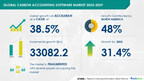
NEW YORK, Feb. 14, 2025 /PRNewswire/ — Report on how AI is redefining market landscape – The global carbon accounting software market  size is estimated to grow by USD 33.08 billion from 2025-2029, according to Technavio. The market is estimated to grow at a CAGR of  38.5%  during the forecast period. Increasing adoption of policies on carbon emissions is driving market growth, with a trend towards increasing demand for software as a service (saas)-based carbon accounting software. However, difficulty in capturing energy usage data  poses a challenge. Key market players include 3E Net Zero Group Pty Ltd., Benchmark Digital Partners LLC, BraveGen, Brightest Inc., Carbon Analytics Ltd., ENGIE SA, ESG Enterprise, GreenStep Solutions Inc., Intelex Technologies ULC, Lisam Systems SA, Locus Technologies, Net0, Persefoni AI Inc., ProcessMAP Corp., Sage Group Plc, SAP SE, SIERRA ODC Pvt. Ltd., Simble Solutions Ltd., Sphera Solutions Inc., and Wolters Kluwer NV.

AI-Powered Market Evolution Insights. Our comprehensive market report ready with the latest trends, growth opportunities, and strategic analysis- View Free Sample Report PDF

Forecast period

2025-2029

Base Year

2024

Historic Data

2019 – 2023

Segment Covered

End-user (Telecommunication, Oil and gas, Technology, Power and utilities, and Others), Deployment (Cloud-based and On-premises), and Geography (North America, Europe, APAC, Middle East and Africa, and South America)

Region Covered

North America, Europe, APAC, Middle East and Africa, and South America

Key companies profiled

3E Net Zero Group Pty Ltd., Benchmark Digital Partners LLC, BraveGen, Brightest Inc., Carbon Analytics Ltd., ENGIE SA, ESG Enterprise, GreenStep Solutions Inc., Intelex Technologies ULC, Lisam Systems SA, Locus Technologies, Net0, Persefoni AI Inc., ProcessMAP Corp., Sage Group Plc, SAP SE, SIERRA ODC Pvt. Ltd., Simble Solutions Ltd., Sphera Solutions Inc., and Wolters Kluwer NV

Key Market Trends Fueling Growth

The Carbon Accounting Software Market is witnessing significant trends as enterprises focus on managing their carbon releases and achieving net-zero emissions. Emissions auditing is a key driver, with investors and potential investors seeking sustainability proficiency from companies. Innovating solutions like Digital Twin technology and AI are transforming commercial operations, allowing for predictive analysis of energy usage in buildings, services, and city planning. McKinsey and Catalyst Zero are leading the decarbonization solution, helping businesses design and construct operations with lower carbon footprints. Driving factors include increasing product demand, COP27, and the need to move away from fossil fuel consumption. Carbon accounting software is becoming essential for companies to stay competitive and meet net-zero targets. On-premise and cloud-based solutions are available, offering high-tech knowledge and expertise to help enterprises make the transition. Digital alternatives to paperless progress, such as online banking and mobile payment apps, are also playing a role in reducing carbon footprints. Fossil fuel companies are also investing in renewable energy sources like wind power and Algae biofuels to meet their net-zero targets. However, it’s important to avoid greenwashing practices and ensure transparency in carbon reporting. 

Carbon accounting software, delivered as a Service-as-a-Solution (SaaS), offers businesses flexibility in scaling their usage according to their specific needs. This feature is advantageous for organizations of all sizes, including Small and Medium Enterprises (SMEs) and large corporations. SaaS solutions enable remote access through the cloud, allowing teams and stakeholders to collaborate on carbon accounting and sustainability reporting from any location with an internet connection. Additionally, SaaS models generally involve lower upfront costs compared to traditional on-premises software, making it a cost-effective choice for budget-conscious organizations or those seeking to minimize initial investments. 

Insights on how AI is driving innovation, efficiency, and market growth- Request Sample!

Market Challenges

Carbon accounting software is essential for enterprises seeking to manage and reduce their carbon releases as they strive for net-zero emissions. However, challenges persist. Emissions auditing can be complex, requiring sustainability proficiency and high-tech knowledge. Financial opportunities exist for innovating decarbonization solutions, attracting investors and potential investors. McKinsey and Catalyst Zero are driving this transformation, offering digital twin technology to predict and design carbon footprint reduction in commercial operations. City planners, building owners, and service providers can benefit from AI-powered carbon accounting software. Driving factors include product demand, COP27, and the need to address greenwashing practices. Companies like ExxonMobil are deploying on-premise and cloud-based solutions, joining the digital revolution in areas like wind power and fossil fuel consumption. Digital twins, AI, and paperless progress are key to the future of carbon accounting software.In the business world, accurately measuring and reporting carbon emissions is essential for environmental sustainability. However, many organizations, excluding carbon-intensive industries, seldom track their energy usage in detail. Energy consumption data for vehicles and fleets is often overlooked in accounting systems. The calculation of carbon emissions requires obtaining utility bills for numerous buildings and contacting various plant managers to determine the usage of fuels like propane and natural gas. Efficient carbon accounting necessitates meticulous data collection and organization.

Insights into how AI is reshaping industries and driving growth- Download a Sample Report

Segment Overview 

This carbon accounting software market report extensively covers market segmentation by

End-userTelecommunicationOil And GasTechnologyPower And UtilitiesOthersDeploymentCloud-basedOn-premisesGeographyNorth AmericaEuropeAPACMiddle East And AfricaSouth America

1.1 Telecommunication-  Carbon accounting software is essential for telecommunications companies to manage and analyze their energy consumption and associated carbon emissions. This includes electricity usage in data centers, network infrastructure, and office facilities. Telecommunication networks, including data centers and cell towers, contribute significantly to carbon emissions. Carbon accounting software enables organizations to quantify these emissions, identify energy efficiency opportunities, and track the integration of renewable energy sources. In the telecom sector, components such as antennas, feeders, cables, and transmission equipment contribute to carbon emissions. Passive components like telecom towers, sites, and others also add to the carbon footprint. Regulations, like the one in India by the Telecom Regulatory Authority of India (TRAI), mandating carbon emissions disclosure, have driven the need for carbon accounting software. Companies use this software to support eco-design initiatives, develop energy-efficient products, and reduce operational costs. These factors are expected to fuel the growth of the telecommunication segment in the global carbon accounting software market.

Download complimentary Sample Report to gain insights into AI’s impact on market dynamics, emerging trends, and future opportunities- including forecast (2025-2029) and historic data (2019 – 2023) 

Research Analysis

The Carbon Accounting Software market is witnessing significant growth as enterprises increasingly focus on measuring, managing, and reducing their carbon releases to achieve net-zero emissions and seize financial opportunities in the decarbonization solution space. This software enables auditing of carbon footprints, predicting emissions from commercial operations, designing and constructing buildings with digital twin technology, and managing traffic flow and room temperatures in real-time. City planners and building owners are leveraging this high-tech knowledge to innovate solutions for sustainability proficiency and transformation expertise. Potential investors and financial institutions are also showing keen interest in this market, recognizing the importance of carbon accounting in the decarbonization process. McKinsey and Catalyst Zero are among the many organizations providing carbon accounting services, helping enterprises navigate the complexities of carbon management.

Market Research Overview

The Carbon Accounting Software market is experiencing significant growth as enterprises prioritize decarbonization solutions for managing and reducing their carbon releases. This market offers financial opportunities for investors and potential investors, as the demand for sustainability proficiency and high-tech knowledge increases. Innovating solutions in this space include digital twin technology, AI, and predictive analytics, which can help manage carbon footprints in commercial operations, buildings, and services. Driving factors include the net-zero emissions target, COP27, and the need to address greenwashing practices. McKinsey and Catalyst Zero are among those leading the transformation expertise in this field. Carbon accounting software can help manage emissions from physical objects like buildings, traffic flow, room temperatures, wind power, and fossil fuel consumption. Companies like ExxonMobil are also deploying carbon accounting software for on-premise and cloud-based solutions. Digital alternatives, such as online banking and mobile payment apps, are also contributing to the paperless progress in this market. Algae biofuels and other renewable energy sources are also being integrated into carbon accounting software to help enterprises achieve their net-zero targets.

Table of Contents:

1 Executive Summary
2 Market Landscape
3 Market Sizing
4 Historic Market Size
5 Five Forces Analysis
6 Market Segmentation

End-userTelecommunicationOil And GasTechnologyPower And UtilitiesOthersDeploymentCloud-basedOn-premisesGeographyNorth AmericaEuropeAPACMiddle East And AfricaSouth America

7 Customer Landscape
8 Geographic Landscape
9 Drivers, Challenges, and Trends
10 Company Landscape
11 Company Analysis
12 Appendix

About Technavio

Technavio is a leading global technology research and advisory company. Their research and analysis focuses on emerging market trends and provides actionable insights to help businesses identify market opportunities and develop effective strategies to optimize their market positions.

With over 500 specialized analysts, Technavio’s report library consists of more than 17,000 reports and counting, covering 800 technologies, spanning across 50 countries. Their client base consists of enterprises of all sizes, including more than 100 Fortune 500 companies. This growing client base relies on Technavio’s comprehensive coverage, extensive research, and actionable market insights to identify opportunities in existing and potential markets and assess their competitive positions within changing market scenarios.

Contacts

Technavio Research
Jesse Maida
Media & Marketing Executive
US: +1 844 364 1100
UK: +44 203 893 3200
Email: media@technavio.com
Website: www.technavio.com/

View original content to download multimedia:https://www.prnewswire.com/news-releases/carbon-accounting-software-market-to-grow-by-usd-33-08-billion-from-2025-2029–driven-by-carbon-emission-policies-report-on-ais-impact-on-market-trends—technavio-302376176.html

SOURCE Technavio

Continue Reading

Technology

Acuity Analytics appoints Jon O’Donnell as Chief Executive to lead next phase of AI-enabled expansion

Published

on

By

Former IBM Managing Partner succeeds Rob King as the group builds further AI native capabilities for its financial services clients

LONDON, Nov. 4, 2026 /PRNewswire/ — Acuity Analytics has appointed Jon O’Donnell as Chief Executive Officer, effective immediately, as the Permira-backed financial services specialist expands its AI, Data and Digital capabilities through acquisitions and organic investment.

O’Donnell, formerly Chief Operating Officer, succeeds Rob King, who will become Chairman at the end of the year. King will succeed Philip Gore-Randall, who retires on 31 December after seven years as Chairman. The appointments form part of the group’s succession planning and have the full support of the Board and Permira.

The leadership changes come as Acuity Analytics broadens its insights and analytics business to help clients redesign how they operate, combining financial services expertise with AI, data and digital transformation.

O’Donnell joined Acuity Analytics as Chief Operating Officer in 2024 after more than 20 years at IBM. His roles there included leading Business and Technology Consulting divisions in Europe, the Middle East and Africa with up to 15,000 people and $3 billion in annual revenue. He was also a member of IBM Consulting’s global leadership team.

At Acuity Analytics, he has worked with the executive team on strategy, the rapid growth of its’ AI, Data and Digital Services business, technology and AI innovation, helping develop the capabilities that will underpin the group’s next stage of growth.

Jon O’Donnell said:

“Our clients are making significant decisions about where to invest in AI and how to change the way their businesses work. They need partners who understand their workflows and can turn technology investment into sustainable advantage.

“Acuity Analytics brings together people who understand financial services in depth with growing expertise in data and AI. My priority is to make that combination count: helping clients re-design their workflows, optimising operations through the best combination of AI and talent and achieve more from their investment.

“Rob has built a strong business with trusted client relationships and talented colleagues. I look forward to building on that work and continuing to benefit from his experience as he transitions to the role of chairman.”

Acuity Analytics’ investment programme includes the acquisition of US data consultancy Continuus in October 2026, adding specialists in data strategy, governance and data platforms. This followed the acquisition of data and AI specialist Ascent in 2025 and PPA Group in 2024, a technology led managed services provider to the Lending industry.

Rob King said:

“Jon brings substantial experience of leading technology businesses and helping organisations change how they operate. Since joining Acuity Analytics, he has combined that experience with a clear understanding of our clients, our people and the opportunities ahead.

“We have invested significantly in AI, digital and data, building on the industry expertise that has always distinguished Acuity Analytics. Jon is the right person to lead the business through its next stage of growth.

“I would also like to thank Philip Gore-Randall for his contribution as chairman over the past seven years. His judgement, counsel and support have been invaluable to me and have helped guide Acuity Analytics through a period of significant growth and change.”

King led Acuity Analytics through its separation from Moody’s in 2019 and its subsequent expansion. As chairman, he will lead the board and support O’Donnell and the executive team, while remaining involved in selected investor and client relationships.

About Acuity Analytics

Acuity Analytics is the trading name of Acuity Analytics Knowledge Partners, a global provider of research, data management, analytics and AI-enabled solutions to financial institutions and corporates.

With more than 7,800 analysts, data specialists and technologists across 28 locations, the firm combines financial services expertise with data and AI capabilities. Acuity Analytics supports more than 850 organisations.

Acuity Analytics was established as a separate business from Moody’s Corporation in 2019 following its acquisition by Equistone Partners Europe. In January 2023, funds advised by Permira acquired a majority stake, with Equistone remaining invested as a minority shareholder.

For more information, visit Acuity Analyticsanalytics.com.

Media enquiries
Gill Galassi
Director of Brand and Communications
Gill.Galassi@Acuity Analyticsanalytics.com
+44 (0)7961 244215


View original content to download multimedia:https://www.prnewswire.co.uk/news-releases/acuity-analytics-appoints-jon-odonnell-as-chief-executive-to-lead-next-phase-of-ai-enabled-expansion-302928876.html

Continue Reading

Technology

FinChain Partners with Plume to Launch Yield Enhancement Strategy, Introducing an Innovative Leveraged Yield Solution for RWA Assets

Published

on

By

HONG KONG, Nov. 4, 2026 /PRNewswire/ — FinChain, a compliant blockchain-based financial infrastructure platform, today officially announced the launch of FLEX & FINO, an innovative on-chain Yield Enhancement Strategy jointly introduced with Plume, the Open Finance platform for institutional assets.

This is a leveraged looping yield product for the interest-bearing RWA asset FUSD. It marks FUSD’s evolution from a simple yield-bearing holding into structured strategy applications. It also provides a reusable practical template for institutional RWA assets in on-chain DeFi scenarios, laying a solid foundation for FinChain’s pipeline of further structured RWA products.

FUSD (FinChain Dollar), FinChain’s core interest-bearing RWA asset, is fully backed by tokenized U.S. short-term Treasuries and compliant money market funds. Its reserve assets are maintained at a minimum 100% collateralization ratio and held by designated custodians; the yield generated by these reserve assets constitutes the native yield source of FUSD. FLEX & FINO is built on a FUSD/USDC looping leverage strategy, operating on FUSD’s compliant yield-bearing underlying assets. Users use FUSD as collateral to earn FUSD’s native yield, borrow USDC against that collateral, and deploy the borrowed USDC into liquidity pools to earn additional APY (Annual percentage yield). The product applies a 90% utilization cap to manage leverage risk; under baseline assumptions, the strategy’s expected annualized APY can reach up to 7.2%. The redemption settlement cycle is T+2, while the interest settlement cycle ranges from T+14 to T+30. By completing the full “collateralize — borrow — deploy into pool” loop, the product is more than a technical innovation: it is a significant expansion of RWA use cases, bringing the yield logic of traditional asset management into the Web3 environment and offering institutional investors a new on-chain yield option. Under the partnership framework agreed by both parties, the TVL (Total Value Locked) associated with FLEX & FINO will be displayed under Partner Protocol and Nest Protocol after launch.

Plume is an open financial platform for institutional assets. It brings institutional assets out of closed financial systems into open, programmable, globally accessible markets.

“Our partnership with Plume is not merely technical synergy,” said Zhao Chen, CEO of FinChain. “It is a meaningful step forward in the evolution of RWA financial infrastructure. As a modular blockchain ecosystem focused on the RWA sector, Plume will greatly expand the application boundaries of FUSD. Underpinned by high-credit-quality real-world assets, FUSD brings the yield-generating power of traditional finance into on-chain DeFi. As an RWA infrastructure provider, FinChain will continue to uphold the principles of compliance and prudence, advance the deep integration of real-world assets and blockchain, build a secure and efficient on-chain RWA financial system, and work with our ecosystem partners to consolidate our leading position in the institutional RWA sector.”

“The key to the growth of RWA lies in moving from asset issuance to genuinely usable financial applications,” said Chris Yin, CEO of Plume. “FUSD is backed by solid real-world asset reserves, and the launch of FLEX & FINO proves that a modular RWA blockchain can carry sophisticated institutional-grade financial strategies. We look forward to continuing to explore RWA DeFi use cases together with FinChain and to attracting more traditional institutions into the on-chain RWA ecosystem.”

The launch of FLEX & FINO is the first deliverable of the strategic partnership between FinChain and Plume. Ahead of it, the two teams conducted multiple rounds of technical discussion and solution refinement covering on-chain adaptation of RWA assets, strategy modeling and risk control. FinChain has also completed its integration with KuCoin, enabling FUSD to access KuCoin’s RCMS staking mirror solution and expanding FUSD’s institutional collateral use cases.

FinChain is continuously strengthening its full-stack RWA capabilities, advancing on multiple fronts including RWA asset issuance, custodial staking mapping and structured strategy products, while expanding collaboration with leading trading platforms at home and abroad as well as RWA blockchain ecosystem partners.

The launch of the FLEX & FINO Yield Enhancement Strategy fully demonstrates FinChain’s forward-looking positioning in RWA product innovation. FinChain will continue to work with global ecosystem partners to bring the capabilities of traditional financial products on-chain, combining the risk-management logic of traditional finance with Web3 innovation. Going forward, FinChain will stay open and innovative, joining hands with partners worldwide to unlock more possibilities for RWA and to deliver more diversified and professional digital financial solutions to institutional clients.

About FinChain

FinChain is an intelligent crypto-finance brand incubated by Fosun Wealth Holdings. Positioned as a Web3 brand for a global real-asset financial blockchain network — and as a financial infrastructure platform that enables the on-chain circulation of real-world assets — FinChain focuses on on-chain identity, RWA technology, asset issuance and on-chain liquidity management. It is committed to connecting traditional financial assets with digital asset use cases, and to continuously expanding FUSD’s institutional adoption and ecosystem partnerships. To learn more, visit: www.finchain.global 

About Plume

Plume is the Institutional Open Finance platform. It brings institutional assets out of closed financial systems into open, programmable, globally accessible markets. Plume Vaults, Plume’s flagship asset management protocol, opens institutional assets from Apollo, WisdomTree, Hamilton Lane, and other leading firms to global investors through compliant, non-custodial vaults. Backed by Apollo Global Management, Galaxy Digital, and Brevan Howard. It holds a SEC transfer-agent registration via Kimber Transfer Agency LLC and a licence from the Bermuda Monetary Authority.

For more information, visit: https://plume.org 


View original content:https://www.prnewswire.com/apac/news-releases/finchain-partners-with-plume-to-launch-yield-enhancement-strategy-introducing-an-innovative-leveraged-yield-solution-for-rwa-assets-302928878.html

SOURCE Finchain Holdings (Cayman) Limited

Continue Reading

Technology

Singapore leads region in race to next-generation AI

Published

on

By

AI is moving from experimentation to strategic deployment among Singaporean businessesAdvanced AI tools are gaining momentum across organisations Deeper integration, governance and resilience are now the priorities for local businesses

SINGAPORE, Nov. 4, 2026 /PRNewswire/ — Businesses are moving beyond basic AI, with Singapore recording the strongest demand for agentic AI among all markets surveyed in a new CPA Australia survey.

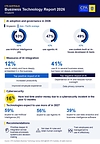
CPA Australia’s Business Technology Report 2026 found 56 per cent of organisations expect to increase their use of agentic AI over the next 12 months, the highest result among surveyed markets. AI adoption is also near universal, with 93 per cent of businesses using AI compared with the survey average of 89 per cent.

Nearly half of respondents reported using advanced AI applications such as custom-built AI solutions and agentic AI, signalling a shift from off-the-shelf tools to technologies tailored to specific business needs.

While adoption is high, the opportunity now lies in deeper integration. Forty-one per cent of respondents said AI is used across several areas of the business, while only 12 per cent reported AI is deeply embedded throughout their organisation.

The annual survey of 1,679 accounting and finance professionals across Australia, Hong Kong, Malaysia, Chinese Mainland and Singapore suggests the next challenge is embedding AI across business functions rather than simply adopting the technology.

CPA Australia’s Singapore Deputy Divisional President, Joshua Ong, said the findings indicate businesses are moving beyond AI experimentation and focusing on how the technology can drive productivity, performance and competitive advantage.

“AI adoption is already widespread. What sets leading organisations apart is how deeply they integrate AI into their operations,” Mr Ong said.

“Businesses are increasingly looking beyond generic AI tools and investing in more sophisticated technologies that can improve productivity, support decision-making and automate complex tasks.

“This direction aligns closely with Singapore’s updated National AI Strategy, which places greater emphasis on moving businesses towards meaningful AI adoption and deeper integration across sectors. Singapore’s strong interest in agentic AI suggests many businesses are already preparing for the next stage of digital transformation.”

“The opportunity now is for businesses to translate that enthusiasm into practical applications that deliver measurable value, while maintaining effective governance and human oversight.”

According to respondents, the leading benefits of AI are increased productivity, improved employee experience, and greater accuracy and efficiency in repetitive tasks.

Digital maturity remains a key strength. Ninety per cent of respondents use data analytics and business intelligence tools, while 84 per cent use cybersecurity software.

Cybersecurity remains a concern, however. Sixteen per cent reported losing time or money due to a cyber incident in the past year. While below the survey-wide figure of 19 per cent, the finding highlights the need for continued investment in cyber resilience as reliance on AI and data grows.

Respondents identified overreliance on AI, reduced human oversight, data privacy concerns and the pace of technological change as the biggest barriers to deeper AI adoption.

“Organisations that combine innovation with strong governance, cybersecurity and workforce capability will be best placed to realise the full value of AI,” Mr Ong said.

Key findings

93% use AI, compared with the survey average of 89%.Nearly half use advanced AI applications, including custom-built and agentic AI solutions.56% expect to increase their use of agentic AI in 2027, the highest result among surveyed markets and above the survey average of 45%.41% use AI across multiple business functions.12% have deeply embedded AI across their organisation.90% use data analytics and business intelligence tools.84% use cybersecurity software.16% reported losing time or money due to a cybersecurity incident in the past year, compared with 19% across all surveyed markets.

About CPA Australia

CPA Australia is Australia’s leading professional accounting body and one of the largest in the world. We have more than 176,000 members in over 100 countries and regions. Our core services include education, training, technical support and advocacy. CPA Australia provides thought leadership on local, national and international issues affecting the accounting profession and public interest. We engage with governments, regulators and industries to advocate policies that stimulate sustainable economic growth and have positive business and public outcomes. A CPA is a Certified Practising Accountant. More at cpaaustralia.com.au

View original content to download multimedia:https://www.prnewswire.com/apac/news-releases/singapore-leads-region-in-race-to-next-generation-ai-302928802.html

SOURCE CPA Australia

Continue Reading

Trending