Connect with us

Technology

Renewable Energy Market to Grow by USD 708.6 Billion from 2024-2028, Driven by Rising Global Energy Demand, Report on AI’s Impact on Market Trends – Technavio

Published

on

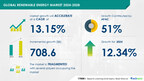
NEW YORK, Feb. 14, 2025 /PRNewswire/ — Report on how AI is redefining market landscape – The global renewable energy market size is estimated to grow by USD 708.6 billion from 2024-2028, according to Technavio. The market is estimated to grow at a CAGR of 13.15% during the forecast period. Rise in global energy demand is driving market growth, with a trend towards rising popularity of clean energy technologies. However, competition from alternative energy sources poses a challenge. Key market players include ABB Ltd., Acciona SA, Duke Energy Corp., EnBW Energie Baden Wurttemberg AG, Enel Spa, ENERCON GmbH, General Electric Co., Goldwind Australia, Innergex Renewable Energy Inc., Invenergy, Nextera Energy Inc., Schneider Electric SE, Siemens AG, Sinovel Wind Group Co. Ltd., Sunrun Inc., Suzlon Energy Ltd., Tata Power Co. Ltd., Vattenfall AB, Vestas Wind Systems AS, and Xcel Energy Inc..

AI-Powered Market Evolution Insights. Our comprehensive market report ready with the latest trends, growth opportunities, and strategic analysis- View Free Sample Report PDF

Forecast period

2024-2028

Base Year

2023

Historic Data

2018 – 2022

Segment Covered

End-user (Residential, Industrial, and Commercial), Type (Hydropower, Solar, Wind, and Others), and Geography (APAC, Europe, North America, South America, and Middle East and Africa)

Region Covered

APAC, Europe, North America, South America, and Middle East and Africa

Key companies profiled

ABB Ltd., Acciona SA, Duke Energy Corp., EnBW Energie Baden Wurttemberg AG, Enel Spa, ENERCON GmbH, General Electric Co., Goldwind Australia, Innergex Renewable Energy Inc., Invenergy, Nextera Energy Inc., Schneider Electric SE, Siemens AG, Sinovel Wind Group Co. Ltd., Sunrun Inc., Suzlon Energy Ltd., Tata Power Co. Ltd., Vattenfall AB, Vestas Wind Systems AS, and Xcel Energy Inc.

Key Market Trends Fueling Growth

Renewable energy markets are experiencing significant trends in 2023. Energy security is a top priority, with interest rates and investment costs influencing the decision-making process for utility-scale systems like solar PV and wind energy. Solar PV capacity is booming, with both utility-scale and small distributed systems gaining traction. Electricity prices are on the rise due to the global energy crisis, making renewables increasingly competitive. Policy makers are implementing new policies and incentives to accelerate renewables construction and grid connection. In the residential segment, solar energy and small distributed systems are popular, while commercial systems are also seeing growth. Wind energy, including onshore and offshore wind, is a key player in the renewables market. Hydropower, bioenergy, and geothermal energy are also important contributors. Module prices are decreasing, making renewables more affordable. Environmental concerns, including carbon footprint and ESG considerations, are driving demand for renewables. Battery storage systems are also gaining popularity to ensure energy security and manage intermittency. Major players in the market include Acciona, Enel Spa, Innergex, Invenergy, Sol Customer Solutions, Engie, and others. Off-grid energy and electrification are also trending, with smart cities and heating applications driving demand. Regulatory reforms and subsidies are essential for the continued growth of renewables. Nuclear power and fossil fuels face increasing competition, with renewables offering a more sustainable and cost-effective solution. Climate change and carbon dioxide (CO2) emissions are major concerns, making renewables a crucial part of the energy mix. Ocean power and wind turbines are emerging technologies with great potential. 

The global electricity demand has experienced substantial growth due to urbanization and industrialization, particularly in countries like China and India. This trend has led to a significant increase in the use of fossil fuels, such as coal and natural gas, for power generation. Consequently, CO2 emissions from electricity and heat production reached over 42% of the global total in 2022. These emissions primarily stem from the combustion of these fuels. To address this issue, businesses are increasingly investing in renewable energy sources, such as wind, solar, and hydroelectric power, to reduce reliance on fossil fuels and decrease greenhouse gas emissions. 

Insights on how AI is driving innovation, efficiency, and market growth- Request Sample!

Market Challenges

The renewable energy market faces several challenges in ensuring energy security and affordability. High interest rates and investment costs are hindering the expansion of renewable energy capacity, particularly in utility-scale systems such as solar PV and wind energy. Policy makers are working to address these challenges through incentives and regulatory reforms, but the global energy crisis and undersubscription of auctions are causing delays in policy implementation. Environmental conditions and ESG concerns are also impacting the market, with a focus on reducing carbon footprint and greenhouse gas emissions. Renewable energy sources like solar, wind, hydro, bioenergy, and geothermal are gaining popularity, but challenges remain in grid connection, construction, and permitting. Major players in the market include Acciona, Enel Spa, Innergex, Invenergy, Sol Customer Solutions, Engie, and others. The residential and commercial segments are growing, with a shift towards distributed solar PV and off-grid energy. Battery storage systems and electrification are key trends, with smart cities and heating applications driving demand. However, the market is not without its rebound challenges. Fossil fuels remain a significant competitor, and policy changes and legislation can impact renewable energy additions. Carbon dioxide (CO2) emissions from traditional power sources continue to be a concern, with nuclear power and battery storage systems offering potential solutions. Innovations in wind energy, with advancements in wind turbines and offshore wind energy, are helping to address some of these challenges. Ocean power and geothermal energy are also emerging as promising sources of renewable energy. Overall, the renewable energy market is evolving rapidly, with a focus on affordability, sustainability, and innovation.Renewable energy sources, such as wind, solar, and hydro, have seen significant growth in adoption. However, fossil fuels, including coal, natural gas, and oil, continue to dominate the global energy market. In 2022, coal accounted for over 38%, natural gas for 23%, and oil for 3% of total electricity generation, according to the International Energy Agency. Advanced coal technologies, like supercritical and ultra-supercritical coal-fired power plants, have extended the life of coal-powered generation. Some countries still rely on fossil fuels due to their abundance and established infrastructure.

Insights into how AI is reshaping industries and driving growth- Download a Sample Report

Segment Overview

This renewable energy market report extensively covers market segmentation by

End-userResidentialIndustrialCommercialTypeHydropowerSolarWindOthersGeographyAPACEuropeNorth AmericaSouth AmericaMiddle East And Africa

1.1 Residential- The residential sector is a significant energy consumer globally, leading to energy inefficiency and negative environmental impacts. These impacts include air pollution, the greenhouse effect, and the urban heat island effect, which can harm human health and social and economic development. To address these challenges, the shift towards clean energy is essential. Solar energy, harnessed through natural processes like conduction, convection, and radiation, is a major renewable energy source for the residential segment. Additionally, wind energy, an environmentally friendly and clean energy source, is gaining importance. Government initiatives, favorable incentives, and a focus on 100% electrification are driving the growth of the renewable energy market in the residential sector. Solar and wind energy are expected to play a crucial role in meeting the rising energy demand from this sector while preserving limited resources for future generations.

Download complimentary Sample Report to gain insights into AI’s impact on market dynamics, emerging trends, and future opportunities- including forecast (2024-2028) and historic data (2018 – 2022) 

Research Analysis

The renewable energy market is experiencing significant growth as interest in energy security and reducing carbon footprint increases in the face of the global energy crisis. Solar PV capacity continues to expand, with utility-scale systems leading the way, while small distributed systems gain popularity in the residential segment. Hydroelectric power, Solar, Wind, Geothermal, and even emerging technologies like Ocean power are contributing to the shift away from Fossil fuels. However, investment costs and electricity prices remain key considerations for policy makers. Environment conditions and policy frameworks play a crucial role in the adoption of renewable energy. Battery storage systems are becoming increasingly important for managing the intermittency of Solar and Wind energy. The carbon footprint of traditional power generation methods is driving the demand for cleaner alternatives, with Wind turbines and Generators at the forefront of the transition. Offshore and Onshore Wind energy, as well as Carbon dioxide (CO2) and Greenhouse gas emissions reductions, are major focuses in the renewable energy sector.

Market Research Overview

The renewable energy market is experiencing significant growth as energy security concerns rise in the context of the global energy crisis. Solar PV capacity continues to expand, with utility-scale systems leading the way, while small distributed systems gain popularity in the residential and commercial segments. Wind energy, including onshore and offshore wind, is also a major contributor, with wind energy additions outpacing fossil fuels in some regions. Electricity prices, influenced by interest rates and investment costs, are driving the shift towards renewables. Policy makers are implementing policies and incentives to accelerate the transition, including legislation, permitting reforms, and subsidies. Renewable energy sources, such as solar, wind, hydro, bioenergy, and geothermal, are reducing greenhouse gas emissions and addressing climate change concerns. Battery storage systems are becoming increasingly important for grid stability and integrating renewable energy into the grid. ESG concerns are also driving demand for renewables, with companies like Acciona, Enel Spa, Innergex, Invenergy, Sol Customer Solutions, Engie, and others leading the way. Off-grid energy and electrification are also gaining attention, with smart cities and heating applications being key areas of focus. Environmental conditions, carbon footprint, and regulatory reforms are shaping the renewable energy landscape. Renewables, including PV-utility and PV-distributed, are becoming cost-competitive with fossil fuels, even without subsidies. However, challenges such as undersubscription of auctions, permitting delays, and legislation can impact the growth of the renewable energy market. Carbon dioxide (CO2) emissions from fossil fuels are a major concern, with renewables offering a sustainable alternative. Nuclear power is also a low-carbon option, but faces challenges related to safety and public perception. Ocean power and geothermal energy are emerging renewable sources with significant potential. Wind turbines and generators are key components of the renewable energy industry, with offshore wind energy and onshore wind energy being major areas of investment. Wind energy additions are expected to continue to outpace fossil fuels, with wind turbine manufacturers and developers leading the way. In summary, the renewable energy market is experiencing significant growth, driven by energy security concerns, electricity prices, and environmental concerns. Policy implementation, investment trends, and technological advancements are shaping the future of the renewable energy industry.

Table of Contents:

1 Executive Summary
2 Market Landscape
3 Market Sizing
4 Historic Market Size
5 Five Forces Analysis
6 Market Segmentation

End-userResidentialIndustrialCommercialTypeHydropowerSolarWindOthersGeographyAPACEuropeNorth AmericaSouth AmericaMiddle East And Africa

7 Customer Landscape
8 Geographic Landscape
9 Drivers, Challenges, and Trends
10 Company Landscape
11 Company Analysis
12 Appendix

About Technavio

Technavio is a leading global technology research and advisory company. Their research and analysis focuses on emerging market trends and provides actionable insights to help businesses identify market opportunities and develop effective strategies to optimize their market positions.

With over 500 specialized analysts, Technavio’s report library consists of more than 17,000 reports and counting, covering 800 technologies, spanning across 50 countries. Their client base consists of enterprises of all sizes, including more than 100 Fortune 500 companies. This growing client base relies on Technavio’s comprehensive coverage, extensive research, and actionable market insights to identify opportunities in existing and potential markets and assess their competitive positions within changing market scenarios.

Contacts

Technavio Research
Jesse Maida
Media & Marketing Executive
US: +1 844 364 1100
UK: +44 203 893 3200
Email: media@technavio.com
Website: www.technavio.com/

View original content to download multimedia:https://www.prnewswire.com/news-releases/renewable-energy-market-to-grow-by-usd-708-6-billion-from-2024-2028–driven-by-rising-global-energy-demand-report-on-ais-impact-on-market-trends—technavio-302376169.html

SOURCE Technavio

Continue Reading

Technology

Deloitte named a Leader in IDC MarketScape Worldwide AI-enabled Adobe Professional Services 2026 Vendor Assessment

Published

on

By

This report is a quantitative and qualitative assessment of the characteristics that explain a vendor’s success in the marketplace

NEW YORK, Nov. 5, 2026 /PRNewswire/ — Deloitte has been positioned as a Leader in the IDC MarketScape Worldwide AI-Enabled Adobe Professional Services 2026 Vendor Assessment (Doc #US54114626, October 2026). Deloitte is recognized as a “worldwide services provider that combines a long heritage in business consulting with broad and deep IT services capabilities, and with a strong understanding of its clients’ business on multiple levels.” Deloitte’s Adobe-focused professional services are delivered through Deloitte Digital.

This assessment was produced by “key findings from IDC’s 56 calls with reference clients of Adobe professional services.” This IDC MarketScape evaluation “is based on a comprehensive framework and set of parameters expected to be most conducive to success in providing professional services relating to AI-enabled Adobe professional services in both the short term and the long term.” Deloitte was positioned as a Leader of the IDC MarketScape: Worldwide Experience Design Services 2025 Vendor Assessment (Doc #US52973225, October 2025) and the IDC MarketScape: Worldwide Experience Build Services 2025 Vendor Assessment (Doc #US52973125, October 2025). 

“We’re honored to be recognized by IDC MarketScape as a Leader in the 2026 Worldwide AI-Enabled Adobe Professional Services Vendor Assessment,” says Kim Frazier, Deloitte Global Chief Commercial Officer, Adobe Alliance. “As technology reshapes customer expectations, our deep knowledge of Adobe solutions and forward deployed models help organizations respond quickly and turn new possibilities into meaningful outcomes. We’ll continue building on the strength of our alliance and the innovation of our teams to help clients realize greater value from their investments.”

“Organizations today are looking for collaborators who can bring together creativity, technology, data, and industry insight to drive meaningful business outcomes,” says Mark Lush, Deloitte Global Consulting Services Customer Offering Portfolio leader and Global Head of Deloitte Digital. “We’re proud of this recognition, which I believe reflects Deloitte Digital’s dedication to helping clients create exceptional customer experiences, accelerate growth, and realize the potential of AI-powered transformation.”

“Adobe and Deloitte have built a strong relationship around a shared focus on customer outcomes,” says Kyle Ellis, Global Vice President & General Manager, Strategic Partnership Program, Adobe. “Deloitte brings a thoughtful, practical approach to complex experience challenges, helping organizations put Adobe’s AI-powered technology to work in ways that strengthen their brands, engage customers, and drive growth.”

According to the IDC MarketScape:

“Based on conversations with Deloitte’s clients, the three main areas where clients commended Deloitte were people quality, value creation, and Adobe-specific thought leadership.”

“Deloitte’s breadth and depth of capabilities, and its ability to mobilize its people quickly on a global scale, are important capabilities for clients.”

“Since 2021, Deloitte has won 10 global Adobe Digital Experience Partner or Customer Experience Orchestration Partner awards, has had 16 of its employees appointed as Adobe Community Advisors, and has been a Diamond sponsor of Adobe Summit every year.”

“Deloitte Digital has a number of intellectual property assets to help its clients drive value from Adobe technology, including:Connected Studio Powered by Adobe: An Accredited Solution combining Adobe’s Creative and Experience Cloud platforms with Deloitte Digital’s technical, operational, and creative expertise, including Workfront, to help clients create more content, faster and for less, in a real-time market.

Deloitte Digital Dual Zone: An Accredited Solution that resolves pre-ingestion data hygiene and identity resolution issues, helping clients build complete, consistent customer profiles and unified data sets from multiple platforms and target market segments from a complete view of customers.

Adobe Xccelerator (AX): An Accredited Solution providing a production-ready platform and a suite of reusable components, templates, features, and integrations that extend Adobe Experience Manager, giving clients faster time to value on Adobe’s digital platforms.

Closed-Loop Marketing Solution: A closed-loop marketing (CLM) Accredited Solution that combines marketing automation and financial management for more cost-efficient marketing (Customers using this solution are able to track more than performance of content based on click-throughs, since this solution tracks actual ROI of content and campaigns).

Investment to Value Map: A tool to help CMOs strategically transform and modernize the marketing function.

ConvergeCONSUMER™: A tool that combines Deloitte’s proprietary consumer data with applied AI and machine learning to help organizations know their customers, predict demand, and personalize experiences.

IndustryAdvantage™: An industry-benchmarking framework Deloitte draws on when building clients’ marketing transformation road maps, including competitive analysis, a marketing capability maturity model, and a multiyear business case and road map.”

For more information about Deloitte Analyst Relations, please visit our Analyst Relations page.

About IDC MarketScape
IDC MarketScape vendor assessment model is designed to provide an overview of the competitive fitness of technology and service suppliers in a given market. The research utilizes a rigorous scoring methodology based on both qualitative and quantitative criteria that results in a single graphical illustration of each supplier’s position within a given market. IDC MarketScape provides a clear framework in which the product and service offerings, capabilities and strategies, and current and future market success factors of technology suppliers can be meaningfully compared. The framework also provides technology buyers with a 360-degree assessment of the strengths and weaknesses of current and prospective suppliers.

About Deloitte
Deloitte refers to one or more of Deloitte Touche Tohmatsu Limited (DTTL), its global network of member firms, and their related entities (collectively, the “Deloitte organization”). DTTL (also referred to as “Deloitte Global”) and each of its member firms and related entities are legally separate and independent entities, which cannot obligate or bind each other in respect of third parties. DTTL and each DTTL member firm and related entity is liable only for its own acts and omissions, and not those of each other. DTTL does not provide services to clients. Please see www.deloitte.com/about to learn more.

Deloitte provides leading professional services to nearly 90% of the Fortune Global 500® and thousands of private companies. Our people deliver measurable and lasting results that help reinforce public trust in capital markets and enable clients to transform and thrive. Building on its 180+-year history, Deloitte spans more than 150 countries and territories. Learn how Deloitte’s nearly 500,000 people worldwide work together every day to make an impact that matters at www.deloitte.com.

View original content to download multimedia:https://www.prnewswire.com/news-releases/deloitte-named-a-leader-in-idc-marketscape-worldwide-ai-enabled-adobe-professional-services-2026-vendor-assessment-302930819.html

SOURCE Deloitte Global

Continue Reading

Technology

HUSK Launches All-in-One Ecosystem, Uniting Healthy Living and Clinical Care in a Single Platform

Published

on

By

New offering connects health plan-covered nutrition and mental health care with a personalized engagement journey — giving employers a way to measure whether wellness spend is reducing healthcare costs

WAYNE, Pa., Nov. 5, 2026 /PRNewswire/ — In both self-funded and fully insured health plans, most employees already have access to registered dietitians and licensed therapists, yet much of that care goes unused. Today, HUSK, a preventative wellness technology company serving self-funded and fully insured employers and health insurers, announced the launch of its all-in-one wellness ecosystem, HUSK Wellness. The all-in-one ecosystem brings healthy living programs and clinical care together in a single personalized experience, with outcomes reporting employers can act on.

For three decades, HUSK has helped employers engage their workforces in wellness. In that time, it has seen the same gap again and again. Benefits are spread across separate vendors, covered care goes unused, and employers have no reliable way to connect wellness spend to outcomes. HUSK Wellness closes that gap by building each employee a personalized journey across five benefits: Challenge, Rewards, Marketplace, Nutrition and Mental Health. Each journey is shaped by employer goals and driven by employee choice.

“Employers have spent years buying wellness one vendor at a time, and the result is benefits that sit unused and no clear line to healthcare costs,” said Erin Markowski, President and CEO of HUSK. “The clinical care is already covered by the health plan, whether an employer is fully insured or self-funded. Our job is to connect it to the healthy habits people enjoy, so employees actually use it and employers can finally see whether their wellness investment is reducing healthcare spend.” — Erin Markowski, President & CEO of HUSK

The HUSK Wellness journey begins with onboarding led by Poppie, HUSK’s wellness assistant. Poppie learns each employee’s goals, interests and preferences, then builds a personalized path across all five benefits. Because everything lives in one connected ecosystem, employees spend less time searching and more time engaging. Employers can see utilization, ROI, and how participation relates to high-cost utilization such as ER visits and chronic condition spend.

“Most wellness platforms are built to nudge people into engagement. We built ours around choice,” said Samantha Chase, Head of Product at HUSK. “Employees tell Poppie what they care about, and the platform builds a journey around that. People stick with what they chose for themselves.” — Samantha Chase, Head of Product at HUSK

HUSK Wellness is available now to employers and health insurance partners. Employers can request a walkthrough at https://huskwellness.com/.

About HUSK Wellness

HUSK Wellness is a preventative wellness technology company serving employer clients and health insurers. Operating under parent company Volaris, HUSK combines engagement solutions (Rewards, Challenge, and Marketplace) with clinical care delivered by Registered Dietitians and Mental Health Therapists. Learn more at huskwellness.com.

Media Contact
Keri Lindenmuth
Product Marketing Manager
klindenmuth@huskwellness.com

View original content to download multimedia:https://www.prnewswire.com/news-releases/husk-launches-all-in-one-ecosystem-uniting-healthy-living-and-clinical-care-in-a-single-platform-302929725.html

SOURCE Husk

Continue Reading

Technology

Listrak Debuts Integration with Dataships, Creating a Connected Approach to Compliance and Growth

Published

on

By

Consent collected through Dataships now flows into Listrak automatically, with each subscriber’s opt-in type preserved.

LITITZ, Pa., Nov. 5, 2026 /PRNewswire/ — Listrak, the cross-channel personalization platform, today announced its new integration with consent optimization platform Dataships. Dataships and Listrak work together to help consumer brands grow their direct marketing audiences while maintaining compliant consent practices across regions.

Dataships optimizes how marketing consent is collected across forms, checkout, confirmation pages, and other collection points, showing each shopper the appropriate consent experience based on factors like location, consent history, and applicable regulations. Through the Listrak integration, subscribers and their consent status collected through Dataships flow directly into Listrak, with no manual exports or imports, allowing brands to activate those audiences across their marketing programs. Single opt-in contacts are subscribed right away, double opt-in contacts receive Listrak’s confirmation email, and unsubscribes in Listrak sync back to Dataships, so consent records stay aligned on both platforms. 

Use cases of the Listrak + Dataships integration include:

Consent optimization. Dataships optimizes forms, checkout, confirmation pages, and anywhere else direct marketing consent is collected, showing every shopper the right ask based on their location, consent history, language preference, and more, which helps brands grow email audiences from their customers.Consent compliance. As each ask is optimized for growth, compliance is enforced underneath so no ask that could bring a brand out of compliance is shown. Opt-ins are stored as a permanent timestamped record, so brands stay compliant everywhere they sell and can prove exactly who they can legally reach.Consent intelligence. Dataships measures how marketing consent performs across channels, markets, and collection points and provides benchmarks, so brands understand the impact marketing consent has on their business, including audience growth, incremental revenue, and overall compliance posture.

“Since growing your audience and staying compliant go together, consent should follow the shopper into the marketing platform automatically,” said Leah Beitler, VP of Partnerships & Ecosystems, Listrak. “With Listrak’s compliance center of excellence combined with Dataships’ consent expertise, retailers grow their lists by increasing opt-ins across channels while staying aligned with regional rules.”

“Dataships is built on the belief that compliance is the infrastructure for growth,” said Matt Gottron, Head of Growth, Dataships. “Through our Listrak integration, retailers access a connected approach to audience growth, compliance, and retention marketing, which results in increased long-term customer value.”

About Listrak

Listrak is the cross-channel personalization platform for retail. By unifying customer data, identity, AI, and cross-channel marketing in one platform, Listrak enables retailers to deliver relevant, personalized experiences across email, SMS, RCS, app, web, and in-store. Listrak helps brands win new customers, increase engagement, drive conversions, strengthen loyalty, and grow revenue. Listrak publishes quarterly retail marketing benchmarks, drawn from data across its platform, at https://www.listrak.com/quarterly-benchmarks. For more information, visit https://www.listrak.com/.

About Dataships

Dataships is a marketing consent optimization platform for consumer brands. We optimize forms, checkout, confirmation pages, and anywhere else direct marketing consent is collected to help brands grow email, SMS, and WhatsApp audiences, stay compliant wherever they sell, and understand the impact marketing consent has on their business. For more information, visit https://www.dataships.io/.

View original content to download multimedia:https://www.prnewswire.com/news-releases/listrak-debuts-integration-with-dataships-creating-a-connected-approach-to-compliance-and-growth-302930963.html

SOURCE LISTRAK

Continue Reading

Trending