Connect with us

Technology

HR Must Identify Critical Roles to Reduce Talent Gaps in Succession Planning, Says McLean & Company

Published

on

HR leaders must guide organizations in separating role criticality from individual performance to ensure operational continuity and long-term success, according to new research from McLean & Company. The HR research and advisory firm reports that organizations often struggle to distinguish roles that are truly critical to business continuity and strategic success from roles that feel essential because of the high-performing individuals who occupy them. While top talent is invaluable, critical role identification must be based on the strategic importance of the position itself, rather than the person in it, to ensure long-term stability and effective workforce planning.

TORONTO, Feb. 25, 2025 /PRNewswire/ – Global HR research and advisory firm McLean & Company has released its latest research, Guide to Identifying Critical Roles, which emphasizes the importance of a structured, objective approach to determining which roles are essential to an organization’s success by informing talent initiatives like succession planning. The new guide underscores that critical roles are not always the most visible or senior positions – rather, they are the roles that could significantly disrupt operations or derail strategic initiatives if left vacant.

The firm’s research findings indicate that organizations that lack a standardized process for identifying critical roles risk making reactive, assumption-based talent decisions that fail to support long-term workforce planning and succession strategies. McLean & Company’s newly published guide provides HR professionals with the tools and frameworks needed to navigate role criticality discussions with key players, develop objective evaluation criteria, and proactively address potential talent gaps.

“Many organizations struggle with critical role identification because they confuse high-performing individuals with critical roles,” says Karen Mann, senior vice president, HR Research, Learning Solutions & Advisory Services, at McLean & Company. “By separating the role from the person, HR leaders can ensure a data-driven approach to succession planning and workforce forecasting, improving organizational resilience and reducing the risks of talent shortages.”

McLean & Company’s research highlights that while 68% of HR professionals recognize workforce planning (WFP) as highly important, only 25% report high effectiveness in executing these strategies. Similarly, just 16% of HR respondents rate their organization’s succession planning efforts as highly effective. The Guide to Identifying Critical Roles helps close this gap by equipping HR teams with a replicable, objective approach to assessing and prioritizing roles for talent development and succession planning.

A Structured Approach to Critical Role Identification
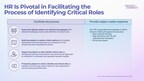
Guide to Identifying Critical Roles offers HR leaders a step-by-step framework to support critical role identification and ensure that talent strategies align with broader business objectives. Key elements of the approach include:

Defining organizational criticality by establishing clear criteria that reflect business needs.Navigating key player conversations to mitigate bias and ensure a fair, inclusive decision-making process.Weighing role criteria appropriately to distinguish between strategic value, operational continuity, revenue generation, and other organizational priorities.Monitoring and adjusting role classifications as business needs evolve.

The Business Impact of HR Identifying Critical Roles
Effectively identifying critical roles is a critical aspect of strong workforce planning, helping organizations minimize disruptions, improve agility, and enhance succession strategies. McLean & Company advises that a clear understanding of which roles are essential ensures seamless transitions to reduce the risk of operational slowdowns when key positions become vacant. With a proactive approach, businesses can anticipate shifts in talent needs, allowing for greater flexibility and responsiveness in a changing workforce landscape.

Aligning talent management with broader business objectives strengthens strategic decision-making, ensuring that high-impact roles are prioritized. Additionally, focusing on internal talent pipelines reduces reliance on external hiring, mitigating risks and costs associated with recruitment. McLean & Company reports that organizations that successfully identify and plan for critical roles gain a competitive edge, ensuring that key positions remain filled with top talent to drive long-term success.

Navigating Pushback and Ensuring Objectivity
McLean & Company cautions that critical role classification can be a sensitive topic that may prompt resistance from employees and leaders who equate “critical” with “most valuable.” The guide provides strategies for framing these conversations effectively, including the use of alternative terminology such as “high-impact roles” or “priority roles” to avoid misperceptions.

Additionally, the guide emphasizes that weighting role criteria differently – rather than applying a one-size-fits-all approach – enables organizations to tailor decisions to their unique strategic needs.

Access the Full Guide 
HR professionals can access the Guide to Identifying Critical Roles and explore related resources, including templates and tools, by visiting McLean & Company’s website or contacting Communications Manager Katie Tame at ktame@infotech.com.

McLean & Company workshops offer an easy way to accelerate HR projects. To learn more about the Design a High-Value Succession Planning Program workshop, please visit the workshop page.

Media interested in connecting with McLean & Company analysts for exclusive, research-backed insights and commentary on HR priorities and trends in 2025HR’s role in social media, the future of work, and more can contact Communications Manager Katie Tame at ktame@infotech.com.     

About McLean & Company
McLean & Company pairs evidence-based research and immediately applicable tools with deep HR expertise to position organizations to meet today’s needs and prepare for the future. The global HR research and advisory firm’s member organizations enjoy comprehensive resources, full-service diagnostics, workshops, action plans, and advisory services for all levels of HR professionals, from executive leadership to HR leaders to HR team members, that help shape workplaces where everyone thrives.

McLean & Company is a division of Info-Tech Research Group.

Media professionals can register for unrestricted access to research across IT, HR, and software and hundreds of industry analysts through the firm’s Media Insiders program. To gain access, contact ktame@infotech.com.

View original content to download multimedia:https://www.prnewswire.com/news-releases/hr-must-identify-critical-roles-to-reduce-talent-gaps-in-succession-planning-says-mclean–company-302385037.html

SOURCE McLean & Company

Continue Reading
Click to comment

Leave a Reply

Your email address will not be published. Required fields are marked *

Technology

HelloNation Article Highlights Sterile Compounding and Medication Safety With Insights From Compounding Pharmacist Expert Laura Temple

Published

on

By

The article explains how sterile compounded medications are prepared to reduce the risk of contamination and support safe, customized treatments.

AZLE, Texas, July 21, 2026 /PRNewswire/ — What does sterile compounding mean for medication safety? HelloNation has published an article explaining how sterile compounding helps pharmacies prepare highly specialized medications while adhering to strict contamination-prevention procedures.

The article features insights from Laura Temple, Compounding Pharmacist Expert and Owner of Laura’s Pharmacy in Azle, Texas. It explains that sterile compounding is a specialized process for preparing medications in carefully controlled environments designed to reduce the risk of contamination. Sterile compounded medications are often used for injections, eye drops, IV medications, and other therapies that require the highest levels of cleanliness and precision.

The HelloNation article explains that sterile compounded medications differ from commercially manufactured drugs because they are prepared individually for a patient’s unique medical needs. Physicians may prescribe compounded prescriptions when a patient requires a customized dosage, a combination medication, or a treatment not commercially available. Because these medications often bypass the body’s natural defenses, medication safety depends on strict preparation standards throughout the compounding process.

The article describes how pharmacies that provide sterile compounding rely on cleanroom environments equipped with filtered-air systems, specialized equipment, and contamination-prevention protocols. Pharmacists and technicians follow detailed gowning, sterilization, and handwashing procedures before handling medication ingredients. These measures are designed to support medication safety by limiting exposure to bacteria, particles, and other contaminants.

According to the article, environmental monitoring also plays a critical role in sterile compounding. Temperature control, air quality testing, and routine equipment inspections help maintain consistent preparation standards. The article notes that sterile compounded medications may undergo additional quality assurance checks before being dispensed to patients. These procedures help support both treatment effectiveness and patient safety.

The HelloNation article also explains that pharmacies performing sterile compounding are expected to follow USP guidelines established for sterile preparation. These USP guidelines outline requirements for cleanroom pharmacy operations, environmental testing, employee training, and quality assurance practices. The article emphasizes that maintaining compliance with USP guidelines helps reinforce contamination prevention and consistent preparation standards for compounded prescriptions.

Patients seeking sterile compounded medications may also look for pharmacies that participate in accreditation programs or are overseen by state boards. The article explains that these programs review safety procedures, documentation practices, and facility standards to help maintain medication safety. Regular environmental monitoring and staff competency evaluations are also identified as important safeguards in sterile compounding operations.

The article further explains that communication between pharmacists, healthcare providers, and patients remains an important part of safe compounded prescriptions. Compounding pharmacists review prescriptions carefully, confirm dosing instructions, and evaluate ingredient compatibility before preparation begins. This collaborative approach supports medication safety by reducing the risk of errors and ensuring treatments meet individual patient needs.

The article concludes that sterile compounding continues to play an important role in healthcare, particularly for patients requiring customized therapies that are unavailable through traditional manufacturing channels. Whether preparing IV medications, injectable therapies, or other sterile compounded medications, pharmacies rely on contamination prevention procedures and strict preparation standards to support patient care. The article notes that understanding how sterile compounding works can help patients feel more informed about the safety measures involved in preparing specialized medications.

What Sterile Compounding Means for Medication Safety features insights from Laura Temple, a compounding pharmacist expert at Laura’s Pharmacy in Azle, Texas, on HelloNation.

About HelloNation

HelloNation is America’s Good News Network, a premier media platform built on the idea that good news travels faster when real people tell real stories. Through its community-focused publications and innovative “edvertising” approach, HelloNation delivers content that informs, inspires, and spotlights the leaders making a meaningful impact in their communities.

View original content to download multimedia:https://www.prnewswire.com/news-releases/hellonation-article-highlights-sterile-compounding-and-medication-safety-with-insights-from-compounding-pharmacist-expert-laura-temple-302831275.html

SOURCE HelloNation

Continue Reading

Technology

CIOs Forced to Rethink Manual Compliance Processes as Regulatory Complexity Rises, Says Info-Tech Research Group

Published

on

By

Regulatory demands are increasing in volume, complexity, and speed, leaving many organizations reliant on fragmented, manual approaches that slow response times and increase risk. New insights from Info-Tech Research Group show that organizations need to adopt more structured and scalable approaches to keep pace with regulatory change. The firm’s recently published blueprint, Build a Regulatory IT Response Engine, provides frameworks, tools, and step-by-step guidance to help organizations translate regulatory requirements into actionable IT controls and prioritized initiatives.

ARLINGTON, Va., July 21, 2026 /PRNewswire/ — Growing regulatory pressure across jurisdictions is forcing organizations to rethink how they interpret, prioritize, and execute compliance requirements. Many IT teams continue to operate with inconsistent processes and limited coordination, resulting in delayed initiatives and increased exposure to financial and reputational risk. Info-Tech’s blueprint, Build a Regulatory IT Response Engine, introduces a coordinated and repeatable approach to help IT leaders operationalize compliance and improve execution outcomes.

Info-Tech’s findings indicate that while organizations recognize the need for faster and more consistent regulatory response, they continue to face barriers such as fragmented interpretation of requirements, weak prioritization, and limited scalability. AI-enabled tools can help streamline analysis and accelerate response planning, but without a coordinated approach grounded in governance and human oversight, those benefits are difficult to realize.

“Regulatory response is becoming too complex to manage through disconnected, manual processes,” says Ahmad Jowhar, senior research analyst at Info-Tech Research Group. “IT leaders need a repeatable way to interpret requirements, prioritize action, and use AI to accelerate planning without losing the governance and oversight needed to execute effectively.”

Key Challenges IT Leaders Face in Regulatory Response

Despite ongoing investments in compliance, organizations continue to face systemic challenges that hinder effective execution. Info-Tech’s blueprint highlights several areas where IT and compliance leaders struggle most:

Fragmented and manual processes that slow regulatory interpretation and response.Inconsistent application of regulatory requirements across teams and jurisdictions.Poor prioritization of IT initiatives, leading to missed deadlines and duplicated effort.Limited scalability to manage increasing regulatory volume and complexity.Misalignment between compliance activities and broader business priorities.

Info-Tech’s Framework for Building a Regulatory IT Response Engine

To address these challenges, Info-Tech recommends a structured, AI-enabled approach that improves consistency, speed, and scalability. The firm’s Build a Regulatory IT Response Engine blueprint outlines the following key priorities for IT leaders:

Define the regulatory landscape: Establish organizational context, governance structures, and a centralized inventory of applicable regulations.Translate requirements into IT controls: Use AI-enabled analysis and structured assessments to convert regulatory obligations into actionable controls.Prioritize IT initiatives: Align initiatives based on cost, effort, impact, and regulatory timelines to reduce execution risk.Build and communicate a roadmap: Develop a clear, resource-aligned roadmap to guide execution and stakeholder alignment.Establish a repeatable process: Continuously monitor, adapt, and refine regulatory response capabilities to maintain compliance over time.

Organizations that adopt this structured approach can move from reactive compliance efforts to a more proactive and scalable model that shortens response timelines, reduces manual effort, and strengthens execution.

The firm’s Build a Regulatory IT Response Engine blueprint includes practical tools such as a Regulation Inventory Tool, a Regulatory Response IT Action Plan Tool, a Communication Deck Template, and a Compliance Program Framework. By applying these resources, IT leaders can standardize regulatory responses, improve prioritization, and help ensure compliance initiatives are executed on time and in alignment with business priorities.

For exclusive and timely commentary from Info-Tech’s experts, including Ahmad Jowhar, and access to the complete Build a Regulatory IT Response Engine blueprint, please contact pr@infotech.com.

About Info-Tech Research Group

Info-Tech Research Group is the “get things done” partner for over 30,000 IT, HR, and marketing leaders worldwide. The fastest growing research and advisory firm, Info-Tech enables leaders to make well-informed decisions and transform their organizations through AI, strategic foresight, step-by-step methodologies, practical tools, industry-leading advisory, and training programs. For nearly 30 years, tens of thousands of private and public organizations have trusted Info-Tech to lead their most important initiatives through periods of change and deliver outcomes that truly matter.

To learn more about Info-Tech’s HR research and advisory services, visit McLean & Company, and for data-driven software buying insights and vendor evaluations, visit the firm’s SoftwareReviews platform.

Media professionals can register for unrestricted access to research across IT, HR, and software and hundreds of industry analysts through the firm’s Media Insiders program. To gain access, contact pr@infotech.com.

For information about Info-Tech Research Group or to access the latest research, visit infotech.com and connect via LinkedIn and X.

View original content to download multimedia:https://www.prnewswire.com/news-releases/cios-forced-to-rethink-manual-compliance-processes-as-regulatory-complexity-rises-says-info-tech-research-group-302831286.html

SOURCE Info-Tech Research Group

Continue Reading

Technology

Atomera to Announce Second Quarter 2026 Financial Results and Host Webinar on Tuesday, August 4, 2026

Published

on

By

LOS GATOS, Calif., July 21, 2026 /PRNewswire/ — Atomera Incorporated (NASDAQ: ATOM), a semiconductor materials and technology licensing company, announced today that it plans to release its second quarter 2026 financial results after the market closes on Tuesday, Aug. 4, 2026.

The company will host a live video Zoom webinar at 2:00 p.m. Pacific Time (5:00 p.m. Eastern Time) on Tuesday, Aug. 4, 2026, to discuss the results. The live webinar can be accessed through Atomera’s investor relations website at https://ir.atomera.com. A replay of the webcast will be available for 12 months. To pre-register for the webinar, use the following link.

https://atomera.zoom.us/webinar/register/WN_OJFbTWe1SIyV69LLdDadCw

About Atomera

Atomera Incorporated is a semiconductor materials and technology licensing company focused on deploying its proprietary, silicon-proven technology into the semiconductor industry. Atomera has developed Mears Silicon Technology™ (MST®), which increases performance and power efficiency in semiconductor transistors. MST can be implemented using equipment already deployed in semiconductor manufacturing facilities and is complementary to other nano-scaling technologies already in the semiconductor industry roadmap.  More information can be found at www.atomera.com 


View original content to download multimedia:https://www.prnewswire.com/news-releases/atomera-to-announce-second-quarter-2026-financial-results-and-host-webinar-on-tuesday-august-4-2026-302830602.html

SOURCE Atomera Incorporated

Continue Reading

Trending