Connect with us

Technology

The Weather Company Advances Global Weather Forecasting with First Operational Implementation of JEDI System

Published

on

Next-generation Weather Prediction Technology Will Lead to a Better Understanding of Forecast Uncertainty, Promising Up to 15% Improvement in Forecast Accuracy

ATLANTA, March 20, 2025 /PRNewswire/ — The Weather Company today announced it is now the first operational user of the Joint Effort for Data Assimilation Integration (JEDI), a groundbreaking weather forecasting framework developed by the Joint Center for Satellite Data Assimilation (JCSDA) and hosted by the University Corporation for Atmospheric Research (UCAR). This milestone implementation underscores The Weather Company’s commitment to pushing the boundaries of weather science and technology, especially with probabilistic forecasting to help improve decision making based on weather.

In an era where extreme weather events are increasingly impacting lives and economies, The Weather Company’s implementation of JEDI within its global high-resolution atmospheric forecasting system (GRAF) marks a significant step forward in weather prediction capabilities. Internal testing by The Weather Company indicates forecast accuracy improvements of up to 15% – a significant advancement in meteorological science – are possible as its team continues to unlock the full potential of JEDI with advanced weather observations.

Proprietary to The Weather Company, the existing GRAF model updates 6x more frequently and up to 3x the resolution compared to other leading global models.1 GRAF drives short-term forecasting for the day ahead, which is critical in planning for people and businesses.

In collaboration with JCSDA – a research center of excellence based on a multi-agency partnership among NOAA, NASA, and the U.S. Navy and Air Force, with key collaborators including the U.K. Met Office and the U.S. National Research Foundation National Center for Atmospheric Research (NSF NCAR) – this first commercial use of JEDI within GRAF demonstrates The Weather Company’s leadership in adopting cutting-edge technology to deliver meaningful weather insights to millions of consumers and businesses worldwide.

“As the first institution in the world to operationalize JEDI for weather forecasting, The Weather Company is not just implementing new technology – we’re revolutionizing how weather forecasting will be done in the future,” said Dr. Peter Neilley, SVP of science and forecasting operations for The Weather Company. “We continue our commitment to innovate in weather forecasting technology and collaborate with the scientific community to solve global problems such as the increasingly disruptive impacts of weather.”

JEDI provides the highest quality analysis available of the current state of the atmosphere, which is crucial in making future weather predictions. An open-community software seven years in the making, JEDI integrates vast amounts of eclectic and asynchronous observations – including radar, satellites, weather balloons, aircraft, weather stations and more – and turns them into a consistent format to be fed into forecast models like GRAF with unprecedented efficiency and accuracy.

“Weather doesn’t operate in silos, and neither should we,” said Dr. Thomas Auligné, director of the JCSDA. “This successful first implementation of JEDI demonstrates how cross-sector collaboration can help bridge the gap between government research and operational forecasting, ultimately driving breakthrough innovations that benefit society as a whole.”

As the first operational user of JEDI, The Weather Company will create benefits within its GRAF forecasts and insights shared with consumers and customers. For example:

Increased forecast accuracy: Improved data assimilation will enable material improvement in forecast accuracy and day-ahead skill for years to come, as the team continues to advance and upgrade the system.New cutting-edge weather observations: JEDI will enable The Weather Company to make better predictions by incorporating more types of weather observations into its GRAF system, such as specialized types of satellite observations, five-second updating data from aircraft, and mobile device pressure readings.Enhanced probabilistic forecasting: JEDI enables ensemble modeling, or multiple forecast runs, which delivers more accurate predictions of weather’s uncertainty. Seeing a range of potential outcomes can be crucial for critical decision making based on weather. An example of probabilistic forecasting can be seen in the newly released snowfall feature in The Weather Channel Premium app.

Behind the Technology: A New Era in Weather Forecasting
While recent attention has focused on single weather models, a high-performing prediction system requires much more than a single model. A true modeling system like GRAF has three basic components: (1) a data assimilation system that brings observational data into models; (2) a model core, which for GRAF is based on MPAS by NSF NCAR and tailored by The Weather Company team; and (3) a post-processing system that takes the model forecasts and turns them into useful products.

While media attention often highlights AI-based weather model cores, there is a growing body of evidence that the most important element in an accurate modeling system is the data assimilation. It serves as the foundation for all forecasting by providing more accurate initial conditions for weather predictions. Even newer AI models – such as the first-of-its-kind kilometer-scale model The Weather Company is developing with NVIDIA – will still benefit from physics-based models and technologies like GRAF and JEDI. And combining GRAF forecasts with artificial intelligence will also improve short-term precipitation forecasts, such as rain alerts down to the scale of a thunderstorm, to help people and businesses plan for what’s ahead.

As the world’s most accurate weather forecaster,2 The Weather Company’s comprehensive approach combines advanced data assimilation through JEDI, the MPAS-based GRAF modeling system, and AI-powered blending of approximately 100 forecast models – including both physics-based and AI-based models. Expert meteorologist oversight then helps deliver unparalleled accuracy for location-specific forecasts, particularly crucial for high-impact local weather events affecting communities and businesses worldwide.

This advancement will further enhance The Weather Company’s ability to provide the most accurate, actionable weather insights across its consumer and enterprise solutions. For more information about The Weather Company’s efforts and its impact on weather forecasting, visit weathercompany.com.

About The Weather Company
The Weather Company helps people and businesses around the world make more informed decisions and take action in the face of weather. With its deep industry expertise and highly accurate, high-volume weather data combined with advanced technology and AI, The Weather Company provides insights and solutions that harness the power of weather in a scalable, privacy-forward way. The world’s most accurate forecaster, the company serves hundreds of enterprise customers across media, advertising, aviation and more, and is trusted by hundreds of millions of monthly active users via digital properties from The Weather Channel (weather.com) and Weather Underground (wunderground.com). For more, visit weathercompany.com.

About JCSDA
The Joint Center for Satellite Data Assimilation (JCSDA, jcsda.org) is a collaborative research center hosted by the University Corporation for Atmospheric Research (UCAR). It brings together key U.S. operational agencies — including NOAA, NASA, the U.S. Air Force, and the U.S. Navy —— and collaborators — including the Met Office and NSF-NCAR —to advance the use of satellite data in weather, ocean, and environmental forecasting. At the heart of JCSDA’s efforts is the Joint Effort for Data assimilation Integration (JEDI), an open-source software initiative that accelerates the transition of research into the next generation of operational forecasting systems. By fostering interagency cooperation, harnessing state-of-the-art computational infrastructure, and engaging a broad scientific and user community, JCSDA ensures that satellite observations are fully leveraged to enhance environmental prediction capabilities..

About UCAR
The University Corporation for Atmospheric Research is a nonprofit consortium of more than 130 North American colleges and universities focused on research and training in Earth system science. It manages the U.S. National Science Foundation National Center for Atmospheric Research on behalf of NSF.

1GRAF model updates its global forecasts every hour, unlike other conventional global models that typically update every six hours. Current global weather models forecast down to 9-13 kilometers (5.6-8.0 miles), while GRAF forecasts down to 4 kilometers (2.4 miles).

2 ForecastWatch, Global and Regional Weather Forecast Accuracy Overview, 2017-2022, https://forecastwatch.com/AccuracyOverview2017-2022, commissioned by The Weather Company.

View original content to download multimedia:https://www.prnewswire.com/news-releases/the-weather-company-advances-global-weather-forecasting-with-first-operational-implementation-of-jedi-system-302407354.html

SOURCE The Weather Company

Continue Reading

Technology

Northwood raises $375 million to build the network connecting satellites to Earth

Published

on

By

Funding will scale the company’s shared, multi-orbit ground network for commercial, U.S. government, and allied customers

TORRANCE, Calif., Nov. 2, 2026 /PRNewswire/ — Northwood Space Corp. (“Northwood”), the company building the network connecting satellites to Earth, today announced it has closed a $375 million Series C equity financing round. The funding will accelerate delivery on existing contracts, talent acquisition, and the buildout of Northwood’s global ground network for commercial, U.S. government, and allied space missions.

Since its Series B less than nine months ago, Northwood has deployed six multi-orbit-capable sites on two continents, demonstrated geosynchronous command capacity from a commercial phased array in live tests, developed and launched a high-throughput antenna system, and opened a new 185,000-square-foot headquarters and factory in Torrance, expanding its manufacturing footprint more than fivefold. Northwood has also added new customers and contracts across U.S. government agencies, commercial new-space operators, and traditional satellite operators.

Andreessen Horowitz (a16z) and DFJ Growth co-led the round, with participation from Alpine Space Ventures, Washington Harbour Partners, Stepstone Activate, In-Q-Tel (IQT), and others. A separate multi-year credit facility from HSBC Innovation Banking will also support working capital and network expansion.

“Space began as the frontier of human innovation, and communications sits at the heart of every mission, yet it has been neglected for decades,” said Bridgit Mendler, co-founder and CEO of Northwood. “We have built hardware that performs and a network that can support the most demanding missions. This funding lets us scale that network and build the infrastructure the next generation of space missions will depend on.”

“We’ve backed Northwood in every round since seed because we believe ground infrastructure is essential to making space infrastructure more abundant,” said Katherine Boyle, board director of Northwood and general partner at Andreessen Horowitz. “Northwood is building the ground network of the future and has become an indispensable partner to government and commercial customers alike.”

“What goes up must come down … this is a universal truth of sending data to and from space-based networks. Northwood plays an essential role in an oft-forgotten, yet critical segment, of that ecosystem — purpose-built to ensure mission-critical signals are delivered to and from satcom constellations reliably and securely. Northwood has emerged from a raw startup to a new-generation leader over the past year, changing the game with innovation and speed of execution to quickly surpass legacy incumbents,” according to Randy Glein, Founder and Managing Partner at DFJ Growth. “Northwood’s advanced phased array technologies, innovative systems, and vertically-integrated manufacturing approach are delivering robust capabilities to demanding commercial and government customers. We are thrilled to join the team at Northwood!”

The ground has become the bottleneck
Satellites are multiplying and spreading across orbits. Active satellites have grown from about 3,000 in 2020 to more than 14,000 by the end of 2025, with tens of thousands more projected by 2030, but the ground infrastructure they rely on was built for a different era of space and has not kept pace. Missions need more ground capacity, in more places, with more capabilities. Meeting the demand takes ground infrastructure that can serve multiple satellites at once, support multiple orbits, and deploy in months rather than years. Without modern infrastructure, the ground will limit what we can do in space, from satellite communications to Earth observation, from national security missions to cislunar exploration.

A space network built like infrastructure
Northwood designs and manufactures its own modular antennas in Torrance, California: Portal phased arrays for command and control and Prism high-throughput dishes for payload data. At full production, the company can build hundreds of antennas per year, and each system ships by standard freight and needs only flat ground, power, and fiber, with none of the extensive civil works traditional ground stations require.

Northwood’s own software and proprietary techniques combine multiple antennas into larger effective apertures. In a recent milestone, the company arrayed 10 Portals to achieve the receive performance of a 20-foot dish. That software extends to a modern API that lets satellite operators search, reserve, update, and cancel passes on the network, paired with hands-on Mission Architects who guide each customer from first conversation through deployment. Operators get a live link without building ground infrastructure of their own.

Because Northwood controls the full stack, from antenna hardware to site selection and buildout to scheduling software, space operators book the capacity they need on a shared network instead of spending millions of dollars on dedicated ground stations. And because the antennas are standardized and modular, the network is growing quickly: a new site takes three months rather than years, and new antennas go from truck arrival to live links in three to four hours. For select customers, Northwood also sells its antenna systems directly, the same hardware that powers the shared network.

Momentum since the Series B

Demonstrated multi-orbit, from LEO to GEO. Northwood demonstrated its multi-orbit capability in a prototype for the U.S. Space Force, delivering dedicated satellite command capacity as a service to geostationary orbit. The demonstration included a full-duplex link to a government GEO satellite from a Northwood Portal phased-array site, building on the company’s existing LEO demonstrations.High-throughput links. Northwood released Prism, a parabolic dish built for multi-gigabit links. Together with Portal, Prism will take the network to global coverage, with sites capable of 100+ Gbps in high-demand regions by the end of 2027.Production at scale. The company’s new 185,000-square-foot Torrance headquarters and factory, opened in September 2026, will produce hundreds of antennas and other components per year across dedicated production lines.Customers. Northwood has added new customers and contracts across U.S. government agencies, commercial new-space operators, and traditional satellite operators.Team. Northwood has grown to more than 140 employees and plans to add 400 jobs in Torrance and Washington, DC over three years across RF engineering, manufacturing, software and site operations.

This announcement is only the start. Northwood is rebuilding the full network stack for bringing data to, through, and from orbit, with several site and network expansions to be announced in the first half of 2027.

About Northwood
Northwood builds the network connecting satellites to Earth. Based in Torrance, California, the company combines modular antenna hardware, manufacturing, software, and global site operations into a shared ground network serving commercial, U.S. government, and allied customers. Northwood helps satellite operators establish and expand connectivity across orbits, supporting reliable communications as their missions grow. Learn more at northwoodspace.io. See open roles at northwoodspace.io/careers.

Media Contact
press@northwoodspace.io

View original content to download multimedia:https://www.prnewswire.com/news-releases/northwood-raises-375-million-to-build-the-network-connecting-satellites-to-earth-302925872.html

SOURCE Northwood Space

Continue Reading

Technology

Cleafy Named a Leader in QKS Group SPARK Matrix™: Enterprise Fraud Management, 2026

Published

on

By

The QKS Group SPARK Matrix™ evaluates enterprise fraud management providers across Technology Excellence and Customer Impact.Cleafy is recognized for its cyber-fraud convergence approach, real-time attack visibility, and explainable fraud detection capabilities.

PUNE, India, Nov. 2, 2026 /PRNewswire/ — QKS Group announced today that it has named Cleafy as a leader in the SPARK Matrix™: Enterprise Fraud Management, 2026.

Anandh Ramaswamy, Practice Director at QKS Group, states, “Fraud increasingly begins as a cyberattack, well before a payment is initiated. Our assessment finds Cleafy particularly compelling in connecting these stages through its Fraud xDR approach, which brings device, malware, network, session, and transaction evidence into a continuous view of how an attack develops. Its deterministic micro-models and Attack Pattern Reconstruction help banks recognize account takeover, remote-access abuse, and payment scams earlier, with clear reasons for intervention rather than an isolated risk score. For institutions with substantial digital banking activity, this cyber-fraud convergence can strengthen prevention while supporting more proportionate customer interventions. Buyers should assess Cleafy as an attack-focused complement to their broader fraud controls, particularly where visibility before the transaction is a priority.”

Divya Baranawal, Vice President and Principal Analyst at QKS Group, states, “Cleafy’s Leader position reflects a distinctive approach to Enterprise Fraud Management: connecting cybersecurity intelligence with fraud operations rather than treating them as separate detection functions. Cleafy LABS contributes specialist threat research and intelligence, while Fraud xDR connects evidence across the digital journey to reveal how attacks develop. Cleafy Nyx builds on this foundation, autonomously hunting for emerging threats and connecting activity across sessions, accounts and devices, with recommended responses subject to institutional oversight. This combination is relevant for banks facing coordinated attacks and growing investigation volumes. Our evaluation also highlights the importance of validating channel coverage, integration requirements, and local service readiness against each institution’s operating environment.”

QKS Group defines Enterprise Fraud Management as the technologies and operational processes used to detect, prevent, investigate, and respond to fraud across customer interactions and transactions. As digital fraud increasingly combines compromised devices, malicious software, manipulated sessions, and payment activity, effective programs need to connect cyber and financial signals, apply timely risk controls, and equip investigators with auditable evidence. Evaluation therefore extends beyond transaction scoring to detection coverage, explainability, investigation workflows, deployment, and measurable customer impact.

Cleafy’s differentiation lies in its cyber-origin view of financial fraud. Its Fraud xDR approach transforms diverse device, application, network, malware, behavioural, and transaction signals into structured, connected evidence across digital banking journeys. Deterministic micro-models provide explainable detection indicators, Cleafy LABS contributes specialist threat intelligence, and Cleafy Nyx autonomously hunts for emerging threats, connecting evidence into coordinated attacks and recommending responses for analyst review. This architecture is especially relevant to banks prioritizing account takeover, banking malware, remote-access fraud, and authorized push payment scams. Buyers should validate fit with existing payment controls, required channels, and governance arrangements.

The QKS Group SPARK Matrix™ includes a detailed analysis of the global market dynamics, major trends, vendor landscape, and competitive positioning. The study also provides a competitive analysis and ranking of the Enterprise Fraud Management, 2026 providers in the form of the SPARK Matrix™. The study also provides strategic information for users to evaluate different vendor capabilities, competitive differentiation, and market positions.

“Maintaining our Leader position, and improving on it, reflects the value of the approach we’ve built,” said Michael Morris, Product Director at Cleafy. “We brought the discipline of cybersecurity into fraud prevention to recognise attacks before they become fraudulent transactions. With Nyx, we’re taking that further through Autonomous Fraud Operations, continuously hunting for emerging threats and giving banks the evidence they need to act earlier, with greater precision and efficiency.”

Additional Resources:

For more information about Cleafy, visit Here. SPARK Matrix™ Enterprise Fraud Management, 2026

About Cleafy

Cleafy helps banks stop financial fraud through Autonomous Fraud Operations. Rather than adding another tool for analysts, Cleafy investigates cases, produces evidence-based decisions and adapts to changing criminal tactics in production. European banks have been running Cleafy’s Autonomous Fraud Operations since December 2025, enabling fraud teams to prevent more fraud losses while focusing human expertise where it adds the greatest value.

Media Contact:
www.cleafy.com
Tammy du Preez
tammy.dupreez@cleafy.com

About QKS Group

QKS Group is a global analyst and advisory firm helping enterprises, technology vendors, and investors make trusted, data-driven decisions. Our portfolio spans the flagship SPARK Matrix™ evaluation framework, SPARK Plus™ analyst advisory platform, QKS Intelligence™ for market and competitive tracking, and QKS Community™ for CXO leaders and practitioners. All offerings are powered by a Human-Intelligence-driven framework and QKS’s closed-loop research methodology – integrating expert-led insights, quantitative modeling, and continuous validation to deliver credible, outcome-focused intelligence.

For more available research, please visit Research

Media Contact:
Anish Krishnan 
PR & Media Relations
QKS Group
5th Floor, Wing 2, Cluster C, 
EON Free Zone, Kharadi,
Pune, India
Email: support@qksgroup.com
Content Source: https://qksgroup.com/newsroom/cleafy-named-a-leader-in-qks-group-spark-matrix-enterprise-fraud-management-2026-1844
Connect with us on LinkedIn- https://www.linkedin.com/company/qksgroup/

View original content to download multimedia:https://www.prnewswire.co.uk/news-releases/cleafy-named-a-leader-in-qks-group-spark-matrix-enterprise-fraud-management-2026-302926290.html

Continue Reading

Technology

LianLian Global and Cobre Collaborate to Streamline China-Latin America Payments

Published

on

By

HONG KONG, Nov. 2, 2026 /PRNewswire/ — LianLian Global, the cross-border payment brand of Hong Kong-listed Lianlian DigiTech, today announced a collaboration with Cobre, the leading platform for instant business payments in Latin America, to power cross-border payments between China and Latin America.

Through this collaboration, LianLian Global clients can reach Cobre’s local payment infrastructure in Latin America, and Cobre clients can process fast, compliant payouts into China through LianLian Global’s licensed network.

Trade between China and Latin America reached approximately US$565 billion in 2025, up 6.5% year on year, according to China’s General Administration of Customs. Yet cross-border payments supporting this trade can involve multiple correspondent banks, adding costs and delays.

By combining LianLian’s licensed China payout capabilities with Cobre’s local infrastructure in Latin America, this collaboration gives businesses on both sides a more direct way to settle cross-border payments. The collaboration aims to reduce the number of intermediaries involved, lower payment costs and shorten settlement times. This collaboration also aims to provide transparent foreign exchange (FX) pricing and end-to-end payment tracking across both the collection and payout legs.

Bryan Jiang, General Manager of LianLian Global in Hong Kong, said:

“Latin America is one of the fastest-growing markets for us, and Cobre has built the local infrastructure needed to serve that market. With this collaboration, we can offer businesses on both sides a faster, more transparent way to make cross-border payments along the China–Latin America corridor.”

Jose Gedeón, CEO and Cofounder of Cobre, added:

“Latin American enterprises engaging in commerce require heightened speed and predictability in their transaction flows. Our work with LianLian Global allows us to provide just that.”

James Wong, Senior Vice President (Financial Services and Fintech) of InvestHK, said:

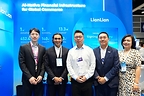
“Hong Kong has long served as a gateway between Asia and the rest of the world, and Latin America is a growing part of that story. We are pleased to see LianLian Global and Cobre working together to make cross-border business payments between both regions faster and simpler, leveraging our flagship HK Fintech Week to mark the start of the collaboration”.

As trade between Asia and Latin America deepens, both companies plan to extend the collaboration to additional payment corridors and use cases.

About LianLian Global

LianLian Global is the international brand of Lianlian DigiTech Co., Ltd. (HKEX: 2598) (“Lianlian”), a global payment and financial platform founded in 2009 and listed on the Main Board of the Hong Kong Stock Exchange in 2024.

Lianlian has served more than 13.3 million clients. Its services reach more than 200 countries and regions, support transactions and settlements in more than 140 currencies, and connect with more than 180 global e-commerce platforms. Lianlian holds 68 payment licenses and related authorizations worldwide, alongside a Hong Kong virtual asset trading platform (VATP) license.

About Cobre

Cobre is the leading enterprise payments infrastructure for Latin America, enabling businesses to move money faster across Latin America and the world. Cobre operates in Colombia and Mexico, offering three core solutions: Local Payments, Cross-Border Payments and Stablecoin Payments. In 2025, Cobre processed over US$17 billion in payment volume across 28 million transactions, serving more than 300 enterprise clients and achieving profitability. Trusted by leading fintechs, financial institutions, and multinational enterprises, Cobre helps businesses simplify financial operations and scale across Latin America.

View original content to download multimedia:https://www.prnewswire.com/apac/news-releases/lianlian-global-and-cobre-collaborate-to-streamline-china-latin-america-payments-302926292.html

SOURCE Lianlian DigiTech

Continue Reading

Trending