
Coin Market
Astar reduces base staking rewards to curb inflation pressure






Technology30 minutes ago
Siris to Acquire Equiniti’s Retirement Solutions, Customer Resolutions and Lenvi Businesses

Technology30 minutes ago
The PMA Rallies the International Community to Act Before the Breaking Point: The Severance of Correspondent Banking Relationships Threatens the Economy and Life

Technology30 minutes ago
Charter Announces Second Quarter 2026 Results

Technology2 years ago
Send Rakhi to UK swiftly with UK Gifts Portal

Near Videos4 years ago
Whiteboard Series with NEAR | Ep: 45 Joel Thorstensson from ceramic.network

Technology2 years ago
New Gooseneck Omni Antennas Offer Enhanced Signals in a Durable Package

Near Videos4 years ago
Why You Should Build on #NEAR – Co-founder Illia Polosukhin at CV Labs
Near Videos4 years ago
Whiteboard Series with NEAR | Ep: 45 Joel Thorstensson from ceramic.network

Near Videos4 years ago
NEAR End of Year Town Hall 2021: The Open Web World, MetaBUILD 2 Hackathon and 2021 recap
-

 Technology4 days ago
“Every Day CO₂ Challenge”: More Than a Game, A New Way of Learning
-
 Coin Market5 days ago
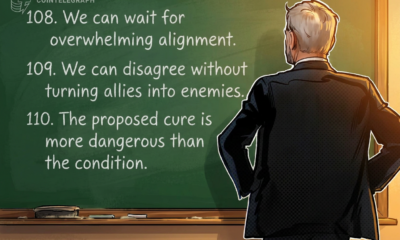
Saylor turns up heat with ‘110 reasons’ why BIP-110 is a bad idea
-
Technology5 days ago
China-Europe Youth Exchange Campaign: When Fashion Meets Football — A Green Pitch Appointment for Cross-Cultural Dialogue
-

 Coin Market4 days ago
Will the US get CLARITY this week? Bitcoin’s new $80K target: Hodler’s Digest, July 19
-

 Technology4 days ago
Trakka Systems to Demonstrate Advanced ISR Capabilities at Farnborough International Airshow 2026
-

 Technology4 days ago
Powering ASEAN’s Manufacturing Transformation: IME 2026 Connects Technology, Industry and Opportunity
-
 Technology4 days ago
DBS named Asia’s Best Digital Bank by Euromoney, recognised for its AI leadership and responsible innovation
-

 Technology4 days ago
Signeasy expands beyond eSignatures with Intelligent Contract Management for growing businesses