Connect with us

Technology

LightInTheBox Announces Strategic Initiatives to Leverage and Enhance Its Manufacturing Capabilities and D2C Model

Published

on

SINGAPORE, April 18, 2025 /PRNewswire/ — LightInTheBox Holding Co., Ltd. (NYSE: LITB) (“LightInTheBox” or the “Company”), a global online retail company, today announced strategic initiatives aimed at leveraging and enhancing its manufacturing capabilities and Direct-to-Consumer (D2C) model. Through these initiatives, the Company seeks to maintain competitive pricing and ensure customer satisfaction in key markets.

Strategic Manufacturing Enhancements

Building on years of experience and customer insights, LightInTheBox has developed its in-house manufacturing capabilities over the past year. A significant portion of its products is now produced internally, facilitating a transition to a Manufacturer-to-Consumer (M2C) model. This approach minimizes intermediary costs, enabling the Company to better reduce expenses more effectively than traditional retailers.

Agile Inventory Management

Adopting a “light inventory” strategy, LightInTheBox has shifted from bulk stocking to small-batch production. This “small-batch, quick-response” model enhances the Company’s ability to adapt to market fluctuations, minimize overstock risks, and respond promptly to consumer demands.

Strengthening D2C Brand Portfolio

The Company continues to build a robust D2C brand matrix, emphasizing “designed in California” to reinforce its American brand identity. By highlighting U.S.-based design elements, LightInTheBox aims to align more closely with local consumer preferences and bolster brand loyalty.

Enhancing Brand Value and Customer Engagement

LightInTheBox is committed to delivering exceptional brand value by cultivating private traffic channels, including email marketing and social media communities. This strategy reduces reliance on third-party platforms and price-sensitive consumers, fostering a more engaged and loyal customer base.

About LightInTheBox Holding Co., Ltd.

LightInTheBox is a global specialty retail company, providing a diverse range of affordable lifestyle products directly to consumers worldwide since 2007. In 2024, the Company shifted its focus to apparel design and launched its first proprietary brand, Ador.com, to meet the growing global demand for accessible higher-end fashion. Ador.com specializes in designer-quality clothing for women aged 35-55 at competitive prices and operates design studios and sample shops in both the U.S. and China, including a boutique and design studio in Campbell, California. Additionally, LightInTheBox offers a comprehensive suite of services to e-commerce companies, including advertising, supply chain management, payment processing, order fulfillment, and shipping and delivery solutions. For more information, please visit https://ir.ador.com. 

Safe Harbor Statement

This press release contains forward-looking statements that involve risks and uncertainties. These statements are made under the “safe harbor” provisions of the U.S. Private Securities Litigation Reform Act of 1995. These forward-looking statements can be identified by terminology such as “will,” “expects,” “anticipates,” “future,” “intends,” “plans,” “believes,” “estimates,” “potential,” “continue,” “ongoing,” “targets” and similar statements. Among other things, statements that are not historical facts, including statements about LightInTheBox’s beliefs and expectations, the business outlook and quotations from management in this announcement, as well as LightInTheBox’s strategic and operational plans, are or contain forward-looking statements. LightInTheBox may also make written or oral forward-looking statements in its periodic reports to the U.S. Securities and Exchange Commission (the “SEC”), in press releases and other written materials and in oral statements made by its officers, directors or employees to third parties. Forward-looking statements involve inherent risks and uncertainties. A number of factors could cause actual results to differ materially from those contained in any forward-looking statement, including but not limited to the following: LightInTheBox’s goals and strategies; LightInTheBox’s future business development, results of operations and financial condition; the expected growth of the global online retail market; LightInTheBox’s ability to attract customers and further enhance customer experience and product offerings; LightInTheBox’s ability to strengthen its supply chain efficiency and optimize its logistics network; LightInTheBox’s expectations regarding demand for and market acceptance of its products; competition; fluctuations in general economic and business conditions and assumptions underlying or related to any of the foregoing. Further information regarding these and other risks is included in LightInTheBox’s filings with the SEC. All information provided in this press release and in the attachments is as of the date of this press release, and LightInTheBox does not undertake any obligation to update any forward-looking statement, except as required under applicable law.

Investor Relations Contact

Investor Relations
LightInTheBox Holding Co., Ltd.
Email: ir@ador.com

Jenny Cai
Piacente Financial Communications
Email: ador@tpg-ir.com

Brandi Piacente
Piacente Financial Communications
Tel: +1-212-481-2050
Email: ador@tpg-ir.com


View original content:https://www.prnewswire.com/news-releases/lightinthebox-announces-strategic-initiatives-to-leverage-and-enhance-its-manufacturing-capabilities-and-d2c-model-302432330.html

SOURCE LightInTheBox Holding Co., Ltd.

Continue Reading

Technology

LexisNexis Risk Solutions Extends Risk Intelligence to Agentic Activity

Published

on

By

AI agents are creating a new class of digital interaction, requiring organisations to distinguish legitimate agent activity from malicious automationKnow Your Agent intelligence helps organisations identify agent activity and fold it into broader risk intelligence used to assess digital interactionsBuilt on the unique scale and connectivity of the LexisNexis® Risk Intelligence Network, Know Your Agent intelligence helps organisations prepare for an agentic future.

UNITED KINGDOM, Nov. 6, 2026 /PRNewswire/ — LexisNexis® Risk Solutions has extended its powerful risk intelligence solutions to help organisations understand and assess a new class of digital actor: AI agents operating on behalf of people and businesses.

For decades, LexisNexis Risk Solutions has helped organisations make risk decisions by connecting identity, device, behavioural, network and transaction intelligence at global scale. As AI agents become another participant in digital interactions, the company is extending that same connected intelligence approach to agentic activity.

Know Your Agent (KYA) intelligence adds a new layer of agentic insights to LexisNexis Risk Solutions’ digital identity and fraud prevention platform. It helps organisations recognise when AI agents are interacting with their digital services and can bring those interactions directly into established risk assessment and decisioning workflows, rather than treating them as an isolated risk problem. Many LexisNexis Risk Solutions customers are already using KYA intelligence in their current risk management decision making.

Analysis of global digital transactions by LexisNexis Risk Solutions shows agentic traffic grew over 750% in the first half of 2026 alone. Rapid growth is expected to continue as more people and organisations adopt agents to undertake everyday tasks such as online shopping.

Because most personal agents today do not self-declare as agents, organisations face an immediate challenge: distinguishing agentic activity from other digital traffic. But this is only the first step. Agent detection alone cannot answer key questions organisations ultimately need to resolve: Who or what is the agent acting for? Has that activity been authorised? Is its behaviour consistent with that authority? And does the wider context of the interaction indicate that it is legitimate? 

That context may also change during a digital journey as control passes between a person and an AI agent, making continuous visibility into the interaction increasingly important. This is where the scale and connectivity of the Risk Intelligence Network becomes essential.

AI-agent activity does not need to be evaluated as an isolated interaction. It can be understood in the context of the identities, devices, networks, behavioural patterns and relationships surrounding digital activity, helping to provide richer context for risk decisions. This connected intelligence approach incorporates agent detection into risk decisions in real time, while aiding in creating a foundation for increasingly sophisticated agent identity and authorisation capabilities as agents, standards and use cases evolve.

Autonomous AI agents have the potential to increase the scale and sophistication of fraud, including authorised push payment fraud and account takeover attacks. Malicious agents can learn dynamically from successes and failures, enabling subsequent attacks to become more tailored and prolific.

For organisations, the decision is not whether an agent is universally trusted but whether a specific agent, acting in a specific context, should be permitted to perform a specific action. Legitimate agents will increasingly participate in digital customer journeys, but the appropriate response will depend on what the agent is attempting to do, the context of the interaction, and the organisation’s own risk policies. KYA intelligence helps organisations bring agentic activity into existing decisioning workflows so they can allow, authenticate, review or reject interactions as appropriate.

“Agentic commerce is moving quickly from experimentation into the mainstream,” said Grayson Clarke, chief commercial officer at LexisNexis Risk Solutions. “Agentic transactions globally more than doubled again in the last quarter, driven primarily by personal agents. Some businesses are enabling agents to transact on consumers’ behalf, while others are restricting their activities, and many are still determining the right approach. We have already seen firsthand how a global financial institution used our detection capabilities to help identify agentic activity and prevent it from executing sensitive transactions.”

LexisNexis Risk Solutions analysed more than 116 billion digital transactions globally in 2025 through its LexisNexis® Digital Identity Network®, giving it a uniquely broad view of how human, automated and increasingly agentic interactions are evolving. The network detected 4.9 billion automated bot attacks during the year, a 59% increase year over year. That scale reflects the role LexisNexis Risk Solutions already plays in helping many of the world’s largest financial institutions, merchants and digital businesses assess risk across digital interactions.

Mike Woodberry, senior vice president of product and analytics at LexisNexis Risk Solutions, added, “Managing risk in the agentic economy will require more than agent detection alone. The real challenge is establishing context: what is acting, who or what it represents, whether it is authorised and what it is attempting to do. Our vision for KYA is to extend established risk intelligence into the agentic economy, helping give organisations the flexibility to apply the appropriate response to each interaction rather than relying on a one-size-fits-all risk assessment.”

Woodberry continued, “Organisations should not have to build a new risk strategy every time digital interactions evolve. Adding a new layer of agentic insights to our established identity and fraud prevention platform helps customers build on the capabilities they already rely on while preparing for the next generation of digital interactions.”

Discover more about how organisations can distinguish between human and agentic traffic.

About LexisNexis Risk Solutions

LexisNexis® Risk Solutions provides customers with information-based analytics and decision tools that combine public and industry-specific content with advanced technology and algorithms to assist them in evaluating and predicting risk and enhancing operational efficiency. Headquartered in metro Atlanta, Georgia, the company has offices throughout the world, serves customers in more than 190 countries and territories and is part of RELX. For more information, please visit LexisNexis Risk Solutions.

Media Contact:

Mike Normansell
Senior Media Relations Manager
+44 7743899948

Disclaimer

LexisNexis® Risk Solutions products and services provide risk signals, analytics and insights designed to assist customers in making risk-based decisions. Results may vary depending on factors including implementation, data availability, transaction characteristics and customer use. No product or service can detect or prevent all fraudulent, malicious, unauthorized or agentic activity. References to detection, identification, risk assessment or prevention should not be interpreted as a guarantee of outcomes.

View original content to download multimedia:https://www.prnewswire.co.uk/news-releases/lexisnexis-risk-solutions-extends-risk-intelligence-to-agentic-activity-302931935.html

Continue Reading

Technology

EPG Modular Data Center Marks Topping-Out of Its US$120 Million Malaysia FIZ Factory

Published

on

By

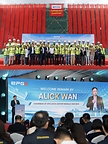
JOHOR BAHRU, Malaysia, Nov. 6, 2026 /PRNewswire/ — EPG Modular Data Center today marked the topping-out of its Malaysia FIZ (Free Industrial Zone) Factory in Senai Airport City (SAC), Johor. The milestone advances development of a manufacturing base closer to customers in Southeast Asia, expanding EPG’s production capabilities and strengthening its ability to respond to customer needs across the region and beyond.

The ceremony featured the raising of the final structural beam, followed by a tour of the facility. Guests included representatives from the Johor State Government, SAC and other government agencies, as well as business partners, customers, financial institutions and investment firms.

Representing an investment of approximately US$120 million, EPG’s FIZ Factory spans 107,450 square meters, including 70,000 square meters of production space. Scheduled for completion in the first quarter of 2027, the facility is projected to rank among the largest single-site data center module manufacturing bases in the modular data center (MDC) sector by production capacity. Once fully operational, it is expected to employ more than 800 people locally.

The factory’s master plan comprises five buildings for sheet metal production, power transfer unit (PTU) products, diesel generator manufacturing, final assembly, and R&D and office functions. The facility will produce MDC shelters and supporting equipment, including diesel generator sets and PTU power modules.

Designed for flexible, digitally enabled manufacturing, the FIZ Factory will integrate advanced automation equipment, intelligent control systems and automated welding technology. Its production lines are expected to achieve an automation rate of at least 80%, with processes including pretreatment, laser cutting, robotic welding and dust-free coating. Modular line design will accommodate multiple product types and specifications.

Digital platforms for supplier relationship management (SRM), product lifecycle management (PLM), manufacturing execution (MES), quality management (QMS) and warehouse management (WMS) will connect processes across the supply chain, R&D, production, quality and warehousing. Digital twin technology will support production visibility and traceability, while intelligent sensing and real-time alerts will help strengthen workplace and equipment safety.

By consolidating production of MDC shelters and critical power equipment in Malaysia, EPG is building capacity closer to regional customers. The factory is expected to help the company coordinate production and assembly, respond more effectively to project schedules and deliver with greater flexibility.

EPG is also committed to responsible operations at the facility. Its priorities include resource efficiency, waste reduction, environmental protection, employee safety, local talent development and cooperation with Malaysian suppliers and partners. The company will operate in accordance with Malaysian laws and regulations and its ESG management requirements, integrating environmental, social and governance (ESG) principles into its decision-making, compliance and risk management.

“The FIZ Factory marks an important step in bringing EPG’s manufacturing capabilities closer to customers and the markets we serve,” said Alick Wan, EPG’s founder and chairman. “By combining advanced manufacturing with strong local partnerships, we are building a responsive base in Malaysia and a model that can evolve with customer needs in other markets.”

Learn more about EPG Modular Data Center at www.epg-module.com.

Contact: communications@epg-module.com

About EPG

EPG is a prefabricated modular data center infrastructure provider, powered by R&D centers in Singapore, Malaysia, and Shanghai, as well as six advanced manufacturing hubs in Malaysia and China. With over 20 years of engineering expertise, it has a workforce of over 1,700 employees, including more than 300 researchers and experienced engineers in its R&D and technical team. Through continuous technological innovation and a scalable delivery system, EPG delivers integrated and efficient data center solutions for hyperscale, cloud, and enterprise deployments across APAC, EMEA, and other global markets.

View original content to download multimedia:https://www.prnewswire.com/news-releases/epg-modular-data-center-marks-topping-out-of-its-us120-million-malaysia-fiz-factory-302931943.html

SOURCE EPG Global Technology (Shanghai) Co., Ltd.

Continue Reading

Technology

TCL CSOT Begins Equipment Move-In at Its t8 Production Line

Published

on

By

GUANGZHOU, China, Nov. 6, 2026 /PRNewswire/ — TCL CSOT’s t8 8.6-generation Inkjet Printing OLED (IJP OLED) production line in Guangzhou had entered the equipment move-in phase on October 31. With core production equipment now moving into the facility, the world’s first 8.6-generation IJP OLED production line has entered the final phase before expected mass production in 2027. The announcement was made at a ceremony attended by TCL CSOT executives and suppliers.

“The move-in of the first piece of core production equipment marks the t8 project’s transition to the equipment installation and commissioning phase,” said Feng Zhang, Senior Vice President of TCL CSOT. “This is one of the most advanced facilities of its kind, and installing the state-of-the-art equipment will be a true test of our ability to work with our partners to expand current technical limits. We look forward to working closely with our partners to take on these challenges as we establish t8 as a new benchmark for safety, quality, and efficiency.”

Representing a major strategic investment in the next generation of display technology, the t8 project will play a key role in driving future display development through IJP OLED. With a total investment of approximately RMB 29.5 billion and a designed monthly processing capacity of approximately 22,500 glass substrates (8.6-generation, approximately 2,290 mm × 2,620 mm), the production line will primarily produce displays for tablets, laptops, and monitors, with scope to expand into flexible and foldable displays. Following the start of construction on September 16, 2025, the main factory structure was topped out in just 226 days. Equipment move-in at t8 marks the project’s entry into the final phase before mass production. The project will now proceed through production line installation, integrated commissioning of power systems, and process validation, with mass production expected in the fourth quarter of 2027.

IJP OLED uses an inkjet printing process to deposit organic light-emitting materials onto glass substrates with greater precision through a process known as on-demand deposition. Compared with traditional vacuum thermal evaporation (VTE), IJP achieves higher material utilization for greener, more efficient production, and is widely recognized as a key technological pathway for next-generation displays.

“From a single drop of ink and a small prototype to our G5.5 line (t12) in Wuhan becoming the world’s first IJP OLED mass production line, and now the move-in at our G8.6 production line in Guangzhou, TCL CSOT has spent the past 13 years bringing IJP OLED from the laboratory to the production line. Equipment move-in at t8 marks the start of the final stretch before mass production,” said Weiran Cao, General Manager of IJP-OLED Middle Platform of TCL CSOT.

As the t8 project progresses towards mass production, TCL CSOT will continue to drive wider adoption of the industry-leading IJP OLED technology and further expand the sizes and applications of its OLED portfolio, delivering advanced displays and improved experiences for customers and end users worldwide.

SOURCE TCL CSOT

Continue Reading

Trending