Connect with us

Technology

CryptoLab to Participate in RSAC 2025, the World’s Largest Cybersecurity Conference “Unveiling Encrypted Facial Recognition (EFR)”

Published

on

Enables facial data processing in an encrypted state, powered by EFR’s core homomorphic encryption technology, CKKS.A cutting-edge security solution designed to withstand quantum computing, utilizing a cryptographic algorithm in the same family as the quantum-resistant encryption selected by the U.S. NIST.

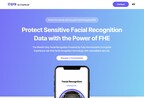
SEOUL, South Korea, April 23, 2025 /PRNewswire/ — CryptoLab, a cybersecurity company specializing in next-generation homomorphic encryption led by CEO Jung Hee Cheon announced on April 24 that it will unveil its Encrypted Facial Recognition (EFR) solution for the first time at RSA Conference 2025.

Celebrating its 20th anniversary this year, the RSA Conference 2025 (RSAC) is the world’s largest cybersecurity conference, attracting over 45,000 participants. At this event, CryptoLab will showcase its EFR solution, which is based on Fully Homomorphic Encryption (FHE) technology and aims to overcome the security limitations of conventional facial recognition systems.

Facial recognition technology is rapidly expanding across various sectors, including payment systems, access control, and smart cities. It is also being adopted at major international airports such as those in the U.S. (Denver), Incheon, and, Abu Dhabi. As the global trend shifts toward contactless, biometric-based automated boarding systems, facial recognition is increasingly becoming a critical component.

However, as facial recognition becomes more widespread, concerns over the leakage of personal biometric data are also growing. In fact, the “facial templates” stored in these systems — numerical representations of users’ unique biometric data — have been shown in studies to be capable of reconstructing original face images if leaked. This poses serious security risks, including identity theft and impersonation.

CryptoLab’s EFR solution presents a groundbreaking approach to these concerns. Not only does the EFR solution store facial templates in encrypted form, but it was also designed to perform the matching process in an encrypted state. This means that facial data remains encrypted throughout the entire processing workflow and is never decrypted at any point.

The key technology of EFR is the 4th-generation FHE algorithm, CKKS. CKKS is a lattice-based cryptographic scheme and belongs to the same family as ML-KEM and ML-DSA, quantum-resistant encryption algorithms selected by NIST (U.S. National Institute of Standards and Technology). This positions EFR as a next-generation security solution designed to withstand not only current threats but also those posed by future quantum computing.

Thanks to GPU acceleration, the system can process tens of millions of facial templates in real-time, within milliseconds, and can scale linearly with demand, making it adaptable to a variety of enterprise environments. Its accuracy is comparable to that of plaintext-based facial recognition systems, setting a new standard in secure facial recognition technology.

CryptoLab’s EFR solution will be offered under a commercial license for enterprises and developers. More details can be found on the official EFR website: https://fhefr.com.

#Introduction of CryptoLab

CryptoLab is a startup founded in 2017 by Professor Jung Hee Cheon of the Demartment of Mathematical science. The company has developed core technology in post-quantum cryptography (PQC) which is secure against quantum computers and fully homomorphic encryption which enables computation on encrypted data (CKKS). CEO Jung Hee Cheon is the inventor of CKKS which is the latest 4th generation homomorphic encryption algorithm and is a globally renowned expert in the field. The company’s Chief Scientist, Damien Stehlé, is one of the authors of the CRYSTALS-Kyber and CRYSTALS-Dililthium algorithms, which have been selected as US NIST PQC Standards. CryptoLab is manned by a team of world-class experts in both FHE and PQC. Recently, two of CryptoLab’s algorithms, HAETAE and SMAUG-T, were selected as finalists in Korea’s national PQC competition.

In 2022, CryptoLab secured approximately 21 billion KRW in investment from Altos Ventures, Stonebridge Ventures, and Kiwoom Investment, affirming its technological leadership. In the same year, it was recognized as a leading company in homomorphic encryption by Gartner. CryptoLab is driving a paradigm shift in data security through close collaboration with major domestic and international enterprises.

View original content to download multimedia:https://www.prnewswire.com/news-releases/cryptolab-to-participate-in-rsac-2025-the-worlds-largest-cybersecurity-conference-unveiling-encrypted-facial-recognition-efr-302435663.html

SOURCE CryptoLab

Continue Reading
Click to comment

Leave a Reply

Your email address will not be published. Required fields are marked *

Technology

IMDA and Tencent Debut “Beyond the Screen” to Champion Real-World Connection through Digital Play

Published

on

By

The launch is marked by the signing of an agreement between IMDA and Tencent to advance healthy digital habits and safe, responsible use of digital technologies among youths, parents, and families.

SINGAPORE, May 2, 2026 /PRNewswire/ — The Infocomm Media Development Authority (IMDA) and Tencent today jointly launched “Beyond the Screen: Healthy Digital Play”, a new digital wellbeing campaign that encourages healthy digital habits by bringing families into the conversation and strengthening real-world connection through healthy gameplay.

The campaign encourages families to bridge the gap between play and purpose through gaming. It showcases how digital play can foster deeper understanding, facilitate balanced routines, and build stronger connections at home.

“Digital spaces are already a natural part of how young people learn, play, and connect today,” said Mr Murphy Zhao, Country Manager of Tencent Singapore and Head of Tech Group, Tencent Games. “As a company with deep expertise across digital entertainment and communications, we want to play a constructive role by helping families build meaningful digital habits that extend beyond the screen.”

Advancing Family Digital Wellness In Partnership with IMDA

As part of the launch, IMDA and Tencent also signed an agreement to strengthen collaboration on initiatives in digital wellbeing. The agreement was signed by Ms Joanna Lam, Cluster Director for Digital Readiness, IMDA, and Mr Murphy Zhao, Country Manager of Tencent Singapore and Head of Tech Group, Tencent Games. The collaboration builds on Tencent’s ongoing cooperation with IMDA, in support of the national Digital for Life (DfL) movement, focusing on promoting online safety and healthy digital habits among youths, parents, and families.

Tencent will co-develop educational content with IMDA, as well as organise four community outreach activities, reaching out to an estimated 4,000 participants. The company will also commit S$ 25,000, which totals to S$ 50,000 with the government’s dollar-to-dollar matching, to the DfL Fund. The DfL Fund provides support for projects and activities promoting digital inclusion, digital literacy and digital wellness. 

“Ensuring digital wellness is increasingly important, particularly for our children who are digital natives,” said Ms Joanna Lam, Cluster Director for Digital Readiness, IMDA. “Tencent has been a DfL partner since 2022, and I thank them for their continued commitment to the DfL cause. We look forward to deepening our collaboration with Tencent to empower parents and youths with practical guidance to build healthy digital habits and navigate the digital world safely together.”

Leading the Conversation on Healthy Digital Play

The inaugural Singapore launch event was officiated by Ms Jasmin Lau, Minister of State, Ministry of Digital Development and Information, and also hosted social service organisations from Singapore, Malaysia, Thailand, Indonesia, and the Philippines. At the event, families participated in gamified quiz experiences and took home educational materials designed to transform gaming into healthier routines at home. 

The programme also featured a parenting talk that shared practical guidance on utilising games as a bridge for conversation at home. The session highlighted how, when guided by constructive routines, gaming can support the development of soft skills such as communication, teamwork, strategic thinking, and persistence.

During the event’s expert insights session, Mr Narasimman S/O Tivasiha Mani, psychotherapist and co-founder of local youth charity Impart, said, “Healthy gaming is not built through one-off rules. It grows through rapport, shared understanding, and everyday conversations. Through a collaborative process between educators, families, and the wider community, it becomes easier to set shared expectations and support balanced habits that carry beyond the screen.”

Building a Scalable Digital Wellbeing Framework for Southeast Asia

While digital habits may look different across the region, the underlying need is the same — helping families build healthier, more confident relationships with the digital world.

“Beyond the Screen” is part of Tencent’s broader commitment to fostering intentional digital play, equipping youths, parents, and educators with practical resources to build balanced routines, encourage respectful interactions, and strengthen open communication at home.

Insights from the Singapore launch will inform the rollout of the campaign across Southeast Asia in 2026, with local adaptations to meet the needs of diverse communities in the region.

About Digital for Life Movement

A Digital Future for All – In our increasingly digital world, everyone can play a part to help create a more inclusive digital future.

The Digital for Life (DfL) national movement, launched on 8 February 2021, aims to galvanise the community across the 3Ps (Private, Public and People) to help Singaporeans embrace digital as a lifelong pursuit and enrich lives through digital technology.

The DfL fund was also set up to support projects and activities promoting digital inclusion, digital literacy and digital wellness. Learn more about the DfL movement at digitalforlife.gov.sg.

About Infocomm Media Development Authority

The Infocomm Media Development Authority (IMDA) leads Singapore’s digital transformation by developing a vibrant digital economy and an inclusive digital society. As Architects of Singapore’s Digital Future, we foster growth in Infocomm Technology and Media sectors in concert with progressive regulations, harnessing frontier technologies, and developing local talent and digital infrastructure ecosystems to establish Singapore as a digital metropolis.

For more news and information, visit www.imda.gov.sg or follow IMDA on LinkedIn (IMDAsg), Facebook (IMDAsg) and Instagram (@imdasg).

About Tencent 

Tencent is a world-leading internet and technology company that develops innovative products and services to improve the quality of life of people around the world. Our communication and social services connect more than one billion people around the world, helping them to keep in touch with friends and family, access transportation, pay for daily necessities, and even be entertained. Our financial technology business covers payment, credit, wealth management and insurance sectors, as we support our partners’ business growth and assist their digital upgrade through FinTech and other enterprise services. We also publish some of the world’s most popular video games and other high-quality digital content, enriching interactive entertainment experiences for people around the globe. Tencent was founded in Shenzhen, China, in 1998, and has been listed on the Main Board of the Stock Exchange of Hong Kong since 2004.

View original content to download multimedia:https://www.prnewswire.com/apac/news-releases/imda-and-tencent-debut-beyond-the-screen-to-champion-real-world-connection-through-digital-play-302760594.html

SOURCE IMDA; Tencent

Continue Reading

Technology

Does Your Building Have Fire Sprinklers?

Published

on

By

Fast Guard Service alerts real estate owners and property managers: 2026 fire code updates to NFPA 25 will significantly affect sprinkler system compliance requirements — and insurance implications could not be more serious.

SAN JOSE, Calif., May 2, 2026 /PRNewswire/ — Fast Guard Service, one of the nation’s leading providers of licensed fire watch and security guard services, is urging commercial and residential property owners to take immediate stock of their fire sprinkler systems as sweeping 2026 updates to NFPA 25 — the national standard governing water-based fire protection system inspection, testing, and maintenance — take effect across the country.

The timing could not be more consequential. Private insurers are exiting fire-risk markets at an accelerating pace, dropping policyholders and limiting coverage in states from California to Florida. In this environment, a sprinkler system that fails a compliance check is no longer a routine maintenance issue. It is a potential grounds for claim denial or policy cancellation.

The 2026 edition of NFPA 25 introduces several changes property owners must act on now. Fire pump failures are formally classified as system impairments requiring immediate response. Supervisory valve testing moves to a semiannual schedule. Annual internal inspections are now mandatory for all dry, preaction, and deluge valves. And where corrosion-control technology has been used to justify smaller pipe sizes, ongoing maintenance of that equipment is now a codified legal obligation — not a recommendation.

Critically, any sprinkler system impairment — whether triggered by repair, renovation, freeze damage, or a compliance-driven upgrade — legally requires a certified fire watch for the duration of the outage under NFPA 1, NFPA 101, and local fire authority mandates. This is a condition of occupancy, not an option.

“The 2026 code updates will send a wave of sprinkler systems into inspection and repair cycles,” said a spokesperson for Fast Guard Service. “Every one of those impairment windows requires a fire watch on-site. We are prepared to be there.”

Fast Guard Service deploys certified fire watch personnel 24 hours a day, 7 days a week, anywhere in the United States — typically within hours of a client’s call. Guards conduct continuous patrols, maintain documentation accepted by insurers and code enforcement authorities, and coordinate directly with fire departments when needed.

Property owners who are unsure whether their sprinkler systems meet 2026 NFPA 25 requirements are encouraged to contact Fast Guard Service for guidance.

Founded in August 2013 and headquartered in Hollywood, Florida, Fast Guard Service is a fully licensed, bonded, and insured private security company operating in all 50 states. The company specializes in armed and unarmed security guards, fire watch services, executive protection, mobile surveillance, event security, and emergency response. Fast Guard Service is trusted by Fortune 500 companies, government entities, healthcare systems, commercial developers, and private clients nationwide.

All operations are tracked through the proprietary Fast Guard App, providing clients with real-time GPS reporting, live guard location updates, and digital incident documentation.

For an instant quote or same-day service, visit www.fastguardservice.com or call (844) 254-8273.

Press Release Service provided by 24-7PressRelease.com.

View original content:https://www.prnewswire.com/news-releases/does-your-building-have-fire-sprinklers-302760491.html

SOURCE Fast Guard Service

Continue Reading

Technology

First Online Conversations Are Changing in 2026, According to New Secretmeet Research

Published

on

By

New research from Secretmeet reveals that the classic “Hey” opener is dying out — and the way people initiate connections online in 2026 looks nothing like it did just three years ago.

GIBRALTAR, May 2, 2026 /PRNewswire-PRWeb/ — People are rethinking the first move. Not just what to say, but when to say it, how long to make it, and what emotional tone to lead with. Across the board, data from Secretmeet’s latest research study shows a clear shift in how online conversations begin in 2026.

The single-word opener? Largely gone. The copy-paste compliment? People spot it instantly. Secretmeet noted that what’s replacing them is more interesting — and more human.

The Death of the One-Word Opener

For years, “Hey,” “Hi,” and “Hello 👋” dominated opening messages on dating platforms. They required no effort and, accordingly, generated little response. According to data published by the Journal of Computer-Mediated Communication, conversational openers that include a specific reference to the recipient’s profile generate significantly higher response rates than generic greetings.

Secretmeet’s research confirms the trend is accelerating. In 2026, users who open with a question — particularly one tied to something specific in a profile — see measurably stronger engagement in the first exchange. The bar for a “good” first message has risen.

This doesn’t mean people need to write an essay. Short still works. But purposeful short beats lazy short every time.

One of the more striking findings from Secretmeet: wit is winning. Openers with a light, humorous tone — a playful observation, a self-aware joke, a clever hypothetical — are outperforming earnest, serious introductions in early conversation engagement.

The Timing Shift Nobody Expected

When people send that first message matters more than most realize. In a Secretmeet review of activity trends, data points to a notable behavioral change: users in 2026 are increasingly active during morning hours — particularly between 7 a.m. and 9 a.m. — a window that was almost entirely quiet just a few years ago.

Evening hours still dominate overall volume. But morning messages show a disproportionately high response rate. The theory? People checking their phones with coffee and no agenda are more present, less distracted, and more open to genuine interaction than those scrolling at midnight.

It’s a small tactical insight with a surprisingly large emotional implication: presence matters more than timing, and mornings are when people show up fully. Secretmeet’s data makes that case clearly.

What This Means for How We Connect

The bigger picture here isn’t about tactics. It’s about expectations. People arriving at online dating platforms in 2026 want something more immediate and more genuine than they did in 2020. The pandemic years accelerated a kind of emotional directness online — and that hasn’t reversed.

People want to feel seen in a first message. They want to laugh. They want a reason to respond. A Secretmeet review of first-message engagement data suggests that users are increasingly capable of signaling — and detecting — authentic intent right from the very first line.

The opening message has always mattered. What’s changed is how clearly people understand that now.

About Secretmeet

Secretmeet is an online dating platform built around one straightforward idea: conversations should feel good. Not stressful, not performative — genuinely enjoyable. The platform is designed for people who want warmth, a little wit, and the kind of back-and-forth that actually goes somewhere. Whether you’re looking for something serious or just a spark of something new, Secretmeet reviews its features continuously to ensure that the first message has a real chance of turning into something worth remembering.

Media Contact

Alice Ross, Secretmeet, 1 14844760121, smm@secretmeet.com, https://secretmeet.com/

View original content:https://www.prweb.com/releases/first-online-conversations-are-changing-in-2026-according-to-new-secretmeet-research-302759958.html

SOURCE Secretmeet

Continue Reading

Trending