Connect with us

Technology

Quintus Technologies Drives Breakthrough Academic Alliance to Accelerate All-Solid-State Battery Innovation

Published

on

Game-Changing Warm Isostatic Pressing Unlocks New Cell Designs and Fast-Tracks ASSB Commercialization

VÄSTERÅS, Sweden, May 13, 2025 /PRNewswire-PRWeb/ — In a decisive move to fast-track the future of energy storage, Quintus Technologies, the global leader in high pressure solutions, has entered a high-impact research partnership with the Laboratory for Energy Storage and Conversion (LESC) at the University of Chicago Pritzker School of Molecular Engineering and the University of California San Diego. This collaboration marks a pivotal advancement in the development of All-Solid-State Batteries (ASSBs)—a battery technology widely regarded as the cornerstone of safer, more powerful, and more sustainable energy systems.

With this strategic partnership, we will be able to achieve greater advancements for all-solid-state batteries and move towards commercialization at a faster pace.–Prof. Shirley Meng, University of Chicago Pritzker School of Molecular Engineering

“The increasing battery deployment to achieve a carbon-free economy comes with a rising concern for battery safety and performance,” observes Y. Shirley Meng, Ph.D., Professor, University of Chicago Pritzker School of Molecular Engineering; Adjunct Professor, University of California San Diego Nanoengineering Department; and Chief Scientist, Argonne Collaborative Center for Energy Storage Science (ACCESS) at Argonne National Laboratory. “While there is significant engineering progress in preventing battery-related fires, the next-generation all-solid-state batteries can mitigate such hazards by removing the flammable liquid in the closed system.”

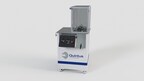
At the center of this pioneering initiative is Quintus’s MIB 120 warm isostatic battery press, a press engineered specifically for battery innovation. Its ability to combine elevated temperatures with isostatic pressure makes it uniquely capable of solving the densification and structural challenges that limit current ASSB technologies. This capability unlocks new design possibilities for multilayer cells and accelerates the path from research to commercialization.

Using solid ceramics instead of liquid electrolytes in batteries is expected to increase safety, as well as energy density and charging capabilities, Prof. Meng explains. However, work with new layers of electrolyte materials indicates that the common uniaxial methods such as calendaring, or hot pressing, lead to insufficient electrode density and lower electrochemical performance. “Therefore, warm isostatic pressing is labeled a key technology in creating sufficient particle-to-particle contact,” she says.

In comparison with other compressing technologies, isostatic pressing stands out as the most effective method to address challenges in solid-state battery development. Studies have shown that isostatic pressure is the only way to close the porosity in coated composite layers inside solid-state batteries effectively to a degree that creates peak electrochemical performance. This allows for uniform compression of small and large multilayer cells, preserving the internal layered structure of components, without creating local defects or inhomogeneities.

The MIB 120 battery press has been specifically designed to meet the needs of the research community, with its space-saving profile, ease of operation, and minimal need for additional infrastructure. It can reach pressures of 600 MPa (87,022 psi) and temperatures of 140° C (284° F), which are fully scalable parameters for industrial-scale presses from Quintus Technologies. The press is designed to have a very high temperature uniformity, which guarantees a high reproducibility of cells, under conditions that can be transferred to mass production once concepts have been proven.

Quintus’s U.S. Battery Application Center was of special interest to Prof. Meng, offering access to the state-of-the-art facility in Columbus, OH, to conduct and optimize initial trials with the company’s field experts.

“Additionally, the equipment is manufactured to the latest ASME pressure vessel code for high pressure operation, ensuring the operators’ safety, which is paramount in my research group,” she comments. “With this equipment-supplier/academic-research strategic partnership, we will be able to achieve greater advancements for all-solid-state batteries and move towards commercialization at a faster pace.”

“Prof. Meng is one of the leading scientists in ASSB worldwide, and we are very happy to enter this collaborative partnership,” states Johan Hjärne, CEO of Quintus Technologies. “This collaboration paves the way for Quintus Giga factory machinery with significantly higher productivity and multi-layer capability. Quintus battery presses offer a sustainable, reliable, and safe path to solve many of the issues seen with alternative production technologies. We invite the battery community to engage with Prof. Meng’s team and Quintus battery processing experts to learn more.”

LESC’s decision to invest in the MIB 120 was made to further enhance the speed of development.

“The Quintus press acquisition, which is supported by the LG Energy Solution’s Frontier Research Laboratory, is critical in enabling academic researchers to stack the multi-layer all-solid-state battery with controlled variables,” Prof. Meng says. “With this advancement in cell assembly, we shall strive for critical, relevant, and impactful fundamental research for ASSBs. We appreciate the partnership from the Quintus team for this open innovation effort.”

The press will be installed at the LESC facility in Chicago in July 2025.

About Quintus Technologies

Quintus Technologies is the global leader in high pressure technology. The company designs, manufactures, installs, and supports high pressure systems in three main areas: densification of advanced materials; sheet metal forming; and high pressure processing for food and beverage innovation, safety, and shelf life. Quintus has delivered approximately 1900 systems to customers within industries such as energy, medical implants, space, aerospace, automotive, and food processing. The company is headquartered in Västerås, Sweden, with a presence in 45 countries worldwide. For more information, visit quintustechnologies.com/.

About LESC

The goal of the Laboratory for Energy Storage and Conversion (LESC), at the University of California San Diego Nanoengineering department and the University of Chicago Pritzker School of Molecular Engineering, is to design and develop new functional nano-materials and nano-structures for advanced energy storage and conversion applications. Conversion of raw materials into usable energy and storage of the energy produced are common aspects of everyday life. The development of new materials to improve upon current capabilities is a key technological challenge of the 21st century. Advances will allow smaller more powerful batteries and will provide a greater ability to harness more sustainable energy sources. LESC research focuses on the direct integration of novel experimental techniques with ab initio computation methods for rational materials characterization and design. To learn more, go to https://lescmeng.ai/

Media Contact

Ed Williams, Quintus Technologies, 1 (614) 891-2732, ed.williams@quintusteam.com, quintustechnologies.com

View original content to download multimedia:https://www.prweb.com/releases/quintus-technologies-drives-breakthrough-academic-alliance-to-accelerate-all-solid-state-battery-innovation-302452065.html

SOURCE Quintus Technologies

Continue Reading

Technology

Mission Critical Partners Announces Launch of its Justice Integration Hub in Support of the City of New Orleans

Published

on

By

The $30 million ARPA-funded initiative connects public-safety and justice agencies, accelerates case processing and improves service to the community.

NEW ORLEANS, Oct. 27, 2026 /PRNewswire-PRWeb/ — Mission Critical Partners today announced the launch of its Justice Integration Hub in support of the city of New Orleans’ Justice Technology Modernization Program (JTMP). JTMP is a multiyear initiative that replaced several decades-old systems with a unified, cloud-based platform designed to improve public safety and access to justice by streamlining operations and strengthening transparency across the city and Orleans Parish criminal-justice ecosystem.

“The Justice Integration Hub is not just a technology milestone; it’s a fundamental shift in how justice is delivered,” said Darrin Reilly, president and CEO, Mission Critical Partners.

The Justice Integration Hub facilitates the seamless flow of information throughout the Parish’s complex criminal-justice ecosystem. Funded through a $30 million allocation from the American Rescue Plan Act (ARPA), JTMP represents one of the most comprehensive justice technology overhauls in the country, modernizing and transforming more than 40 years of legacy infrastructure. The program integrates the area’s entire criminal justice ecosystem — including the New Orleans Police Department, Orleans Parish Sheriff’s Office and Justice Center, District Attorney, Public Defender, Criminal District Court, and Clerk of Court — into a single, connected environment.

“The integration hub fundamentally changes how our justice agencies work together,” said Nathaniel Weaver, JTMP director. “Instead of information stopping at the boundaries between agencies, it can move securely in real time, allowing people to spend less time reentering data and more time making the decisions that move cases forward.”

From Fragmentation to Real-Time Coordination

For years, criminal-justice agencies in New Orleans and Orleans Parish operated on outdated, siloed systems that limited collaboration, slowed case processing, and created cross-department inefficiencies.

The Justice Enterprise Hub is built on Microsoft Azure and leverages a standardized enterprise data model aligned with national data-sharing models. A secure integration hub enables real-time data sharing across agencies, ensuring that critical information is accessible when and where it is needed.

Immediate Impact Across the Community

The Justice Enterprise Hub already is helping to deliver measurable improvements:

Patrol officers now have additional hours each week to spend in New Orleans communities and respond to emergencies due to more efficient digital arrest-processing workflows.Data sharing from the jail to the court facilitates automated creation of cases and scheduling of court appearances, saving approximately 6,000 hours of time clerks would spend on data entry.Faster information sharing between agencies is helping reduce hearing delays, streamline inmate transport coordination, and improve overall justice system efficiency. This significantly reduces incarceration costs and generates measurable operational savings.

A Foundation for the Future of Justice

With the core platform now fully operational, New Orleans and Orleans Parish are positioned to build on this foundation with advanced capabilities, including AI-assisted case processing, digital evidence management, and expanded state-level data integration.

“The Justice Integration Hub is not just a technology milestone; it’s a fundamental shift in how justice is delivered,” said Darrin Reilly, MCP’s president and CEO. “New Orleans and Orleans Parish now have a nation-leading, scalable, and future-ready system that enables agencies to work together more effectively and collaboratively to better serve the public. We look forward to bringing this solution to more communities across the nation.”

The system was implemented in four phases, following a competitive nationwide process that selected Mission Critical Partners and Major Services, a New Orleans-based IT consulting firm, to oversee JTMP’s development, implementation, and coordinated go-live activities across all participating agencies. Those four phases went live in succession, between November 2025 and April 2026.

About Mission Critical Partners (MCP)

Mission Critical Partners (MCP) is a leading provider of data integration, consulting, network, and cybersecurity solutions specializing in transforming mission-critical communications networks into integrated ecosystems that improve outcomes in the public-safety, justice, healthcare, transportation, and utility markets. Our comprehensive experience and vendor-agnostic approach help us develop modernized solutions that maximize value, improve efficiency, and mitigate risk. Additional information and career opportunities are available at MissionCriticalPartners.com.

Media Contact

Morgan Sava, Mission Critical Partners, 1 608-658-8858, rscarpino@pipitone.com, https://www.missioncriticalpartners.com/

View original content:https://www.prweb.com/releases/mission-critical-partners-announces-launch-of-its-justice-integration-hub-in-support-of-the-city-of-new-orleans-302920918.html

SOURCE Mission Critical Partners

Continue Reading

Technology

MadeAi Launches Dossier Expert, Bringing Agentic AI to Formulary and Value Dossier Development

Published

on

By

New AI-powered solution transforms dossier creation and maintenance with source-level traceability, cross-functional collaboration, and up to 70% faster authoring and updates

CAMBRIDGE, Mass., Oct. 27, 2026 /PRNewswire-PRWeb/ — MadeAi™, a leader in AI-enabled evidence synthesis and life sciences solutions, today announced the launch of MadeAi Dossier Expert, a new AI-powered solution designed to transform how pharmaceutical and life sciences organizations create, review, and maintain formulary and value dossiers.

Traditionally, developing AMCP dossiers, global value dossiers, and health technology assessment (HTA) submissions requires months of coordination across HEOR, Clinical, Market Access, and Medical Writing teams. Evidence is dispersed across multiple sources, citations require extensive manual verification, and updates often trigger lengthy rounds of rewriting and review.

Dossier Expert replaces this fragmented process with a living, evidence-linked document that evolves as the underlying science changes.

Built to address one of the most time-consuming challenges facing Market Access and HEOR teams, Dossier Expert brings evidence management, AI-assisted authoring, citation verification, and cross-functional collaboration into a single, continuously updated environment.

From Static Documents to Living Evidence

Unlike traditional dossier authoring approaches that focus primarily on accelerating initial drafts, Dossier Expert is designed to streamline the entire dossier lifecycle—from first creation through ongoing evidence updates.

Key capabilities include:

AI-Powered Dossier Generation: Create structured AMCP, HTA, and value dossiers using customizable templates and AI-generated, evidence-grounded content.One-Click Citation Verification: Trace every AI-generated claim directly to its source document, with the supporting passage highlighted for immediate verification.Intelligent Evidence Updates: Automatically identify sections affected by changes in underlying evidence and selectively regenerate outdated content without overwriting human edits.Integrated Evidence Hub: Organize and connect indexed source materials directly to relevant dossier sections.Integrated MadeAi-LR: Access AI-enabled literature review directly for in-platform literature review support.Seamless Collaboration: Enable HEOR, Clinical, Market Access, and Medical Writing teams to work within one document, with built-in commenting, assignments, approvals, and version control.Flexible, Submission-Ready Outputs: Export approved dossiers to Word or PDF.

Accelerating Market Access Without Compromising Scientific Rigor

Dossier Expert is designed to deliver up to 70% faster dossier authoring and updates, while reducing the manual effort associated with evidence verification, document management, and recurring revisions.

“Creating a dossier is only part of the challenge. Keeping it scientifically current, fully traceable, and aligned across multiple stakeholders is where organizations lose enormous amounts of time,” said Gaugarin Oliver, Founder and CEO of MadeAi. “With Dossier Expert, we’re moving beyond AI-generated first drafts to a fundamentally different model: a living dossier that connects every claim to its evidence, identifies what needs updating, and enables experts to focus on scientific judgment rather than document administration.”

By combining AI-powered efficiency with human oversight and transparent source verification, Dossier Expert helps life sciences organizations accelerate evidence communication while maintaining the rigor required for payer and HTA engagement.

Learn more about Dossier Expert at www.madeai.com.

About MadeAi

MadeAi™ is an award-winning AI-native evidence synthesis and life sciences solutions platform designed to help pharmaceutical, biotechnology, and medical device organizations accelerate evidence generation and scientific communication. Combining advanced agentic AI capabilities with human expertise, MadeAi supports workflows across HEOR, Market Access, Medical Affairs, and RWE, delivering greater efficiency, transparency, and scientific rigor.

Media Contact

Meghan Oates-Zalesky, MadeAi, 1 617 435 2470, meghan.oates@madeai.com, www.madeai.com

View original content to download multimedia:https://www.prweb.com/releases/madeai-launches-dossier-expert-bringing-agentic-ai-to-formulary-and-value-dossier-development-302920940.html

SOURCE MadeAi

Continue Reading

Technology

Peloton Launches Peloton Broker to Streamline Early-Stage Land Acquisition for Energy Projects

Published

on

By

New tract-based pre-leasing tool joins the
Land Data Management solution in the Peloton Platform

CALGARY, AB, Oct. 27, 2026 /PRNewswire/ — Peloton, a provider of energy data management software, today announced the launch of Peloton Broker, a tract-based pre-leasing management tool built for energy projects. Peloton Broker gives brokers, consultants, land departments, and legal teams one place to handle ownership discovery, negotiation tracking, and title curative work, so they can move from prospect to signed lease without re-entering data or juggling separate systems.

Peloton Broker is part of Peloton’s Land Data Management solution in the Peloton Platform, alongside LandView, LandView Map, and Peloton Dashboards. It extends Peloton’s trusted foundation to the earliest stage of land acquisition, with pre-leasing work carrying straight into agreement-based lease management in LandView.

“The pre-leasing stage has always been where land data is most scattered, with ownership research in one place, negotiation notes in another, and title issues surfacing late,” said James Hatcher, Product Manager – Land Data Management at Peloton. “Peloton Broker brings that work into the Peloton Platform from day one, so land teams start every lease with a complete picture and the rest of the organization gets land data it can trust.”

Built for the start of the lease lifecycle

Peloton Broker helps land teams at oil and gas operators and renewable energy developers:

Track ownership at the tract level, covering both surface and mineral rightsManage negotiations in integrated workflows that record every offer, contact, and status changeCatch title concerns early with title curative support, before they hold up executionWork from the map with GIS-driven prospect management connected to LandView MapKeep audit-ready records with full traceability from first contact to executed lease

Connected across the Peloton Platform

The Peloton Platform is a SaaS solution hosted by Microsoft Azure that brings well, production, and land data together in one environment. With Peloton Broker on the platform, customers get:

A single source of truth. Land, operations, and finance teams work from the same accurate, up-to-date information, with master data such as business associates, wells, and units shared across products.Linked lifecycles. Land data ties into well and production data in WellView and ProdView, and integrates with third-party ERP and financial systems.Enterprise-grade security, backed by Peloton’s SOC 1 and SOC 2 Type 2 certifications.

Peloton Broker is available now. To learn more, visit peloton.com/products/land-data-management/broker.

About Peloton

Headquartered in Calgary, Alberta, and founded in 1991, Peloton created the energy industry’s original data management solution, and it remains the standard today. With more than three decades of industry expertise and over 700 clients globally, Peloton offers software across the well, production, and land lifecycles. The Peloton Platform brings all three together in one integrated SaaS environment, hosted by Microsoft Azure.

View original content to download multimedia:https://www.prnewswire.com/news-releases/peloton-launches-peloton-broker-to-streamline-early-stage-land-acquisition-for-energy-projects-302921122.html

SOURCE Peloton Computer Enterprises Ltd.

Continue Reading

Trending