Connect with us

Technology

Sungrow and Globeleq Sign Term Sheet for the Red Sands BESS – Africa’s Largest Standalone Battery Energy Storage System

Published

on

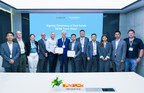
MUNICH, May 26, 2025 /PRNewswire/ — Sungrow, a global leading PV inverter and energy storage provider, and Globeleq, a leading independent power producer in Africa, are pleased to announce the signing of BESS supply and a 15-year long term service term sheet for the 153MW / 612MWh Red Sands BESS project in South Africa.

The Red Sands BESS project is part of South Africa’s inaugural Battery Energy Storage Independent Power Producer Procurement Programme (BESIPPPP) and is located in the Northern Cape, about 100km southeast of Upington. It will be the largest standalone battery energy storage system in Africa.

Red Sands BESS will use approximately 5 hectares (12 acres) and will connect to the grid through the Eskom Garona substation. The project is strategically positioned to support South Africa’s power system by delivering critical services such as load shifting and grid stabilization, facilitating the integration of renewable energy sources, and addressing ongoing energy supply challenges. 

Under the signed term sheet, Sungrow will supply its state-of-the-art PowerTitan 2.0 liquid-cooled energy storage system and will provide comprehensive Operations & Maintenance (O&M) services under a 15-year contract with Globeleq’s Red Sands BESS project, ensuring long-term reliability, efficiency, and optimal project performance.

The Red Sands BESS project is expected to reach financial close in 2025 and will begin operations in 2027.

Paolo de Michelis Globeleq’s Head of Renewables said, “We are excited to sign the Supply and 15-year Long Term Service Agreement term sheets with Sungrow for our 153MW/612MWh Red Sands BESS project in South Africa, the largest stand-alone battery energy storage project in Sub-Saharan Africa to date. Developing BESS projects involves navigating complex challenges and requires a strategic long-term commitment from all project partners to ensure the project’s success. Sungrow’s track record in South Africa, high-quality technology and competitiveness will be instrumental in overcoming these challenges and delivering a reliable project and stable grid.”

About Globeleq

Globeleq, which is owned 70% by British International Investment and 30% by Norfund, is the leading developer, owner and operator of electricity generation in Africa. Since 2002, its experienced team of professionals have built a diverse portfolio of independent power plants, generating 1,794 MW in 17 locations across 7 countries, with a further 485 MW in construction and more than 2,000 MW of power projects in development

About Sungrow

Sungrow, a global leader in renewable energy technology, has pioneered sustainable power solutions for over 28 years. As of December 2024, Sungrow has installed 740 GW of power electronic converters worldwide. The Company is recognized as the world’s No. 1 on PV inverter shipments (S&P Global Commodity Insights) and the world’s most bankable energy storage company (BloombergNEF). Its innovations power clean energy projects in over 180 countries, supported by a network of 520 service outlets guaranteeing excellent customer experience. At Sungrow, we’re committed to bridging to a sustainable future through cutting-edge technology and unparalleled service. For more information, please visit: www.sungrowpower.com.

Photo – https://mma.prnewswire.com/media/2695975/20250526092713.jpg
Logo – https://mma.prnewswire.com/media/1344575/Logo.jpg

View original content:https://www.prnewswire.co.uk/news-releases/sungrow-and-globeleq-sign-term-sheet-for-the-red-sands-bess—africas-largest-standalone-battery-energy-storage-system-302465149.html

Continue Reading
Click to comment

Leave a Reply

Your email address will not be published. Required fields are marked *

Technology

Atmospheric Chemist Susan Solomon Awarded the 2026 Tang Prize in Sustainable Development, Unraveling the Mystery of the Ozone Hole and Advancing Global Environmental Governance

Published

on

By

TAIPEI, June 15, 2026 /PRNewswire/ — The Tang Prize, one of the world’s leading academic awards established to address the critical needs of the 21st century, recognizes achievements in four major fields: Sustainable Development, Biopharmaceutical Science, Sinology, and Rule of Law. Beginning today, the Tang Prize Foundation will announce the 2026 laureates over four consecutive days, with each prize carrying a cash award of NT$50 million. The first award to be announced today, June 15, is the Tang Prize in Sustainable Development, which has been awarded to American atmospheric chemist Professor Susan Solomon. Professor Solomon is recognized “for groundbreaking advances and leadership in atmospheric and climate sciences that shaped global policy for Sustainable Development.”

Climate change is one of the most urgent issues facing global sustainable development today. Professor Solomon is world-acclaimed for her seminal work on ozone layer depletion and climate change. By combining Antarctic field research, modeling innovations, and deep engagement with policy and the public, she has played a pivotal role in both the success of the Montreal Protocol and global climate negotiations. Her major contributions include proving that chlorofluorocarbons (CFCs) were indeed the cause of the widening ozone hole in Antarctica; proposing the heterogeneous chemical reactions that explain ozone hole formation; demonstrating that the impacts of CO₂ emissions are largely irreversible for more than 1000 years; and co-leading the production of the United Nations Intergovernmental Panel on Climate Change (IPCC)’s Fourth Assessment Report on the Physical Science Basis of Climate Change, which comprehensively synthesized key knowledge in climate science.

Professor Solomon is currently the Lee and Geraldine Martin Professor of Environmental Studies in the Department of Earth, Atmospheric and Planetary Sciences at the Massachusetts Institute of Technology (MIT). She began her scientific career at the National Oceanic and Atmospheric Administration (NOAA) from 1981 to 2011, and joined MIT in 2012 after 30 years of service at NOAA. Over the course of her career, she has received nearly 70 international awards and honors, including the U.S. National Medal of Science, the U.S. National Academy of Sciences Award for Chemistry in Service to Society, and the Blue Planet Prize. Her receipt of the Tang Prize comes exactly forty years after she first led expeditions to Antarctica in 1986.

From 1986 to 1987, Professor Solomon served as the Head Project Scientist of the U.S. National Ozone Expedition at McMurdo Station, leading teams to Antarctica and collecting the first direct measurements of reactive atmospheric chlorine compounds. These measurements confirmed that CFCs were indeed the main cause of the expanding Antarctic ozone hole. Her findings provided one of the scientific cornerstones for the Montreal Protocol on Substances that Deplete the Ozone Layer, the landmark international agreement to phase out ozone-depleting substances, widely regarded as one of the most successful environmental treaties in history. Few scientists have had such a direct and lasting impact on a global treaty that safeguards the biosphere. In 2016, her research group at MIT identified the first encouraging signs of ozone recovery over Antarctica as a direct result of international cooperation to phase out the ozone-depleting chemicals— a landmark moment in sustainability science.

In 2009, Professor Solomon published a groundbreaking study indicating that the climate impacts of CO₂ emissions on surface temperature, rainfall, and sea level are largely irreversible for more than 1000 years, even after CO₂ emissions cease. This paradigm-shifting finding demonstrated the long-term environmental harm caused by global warming, crystallized the urgent need for early and sustained action on climate mitigation, and had a lasting influence on both scientific understanding and international policy, reinforcing the link between science and sustainability.

Professor Solomon also showed how the thickness of the ozone layer in the Southern Hemisphere affects atmospheric flows and temperatures all the way down to ground level. For more than 40 years, her pioneering research on the impacts of human-influenced trace gases on the Earth’s climate system has contributed enormously to our fundamental understanding of Earth’s chemistry-climate interactions.

Her proposed mechanism of heterogeneous chemical reactions showed that, under the extremely cold conditions of the Antarctic stratosphere during winter and spring, polar stratospheric clouds (PSCs) form, and the surfaces of their ice crystals provide highly effective reaction sites. These surfaces allow chlorine gas (Cl₂) to form much more rapidly than it would in the gas phase. This mechanism has become an indispensable theoretical foundation for stratospheric chemistry models and is regarded as a classic in environmental science.

From 2002 to 2008, Professor Solomon co-led the production of the IPCC’s Fourth Assessment Report on the Physical Science Basis of Climate Change. The IPCC was awarded the 2007 Nobel Peace Prize for its work. The report brought together the world’s leading climate science research, provided a comprehensive synthesis of scientific knowledge, and became a cornerstone for global climate negotiations. She also communicated key scientific findings to international policy-makers, which helped inform the language of the 2015 Paris Agreement. Its message of “Warming of the climate system is unequivocal” and “Most of the observed increase in global average temperatures since the mid-20th century is very likely due to the observed increase in anthropogenic greenhouse gas concentrations” has set the fundamental tone of the world’s deliberations on adaptation, mitigation, vulnerability, and resilience.

In 1994, Antarctica’s Solomon Glacier (78°23’S, 162°30’E) and Solomon Saddle (78°23’S, 162°39’E) were officially named in her honor, recognizing her outstanding leadership and contributions to Antarctic research. For a scientist who has devoted her career to the study of polar regions and planetary systems, this recognition carries special significance.

Beyond her scientific achievements, Professor Solomon has also been an extraordinary ambassador for connecting science to sustainability. She has delivered hundreds of lectures around the world, briefed national governments and international bodies, and testified before the U.S. Congress on climate and atmospheric issues, actively advancing the integration of scientific knowledge into public policy.

About the Tang Prize
Since the advent of globalization, humanity has enjoyed unprecedented benefits from advances in civilization and science. Yet a multitude of challenges, such as climate change, the emergence of new infectious diseases, the widening wealth gap, and moral degradation, have surfaced along the way. Against this backdrop, Dr. Samuel Yin established the Tang Prize in December 2012. It consists of four award categories: Sustainable Development, Biopharmaceutical Science, Sinology, and Rule of Law. Every two years, four independent and professional selection committees, comprising many internationally renowned experts, scholars, and Nobel laureates, choose Tang Prize laureates who have made substantive contributions and generated a far-reaching impact on the world, regardless of race, nationality, gender, or religion. A cash prize of NT$50 million (approximately US$1.6 million) is allocated to each category, with NT$10 million (approximately US$320,000) of it being a grant intended for research or educational outreach programs to encourage professionals in every field to examine mankind’s most urgent needs in the 21st century, and become leading forces in the sustainable development of human society through their outstanding research outcomes and active civic engagement.

View original content to download multimedia:https://www.prnewswire.com/news-releases/atmospheric-chemist-susan-solomon-awarded-the-2026-tang-prize-in-sustainable-development-unraveling-the-mystery-of-the-ozone-hole-and-advancing-global-environmental-governance-302800051.html

SOURCE The Tang Prize Foundation

Continue Reading

Technology

ICIS Top 100 Chemical Distributors Ranking for 2026 Unveiled

Published

on

By

LONDON and NEW YORK, June 15, 2026 /PRNewswire/ — Today, ICIS unveiled the 17th annual ICIS Top 100 Chemical Distributors, the most comprehensive global ranking of these essential companies in the chemical supply chain.

Leading the distinguished and dynamic group is Germany-based Brenntag with $17.8 billion in 2025 sales, followed by US-based Tricon Energy at $14.0 billion, US-based Univar Solutions at $11.5 billion, China-based Sinochem Petrochemical Distribution at $8.7 billion and Japan-based Nagase & Co at $6.0 billion.

“The Middle East conflict and the resulting supply chain disruptions has put security of supply at the forefront of priorities. Chemical distributors are once again demonstrating their resilience and value in this dynamic environment,” said Joseph Chang, global editor of ICIS Chemical Business.

The ICIS Top 100 Chemical Distributors features detailed information on around 300 companies, as well as ranks leaders by sales in key geographies.

ICIS compiles the Top 100 Chemical Distributors list with the support of the European Association of Chemical Distributors (Fecc), the US-based Alliance for Chemical Distribution (ACD), Associquim (Brazilian Association of Chemical and Petrochemical Distributors), Responsible Distribution Canada (RDC), UK-based Chemical Business Association (CBA), and Netherlands-based International Chemical Trade Association (ICTA).

The ICIS Top 100 Chemical Distributors ranking is based on 2025 sales and year-end 2025 currency exchange rates in US dollars, and appears in the special June 12, 2026 issue of ICIS Chemical Business, in association with the Fecc. It is available for download here.

About ICIS

ICIS – Independent Commodity Intelligence Services – helps businesses through seamlessly delivering data and analytics, across global chemical, fertilizer and energy markets. A trusted source and benchmark for price information and insight across key commodities markets worldwide. Our independent, transparent market intelligence informs thousands of quality decisions every day, enabling our partners to make the very best business decisions.

ICIS is part of RELX, a FTSE100 company.

About RELX

RELX is a global provider of information and analytics for professional and business customers across industries. The Group serves customers in more than 180 countries and has offices in about 40 countries. It employs approximately 30,000 people of whom almost half are in North America. RELX PLC is a London listed holding company which owns 52.9% of RELX Group. RELX NV is an Amsterdam listed holding company which owns 47.1% of RELX Group. The shares are traded on the London, Amsterdam and New York Stock Exchanges using the following ticker symbols: London: REL; Amsterdam: REN; New York: RELX and RENX. Total market capitalization is approximately £24bn/€28bn/$33bn.

View original content to download multimedia:https://www.prnewswire.com/news-releases/icis-top-100-chemical-distributors-ranking-for-2026-unveiled-302799783.html

SOURCE ICIS

Continue Reading

Technology

Tethis announces application note of SmartBioSurface® slides for cell suspension workflows on leading spatial biology platform

Published

on

By

MILAN, June 15, 2026 /PRNewswire/ — Addressing a critical technical limitation in multi-cycle imaging – the reliable adhesion and retention of suspension-derived, non-adherent cells – Tethis S.p.A. today announces the release of an application note for multiplex immunofluorescence imaging of cell suspensions on a leading spatial biology platform enabled by SmartBioSurface slides, demonstrating a robust workflow for high-plex immunofluorescence imaging and biomarker profiling of suspension-derived immune cells.

Using cryopreserved human PBMCs as a representative use case, the study assessed SmartBioSurface slides for attachment, retention, storage stability, and marker performance.

Key results include:

Greater than two-fold higher initial PBMC attachment versus standard charged glass controls.Minimal cell loss across cyclic imaging, averaging approximately 0.14% per cycle and corresponding to approximately 98.5% retention after ten imaging cycles.No detectable cell loss after two weeks at 4 °C following fixation.Consistent marker performance across a 15-plex immune panel, with all markers exceeding the defined signal-to-noise threshold for reliable detection and classification.

Suspension-derived samples, including PBMCs and circulating tumor cells, are increasingly relevant for integrating spatial tissue profiling with matched data from blood samples or liquid biopsies. However, unlike adherent tissue sections, these cells lack intrinsic anchoring to the sample carrier and are susceptible to loss during repeated wash, staining, imaging, and signal-erasure cycles. SmartBioSurface slides are coated with nanostructured titanium dioxide designed to mimic the extracellular matrix, supporting enhanced immobilization of non-adherent cells while preserving downstream assay performance.

“By using SmartBioSurface nanocoated slides, suspension-derived cells can be captured in a stable two-dimensional layer, helping overcome one of the key barriers to high-plex analysis of otherwise non-adherent cells,” said Holger Neecke, CEO of Tethis. “Tethis’ gentle cell-adhesion approach has the potential to preserve cellular morphology and retain complex suspension-cell structures, opening new opportunities to study rare cells, immune-cell interactions, and circulating multi-cellular complexes with enhanced structural and phenotypic clarity.”

The application note supports the use of SmartBioSurface slides as a scalable sample-preparation solution for high-plex biomarker profiling of suspension cells, with potential applications in immuno-oncology, infectious disease, liquid biopsy and translational research.

Download the application note here: tethis-lab.com/smartbiosurface/ 

About Tethis

Tethis S.p.A. is a life sciences and diagnostic company developing innovative workflows for high-quality sample preparation and cellular analysis, with a focus on integrating liquid biopsy into research and clinical practice. Tethis’ SmartBioSurface® slides, based on a proprietary nanostructured titanium coating, enable efficient and gentle adhesion of suspension cells, supporting applications such as imaging, multimodal single-cell analysis, and multiplex assays. In combination with the See.d® instrument, which standardizes blood sample preparation to preserve sample quality and integrity and enables AI-driven, comprehensive analysis of suspension cells, the platform supports high-sensitivity identification and characterization of immune and rare cells, including circulating tumor cells. The company is headquartered in Milan, Italy. www.tethis-lab.com

SmartBioSurface® slides and the See.d® instrument are for RESEARCH USE ONLY and not for use in diagnostic procedures.

For further information, please contact
Tethis S.p.A.
Holger Neecke, CEO 
Email: media@tethis-lab.com 


View original content to download multimedia:https://www.prnewswire.com/news-releases/tethis-announces-application-note-of-smartbiosurface-slides-for-cell-suspension-workflows-on-leading-spatial-biology-platform-302795137.html

SOURCE Tethis S.p.A

Continue Reading

Trending