A $500 million commitment — and a call for the global scientific community to join — aims to unlock predictive models of the human cell to accelerate the cure and prevention of all disease
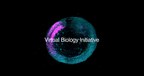
REDWOOD CITY, Calif., April 29, 2026 /PRNewswire/ — Today, Biohub announced the Virtual Biology Initiative, a landmark five-year initiative to galvanize a global effort to create the technologies and multi-modal datasets needed to build predictive models of life. Biohub is committing $500 million to anchor the effort: $100 million to help nucleate a coordinated, worldwide data-generation effort beyond what any individual institution could undertake alone, and $400 million to generate data at scale and develop next-generation technologies for measuring, imaging, and engineering biology.
Scaling biological data to build a predictive model of life requires a global effort
For the first time, it is becoming possible to envision a high-accuracy predictive model of the cell. The scientific and technological foundations exist, but achieving this goal will require orders of magnitude more data than is currently available.
Generating these data will require significant, coordinated effort involving leading institutions and funders joining forces.
Biohub is committing resources to support this effort: large-scale compute power, cutting-edge technologies for instrumenting, imaging, and programming biology, and frontier biological and AI science.
Biohub will make the data it generates open and freely available as a resource for the worldwide scientific community.
Several other institutions are coming together with Biohub, including the Allen Institute, Arc Institute, Broad Institute, and Wellcome Sanger Institute, as well as consortia including the Human Cell Atlas and the Human Protein Atlas, to coordinate a larger scale effort. These groups are committed to working together, through coordinated and independent efforts, toward this shared goal.
As a key technology partner, NVIDIA will support the initiative to leverage accelerated computing infrastructure, domain-specific software, and technical expertise, enabling Biohub and its ecosystem of collaborators to generate, process, and analyze large-scale datasets to ultimately train and deploy impactful models for biology.
Renaissance Philanthropy is joining this effort to catalyze the expansion of funding for data generation. Additional funders, research institutions, and partners are expected to participate in these expansion efforts.
Predictive models can reveal biological mechanisms and the causes of disease
Accurate predictive models of the immense complexity of the cell could help scientists understand its fundamental mechanisms and reveal the causes of disease. Such models would allow researchers to ask and answer questions digitally at a scale and rate far beyond what is possible in the laboratory today, accelerating the path to scientific discoveries that could open new approaches for medicine and lead to new therapies and treatments for complex diseases.
Biohub’s Virtual Biology Initiative seeks to accelerate progress toward this goal, through investments in imaging, engineering, data generation and infrastructure that will make a comprehensive, high-resolution view of the cell across its molecular, spatial and dynamic dimensions available to the global scientific community.
“To build artificial intelligence that can accurately represent the full complexity of biology and accelerate scientific research, we need orders of magnitude more data than exists today. We need new technologies to observe the cell, from the molecular to the tissue level, and in the context of health and disease. At Biohub, we’re committing our resources to solve this problem. Generating this data will require a coordinated global effort. We’re thrilled to partner with leading institutions and consortia who are also committed to this and to work with them to galvanize a larger effort to create the foundation for predictive models of the cell,” said Biohub Head of Science, Alex Rives.
This initiative is the next step in Biohub’s decade-long effort to advance technologies to measure cells across scales and contexts, and to accelerate the scientific understanding of cellular biology, including its support of large-scale data generation projects such as the Human Cell Atlas, the Billion Cells Project, and the Tabula Sapiens multi-organ cell atlas, and a range of integrated grant programs across imaging and instrumentation, spatial molecular biology, and synthetic biology.
Efforts within Biohub and across the scientific community
A much larger global effort will be needed to reach the necessary scale. To help jump start a coordinated global effort, Biohub is committing $100 million to fund external research that will anchor a field-wide data generation effort and advance the frontiers of experimental technology. In doing so, Biohub’s Virtual Biology Initiative will build on its longstanding support of the global community working on single-cell biology. Biohub will also contribute engineering and data infrastructure to support the project and build the data foundation it requires.
“Biohub has been an extraordinary partner to the field for a decade, and the Billion Cells Project is a terrific example of why. It brought together and supported groups and turned their efforts into a shared resource the whole community can build on. Expanding that model to the full measurement set needed to train an AI model of the cell and to understand how cells function together in communities is ambitious in the best sense. It’s the kind of coordinated, openly shared infrastructure that can genuinely change what’s possible in biology. I’m thrilled to see this next chapter begin,” remarked Jonathan Weissman, Landon T. Clay Professor of Biology at Whitehead Institute and MIT and an Investigator at the Howard Hughes Medical Institute.
This is an undertaking far larger than any one organization. The Protein Data Bank became one of science’s most important resources because researchers around the world organized and contributed to it. The Human Genome Project succeeded because the world’s leading laboratories aligned around a shared goal.
Leading institutions and international consortia (see below) are working together to align their respective initiatives to generate proteomic, genomic, transcriptomic, cellular, and tissue-level data and develop algorithms and models—as part of a broader shared global effort. The effort will advance large-scale open data resources for AI-powered biological research and enable deeper understanding of cellular programs in health and disease.
“Achieving a predictive understanding of cellular behavior will require coordination and data at a truly global scale. The Human Cell Atlas brings together a global community, data, capabilities, and expertise needed to help make this possible—and efforts like this, where leading partners including Biohub come together, have the potential to accelerate progress in ways no single organization and consortium could achieve alone,” says Muzz Haniffa, co-Vice-Chair of the HCA Organising Committee. “In our next phase, the Human Cell Atlas is expanding cell atlases into two and three dimensions using next-generation spatial omics, while building shared frameworks for data integration and predictive AI models. We see strong alignment and complementarity with Biohub’s vision and look forward to collaborating with Biohub and our HCA partners around the world on this global effort to help build the open, interoperable foundation needed to accelerate AI-driven discovery in health and disease,” says Alexandra-Chloé Villani, co-Vice-Chair of the HCA Organising Committee.
This shared global effort, including Biohub, will generate the data that is critical for building artificial intelligence models for cellular biology. These data will also be a rich source to unlock new scientific insights. A dataset of this magnitude will contain answers to a multitude of scientific questions about cellular biology and the causes of disease.
Within Biohub, we are investing $400 million to build the core set of technologies and infrastructure needed to push the frontiers of research and help scientists expand what can be measured and observed across cellular biology. In next-generation imaging, we’re developing cryo-electron tomography that will resolve atomic level details in the cell, and microscopy that can observe millions to billions of cells in living tissues and organisms. We’re also building molecular, cellular, and tissue engineering technologies that will enable better experiments and the measurement of more parameters—with the ultimate goal of understanding disease and reprogramming it at the level of cells, molecules and tissues. The internal funding will also help drive data generation within Biohub, which will be made openly available.
This is only the start. The overall global effort will require substantial additional support from other funders. Together with the organizations listed below, we invite other funders and scientific partners to join in this transformative initiative.
Other leading institutions and international consortiums
Leading institutions and international consortiums who have plans to partner in the global effort include:
Allen Institute is a nonprofit bioscience research organization based in Seattle that’s dedicated to accelerating science for a healthier world. It conducts large-scale, collaborative research across neuroscience, cell biology, and immunology. Through ongoing collaboration and partnership with Biohub, and in service to its deep commitment to open science, the Allen Institute will contribute massive datasets, biological models and other powerful research tools to the Virtual Biology Initiative, with the goal of integrating data from many different sources and enabling the global research community to speed scientific discovery.Arc Institute is a full-stack institute for AI and biology research, dedicated to understanding the root causes of complex diseases. Arc’s investigators are supported by long-term funding and freedom to pursue bold ideas. Its Technology Centers are research and development hubs focused on advancing Arc’s Virtual Cell and Alzheimer’s Disease Initiatives, leveraging genome engineering, multiomics, and cellular, mammalian and ML models. Founded in 2021, Arc is an independent nonprofit organization working in close partnership with Stanford University, the University of California, Berkeley, and the University of California, San Francisco.
“Predictive models of cellular biology and response can tell us which levers to pull to change a cell from a disease state back to a healthy one,” says Arc Co-Founder and Core Investigator Patrick Hsu. “By scaling hiqh-quality foundational datasets to train these models, we can directly accelerate progress against complex diseases.”The Billion Cells Project is a landmark single-cell sequencing project to advance researchers’ understanding of cellular behavior and gene function. Launched in 2025 to break through the data bottleneck limiting biological AI models, the Billion Cells Project coordinates 17 projects across leading institutions, including MIT, Stanford University, UC San Francisco, Columbia University, University of Washington, ETH Zurich, and the Genome Institute of Singapore, in collaboration with industry partners 10x Genomics and Ultima Genomics.
“Biohub’s investments in efforts like the Billion Cells Project and CELLxGENE are generating datasets that are already reshaping the field. I’m thrilled by the scale and ambition of this new initiative — especially by the investment in technology development to enhance the modalities and scalability of data generation, and the doubling down on community building and open science — as the path to success,” said Scientific Director of Seattle Hub for Synthetic Biology, Jay Shendure.Broad Institute is a biomedical research institute focused on genomic medicine, which brings together scientists across the MIT and Harvard community, including five teaching hospitals. Broad’s scientists have been at the forefront of the genomics revolution, including the Human Genome Project, the SNP Consortium, the International HapMap Consortium, The Cancer Genome Atlas, CRISPR technologies, and more. Of particular relevance, Broad scientists have played a central role in developing single-cell analysis, including the foundational work on single-cell RNA sequencing, Perturb-Seq, optical pooled screening, various methods for spatial transcriptomics, and a range of widely-used analytical methods. Broad’s Programs of the Cell Initiative is a large-scale initiative to apply these methods and capabilities across biomedicine. Broad is committed to open data sharing and broad collaboration.
“The biomedical community has a long tradition of coming together around ambitious projects to assemble, analyze and freely share large-scale data, dating all the way back to the Human Genome Project,” said Eric S. Lander, Founding Director of the Broad Institute. “Fully deciphering the logic of cells is a huge challenge, but it has the potential to transform medicine. And, it’s a challenge that will once again take many groups and perspectives collaborating together.”Human Cell Atlas (HCA) is a global collaborative effort supported by multiple funders to create comprehensive reference maps of all human cells—the fundamental units of life—as a basis for both understanding human health and diagnosing, monitoring, and treating disease. Since its founding in 2016, it has grown to more than 3,900 members across over 1,700 institutions in more than 100 countries. HCA has exemplified open data sharing and equity in research representation and participation. The next phase of HCA will bring together this collective expertise in technology development, large-scale data generation, cross-system human biology, and algorithmic innovation. HCA will leverage next-generation spatial omics technologies to drive the expansion of cell atlases in three dimensions, while advancing shared frameworks for data integration and model development that enable predictive understanding of cellular behavior in health and disease.Human Protein Atlas (HPA) is a Sweden-based program initiated in 2003 to map all human proteins in cells, tissues, and organs using an integration of various omics technologies, and maintains the curated Human Protein Atlas database. The HPA brings well-established pipelines for high-quality proteomic and imaging data, enabling the integration of protein-level information with transcriptomic, cellular and tissue datasets, adding an important dimension for understanding functional biology and supports more comprehensive, multimodal representations of human cells. The next phase of the HPA will include perturbations, systems level proteome measurements and AI-powered modeling.
“While AI presents novel powerful opportunities to model biology, we are still greatly limited by data. A global coordinated data foundation for modern AI-powered biology is exactly what we need to break siloes and accelerate progress towards high-fidelity simulators of biology. The HPA has always been advocates for open science, and are delighted to support this initiative,” stated Emma Lundberg, co-Director Human Protein Atlas, Stanford University/KTH.Renaissance Philanthropy was founded to increase ambition in science, technology and innovation by making it easier for donors to support breakthroughs through time-bound, thesis-driven philanthropy. Renaissance Philanthropy has worked with philanthropists, foundations, and governments to increase investment in AI for Science.Wellcome Sanger Institute has been a leading contributor in transformative globally collaborative genomics initiatives, including the Human Genome Project, the Human Cell Atlas, the International Cancer Genome Consortium, the 100,000 Genomes Project and the Earth BioGenome Project. Based at the Wellcome Genome Campus, the Sanger Institute’s focus areas are in human disease genomics, the diversity of life in planetary genomics and programmable biology in engineering genomics. Sanger scientists are committed to open science and pioneer the application of cutting-edge genomics technologies to advance understanding of biology and health.
“We are delighted that the expertise based on the Wellcome Genome Campus will play a key role in the development of this important collaboration to power the future of AI- accelerated biology. As our campus expands, we look forward to continuing to play a leading role in major global initiatives which safely make data available to drive forward scientific discovery.” – Dr Nicole Mather, Chair – Wellcome Genome Campus Science & Tech Advisory Group
View original content to download multimedia:https://www.prnewswire.com/news-releases/biohub-launches-the-virtual-biology-initiative-to-galvanize-a-global-effort-to-create-the-open-data-foundation-for-ai-accelerated-biology-302756743.html
SOURCE Biohub








 Technology3 days ago
 Technology3 days ago
 Technology3 days ago
 Technology3 days ago
 Coin Market4 days ago
 Technology4 days ago
 Near Videos4 days ago
 Technology4 days ago